






Divinity Derby Deep Dive
What the Community Thinks About Divinity Derby
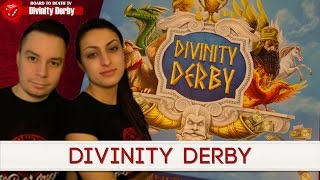
Divinity Derby invites players into a richly thematic world where deities bet on mythological creatures locked in high-stakes races. The game has earned consistent praise from board game reviewers for bringing fresh energy to the racing and betting genre. Most reviewers highlight how the mythological setting elevates the experience beyond typical animal-racing games, and the innovative card-sharing mechanic creates meaningful player interaction that keeps everyone engaged throughout the race. One designer-focused reviewer offered a more reserved perspective, acknowledging the game's solid mechanics but viewing it as a lighter reimagining of the stock-market classic Habengut. Even so, they recommend Divinity Derby as an accessible alternative when the original is unavailable. The consensus is clear: Divinity Derby delivers engaging social gameplay with a memorable theme and clever mechanical depth that stands on its own merits.
Core Mechanics That Define Divinity Derby
Betting and Bluffing
At its heart, Divinity Derby is a game about reading the table and managing hidden information. Players take on the role of deities wagering on the outcomes of the mythological races, placing bets without knowing exactly what their opponents are backing. The betting adds psychological tension to every round, as reviewers noted, since players must decide whether to trust their instincts or adjust their wagers based on the unfolding race. The bluffing element transforms a simple race into a social puzzle where confidence and deception are as valuable as luck.
Neighbor Interaction
Divinity Derby uses a mechanical constraint that keeps the game focused and manageable: players can only directly interact with their immediate neighbors through shared card hands. Each player has a set of cards positioned to their left and right, and these cards are shared with the adjacent players. On each turn, a player selects one card from the hand on their left and one from the hand on their right, then plays those cards to move the mythological creatures around the racetrack. This forces constant negotiation and strategic tension with only two opponents at a time, preventing the decision space from becoming overwhelming even with larger player counts. Reviewers loved the consequence of this setup: opponents might claim the exact card you needed, or you might claim the card they were counting on, creating moments of both triumph and spite that drive memorable table talk.
The Divinity Derby Experience
Mythological Wonder and High Stakes
One of Divinity Derby's greatest strengths is its setting. The game features six magical creatures racing around a divine track while players assume the role of gods placing bets on the outcome. Reviewers consistently noted that racing mythological creatures creates a more immersive and fantastical atmosphere than racing camels or horses. The theme transforms betting from a mechanical exercise into a narrative of divine intervention and power, where each player becomes an invested character in the mythological drama unfolding on the table. This thematic richness makes every move feel consequential, and the betting becomes a form of storytelling rather than mere number-crunching.
Social Pressure and Negotiation
The shared-hand mechanic creates a unique social dynamic where every decision is exposed to immediate consequence. Reviewers highlighted how the game generates authentic moments of accusation and excitement: when one player desperately needs a card and the neighbor grabs it first, the shared frustration and laughter create bonds that persist long after the game ends. The game encourages table talk, negotiation, and even strategic manipulation of neighboring players. Multiple reviewers mentioned how this shared-hand system generates the same kind of elevated party atmosphere found in Camel Up, but with deeper decision-making and longer engagement, giving players more opportunities to form alliances and read each other's bluffs throughout the multiple races.
What Makes Divinity Derby Stand Out
An Elegant Solution to Scaling Interaction
Divinity Derby solves a design challenge that plagues many multiplayer games: how to keep everyone engaged without creating analysis paralysis or overwhelming downtime. By restricting meaningful interaction to left and right neighbors, the game allows it to scale from 3 to 6 players without becoming unwieldy. Reviewers appreciated this elegance, noting that players never need to model the entire table's board state, only track the two neighbors whose cards they share. This design choice keeps the decision space focused while preventing the kind of kingmaking or runaway leader problems that plague some racing games.
Three Distinct Races and Rising Tension
The game structure of playing three races builds tension and investment over time. Reviewers noted that the multiple rounds allow strategies to develop and players to adapt to each other's patterns. The final race carries the weight of earlier outcomes, making comebacks possible and keeping hope alive even for players trailing in points. The racing format itself, with creatures moving along a track toward a finish line and a final round of betting before resolution, creates natural peaks and valleys of excitement that mirror the emotional arcs reviewers expect from the best racing games.
Potential Drawbacks
A Lighter Alternative Rather Than a Replacement
One experienced designer-reviewer offered a measured critique: while Divinity Derby elegantly uses the shared-hand mechanic, it does not achieve the same depth of strategic play as Habengut, the stock-market game that pioneered the system. The reviewer noted that although the racing theme brings charm and accessibility, it somewhat dilutes the complex decision-making that makes Habengut a beloved classic among heavy strategists. This reviewer acknowledged that Divinity Derby stands on its own and delivers genuine fun, but they would always reach for Habengut if given the choice. For players seeking a racing game with substantial strategy, this perspective suggests that Divinity Derby leans toward accessible, social play rather than brain-burning optimization.
Dependence on Player Engagement and Table Dynamics
The game's heavy reliance on shared hands and neighbor interaction means that the quality of play depends significantly on the social environment. Reviewers did not report serious issues here, but the mechanics inherently require engaged, communicative players who enjoy table talk and negotiation. A table of quiet, analytical players might find the shared-hand mechanic frustrating rather than fun, since the pleasure comes from managing expectations, reading bluffs, and the chaos of shared decision-making. Additionally, the betting and bluffing layer requires players willing to embrace risk and deception rather than purely calculated play.
If You Enjoy Divinity Derby
Reviewers consistently pointed to Camel Up as a natural next step for fans of Divinity Derby. Both games share the racing format, betting mechanics, and escalating excitement as the races unfold. However, where Camel Up relies on dice and pyramids for randomness, Divinity Derby brings more player agency through its card-hand system. For those seeking deeper strategic play, reviewers suggested Habengut, the stock-market classic that shares Divinity Derby's shared-hand mechanic but channels it into a more complex economic simulation. Habengut is difficult to find and only released in German, making Divinity Derby an excellent, more accessible entry point to the shared-information design space that Habengut pioneered.
What Reviewers Are Saying
"Racing mythical animals is way cooler than camels, not to mention that the Kickstarter has awesome stretch goals to add drafting abilities, painted minis and variants."
— Board to Death TV
"You can choose a card from the right and a card from the left but they're shared between myself and my neighbor on either side, and one of the cards I play is going to be at full speed, the other one is going to be at a reduced speed so I've got some control and some knowledge over how fast the creatures are going to go around the track and then we place bets and it plays out a bit like something like Camel Up."
— Adam in Wales
"There's this chance that oh you're going to take the card I need. Oh no I'm going to take this just to spite you. Very Camel Up like enough of a different flavor that I think it stands on its own as well."
— Game Night Picks