








Jibber Jabble Deep Dive
What the Community Thinks About Jibber Jabble
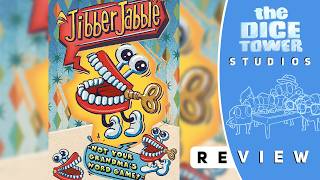
Jibber Jabble has earned consistent praise from board game reviewers for its distinctive take on the word-guessing party game formula. Rather than finding a polished experience that works smoothly every time, reviewers celebrate the game's unpredictability and the hilarity that emerges when players misalign their thinking. Chris Yee rated it 9 out of 10, calling it "one of my most laughed at party games in a long time," while Tom Vasel gave it an 8, noting that the game is "great when it works well, even better when it's falling apart." The Banter and Boards creator described the experience at a convention as one that "knocked it out of the park with big group," praising how it "created these organic hilarious moments."
Core Mechanics That Define Jibber Jabble
Cooperative Spelling Under Constraint
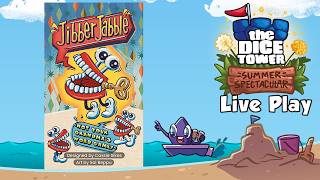
The heart of Jibber Jabble revolves around players spelling clues one letter at a time without direct communication. One player, the guesser, picks a numbered word (ranging from difficulty 1 to 6) but cannot see it. Everyone else knows the target word and works together to spell out three different clues. The catch: each player contributes only one letter in turn order, and they must predict what clue word the previous player started without knowing the original intent behind it. Players cannot use normal conversation to coordinate, only the words "jibber" (I understand) and "jabble" (I'm confused) to acknowledge comprehension. This constraint transforms what should be a simple collaborative puzzle into a chaotic exercise in misalignment and recovery.
Managing Chaos with Hint Cards
The game includes hint cards that offer emergency powers when communication breaks down. One power lets everyone except the guesser shout a letter at the current player on the count of three. Another allows a player to delete someone's previous letter and start fresh. A third lets a player skip their turn. These powers exist specifically to rescue players from the friction that builds when the table diverges too far in understanding, yet the designer notes that spelling errors and unconventional clues are not just allowed but encouraged. Players need not spell words correctly; any clue, correctly spelled or mangled, can guide the guesser toward the target if everyone happens to interpret it the same way.
The Jibber Jabble Experience
Chaos as the Main Attraction
Reviewers consistently highlight that Jibber Jabble shines not when players perform optimally but when the system falls apart. Alex Backle from BoardGameCo explained that the game "develops these little mini stories" as players encounter moments where someone shouts a completely unexpected letter and the whole table realizes they were thinking of entirely different words. Tom Vasel and Chris Yee compared the effect to Telestrations, where the disconnect between what was intended and what was received becomes the source of laughter. The Banter and Boards creator noted that the game works particularly well "for big gatherings where people just want some time to kill and not everyone needs to be super focused," since natural distraction becomes a feature rather than a drawback. The game's appeal lies not in achieving perfect communication but in recognizing just how differently each person's mind works when constrained to a single letter per turn.
Memorable Moments That Linger
Reviewers frequently mention that successful plays of Jibber Jabble generate stories that outlast the game. Backle recounted an example where a player spelled "red" as a clue for "tongue," leaving everyone at the table confused about how to build from that start. Later, when the target word was revealed as something entirely different, the table understood they had never been on the same page at all. These divergences, rather than feeling like failures, become the memorable points that groups revisit long after playing. The cooperative framing suggests everyone is trying to win together, but the restrictive communication mechanic ensures that victory often hinges on luck and the hope that someone else's misinterpretation happens to align with yours.
What Makes Jibber Jabble Stand Out
Simplicity Meets Unpredictability
Jibber Jabble strips party games down to their essentials: a word, three clues, and five or more players thinking independently. The setup is pocket-sized and the rules take minutes to teach. Yet this minimalist framework generates surprising depth because no two plays feel the same. One player might interpret a letter sequence as pointing toward one concept, while their neighbor builds an entirely different theory. The Banter and Boards creator emphasized that the game is "so easy to teach" but still "worth trying for big groups," and the designer Cassie Sykes reinforced that spelling ability has no bearing on success or failure. This leveling of the playing field means a non-verbal or poor speller faces no disadvantage; the game rewards collaborative problem-solving and shared reference frames, not vocabulary or orthography.
Flexibility Across Table Sizes
Reviewers played Jibber Jabble with both small and large groups and found it adaptable to both. The going Analog podcast host mentioned playing with "as many people as you want, technically," and the Banter and Boards convention coverage noted success with both big and small groups. The game's reliance on turn order and the simplicity of contributing a single letter means that adding players does not significantly increase downtime or complexity. The power cards, while optional, serve as a pressure valve when the table grows large and confusion mounts, making the game feel scalable without losing its essential character.
Potential Drawbacks
Vulnerability to Frustration If Misaligned
The design that makes Jibber Jabble memorable can also make it punishing. Alex Backle noted that "sometimes you feel stuck" or "like the village idiot" if everyone else seems to understand what's unfolding while you remain lost. Tom Vasel acknowledged that a player might feel like they are "not on the same wavelength" and worry that their contribution is undermining the group. The designer herself emphasized in a convention show that players who worry about spelling or frustration should lean heavily on the hint cards, suggesting that without them, the game can feel overwhelming to some tables. The cooperative framing means defeat is shared, so a player's misstep affects everyone, which some groups may experience as pressure rather than levity.
Rule Looseness Can Enable Gaming the System
Backle identified a notable issue: the rules' deliberate permissiveness allows tables to establish unspoken conventions that can undermine the game's spirit. Because spelling can be incorrect and clues can be nonsensical, groups can accidentally converge on patterns (like inserting a placeholder letter when stuck) that feel like exploits rather than plays. Backle described having to establish house rules to prevent these workarounds from hollowing out the experience. The looseness is intentional, allowing groups to invent their own challenges and house variants, but it also means some tables must police themselves to keep the chaos from becoming mere randomness.
If You Enjoy Jibber Jabble
Just One is the most direct comparison, as both rely on single-word clues to guide a guesser toward a target. Just One plays more cleanly and focuses on the elegance of finding the right clue; Jibber Jabble adds the spelling constraint, which invites more chaos. Captain Obvious, from Lucky Duck Games, offers a competitive sibling to this formula, rewarding those who think alike in a head-to-head context rather than cooperatively. Telestrations shares Jibber Jabble's love of misalignment and the humor that emerges when communication breaks down, though it trades letters for drawings. Talking Tango, an older improv-style game, employs a similar iterative spelling mechanic from decades past. Codenames and Bull's Eye offer alternative word-guessing experiences; Bull's Eye is particularly recommended for those who want a more thoughtful, one-letter-at-a-time puzzle. Monikers overlaps in spirit, trading on pop-culture references and the shared joy of watching others misinterpret clues. Telestrations rounds out the set as a game where imperfection is the draw.
What Reviewers Are Saying
"This game is less about winning and it's more about just watching the chaos unfold as you play, which results in a generally fun time across the board. It's very much like Just One if Just One were more about the fun and less about actually trying to make the wins happen."
— BoardGameCo
"It's great when it works well, even better when it's falling apart. This is a game that's better when it falls apart."
— The Dice Tower
"It created these organic hilarious moments. So I'd keep an eye out on Jibber Jabble as I think AllPlay has a hit on their hands."
— Banter and Boards