










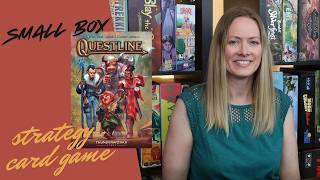
Questline Deep Dive
What the Community Thinks About Questline
Questline has earned consistent enthusiasm from reviewers who appreciate its elegant simplicity and meaningful depth. Critics see it as a strong addition to the Roll Player/Tales of Yore universe and a clever evolution of the drafting card game formula. The consensus is clear: this is a game that accomplishes a lot in fifteen minutes, offering both quick accessibility and surprising strategic decisions. Reviewers consistently return to its storytelling theme as a genuine strength rather than mere window dressing, and its real-time simultaneous play creates a palpable sense of excitement at the table.
Core Mechanics That Define Questline
Sequential Card Drafting
At its heart, Questline is about building a valid quest line from numbered cards 1 through 7, followed by an epilogue card. Players must ensure every previous number exists before a higher number scores. The genius lies in the flexibility: some cards contain multiple consecutive numbers (like a card worth 3, 4, and 5), while others have special abilities that let you skip numbers entirely. This creates constant tension between pursuing immediate scoring opportunities and holding cards that enable bigger payoffs later. The Thunderworks Games design team leveraged this sequential constraint to force interesting moment-to-moment decisions without heavy rulebooks or excessive complexity.
Simultaneous Real-Time Play
Rather than taking turns, all players draw and discard simultaneously and at their own pace. In multiplayer, you can draw from the central deck or from the discard piles of your left and right neighbors, creating a first-come-first-serve atmosphere. In solo mode, a modified drafting system maintains tension by introducing progressively lower-value epilogue cards as you delve deeper into the deck, rewarding both efficiency and strategic patience. This real-time element transforms what could be a contemplative card game into something with genuine urgency and pressure.
The Questline Experience
Exciting and Slightly Frantic
The real-time simultaneous play creates a unique table energy where players scan their neighbors' discards, hoping someone will discard exactly what they need. There is visible tension as you watch opponents reach for cards you want and must decide whether to risk another draw round for a better card or lock in your current hand. Reviewers who embrace this pressure find it exhilarating, though it is explicitly not for players who dislike being rushed or who need to analyze every detail on a card before committing.
Narrative Satisfaction
Once everyone completes their quest lines, the game shifts tone. Players can read their adventures aloud if they wish: your ranger began as an outcast, encountered danger, looted treasure, and emerged as a true hero. The card combination naturally creates story arcs. Reviewers noted that this storytelling element works because the card designers intentionally created cards that pair thematically, making the narratives feel earned rather than forced. The epilogue cards represent the final status: legendary hero, local historian, true wanderer. This thematic payoff gives weight to what might otherwise be a purely mechanical exercise.
What Makes Questline Stand Out
Exceptional Solo Experience
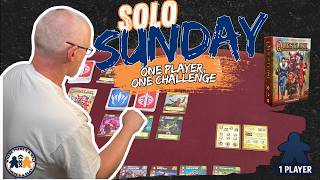
Many drafting games struggle with solo variants, but Questline delivers on both fronts. The solo mode restructures the simultaneous draw mechanics into a deck-management puzzle where you choose when to reset your available drafting options. The epilogue system creates natural tension: claim a lower-value epilogue card now to guarantee completion, or press further into the deck hoping to encounter a higher-value card before the worst options surface. Multiple reviewers called out the solo mode as a strength, noting it holds its own against the multiplayer experience rather than feeling like an afterthought.
Accessibility With Depth
Questline plays in roughly fifteen minutes and teaches in minutes more. The rulebook is clean and straightforward. Yet within that compact footprint sits genuine strategic consideration: which cards to pursue, when to stop drafting, what to discard so opponents cannot easily access it, how to position your cards to maximize the subtle scoring engines. A new player will enjoy their first game and find a good score satisfying. A veteran will notice card synergies and plan three moves ahead. Few games at this playing time manage both accessibility and depth this well.
Potential Drawbacks
Real-Time Pressure Is Not Universal
Players who dislike being rushed, who feel stressed when they cannot read every detail on every card before deciding, or who simply prefer turn-based thinking will find the real-time aspect punishing rather than exciting. This is not a flaw in the design but a deliberate choice that works wonderfully for some tables and poorly for others. Reviewers were explicit: if you do not enjoy real-time games or if you need to analyze every decision at length, Questline is likely not the right fit.
Experience Creates Advantage
Players familiar with the card pool and scoring conditions have a measurable advantage over newcomers. This is typical for card games but worth noting for tables where power balance matters. A player's second or third game is noticeably smoother than their first, as they no longer spend mental energy remembering what abilities exist and can instead focus on execution and tactical decisions.
If You Enjoy Questline
The comparison reviewers reached for most was Fantasy Realms. The One Stop Co-op Shop called Questline a slightly different take on that draw-and-discard, best-hand game and said fans of Fantasy Realms might like this one, and a solo playthrough noted that Questline reminds them a ton of it. The other name that kept coming up was Far Away. One short review called it one of their favourite games and said Questline plays faster, where sometimes you just have to trust your gut, and the Going Analog hosts agreed it brought Far Away to mind. Players who enjoy building a combo-heavy hand of cards but want it done in ten to fifteen minutes will find Questline sits comfortably alongside both.
What Reviewers Are Saying
"From my experiences from a few games I played it doesn't feel frantic or kind of like I'm going to get lost or I'm too frustrated or anything like that. I think it's very slow-paced real time."
— Going Analog
"It does offer a strong solo play while it has a multiplayer game that honestly just plays everybody at their own pace, which is bananas, but it works so well."
— Watch Review
"I love the press your luck aspect of it, too, where it's like, I could just race forward and get that big one. But if you make the smallest mistake, all of a sudden, your biggest card, boom, goes back."
— Bower's Game Corner