Top 10 Food Games
Games in This Video
9 games are featured in this video — they unlock as you watch.




Transcript
My guy like food.
Hey man, Thanksgiving, you know, is is the the fable holiday, you know, and so there are a lot of games that have food kind of near the center of them and we're going to talk about them.
What's up everybody? My name is Nick.
I'm Mike.
We are the brothers Murf. And that's right. Today we're going to talk about our top 10 games that we will say prominently
feature
feature food. So because there's there's weirdly enough there's not that many games about like being a chef or being you know uh in a restaurant that so these a lot these are not all just like kind of those restauranty games.
There are a lot of games where you got to feed your people and stuff like food is is is essential to life and so
and it goes beyond just like feeding your people. It's like really has to be like an integral part of the game because food is an integral part of you got to eat to live, right? Like you have to eat. It's one of the main things you got to do. Eat, breathe, uh, and drink whiskey.
Oh man. Yeah, got to do.
That's That's how you have a long life.
That's how you do it, baby.
Forget water. Who needs it?
That's right.
Uh, we're going to talk about some food games now. Number 10 is going to be a game called Juicy Fruits. This is from Capstone's kind of family line of games. Uh and in this game, you are on an island and you are collecting fruit and basically making juices and things and and serving them up to people. You're maybe taking the fruits you gain and and uh making ice cream out of them. So, it's all about kind of feeding uh people that are visiting your island. And it has a really interesting mechanism for gathering fruit which actually feels kind of thematic. It's a big slide puzzle. So you have things like uh you know oranges and limes uh and grapes and things and they are all going to have a token on your board that's representing that kind of uh good. And to collect something, you are going to take uh you know that token and slide it as far as you like in one direction. And for every space you slide, you'll collect one of that good, one of those oranges, one of those grapes. Uh, so you are playing, you know, to to basically do recipe fulfillment, but you're also trying to get stuff lined up and moved out of the way so that you can kind of maximize your turn. So you don't want to inadvertently block uh yourself. and your island starts off actually fairly limited in where it can move because you have all these boats kind of docked around your island and that's the people that want, you know, the fruits and things that you're serving up. So, the more you kind of fulfill those recipes,
the more space opens up on your board so you can start sliding further and collecting more uh fruit on a turn. But there's also buildings you can put down onto your board that might give you in-game benefits, just endgame scoring and things like that. So, you want to get those because that'll generate a lot of points for you, but you're now kind of condensing this available space on your island back down again. So, it's this really interesting kind of uh cadence to the game where things are going to kind of open up, things are going to kind of shrink back down, but hopefully you are, you know, doing something to kind of generate points and get those kind of big buildings and stuff in place for the endgame scoring as well. It's really fun, really nice components. And again, I've just never seen, to my knowledge, like a slide puzzle at the center of a game. And especially for resource gathering where it feels like you have your basket, which is what you have in the game, and you're going down and you're picking fruit as you're walking along. I just think it's really kind of cute and charming.
Number nine is going to be Flapjack Flip Out. Is Flapjack Flip Out the greatest game ever made? Yes. It's better than TI4. Get wrecked. TI4 Flack Flip Out is ridiculous. But it is about pancakes, which is why it's got to be, it has to be on the food list. We were like, we have to flip out. It's ridiculous. I love it. This is basically a game where you have these little paddles and you are flipping these pancakes. It's a dexterity game. And you're basically going to have some kind of order uh that's going to want a certain kind of pancakes because on the pancakes, there's like normal pancakes, there's like blueberry pancakes, there's like chocolate pancakes, I think banana pancakes, whole bunch of different ones. And you're basically trying to flip those pancakes and you're trying to do it quicker. So basically, you're grabbing these uh pancakes, putting on your paddle, and then flipping them. And if you can flip it down, which is you flipping the pancake, you then get to keep it. You're trying to fulfill these orders. It's very, very silly, but it's very chaotic, and I love it. It's so insane. Flapjack flip out is just silly.
It's just silly fun. Like, this is one of those games where it's like not every game needs to be a serious thing. Not every game needs to be a big a big like h economic d it's just like sometimes just having fun and flipping pancakes is where it's at. Uh it's just really really fun to play at the end of the night. Really fun to play at a convention. Really fun to play with like kids or the whole family. Again, it's silly. It's the greatest game ever made. It's Flapjack Flip Out.
Next up is not a food game, but it is a drink game. uh and it uses food and sugars and things. Specifically, this is distilled. In distilled, you are making spirits. You are making depending on the game, uh you know, different types of leures and whatnot. So, you things have whiskey and vodka and moonshine if if your stuff goes ary. Uh and then there will be different types of uh spirits from around the world that will kind of change out from game to game as you play. This is a I always call it like a shopping game. I think uh it's a game where you're going to have a certain amount of money each round, hopefully as much as possible, and you're going to be going around the table spending money to buy, you know, draft essentially things from the central board. Uh there are equipment upgrades and managers you can get that are going to give you, you know, once per round you get a a wheat or a water or you can uh you know, buy an extra basic good or something. They give you all sorts of little gamebreaky powers.
And then there are a menu of different types of sugars essentially you can get. There are, you know, fruit based sugars, grainbased sugars, and these are going to be the types of things you need to put into a recipe to try to make a specific spirit. So, uh, you know, vodka, for example, is simple. It can sort of have anything in it. And so long as you have at least, you know, one alcohol, uh, one water, and one, you know, sugar, you've made, you know, you've made boka. Congrats. There are more valuable spirits to make. And those are going to be a little more specific. You need to have specifically grain sugar. You need to have three of them because it's going to produce more alcohol. For every sugar card you have, when you go to make your spirit, it's going to add more alcohol cards, uh, which will give you a higher chance of success. So, what's really interesting is once you've kind of purchased all your things, you've gotten everything you need, you're going to go into kind of the distilling phase where you're going to choose what you want to try to make this year. And that is going to be, you know, dependent on the cards you have uh and how much you're willing to risk, I suppose, because there's a little bit of uncertainty when you are making spirits. You are going to need at least one source of water. Uh one source of of uh yeast. Uh alcohol cards from prior rounds of it can count as either of those things. Uh and you're going to need at least some sugar. Uh and for
each sugar card you add in, like I said, you'll add in additional alcohol because that is what is happening with the distilling phase. Once you have all the cards you want, you shuffle them up. You're going to discard the top card and the bottom card from that stack. They're going to go back into your kind of holding area and then you're going to flip out and see what you made. If you don't have all of the components present, you made moonshine. Congrats. And and you can still sell that and stuff. But it's not going to be as valuable. If you manage to make, you know, something for, you know, like whiskey, for example, that needs a specific recipe, you can then claim that little token, say, "Hey, this is whiskey. You can sell that. It's going to be worth more points and money which will give you more ability to buy future, you know, equipment upgrades, barrels, special bottles, and stuff.
It's a really fun, unique game in that there's the whole you can stack the deck with a bunch of stuff, but you eventually do have to discard two random cards and that could change what you actually ended up making or, you know, how valuable that was for you. And I really like that little bit of uncertainty, but your ability to hedge your bets. It's just got a cool style and stuff with like the sort of set collection with the bottles uh and on and on. So, I love a game that's just purely about spirits.
Number seven is going to be Kitchen Rush. Again, we kind of talked about this I think during the intro, but like there's not that many games set in like restaurants, and this is one of them. And this is really feels like working at a restaurant because you are under the gun. You are under the time limit. Um this is um the kind of prequel to a game we really enjoy that we actually like a little bit more in Kitchen Rush called Rush MD which is about working in a hospital. Also very timely type profession, right? So in Kitchen Rush though, you are trying to um fulfill orders and you're doing that by putting out your workers, but your workers are hourglasses, 30 second hourglasses if I remember correctly. And so when you go to do an action, you have to flip your hourglass over and you cannot move that worker until the hourglass runs out. So it's this quick like you're constantly moving stuff, but you're also in this weird area where you're like waiting for like I have 3 seconds to think, what do I need to do next? Okay, boom, I need to do this next. Okay, and you're kind of doing these things and you're trying to fulfill these orders. These orders have varying levels of difficulty. Um, and this is also a cooperative game. So you're all in the same kitchen. You're all working together. You are chopping up the vegetables. You are cooking them for a certain amount of time. Again, depending on what the thing is, it needs to be cooked for a certain amount of time. And then, of course, dishes.
There's dishes. You got to you got to wash dishes. You got to make the dishes. You got make sure the dishes are available. There are different dish sizes depending on the meal. It's a little appetizer, it might be like a little one dish. If it's a big old entree, it might be like a four dish. All this different kind of stuff. And you're like working together in these fourminute periods. All these games, this and Rush MD have like fourminute rounds where it's just this chaos where everyone's moving all their stuff around, doing all these things, working together, just chaos, and then the round ends and you're like, "Oh, [groaning] okay. Okay." Which is kind of what from what I hear, what it's like working at dinner rush in a very popular um restaurant. It's really, really fun. It's very stressful. I like Rush MD a little bit more because it's just it's slightly easier. This game is really hard. That's the only only real knock on this game is that it's very very difficult. It's very difficult to get a good score, but it's also very very fun.
You have to be in the mood for that kind of like quick stress, but if you are, it's really really great. And of course, it's at a restaurant, so it's all about food. Next up is going to be New York Slice. This is a uh I split, you choose game that has like I think still the most satisfying allaround production in terms of like just digging just diving into the theme that it has. So this is a game where you are splitting up pizzas. you are. If I if I'm the person that's splitting up the pie, uh I can I can split up this pizza in whatever way I want. But the thing is, everyone around the table is going to pick a section of this pizza or the special power that comes along with it. Uh they're going to get to select stuff before I select.
I'll get the leftovers. So, you are trying to split up this pizza in such a way that everyone's going to take stuff. It's going to leave you with a little section that you really wanted for yourself. Now, what's really cool is the different pizza slices that make up these pizzas that you're then splitting up have all sorts of different toppings and numbers. And it's basically set collection within each number. And if the number is nine, for example, I can't remember what topping that is specifically. Uh if it's a nine, there are nine of those slices amongst all of the tiles. And if you have the majority of the nines at the end of the game, you get nine points. If you have the majority of the threes, you get three points. So, obviously, numbers that are higher are going to be harder to get a clear majority of, but they're worth more points. There's also pepperonis on various pizzas, uh, pieces of the pizza, and those are just always worth points because everyone loves pepperoni. Uh, and I just love that the uniqueness of it. It's a game where you're splitting up pizza. Each round will have a little bit a special power opportunity so you can put that with slices or put it on its own and everyone will always get something every round.
Where this game really goes the extra mile is the box opens up like a pizza box. It looks like a pizza box. The uh rule book is like a it's set up like a menu, like a little foldout three-piece menu. The score track looks like the little where a waiter would write down the order that you take. It's just every bit of it is like making you think pizza place. And I just love that they went that extra mile to make it through and through feel kind of like classic pizza joint. Uh, and it does really well in the whole I split you choose. It's a really interesting often stressful mechanism where you're like, "Ah, [gasps] I don't want this person to get this thing. So, I can't put I can't put all three of these 11s together. I got to cut off part of this pie this way and put this pie that way." And hopefully, I'm not giving someone like the victory because again, you're going to get whatever is left over and people see what you're going for as well. So, they're going to try to not give you what you want. It's a really interesting tense thing around eating pizza.
Number five is going to be Bag of Chips. This is This is a game that shouldn't work, but it does. It's great. I love Bag of Chips. Bag of Chips is low-key one of the most underrated games ever made. Bag of Chips is a game uh that literally comes in like a bag. It comes in like a little bag that looks kind of like a bag of chips, but it's very sturdy, so it holds holds up over time. Um, and this is like a push your luck type game where basically in this bag there are going to be uh various condition cards I guess and there's going to be these various chips and basically everyone is going to get like a hand of cards and these are going to have different scoring conditions where and there'll be something like there's all different kinds of chips in the game. There's like potato chips, teriyak chips, salt and vinegar chips, those kinds of things. And on these cards, there'll be various scoring conditions where you're like at the end state of the game, there will be more teriyak chips than potato chips. And that will be worth a certain amount of points.
Now, in the game, there's a lot of potato chips. There's not as many teriyak chips. So, if you're saying there's going to be more teriyak than potato chips, that's going to be worth a decent amount of points. Other ones that would be like, oh, there's going to be more potato chips than like chicken flavored chips. Chicken flavored chips are like the the least common. that's gonna be worth like five points because that's almost a almost guaranteed to happen. And the funny thing about these scoring ones is they vary wildly. I think the lowest one is worth like five points and the highest one is worth like 200 points. Like it's crazy because it's just so unlikely. So how the game works is basically everyone has their cards, your scoring conditions, and then there's a couple different like pulling rounds where you're pulling chips out of the bag. So, the first round you're pulling like four or five or six something out of the bag, a certain amount, and you're pulling them out and then everyone then gets to choose cards that they're going to keep because you're like, well, this one that wants teriyak over potato chips. There's no teriyak. There's already four potato chips. I don't think this is going to happen. I'm going to get rid of it. So, there's this constant like, do I stay in? Do I stay in? Do I think it could happen aspect to it that I find very, very fun. And then there's a next round of pulling out chips. you pull out less this time and they can get rid of cards.
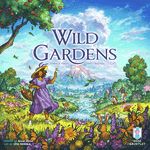
You pull out less and then you pull out I think one last chip and you can kind of like go for it and then you see what you've scored and the ones that you don't score you lose points for. So you don't want to get something wrong. It's really really fun. It's silly. It's just a quick little push your luck game. But I actually think it's incredibly fun and I think it's incredibly underrated and like it's just a little bag you can throw in a backpack. You can throw in the back of your pocket even. It's just like this small little game that I think is a really really fun push your luck in that didn't get the love that it deserved and it's about chips. It's about a bag of chips. So, it's food list. Next up is going to be a game about foraging. This is called Wild Gardens.
This is a game where you're going to be walking around uh a board uh and where you kind of land will have different ingredients, different things you could forage essentially. And you are going to be collecting mushrooms and different herbs and things and using them to feed your friends essentially. There's it's a recipe fulfillment game ultimately uh where you are uh trying to move strategically by playing I think cards or tiles that will dictate how far you have to move and you can choose I go this way down the path or I go this way. It's sort of built into a big uh rondelle. Uh, and so it's a interesting spatial puzzle of trying to figure out like, okay, how do I get to this one spot because in this particular game or this particular part of the game, this, you know, type of flower or whatever is only available over here. So, I have to try to get that way and then be able to fulfill uh these recipes. It's just a really unique game in that I haven't seen resource gathering in quite the way that Wild Gardens does it. And also something like foraging has has really kind of come up recently, especially with like the internet and people being able to get good information about what things are safe and not safe to forage and eat.
I really kind of like seeing games that reflect something that's kind of so old school, but it's a skill we've forgotten. Um, and the fact that it's kind of set in its coziness with uh a beautiful art of course and stuff and the food looks amazing, but you know, the idea that like, hey, you have your friends and you're trying to feed them things that they like. They have their preferences, so you're trying to do recipe fulfillment. You're trying to get the right recipes to the right people. Uh, it's just got a really great vibe all around. And again, something like foraging, I think, is sort of a forgotten art that we're getting back to now, which I think is cool.
Number three is going to be Fromage or Fromagio. Either one. They're both They're both kind of the same game and you can even mix them together. But nonetheless, Fromage and Fromagio are all about cheese, baby. And they have one of the best so good. One of the best gimmicks in a game. If you know us, you know that we love a good functional gimmick in a game. And this one has maybe the best functional gimmick ever. where basically you have this big board and the board is going to be broken into these big four quadrants and each of those quadrants is going to be a little miniame. Basically all these different things are going to score in a different way. One's like an area control thing, one's kind of like you want your cheese on these different shells. All these different kinds of way of scoring and then Fromagio adds in four more and you can even mix and match those different kind of mini games which is very very fun. And so what you're going to do is on your turn, you're basically going to have one of these quadrants in front of you. And you're working on that one this turn. It's completely simultaneous game because you're never working in the same quadrant as anyone else at the same time. So you're working you're basically putting out your cheese and you can put out your your cheese and your workers in one of two places. You can put it in the actual scoring area of that quadrant or you can put it in an area that gives you various resources. And again, when you put them in the scoring area, you will have to add cheese to it. And there's all these uh there's three different kinds of spots. There's like kind of like a um a hard cheese, a soft cheese, and like a blue cheese. So certain spots require different kinds of workers. But the really cool thing is whether you're getting resources or putting out cheese, there are three different tiers of
cheese. There's bronze cheese, silver cheese, and gold cheese. And the gold spots obviously are going to be worth more than the bronze spots, but that worker will have to stay on the board for longer. So, basically how it works is every round the board is going to turn. And when you're putting your workers out in this bronze, silver, or gold spots, they're going to be facing one of three ways. And after the board turns, any of your workers that are now facing you, you can literally look at them and their little portrait, the little dude right there, is facing you. Any workers that are facing you, you will get back. So, if you put it in a bronze spot, after one turn, that worker is going to be facing you. you'll get it back. If you put it in a silver spot, it's going to take two rotations for that worker to be facing you and you get it back. And if you put it in a gold one, it's going to take three rotations of the board before you get that worker back. It is such a good gimmick. It's such a good way of doing like kind of cost analysis, like is this worth me not having this worker for three turns? But then the gimmick is the board turning. But that gimmick works and it's actually really really functional. It really makes sense.
You're like, "Oh, look. Anyone who's facing you, you now get. Any of your workers, you now get them back. It's super easy and super clear." Cuz a good gimmick is only good if it's like functional and easy and integral to the game. And this is all of them. Veragio is really, really fun. All the little mini games are like fun to play around with. It's just everything about this game I find very, very charming. And it's about cheese. And cheese is great.
We'd be remiss if we didn't put Sushi Go Party on here. Uh, this is a game all about making as delicious a meal for yourself as possible. Uh, with adorable alive, it seems types of sushi, which makes me conflicted about eating them. Uh, but this is a classic card drafting game uh from Phil Walker Harding Pro uh where you are going to have a hand of cards. Uh, they're going to have things like tempura, sashimi, and stuff. It's all set collection. Uh so tempora, for example, for every two you have, you get five points. Sashimi, it's nothing unless you get three and it's 10. Uh and you're going to have this hand of cards, but you're only going to pick one of those cards, and you're going to pass the rest of them down to your, you know, neighbor on the left. You'll receive, uh the leftover cards from the neighbor on your right, and you will then choose one of those cards, and then on and on until you have this hand of of cards played to the table. So, what's interesting is as you're playing cards or, you know, choosing cards, you're going to flip them up. People start to see what people are going for. And things like sashimi is sort of a riskreward where you could end up with nothing if you don't gather enough. So, I can now make sure you don't get that sashimi over there. I can put it down. You know, there's uh uh these kind of dessert uh pieces that are only going to score at the end of the game. So, you're kind of trying to slowly accumulate those. You don't want to have the least of them and lose points. Uh, you know, other things are going to the mocky roles are sort of a majority. Whoever has the most gets
first place points. Whoever's the next most gets second place points and on and on. Uh, but it's just like I love the simple theming of like you're just trying to have a delicious meal and these things look so cute. They look so delicious. They're adorable. Uh, and you are trying to, you know, make sure you get all the best stuff. You deny your opponents. Uh, but it's a really simple choose a card, play it down, pass the rest of your cards to your neighbor, and repeat. So, it's super accessible. Sushi Go Party specifically takes Sushi Go and the types of cards that are in that game and then gives you a bunch of variety so you can choose, oh, I want to have this type of card in this game and that that kind of card and you can vary up your experience. It's not the exact same uh cards from game to game. Of course, what they do and stuff is always going to stay simple, simple set collection kinds of things, but it does give you that variety and allows you to play games with even more people. So, this is one that like I've never experienced someone not enjoying Sushi Go or Sushi Go Party.
So, it's nice to have some games in your kind of back pocket that are like this can play with anybody, anytime. It's breezy, it's cute, it's appealing. uh you know, and for someone who hasn't like maybe played a lot of board games, something like card drafting like that might be kind of a unique and novel thing that they haven't done. And with the beautiful art and stuff around it, I think it's a great way to help maybe create some new board gamers. Number one is going to be Grand Austria Hotel, which is one of our favorite games, which is why it's number one. But also on top of that, you think of Grand Aer Hotel as like a hotel game, and that is true. I would say it's more hotel. And with this kind of list, we're talking about games that feature food very prominently. They don't necessarily have to completely be about food. And this one isn't completely about food, but food is a massive part of this game because to get people to come and stay in your hotel, you have to feed them first. And all of these people are going to want different things. So, in Grand Auster Hotel, again, you're building out your hotel and you're trying to get guests to stay in your hotel. At the beginning of each of your turns, you can have a guest come and stay at the cafe because at the bottom of your hotel, there is a little cafe that can hold three guests. And each of those guests are going to want some combination of cake, strudel, um, wine, or coffee. They might want like two coffees and some cake. They're getting real crazy. Might want three wines and some strudel.
Getting real wild out here. and they will sit down in your cafe until you feed them those things. And you can um spend some of your dices the dice um drafting game and two of the dice drafting spots, the one spot and the two spot will get you those things, cake and strudel or wine and coffee. And then you get those little cubes in your um kitchen and then you can bring them out to those guests. And then once you completely feed them, they will then come and stay in your hotel. And that's how you close the doors in your hotels, which is the main way, main thing you're trying to do in the game. So, it's one of those things when we were first talking about this list, we were like, "What about Grand Hotel?" We're like, "Ah, it's like a hotel game." We're like, "No, the food part of it is like half of the game. It's like half the game is like getting this food and getting it to these guests. You can actually get them into your hotel. It's a really big part of the game, but yet it doesn't really feel like it, but it actually is completely a huge, huge part of it. So, nonetheless, this game is a classic. It's It's been around for a long time now. It's been one of our favorite games. It's usually in one, if not both of our top 10 games of all time. It's just so so good. It's a great dice drafting game that's really, really wonderful. But the food portion is there. It is actually a really big big part of it, even though a lot of times you're not really thinking about the food too much because it's kind of a means to an end to get them into your hotel. but it is the way you get them into your hotel. So, it's on the food list and it's just so so good. Love Grand Ora Hotel. That was our top 10 games that we see they think prominently feature food. Again, make more games about restaurants and and chefs. I think it's a really cool theme that does not
get used enough. Really,
that'd be very cool. We'd love to hear it and I know there are some out there for sure. So, those are just our favorite food games. Of course, there are many more. So, tell us your favorites, whether or not they align with ours. We'd love to hear uh what kind of games you get down with that that seem to have, you know, food and things at the center of it or drinks if you like.
Uh and that's going to be it for us. Yeah. Yep. All right. We'll see youall on the next top 10. Bye, everybody.