My Last Minute Xmas Board Game Gift Guide!
Games in This Video
8 games are featured in this video — they unlock as you watch.





Transcript
Hey everybody, it's Danny here from Board Game Sanctuary and welcome to my 2025 Christmas gift guide. I know this video is going to probably go up a little bit late, so I guess you could consider this video a little bit of a Christmas gift guide for now or maybe to yourself for the future. So, I wasn't really sure whether I was going to make this video, uh, mainly because I've had a lot of things going on in my life. But, I thought, you know what? I think I might have compiled a list at the very last minute and I can't wait to share it with you. Hi, my name is Danny. I'm an avid modern board gamer from Australia who loves sharing my passion for this hobby with you, my friends and my family. Let's get this video started. So, during Christmas time in Australia, it's usually about 40°, sometimes 42 degrees, and a lot of people head to the beach. Yeah, it rarely snows. Mainly because it's the middle of summer, but basically in Australia, you pack a towel, you go to the local pool, you spend Christmas day or Boxing Day with your loved ones sweating like underneath the hot sun as you have like your Christmas barbecue or your Christmas lunch. And so, this next game really popped into my mind when it came to thinking about a gift that I could carry around with me and take with me on holidays. This next game [clears throat] is a game that I've been looking for for a long time and it's for the avid Christmas traveler. And you know, it doesn't have to be summer to play this game, but it definitely has a summer vibe to it. And it's called Seaside.
Seaside is a game that requires zero setup. Yep. You can literally play the game out of this bag. And basically all you're doing is you open the bag up, draw a token, and place it out. And all of these tokens are weatherproof, travelproof, waterproof, windproof, sandproof. It is a game that is definitely meant to be played on the run. And so on your turn, you're going to be drawing a token from the bag. And each of the tokens actually is double-sided. So if you draw an isopod, a shell, or a crab, you basically place it into uh a little middle area. And I guess if you're playing this at the beach, you can just draw like a circle in the sand. and you place that out there. So on your turn, you're gonna decide which of these sides. Woo, I dropped a piece under the bed. Found it. So you basically draw a token from the bag and then decide which side you're going to play. If it is a crab shell or isopod, you're going to be placing it in the central area which will be accessible to all players or you're going to be placing it on using its other side. So if you for example draw a sandpiper which is like a type of seabird, you'll be able to take any number of isopods from the sea and place the sandpiper on top of it. Think of it as like thematically the sandpiper going and scavenging for food in the sand and finding these isopods hidden underneath the surface. If you get a beach, you basically get one shell from the sea per beach that you've already collected. The
beach kind of looks like this. Oh, it's actually on the edge of this bag here. And if you have a wave, you basically can flip over a beach tile and then resolve the effect on the other side of the previously played beach tile that you've got with the crabs. If you have two rocks, you create like a little crab enclosure and then you get to nab up some rock uh some crabs to build your little crab habitat. And basically, the winner of the game once the bag all empties out is the person with the highest stack of tokens. Whoever has the most tokens is the winner. And it's simple as that. At the end of the game, you just put it all back in the bag, throw it into your knapsack, head off, and it doesn't really matter if there's sand in there because it's made for that. So, this Christmas, if you're feeling a little bit lonely, or you're spending it on your own, maybe cuz you're working, or maybe there's a blizzard outside and you can't go and find friends and family, or maybe you just chosen this year that you don't want to deal with family drama. Well, I've got the perfect Christmas solo game for you because it is zen and involves having a nice cup of tea. So, a nice cup of tea is a solo game that only features 18 cards. Yes. And one of the cards is like a rule reminder card. What you're going to be trying to do in this game is you're going to be sequencing the process of making tea. So, you're going to place all these cards and shuffle them up and place them in a row. And you're going to try and resequence them
before the game timer runs out. Now, as you're playing this game, all of the cards will be flipped this side, and you're going to be trying to flip them over to the color side and putting them back into sequential order. Now, to go thematically with this game about brewing tea, you have your little deck of worry cards. These are cards that you are kind of stressing about and you're trying to relieve that stress by getting rid of these cards because if you have a worry card underneath a colored card, that worry card disappears. And the worry cards actually have different actions that you can use to shuffle and rearrange the way and the sequence that your tea is brewed. For example, the commute card allows you to swap two cards that are not a pair. With the home card, you can choose a left or rightmost card in the line and move it to the other end. So they give you all these actions to sequence that tea making process in order. However, when you're resolving these cards, you have to resolve them from left to right. So each decision that you make that's based on a different type of worry, could be financial issues or politics or even an existential crisis. Uh, all of these are going to really give you the actions that you can take to make and brew that perfect tea. And if you do, you get maximum amount of points. And there's different modes of play, which is really beautiful. And what I like about this game is it all fits into this very, very small wallet. And this is part of the
Buttonshy series of games, which I absolutely have adored recently. So, a holiday themed, I guess, zenlike solo experience. The next game has a really great amount of table presents. And I think I'm going to categorize this one as an XM quickie. One that you can play in between like events or one where everyone's just kind of sitting around, people are a little bit bored. This game has a little bit of grabbing power, mainly because it's got a cool animal theme, but the rules are so easy to teach. You can teach it in under 60 seconds. The game is by famous designer Rhino Canitzia Botswana. So, Botswana is a game where you are going to be basically you're playing a card underneath one of the five different animals, giraffe, lion, elephant, hippo, or mcat. And basically the value of the card that gets played there is going to determine that animal's point scoring value. So you're going to be playing a card and then taking one of those animals and putting them into your possession. So the animal that you take doesn't need to necessarily match the card that you play. So if I play, for example, a two lion, I can actually take an elephant from the stock if there is some. And so what's interesting about this game is that everyone can see what type of animals you are gathering. And if someone's gathering a lot of lions, then you're thinking, "Hang on a minute, that person might be trying to score big
in lines." So, if someone's got a one line or a zero line, because each animal at the end of the round is going to score based on the last card that that is played in that column, then that person might be nullifying that scoring value by playing a zero line to stop that player who's collected all those lines throughout the round from scoring at all. And that is the big nuance of the game, the idea of going, "Ooh, what animals should I be gathering? What animals are other players gathering? What are my opponents trying to score for? Looking at the options of the cards in your hand and thinking about, oh, when would be the best time to play the five me cat or the five hippo and when would be the best time to play the zero elephant or the zero giraffe. Especially if you can see five pe, you know, especially if you can see a group of people collecting lots of giraffes, you might decide, hang on a minute, I don't want them to score those points. So, you're really reacting and thinking about when the best time to set those values are going to be. And that's essentially the dynamic of the game. The frills of the game comes from trying to psych out the other opponents, trying to read what they're going to do, analyzing the decisions. They might take an elephant now to lure you into thinking they're going for elephants, but then they might pivot and collect another different animal altogether. And so the game is quite simplistic in its structure, but the threads of where it can go really, really kind of embed
itself quite deep the more you play it. So often at Christmas time, this is the time when we have a lot of time off, a lot of time that we can kind of sit around and spend with our loved ones and also time we can play some of those more strategically rich and mindcing games. This next game is only for two players. And I do realize that sometimes, you know, Christmas time, you might want to play a wider strategy game with more players. The reason why I put a two-player XMA strategic game or put this game under the XMA strategy category is because sometimes, you know, my friends and family, they don't want to play anything strategic. They'd rather play a party game, a word game, something that's easy to grasp. Whereas, if I'm playing like a strategy game, I'm going to play this with my hubby. So, so this one is my recommendation only because I really love the theme and also the puzzly nature of what you do with this card game. And the game is called Nishi. And Nishi is a two-player only card game where you're basically going to be picking and drafting cards from the river. And then you're going to be building your little tableau of cards.
there's like a row of five cards in front of you and a row of five cards in front of your opponent and you're also going to have five cards in your hand which the order and position of those cards cannot be changed. Now, at the beginning of the game, you're going to be starting with these mountain cards and each card has its own unique way of scoring. You might be saying, "Hang on a minute, Danny. We've seen these sort of card games. We've played card games that have set collection and position management and scoring. But what makes this different is that the position of your hand is secret to you and also the public information of your five cards in front of you a public information to your opponent. But at the end of the game, you're going to be revealing your hand of five cards, aligning it with the five cards that are up to create a little array of 2x5 grid of cards. And then you're going to be scoring everything that you've collected. And so that puzzly nature of what's open and closed becomes such an interesting strategic element to the game. And it kind of reminds me of the game uh sea salt and paper where you know you don't know what your opponents have. You can only kind of guess what they've got based on what they draw and what they discard and what they play. And so it has that really cool hidden information element. And not only that, you're also trying to get rid of these mountain cards because if you have them in uh your tableau at the end of the game, if you've got two or more, you'll lose five
points, but if you got one, you'll get five points. But each card scores in a different way. The ninja cards uh kind of copy another card's action. You've got these little weak cards, which will score you big number of points based on the number of them uh that you've got. And then you've also got these little samurai cards which will be uh need to be placed in your hand, but then when you deploy them at the end of the game, they'll need to go under a banner. And so the position of these cards is really going to matter. So it has that kind of like arboritum like scoring effect as well where the position of how you lay out your little array is going to really impact the maximization of your score. And so you've got the scroll master who's going to get points based on the position that he is in a particular row.
And then you've also got, you know, the uh princess who likes to be the center of attention and likes to be in the center of the array at the end of the game. And so there are certain cards that are called character cards and there are certain cards called location cards. And some of those cards tend to connect or work together and bounce off each other. And what's really brilliant about this game is that as you're drafting these cards from this central river, you can kind of guess what your opponent might be going for. If they put it out in front of them, you might be think, "Ooh, that's a scoring avenue they're going for." Or if they put in their hand, watching which position in their hand they put it in is crucial. And the game even gives you a little bit of flexibility to use certain tokens to kind of manipulate your array and I guess rearrange it to help you maximize your scoring. The next game is a small box card game that I would consider is a familyfriendly game and I guess this is going to go under the Christmas family category and that's because it's a game that has a really inviting theme. I also really really love this designer. He's called Daryl Chow and he's from Singapore. And I love uh the theming that he has in his games. He always makes his games very accessible, very light, easy to kind of grapple, but also quite inviting to play. And this is one that I can picture playing with my family, um you know, in the backyard around the barbecue and just playing this game because it's just basically essentially a deck of cards. This is a
game called 13 animals and it's based on um the Chinese game Mahjong but simplified more into a card version and rethemed with these cute animals of course. I mean who doesn't like cute animals? But basically in 13 animals you are going to be out in the play area. You're going to be drawing a card and discarding a card. And essentially all you're trying to do is to create a whole hand of cards that are all in different sets so that there's no like single card or other card that's left over that can't join a set. You're kind of trying to create multiple sets in your hand cuz that's going to trigger the end of the round. Out in the main playing area, you've got two decks that you can kind of draw from or you've got three face up cards that you can kind of pick from. And there are three different categories of cards.
There's like the bird category, which are these blue cards. There's like the special creature or mythical creature category, which are the yellow cards. And then you've got the cool uh normal or regular real world creatures on the green cards. So, when you're picking from the two decks, you can kind of see the color of the back of the cards, which kind of gives you an indication of like, ooh, if I need, you know, a second bear to score five points, I might draw from that green deck, but I might draw something that's not a bear. And then I've got to contend with how I'm going to use that to create my sets. And so the game is all about trying to collect these sets as quickly as you can because the more time that you give other players to collect their sets, they're going to be able to create more powerful uh combo of points. And so each particular animal has its own way of scoring. And what's brilliant about this game is that all the scoring is listed on each card. So two bears gives you five or if you get one of each of the three green each of the five green types of animals, you get three points. And the yellow cards uh often give you more points, but they're a little bit harder to get because they're a little bit rarer. So, four cappers will give you eight points. There's even um like a little fox that kind of acts like a wild card. So, the ninetail fox acts as a wild card for the yellows. And then with the blue cards, you've got triplets. So, you want to try and collect sets of three. And so, the rarity of the
different animals in the game really varies quite wildly. And so you're thinking, am I going to really go deep on green and blue and try and collect those multiple sets, or am I going to try and use some of the golden ones to kind of leverage my high scoring powers? And so you're constantly contending, okay, I've got this card, I've got this card, how can I complete this set? Do I discard this card hoping that I'll get a card that I need to uh build up to the other set? And the other way to I guess uh end the round or score is also if you've get if you got 11 different animals in your hand. And so if you got 11 different animals that also gives you five points. That's another way of kind of quickly finishing off the round um while before anyone else can kind of collect you know triplets or multiple sets of those high scoring animals. And so this is a really really inviting game that does have a little bit of mathematical flavoring in it. Uh, but the strategy behind it is easy to grapple, easy to dive into, and it's very, very accessible. My two player Christmas recommended game for this year is a strategic card game. And I think this year really gone down a cool deep dive for exploring different little smallbox card games. And that's because life is hectic. Life has so much going on. And as you get older, I'm like, I'm going to be 41 soon. there's going to there's just too much going on that sometimes I just want to play card games. It's going to give me that hit of
uh playing a strategic game. It's going to really tap into the neurosapses in my brain and really get me excited to play um a board game, but also the time constraints that are required from some of these card games is quite low compared to like my favorites which are like medium to heavyweight euros. Uh, so this next game has a fiveway tugofwar where there are five planets and you're trying to pull those planets by influencing them to your side. And the game is called Zenith. And Zenith is a game that actually I kind of overlooked quite a lot. There was this one game shop I went to and I kept seeing the box and I was like, "Oh yeah, I really like the art." But I wasn't really sure about the stark whiteness of the background. And space games are not typically my normal flavor or theme, but they are my hubby's flavor and theme. So, and my hubby also likes card games, too. So, that kind of is like hitting two birds with one stone. So, Zenith is a twoplayer game where you're playing different cards. There's five different um planets and the cards are color coded and when you're playing the cards, you're playing them uh I guess in alignment with those planets to try and pull those planets towards you. And if you can pull the planet off your board, there's a little section at the end of the board where you can kind of uh place that planet to show that you've gained influence there. And there are three different ways to end the game. You can get three uh you can acquire you can push three of the same planet off the
board onto your side. You can get four different planets or uh you can get the first to get five planets of any combo will also win the game. And so the game involves a lot of cool card play and card combos. And as you're playing the cards, you're resolving different effects. And you can also advance up these three different tech tracks. And as you advance up the tech tracks, you get the bonus of the position that you get up to, plus all the actions that you've already surpassed. And because there are three tech tracks that you're building up at the same time, if you can get your three tech counters to reach the different thresholds, you can also trigger horizontal bonuses that also allow to give you leverage to push certain planets of your choice towards your side of the board. And so it feels like a fiveway tug of war with some really cool, interesting carplay. And it's one that's definitely going to be hitting my table this Christmas holidays. The next category is a category I've actually never done before in any of my past Christmas videos. And if you really like this Christmas gift guide, please don't forget to check out my main YouTube page because all of my past Christmas gift guide videos are on there, too. But this is a game by one of my favorite Japanese designers, Sashi.
And it's all about manipulating the queue so that you can get to the front of the elevators to then get to the right floor. And this category that I'm calling is called the Christmas shopping category. Yes, if you know what it's like at your local shopping mall, uh the couple of days before Christmas or even when there's Boxing Day sales, you know that rush to get those best bargains. I mean, these days you can probably get them online, but this game really encapsulates that feeling of trying to be at the front of the queue in order to score points. So, this is a game called In Front of the Elevators, and basically there are three lifts. There's three different cues and then you kind of kind of manage a family, a family of different family members and different family members will push in front of other certain types of people. There's um like the granddad, the grandma, the mom and the dad and they all have different particular rules that they like to follow. So you've got these three cues and when you play that particular card, you'll I guess manipulate that queue based on that family member. And so what you're trying to do is push all of your cards to the front of the line because each lift only has a certain capacity available. And so you want to try and nab a position in that lift because depending on that position that you're in, you'll score a certain number of points. And so whilst the game is brilliantly simple, so this particular lift, if you're first you get three, second, you get three. If you're
third in position, you get five. but also if it's one of these family members, you'll score double points. So each lift will have a certain type of requirement that's listed on the card and you're going to try and put those sorts of people or those family members in those cues and try and push them to the front of the line. There are a couple of little twists to the game where, you know, there's a lost kid who always goes at the end of the line. There's a card that allows you to swap the positions and there's one where if you have three of the same kind, they all get removed from the queue and they're placed in front of you. So, the game really toys with this simple idea about being in the right place at the right time and in the right order. And so, if you can use your family member cards and leverage them so that they can get into the right position, then you're going to score maximum points in this game. And it's brilliant. And it it it definitely warrants a place on my little Christmas list. Mainly because of how thematic it feels when I think m I I I get that little frustrated feeling when I'm like lining up and there's like 20 people in front of me and all I want to do is buy a chocolate bar and get out of this. You know, typically I'll avoid shopping centers during Christmas mainly because of the crowds and I don't really like crowds that much. So, but this game really taps into that feeling of going through and spending your time buying things at your local shop. Now, one thing that lots of people like to do on
Christmas is to make drinks. They either make their favorite cocktails, mocktails, eggnog, or even their own lovely cup of tea. And so, drinks are the flavor of Christmas sometimes because your choice of drink often expresses who you are. And personally, I like a English breakfast tea or hot chocolate or sometimes a milk tea. And so those drinks say a lot about me in terms of like maybe Danny likes staying awake a lot during Christmas, needs this little sugar hit. Anyway, this next game is a perfect fit for the Christmas drink category. [snorts] It's a simple card game that actually has a lot of similarities, but also a few differences to a previous game in this list, and that's Botswana. This game that I want to talk about is called Soda Jerk, where you're basically changing the values of the different types of drinks. So, at the beginning of the game, there'll be uh five different drink stores. There'll be the strawberry, the orange, banana, blueberries, and kiwi store. And each of the stalls has different fruit ingredients that match the stalls and they're of different values as you can see here. And so on your turn, so after everyone's been dealt a hand of cards, you're either going to play one card face down from your hand underneath any of the five different uh fruit stalls,
or you can choose to flip up a face down card. Now, this is an interesting thrill to the game because you can place any of these fruit under each of the stands. So, if you place the strawberry under the strawberry stand, that value of that strawberry stand is now going to be plus one. But if you place a two orange on that stand, it's going to minus two from the value of that strawberry. But only the person who played it face down is going to know that information. On your turn, if you decide not to play a card, you can turn one of the face down cards face up. And that now becomes public information. So that two two orange card that was placed under the strawberry stand, now everyone knows that strawberry is going to be worth minus one. And so there are three ways that the round can end. And when one of those three ways is triggered, I think you got three cards in your hand or all the cards are face up or all the players choose to flip the cards consecutively. And then what you do is resolve the value of each of the five different fruits in that particular round and give them a particular numerical value. Some of them could be positive. So the strawberry might be minus2, orange might be three, banana might be -1. And based on the cards that players have left in the their hands, the value of those cards is now going to be, I guess you can say, multiplied by the value of each of the fruit stands.
If I have two blueberries left over, and the blueberries are worth two points at the end of the round, then I'll get four points for these blueberries. However, if I had um strawberries in my hand and going with that example earlier and strawberries ended up being -2, then I would get -4 points for these two strawberry cards that I have in my hand. And so there's that duality of deciding which cards to play to manipulate the value of the five different fruits. which one on your turn, you're going to decide to place another card to knowingly adjust that value or you're going to flip up a card to reveal certain information to the other players. And that might lead them down certain paths that might make them think, "Oh, actually that blueberry is going to be minus two, but you know secretly that you've already played some blueberry cards in there to boost its ultimate final value." It's a brilliant, brilliant psychological game of I guess economic and um economic play and strategy. And so it's just a brilliant, brilliant, brilliant idea that I feel like is like a Botswana 2.0 style game.
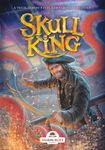
Uh and there's other advanced modes that you can play, but brilliant, brilliant as it is, as it currently stands. The next game is a game that you can play at the pub or with a big group of people. And so this comes in at my Christmas big group gathering or party game category of games that would I guess create that party vibe at your next friendship gathering or friends gathering. And this is a game that only recently discovered. It's based on an older game called Wizard. And this is a retheing of the game. And I really do like this new theme of the game and it's called Skull King. And Skull King is basically a trick taking game. And yes, there are a lot of trick- taking games out there, but there's a reason why this one might be the one that you want to add to your stocking this year. [snorts] So, Skull King plays over 10 rounds and plays up to eight players. And you can play on the most basic mode possible if you like. We can play it with all the included modular systems that increase the advanced nature of the game. And so in Skull King, basically it's a trick taking game where it spans over 10 rounds. On the first round, everyone gets one card. Second round everyone gets two cards. Third round everyone gets three cards. All the way up to the 10th round where everyone gets 10 cards.
You can see how this game kind of increases in its arc over the course of the game. And so before you resolve your tricks in each round, you've got to announce how many tricks you think you can win. And so you're going to bid on saying, "Oo, I'm going to win zero tricks. I'm going to win one trick." And so then after you everyone's done that, you resolve that particular round. And so the lead player will play a card. If it's the lead suit, everyone else has to follow that suit if they've got it. And if they don't have that suit, then they kind of just throw that card away and they either win or lose. And so at the end of the round, you're going to be scoring different amounts of points. And so if you play a 14 or you've got a card that has the number 14 on it, you get 10 points for each trick that you won. If you um if you have the trump 14, which is the black 14, so the black suit in this game always trumps all the other three colors, you get 20 points for each trick that you win. Uh if you play a mermaid card, you get 20 points for each one of the pirate that you captured. And if you have the skull king card, you get 40 points when you're cap if it's captured by a mermaid. And so all of these points are counted if they're in your possession. And what's going to happen throughout the game is that at the beginning, you're not going to score a lot of points, but then as the game progresses and more and more tricks are played across the 10 rounds, there's a big catchup mechanis mechanism. So, you
might lose big out in round seven or eight, but then round nine and round 10, you might actually turn that whole thing around because you get so many points in those final rounds. And that is the great element in this game is that you are always in it until the very end. And there's an interesting hierarchy to the way the tricks are played. So obviously if you play the highest number of like the treasure chest then you win the trick. Um provided that everyone has you know followed suit. But then there are cards like mermaid cards and mermaid cards defeat all numbered cards and the skull king. So the skull king is a special card that defeats all cards except mermaids. And then you've also got pirate cards that defeat all cards except the skull king. So there's an interesting hierarchy there. There's also these other minor cards called escape cards, which means that you just automatically lose and you basically run away from the trick battle. And so that kind of guarantees that, you know, if you've beded lower and you've already reached your threshold, you might save that card for one of your later tricks to ensure that you don't get tipped over the edge. Because if you do go over the edge in terms of not meeting your bid quota above or below, you're going to lose a certain amount of points, which can be quite brutal and quite devastating if you've over bidded or under bidded. The last game on my Christmas list is what I like to call the surprise stocking stuffer game. And this is only a game I just came across by going to this uh local game store and I saw it on there and I was like, "Ooh,
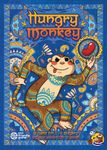
this art looks intriguing." In fact, I had seen it before once on Amazon, but I was like, "Ooh, maybe this is a game I need to see in person before I consider getting it." But when I saw the box cover, I was like, "Ooh, this might be my jam." It is a card shedding game called Hungry Monkey. Yes, look at the psychedelic nature of this art. Isn't it brilliant? Uh, basically this is a game where you're trying to get rid of all the cards from your hand and the four cards that are placed up in face down in front of you. And so this game is basically a way of if you've ever played Uno, that's basically a card cheating game where the person who wins the person who gets rid of everything. And so some of the cards have particular effects. And so what you're going to do is you can on your turn play a card or you can play multiples of the same card into the animal discard pile. Then if the cards that you play have a particular effect, you can then resolve those effects. If on the top of the discard pile you place um four identical or you create four identical animals of the same, you don't get to trigger an effect and then you remove the discard pile from play. At the end of the turn, you draw three cards and you continue. Now, as soon as you've gotten rid of all the cards from your hand, you also got four faceown secret cards that are secret to you as well that you're going to try and get rid of.
And these kind of add that little extra element to the game where you're like, oo, you don't know what cards are going to be under there. So, you don't really know how easy it will be to remove them. So, by flipping over the cards in front of you, you've got to contend with how you're going to get rid of them as well. And in this game, you can only play a card into the animal pile if it is higher or the same value as the one that's face up there. So, for example, if there's a 10 and you play a two, you can't play two on top of the 10. You'll have to keep the two in your hand and save it for later. And maybe later on, you'll be able to play multiple twos to get rid of it when the discard pile is refreshed. So, some of the different actions uh in the game, you've got the ant, which is a value of one, which is the smallest number in the game, but it is always going. However, the ant card does come with a caveat, and that is if you play your ant card on the animal pile, you have to take all the animal cards in that pile except for your ants.
But you still get to play it. So, you get to get rid of this one, but as a consequence, you need to take other cards back. If you play an ant on top of another ant, you don't actually have to do that. So, if someone already has paved that way for you, then that's going to allow you to get rid of that one from your hand. A two will allow you to swap one of your face down cards with one in your hand, which will give you the access to that information. So, you can simply go, "Oh, I have like a, you know, an ant out in front of me. Um, now I've got to get rid of it." The snake card allows you to peek at a faceown card of any player. So, if someone's got like, you know, two face down cards, you're going to want to look underneath one of them to try and think, "Oh, I might increase the value so they can't play that face down card." Uh, the number seven mongoose card allows you to take an additional turn. Uh, so you've got all these really cool cards that have these cool effects on them. And then, uh, with the eight card, the next player has to play, um, a card that is the same or lower. If you play the number 11, king tiger card, uh you can discard all the cards from the animal pile and essentially kind of allow it to reset for the next player. So, this game has some interesting elements. And if you like games like uh Jungo, which is another card shedding game that's featured on my channel before, definitely check that. That's also another great stocking filler. Uh, this kind of is like jungo but a next level higher, especially with the abilities.
So, what did you think of those gift suggestions? What are some of the things that are on your list to gift to other people or even yourself? Please uh consider writing in the comment section below. Don't forget to like and subscribe to this video. And uh if you really want to help my channel grow, please consider buying me a coffee a month over my Patreon page. Uh, every contribution is deeply appreciated. I hope your uh Christmas and New Year's is a good one and I hope you get to play lots of board games. This is Danny signing out. I'll see you again soon. Goodbye.