Graeme's Top 100 Games of All Time: 20-11
Games in This Video
10 games are featured in this video — they unlock as you watch.







Transcript
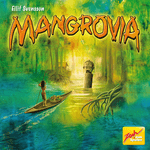
So, now I'm down to my last 20 games on this list. I think this section from 20 to 11 is probably the hardest one to do. These are all the games I love, but just fall outside the top 10. I almost felt bad to have them not appear as my top 10 games for me. But anyway, let's get right into it. Number 20 on my list is one from 2014, and it's called Mangrovia. Players take on the job of building huts and claiming sacred sites in lush tropical archipelago. I know that sounds pretty vague, but there really isn't much theme in this one. This is a worker placement game kind of. It's with a twist. The main mechanism in this one is that there's a row of actions. And when it's your turn, you're going to place your offering bowl between two separate action spaces. When all the players have placed their offering bowls, the boat is going to move, triggering off each action in order. Now, the neat thing is the action spaces are kind of in a line, each with an action on either side. The boat triggers one side of the actions in order, then turns around at the bottom of the line and makes its way back up the other side, triggering all those actions. Each player will perform two actions in a round. Now, the goal of the game is to be building huts and claiming area majorities, and the actions you're going to do kind of support that ultimate goal. Building requires getting the correct cards as each space has a cost and a terrain type. So, you must have enough value in your cards to pay for that spot. But only two of the four types of terrain can be built upon. And to change that, someone needs to take an action to actually do it. The row and column scoring comes down to majorities at the end of the game and is interesting, but the real standout of the game for me is that action selection. Balancing what actions you get on either side of the action space is kind of the whole fun of this. This is another one of those weekend uh night
games where this low overhead is quick to play, but it still has an interesting hook that keeps me coming back and why it's the number 20 on my list. Next is number 19, and this is The Voyages of Marco Polo. Players retast the legendary journey of Marco Polo using a character from history. Players start off in Venice and try to make their way along the Silk Road to hopefully reach Beijing. The main mechanism is dice placement. Each player will roll the dice at the beginning of the round. On your turn, you're going to place your die or dice, depending on the action, to take an action. The higher the value of the dice used for the action, the better the options that may be chosen, but also more money the player must spend if someone has already taken that action. Now, the actions are going to have you collecting resources or money, acquiring contracts, traveling across the map, or if you have a caravan in a city, using that city's special action. Now, the game is only five rounds long, but that dice action is so nerve-wracking, watching other players place out their dice and hoping you can still put out yours on the spot that you really need to. But what gets this so high on my list is actually the characters you get at the beginning of the game. Each one has some gamebreaking ability. When you hear everyone's ability, you realize just how strong they all sound, but they're all so balanced. Being able to set your dice to whatever your number you want? Yes, please. Don't pay for using an occupied spot. Sounds good to me. Start in Beijing with a trading post there. Sure, why not? It's worth points.
These special abilities takes a very good Euro game and makes it excellent. I think without the character abilities, the game might not have been on my list, but as they are, it comes in at number 19. Number 18 on my list is Circadian's First Light. Players are the leaders of the Circadian Alliance who have arrived on the planet Riy. I think they'll deploy researchers to gather resources, upgrade the research space, explore the planets, and collect gems. And one of the most important things is to respect the world and its hosts. To that end, players will need to have open negotiations with the hosts in hopes of gaining their favor. Now, the main mechanism here, like the last one, is dice placement to take actions. But this time, you have action spots on your own player board and some on a main board, which are shared. You're going to roll your dice kind of behind the screen and allocate them to your player board. And when you're ready, you reveal. Dice in your player board will either be assigned to the farms, those will stay on your board and generate resources, or they're going to be diced assorted uh assigned to the garages, which will be used to take actions on the shared main board. But the dice in the gardens will cost algae to send them out, plus the cost of the action you want to take.
Now, the game has a really enjoyable ramp up. At the beginning of the game, you're so worried about having enough dice or resources. the end of the game, you have piles, but you need piles to get those high value end of game scoring opportunities. The game has a really enjoyable arc. Your engine gets better and better as does the and as the game goes on, you see the end of the eighth round coming. You're just trying to eek out just a few more resources to get those last points. I always find this game just thoroughly satisfying. Win or lose, I feel like I've done something and why it's my number 18 game. Number 17 on my list is technically a group of games, but I'm putting on the original one on my list. This game is from 1982 and is called Empire Builder. Players take on the role of managing a railroad to create a railroad empire across North America by laying track, delivering goods, and managing money to fulfill contracts. Now, I do own several versions of this one that take place in different parts of the world, some in the fantasy world or even on Mars. They all operate the same way, but each one will have little rules changes for the setting. This group of games are called crayon rail games because as you build track on the board, you're actually drawing on it with the crayon of your color. Just never choose the yellow color. Unfortunately, the game looks terrible. The components are so subpar by today's standards. But if you want a pure route building with pickup and deliver, you can't do any better than these. The game is so simple. You start by building some track with your initial investment, and you have some contracts.
Each contract will have three options on it, like deliver oil to New York, deliver wheat to Dallas, or cotton to Winnipeg. Each option will have a price the city's willing to pay for those goods. Each city on the board will also produce one or two goods. So, your task is to build rail rate to get from point A to pick it up to point B to drop them off and get money. But each section of your track is going to cost money. You also have a slow train at the start. So, not only are you building track, you're also going to be moving your train along the track you've built to get from point A to point B. But the game is unforgiving. And this is one of the few games I own where there actually is an optional mercy rule. Now, you can get completely stuck in this game with no money and no contracts you can fulfill. You can spend your turn discarding and redrawing the uh contract cards, but the mercy rule gives that actually a player alone from the bank. You've seen from my list I have a few pick up and deliver games, but this is by far my favorite of them all. I really do wish they looked better and had better overall components, but the gameplay more than makes up for it, and that's why it's my number 17. 16 in on my list is Rajas of the Ganges. This one is set in 16th century India during the Mughal Empire, which was rich in culture, trade, and opportunity. Players are ambitious Rajas and Ronnies developing their provinces, trading goods, and gaining influence.
Now, it's interesting how games group up together as this is another dice and worker placement game. Each player has a several colorful dice. When you place a work on an action spot, most of them will require a certain color dye, maybe a certain number, or maybe a coin to take that action. You'll be building up your province by getting tiles, making sure the rows flow through them so you can connect the different sides of your board for basically bonuses. Once you've started to add markers to your board, you'll want to go to the market place on the main board to score them. You'll also be able to visit a palace to get one of the nobles or maybe you'll just sail down the river uh ganes. And to do all this, you need to have a good flow of money and dice coming in. But what I find so enjoy about this game is the scoring track for an odd reason, or should I say tracks. There is a fame track and a money track. These tracks move in opposite directions, but when someone passes, that triggers the end of the game. It sounds like a little thing, but it means the players are free to go at the game in different ways. You might have a great money engine going, but maybe I'm getting more fame and there are fewer fame spots on the scoring track, so I may be going faster than you. But at the end, it's just a good, solid, fun, and enjoyable game, and why it's my number 16. Number 15 on my list is another old Euro, which was out of print for a long time, but luckily, it's back. This is called Fenz. Players are master buildings in Renaissance Florence, aiming to construct towers of specific heights for the noble families.
Now, the main part of this game is drafting cards and bricks. Each turn, you choose a card from the display and get all the bricks on it. The card furthest to the left is free, but if you want any other card, you have to pay to skip over it. So, if I want the second card, you have to put a brick on the first card, etc. Some of these cards are negative events, but eventually they're going to have a whole bunch of useful bricks on them that someone will eventually pull the trigger and just take it and trigger the that negative event. You're going to be using these bricks to build your own towers. And towers must be of a single color. You have to pay to add bricks to your under construction towers. And if you don't build on a tower in a round, that's actually torn down. You have to start from scratch again. It's this main mechanism, the drafting of cards, and the bricks combo that I find so enjoyable. There are several cards on display, so you can always have options. And at some point, depending on the bricks in your card, they become more important than the card itself. It's a fun balancing act between brick colors, card effects, and tower stability, and why it's my number 15 on my list. Next in at number 14 is a game that came out just as I was getting into board games and it kind of opened up my mind. This is Race for the Galaxy. Players are in a futuristic galaxy filled with alien worlds, advanced tech, and interstellar trade. This is a pure card game where you're building up a tableau of cards in front of you which represent the planets you have developed. Each round, players will secretly select an action they want to do in the round. Explore, develop, settle, consume, and produce. Then the players reveal their selections. And here's why I love this game. If a phase is not picked, it's not done that round.
I spend most of my time in this game looking at the other players. I need to so explore and settle this round. And when I look at the other players and what they have in front of them and the cards left in their hands, I'm figuring out what I think they will probably do. You and I only have one card left, which means you'll explore. So, I don't have to pick that. I will just piggy back on your explore so I can maybe do a settle action. It also has another favorite of mine, multi-use cards. If there's a cost on the card to play it, you have to discards from your hand as payment. It really makes you choose which of the cards the most important to you and making sure you have enough cards to pay for the ones you want to play. This game was my number one game for a few years after it came out, but has slowly slipped down my ranking, but it still comes in at number 14. Number 13 is another Stefenfeld game, but still not the last one on my list. This is another card game that has multi-use cards, and it's called Bruge. Players are merchants in medieval Belgium who are competing against each other for influence, power, and status while still maintaining their relationships with those in power. At the beginning of each round, some dice are rolled and can bring some disaster to the city. On a player's turn, they're going to play a card from their hand.
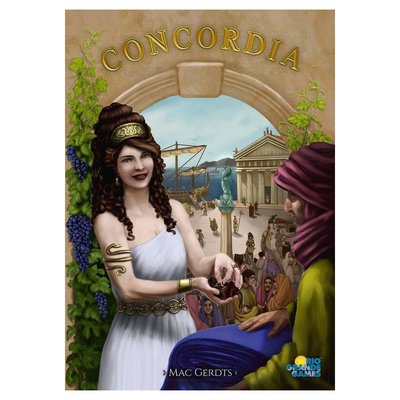
There are 165 player cards, each in one of five colors. When you play a card, it's going to be for one of five actions. Getting a worker, taking money, mitigate a threat, build a canal, build a house, or hire the character to pick on the card. When I said that this had multi-use cards, I wasn't kidding. The color of the cards will dictate several of these actions. Discard a yellow card to get a yellow worker or coins based on the current yellow die, mitigate a yellow threat, or build a yellow piece of the canal. And it's this choice of what to do with the card that is so enjoyable. You're trying to get synergies of your character cards, but they do have a cost to play them, and they need a place to to stay. So, which cards will be buildings and which card will be discarded for coins? And this is going to change as you get more cards. You have to be able to pivot as the situation changes. Spec specifically those threats lurking. This game is just so enjoyable and polished that it comes in at my number 13 on my list. Number 12 is another card game kind of. This is Concordia. Players are guiding their dynasty and sending out colonists into the realms of ancient Roman Empire. At the core of this game is card play. Each player starts the game with the same set of cards. To do an action, you play a card with that action. and you can't do that action again until you return those cards to your hand, which is another card you're going to be playing.
Throughout the game, you'll be buying new cards and adding them to your deck. Usually, they're stronger versions of your base cards, but the cards per game are kind of in random order. There are two main reasons why I love this game. First is the collection of resources. When you're collecting resources, you have two options. You can either select a region to produce their goods and flip its marker to the coin side and then each house from that region also produces the resource for that owning player or you can collect all the coins from the flipped over markers and turn them back to the resource side. This is such a fun mechanism and great for timing. The other reason why this game is on my list is for the end of game scoring. As you're purchasing more cards, the cards are aligned to certain Roman gods. At the end of the game, they're going to be multiplier. So, if you have the three Jupiter cards, each card will score the number of non-brick resources houses you have. The purchase of the extra cards starts you on your long-term goals. Or you can just p purchase cards that are already aligned to the current board state. If I have five colonists on the board, I'll only be buying more Mars cards, which will score my colonists. This game combines such fun mechanism into a truly elegant game that ends up being number 12 on my list. My number 11 game is the one that just missed my top 10, and it's a splatter game, and one that has slowly crept up my rankings over the last several years. This is Antiquity, a game set in Renaissance Italy, where players are managing their cities, exploring the landscape outside of their cities, and trying to appease the patron saint of their local cathedral. The map in this one is set up randomly, but each player takes a spot on for their home city, which is represented by their personal player board. The board is where you'll be building up your buildings. Each building is a different Tetris style piece, so fitting them on your puzzle board is kind of the fun. To activate a
building, you need to assign one of your workers to it. Soon you'll be needing to go further a field to start to collect more and different types of resources to keep your city going. Eventually, you will build your cathedral and dedicate it to a patron saint. And this is the fascinating part of the game. Until that time, you have no endgame goal. Depending on the patron saint you pick, that will determine your victory condition. Each patron saint will also give you a fairly powerful ability. Multiple players can have the same saint, or they could all be different. So, each player is working on different things to basically complete their game. Another feature for the game are famine and pollution. As your city grows, you're going to have more people coming to the city, and you may not have enough food to feed them all. So, some can die due to famine, which affects the space in your city. And as your city becomes more industrialized, it will start to make more pollution, which will affect the spaces kind of in the countryside around your your uh city. This is a deep game that forces you to deal with the long-term repercussions of your decision much earlier. There is no randomness in the game. Once the board is set up, all outcomes are on you and your decision.
The gameplay emerges from the interlocking systems in the game. Antiquity is slowly becoming one of my favorite Splatter games, but not my favorite, and it's still my number 11 on my list. So, there you have it. My number 20 through 11, the group that just missed the top 10. So, come back to see my final top 10 to see the ones that beat out this great group of games. So, until next time, thanks for watching.
Hey folks, thanks for joining us for that video. If you haven't yet, like the video, subscribe to the channel, and hey, make sure you check out what's happening where I'll cover an app on an iOS or a Switch device, and you can check it out along with me. Thanks very much. You've been watching the Dice Tower.