Beyond Solitaire Podcast 249: Sabrina Culyba on Transformational Games




Transcript
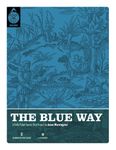
And now for a quick word from our sponsor. I am proud to announce that the Beyond Solitire podcast is sponsored by Central Michigan University's Center for Learning through Games and Simulations. Their upcoming project, Line by Line, will crowdfund on Backer Kit this October. And you can find my interview with the designer Tilac Vias in the show notes. CJS's most recent project, The Blue Way by Jason Morning Star, is also currently up for pre-order. It's an amazing RPG about oppression and identity, and you should check it out. For now, though, let's get on with the show. Hey gamers, this is Liz Davidson from Beyond Solitire and this week on the podcast of a very special guest. This is Sabrina Silva. Uh she's the founder of Ludo Liinal and she's a game designer and also an expert on transformational games. How you doing today Sabrina?
I'm doing wonderful. Thank you.
Um it's so lovely to have you on. Uh I initially decided to contact you because I got a look at the transformational framework uh which you wrote about transformational game development. So, uh, for people who don't know what a transformational game is, could you give us just the brief rundown?
Sure. So, a transformational game is a term to describe a game that is designed to do something more than entertain. So, to create a change in the player that extends beyond entertainment and beyond the the um experience of the game.
So, you talk about this, but why would you choose the term transformational game versus something like a serious game or an educational game? cuz they definitely share some space in terms of the kinds of games that you're referencing and and designing.
Yeah, I actually consider it more like an alternate term. A lot of like serious games and educational games, I would consider most of those transformational games. But serious and educational come with additional baggage that I think constricts and limits what we could think about as a transformational game. And so the term transformational is a term that uh actually I think Jesse Shell at Shell Games maybe started or at least uh agreed that at our studio where I was when I wrote that book um we agreed that that was a better term for the the kinds of games and like sort of the breadth of the types of things that we might work on. Uh, so according to the book, a transformational game is something that is going to change the player's behavior outside of the game, which when I first read it, I was like, "What? So, you're manipulating me?" Uh, but it's actually much brighter than that, broader than that. Um, so, um, you know, what kinds of uses can transformational games have for people who are sort of curious about this,
right? So, first of all, when you're on working on a transformational game project, your goal is to leave a lasting impact on on players, it doesn't necessarily mean that it will, and that's a big that's a big piece of this whole discipline of transformational games. Um, but it it really I think when people so for example, when people think about educational games, they think about, you know, learning uh skills and facts and similarly serious games are often about training. Um but a lot of transformational games can extend into empathy building or um uh identity reflection. Uh so things that have to do with more than just or beyond just uh facts or skills.
So what sparked your interest in working on these to the point where you wrote a whole book about it?
The book really came from working on projects. So, I I worked at at Shell Games, which I referenced as a studio here in Pittsburgh where I am for 13 years. And during that time, I worked on a number of projects that were transformational. And I guess I've kind of always been interested even before I had that vocabulary. In my grad school work, I did uh language learning games as one of my focuses. So uh at Shell it was a lot of client work and a a lot of times those clients a good number of those clients were NOS's or other uh missionbased clients organizations and they wanted to create a game they wanted to use the medium of games but they wanted to have some kind of impact on the world and on players and the book really came out of okay we did these projects and we start to see some of the same types of needs on the projects and realizing that we needed to extend our our idea of pre-production uh to include more than what we might do if it was simply quote air quotes simply an entertainment game.
Okay. So, this sounds like it's not too different from something like a professional war game where an outfit might be contracted to create a war game that represents like a pandemic or a conflict and people are like learning how how to navigate through the game, but this would be a video game instead. Is that kind of the
Yes. I at the time that I was first working on these projects, I had not done no tabletop design and was nowhere uh involved with the tabletop industry. That's actually a relatively recent move for me. Uh so it was very much this is all very much video game design.
That's really interesting. So when you are taking on projects to make a transformational game, um what I guess what types of missions or projects are good ground to make something like that? Um or is it just you know the client asks and you and you figure it out?
It's very much my experience is very much the client asks and you figure it out. I mean a lot of these organizations that we worked with had other interventions, right? They have trainings, they have classes, they have online materials, they have activities. Um, so they it's not like this is their first time trying to explain how to imbue or transfer into humans their whatever their mission or goal is. But games are usually a new were usually a new medium for them. So, you know that it wasn't always the case that clients came in with something that you could point to that they had had made previously that was related to achieving their mission. But sometimes that did happen and that's that's useful. That can be great to immediately start to answer some questions about like the content that needs to be into in the game for example. um or they might have some good ideas about the so one of the things about the framework is it introduces these questions to ask and part of the asking those questions is like if we want to change players well we need to understand how we expect them to come into the game and then how we want them to be different afterwards and so reflection on who your audience beyond you know the typical audience parameters like age and um uh maybe soio economic status or uh genre preferences that you might tap into a little bit when doing product design. There are other things that you
want to know, especially in relation to your topic or your theme or your area for your for your game. It's probably similar for for war games. You're you're you're doing some level of uh assessment of the starting context that players come in with.
Yeah. Yeah. Um I'm not a professional war game designer myself, but based on interviews I have done, yes, that would be accurate. Um, so what kind of special considerations go into designing a transformational game? I mean, I'm assuming it still has to be a game, otherwise it would just be a training. Um, but
I don't think that's the Well, I mean, some trainings can be games. Uh, so I think I think it it's really fuzzy when you start to talk about um the terminology precisely, but so some considerations that are uh that need to take place. How are people going to come to the game? So it is true that a lot of times for transformational games people are coming not of their own accord. They're coming because they're participating in a program. They're coming because they have some kind of um other life goal like they want to get accredited or they want to you know do something like be part of an organization. So they might need to engage in the game in order to achieve those goals. Um so that's that that can be true. If they're not coming because they're already on board with it with the mission, the goal, then how are you going to approach that? Because there are there are different strategies. You can, you know, do a head fake kind of thing as it sometimes people refer to it, which is you don't necessarily talk about what it is that you're actually talking about. Uh and then people either either you do like a reflection afterwards where you kind of reveal like this is actually about this or you leave it to people to do that digestion themselves and to construct the takeaway that that hopefully we you know sort of subconsciously leading them to make that that leap. Uh so th that's one thing.
Another and related to that is like the context in which they'll engage with the game. And in particular, when you're trying to create lasting change, play pattern matters. Uh, scope of the game matters. If you want to teach someone a first level, first year of a language, it's probably not going to happen in a 10-minute experience. So, you can kind of see that there's a correlation between the scope of your goals of the transformation and the scope of the game you're going to create. Uh, how do they need to come back repeatedly or is this something that they can get in one sitting? how long do they need to play? You know, those kinds of considerations which obviously you think about play pattern when you are working on a traditional game, video game or board game, but there are some I think you think a little deeper when you're talking about a transformational game.
Interesting. Um, in your branch of the field, do you think about something that is a game versus something that is gified? Like I noticed that in your um your book you mentioned Dolingo like as a language game. And
to what extent I'm I'm just genuinely curious like to what extent do you think that Dolingo is a game versus a set of exercises that is designed to just kind of make you feel like you've messed up if you miss a day?
I think it's a game. I think it's an experience that and you can obviously it's not the same kind of game as, you know, um Super Mario World, which is what I'm playing right now with my 5-year-old. It's a different kind of game, but it, you know, it creates uh it creates a space for for uh feedback and goal setting within an interactive experience. And I think that that that it definitely is leveraging a lot of the elements of game design. Uh, and I would I would call it a game in to the extent that we should talk about that we're talking about how games can be um used for entertainment or transformation. I think ex excluding it and claiming that it's not a game at all is is worse than including it and acknowledging that there are nuances and how it's different from a game. You know, this game over here is different from that game over there.
Honestly, I love an answer like that. I find definitions if you press them too hard just kind of start to fall apart. is always I mean
yes oh I mean everything
it's a model right language is a model
yes
and uh as I say actually this is in the intro of the of the book like all models are wrong but some models are useful and so I think as as long as the language model that you're using is useful for the conversation then you know then you know that that's the goal of of having a term like that
absolutely so you know you're thinking about how people are coming into these games and trying to building experience for that'll kind of meet them where they're at so they can engage with it. How do you measure outcomes of a transformational game?
Oh, it's such an interesting question. Uh it's it's really really challenging. Um so uh so first of all a lot of times you don't because it takes effort, development time and money and expertise to be able to assess not only the players themselves and that's input into assessing the efficacy of the the game, right? And a lot of projects don't have that funding or they don't um they don't prioritize it or uh they don't have the expertise. Um so it it's not it doesn't always happen um that you can do actual assessment and and actually in the book I talk about about this very question and there's sort of a model of different levels of assessment and you know like the very bottom is like it just feels like just feels good. It just feels like it's uh conveying the thing that you want and at the very top is like a rigorous study. Um but you can do things in between. You can base your choice, some of your design choices on other things and other mediums that have shown to be that have been studied and have shown efficacy. So you could say, well, we're doing we have this embodied in the game and it's been shown over here to do this. So we can make like a good faith assumption that as long as we are, you know, doing the best we can to to imbue that into our game that we'll have some of the same impacts. You can have experts review it um or other, you know, stakeholders who are involved in the transformational process like teachers, you know, giving their critique and evaluating does it does it seem like
yeah, it's doing a good job or it's it's got what's needed. Um you obviously can also talk to the players and observe the players, but often you don't have access to players after they finish the game. That's sort of the irony like you need to especially a video well I mean any same with board games. I mean, if if you're doing a protocrief follow-ups where you actually engage back with the guests who were part of the experience and find out, you know, are they maintaining their perspective shifts? Have they made any behavioral changes or those kinds of things. Um, but often you don't have that luxury and you they experience the game and you can track what they do in the game and you have no idea afterwards uh what h what actually happens. I think that's a big challenge and and funding is a challenge
in general for making video games and then to ask for funding
not just for development, not just for marketing but also for assessment. A lot of times projects don't have that.
That's tough. So, what was your what what what is I guess your relationship to video games outside of a working context where you're a person who's actually like worked on their design? Was it something you always liked and you just kind of wanted to keep doing it in a professional way or did you get into games as part of study later? I have I was I started in video games in terms of my my career, but I've always thought of myself as an experience designer. At the same time that I was uh I started my career in video games, I was also working at a robotics toy startup. So, you know, it's I just like designing experiences. Um, coming to games, what I love about games is that when players play a game, let's say a video game, they're pushing, they're sitting and they're pushing buttons and they're looking at a glowing box, but if you ask them what they did, they'll tell you that they went here and they did that and they talked to this person and they found this and they solved this riddle.
They they'll tell you this whole story experience that they had. And I love that. I love I love that like that experience take away from video games. And that's what drew me in. Um and I kind of came to it over my came to the desire to do something like video games over my undergrad experience where I was working in in and I was learning programming. I was doing computer science and then yeah I and I I went to grad school at the Carnegie Melon Entertainment Technology Center and was like yes this is what I want to do experience design and a lot of that is video games and then went right into video games after I graduated.
Awesome. Okay so um you know you mentioned earlier that your your study is specifically focused on games about learning language. um what I so I'm a former Latin teacher. I'm just super curious like what did that entail and you know what how does it reflect on your own study of language throughout your life?
Yes, I've always loved the idea of learning language through games. And so I did several projects in my grad school work uh around learning Japanese through video games, through uh small interactive games, and also through like an an interactive kind of RPG style game where you're [clears throat] you're using voice recognition and commands and simple sentence structures to to do things in the world as you would, you know, do in real life, but with like a a fantasy uh component to it.
Oh, that's fascinating. So, are these games that you studied or games that you made?
That I these are the what I'm referring to was a a project that I worked on for a couple of semesters. It's a two-year program, the Entertainment Technology Center. And for three of those, so it's four semesters. For three of those semesters, you're doing a semester long project. And for a couple of those, I worked on a a language learning project.
That's really interesting. Um, so, uh, what I'm just like, what languages do you speak and how did you go about learning them?
Oh, well, fluently English. Um, I I know enough Japanese, although you know, this is my grad school time is over is like 20 years ago. So, uh, keep that in mind. Um, but I have studied Japanese quite a bit and French a little bit. A few years ago, I was I was really like picking up French. Um, but I don't use language on a daily basis other than English. Um, so I could get by if I needed to travel and I have I have done travel and and long stays, extended stays in Japan. But again, almost a lifetime ago now.
Fair. Yeah. I'm because dead languages are my thing like I completely relate in the sense that obviously the only language I'm like super fluent in is English. I can speak se in several languages badly. I can read a lot of languages. Okay. Y
and my spoken Latin was really great as a class teacher. So yeah, I mean use it or lose it, right? Um but I mean I guess what kind of theories of language learning like underpinned the games that you were working on? Like were people doing grammar practice or were they like using the language and it was meant to kind of create an atmosphere they could do that?
Right. So the the there were I worked on two projects. Um one was called uh if I I'm reaching back. One was called Pettochan and the idea was it was this little desktop pet. So we were doing some major technical things getting you like an invisible window with just a little 3D animated character and you would play little you would train you were training Pettochan and it was based on this you know research that um one way to teach people things is to have them teach things to somebody else including a virtual character. There was some research that showed that that was that was um effective and so that was kind of the guiding principle behind the approach of Pettochan. You had this cute little character. It said on the screen. It only spoke Japanese, but it didn't know very much. And you were teaching it words and it really we just got as far as, you know, colors and directions. So, you play little games with matching colors and directions uh and I can't remember very very simple straight up vocabulary, not really um constructing grammar or fussing with grammar at that point. So, think Tamagotchi on your desktop computer.
Cool. Um, and then the other project was called Kottoama. Is that or Kodama? I think it was called Kottoama. Uh, and you were you were a character walking around these little sphere worlds and you didn't know any of the language, but you could point at things and get collect the words and then use words together to to basically cast magic spells. So instead of opening a door, clicking a door to open it, you would sort of cast door and you would open the door or box, you'd collect words like door and box, things that were related to to things you do in a role playing game, right? You open just open doors and uh throw things or, you know, to attack. So very basic vocabulary pairing effectively a a noun and then in Japanese a particle and then a a a verb.
Cool. Honestly, it sounds it sounds like an actually useful instead of just plain fun version of like Chance of Sonar.
Oh, yeah. Yes. And and I I've obviously played Chance of Snar. I've always I definitely still am enthusiastic about any games that play with the idea of language. Um but yeah, it it was it is it's hard to it's a very it's a very it's it's such a weird skill, right? So I still I'm still at the age with my youngest kiddo that you know they're still developing senses of like basic words like even a little bit like they struggle with pronouns for example for some reason he calls everybody him he and and it does and it's and in one hand it's like oh why isn't he using the various pronouns in the other hand it's like nobody is teaching him this. We we all pick up our native languages just by being around people and absorbing it. It's crazy. It's such a challenging skill to learn. And yet at the same time, children are for the most part, we don't really teach children basic language and grammar. We let them absorb it. Uh so yeah, I just find language learning really fascinating. It doesn't mean that I'm particularly good at it myself, but it's always been an interest of mine.
Yeah. No, I get it. um in my classroom. Um one of the reason the the the last program I taught in before I went full-time into board games, um I loved it because we were doing uh comprehensible input style teaching, which is like basically underpinning that is the theory that students learn when you're not constantly correcting their grammar. Instead, you're giving them very understandable, clear messages that they can comprehend
in the target language, and then the more they understand and can interact, then they'll just pick it up. It's almost like, you know, in some ways my class was like a kindergarten, but everybody was in high school.
Yeah. No, I love that.
So, I'm always just very curious like how do how do how do people at other levels think that you should teach games and how do people in other I mean language and how do people in other fields think that you should teach language because
Yeah, exactly. Well, I think there's there's there's a lot of different approaches and different approaches work for different people possibly even in different languages or at different times of your life. And one of the things that I've always found really interesting is just learning about a language as the first tier of learning a language. Like just exposure to the types of sounds, the order of the grammar, the way that it intersects with um mannerisms
and and culture and those things those things are just so interesting and I think a little more accessible than you know being able to give a speech in another language or you know navigate a phone tree in another language confidently. Um, and those those are things that I've I think are perhaps undertalked about in language learning that sort of becoming familiar with that language's identity and being able to, you know, hear over hear someone and say, "Oh, yeah, that's they're speaking Japanese, they're speaking Korean, they're speaking uh Thai, and or I'm looking at something, I I know which language it is, and I kind of know some things about the people who speak that language culturally in its in its home geographic area."
Yeah. What's interesting about that is in your own language that you're fluent in. It's kind of like knowing how to drive a car, but I don't know how to actually fix my car.
Like I can't I can't pop the hood. I mean, obviously I know a lot more about grammar from having studied, right? But like most people who are operating a language know how to drive, but they don't know how to fix the car, if that makes sense.
Oh yeah, completely. And I think it that again that's sort of speaks to the difference between how we learn language and how we talk about like training on language to use that terminology to differentiate um you know like the like adjective word order in English and that's often used as an example of it just sounds it just doesn't sound right if you say it out of order but in any other language you have to you would have to learn that as some kind of list of rules and I honestly can't imagine I often think Thank goodness I learned English first. Thank goodness English is my native language because it's such a it's such a fussy language with so many exceptions and funny little places. I think, you know, a lot of languages have those kinds of nooks and crannies, but one thing about being it being my native language, I can see them all now. And just
thankfully don't have to learn it, just know it. Thank you.
Yeah, English I think English is extra freaky in terms of some of it. It's it's all it's very forgiving and flexible in terms of what people can understand,
but it's a hard language to speak in a way that is like grammatically perfect and
it's there's a there's an interesting kind of like twist in there. So, when you're doing a transformational game about language, like obviously the transformation is the person comes away able to use some language. um when you are doing a transformational game that's aimed at something that is less tangible like empathy or um I don't know like I guess you can make a transformational game of just anything like learning to share or you know how do you um you know in with language at least there are theories of language where you can kind of like build like okay well I think that we should introduce these words or like we should try you know you and me versus me and him or you know whatever But when you're trying to build something like empathy, how what do you turn to to try to scaffold that for somebody much less put that into a game? Yeah, I'm I'm not gonna so about doing specific I think I'm not an expert in in any of like individual area of focus and a lot of times when we work on transformational games we partner with
experts with people who study who have you know who work in the space or um or we and and we also leverage uh usually some kind of version of a thought leader in the space. So that could be a paper, it could be a book, it could be a person who who has written about like okay how do you how do you achieve that? We also look at other examples um that are out there that uh anecdotally or perhaps if you're lucky researched uh have shown to be effective in creating empathy and and and reference those. That's that's another thing that you can do if you're working on a transformational game is is look to other examples of where people have been successful in generating empathy and and part of what the question you want to ask like I'm saying empathy is is um kind of a broad statement but what is what does empathy look like? What is the actual um change in behavior or change in um opinion reported opinion or reported uh you could like assess
how they feel about certain policies you you know you and then and then there's the assessment then there's the assessment aspect like how do you
tell because empathy is internal but we can say that potentially you could look at like how do we measure empathy through maybe like a survey or observational an observational um experience and then you would in a perfect world you would get that beforehand and you'd have people experience the game and whatever that form factor is and then you would follow them up some period of time and see if you can show change. It's very rare that you have so much luxurious money and time and resources. Fair. Um, so this would be a true question, I think, for any media that's explicitly trying to change somebody's feelings or opinions. But I guess are there ethical questions and considerations that go into making a transformational game that's trying to actually transform how someone sees the world? I mean, I'm assuming that one could make a transformational game that like has an evil objective. thought that's what you were doing.
But like, you know, there are also like unintended consequences, especially if you're trying to change how somebody's interacting with other people or feeling about themselves or about the world. Um, you know, to what extent do those considerations enter uh designing a game that's supposed to like I guess change your heart, so to speak?
Yeah, I mean, I think I think those are definitely considerations for you if you're if you want to work on a transformational game to think about. I this is one of the reasons why I prefer not to do head fakes. I I prefer I prefer to do experiences where people are on board with um learning more about themselves or the world and and possibly uh you know opening themselves up to changing their opinion, changing their behavior, changing who they how they see themselves versus um we're making something and we're not talking at all about um about what it what it is. At the same time, I don't think that everything that impacts us. I mean, a lot of the media that we experience impacts us in in in lasting ways. And it would be exhaustive to, you know, do some sort of extensive version of a trigger warning where we talk about all the different ways that this book could possibly influence your thinking. um just so you know just so you're consenting to every every way that this you might learn something about the geography of this country and how to say grandma in this langu like you know we could we could take that to an extreme as well. So, I do think whenever you're making something, it's incumbent of you to sort of consider how you might be impacting the world with whatever it is you're producing, whether that's the environmental footprint or the emotional impact or how you're representing people that you may or may not have a right to
represent. So, I I think it's responsible to consider that in whatever you're making. This is just another piece of that.
Fair. So when you say a head fake, I would that be something like Brenda Romero's train would count as a head fake?
Uh [sighs] yes. I mean it definitely it relies on the head fake, but it very quick like the whole the whole experience involves the reveal. So it's not like you play train as much as anybody plays train. It's not like you would play train and then walk away not knowing what it was that you actually did. And so I think that's like so there's two there's like different categories you can sort of
reveal that oh this is an allegory or a metaphor in you know for something surprise um people could come in knowing it is an allegory or a metaphor or you could uh never tell them and then people are left to debate or perhaps not know. Um yeah so I think I think there's different levels. So basically like a head fake like the ones that you're talking about would be a game that was meant to transform someone but you never told them or made it clear what might happen at all and like to them they just played a game and then you're measuring what it did to them. Not to stress and strain our definition of game um by by pulling in evil things, but I would I would I would like point to social media and a lot of dark patterns that are available to you know create addiction effectively um in and manipulate people for purchasing or behavior um engagement.
uh those can be I think there there are times when that those are patterns are inappropriate to use even if your goal is to get them to behave or engage in something that I don't know you think is good for the world like something some kind of climate change is real or uh all human beings deserve dignity I still feel like maybe you don't want to leverage those dark patterns um but I think you can see them at very heavily engaged in our society right now when you look at like social media for example or gambling. Gambling is another great place where you can see patterns that are that are meant to like manipulate people and not and not tell them and and the result is quite negative.
I got you. Okay. So basically like the means do not justify the ends in transformational gaming. I mean your mileage may vary but I don't think the means justify the ends like you know and and I think people have different opinions about what is what is too far. So, I I'm not trying to be prescriptive about don't, you know, don't use um notifications or other, you know, elements that are in other places, but I I do think you want to know like and part of the framework's goal is that you knowingly walk in to your design decisions. So, one of the reasons why I developed the framework, I mean, we we didn't really have anything like this when we were working on these projects, but we were obviously we're all video game designers and video game developers. And so, we're evaluating and play testing um and using best practices for entertainment and you know, but we're also working with clients who have these goals around transformation. And so when you're running a play test and the players have a great time and they know what to do.
Okay. Well, what about the what about the other half of your what what about the measure of success that isn't that they had a good time and they that it worked? You know, there's in entertainment you got the appeal and the engagement and the usability. Like do they want to play? Do they like enjoy playing? Like do they stay like engaged and immersed in the game? And then can they like can they do it? Is it is it usable? But then with transformational, we have this these other goals related to how do they how are they different afterwards and and was is that successful? And so the framework really came out of realizing that we need to have some conversations much earlier in the process and then continuing through the process and ideally we have them with the whole team and with our clients and our experts, you know, our our other stakeholders and answer some questions about that can inform our theory about why is this in the game? Why are we doing this in the game? Why are we making these decisions? And that's that's just design, right? Design is asking questions about your constraints and embracing them and then and then proposing solutions. That's that's what design is. And the framework is I made it as a tool for for myself and for my teams that I worked with to be able to ask questions that would help us create those constraints and and create those answers for our theory of of change and impact and game design.
This is fascinating. So, I want to kind of talk want to bridge into the next stage of your career. So, you no longer work on video games because you've made a jump into board games. Uh, what what caused this leap of faith into the analog world? Uh, it wasn't specifically meant to be a jump necessarily really. I had been at Shell Games for a long time. Um, Shell was a great place to be at a long time because the studio traditionally worked on so many different types of projects really not just like video game sort of stereotypical video game but theme park attractions and virtual reality and you know mobile experiences and things that kind of borderline on you know apps or so like physical things that had physical components installations. So really different projects and different platforms is a great place to um not get bored. But eventually I decided I wanted to see what else I would do if it was just me if I wasn't working on client projects and you know what's the next 10 years like? So I made the difficult decision to walk away from a studio. I I love the studio. I love the people at the studio. It's a great place to work. Uh, and then just yeah, take a leap of faith, cross the road without knowing what was on the other side. And I did a little consulting for a while and then through a series of serendipitous events, I actually got a little grant to work on a family weight
board game. That game eventually became Datoms, which was the first game that I decided to publish. And that was a little bit of an experiment. I didn't know if I would like board game publishing. It turns out I do. So, I've published another game and and an expansion for it and I at the moment plan to continue to do that.
That's fantastic. So, why did you decide to name your company Ludo Liinal?
Well, Ludo for play and Liinal for in between. So, Lud Liinal is like play in the space between. And I I felt like first of all, I wanted something that I would like to look at every day and and say and think about that would like inspire me because I'm the one who's going to have to say the name the most and look at it the most and put it on everything. So, I really just liked Little Liinal and I liked that it offered sort of the space to grow into anything that would, you know, definitely be play related, but I didn't know for sure. And I still don't know like where all it would it will go. So the name kind of opens itself up to that. And it's a good a good reminder for me to yeah be be open to ambiguity and um shifts and playfulness. Yeah,
definitely. Uh so when you are deciding what board games to make um are there specific sorts of like themes or mechanisms or maybe liinal kinds of spaces that are attracting you to making that design?
Yes. Uh so the two games that I've made so far are maybe they feel different. One is one is a competitive with a strong solo that's datoms and it's like ages eight plus but it's definitely more anchored towards adult players. And the the second one is called Odino and it's a co-op family game and that's specifically designed with the idea that younger players could play alongside older players. And I really do I mean cooperative board games really really fascinate me especially when it comes to adults playing with with kids. And I became interested in them unsurprisingly when I had my first kiddo. Uh and that was the first board game [clears throat] that I published actually was not I I didn't publish it. We my partner and I designed a game called well we called it treasure hunt. It ended up being published by [clears throat] Peacebook Kingdom as Yahar Hunt and it's a cooperative kids game family game. Um, yeah. I So that's very liinal, right?
It's it's like it's kind of Odino is is a fun light strategy game for adults, but like it it play it pulls in kids as young as five and lets them play like at the same place and, you know, play on the in the same session with older players. And I I love that. And I love how interesting cooperative games are, but yet they're so new. So here you know board games and card games are very old and here we are as you know really uncovering new spaces within the medium and that's how I think of cooperative games and and how they've exploded over the past 10 years just like it's just very interesting to be in. So yeah, I definitely cooperative games will continue to be something that I I work on. And then for for Datoms, oh man, that game went through such a journey. I mean, it was motivated by the grant that I got uh and then really became wrapped up in this incredible um realworld uh art pastime, scientific practice of making microscopic mosaics out of algae.
Oh, which again like Yeah, talk about liinal. It's such an intersection of human curiosity, art for art's sake, science, um, beauty of nature there. It's just an amazing it's it's been an amazing theme to work on for a board game. So, I like I like that. I would like to do other games that kind of have that the sort of they reveal something interesting about the real world. Yeah, one thing I also enjoyed, you know, you're interested in co-op and you also flagged the DIT times as a strong solo mode. Um, do you consider solo gaming something that is also a little bit I mean we've had solitire systems for some time, but I feel like since maybe the late 80s, there's been like a lot more action.
Yeah. And it's it's becoming so much more mainstream now and so much more than I mean, I think I guess I think a little bit like game books, like even um Choose Your Own Adventure, sort of like solo games, but I don't think as a similar to co-ops, when I was growing up playing board games, I would not have I don't think I would have ever identified solo as like a a thing that I could play. just like co-ops like there didn't you couldn't go out and buy a co-op and you couldn't to for me like going to Toys R Us or something you couldn't go out and buy
a solo game really. So um besid besides a video game but the idea that you could have a physical game and it could somehow be a solo game experience I feel like is relatively new at least to me and seemingly like in the the the general marketplace.
Yeah. Um, yeah, I think and I and I think we're seeing lots of interesting exploration and different different types of approaches to solo play and what does it mean to create a solo? I think you had a recent um conversation where you guys were talking about oh who was it that was speaking about the solo
factory. Yes. Yes.
Yeah. So interesting like the these different like frameworks and and approaches to what does it mean to create a solo of of a game experience? Yes. Uh, well, I'm always happy to find more solo co-op people. What was your first What was your first co-op? Just out of curiosity.
It might have been Pandemic.
A classic. A modern classic, but a classic nonetheless.
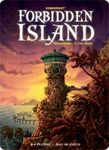
Yeah. Well, and now I play I played all the Pandemic Legacies. Um, so great. Um, Forbidden Island probably came along shortly after Pandemic, probably because Matt Leok, uh, just like following the design. Um, yeah, I think Pandemic for sure was the first, uh, co-op that I played, I engaged with repeatedly.
Yeah, that's really interesting. You know, um, I told the story elsewhere, but, for me, the first one was just I was playing a ton of Magic the Gathering and it was too expensive. Uh, and so I picked up the Lord of the Rings living card game because I wanted to do deck construction without having to crack a pack and it was hard to find people to play with because people want to play Magic. So I realized because the game is cooperative, you can also play it by yourself.
Mhm.
And so that opened up an entire world of gaming for me that I had not thought about at all until that point.
Yeah. And it's it's it's right it's right it's always been there. It's right there. And yet it feels so new.
Yes. Um and I'm, you know, things like Automoactory in the last um you know, several years have really, I think, changed the scene even more. Like what does bot design look like? Um you know, the earlier solo modes for like GMT games, like you know, historical war game type things can be very charty. Like if this then that, if this then that um what's the game, what's the board state, then it'll do this. And so like you have to really know the game super well in order to play it solo which like makes it harder to hop in.
Um those simpler faster modes are fascinating and like do they do they introduce like somebody who knows things about computer programming because I really don't. And so I wonder if they if solo modes and co-op AI things like look different to you because you have a programming background. I think everything in life looks different to you if you have a I really think like I think computer science is a fundamental skill that we teach everybody because it just it gives you a different perspective just like drawing gives you a different perspective like you think about lighting and shading and shape differently when you draw and you think about like um hierarchy and process and uh condition if you know and status differently if you learn to program and I think so yeah so I don't know if it's I don't I only have my perspective. It's like trying to say if I if we see colors the same. Uh but I I do think that the way I evaluate games a lot of times is heavily influenced by my background in computer science and software.
That's super interesting. Um if you can say what are you working on now for for Lud Limit? Are you like a one project at a time person? Do you have a bunch of things in motion?
Always have a lot of prototypes and ideas. Always have a lot of bad prototypes, you know, like games that aren't ready. Um, that's that's how I would describe them is like, oh, they're interesting, but I wouldn't I wouldn't publish it yet. Um, and so I don't have a date for my next game, but it most likely the next thing will be one of our in progress co-ops. That's awesome. Um, so, uh, we could go on talking about programming and all these things forever. However, uh, what I want to know is a couple of softy questions. So, uh, the first one is, what is a game that you've played recently that brought you some joy?
Oh, so many. Uh, let's see. I'll throw it out to actually a solo game that I played recently, uh, called One for Sorrow. Have you heard of this game?
You know what? I have heard that title, but I've not played it. What is it about?
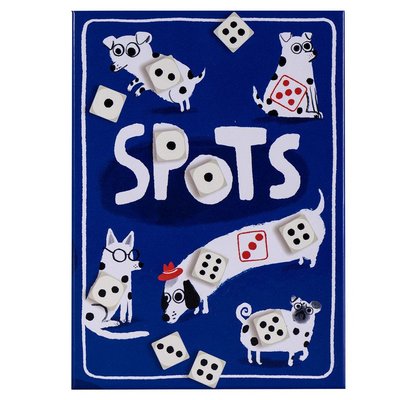
It's an inhand solo where it's based on, you know, the rhyme, one for sorrow, two for joy. Yeah, the magpie rhyme. So, it's based on that rhyme and you're ordering your cards and there's a spectre of sorrows that's chasing you down and you have to complete the ordering before uh before the spectre destroys these trees in your hand. That's like a very quick summary. Uh and I'd never played an inhand solo game before. It's a very small one. You can take it with you everywhere. So, I just had a really good time playing with that. I loved the art and the I have a I have a little affection for games based on like folklore rhymes. So I I thought that was a really cool uh theme for the game. So I I personally enjoyed that. I think as a in group settings like I'll also mention spots. I've played that recently with a couple times with friends and family and that game's just so much fun just on point designwise.
And now that I'm a publisher, I'm also always looking at product design and I think the product design is so fabulous in that game.
Oh man, spots is so cute.
Yeah.
Uh I think the custom Dyson spots really do it for me.
Oh, it's like every attention to detail, those little one spots, the slightly offkilter spots on like the four it. They're so so good.
Yes.
Love it. And like I know it costs extra to make a custom die mold and they could have just done a normal d6, but I think it would really detract from that game actually.
Yes, I I do think I mean you can obviously play the game with regular dice, but why would you want to?
Yeah, definitely not. Um, and then if people want to follow you or track your work online, where do you like to be found? I mostly post on Instagram for my company Little Liinal and I'm also on Blue Sky both little Liinal and Sabrina C. Uh those are the two main places where I I show up. Uh my website is little liimiinal.com.
Excellent. Uh Sabrina, thank you so much for taking the time to come on and talk to us about transformational games and also I guess the the transformations your gaming career has taken.
Thank you for having me. Oh, and if people are interested in transformational framework, uh, transformationalframework.com or littleliminal.com, I actually offer a PDF for free if if you just want to take a look at the the framework. Um, I just wanted to make something that would help other people working on these kinds of games.
Absolutely. And I will make sure that it gets into the show notes below. Uh, all right. Out there, you find me anywhere online as Beyond Solitire. Uh, and as usual, thank you so much for uh, watching. Please like, subscribe, comment, ask questions, and most of all, happy gaming.