Let's Talk Board Games #37 - Splito, 3 Chapters, Prey, Rainbow & Penguin Party!
Games in This Video
5 games are featured in this video — they unlock as you watch.

Transcript
Hi everyone, my name is Money and I'm Naveen from Before You Play and welcome to another episode of Let's Talk Board Games where we talk about a few games that we've been playing and how we feel about them. Now, clearly we are not in our usual space and that is because we are still traveling for a few more days. Yeah, we are currently in Japan right now. So, we wanted to talk about five of the games that we brought along with us on this trip. Some of these play more than two players and we'll talk about those when they come up. Yes, we had the sort of unique opportunity to be able to actually play uh games with more than two, with up to six players actually. And so we figured it was a perfect time to get some of these games played and see how they play, I guess. But first, this episode is kindly sponsored by the board game Buzzin Picnic, which is likely coming to Kickstarter later on in July. Yes, Buzz & Picnic is a charming, family-friendly game for two to six players ages seven and up that is all about playing cards in order to guide friendly insects while swatting away the annoying ones. In Buzz and Picnic, players take turns playing cards and guiding friendly insects to insect hotels while keeping your food safe from annoying bugs. Slap the annoying ones with a trusty slipper card and earn points, or plant flowers to lure friendly insects away from your opponent's fields. The game itself is beautifully illustrated and designed with sustainability in mind. And the base game only contains mild takeback mechanisms that are suitable for younger audiences. Although for more experienced gamers, the game will also include an expansion that includes some additional twists. Now again, this game will be launching on Kickstarter in July later this year. So if you want more information, please follow the link in
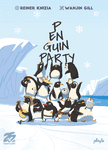
the description down below. And thank you so much to Board Game Buzz and Picnic for sponsoring this video. Okay, thank you so much for that. Now, we are traveling abroad and we have five games that we're going to be talking about. Just keep in mind that all five of these were sent by the respective publishers, right? All right. Shall we get into the first one? Okay. Okay. The first game that we brought with us is a game called Penguin Party. So, these are all going to be small box games because of course they had to we had to be able to fit them in. You don't want to lug them here and then lug them back. So, none of them are going to be big box heavy euros or anything like that. Um, now Penguin Party is a game that was designed by RER Kitia. I don't actually know when this game came out. I think it came out a long time ago, probably several years ago, like in the 2014s era or something. Uh, this particular copy is published by 25th Century Games, but I believe there are other publishers who publish published this in the past, including Plate, which is actually a uh publishing company that was present at the Tokyo game market. Yeah, I'm not sure if they're a Japanese uh publisher, but from Korea, I've definitely seen this in local board game shops while here in Japan. This game is everywhere. It's in board game shops. It's in cafes. So, I think this is a well-known game here in Japan. And for anybody who's ever played it before, this game plays two to six players. And what you're basically trying to do is you are building up a shared pyramid of penguins who are quite literally having a party. Like there are different suits and each suit uh showcases penguins doing some sort of partying activity. They're just having they're socializing. They're socializing. Now, the important thing is
each suit is a different color, and each player is going to have a hand of cards, and we're basically going to be alternating. So, in a two-player game, we're just going back and forth playing cards to this pyramid. The first couple of cards have to be played to the bottom row of the pyramid. And depending on the number of players, there's a maximum number of cards that can be on that bottom row. Yeah, I think in a uh in a two-player game, it's seven at the bottom max. Seven. the next level onwards, the rule is that the card you play has to match the color of one of the two penguins below it. Yeah. So, if I have a green and a blue at the bottom of the of the pyramid, the only thing that can go up into the pyramid is either a green or a blue. Yes. And that is pretty much the whole game. You basically keep on taking turns until you cannot play any more penguin cards. And uh at the end of the round, you're going to score negative points in rhineria fashion for each leftover card that you have in your hand. And you play a certain number of rounds. And basically whoever has the most points wins. That is the simplicity of Penguin Party. Also in Rhiner Kitia fashion because he typically tends to design games with a simple rule set. Yep. Um in a two-player game it was very much back and forth headto-head. I imagine in higher player counts there would be it would be a little bit more complicated with people deciding which colors go on that base level. Yeah. Although we uh were hanging out with a group of six of us, uh we did not get this one played at the highest player count. We only played it at two.
a couple of times only at two. Yeah. And so, uh, you really like when you get the cards in your hand, you really have to kind of math out and kind of plan like, okay, if I if I'm stuck with just this one green and there's no green like level, this card is going to be just a dead card in my hand. So, you have to figure out like, okay, I need to have this foundational base so that I can then level this up so I'm not stuck with now this card that can't actually go somewhere. Yes. And then your opponent can kind of tell that like, oh, she's playing a lot of blues. So maybe she's setting herself up to have an easy path of the blue all the way up. It's interesting. It's very simple. It's very cute. You know, you can play this with anybody who knows their colors. Good for kids. I would say you can play this with with kids. And uh it really is all about planning your route. Like you get your hand of cards at the start of the round and you're thinking, okay, how many of these are going to be bases? is like which are going to be the important colors that I'm going to be planning for and when am I going to cut my opponent off because what what is the likelihood of they of them having certain colors and which ones am I going to end there's a little bit of card counting I think there's like seven of each color and then blue is the only color that has I think eight if you can start seeing that like oh a lot of purple are in play I have the last purple here most likely then you can kind of say okay I I can secure this right so two players it really is just all about riding the other player out, right? So, it becomes surprisingly tactical for such a simple game. How do you feel about it in the end? Very light, very simple. Um, it is an okay game. It is one of those ones that I would I wouldn't say no to it. Yeah. Uh,
but it's not one that um I would jump for joy for. It's very quick. So, very simple, very quick. One of those that, you know, we just I would consider this to be like a filler type, which nephew and niece, I would love to play this with them. Very simple. There's no numbers on the card. So, you know, mostly in card games like you have suit and number. Sometimes like a seven-year-old is just not going to put it together, right? Or six-year-old's going to put it together. This one is just color. Does it match? Yes. Go. Okay. So, the negative points part might be a little bit confusing. So, just make them positive points and say whoever has the lowest score wins. Yeah. Yeah. Exactly. So, that's essentially it. Um I'm in the same boat as Naveen. This one was okay, but I think we're not necessarily the target audience for it. I would definitely love to play it. It served its purpose. You know, you have a a light filler that you just want to get something in, socialize, and then be done with it. Yes. And that is Penguin Party. All right. Next up, we have a couple of very small box games. They come to us from All Play, and they are Rainbow and Prey. Now, these two are a part of All Play's Tiny Box series. Uh there was a few titles that were released at Gen Con last year. It was these two. Were they released then?
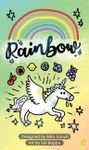
Definitely at Gen Con is when we got these. Uh that's where when we're giving them as review copies. It was these two. a game called uh Fairy and Panda and Panda Panda Panda. Panda Panda. Both of which we I think we've talked about on the channel in the past. Both of which we enjoyed. And these are the other two. These are the other two. These ones play uh three and up. So, this is like the moment we knew we were going to meet up with some friends. So, we said we're going to force these games on them. They kindly obliged. There was no forcing. So, let's go ahead and talk about Rainbow first. So, Rainbow is if Well, if you're not familiar with the Tiny Box series, these are very quick playing games, like 10 minutes typically. 10 15 minutes and they they're typically very simple in structure in mechanism and they highlight a different sort of kind of mechanism and I believe these are games that all play brought over from Asia. Yes, they typically have uh Asian or Japanese designers and I believe all of the games that we've played so far have the same illustrator as well who is the illustrator on Nana. Uh really cute. If you see anything really cute like this most likely Syepu did the art. Now, Rainbow is a take on card shedding, right? Hand shedding, which is basically playing combinations from your hand in order to uh shed all of your cards first. Uh Rainbow plays three to six players. So, we were able to play this at the full six. Um and it says seven and up. Now, I think the box is a bit washed out. So, let's just replace them with their thumbnail images to make it easier for you to see. Rainbow is designed by uh Mito Suzuki, and of course, they're all published by All Play. And basically the the reason why
it's called rainbows is because all the illustrations on the cards are rainbows. The cards are numbered one through six. And at the start of the round, each player will have a hand of cards. And you want to be the first player to shed your entire hand thematically. So you want to get rid of it. Collect the pot of gold. Ah, I didn't catch that in the teach. There's no pot of gold in the game. It's just in the theme in the rule book. Now the way that the game works is you'll have a hand of cards depending on the number of players and uh each player is basically going to play one hand. The rule book says you're playing one trick, but this is not a trick- taking game. You're basically just going for one round before you score points. And the way that that works is starting with the first player and going clockwise, you're either going to play a single card, a set, which is uh a certain number of cards of the same number. Yeah. It could be like two twos, three threes, something like that. Or a run. And a run is a sequence of numbers. Yeah. Like a three, four, five. Yes. And it does not matter the number of cards you play. All that matters is what type of hand you're playing. Now, you can always just play a single card, but as soon as one player around the table chooses to play either a set or a run, then now everybody else for the rest of that round must play that same type. Yeah. So, if Mon'nique was the start player and she put out two twos, I could only play uh other sets.
So, I could play maybe three threes or three twos or something like that. Or you can always play one individual card. Yes, a single card is always an option, but you just cannot play the other type of So, I would not be able to do a run, which is like a 1 2 3 four. Yeah. And the opposite is true. As soon as a player decides to do a run, then people cannot play uh sets. And that is basically the key mechanic of the game. I guess once one round has gone where everybody has played one hand, then whoever played the largest hand. So, it's going to be that is when the number of cards matter because you do technically do want to play more cards in a hand setting game, but you're basically going to go in order from whoever played the largest hand to the smallest hand, collecting cards from the center of the table, and those are going to be your points at the end of the game. At the start of the game, it's just a certain number of cards that start face up, but uh from the second round onwards, all the cards that you played as hands now become the scoring points. And from then on, you can have uh pairs of cards that you're earning, which of course can score you more points. And as soon as two or more players have gone completely out, meaning they've completely shed their hand, then the the game ends. So, it is a very quick game. Uh definitely a card shutter, not a trick- taking game. No, there's no tricks to be had here. And so, what are your thoughts? Yeah, this one was uh pretty light. Um after the rules were taught I was like okay I don't really quite understand the the way the scoring worked but then it was very simple uh once you actually see it in action. So the cards that you are
playing become the scoring for the next hand. Yes. Uh so they can kind of like tear up. So there is a little bit of trying to strategize like okay I want these two fives in there so that on the next goound I could really play this nice run so I can get the pairing of the two fives to score 10 points. But there's a lot of other people. You don't know what's in their hands cuz if they out play you, I guess with their hand, then they're going to get first dibs on that scoring for the next round. So, to be clear, the cards in the middle, they go into your scoring pile. They don't go back into your hand to be able to play out. So, you do have to plan out your hand properly. Um, I do agree it is I mean, all these games are simple. All of the games in the the Tiny Box series are meant to be simple. They're meant to be quick. But what I like about them besides the art is they typically have some sort of like twist on that one mechanic. Um I especially really like Panda Panda Fairy for such a such a simple that's a push your luck silly game. Yeah, that one was actually pretty entertaining because of the way that the scoring worked and the the gestures and such. This one was a bit too I think simple. It was it was pretty simple. Um you know after we played it, it wasn't like we were like okay run it back you know it was like okay what what else do we have to play? some games like that one. This one I think we all felt like now I think that is also the highlight of the design is the fact that you can play them with younger players and I think this one you can especially play with younger players. It's very visually appealing and it's all rainbow.
It's all it's very very beautiful but there just wasn't that like extra pinch of salt I guess that really gets you you going right. Yeah, we played this at the full six. Um, and I think afterwards we had like a mini discussion with everybody around and I think we felt that maybe at four or five would be would be probably the better count. Yeah, there's just not a whole lot of control and um I think that's true for a lot of games that you play at the maximum six player count. You sort of lose that control and you gain a little bit more chaos and I think that was especially true with this one. So that was Rainbow. Yes. Now the other one is a game called Prey. Uh, if Rainbow was a take on hand shedding, this is a take on trick taking. It's truly a trick taking game. And the catch with this game, by the way, it plays three to four players. Three or four players. We played it at four. And this one takes a little about uh 20 minutes. So, it is a little bit longer than the typical tiny box games, but the twist in Prey is all of the cards are doublesided, meaning you can rotate them. One side is the prey side, the other side is the predator side. So, if you're familiar with a game called Scout, uh it has the deck is kind of constructed in that way where one side is is one number and one value and one side is the other value. Um but unlike Scout, you will not be flipping it over at the beginning of the game. Yes. At your own free will, you will not. And these are technically animal cards, by the way. They're animal predators or prey. And uh there are 12 cards, I believe, in four different suits. Now, at the start of each round, all players have their own two dice that you're going to roll. And this is going to
determine the number of tricks you are trying to win. Yes. So you're going to have two values obviously because you're rolling two dice. So if you rolled a five and a two, you're either going to win or you're either going to try to win exactly two tricks or exactly five tricks. You do not sum them. You do not subtract. Yes. Now the thing that's neat is if you roll a six, you also have the option to either win six tricks or zero. Yes. So now you basically have three options going into the round. As for the gameplay itself, it is standard trick taking. Uh, so this is kind of a nice one if you are not familiar with trick- taking games or you want to sort of introduce people to trick- takingaking. This is sort of perfect for that. Yeah, this is a must follow trick- taking game. Must follow. Very typical trick taking. Um, we're not going to go into how trick is played right now, but this is a mustfollow game in the sense that you play a card of a certain suit and everybody has to play the same suit if they have it in their hand. So, if Monique was a starting player, she played a seven green. I And I have a green in my hand, I must play green.
Yes. And the thing is the first six tricks of the round are considered predator tricks. So we are all required to play our cards on the predator side which I believe is the darker side. And then uh tricks 7 through 12 basically the last half of the round. You flip your hand over flip your entire hand over and you play them on the prey side. So there is a bit of planning. There's a lot of planning actually that goes into how you're going to play your hand out. Um other than that it is a standard trick game in the sense that whoever plays the highest value in that suit wins the trick. But there is no trap. So that is why it is fairly simple in that regard. The twist is the whole predator prey thing. Yeah, the twist is the the halfway you flipping over. Um you can see what the value is of your cards. So there's a hand management aspect to it. Um because sometimes, you know, if you know you're trying to short suit yourself in something or you want just like the really high value of a certain color when it flips because you know, okay, I need to win three tricks and about halfway through you're like, I haven't won any tricks. Mhm. Okay, good.
But I'm going to hold back these really valuable cards for when the actual flip happens so I can actually play them so I can try to accumulate some of these tricks so that you can score your values. Um, that is kind of the the quirk to it is just the rolling of the two dice to determine what your trick uh count is going to be as well as how are you going to manage your hand when the switch actually happens. And it's very simple. If at the end of the 12 tricks you met your bid or it's not even a bid, you met your goal, one of the two goals that you have, then you score one point and it's just the first player to two points. Yeah. So minimum you're going to play two full rounds of this game because if if I win the first and the second round, game over. So you can have several winners. You can have several winners technically. Yeah. But it's interesting in its simplicity because a lot of trick taking games that require you to decide your how many tricks you're going to win. It requires you to decide that. So in this game, you're just dealt a hand of cards and you make it happen. You have to make it happen.
So you roll the dice and it's like, well, I don't have a choice. I'm going for either this number or this number. and you make it happen with the cards that you have. Yeah. But there's some there's some control in that because of the predator prey. Yeah. Because some of your cards might have a low value at the beginning in the in the predator phase, but you can see that it has a higher value in the prey section. So, you're just trying to basically somewhat card count like, hey, a lot of greens have been played. So, even if I have control, like am I going to be able to use this green effectively or am I going to have to dump it unfortunately when it's not, you know, when it's not uh when I'm not the one leading. So, um, the thing that you might have that question is if you roll doubles, uh, you just reroll until you have two, uh, different numbers. You'll always have at least two options for the the number of tricks that you have to win. Um, other than that, like I was mentioning, it is very simple.
Definitely a trick- game. And I I really enjoyed it. Yeah, we both like trick taking games. Uh we always like to find what is that quirk cuz that is what makes trick taking games uh so kind of uh elusive or like u what's a word like the you know like whenever you're like hearing about a new one like what allure allure the allure of trick scratch the elusive simple mechanism but there are so many games in the genre what can they just tweak and dial in to make this particular game different to make it this unique game. Yeah. So, this this particular one I actually enjoyed. Um, and so now we've actually played all four of these tiny box games. Yes, there's another set. There's another set, but this is the one that came out last year, 2024. So, I think I could rank them right now. Oo, I think Panda Panda is my favorite of the four. Okay. Uh, followed by probably Prey. Okay. Then Fairy is very silly.
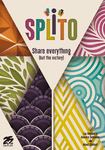
Fairy is very, very silly. So that that one I'm still going to put it as the third one. And then I think rainbow would be my last my number of four. Do you have an opinion on this one? This is sudden. I didn't talk about this. I would say probably the same, but I would invert fairy and rainbow just because fairy So fairy is actually a funny game, but it's very situational. It's not really something that we would bring out that often. Whereas I would bring out I had to caveat fairy. Yeah. It's just one of those like I would bring it like to a hu not a restaurant. Maybe if you're in line for something. I don't know. I don't know. I feel like it's a line at Disneyland. It's a very silly one. But there you go. In general, I really enjoy the Tiny Box series. Uh because they're so accessible, they're so quick, and they're so cute. Got to love the size of these boxes. They're meant to just be brought anywhere so that you have a game to play. I love that. I love that for us. I love that for us. Oh, and I didn't I didn't mention uh Prey is designed by Tou I Tou. And of course, art by Saku as well. Yep. Okay. Next up, we have a game that plays the most amount of players out of the five games ever. It is Splitto. Not ever, but uh this one plays in 15. Wait, Splitto. Share everything but the victory. Yes. So, this one plays three to eight players, so that's why we really wanted to play it with at least six. Um, share everything but the victory. That is correct. There's only going to be one winner at the end of this game. This is a simple drafting game, but it is kind of in the vein of between two cities or uh between two castles of Mat Lwig. Yeah. Uh where you're going to have a teammate to your
left and a teammate to your right, and you are going to try to make it so that you score the most amount of points after you multiply your scores with your teammate on your left and your right. Yes. Now, the game comes with a deck of cards, and that is what you're going to be drafting. Of course, the cards are going to be either a value with a color, which is its suit, or an objective card, which is going to be something like have the most twos or have at least one of each of these three suits amongst in between you two. At the start of the round, you're also going to have two face up objectives specifically, and those are going to be public objectives that everybody is competing for. Yeah. So, if uh if Mon'nique is sitting right here, she's my teammate here. And if I have another player here, let's say Michael is sitting here, he's my teammate over here. Now, Michael will have somebody sitting next to him. So, not only are we teammates, but he is now teammates with that person. Everybody sits in a circle and you have neighbors to your left and right, basically. And the way that the game works is you have a hand of 13 cards and each round you'll just play a card or each turn, I guess, you'll you'll uh draft a card and you'll either play it to your left or to your right pairing. And at the same time, everybody will reveal. And then you pass the cards to your left. And you basically keep on doing this until all the cards have been drafted. Now again, the cards are either values or objectives. So you're building objectives in order to score for each pairing. And you're also trying to play cards to meet these objectives. So the risk here is like the communication aspect. There are some strict communication rules. And so maybe if I play an objective that's like don't have
any ones in there between the two of you and Naveen just happens to play a one at the same time. We're not going to score for that. Yeah. You're supposed to play simultaneously, right? So it's not in the spirit of the game, you don't want Mo'Nique to play and then I hold back for a second and then make my decision. Oh, I won't play that one there. So it's like everybody ready? 1 2 3 go. And then you kind of play the card into the into the either the left or the right. Sometimes you can find
yourself that objective for you. Sometimes you're also in a position where it's like none of these are really going towards either of my objectives. There are no objectives in my hand so I'm just going to play a card from it and don't dump it between my two neighbors. Well, because sometimes uh there's there's uh you can see what other people around the table are trying to go for. It's like, oh, they need to have the most amount of force. Well, I'm holding a four. This four is useless on the left and on the right as of right now. Let's just dump this here on the right so that it doesn't get passed along so that person can go pick it up again. There's a hate drafting aspect here. I think the public goals are are very nice because you always have at least those two things that you're trying to work towards. It's like have the most uh blue uh suited cards on on your sites. You're like, well, we can compete for that or they can compete for that. So, you know, your your public objectives are a very very solid part of the game. But that is it. That is the simplicity of SLTO. You're just doing that over and over again. It's a nice large group activity and it's kind of funny because of the way that you're trying to communicate. You need to be you need to work together with both of your neighbors, which is something that I failed at because I don't know what it was. I think I didn't realize that your score is the multiply the you add up the points for your left, add up the points for your right, and you multiply them together. So, you can't just like ditch one of your neighbors. Yeah. Cuz I think in like the between two castles of Mad King Ludwig, that one is like the person who just scored overall the highest in one of their partners. Yeah. So, so actually in those games it's you take the lower of your two scores. Whoever has the highest score amongst their lower scores wins. So that that
mechanism kind of forces you to kind of bring it up like this. This one is just like just ramp them up and multiply multiply them together. So sorry Amy, I think I think I messed that up. But uh yeah, in general, I really enjoyed it. I think it's a nice fun game to sort of It's a nice quick game that you can play with a lot of people and there's no downtime because it's all simultaneous play. Yep. So yeah, I like drafting games. Um this one I I think was actually really really good. Uh this one I think we will be keeping for a while. Nine loves drafting games. I I really like drafting games and I also like that mechanism of that uh cooperative sharing kind of experience on the left and the right. I really like that about between two cities and castles of mad can look good. Those games are a little bit more gamey, you know. This one is a bit more social and and a lot more simple. Like the objectives are simple. The cards are just values and colors. This is a good con game. You know, when you're when you're there, you got eight people, seven people, and you're like, "Okay, before we split up, we all want to hang out a little bit. Let's play this game, and then we can split up and play something else." We always reference conventions, but really, this is a good family game. So, if you're at like a dinner or something, you have a lot of people there. It's just great that it plays so many people and it plays really well because the the higher the number of players doesn't really impact what's happening to you. Yep. Um it only impacts the the scoring objectives that require you to have the most of something. But really the more the marrier, honestly. The only thing is uh if if you're playing with new players and new gamers, just teach them good drafting etiquette. Oh yeah. Take a card, wait, pass your deck. Don't look at that deck. Don't move on until
everyone plays. Yeah. Then simultaneously pick up the deck, do it again. That way you don't find yourself in a situation where somebody has played too little cards or too many cards. Yeah. And to be clear, we did not have that situation. No, you know, everybody that we played with was gamers. Everybody is wellversed in in drafting games. So there you go. That is Splitto. And by the way, this was published by not only 25th Century Games, but designed by Luke Ramond as well as Ramarik Golier. Golier. Luke Raond of Sky Team. Sky Team fame. Yeah. All right. The last game that we're going to be talking about today is one that we have been anticipating for a long time. Yeah, we actually had this on a on a top 10 list of anticipated games. I can't remember what list I think it was like an Essen list whenever it was initially announced. Yeah. And it is a game called three chapters. I hope you can see this.
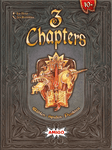
Yeah, a little faded but it's called three chapters. Choose, play, and score. Because in this game there are three chapters which are basically three phases of the game in which you choose cards, you play them and then you score them. Now this is a game that is designed by Joe Hut and published by Amigo. We always are interested in Amigo games. Yes. Amigo comes out with a lot of a lot of card games. Lot of card games. Clever little ones. Games that are in this size box for some reason. Always ranked like 6.0 on BG. But then you actually play them and you're like what the heck? It's not a 6.0. Yeah. No, a lot of them are really A lot of them are actually really good. Yeah. So, three chapters is a game that can be played up to six players. We have played this at four and several times at two and it plays in about 30 minutes, which is about right. Um, the first time I saw this or the first time we got it in, I felt like it was a bit daunting to get into because I wasn't sure what kind of a game chapters it was going to be. And so, that's why I opted out of playing it at the full six because I thought, "Oh man, is this going to be a heavy game?
Like, there are three chapters in it." It's not. Not at all. It is a It's fairly light but very clever. Now, the way that this game works is the game comes with a deck of cards and they are all sort of it's a play on like fairy tale. That's why it's like that public domain characters. Yeah, there's like Alice and Wonderland in there. There's Pinocchio might be in there. Three little bears. All these beautifully illustrated characters. The card art I think is fantastic. Very nice. And at the start of the game, each player is dealt a hand of eight cards. Now, just so you know, the two-player variant works a little bit differently. So, we're just going to be referring to the higher player count uh version of the game. Sure. And so, it's called three chapters because the first chapter you are choosing cards in a draft. So, you're going to be choosing cards that you're basically going to be using for the rest of the game in order to play in a sort of trick-taking fashion in chapter 2 and then eventually score as a sort of comboing of your tableau in chapter 3. And so, this works as a typical typical drafting game just like Split. So the game arc is you draft, you play, and then you score. Yes. Now, in the first chapter, you're only drafting seven cards. So, one card is going to be tucked away. Tucked away. And but you will be able to see, you know, a lot of the cards that are in play because it is a draft where you have to rotate hands.
Yep. And then uh after everybody's drafted their hand of seven cards, you move into the second chapter, which is kind of trick- takingaking, but not really. So, basically, you're going to be uh playing out hands in which one player starts by playing a card from their hand and then everybody else plays a card from their hand, and whoever plays the highest valued card of that hand technically wins and gains a a star. Yes. Because in this game, there are three different types of tokens that are worth points. The star is worth two points, the heart is worth one point, and then the green gem is like half a point. It's a it's a two to one. At the end of the game when you go to scoring, for every gem you have, you score. For every two gems, you score one point. No half points. Yes, that's true. Because any leftover that would be worth a half are not actually counted as scores.
Yeah. And so, uh, it's technically kind of trick- taking, but there's no suits. Every single card is unique. And in the top left corner, there is I think they're numbered one to 60. So, just whoever played the highest value is the one that won that trick or that particular hand. Yes. And gains. Sorry. Now, the thing about this game that makes it interesting is each card has its own sort of scoring criteria at the bottom, and that will either affect the second chapter where we're playing cards, or the third chapter, which is where you're going to be scoring points. So, a lot of the fairy tale characters want to be paired with their other uh similar fairy tale characters like Council and Gretle, or like uh Pinocchio wants to make sure that Jeppetto is in play. Yes. So, if you're in the draft phase and you're like, "Oh, I see Pinocchio and Jeppetto are here." Well, then maybe I can take Pinocchio and then somebody will play Japetto and then when we go into actually playing cards, Yes.
once that person, whoever eventually drafted uh Jeppetto, plays Japetto, then I'll play my Pinocchio card and then I'll get some sort of benefit. Yes. So, as long as their counterpart, whichever other character they're looking for, is played in the same hand during chapter 2, then you get whatever benefit it says on there. On the other hand, if you chose to take both Pinocchio and Jeppetto, so that's not going to be possible. Chapter three, when you go to scorecards, you'll still gain that benefit because they're both a part of your tableau. Yeah. So, all the cards that you play, um, technically, uh, you're going to keep them in front of you. So, when the person who won the trick gets their star, it's not like they collect all four cards into their pile. Right. Right. Right. So at the very end of the game, you'll lay out all seven cards and then whatever is true for your particular hand that you drafted in the first phase or in chapter one could then come into effect also.
Yeah, it's a little tricky to explain and to probably understand just from hearing it. It's one of those games that you kind of have to play to really fully grasp. But that was I thought that that that was the interesting part. The fact that you're really just drafting all the cards that you're scoring and playing in the first in the first chapter. You're not going to be gaining any more cards in that. So it has kind of like a if you're familiar with fantasy realms like in that sense that like this card wants to feed into that card. So I want to make sure that that card's in play, but maybe in the drafting you're like, "Oh no, I've never seen that card. Maybe that card's not in play, but who knows, you know?" Yeah, somebody might have taken it. And there are some mean cards, you know, there are some cards that are like, "Nobody gets the hearts or scores for this for this hand during the second chapter." Some uh abilities only come to play in the second chapter. They you won't be able to activate them in the third chapter. And the higher the value, the fewer their abilities because it's easier for you to win and gain stars, which of course are going to gain you the most. This is a low scoring game.
Like it's a very low score. To reach 20 is really, really good. Yeah. So, yeah. So, you can be drafting like the 60 card, the 59, the 58, but you're basically reserving yourself to only scoring by winning tricks, which is two points per star. But other people might be scoring because they've done gems and hearts. Also scoring on some of these other combinations. So, right. because those cards that only that don't have any abilities, they're not going to score you additional points uh in chapter 3. You really need cards with abilities in order to milk those additional scoring criteria. And the other thing we didn't mention is each card has one or two uh suits attached to them. So they may be like, oh, I don't remember what they're they're called. They call them like the monster suit or like Yeah. Or like a crown. So like uh you know, when you play a card, it can say score one heart for every crown that's also in play. So you're like if you're going last and you see they played the queen, they played the another princess and this is the perfect time for me to play this cuz now I'm going to score three hearts which is three points. So that person might have won the whole trick by getting a star and getting two points. But by you playing that card that gets you crown points, uh then you got four points on that turn. So it's definitely worth it to lose that trick, right? But that's essentially the game now. Like we're mentioning after the second chapter, you go to the third chapter where you basically just score all of your cards again according to their abilities. So, in that third chapter, you're not going to be earning stars for winning any hands or anything. Um, but that's essentially it. Yeah. Uh, the person at the very end of the game who has the most amount of gems also gets an additional uh four points gems or something. Four gems or something like
that. There's no two points. Yeah. So, if you're hoarding gems, that's kind of a good thing. That's something you want to keep track of around the table is like, oh, Mon'nique is just one gem away from having the most. If I can just get two more gems, then I can get that extra bonus points at the end. Because even though gems score you the fewer amount of points, it still gets you that bonus at the very end of the game. I really, really, really, really like this game. I I love Fantasy Realms, you know. I'm one of those people who are in the Fantasy Realms boat, unlike somebody. I don't like Fantasy Realms personally, but I like this because of the trick taking aspect and the hand management aspect of this particular one. This game is really cool because of the three different facets. Um, I think you didn't like Fun Realms necessarily because you're just drafting, right? Are you drafting? Are you drafting Fantasy Realms? Yeah, I think so. Oh, yeah. Yeah. Yeah. It's just that it's just even though I like drafting games and like optimizing your hand, but Fantasy Realms, for some reason, it just falls flat for me. Yeah.
But this particular one, the fact that you are drafting the cards so that you can get them in play at the right time cuz you're actually playing the cards in this one. Um, you know, I like that that stress of like when is somebody going to play that Japetto card? I know it's in play. I know it's there. I don't want to play this card right now. They could have tossed it. Yeah, they could have tossed it or, you know, maybe they're they're doing something else with it. So, um I I really like the hand management aspect of this and the timing of it as well. Yeah, it's definitely all of its parts are greater than the one mechanism, right? It's not just drafting. It's not just like the the trick taking part. It's not just the comboing. It's all three, but done really really well. Yeah. And then timing is very important in the game. Timing is really important. It's also very fast. Um it played really well at four, I imagine. I I think I would like to play it at five. I think the more players the better cuz we've played it at two and it's okay at two. I would I would do it. I would play it at two.
There's a mechanism in in the two-player game just really quickly that where uh during the drafting phase, you're also constructing like these two dummy players. They're your ghost hands. The ghost hands. Yeah. Uh to get more cards in play because again, a lot of these cards synergize with the other ones. So if you're only playing, you know, a total of 16 cards of a deck of 60, you're not going to have synergies going on. So there's ways to kind of play that. It was not as fun as the four player experience. It tries to simulate a four-player game while each player making the decision of the other two players, but the thing is during the second chapter, you shuffle the the ghost hands and you flip them. So it's not like they're making the decision to play those cards at those times. And that's where the the le less enjoyment comes into play. Yeah. But I still like it. Yeah. I think five would be the right player count. Four to five is the right player count because uh there are those cards that say for every crown that's in play. So you want to have more people potentially playing those crowns in play when you have that one card that's like this is the time to play this thing, you know? Yeah. Yeah. Yeah.
But yeah, really really enjoyed it. Um this is definitely one that we're going to be keeping for a while. And the art was also phenomenal. I love the whole package of it. Small box, really quick play time, and it's just so much so much fun for for a short amount of time. Mhm. So anyway, that was three chapters. This is probably my favorite of all of the games that we brought with us. Your favorite? Uh I I'm torn between this one and Splitto five. I really did enjoy Splitto. Drafting. This one also drafting though. This thing has a a little bit of I I think maybe Splitto just slightly above three chapters. But if I was to pick the top two, it would definitely be these two. Nice. Mhm. Well, there you go. Those were the five games that we brought with us to play while traveling. Now, we did go to the Tokyo Game Market, so we're bringing home a lot more games than we brought with us. We'll be doing a wrap-up video.
Stay tuned for that. Uh, thank you again so much to the board game Buzz and Picnic for sponsoring this episode. And otherwise, please let us know what games you've been playing. We will be back in our usual studio very shortly. Soon. Yeah. And we will see you then. Thanks. Thanks. Bye.