I Played Six Party Board Games with Three Generations of My Family



Transcript
Hello everybody. Welcome to Doyle Tabled. My name is Shaggy and today I'm doing something a little bit different. I just got back from a family vacation, so I'm currently kind of behind on my filming. I try really hard to release something on the channel every week, so I thought I'd make a quick and easy video about some of the board games I played while on vacation. In particular, the party games that we played as a family. I normally don't get to talk about these kinds of games. Why not take advantage of the opportunity? Now, first a little bit of background. I went on vacation with my wife, my two boys, and my parents. I wanted to bring games that all six of us could play together. You'll often hear certain games described as easy enough anyone could play. Well, I was putting that to the ultimate test. Three generations, a pre-teen, a teenager, and my parents who have no interest in board games at all.
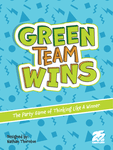
Crowds don't get much tougher than this. The first game we played was not Poop Apocalypse. That was just my little joke. I need a separate video to explain all my thoughts on Poop Apocalypse. Maybe even an entire series. No, no. The first game we played was Green Team Wins. On the box, it says this plays three to six players, but really you could play this with many, many more. In Green Team Wins, everyone is asked the same question, and you write down your answer in secret. It's often a multiplechoice question and your goal is to answer with the majority of people. These are kind of opinion questions and you're not even really stating your own opinion. You're just trying to guess which answer is going to be the most popular. And there's three different types of questions in the box.
So you have these uh dry erase boards and the first kind of question are these this or that questions and you just have two options. So like in this case it's table or booth or this one says frosting or cookie dough. And here is say something hilarious or say something inspirational. Of the three different types of questions, this was my least favorite. Just a little odd and not very interesting. The second type of questions worked a lot better and these were the best of three. So like in this case it's what is the deadliest natural phenomena? One hurricanes, two tornadoes, three earthquakes. These worked a lot better because you would get a you know many more different types of answers. People would argue that their answer is the best. Oftent times with the this or that everyone would sort of answer the same. With the best of three that definitely doesn't usually happen. Here's another one. Which color crayons do they make the most shades of?
Red, blue, or green? And here, what's the easiest job on a news team? Sports, traffic, or weather. The third type of question was by far my favorite. These were the fill in the blanks. So, you have something like this. Dog blank. And then everyone has to write in their own word. Or this one rain blank. Or this one blank day. First thing that comes to my mind is Green Day, but I probably would not write that because my kids have no idea who Green Day is. And that's what made these so interesting. You really had to try to think about, you know, who you're playing with. What might they think about? These were definitely the most fun and spurred on the most conversation and the most laughs. There's a bunch of cards in here, as you can see. And it worked really great for us because we could all just sit in the living room.
You know, you don't have to be around a table. Just give everyone a dry erase board and a pen and it works great for just sort of a casual play. Now, I will say we ignored the scoring system on this one and we just gave everyone you know one point if you were with the majority. The actual scoring system is a little bit more complicated where if you join with the majority, then you get to be on the green team. And if you score while on the green team, you score more points. But if you don't, then you go back to the orange team. And while you're on the orange team, you can't score points. So, you need to get back onto the green team. That was going to be way too complicated uh for our setting. And so, we just ditched that scoring and just made it super simple. And that's really something that you shouldn't be afraid to do. Most of these party games are basically activities anyway. And so, you know, a lot of times just getting rid of scoring altogether, it might make the game a lot more fun depending on your crowd. So, anyway, that's green team wins. This was a a hit. The next game we played was How Dare You. This is just a deck of cards.
It says it plays from one to 10 players, which is funny. I can't imagine playing this solo, but this is basically an incredibly simple trivia game. The way it works is you're going to pick one of these cards. The first player will just say a number between 1 and six, and that's the question that you're going to ask. So, let's say they say three, and the question is the number of chickens in the world in billions. You can see here at the top, all of these questions relate to birds. And that's how all the cards are. They all have a topic. And every question in this deck is going to be a number of some sort. So then the first player will just say a number. You know, maybe they say three billion. It'll then go to the next player and they either have to say a larger number or if they think the previous number was too high, then they can say, "How dare you?" You'll then turn the card over to see the answer, which I won't do now, so I won't spoil any of the cards. And whoever was wrong will take the card.
Who'sever wrong will score the silly goose points that are on the top. So in this one it'll be four ducks. But you know for the next one it might be five ducks or something like that. You'll do 10 rounds of this and at the end you'll count up all of your silly goose points and whoever has the most loses the game and everyone else wins. Yes, this is one of those rare games that I love that has the probably most hated mechanism of all time, which is one loser. There are very few one loser games. Now, I typically hate trivia games, but this one does it right. The best way to do trivia is to have questions that nobody knows the answer to. So, you're just giving your best educated guess. You're never going to feel stupid for not knowing something.
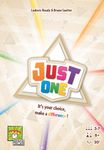
And these questions really worked because, you know, the adults were on the same level as the kids. You might have a vague idea of what you think is the right answer. And a lot of times we found that we were way off. That our instincts on a lot of these questions were just not even close. And that really made it entertaining and somewhat educational as well. I also like that each card had a topic and you could just see it right on top. So, if it was a topic that I didn't think the kids would, you know, know about, could just skip that card and go to the next one. And this one was by far the easiest to set up and play. Super simple. Could play it anywhere. Could play it in the car. Could play it on the plane, right at a restaurant. It's great for that. And there's a ton of questions in here. So, you're, you know, you're not going to really go through them. You're not going to remember the answers anyway if you go through it all. So, yeah, this one worked great. That is How dare you? The next game we played on vacation was just one, an absolute classic. Most of the games I brought were new or, you know, mostly new to me, but I did bring this one because I just know it's definitely going to work. I won't talk about this too much because you already know how Just One plays, I'm sure. But essentially the way it works is you're going to have one player who's trying to guess a mystery word that's on one of these cards. So they'll just say a number like one and then everyone else will know that they're trying to get This is a cooperative game. So they're
trying to get the guesser to say ladybug. And then in secret, everyone except for the guesser is going to use one of these plaques and they're going to write down a clue word in secret. And then once they've all written one, they'll show each other what they've written. And if anyone has written the same clue word, they have to erase it or not show it to the guesser. That's why it's called just one. You can only have each clue once. So what that does theoretically is it should make you pick a clue that's not too obvious. You really want to avoid matching with the other players. And then once you do that, the guesser gets to see the clues that made it. and then they try to guess the word and if you get it right then you get a point and you just go around the room each person taking a turn being the guesser and I like that because if someone doesn't want to be the guesser then you can just skip them right and they don't have to be the guesser you could have someone else be the guesser the next time that might be good for kids who don't want to necessarily be on stage because there is a little bit of pressure being the guesser this game always works fantastically well it's great classic party game just fun. Next up is Fun Facts. This is also a cooperative party game from the same publisher. And in many ways, this is almost like a part of a trilogy of games with just one So, Clover and this one. This one plays four
to eight players, and you're going to be answering questions about your own life. Let me show you what I mean. So, these games are always very well produced. And so, you have these little arrow things, and everyone's going to write their names on it. I didn't uh clean ours off very well, but everyone's going to have their names on one side, right? And then you're going to have a question like this one, which is very appropriate. How much do you enjoy making lists from 0 to 100?
So, in secret, everyone's going to write down their number. You know, be about an 85, I think. Then you're actually going to go around the table starting with, you know, the first player. They're going to put, you know, their arrow out and then you're just going to go around the table and the next person's going to decide, do they think theirs should be above or below, right? So, maybe they say it should be below. And then the next person's going to go, "Well, I think mine should be right in between." And then, "Oh, I think mine should be on top." And then I might go, "Oh, no. I I make lists all the time. I've got to be on top." And then whoever the first player was, they'll get one more chance to just move theirs, right? Because they they just put theirs out at the beginning. So, they might go, "No, no, no. You guys are wrong. I I hate making lists." You would then flip them over one at a time and, you know, see if you had gotten all the numbers correct. Like just one, this was a little fiddly in terms of making it work in the living room, having to, you know, play on the coffee table, have everyone come around and sort of place their marker where they think it should go. It wasn't quite as smooth as some of the other games, but not that big of a deal. I think I really, really enjoyed this one, except for some of these cards.
The questions on these cards were not all great. And so what I did before we played is I went through and I picked out which cards I think would work with the group. Questions like, you know, how much do you enjoy abstract art? You know, that can work. You know, how well would you survive a zombie apocalypse? That's a good one. But then there's things like this. In general, how many times per year do you go to the hair salon? Uh, that's not going to work. How interested are you in having a portrait of yourself in a museum? You know, some of those questions are going to work better or worse depending on your group. And then there's also questions, quite a few, that are kind of like this one where it says, "How many times have you gone skiing or snowboarding?" Well, I know how many times my family has gone skiing or snowboarding, right? Quite a few of these questions almost don't work if you know each other too well. You know, like what is your shoe size? Well, I know the shoe size of everyone in my family. So, I had to pick out a lot of cards is what I'm saying. And I would say about a third of these cards in this box actually worked for the situation.
Now, that was fine because, you know, there's lots of cards in here, but it means this game has sort of a lifespan in order to play with my family, unless we make up our own questions. That's maybe just a minor negative, but otherwise, it was quite enjoyable. We had a great time with it. That is fun facts.
Next up is Blob Party. Blob Party is another cooperative game. In many ways, it's almost like the cooperative version of Green Team Wins. The idea here is that everyone starts as their own little blob character. And in a very cute fashion, the game comes with uh this Play-Doh stuff where you can sort of form your own little blob. And there are even, let's see if I can find some, here we go, some googly eyes that you can put on your guy. And then everyone has their own, you know, board. They're going to have a category card and you have these stack of categories and then you have a bunch of word cards and whoever is the first player or the main player is going to take three of these cards and pick one of them based on the category. So maybe they would pick airplane and then everyone's going to write down, you know, a word or phrase or really anything on their board in secret that fits the category in the word. So they might write, you know, the Wright brothers or something. You'll then reveal and then
everyone who's written the same thing down is going to join a team. They're going to take their little blob characters and mush them together into one. And the goal is to have everyone become on the same team. So maybe a couple people wrote, you know, Wright brothers, maybe a couple people wrote uh the Spruce Goose or something. They'll form their own teams and then you'll go again except for every team is only going to submit one answer and then in order to win, you just have a certain number of rounds in order to have everyone join up and answer the same. This one is very dependent on which category and word combos you get. For my kids, history and airplane, you know, that wouldn't have worked very well, but you know, famous people, that also might not work extremely well. Sports would be a little bit better. TV, that would be a little better. TV airplane. Does anyone remember the uh sitcom Wings? That's probably what I would write.
So yeah, I like this one. I think you might have some games of it that don't really work, but you know, it would be like five minutes and you could just play again. And when it works, it's a lot of fun. So there you go. That's Blob Party. And last but not least is That Escalated Quickly. This is another fully cooperative party game that can go up to eight players. This is a lot like a co-op version of Wavelength. If you are familiar with that great party game, definitely check out Wavelength if you haven't. This has a similar idea. It works slightly differently. Okay. Well, that's an annoying
box. The way this works is you have these number cards going from 1 to 10. And you're gonna shuffle these up and pass one to each player. That's going to be secret. You're then gonna pick a question here. It might be like this one. I got an unexpected package delivered from a distant cousin. What is it? The lower number, number one, is going to be the least disappointing. And the number 10 is going to be the most disappointing. So each person is going to look at their number and try to think of something that would clue people in to what number that they have, right? What answer could they give that would help the other players determine what number they have? Right? So if I said the latest greatest board game, obviously that's a number one because that would be the least disappointing thing you could receive.
Anything that's not a board game, number 10, most disappointing. And so you just go around the room, each person giving some madeup answer to this question. And then whoever's the main player, they are responsible for trying to put everyone's cards in order from 1 to 10 based on their answers. And that way it shares a little bit with like fun facts. Only these things require a little bit of creativity and imagination because you're just coming up with them. Here's another one. Someone just gave me $1,000 in cash. Where should I put it? Number one would be the least secure place and number 10 would be the most secure place. Here, I'll grab a random number and see. So, if I just said something like I would just keep it, you know, stacked up outside of my house. Well, what number do I have? Yeah, clearly I have a number one. This works really, really well if you have people who are willing to, you know, be a little bit creative and play along with the silliness. And so this won't work for all groups, but we had a really good time with it. We It was really fun and it worked really well. I still think I like wavelength a little bit better, but this is certainly more compact and, you know, easy to play and it does have the benefit that everyone gets to participate and come up with these answers rather than just one player, which is how wavelength works.
So, yeah, I highly recommend this one. It is that escalated quickly. And there you have it. Six party games that I played on vacation with my kids, my wife, and my parents. three generations. And honestly, I would recommend all six of these. If you're ever in that situation and you just want like a fun activity that everyone can participate in and have a good time, all six of these worked great. I still think just one is my favorite of the bunch. It's a classic for a reason, but each one of these has, you know, some benefits and some drawbacks that might make it, you know, better or worse for your group. And there you go. So that is all for me. Until next time, thank you so much for watching and goodbye.