Top 7 Board Wargames | With Designer Volko Ruhnke | Part 2
Games in This Video
7 games are featured in this video — they unlock as you watch.



Transcript
Hi everybody, I'm Zil Blitz and welcome back to the continuation of our interview with award-winning designer Vocal Runi as he talks about his top seven war games that he likes to play. This video series is sponsored by Noble Knight Games fine purveyors of used and new board war games and other gaming supplies. They sell all across the world. If you are looking for some of the games that Voco mentions, they might have them. Links are down below in the video description. And if you do use those links to make a purchase, thanks very much in advance as it does help out the channel. If you missed the first part of the interview, I'll put a link in the top right corner. You can check that out. But let's jump right back into things with Vocal picking up with his number four favorite war game. Let's jump up to number four. Sure. Much more recent design. Uh so yeah, I'm a I'm a I have a great interest in um World War I trench warfare, the Battle of Verdon in particular. There are a number of games on the Battle of Verdon. I've always looked for one that uh that worked as I wanted to and and this is it. So, I don't have a lot of really new recent designs on my list of because I, you know, I I want them to, you know, pass the test of time. I want to know that I'm still playing them years later. This is probably the most recent. I have played this game so much. I don't know.
It came out a few years ago. I don't know. Again, this is one of those that I've played, you know, played obsessively. Um and it is uh a beautiful uh design Walter Vidowski. So f French design of Verdon. It is I guess a light war game. It's got it's cardisted I would say. Cards are very important. Uh the cards are used in very original ways. Um, there's a very clean, elegant combat system that conveys, I think, trench warfare, barges and assaults very well together with the cards. And I won't use up the time to explain how barrage cards and event cards and the uh, infantry assaults work together. But, for example, something that I find very evocative, how well you're you have to have an artillery barrage to do an infantry assault.
Okay. Absolutely. Necessary. And that's a barrage card. And how your barrage goes is what's variable. That's where you're rolling dice. It's a buckets of dice system for your barges. So you can, you know, however many shells and guns you've got, that's represented by your barrage cards in your hand and you're playing them and there's a lot lot of choices there. But then you roll a bucket of dice and you see how well your barrage did. Your infantry is already committed. And then depending on how your barrage does, your infantry assault is deterministically simply and deterministically resolved. Right? So what is that saying? That is if we if we boil down infantry assaults and trench warfare, it's about the artillery and the rest of the plan is locked in and your infantry is going to, you know, is going to walk over the enemy or is going to get massacred depending on how well your barges did against their dugouts.
that kind of thing conveyed very vividly and elegantly. So that's just like the heart of the combat system. But then the cards also bring in all the context of what's going on beyond Verdon in 1916 in the in the in World War I. So there's a lot of World War I flavor that is not just the um the the trench battles. Super fun. Um my uh I I play a lot with my sons. My younger son finds this game to be one of the most stressful, you know, because like worried like how's this barrage going to go ahead in a Yes. in a in a good way. He's an excellent player and he beats me all the time, but this is one where he's like, you know, he has to worry. Uh, and that tells you, which you should, you know, I mean, if you're if you're commanding troops at Verdon, you should be worried, you know, about how things are going to go. And and this game achieves that um in in spades. Um, can I ask you a question about that? I know I've seen your um prototype of Adraen and I looked at the map for this game for Dun. Is that is there some influence? Is there some crossover between There is your design there.
There is um um maybe not as much as you would think because I did work work for Dan mostly from you know original maps. Mhm. I mean there's, you know, there's a lot of data on on the battle of redone by now. So it's not one. Uh I double checked some things with with Walters map and actually Dan the original map was pointtooint. This is a kind of version now about because Dan so Dan reconnaissance at Verdun 1916 will be volume two in my recon series with GMT. Volume one is the coasters. So, Coast Watchers has certain mechanics that are the basis then for how should this work for a World War I trench battle in Dahan. Okay. So, they kind of got to know that. So, Coast Watchers is an intelligence network in the South Pacific. It's a network can you know basically across a chain of islands. So, it's a it's a pointto-oint map to show an intelligence network. Okay. So, Drahan started out as a pointto-oint map because I was porting coast watches, but a pointto-oint map doesn't make as much sense for a continuous dense land battle. Uh, I found uh an area map worked better. So I actually converted Draen to an area map which is the same this the same solution that Walter used for Steel Inferno because it just it really it makes sense
for a you know for again this is not a detailed it's not you know for hex encounter you want like distance and time and terrain to matter a lot. This isn't really about that in either case. There is some terrain in both but they're very basic. Um, it's really a matter of, you know, mass and in my case, we're talking reconnaissance and what you know and, you know, if you know where the enemy artillery or men are, you can hit them, right? It's it's it's really about the reconnaissance. So, we're focused on different things than would be would justify hex's a hex map. Yeah. Um, and it just was much cleaner and easier to do there. So, there's that kind of sort of general influence. Um, is there a tweet? Oh, sorry. Yeah. Oh, sure. So, so tweaks. Yeah. So, actually it's rather similar for Angola because we didn't talk about with Angola. I do actually play with a variant for Angola and I play with a variant for Steel and they're both just to adjust the play balance a touch. A touch. Okay. In Angola, the two of the factions are green and blue. The green and fighting against red and yellow. Yellow's a little bit weak. Green can become a kind of a steamroller in Angola. This is the um the the the faction that the CIA is supporting from Zire coming south. They can get and in these command cards in Angola there are blanks which you have to include but you don't get to do anything. It's like you know sand in the
gears of your command system. And everybody has these blanks except green. Green doesn't have to use any. Now, and I don't know why, but green ends up being a bit too energetic. So, fortunately, for whatever reason, MMP there's like a spare set of cards in there, and I took one of those cards. I just with a marker, I made it into a green blank, and I just, you know, forced the green player to have a blank, too. That creates a little bit of friction in their mechanics. And that slows them down just a little bit. There's other little things, but that's the that's the main one. Yellow being a little bit weak, I like to give them an extra brigade, an extra large unit marker, but that then you got to use a blank marker or something. It's a little more difficult. Anyway, Steel Inferno I think is is well balanced. The issue is the nature of the battle is there's a big German surprise attack and lunge in February and they take most of the territory that they took in that battle. they took in the first few days including the key fort Dal and fittingly in the game the Germans have to take Damal or the French are just going to start racking up points for that failure the way that the Germans took it had to do with the lack of French preparedness right in the beginning um Duma was barely defended um it's it's it can be hard to take on the moves and if you don't take in the first moves as the Germans in the game it becomes very hard to take. And the bottom line to that is an awful lot of the gameplay of the full
year's battle rests on how the first German assaults go. Okay, this which is loyal to the the setting, right, to the dynamics of battle, but you are relying on all the on dice rolls for barges, you know. So the Germans in the beginning in my view can benefit from a little help to settle that swinginess down a bit. And it's a very simp we and I've played this game a ton with lots of different people and we went through all kinds and we came up with all these little complicated little ways to do that. And one of my friends, his name's uh his name's Dan lives in Tokyo. He came up with this one ch this one very simple change that does it on its own. And that is there's an a very clever air superiority. So the reconnaissance aspect of Verdon. Yeah.
Air superiority tugofwar between the two sides. Whoever has air superiority, their artillery is much more effective. That's it. Makes sense. Makes sense. It starts at zero. Historically, the Germans launched in the beginning probably the what's considered at least by a couple authors I know the first integrated air offensive operation to take control of an airspace over a a battlefield and shut the enemy out. Right. Lot of innovation there operationally in German um air tactics that kicked off at the beginning and then the French brought in reinforcements very quickly. air reinforcements can be brought in very quickly and things evened out. In the game, you start at zero air purity. My adjustment is you start German plus one and that balances it all out. My adjustment for my friend Dan, but the one I use now. Yeah. And with that, what what the effect of that is is the German artillery is more sure there. It's less uncertain how well your barrage does because you have the aerial reconnaissance. Yeah. to guide which is also realistic. And that's it.
Perfect. It's always nice when they turn so simple like that. There's got to be a certain elegance to design where you kind of like say you can have these complicated systems and models and then all of a sudden it's the that that little simple thing that fixes it all. Absolutely. That's just it's always a beautiful moment for me in game design when I can like draw a line through text or kill a rule or something that I'm like ah good day. Yeah. And speaking of game design, that might be a segue for us to take a little bit of a break and it how about some upcoming projects for you, things that that you've been working on that are in the pipeline and uh I know you've got a lot going on, but maybe highlight a couple of those or Yeah, thanks. And you so we've talked about we mentioned some of them. So this is a an exciting and unique moment for me because uh I have actually two games that are both in art.
And so you know when you're you're in art it's you know you've you've been working with your prototype all this time. You've been testing it with folks. Uh you know twe tweaking it, developing it, tightening it, adjusting the bounds, checking things, checking the verbiage to make sure it's clear. all of that stuff and like you're starting to see it realized, right? And I love So that's exciting in itself, but I love working with artists because they because um artists who do board game art uh it's it's of course it's creative talent, but it's also technical and they're solving visual technical problems in cool ways, you know. So, I I I love um I love that that that collaboration between me as a game designer and a and the board game artist. And so, I've been working now with actually four different artists on two different projects. I've had a, you know, a great um um uh abundance of that particular joy. So, that's Hunt for Blackbeard with Fort Circle Games and Coast Watchers with GMT, both of which are in art. hunt for Blackbeard. Um, from a design development point of views of mature design, I stopped working on that a couple years back. I worked on it for a long long time, you know, it it was sad. I haven't, you know, changed the design or needed any further testing. But now Mark Mark Rodrigue, my um friend uh in Montreal, who in addition to being a professional um graphic artist, is also a war game
designer, bayonets and tomahawks. So that that's like Librim Kum wood. you get an artist who knows board games and they're even, you know, that much more effective, right? Um he knows the 18th century very well. He's 18th century um military reenactor is another of his um avocations and so he's been doing the art for Hunt for Blackbeard and that's just, you know, proceeding and proceeding. Um so, uh so that's pretty cool to see what that game will look like uh finally when it when it gets to the market. and it's looking, you know, better better and better. I think I think it's going to be very slick production. So that's Hunt for Blackbeard with Fort Circle Games, which I think we will be print ready in the sometime in the early spring. It's a bit ahead of Coast Watchers, but Coast Watchers also is proceeding. The two-player um game is quite thoroughly tested.
Haven't I mean look still I like to use every day I can before the thing goes to print to continue to look for you know because there'll be something after it's printed that's going to be you know I wish I would have fixed that right that's inevitable right so I'm trying to get as many of those things but I haven't found iteration yes absolutely abs only you know uh only published never finished um so uh so I haven't found anything really to to change in a while in the two pl um that is that is mechanical we can still clarify obviously tell oh this this word could be more clear than that word in the rule book or whatever We've been working on solitire. So, Coast Watchers has two separate solitire systems. It's an asymmetrical game. You've got the Coastwatchers intelligence network and the Japanese security forces hunting them. You know, that's they they've got different actions and different victory point sources and that kind of thing. So, that means you if you play the Allied solitary, you need a Japanese bot and if you play the Japanese solitary, you need an allied bot. And they are different.
So, we have two whole solitary systems. The Allied solitire is quite well worked out. Very little changing there. We're now intensively testing with the time remaining the Japanese solitire experience. Um and and and making some more substantial, you know, slightly deeper surgery. Uh substantial but selective, you know, it's like this one little part of this kind of action isn't working the way we want. That kind of thing. Um while we're while the art proceeds, right? So, and so there um we have a cover painting from um Matthew Wallhead who did the cover for Inferno. So, one of my favorite um box cover paintings of of any of of my games. So, he did the cover painting for Coast Watchers. Um Robert Albower, who did a lot of the art for Inferno um in the living campaign series, uh did um the game board um uh which I is beautiful. I mean, it's like it's like this aqua tropical sea that you could like just jump in like you're, you know, like a swimming pool or something. It's just very beautiful and evocative.
And and now um Wetton, who is an artist that if you know the game um Corsair uh Command, I think it's called um but another naval game. So, he's um doing some fantastic work. um unifying the package. So one thing is you get different artists doing different things and and and some things borrowed from my prototypes that also is in there and it's it can be a kind of a mash, right? So W is first of all stepping back and unifying everything working with the other two artists and he's now been doing the cards and I'm just you know in love with this card art for coast watchers. So eager for people to to see it. Um, and I know I've had a chance to play a prototype of Hunt for Blackbeard a couple times now. And to me, I'm really looking forward to digging into it deeply because it feels to me a game that you can play. As you play it more, you're going to learn more strategies and tactics and ideas. It's like one of those games that has just a lot of depth to be explored in that that narrative play that's going to come out of that too. And then for Coast Watchers, the combination. So, one of the things you you've got hidden information and solitaire and those two things I think oftent times are very contradictory. if you think about the history of historical conflict simulation. So this marriage of a highly hidden information you hidden information elements built into the game combined with those solitire modes that could be I'm really excited to see how that all plays out. Yeah. and the um you know the the trick or I guess
the technique that we can take advantage of if there's hidden information it's it's it's blocks or face down counters that are spread about right is we can spread those blocks or faceown counters about semi-randomly right if it's assets that your your your bot opponent owns you're putting those down and you're trying to reveal those and hunt those out, right? And that's true for either side. The Japanese do that with military buildups, which is their face down markers, and the coastwatchers do that with their coast watching stations, which is the standard blocks, right? And so then the difficulty only at that point comes in, how do we make that semi-random distribution of these hidden things that you're trying to find as the solitire player intelligent? Yeah. And how do we allow it to interact with you the way it would without revealing to you everything? Yeah. Or at least compensating the bot when a little more has to be revealed because as the player you're operating that system. So, um I've been working with so one of my um originally he joined as a play tester now um um a developer his name is Todd Quinn um in he's an Australian works in Canbor so he knows a lot of this Australian coast watching history very very well um he also has co-designed
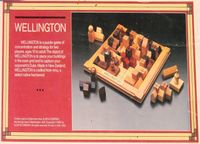
these um solitary systems with me and he he has come up with a number of great um solutions that that makes it work. So, I'm very curious to see um but this was I think easier for me than an Abyss because I have Right. Right. Yeah. for launching a new series. So, fantastic. Shall we jump up to uh number three on your list? Okay. Number three. So, again, honor to genres here. This is the card driven game. This is my favorite top classic CDG. If we think about CDGs in the we the people Hannibal Rome versus Carthage mold, Mark Mclofflin's Wellington. Now Mark is done a ton of design. He's very well known especially for I think the Napoleonic Wars which he did before Wellington. And then Napoleonic War is a multiplayer game that does the the whole wars and is a system like a core way of having cards activate units for maneuver that Ed Beach borrowed for Hero Stand and you know Virgin Queen and Tanto Manta. We go on from there right so that that traces to Mark Mclofflin and then the CDGs here that the operations and event um presence on the card goes back to Mark Simich Hannibal Roman versus Carthage and then Mark Herman we the people. So that's the lineage here. So this is classic CDG like my own. Wilderness war is a classic CDG and it is a um two to
four player game and similar to Angola and so maybe I kind of like this arrangement. It's a 2v2 right so it plays best I think with four players but it is two French players versus two allied players uh one British one Spanish against each other. So it is not a diplomatic game largely the Napoleonic war the Iberian Peninsula War in the early 1800s with Britain and it's actually the tail end of the peninsula war absolutely is a peninsula war early 1800s yes but not but in the Napoleonic wars it's late it's 1812 to 1814 right okay so what's happening is at the time that Napoleon is venturing into Russia gets beaten back is being you know is battling in the heart of Germany And eventually uh the allies are driving on Paris in 1814. Wellington and the Spanish are doing the same to Napoleon's armies in the peninsula. So the peninsula war starts earlier but this is that climactic aspect when um when the allies are advancing. So the French are on the defensive here and um so a reason so I have played this CDG more than any other class like my you know my cards are worn out my you know just it's just one I've played very very very very very often you know and will still still look forward to playing more more so than uh the Napoleonic Wars
for example uh and what I love about it again this is my personal taste I've been talking a lot about operational warfare. This really zeros on that. You know, you're not really worried about diplomacy. Um, you're kind of assigned the reinforcements you get depending on what's happening elsewhere. Similar to wilderness war in a way. You know, you kind of get the regulars that they send you across the Atlantic and do your best with and that sort of thing. Um, there I mean there's some some recruiting and so forth going on, but but largely you are like right in you jump right into 1812 campaign when you start is probably Wellington's most famous campaign. um where he's driving on Madrid, you know, Siad Rodrigo and Both and Salamanca and all these famous battle scenes and you just you just jump right into that action with with four players. It's very focused on the operational maneuver and battle cards are flying and all this sort of thing that in Mark's Mark Mclofflin's um system works very very well. I mean, it really shines. And so in the Napoleonic Wars, I tend, even though it's very popular in my taste, I tend to be a little bit antsy. I'm like, can we get past, you know, what Denmark does diplomatically so I can get back to, you know, maneuvering these armies and and battling AC across Austria or whatever it is here, you know, you you are right in that the whole time.
Distilled it down to that action and that element of it you really enjoy. It's just action-packed. Exactly. It's just action-packed. And because there's such a large role for reaction cards, everybody's involved, right? Like if there's a battle going on between my partner and uh you know, my ally and one of the enemy armies, I'm usually involved because I got to know, do I play my reaction card here to help or would it be better, you know, later on kind of thing. Um so, so it's very, you know, the four players are quite engaged all the time as well. So, um, so yeah, just for me it just is like it hits it just hits the spot for operational level, you know, maneuver CDG in the classic style. Yeah. And is there a tweak that you have for that one then when you play or is that Yes. Yes and no. So, um, it's it's well tuned.
It's well balanced. There are, you know, the the the some of the victory conditions are a little bit intricate, but they achieve the effects that you you need. Um, there's one thing I don't a moment I don't savor in the Napoleonic Wars that can happen in Wellington is there's something called the peace die roll. Okay. Okay. Where you know you're you're you get to the end of a year, you kind of um and and there's a chance you can influence but there's a chance that you roll a dieice and if you roll a six, the game ends. And it's a to me it's kind of a it's a little bit of a fun sucker because I'm like this is great. You know, let's it's not over. You want to keep going, right? And then we roll the dieice and it's over and I'm kind of like, oh, you know, I want I guess historically it makes sense, but it's like I I just don't like it. Right.
Yeah. So, so Wellington has that and there's also a kind of a victory role that is is I think it's more it's almost it's it's so there is a victory role that that there the British need to be under pressure in 1812 to take Madrid and if they don't take Madrid it's possible that it ends right there and that one I tend to keep but then there's on top of that there's this peace die roll which is like things also in rook I mean I understand the simulation idea is the participants in the peninsula war didn't know how many years they would have to fight it out there, right? So, it makes sense that you're not sure is this going to be a one year, do we have one year left to go in the Napoleonic Wars or three years left to go and somebody else determines that. The campaign elsewhere determines that, the diplomacy elsewhere determines that, that makes total sense. But from just from a um fund fulfillment perspective, yeah, it's the kind of thing like you do the roll and then you roll a six and you're like, let's just say we rolled a five, you know, keep playing. Let's just keep playing, right? That makes sense.
Let's um Can we go up to number two on your list here? Hey, you said historical, but it's your list. You are free to do. This is my number two top war game of all time. War of the Ring. War of the Ring. Oh, I can't wait to hear this one. Yeah. For by a brilliant uh trio of Italian designers, two of whom have more recently done War for Iraqus, which Okay. I have been getting a lot out of as well. Um, so this is another I have that's a first edition. It's been, you know, this is a a famous game, very successful. You can get very expensive deluxe editions. It's seen changes, updated map graphs. I still have my old first edition uh 4 204 plastic miniatures that I together with my boys painted all of them because this was a case where this game was so enjoyable that it was worth it to have a you know home painted set and we play so um we actually have a family tradition.
I play with my two boys, you know, every holiday so they can uh gang up and beat dad in war. And I'll tell you some more about that, but it is an amazing design. And so it deserves the deluxe edition and all of the worship that has received and it is it is the design when I first got to know it impressed me most about the execution of asymmetrical game play because as so and I've always been fascinated with asymmetrical situations. I I think my theory in history is most conflicts are asymmetrical. I mean if you think about it for for it to be totally symmetrical would be like a weird freak coincidence of nature.
Why? Strategies are different, resources are different, ends ways and means culture everything's different. So it's likely you're going to have asymmetrical. A lot of games we choose, you either choose unusually symmetrical settings or we make them more symmetrical than they maybe really were. And so asymmetrical design is hard to tune. It's hard to balance. It can be hard to learn to play because they're just different styles going on. So obviously within the coin series, I've played a lot with asymmetry. I'm doing the same now with things like coast watchers and so forth. Um here there are two ways you can win. You can win a military victory by conquering certain number of strongholds, different numbers for the two sides. Or you can win win by the ring. This is the this is the the lore of the rings. So if the free people's player can get the fellowship across Middle Earth uncorrupted, dump the ring in Mount Doom, they win regardless of what's happening militarily. On the other hand, if if Frodo is corrupted and simply gives the ring to Sauron, then Sauron wins regardless of how well or badly the war is going on the ground.
So, you have these two ways you can win. They're totally different. They're I mean, they're related. They're happening in the same world on the same map. You know, they affect each other, but the mechanics are totally different, and they're both in such beautiful balance. Um then you have uh cool twists on it's not card driven, it's card assisted. It's like dice driven. You have you see this a lot more now. Um but I think when it came out, this was still relatively new that the kind the flavors of actions you can take are based on a dice roll. And when you get more resources, it's more dice. You know, more lords join your side, you get more dice. So you've got that's working very in a cool way to provide a lot of, you know, variety to the decisions you make each turn. And then those relate to uh some event cards that are each usable in two different ways uh you know generally as an event by playing a dieice or to modify a battle.
And you've got that choice of how do I you know it has that CDG genius of okay here's my hand my little hand of cards and there's so many different ways I could use this and how do I you know maneuver anyway within all of that um two things. one, it reproduces a credible medieval warfare situation um you know be beautifully the the simulation value where again I was what I was saying about Crusader Rex and what the dynamics are in there for things like castles and sieges and battles. Some of that is also from War of the Ring, believe it or not. Uh and I I in fact I I did a whole um video talk about great fantasy and science fiction literature in a way it's immersive and we believe in the world because it actually is based on human history right I mean there's a lot of medieval dynamics in Lord of the Rings for example okay right and so that comes out here you you can see that Tolken's tale that made up of this world and this war works. You know, it coheres. You you can you can reproduce what happens in the books on the game table because War of the Ring as a game is a great simulation of that world and that world is wellconceived.
Yeah. Uh so that's one part. The other is um so I have no chance to defeat my sons, you know, at board games. Like they're just much better and smarter and clever. But I have a lot of fun because I take the free peoples. I I think actually the game plays best three players. Uh um you know and I take the free peoples and they are divided as a shadow. And I don't know if this is true in in your extended family. But in my family, if you put two brothers on the same team, they just clash, you know, right? They're just going to fight each other. And so what I try to do is every year I try to do some weird kind of new creative moves, dad moves they call them. And now they have to react to something they haven't seen before and they have to agree on what to do as the shadow. Now I still lose, but it's just like huge fun. And after all these years playing that game, I come up with something new to do every single time that surprises them. You know, that's room for in-game player innovation. You know, that tells you it's a brilliant design. And I feel like that's to to a certain degree a rare that's that well kind of we were talking before we started recording about different like thinking preferences and mine is ideation. So there's nothing, you know, one per like an aspect that I know resonates with me and the way I like to play games is you've got a situation of these resources and a map and you've got objectives and can you come up with like well I could try this you know that idea you haven't thought of before and it unfolds into an entirely different operation strategy and sometimes it just
fails miserably but it's just it it you know you've got these multiple pathways that in something you'd be like I just haven't thought of that before I think that would work let's just try it you know and game that gives you that that soup of possibility or or that that tableau of possibilities is fairly rare in in my mind, you know. So, and you know, and Mark Herman, you know, who recently did one of these shows with you, so he loves this game, too, you know, I know that because we've talked about it quite a bit and he compares it to chess in in that way that there are all these kind of things you can try, but guess what? There are counter moves, you know. So, I did a totally different Free People's strategy uh this last playing and it was kind of it threw the shadow into disarray, but they figured out the counter moves. And no, it did not work. You know, the design handled my weird play very fine by showing us why that doesn't work. Yeah. And by the way, again, I am playing the basic. I'm playing first edition, no expansions. I mean, there's all kinds of stuff. If if I was like, I'm starting to feel like I've plumbed the depths of this game, there's all kinds of new stuff I could get to add to it. I haven't gotten any stuff because I'm still excited with the and that I think kind of to go on that point too, I think that's the mark of a great game that can take that creativity and not break the game because sometimes you kind of you get the killer strategy.
You get the this is the way you win the game and then the game's essentially done. You just play that one way. I I I don't know how they achieved the tuning uh of this in Italy. They must have had a diverse and talented and highly dedicated test group to shake out the first edition of this game. Now, I will say that second edition they there are some little changes. They've changed a card here and there. There's some discussion about whether the free people's side needs a little bit of help or something. They're tiny little, you know, changes and I'm not sure even any of them are really necessary. Yeah. To get all that complexity and asymmetry to kind of work in a way that that plays out is remarkable. Yeah. It's just a beautiful execution. Yeah. Let's um should we jump up to a question? I'm curious to hear your answer on here. Um what is your favorite game of the games that you have designed? Yeah. Yeah. And you've got I mean there's a how many how many games is it now? Do you know? I don't know. No, I actually don't know that number or so. But anyway, yeah, that's not necessarily essential to the point. Yeah. And it it's a you know this is I think you've gotten this reaction before like which of your children do you love the most, you know, kind of thing and my or grandchildren or whatever. And it is it's you know what on what criterion? It's a it's not a particularly I was going to say that it's not a particularly um meaningful a answer but I can just name some
criteria if I think about if I think about um impact right so I think as a designer you want to affect the state of the art right uh of the hobby because it kind of multiplies like you might enjoy my little design but maybe other designs you're playing you're just going to enjoy them a little bit more because I've somehow in influenced that style and my what I imagine for myself is that Andy and Abyss being volume one of the coin series started something that is still flowing. You know, we have tw 12 main volumes. We have a multiack with more multiacks coming and then expansions for a couple of volumes. And that's just GMT. There are coin series style games that other companies like like Compass are publishing as well. And so all of that goes back to uh um uh the design of Andy and Abyss volume one. Now, Andy and Abyss stood on other designs, too, because I was learning from previous ones and and there would be no Andy and Abyss and No Coin series if it wasn't for CDGs as an art form of historical war games, which means no We the People by Mark Herman, no coin series, right?
However, in terms of my designs, if I come to what is the one that I think has most influenced the state of the art, it would be Andy and Abyss. So, I would name that. I think that's an excellent choice. Yeah. If my if my criterion is kind of what's the best can't say yet quality design um yeah maybe maybe what I mean to say there is what is my own personal state-of-the-art you know what am I because I again like to imagine myself learning right that I'm getting better each I think that's been a big hallmark of like all the conversations I've had with you and listening to other podcasts and things like that that eternal curiosity that's fueling changes, modifications, improvements, that back to it's never done, right? And and and there's there are always ways to do it better uh the next time you're you're at bat. And that's not just like mechanically, you know, or how do I translate history or how do I scope whatever? What do I focus on? All those design decisions, but just representation. How do I write the rule book, you know, what do the plays look like? All of that that I'm involved in as well. So I'm trying to not just do things because it's the way I've done things. Yeah. Right. But to say, okay, how could this be better? And of course that means playing a lot of games and learning from other designers as best I can. So then I have to pick because it's the most recent design. It's the evolution of your state, right? The most highly evolved form. my my state of the art because even though it's still in
prototype form and there's a lot of test and development to go to get it to quality assurance in terms of the design art Draen is informed by coastwatchers I think there's some things in Draen that are better than in coastwatchers there's some things in coastwatchers that might be better than hunt from blackbeard and and there's there at a minimum presentationally things the way the rule book is is written um that you know is better so so there I'll my my current love, you know, um is of course the one I'm I've got working on now. I'm I'm in the midst of I mean I'm in the midst still of Coast Watchers of the final bits, but most of the design work is behind me and is set, right? Whereas in DAN, I've got a functioning prototype.
Um it's done some testing and tightening. I've already been changing things, but I'm in the thick of how do we execute this thing? And so then that's going to draw my um heart. Fantastic. Thank you for sharing those. And now the moment. Should we go to number one? Number one. So I'm sure these are oftentimes like I know talking to like Mark and thing it he it the the one to seven isn't as critical. These are seven fantastic games that you like. These are seven fantastic games and and there are many and I looked at Mark and I'm like yeah Atlantic Chase you know it's anyways but my pick today for all time best war game board war game is this um so the the Jensen's Chad Chad and Kai Jensen the late great um Chad Jensen um what a genius designer and and what a um a beautiful uh legacy he has left Um, I have played a lot of combat commander Europe. I think Pacific stands above it and I am not in the majority view in that way. And I will say part of it probably is. I just happen nowadays to be more interested in the Pacific theater of World War II than Europe because I've, you know, there's so many game Europe has been so done, right? uh especially at the tactical level that maybe that's why I'm I maybe that's it.
I don't know. Uh however, a part of what makes what resulted in my view of this being a cleaner, more atmospheric um you know, tighter, more while also being more evocative, a better quality design, a higher state-of-the-art than Combat Commander Europe in my opinion is because Chad and Kai took that approach of learning. So, I learned I I've had some great convers I had some great conversations with them. I have great conversations with Kai now um uh at Cons and such about their process, their their creative process and how what they think about series and how to do a series effectively and how to do expansions effectively and what makes effective design and and communication.
And one is they were not afraid to learn cuz Combat Commander Europe when when Combat Commander before this game came out, Combat Commander Europe was a humongous success, right? Smash success. Everybody loves it. It's going great guns. It's expanding. Now you're going to do in the Pacific. A normal designer would say, "Okay, we're just we're going to we're going to put it in the Pacific. You know, we'll have some different terrain types, you know, some different troops and things like that, but the core system is going to be the same." And they they didn't take that easy chair approach. They look I believe this is what they did. Um they uh they looked at what was rough. What could be better? What could h give us less dead time, fewer dead cards, um more ways to use the same mechanisms and cards to affect more different things?
um what are cases where we've got a lot of die rolling going on and the effects are, you know, not as much as they could be. Can we simplify that out? They changed the way that um that uh units break and resuscitate their morale different in combat commander position. They changed the way weapons break and are repaired. very controversial stuff because of course the Legion of Combat Commander Europe fans are like, you know, what are you doing to my perfect experience that cannot be improved? You know, you're changing it, right? I I I'm being a little bit, you know, physicious there because there are absolutely very um interesting cogent debates about which way to do it and what's the plus and minuses of each. I'm just choosing my side. And it's Combat Commander Pacific, which I I just find um more even more exciting. I mean, Comic Commander is fantastic. Love it. Um even more exciting, even more immersive, even more atmospheric. Um and so that's just on this issue of why Pacific within Combat Commander, Combat Commander as a whole, now what makes it great. Um, they took what what in my view they took what was great about squad leader from I played a lot of squad leader in the 1970s and 80s, you know, very nostalgic for me to say they took great concepts in Squad Leader. They took um I don't
know if it was consciously or unconsciously upfront and what that did for relying more on cards than other components to resolve things. Uh, and then they took a CDG, the concepts from CDGs, and they put that all together in a new package and made all the design decisions, right? You know, did that as well as I think it could be done. Yeah. Um, and so it's a beauty to play. I don't I don't I play it. Absolutely. Rules is written. The rules writing is fantastic. at the presentation is fantastic. Um they they there's a lot of courage in the scoping. I mean, imagine I'm going to do a World War II tactical game. You're not going to get to play with tanks. Yeah. You know, please buy my game even though there are no tanks.
Imagine saying that before it had been done successfully, right? But what does that give you? Right. That gives you I mean all the maps will be the same size. They're going to have exactly this many hex's and the way that these hex's are coded. Um the mechanics are tied to that. Yeah. Forever, right? What do you get out of it? But you get out of that an absolutely beautiful and tight execution. And guess what? There are tons of situations. There are tons of tactical battles in World War II where you don't need tanks, right? It's not a problem. It's, you know, we're fascinated with the tanks, but there's a lot of infantry combat going on. So, it's just a brilliant scoping decision that that leads to so many good um uh good effects. So, I have played um Combat Commander I don't know how much a lot a lot a lot a lot and and still do and most of that in the you know in recent years has been Combat Commander Pacific and there's not a thing about it I would change. Yeah, that is fantastic.
I'm I'm I I have a couple of games set up for Combat Commander and it's on my currently learning list in my my this year's shelf of shame. But you will succeed. I I I I I think it's I mean the thing the thing that strikes me right is that it's a game that has I don't want to say a cult following um but there's a a population there's a community of players that have taken on this game that has kept its the interest and the momentum for the game over the years since it's been designed. And that to me is what you start to look at when you see this is an iconic game in our field. And it's like where you've got players that it's just a way of life that they're always going to have a game of this going at a certain point in time playing and and more to come. We're going to get an island hopping uh battle pack for comic commander Pacific which is I'm very you play the battle packs and expansions too, right?
And I've designed for them. I have a few scenarios, you know, that I've done tucked away here and there. So there like Mark Herman and John Butterfield. They're other, you know, cameo designers which is is cool. um just the way the scenarios are designed and presented. If when you get Coast Watchers and you look at the situations in Coast Watchers, the situation sheets should remind you of Combat Commander Pacific, which also goes back to to Squad Leader as well. Um and I know there's a bifurcation of, you know, others have fa other favorite tactical World War II systems, right? And it might be ASL and it might be um you know, Conflict of Heroes or whatever. And and there are absolutely pluses and minuses. I just I ha I happen to love the the chaos the narrative chaos of the card driven system as executed in Combat Commander is just for me is just it's just huge fun. And to me it strikes me from what I know about it. It seems to be a very accessible tactical combat system too.
Like it you know tactical combat systems especially when you add in like you say armor they tend to get complex very fast. And so it's a significant investment of time to get fluent at gameplay. Whereas with this, it's distilled it down to those key elements and kept it accessible so that a lot of people can get in quickly with really expert presentation, you know, in the art um the the layout, the rule book, the rules are written very in it, you know, their own style and they're very very effective. And by the way, art counter art by Lee Brimham Wood again. We've come full circle. Yeah. Yeah, thank you so much for all your time to do this. It's been a fascinating conversation. I just love listening to you talk about the and it's for me one of the exciting parts about hearing how the games you're playing have blended together with the games you're designing. I think that's a really fantastic insight into how your mind is working and I think we've hit on themes like the the eternal curiosity and the the iterative design nature and just a lot of the different ways. And I think also a thing that that strikes me with your designs um and with the games you you've chosen to talk about in this is that sort of respect of history maybe perhaps is the right way to put it.
There's a you know you've you've got an emphasis on representing history that I think would make game design more challenging because it's easy to say well we won't deal with that. We'll just sit pretend it didn't happen. But you've got this nice balance between historic authenticity and gameplay that I think and that represents both in your designs and also in the ones that we've talked about today. So and and I think that's that so typifies our hobby of board war games, right? Is what what makes it fun? Well, playing with your friends is fun. Uh you know, rolling dice and seeing what happens is fun. Um weaving a story is fun. Beating your opponent is fun. Those are all elements of fun. But the inescapable element that, you know, binds board wargaming and distinguishes it, I think, is its ability to transport us to some place. And and it might be a historical place or it might be a fictional cannon like The Lord of the Rings that happens to be so well out that it seems like history. Yeah.
There's an element I think that I've seen referred to as time travel. Yes. Where you I call it Yeah. Time tourism. Yeah, you know, because I think you want to go today. I would argue too, I think the thing that's um that drives home for me too is that it's it's more effective for me on a personal level than watching a video or reading a book. Yeah. Because just it it there's so much more of a dynamic element to playing a game about history. That's it. So, and that goes back to so uh bouncing off that uh James Dunigan's famous phrase paper time machines for you know what SPI produced. Uh and then Peter Peara um who his writing on war gaming through this has to do with professional wargaming. Why is war gaming so effective at conveying lessons and being memorable? And it goes back to storytelling. The way you know Aboriginally we learned was to hear each other tell stories. Our own stories right are very sticky and emotive, right? So we're not just watching somebody else's story on the screen or reading it in the page of the book. We're creating the story.
We're climbing inside that world and we're pushing and uh uh buttons and pulling levers and seeing what happens. you were talking about experimenting with different strategies for example and then the the stories that we create are our own. We're attached to them for that reason. It goes way back to how you know we we evolved to think way back when and yes absolutely you know simulation games do that so effectively. So I find it also the most evocative way to to tour history is through a game. And I did a recent um video on the my favorite games of the past like year, year and a half and a distant plane was in there even though I've only played it once. Um but it was there because it created such a memorable experience, you know, where and it was kind of some of the things you were talking about where we I was the the the government trying to work with the coalition. I didn't know how to play. I kind of knew what was supposed to happen right from a general understanding of Afghanistan, but the the way the game played out was like we have to work together and we could see the frictional element between like okay you could do that to your benefit but it's not to our benefit but look we have this big and it just all rolled together into such a memorable experience that I think I and I think I suspect most gamers have these types of you know you say okay over the last year you're going to have a handful of highlights where everything came together the people at the table the way the game worked the history and it just lit up like a firework and you're like, "Wow, this is awesome." You know, and you Yeah, exactly. And you remember it.
And so like an example of that effect, I you know was a teacher uh a government trainer for for many years and uh we used games in the classroom you know and and and I would see a student sometime later you know and they never said something like you know in your lecture when you said this with that viewraph slide boy I really that really had a lot of impact on me you know I don't think that I mean maybe it happened but almost never but so often oh yeah and we played this game and here's what then they want to tell me what happened, you know, and then you know, um, so we remember we remember those stories because we were in them. Yeah. Yeah. I always have that one. It's like, that was my favorite PowerPoint ever. A sentence that has never been.
Thank you, Vocal. I appreciate all your time today. And I'm sure that people are really going to love to hear this conversation. I appreciate I know you're a busy person with lots of designs and things, so I really appreciate sharing all this with the with the channel and with the community. Thank you very much. Uh just a great fun for me and uh you know thanks for giving me so much time on the air. Oh absolutely. Bye everybody.