The BEST (and worst) Themes in Board Games - A TIER LIST
Games in This Video
7 games are featured in this video — they unlock as you watch.




Transcript
Have you ever been deep into explaining a heavy dense Euro game when someone interrupts and says, "But what am I actually doing?" That's theming or lack thereof in action. A strong theme can make a game feel immersive, exciting, and most importantly, convince your friends to actually play it. It can transform an Excel spreadsheet into an adventure through space and time, or make you weirdly emotional about a flowchart. There are brilliant themes, forgettable themes, and themes so bad we just cringe thinking about it. We'll get to those special offenders later. So, today we're discussing all of this using the most thematically YouTube way possible, a tier list. From themes that exist in name only to those that become the very DNA of the game. We'll explore what makes themes work or flop like the Borderlands movie. Anyways, thank you for joining me and let's see what's the best and worst of themes in board game design. What is theme? Okay, so before we begin, let's clarify some of the terms. Just like reading the rules before playing a game, we need to understand what's going on. Theme at its core answers the question, what is this game about? Whether that's conquering planets and asserting galactic control and dominance in TI4 over the span of 12 hours or going on a Culuthemed cruise ship across the Atlantic Ocean in Unfathomable. Now, a lot of people might conflate art style or production quality
with the theme. It's like saying this restaurant has an amazing atmosphere when what you really meant was I like their fancy chairs. Take the game Worms for example. It's about collecting dragons and making a nice cave network to research them in. That's the theme, which exists independently from the art style and the components. Dependent on the execution, you could either create cardid masterpieces or it might be a deviant art collection from 2006. Two games can also share identical themes yet feel worlds apart. Gloom Haven and Munchkin are both fantasy dungeon crawlers, just like how a Michelin restaurant and a gas station both serve food. So, this is really what leads me to my next thought. What makes a good theme versus a bad theme? And from this perspective, I think we need to look at a few different aspects. First, there needs to be some kind of immediate resonance with the players. The theme needs to create an interest and evoke some kind of innate desire to engage with the game. Second, a theme needs to interact with its mechanics. It's something that's often lacking and a common issue in modern Y games, I would say, and it often results in gameplay that feels disconnected and making the theme a little more than the skin over the mechanics. Third, there needs to be some kind of level of uniqueness and distinctiveness. The market can only sustain so many medieval farming games before we have nightmares about sheep.
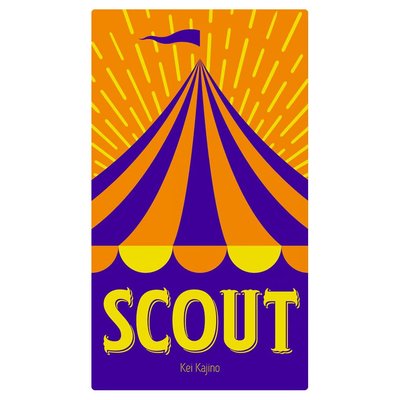
Lastly, a strong theme fosters an emotional investment. You should genuinely care about conquering the galaxy or building that rail network. If winning just feels like having the most of an arbitrary point rather than achieving something meaningful, then the theme might as well be window dressing for a glorified math equation. So, let's get started. Dt tier. What even am I? The first game on our thematic tier list is Scout. Now, Scout, for all intents and purposes, is a really good game. The game is a tricktaken ladder climbing card game that uses smart hand management to create a deceptively clever little game. For example, the crux of the game is that you can't normally rearrange your hand, which pushes you into creatively solving little puzzles on how to maximize your current cards. Overall, great mechanics packed in a smalls size box. No complaints there. The theme in Scout is about running a circus. Allegedly, if you had completely ignored the introductory spiel and someone just told you that this was about, I don't know, assembling a spy network or competing in an underground majong syndicate. You'd probably just not along in peaceful bliss because it doesn't really matter.
Now, to be fair, there are bits that allude to a circus. Like here we have Frank the juggler. And yeah, each little cardboard chit is appropriately flavored. Like how these look like little carnival prize tokens, for example. But does it mean anything? Does it even matter? Could it be anything else and play just the same? Does anyone even care about Charles the Clown? No. I don't think anyone has ever cared for him. So, let's think back to our criteria first. Does Scout create immediate resonance with players? No, not really. When I say circus card game, nobody really cares about the circus part. Second, does the theme interact with the mechanics? Absolutely not. Nothing about how you play this reflects anything about the circus. Third, uniqueness. I mean, I suppose circuses aren't overtly common in board games, but the theme is applied so thinly that it doesn't even matter. And emotional investment, zero. You never feel like you're building a circus or a team or even care about the setting. It's just trick taken game with a bunch of fun colors and words. Scout technically has a theme. It's there. It exists. It has been declared, but it is entirely meaningless and disconnected from the game. I put this in Dtier because functionally the theme might as well not exist. The game is supposedly about a circus, but it could be about a farmers market or a shoe store or medieval tax auditors without changing a single mechanic. The theme is so barely
connected that it exists just to fill a checkbox. But here's the controversial part. That alone doesn't make it the absolute worst theme in existence. Scout is one of those games where it might as well be a themeless abstract game, but for the sake of some color and some pop, it has something. It's inoffensive. It's brightly designed and unintrusive. It keeps the focus squarely on the gameplay. It adds absolutely nothing to the game experience. And for that reason alone, it is a failure of them and it goes straight to D tier. And you know, let's toss in some other games into D tier so it's not so lonely. Let's toss in Azul and the mind just to keep scout company. You know, it's kind of sad being isolated alone in each tier. And also, let's not forget there's still an F tier to look out for. C tier, just skin over mechanical skeletons. All right, let's move on to our second game on this tier list, Worms Span. Now, I could have picked from any of the span games out there. Wingspan, Finspan, Span Span. The options are functionally endless, but Worms span is the one I'm most familiar with, having done a full review a while ago. That said, the logic will follow no matter what member of the spanverse you're familiar with. In Wormspan, you play as an amateur dracologist, gathering dragons in caverns to study and visit. The game is at its core a tableau builder where you craft a little engine of cards to trigger as many effects as possible in
an effort to score higher than your rivals. The mechanics work well and by the end of the game, you do get a mild sense of accomplishment when you've built your engine into something efficient. Now, from a thematic standpoint, Warspan absolutely succeeds in creating the atmosphere and selling the fantasy. Your dragons are beautifully illustrated, appropriately labeled, and the idea of sending your little meeples to visit these dragons is a charming thematic touch that really sells the game. The thing is, the theme is fundamentally pasted on to the gameplay loop, though. That theme, the spotlight, it works very well. It's even palatable and endearing. But the gameplay and the theme are independent of one another in a way that makes it feel like a skin. Unlike Scout, where the theme was barely even existing, Warmspan creates an illusion of harmony between gameplay and theme. But beneath the beautiful artwork and the endearing dragons lies a cold machinery of its mechanics. It's like an Excel spreadsheet that's been heavily cosmetized to mask the math that the gameplay fundamentally is and that's independent from the theme. It's like an animatronic dragon in a medieval themed Chuck-E-Cheese that makes the same jerky movements. Whether it's breathe in fire or singing happy birthday, the mechanics are merely wearing the skin of the theme.
It doesn't take a leap of genius to come to this conclusion. It's already proven by the existence of other span type games that take the same core Excel spreadsheet game design and dress up the math and various functions in a different approachable theme. Take the brand new Finsspan for example. It really is the same gameplay loop as Worms and Wingspan, but instead of dragons, it's fish. What resources being gathered, what type of creature your mele goes to visit, it's all just a pallet swap. The gameplay and the mechanics can wear any costume you want. Now, span type games aren't singularly guilty of this. Many many Euro games fall into this trap where the mechanics are essentially dressed up and glued together by some semblance of a thematic experience. I only pick on the Span franchise because it's so transparent in how versatile the gameplay formula is.
It's capable of accommodating almost any theme you can imagine. At a certain point, you could just throw a dart at Encyclopedia. Hit mollisks and mollisk span would be on shelves next week with a pre-order bonus of deluxe snail meeples. It's really just an endemic reality of game design. A designer creates a solid gameplay system, but a publisher wants the next hot medieval farming simulator, so the system gets draped in burlap and hay. While it's certainly better than what Scout has to offer in the theme department, Wormspan and other pasted on games land squarely in C tier games where the theme works, looks good, but ultimately shares only a casual acquaintance with the mechanics that are lying underneath. So yeah, let's put in some other examples like Castles of Burgundy, Dominion, Take It to Ride, or even one of my favorites of Seven Wonders Duel. Truthfully, there's hundreds of games I can fit right here perfectly. So, let's just leave it here for now. A quick defense of C and D tier them in. So, I might have come across a bit harsh on these lower tiers. I think a fair quick counterargument should be made as well. C and D tier themes aren't disasters or failures of game design. In fact, it's often exactly what these games need to do to reach more people.
Some of the most commercially successful games in the hobby exist in these tiers, precisely because their themes are approachable without trying to overwhelm or incorporate themselves into the mechanics. The Span games and Ticket to Ride aren't trying to create those moments where you're texting your friend 3 days later to apologize for that diplomatic incident during round five. They've got more modest ambitions, like teaching your grandma what a mele is. A lot of people just prefer games where the theme stays out of the way of the core, addicting gameplay loop. Sometimes we just want a well-designed mechanical challenge with a pleasant aesthetic rapper. C-tier themes fulfill this role perfectly, making complex systems more digestible without getting in the way of the gameplay. That's really at the heart of these designs. To put this whole argument differently, for a lot of games, the goal of theming is to create a sense of comfort and interest instead of trying to define the gameplay. And this is a completely reasonable approach to game design. So, while I've placed these games in C tier and even D tier for their thematic integration and the theme overall, they're often exactly what people want. good mechanics with a theme that's layered in an aesthetically pleasing way and personally interests them.
B tier harmony within reach. Okay, so now we're on to the next game and this is one where we land at Brass Birmingham. In Brass, you play as a capitalist entrepreneur from 1770 to 1880, which is basically the historical sweet spot where you could make obscene profits without pesky things like worker safety or child labor laws. The game is centered around creating industries and networks to move goods to sellers and consumers, all while inhaling coal dust like it's expensive perfume. Now, the theme of the game is pure industrial capitalist heaven. You'll be actively competing with other players to rush to create the most efficient industries and the most efficient networks while trying to utilize the resources on the board like beer, iron, and coal. Of course, all of this is supported by clever hand management mechanics and an income system that really encourages you to take on early debt. Unlike our span games where you could do a pallet swap for dragons or fish and not really miss a beat, brass actually integrates its industrial revolution setting into the mechanics. When you build a coal mine, you actually need coal to operate many of your other buildings. When you construct rail networks, they physically connect locations in ways that matter to the gameplay. Even from a teach perspective, it all makes some logical sense. Coal is needed in such high volume that it needs to be transported from the nearest source with a rail or a
canal, while iron was needed at a lesser quantity so it could be transported from standard roads. The canalto rail transition between game eras isn't just a thematic flourish. It fundamentally changes how connections work and what strategies are viable. This creates a satisfying sense that you're experiencing actual technological progress rather than just a phase two of an abstract game. That said, Brass Birmingham still sits firmly in the B tier because while the theme works and effectively at that, it doesn't quite reach that emotional resonance or that immersive quality that an A tier game would have. You're still fundamentally moving cubes around a board and calculating optimal economic returns while playing as forgettable character tokens. The game's focus remains squarely on efficiency and optimization rather than a narrative or thematic purpose. You don't develop a particular identity or storyline through gameplay.
And there's no sense that you're playing as a specific historical industrialist with a distinct personality or agenda. Your decisions are driven by flat game optimization calculations and solving the puzzle of the board. While this doesn't diminish the game's excellence, it does create a certain emotional distance from the game. Likewise, the actual theme of being an entrepreneur in the industrial revolution just doesn't capture my imagination like so many other themes. The game never quite makes you feel like you're a ruthless 19th century industrialist in your bones. You're always aware that you're playing a game with an industrial dress in. But this disconnect made me consider something interesting. What if that's exactly the point? There's an interesting alternative perspective that perhaps this distance in theme and mechanics is intentional. Because what is more thematic than playing a cold, calculated optimization freak in an ultra capitalistic industrial setting?
The emotional detachment you feel while moving cubes and calculating returns might actually be the perfect embodiment of the industrial capitalist mindset. Maybe the fact that you care more about efficiency than emotion is precisely the point. You're not meant to feel immersed in a narrative. You're meant to feel like a disconnected entrepreneur viewing Birmingham purely as a collection of resources and opportunities. The game's focus on economic optimization over any other aspect might be the most thematically appropriate choice for representing the clinical nature of maximizing profit above all else. So perhaps brass is brilliant in its thematic implementation, not because it makes you feel specifically like a 19th century entrepreneur, but because it makes you think like they did. The mechanics don't just represent the industrial revolution, they replicate its mindset. It's a fascinating lens through which to view the game. That said, I don't think this kind of meta narrative is inherently positive to them in board games. This is more of a study of the game from an analytical perspective rather than something players consciously experience during gameplay. And setting this alternative approach to theme aside, there's another reason Brass remains in B tier. In a weird way, it's easy enough to imagine a heavily remixed version of this game.
Reimagine it as establishing a tech startup ecosystem in Silicon Valley from the 70s to 2000s. Coal mines become server farms. Iron works transform into component manufacturing. And canals and railways evolve into dialup connections and broadband infrastructure. beer becomes venture capital funding that enables even more ambitious company expansions. This kind of remix wouldn't really lose much, if any, of the gameplay allure. Brass just doesn't have that innate connection to who or what you're playing as, which other games that are higher in the tier list have. This kind of remixability is a key distinction between Btier games and higher tiers of theming. It just doesn't make Brass a bad game. It's far from that. It's excellent with a well-implemented theme, but while the theme works harmoniously with the mechanics and enhances the gameplay, you could swap Industrial England for Silicon Valley um without losing any form of connection to the theme. It doesn't really hollow out the game. And the reason for that is in Brass, players are connected more with the mechanics than the theme. It doesn't really matter what it looks like as long as the game plays well. And that's really the stamp of B tier themes. functions, it works, it enhances, but it never becomes so integral that reimagining it would fundamentally alter the way the game plays and feels. Btier themes serve their purpose with admiration, and they don't really bother you in any ways.
They enhance the experience, but they don't necessarily define it. And the investment from individual players isn't into the theme itself, but the mechanics. B+ tier, hold in hands. Now, before we shift gears into our A tier example, let's quickly take a quick pit stop with B+ and heat pedal to the metal. In Heat, you're a speedy dude in an oldtimey F1 car. Imagine your car around a racetrack as fast as possible. The genius of this is how the mechanics just make sense for what you're doing. For example, starting in lower gears means playing fewer cards and moving slower, while higher gears let you play more cards, representing moving faster. Need to slow down for a corner? First, you'll need to downshift just like in real drive-in. The rest of the game follows the same pattern of, oh yeah, that makes perfect sense. Slipstreaming lets you speed up and overtake opponents. Taking corners at a high speed will send you spinning out.
Weather will make everything more chaotic. There's a lot of care that went into making it feel like racing. It's not just oh, we added these mechanics and then themed them. It feels like they started with what would race in feel like and then built mechanics to match. What bumps heat above the standard Btier games like Brass is how naturally the mechanisms flow from a theme in a very natural way. The game accepts that people want to simulate the feeling of a race, but done via a deck of cards and a little plastic piece on cardboard. It willingly accommodates the theme, but there is a hitch to all of this and it's why it's not quite a tier. There are plenty of moments where the spell breaks. You're drawing cards and thinking about probabilities and you're calculating the odds of drawing exactly what you need to get out of your deck.
This all pulls you out of the race and mindset and into a mathematical one. And once you get better at the game and know the inner workings of the game itself, you'll become more and more focused on hand management than actually playing a racing game. You never forget that you're playing the game about racing, even though it comes close to that feeling. And Heat sits in that sweet spot where the theme and the mechanics are dancing so closely together, but they're not fully committed. They're on a great third date, but not quite ready to move in together. So, it's close, but still hamstrung by moments of this card optimization that breaks the spell. Anyways, let's fill out this B tier section with a few other games with strong themes like Everdell and Radlands. Very cool, very cohesive, but not yet a tier.
A tier, a commitment between theme and mechanics. So, what happens when a game's mechanics and theme move beyond Den and actually commit to one another? This is where A tier is. And for this, we have the well-loved Spirit Island. I actually never talked about Spirit Island on my channel before simply because I wasn't really a big fan of it. It felt too fiddly, and I didn't really vibe with its approach to co-op, but recently I've given it another go over the digital version and found new appreciation for it. Spirit Island is a cooperative game that flips the settlers of Katan narrative on its head. Instead of playing as explorers claiming a new world, you embody powerful nature spirits defending your island from foreign invaders, which are attempting to industrialize your land. Just like in Brass, what props up Spirit Island to a tier is how thoroughly the theme permeates every aspect of gameplay. In essence, Spirit Island's mechanics are deeply intertwined with its narrative.
The focus of the game revolves around the spirits and their antagonism to these invaders. Each spirit embodies a unique approach to defending the island that perfectly reflects its elemental nature. Lightning's swift strike attacks with sudden powerful burst that quickly dissipate. A spread of rampant green inexraably reclaims territory through choken vegetation. Ocean's hungry grasp constantly seeks to drag in invaders into the depths. And each spirit's gameplay directly emerges from its thematic identity rather than simply having different powers. Even the fear system that captures the psychological warfare between spirits and invaders. You're not just depleting enemy hit points. You're terrifying them into abandoning their ambitions. Seeing the invaders flee in terror because you're slowly picking them off in nightmarish fashion is a perfect marriage of theme and gameplay. A lot of cards will either act differently or focus on different kinds of invaders. For example, um Shatter Homestead. It makes sense that this card destroys towns but not impact the explorers. It's all a fulfillment of the theme and the embodied forces of nature. Even the game's escalation feels thematically coherent. The invaders don't just get stronger in an abstract way. They follow a logical cycle of exploration, building, ravaging, which all thematically creates a reason for you to protect your land. Their actions make sense, and your opposition to them feels like a genuine struggle for the
island's soul. Even the multiple adversarial powers feel distinctly different in ways that align with their supposed national characteristics. And when playing Spirit Island, you're not just trying to optimize power combinations. You're engaging with a narrative of protection against invaders. The game encourages you to think as your spirit would. For example, shadows flicker like flame, prefers pickoffs, and creating fear. Simply put, the mechanics reward you for playing in the spirit of your spirit. Now, what keeps Spirit Island from reaching S tier is that for all of its thematic brilliance, you're still ultimately managing energy tracks, cards, and presence tokens in a way that is somewhat abstracted. The immense cognitive load sometimes pulls you out of this immersive experience as well.
And there is a surprisingly high amount of number crunching and optimization like managing your defenses or how you can predict exactly what invaders will be able to accomplish each turn. Simply put, there are moments where the game math becomes visible through the thematic veneer, and you are no longer an element of nature, but a hurried accountant. Nevertheless, Spirit Island stands as a strong example of a tier thematic design where the mechanics and the theme are so tightly interwoven that if you try to reimagine this game with a different narrative, it just wouldn't create the same emotional resonance. It creates a genuine investment into your island's fate, and the thematic framework lends itself to the gameplay with great success. And let's not have Spirit Island so lonely. So, other examples of A tier would be games like Twilight Imperium 4 and Nemesis.
S tier, it's in the DNA, man. Okay, so we made it into the S tier, the pinnacle of thematic game design. And now I get to glaze on one of my all-time faves, Dune. Originally published in 1979 and re-released in 2019. What puts Dune in this elite category is how the game doesn't just accommodate its theme, the entire game design emerges from it. Unlike lower tier games where the mechanics might inspire some theme, Dune's gameplay feels like it was extracted directly from good old Herbit's universe with the rules servant as the story rather than the other way around. Take the storm that eternally circles the planet of Arachus. In game, this destructive force moves around the board, decimating everything in its path. The Fman, who are native to the planet Archus, can predict its movement, giving them a strategic edge that perfectly mirrors their adaptation to the harsh desert life found in the novel. They can either use this knowledge themselves or sell it to other factions for spice, creating a natural asymmetry that feels authentic to the source material. The space and guild controls interstellar travel. So naturally they collect payment when other factions deploy troops to Iraqis.
Even the emperor collects funds for the various means and mechanisms of treachery. On the other hand, the benny Jesuit are broke and rely on funds from Chom charity. It all circles around to the plot. In one of the strangest ways, and it's an evidence of thematic cohesion, is that the more you know about the Dune universe, the easier it is to explain and play the game. Like, of course, the Haronan have more traders up their sleeves, and of course, if you have access to ornithopters, you can move further. It all is based off a thematic reason. And what's fascinating about Dune is that when the license was in legal limbo, the game was actually reimagined as Rex Final Days of an Empire, which is set in the Twilight Imperium universe. And despite having the same mechanisms, Rex feels hollow by comparison. The mechanics work, but they're no longer resonating with the same power because they had been divorced from the narrative that inspired them. That's really the most defining characteristic of S tier theming. When the theme and the gameplay become so inseparable that removing one fundamentally changes the other. We know that changing the theme of Dune hollows out the experience because we've already seen it done. We experienced it. And in Dune, you're not just moving pieces on a board. You're enacting the power struggles, the betrayals, the alliances of Herbert's universe. The game doesn't just tell you that the theme matters. It
makes you feel it with every decision you make. Every rule, every mechanism, every interaction serves the greater purpose of immersing yourself into the world. It doesn't feel like a representation or kind of a illusion for really a few hours around the table. You are playing for the planet of Dune. And that transformative power is what makes S tier theme so special. Now, I think I really need to make an important note. Every single game, no matter what tier, can technically be rethemed and reimagined. Some of the most thematically beloved games of all time, like Battlestar Galactica or to a lesser extent, War of the Ring, have been rethemed with different IPs. But here's the difference between being an A or S tier. It doesn't mean that retheing is impossible. It means that you lose a core component that makes them a great game. You could argue that Dune becoming Rex is on paper just a copype job like Wingspan become in Warmspan. But while Ctier games simply swap costumes, A and S tier games are actively hollowed out when they're rethemed because the gameplay and theme perfectly meld together. The higher we climb in this tier list, the more is lost in retheing from it doesn't really matter in D and C tiers to becoming a hollow shell in A and S tiers. And this is a true test of thematic integration.
F tier actively undermines the experience. I want to acknowledge the elephant in the room, the dreaded F tier. These aren't just games with pasted on or absent themes. These are games where the theme actively works against the experience. At least for me and maybe for you too. And here in the F tier territory where we need to acknowledge the sword, subjectivity. While previous themes I could make some objective argument, the F tier is where personal taste plays its largest role. All of my examples are based on a fickle thing, which is my opinion. So let's go a bit deeper with that understanding. Exploding Kittens is marinated in that special sauce of the early 2010s internet where that comedy formula was basically take something cute, add violence, sprinkle with bacon references, and see how it goes. The disconnect here runs deeper than just an aesthetic preference. The game itself presents itself as a chaotic and unpredictable through its theme and art style, suggesting wild surprising gameplay. Yet mechanically, it's a rather straightforward and predictable take that card game with very limited decision space. This creates a psychological expectation gap. The exploding cat illustrations promise chaotic fun, but it delivers structured predictability. It's like you're going to an EDM festival, but instead of
pyrochnics and light shows, you're stuck doing the hoke pokey in a retirement home. Then there is Munchkin, a game that's been around forever and spawn more editions than I can count. This parody fantasy theme is built entirely around jokes and puns, which is fine for about 15 minutes, but Munchkin isn't a 15-minute game. It's a 3hour slog with 15 minutes of jokes stretched impossibly thin. By the third time someone plays a boots of buttkicking, the theme has worn out and the game stubbornly refuses to end. This disconnect between the lightweight humor and the dragon gameplay creates the worst kind of thematic experience. It's one that actively makes you resent the game's theme. For a different flavor of cringe, we have Tanto Coray, a deck building game about collecting anime maids. I've never played it, but supposedly the game is actually a solid deck builder with some interesting mechanics which are very reminiscent of Dominion, but the mechanics are buried beneath artwork and theming that just makes so many players uncomfortable. There's something distinctly awkward about explaining to your friends that yes, this is a game about hiring maids with varying abilities. It's the perfect example of a theme that creates a barrier to entry regardless of how good the mechanics might be. And the thing is, in multiplayer games, a theme needs to
create a shared space where everyone can comfortably engage with the game's world. When a theme instead can instill discomfort in a large swath of players, it kind of undermines that social contract that makes tabletop gaming work. Now, of course, there are people who would love this theme, and I myself indulge in the occasional weebness, but even amongst anime enthusiasts, I just don't see this specific game as one people actively want to play as a consequence of the theme. And lastly, the Oregon Trail card game, which attempts to capitalize on nostalgia for the classic computer game, but ends up as a shallow experience where the only real theme is remember how you died of dissentry in the computer game. Wasn't that hilarious? It's built entirely around one joke from the 80s that doesn't sustain a full card game. It creates an odd meta layer where you're not engaged with the game, but you're engaged with your memories of a game.
The entire experience feels like it's designed around cashing in on 80s nostalgia and the merchandising circle that surrounds it instead of creating a thematic experience. What unites all of these F-tier themes is that they actively create mental and emotional friction between players and gameplay. Whether that's through thematic dissonance like an exploding kittens or unsustainable humor which is in Munchkin or pure social discomfort from Tantooro or hollow nostalgia in Oregon Trail. These themes demand additional cognitive and emotional work that detracts from the play experience. And this is fundamentally different than games with an absent or pasted on theme which merely fail to enhance the experience.
F- tier themes tax players by creating expectations they can't fulfill, humor that wears thin, social dynamics that create tension, or nostalgic references that substitute for genuine enjoyment. It's just a painful element of their game design. And that's the true tragedy of F-tier theming. Not just an opportunity missed, but an experience that is actively undermined by the very elements meant to enhance it. Now, what makes this tier so subjective is that one person's F tier is another person's S tier. Some people genuinely love Exploding Can or are in absolute awe of Munchkin World of Games. And that's fine. Theme resonance is deeply personal, but that's exactly why F tier exists. It's the recognition that sometimes a theme can be so personally off-putting that it prevents you from appreciating whatever mechanical merit might exist underneath. When a game's theme makes you want to apologize to others at the table before you start playing, that's a solid F. Beyond the tears, the abstract realm. Now, before we wrap up, there's a whole category of games I've completely ignored, and they don't even fit our tier list. Abstract games. Games like chess, Go, or TAC don't even pretend to have themes, and that's fine, too. Abstract games are like the minimalist architects of the board game world. They strip away all the narrative fluff and thematic window
dressing to focus on pure elegant game mechanisms. When you're playing TAC, you're not really building roads in any meaningful sense. You're engaged in a beautiful dance of spatial reasoning and tactical thinking. with Go. Sure, you're technically placing stones to capture territory, but let's be real, you're playing a tight, satisfying, positional game with elegant simplicity. These games aren't themeless because they failed at theming. Like Scout, their abstraction is a deliberate choice that creates an entirely different timeless game and experience. They don't need thematic integration because they're not trying to tell you a story or make you feel like something. Instead, they're offering pure mechanical challenges that engage your brain directly. In a weird way, these games show incredible design confidence. There's no hiding weak mechanisms behind flashy dragons or sci-fi battles. The gameplay has to stand entirely on its own. And when it works, it results in a timeless experience. And these are games that have engaged people for centuries with nothing but elegant mechanisms. And abstract games really just say good gameplay is enough. It isn't to say that thematic games are bad. It's just a different approach. And one interesting angle that even though abstract games are timeless and themeless, it can always be a bit of a fluid range. Think
about a Super Mario themed chess set or Sigil, which takes the core of Go and adds on some magical flare. There's various levels wherein these abstract games can be themed up or modified into a more thematic experience, but I think that's an exploration that deserves its own video. So, I'm going to leave it there. So, while our tier list examines how games marry themes with its mechanics, it's worth appreciating that sometimes the absence of theme isn't really a problem to fix. It's just a completely different path to create in games. And abstract games really exist in their own separate universe where this discussion of thematic tier listing doesn't really apply. Conclusion. And there we have it. a journey through the full spectrum of board game theming from why is this even here to I am now emotionally invested into cardboard.
We've seen how theme can operate at various levels of integration as mere window dressing in scout as an appealing skin in warmspan as a complimentary partner in brass as a natural extension in heat as an inseparable element in Spirit Island and as the very DNA of a game in Dune. What matters isn't just about having a theme, but how that theme interacts with gameplay. Does it create immediate resonance? Does it meaningfully connect with its mechanics? Does it offer something distinctive? And most importantly, does it foster genuine emotional investment in what you're doing? Great theming isn't about fancy art or impressive miniatures. It's about creating an experience where every card played, every token moved, and every decision feels like a natural extension of the world you've temporarily inhabited. When a game achieves this, the mental boundary between playing a game about something and doing that something itself starts to blur. And remember that question we started with, but what am I actually doing? The mark of a high tier Theaning is that players never need to ask this. They're not doing an arbitrary task in hopes of claiming victory. They're protecting their island from invaders or controlling the flow of spice. The what and the why of gameplay become inseparable, creating an experience where mechanics don't just support the theme, they become the theme. But here's my final twist. So many fantastic games
have just eh themes. Some of the most brilliant mechanical designs out there have themes that wouldn't climb above C-tier, but their gameplay is so compelling that it doesn't matter. Think of games like Dominion or Azul. Their themes aren't particularly immersive, but their gameplay loops are so satisfying that countless players keep coming back. A mediocre theme on a brilliant game can still result in a classic. While even the most evocative theme can't save poor mechanics, the sweet spot, of course, is when they work in harmony, but we don't need that to achieve brilliance in game design. So, next time that Kickstarter about competitive gondola racing in Renaissance Venice catches your eye, remember, just because there's fancy canal art doesn't mean you'll feel like you're actually rowing a boat any more than making whoosh sounds makes your gamer chair a Ferrari. The best themes don't just look good, they make you forget that you're playing a game at all. And let me know in the comments which games do you think deserve S tier or where you think I'm totally wrong or what games you think are the most pasted on. I was waffling back and forth of some of these games, like where does Root go. As always, thank you so much for watching and may your themes be meaningful and your mechanics clean. May you never have to explain to your non-gaming friends why you're so emotionally invested in a game about collecting anime maids. And thank you.
Bye.