The 5 Most Popular Modern Board Games… in ONE VIDEO!
Games in This Video
5 games are featured in this video — they unlock as you watch.



Transcript
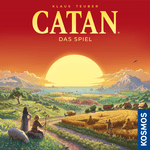
My name is Ben. This is Board Game Dad. And today we're looking at five of the most popular and bestselling modern family board games. These are games that most people have heard of, even people who are new to the hobby. But we're going to make this video very beginner friendly. So, let me just show you what I mean. We'll jump right into it and take a look at Katan. What makes Katan really stand out can be found right at the beginning at the setup. Katan has a modular setup. Meaning the game board is comprised of hexagonal tiles that are randomized and put together. And then on this random board of hexagonal tiles, numbers are placed on each one. The numbers represent the result of rolling two dice. So it's the numbers 2 through 12.
Now what players do looking at this board is they choose where they want their initial settlements to be on the board. But to do this they must have some understanding of what's going to happen when the game begins. So, a game of katan takes place over several turns where on a player's turn, the player will roll two dice. And whatever they roll, every space on the board is going to generate resources for the settlements that are on a vertex next to that tile. This is very engaging because what it means is even when it's not your turn, you're paying attention to what's happening because you can even be cheering for the person rolling the dice because you know that what they get is going to affect you. That was really thrilling the first time I played katan because it keeps everyone engaged. Now, you collect your resources based on if you're adjacent to the tile that was rolled and then the trading ensues because the active player, the one who rolled the dice, is allowed to make deals with any of their opponents. And these deals can take any form. Sometimes they can be very, very lively. Sometimes rivalries form between players and other times alliances. The thing about this game is it is very very interactive.
It's interactive because of the negotiation and the deals, but it also has a lot of luck because of those dice. So, Kayan is exciting for a number of reasons. You have that setup which is different every single time and offers brand new opportunities and strategies every time the game is played. You also have a very highly interactive game that keeps everyone paying attention as the dice are rolled from turn to turn and earning everyone income. However, these days, people who are really into the hobby sort of tease uh katan a little bit and they'll say bad things about the game about how the luck might dominate the game or another big criticism is how in that negotiation sometimes you get a player who plays kingmaker that is the person who has who feels like they'll never catch up and so they've made it their mission not to win the game but to help somebody else win the game and that's when the deals stop looking fair. That's when the game becomes less fun. But the way that I look at kitan is it really depends on who you're bringing it out with, who you're going to be playing it with. If you if you've got the right group, kitan can be a huge amount of fun. Let's move on to the next game, which is called Ticket to Ride. Ticket to Ride is a train game. It's another game where players are competing to get the most victory points. And really to get
victory points, there's two things that you can do during the game. You can score victory points by completing segments of a route on the map. Now, the in the original game of Ticket to Ride, the map is the United States. Connect two cities and based on the distance between those two cities, you score the victory points for that. Then at the end of the game, players will have been holding cards throughout the whole course of the game for for two cities that they're trying to connect. And completing these routes is also going to be scoring victory points. The way that the game gets played is that on your turn, you can do one of two things. Either you can pick up cards, and the cards are different colors. They show trains, or you can play a set of matching cards in order to complete a route and put your trains on it.
That is very very simple. But the game has a little bit more depth than that because oftentimes what happens is players sort of broadcast their intentions based on the cards that they're taking. And a player who is especially watchful can figure out what their opponent is trying to accomplish and then deliberately uh get in their way. So there is a great deal of tension in Ticket to Ride and tension is another characteristic of games that really keeps players coming back for more. This is also where Ticket to Ride suffers because its appeal is that it looks like a friendly and colorful train game, but in actuality it can be quite cutthroat once some or all of the players figure out that they can uh ruin another person's plans. So, speaking personally, my wife and and I loved Ticket to Ride in the beginning until I realized that there was more going on. And once I started stealing my wife's routes, it was a very unwise thing to do. Uh, it lost some of its draw for us. The next game we're going to look at is Pandemic. Now, Pandemic set a new precedent for
cooperative board games. In fact, I think Pandemic may have been the first cooperative board game that I've ever played. Uh, the way that it works is this. The objective of the game is to save the world from a pandemic. And in this game, there are four diseases that are spreading about uh about different regions of the world. And the players ha all have specialties in the field of medicine and they're trying to or emergency relief. Uh and they're trying to get around the world to either do one of two things. Either one, they want to find the cure, which is a long-term solution. It takes the duration of the whole game to find a cure. And once players find the cures for all four diseases, that's when the game is over.
Now, that would be the only thing players ever did. except it can get very messy with infections spreading all over the world. So, in order to kind of keep things from getting out of control and getting outbreaks that just take whole continents over, uh players can also do the short-term solution. They can just treat the disease. And treating the disease takes a person who's sick and just takes takes care of them so that things don't get worse. Now, the catch in the game is that every turn players get four actions and they have to decide how they want to balance between the short-term solution, just treating the disease, or the long-term solution, researching the cure. After they've decided how they're going to use their four actions, there is an infection phase where cards are flipped over from a deck and that tells the players where new infection cubes are going to go.
Now, this gets messier and messier because during the draw phase of the game, a player can encounter an epidemic, which takes players through three steps to intensify the infection, including taking the discard pile, shuffling it, and putting it back on top of the draw deck to be infected again. So, in pandemic, there is a lot of pressure on players as the disease and the conditions in the world just keep getting worse and worse, and yet the cure is just within reach. Again, it's another game that has that tension like we talked about in Ticket to Ride. It's what makes the game so much fun to play. Not only that, but it's a very collaborative game, very high in interaction because players are talking with each other and they're trying to work out a strategy that can that can uh figure out how they're going to invest their energies with those four actions.
And then finally, this is also the most thematic game on this list because in Pandemic, although it does have simple and easy to understand mechanics, the theme of the game really presses on players and makes it feel like it's like it it's almost real. Anyway, uh those are all of the things that make Pandemic a great game. And of course, there are several versions of it. Uh you can do Pandemic with different expansions. There's even something called a legacy version where uh it's designed the whole game is designed to play be played through with many episodes all of its episodes played through one time. There is a criticism for Pandemic. It's a light criticism and that is only that in a cooperative game like this it opens up what is called a alpha player. The alpha player is usually the most experienced player or the person who is teaching the game. And among other less experienced players, that person dominates the conversation.
The pressure in the game is so immense that it is very hard to resist being an alpha player if you have experience and you know what other people should do. So you find yourself going, you should be really doing this. you know, would really work out is if you did this. And it can make a negative experience. Granted, some people are aware of this and they try to make it a more collaborative experience, like, okay, uh, what do you think you should be doing here? But then you have a a person who's acting like a teacher. So, it's very hard to get a group where everyone comes to the table equally. And that's probably where the game expires in its interest. At least for me, I like to play games where it's easy for all players to play eye to eye. Um, so that is Pandemic. The next game on our list is Wingspan. Both Wingspan and Everdell share a characteristic in artistry. The first thing that's going to jump out when you see this game is just how beautiful it is. But with Wingspan especially, there is attention to the detail and nature that really draws players in. Artistry, the design of this game's components are a reason to play this game. It's one of very few games that can get people in for just that reason. But let's talk about a little bit how you play. In this game, players
are collecting different birds for an ecosystem. There are three uh environments where the birds will come live on your player board, your reserve. This is an action selection game, also a tableau building game. So action selection just means that each turn a player is going to choose between one of four actions. And tableau builder means that among the actions, one thing you can do is add a card to your tableau. And every card which is a bird card uh will augment the actions. So initially you're performing an action where the action is just to take some food. But as you get more bird cards, you're not just taking food, but you're getting extra food and you're rolling dice and you're spreading food and sharing it with the other birds. And you've get more and more things that you can do as you play through this game. It's very exciting.
It's called an engine builder where the the longer you play it, the more stuff you get to do. and there's a feeling of progress in this game which is also a very addictive experience and again mechanically it's what draws people into the game. Um but there is a drawback about this game as well. So we look at this uh these list of attributes couple of things. One, it's not an interactive game. All of the other games we've talked about so far have a great deal more interaction than this one. During an opponent's turn, there's very little that you can do. Their actions generally don't affect you. They can, but only depending on what the cards are. Uh, and so you spend a lot of time waiting for your turn. And in a four-player game, Wingspan can go on for a long time. Not only because you're waiting for it to be your turn again, but also because every action gets more complex the longer you play the game, which means the turns are getting longer. So, there's a lot of waiting in this game. But what really stands out about Wingspan and makes it different from the others on this list is its complexity. This is the only game I think on this list that you would not want to play with someone probably younger than 10. Could be done, but the challenge you're going to be facing is this.
Every single card is different and every single card does something to augment the actions that you can perform. Which means in order to play this game, you are performing a simultaneous analysis of all of the cards, looking for synergies between cards that will look uh work well together on your player board. It can almost be overwhelming. Now, for some people, it's a it it draws them in. For some people, it's going to push them away. You need to know yourself before you consider getting Wingspan. And the last game is Everddale. Now, Everdell was a huge hit when it came out. I talked about the artistry in Wingspan, but Everddell blew people away. When I first saw Everddale, I saw that the wood, the pieces of wood actually looked like logs and the berries were a little bit just a little bit squishy, like real berries. Wasn't it so cute? And then there was this gorgeous tree that was so super surpris
they didn't need it. They did it only to look good. I had never seen a game that had elements in the game that weren't even for playing, just for looking at. And I saw this and I thought, a game that's that beautiful, it has to be good. There's no way a game that pretty can be bad. And then I played it and well, it's a bit maybe underwhelming, but it does some things very very well. So definitely you look at the attributes, the artistry is off the charts, but let's talk about how the game is played. So it's another tableau builder. So you get your tableau of cards, but in this one it's less uh the actions are less about the cards and more about worker placement. So, at the beginning of the game, you have a few workers and on your turn, you place a worker in Everddale in order to collect some resources or to collect some cards.
Now, on a later turn, instead of placing a worker, you can play cards from your hand. And you play them by paying the resources. So simple enough and a little bit of engine building because one, as you get more cards, you have more things that you're trying to accomplish, more ways to get points, um more things to think about as your tableau becomes more complex, but also as the game goes on, you get more workers. So in later rounds, you have more workers than you had previously, which means there's more things you can do. It has that engine building effect, which we talked about when we talking about Wingspan. It's very addictive. It draws people in. There's a feeling of progress in this game. Uh, but that's not all. There's another mech mechanism in this game that I found very enjoyable, and it's really what kind of is the the the unique niche or gimmick of Everddale, which is that you have two types of cards, buildings and creature cards. And generally, you can pay the cost to add these cards to your tableau. But there's a nice little benefit. If you already have the right building for a creature, you can pay the creature card for free because they just go live inside the building thematically. That's what that means.
They're just go moving into the building that you've already paid for. And when that happens, you put a little marker on the building to mark it as occupied. It's very cute and it creates very obvious synergies. This card and this card go together because this card will enable me to build this one for free. It's very obvious. We talked about how in Wingspan you have to look at all of these cards and you have to look for the ways that they work together. But in in Everddale, it just it's right in front of you. You're just trying to collect cards and find the cool little synergies where you can build cards for free. All of that is what makes Everddale such a smashing hit. It probably wouldn't be the hit that it is today without the appeal of the artistry, but it does have a really nice mechanic about the game.
There is one criticism for this game as well, though, and that is much like Everdell, the game gets longer the more you play because as as the game goes on, you get more workers. You get more workers in the previous round and with so many cards, there's more to think about. There's more to add. the turns get longer. Plus, you can keep playing as long as you have something to do. You don't stop until you pass. So, players are compelled to keep finding more things they can do in order to get more points. It can make a game of Everddale last for a very long time. That is really the only reason I I don't play Everddell uh as excitedly as I used to, but boy, it sure is attractive. Now, that is my take on five of the most popular and best-selling board games. If you'd like to know how I picked this list, I'll put a note about that in the description. And then finally, this attribute system. You can actually search for games according to these attributes on my web app, the perfect boardgame.com, where you can find games.
You can rate games according to that attribute system. And best of all, you can showcase your own collection of board games and even take a look at the board games that I've reviewed through the website the perfect boardgame.com. Hope you take a look at it. It's my huge uh project and it's been a lot of fun to contribute that to the hobby. Anyway, thank you for watching. I hope you found this video useful. I'll see you next time. The back.