Episode 107: Bryan Bornmueller - Pitching Boardgames: Publisher’s View - Top 5 Trick Taking Games...
Games in This Video
7 games are featured in this video — they unlock as you watch.



Transcript
Got games you're looking to sell and don't want the hassle of selling them on your own? Noble Knight's buy, sell, trade program is fast and reliable. Send your list, get a cash or credit offer within days. Get free shipping labels covered by Noble Knight and get paid via check, PayPal, or intore credit that never expires when those games arrive. Store credit is always more than the cash offer, and you can use that credit to pre-order or buy new games now. Visit noblenight.com and click buy, sell, trade. Hello and welcome to episode 107 of the Board Game Geek Podcast, where we geek out about board games, the mechanisms behind them, and the people who create them. I'm your host, Amanda Panda, and for this episode, I have with me Brian. Hi, Brian. How are you doing? Oh, I'm doing very well.
Can you please tell us a little bit about yourself?
I am a game designer. Made the Lord of the Rings tricktaking games. I work for Asthma as like a game scout. So, I look at prototypes that designers have and then try to match them up with a studio that can make the game and do a good job. And years ago, I helped start Office Dog Studio, uh, one of the Asthma studios, the the people who publish Lord of the Rings trick taking game, unsurprisingly, developed some of their their first first few games.
And can you please say your full name so people have that if they need to say it in the future?
Sure. It is Brian Borne Mueller.
And for those of you who don't know, it's Brian with a Y. I was like, "Oh, that's an interesting way to spell Brian that I haven't seen before."
It is. Yeah, I think it was a book series my mom loved. It was like the the good older brother in the series was a Brian with a Y. It's like 10% of us. You always meet a Brian and then we all sort of we sort of check.
You work for ASI the parent company and you design games for office dog the subsidi right the subsidiary or the the publishing company underneath. Can I ask you, and feel free to not answer if you don't want to, but how does that look like in contract form? Because you're a full-time employee for Asthma Day. Do you do just a contract just for the game under Office Dog or is that just part of your work for Asthma Day?
It's just part of my work for Asthma Day. I always tell people it's like I'm working for the Medici in, you know, Renaissance Florence or something where it's like, look, they take good care of me. It's a very nice place to work and it's really great to just as part of my day-to-day job make the games that I'm interested in and it also means that I get to stay involved in the entire process and the team at Office Dog is really really excellent but it means I'm always lurking around the corner and when Bri is getting sketches from artists or Crystal is making marketing plans I'm lurking over the corner and get to peek at that and give them my opinions. It's a very gratifying way to be able to to make games and be able to work at a a company that has a big reach and seeing the games come out all over the world is really wild. I was just in Essen and I was at an Asthma day event and someone from Asmade Taiwan came up and introduced themselves and like oh hey I was the one who translated your games into traditional Chinese and like just what a wild a wild thing to to be able to do.
That's really cool. And do you get the same designer rights as if you had signed the game directly? Do you get a certain amount of designer copies? Do they do residuals? That type of thing. I'm just curious.
Like most creative jobs in America, right? If you're a salaried employee at the company, right? All your ideas that sort of relate to that company are there as the same as most people in the state. But certainly you can see my big stack of Return of the King. Those are turn of the kings in all the different languages. Get all the and I have all the goodies and stuff on the shelf here. the studio and stuff takes very good care of me and it's great to be able to work with a story that I love and have it come out in such a big way. Certainly, I've gotten complete credit for working on the games. It's nothing like being some anonymous company employee in the 50s or whatever where your name is grubbed off of the box. I've gotten full credit and acknowledgement for doing this, which is is really great. It's very interesting because I see more or hear about more of the independent publisher side and how the designers work with them and then I realize for companies like Asthma that it's more like a technological company where if you develop any programs or any new processes there it's intellectual property of the company you work for kind of like colleges too I think if you work for a college and you design or figure out something or write something, it technically the intellectual property belongs to that college and you don't have the rights to it anymore. So, it's interesting to hear that that's how it's also done at Asma day. It was just really cool behind the scenes little peak.
It was very transparent as I went down this path and honestly when I started working on I mean the fellowship of the ring tricktaking games the first game design that's ever really left my living room where I played it with many people beyond just my poor family. And so being kind of part of a company that supported that and having a team that was like, "No, no, this is good. We should go for it." And then certainly when I started working on it, I I thought I was like, "This is a a game for people who love trick- taking games and love Lord of the Rings and that's kind of it." But it's been much more popular than just that. So what a what a fun ride to have been on.
Yeah. So you've designed other games. It's just hasn't come to fruition. Is that correct? I feel like there's a psychological sort of term for this where when once you've done something for a while and known something for a long time, it's like harder to make something than if you're young and starting out and don't have a lot of experience with it. Because I've worked in the game industry my whole life, 25 years, and been demoing games and having opinions about games for that whole time. And so then it's very hard when you have an idea and you're like, "This is great." And then you make that first prototype and you're comparing it to everything you've ever played. And often times it's hard to sort of push past that bad first prototype into something that's like, oh no, I can actually see that I can get to something that I like and that you want to play a few hundred times is very hard. I think it's amazing what you do and it's such a cool company to work for and you get to talk to a lot of people and see a lot of designers and see a lot of designs. Now, you also said that you helped start Office Dog. Can you tell us a little bit more about that? Like how did that happen?
The guy who fully started it, Luke Peters, who was my boss for the first few years, some of the big bosses at Asmade, Steve Horvath primarily at the time, who since retired. um wanted a studio in the US to make original games from designers and there just wasn't a studio like that in the big spiderweb of Asthma co companies at the time. There's lots in Europe who had really good connections with European designers, but there's a lot of game designers in the US. And the funny story is at one point Richard Garfield wrote Steve Horvath an email and was like, "Who do I pitch a game to?" And I always just imagine Steve looking around his office being like, "Oh no, what do I say? Who's in the US to to work with Richard on this?" I think that sort of idea was the impetus of, "Okay, we just need a very small studio to be making a few original games." So Luke hired an amazing team around that and I got busy sourcing games to fill out the schedule. It was what we did word traveler. You were visiting a city and was a little word game.
We did river of gold with came came together great with Keith Pou and then the first Lord of the Rings trick taking game and crafting the cosmos was our first four games that we worked on. And I was like, as we were developing those and producing those, Luke was hiring the team to do it as we went. I love starting things and figuring stuff out and doing new challenges. That was really a dream for me to get to to build that up.
What was your official job at Office? That was your title, if you don't mind me asking.
I was the game development manager was my title. And and I did do a lot of development on the first few years of games. Sean Freud and Circle of Conflict that are just coming out now were sort of the last games I did a lot of development for Office Dog. And honestly, I my sort of career path there was I found so many games for Office Dog that I wasn't really able to scout for games because when you find a amazing game and you tell the game designer, "Oh, we love this. It'll come out in four or five years because our schedule's full is not very exciting for them and very fun for us." So they said, "Well, go off and keep scouting for games and just share them with any of what as call like the tabletop studios basically just like the board game studios." I was just in essence with a suitcase full of games playing them with people from all the different asthma studios. As kind of a people pleaser, the greatest thrill is to have a game and show it to somebody who works at a game studio and saying, "Okay, I think this is good. I think you should spend three years of your life working on this game. So the they the bar is very high.
They can be polite and say, "Oh, yeah, that's okay, Brian." But when you show them something and you can tell they they really like it and are ready to get the legal team involved to sign an agreement with the designer and really make it, it's a very thrilling feeling for me.
I love that. I think there's a lot of people that would love to do what you do. Can you give us a little time frame of how you became a scout for a board game company?
It is not a viable career path. It's basically I worked at comic and game stores when I was in high school and college and then I moved up from Iowa to Minnesota to work for Fantasy Flight Games in 2006. And my first job there was just in customer service. So if you were missing one of the writers of Rohan from your copy of War of the Ring, I was putting it in an envelope and mailing it to you. But Fantasy Flight was about 20 people in 2006 when I started, maybe a little more. And then by the time Asthma Day bought it, it was over 200 people. And so there was a lot of growth in that decade or so. And so I just kept doing different jobs. One of those was I would always go to Gen Con and run the fantasy flight store. And Steve Horvath, that guy who was eventually one of the senior executives at Asthma, uh was Fantasy Flight's head of marketing. And every year at Gen Con, he would say, "Okay, Brian, what's the hot game this year?"
And I'd be like, "Oh, Steve, it's it's going to be dead of winter. It's going to be really hot." And sometimes we would get together and play them one of the evenings there. And after I was right a few times, I don't know, I think that stuck in Steve's head. Brian's paying attention to these things. He's got a good eye. People always say in French, they say you've got the nose, right? In English we say you got an eye for games. So I don't know. I was willing to do new stuff and pay attention to games. It's very much a case of working hard and being in the right place at the right time. So when Steve wanted one just started off as dog, I was able to jump over and do that.
Wow. That's really cool because I think some people get intimidated in maybe not trying out for the job or not putting their resume forth for such a big company. And I know I was intimidated. I know I didn't do it even though I kind of regret it. But that just sounds like it's a it's a great company to move around and get to know different parts of the industry and learn a lot from it. It's a place where you're always learning and there's just so many amazing people just all over the company that have tons and tons of experience and whose wisdom I think is we try to really value and to keep those people around and keep listening to them.
That's awesome. Now, our main topic for this episode is pitching board games from the publisher side because you do take a lot of pitches, but you did say a little bit about pitching to other studios. So it wasn't really pitching. You were showing games to other studios under Asthma. How is that from pitching a board game to the studio or was it very similar?
Everybody who kind of has a creative job sort of wants to be like, "Oh, how do I get the get to the point where I don't have to pitch my idea to someone?" But I mean, Steven Spielberg pitching movie ideas to people, you really can't get away from it. Maybe someone like George Lucas or someone who founded his own company that was incredibly successful and now we can do the thing I want to do. But even then eventually you're going to have to convince people to go see it and people to work on it and all of those things. I get it's hard to count but it's in the neighborhood of a thousand pitches a year. Most of those are cell sheets that people email me. One-page description of uh what the game is. And that skill of being able to take an idea and distill it into something that can be really quickly communicated is very hard. Has very little to do with the like actual game play, but it is very important.
Especially for me, I'm working in the commercial realm of game design. I love the people. I love going to the indie game night markets and just playing crazy ideas that are maybe not commercial, but when I'm at work, is this an idea that's sticky that I can communicate to people. It's these couple of ideas combined in a new way that can be really exciting to find something that jumps out there. And so people are sending me cell sheets. This one page, there's a lot of great examples on there. or the TTDGA, the Tabletop Designers Guild of America has some great examples on their website of of different cell sheets, templates, and things that folks can use. But so then I'm sifting through all these pitches and some will jump out to me and then I'll play them with the designer, usually online somehow, something like Tabletop Simulator. Sometimes it's just them doing a pantomime, holding up cards on a camera or talking through the cell sheet with me. But I just want to get a deeper understanding of the game.
Sometimes people will include a little short video of them talking through the game. And then if I'm still interested, then I want to get my own copy of the prototype. If it's complicated, the designer will send me one. And if it's simple, sometimes I can print out cards real fast or something. And then I have groups of of people, some people at the Asthma office, some other groups of people that then I'll play the game, making sure I've learned it correctly from the designer and their rule books. The prototype rule books don't have to be perfect, but have a good if I understand how to play it, then I'll play it with these kind of test groups and go, "Oh, is there there's something here?" And then from there, I collect four or five games every few months, and then I I share them. I'm mainly working with Office Dog and Zman in the US, Rebel Studio in Poland, uh, Lookout in Germany, and then I always send the things to our five French studios, Space Cowboys, Days of Wonder, Leelude, Days of Wonder, and The Next Move. The French team is very robust, and uh, they have their own really, really excellent game scouts, but I I share my games with them, too, and uh, just see if it strikes their interest, right? I'm a very big believer you can't tell people what game to make and have them make something good. They have to be genuinely excited about it because it is three or four years of their life that's going to get put into working on this game and talking to the game designer all the time and doing development and everything else that comes along with it. So, I'm hoping to find something that's exciting for them.
And when you do share it with them, do you make a pitch deck as well or do you just forward the the cell sheets to them? Do you actually talk to them?
I don't forward the cell sheets. Sometimes, depending on where it is in the calendar of the year, I'll have to just do a little digital presentation and then I make my own template I use. It's like, okay, here's how I'm going to share this information. But like, uh, this last week at Essen, I was able to get together and they were all there. And so, it's like, okay, let's take a little time. And we got together and then I'm just able to play the games with them, which is really the best, right? Cuz we're making physical games. And so being able to put it in their hands and show it is ideal, but sometimes that's just not how the timing works.
For you as someone who's receiving the pitches, are you looking for certain types of games sometimes or are you just seeing what looks fun to you? Do you think this studios needs this type of game or that studio needs that type of game and then you're keeping an eye out for those types of things?
The studios all have a bit of their own kind of DNA and brand. Oh, this is a Euro game with some clever mechanics or something. I think Lookout would be most interested in this or something like that. And sometimes Mike Hmel from Office Dog will be like really like a game with this sort of theme. But for the most part, the thing that's great about looking at pitches from external game designers is trying to find an idea that we couldn't have come up with on our own. I would have never thought to combine this with that or whatever. That's what's really exciting. And now there's types of games that I know will survive the process better than others. You look at some things like Harmonies, like River of Gold. A lot of it's pretty familiar, especially to people who are very literate in playing games, but then there's something that's a little new or something that's combined them in a new way that's very exciting. It's got a theme and a set of components that gives all the really amazing creative directors room to make a product that then looks really nice too. And there's different divisions of Asthma. So most of the studios I'm working with aren't doing social party game type things.
There's a different set of studios for that. And now of course I love party games and sometimes a designer I know will send me over something that's interesting and I'll go you know I have a counterpart whose name is Kelly. They'll be like, "Hey, Kelly, maybe you want to check this out." Or like Jonas from Bezer Wizard like, "Let me show you this one game. I'm not quite sure where this should go." And then there's the other my other colleagues in what we call the lifestyle games. So if I have a game that I think's really cool, but oh, this is a really big game, then maybe I go reach out to Caitlyn at Fantasy Flight and I'm like, "Maybe take a look at this and just see." We're all part of the same team ultimately, so I'm I'm happy to share. and I and I just want to find games that people are excited about. I'll go outside of my normal remitt a little bit
that I love the community that's built underneath this umbrella of a company, right?
It's so many amazing people. It's great to great to get to share.
I do want to ask how much time do you spend on the first pass? Because it feels like the recruiters that are reading resumes and then how they sort or just eyeball what they want to dive deeper into. So, it kind of feels like that for me right now, but I'm just wondering how much time do you actually take on the first pass of getting either a video or a cell sheet or an email?
If I get an email or a cell sheet from someone who is not someone I've worked with before, it's pretty quick, right? And a lot of filters kind of up of things I'm probably not into. Someone's like, "Oh, it's like chess with dice. That's probably not what I want." And, uh this is an adult party game. That's that's definitely not. Oh, I have a collectible card game idea. That's not for me. like some things get filtered very very fast and then from there I need to be able to read their cell sheets and feel a little bit of a pull which is I have the world's most subjective job just totally looking at it and does this grab me I always sort of tell people and it's certainly a a rubric I use of when you play a game with someone and at the end they go oh and especially a prototype right where you're really looking for feedback you play and people go like oh that's nice okay your game's not very good what you want is when we play the game and they're like, "Can we play that again?"
Or, "Can we play that again soon?" Oh, that's good. The best thing is you play the game and then they'll pretend to steal the game. I'm just going to put this in my bag. But that's when you really have something where this is the only copy that exists of this. Well, I I need need to have it.
Okay. So, that's that's good information to know. So definitely knowing your audience, knowing what kind of games they're looking for or what kind of games they produce and they want is probably the easiest way to make sure that your cell sheet or your information gets seen. Correct.
Yeah. And just describing what makes people who play the game really excited, right? And what makes it different? How many games were there on the BG Essen list of 2000 or something? the game being really fun and really beautiful and really polished are all kind of table stakes now. Oh, and now what makes this stand out and makes makes all of us who love these games go, I want to try that. I want to take a look at that. That sounds cool. Like trying to trying to see that kind of in the still totally uncarbon marble state is the challenge.
Yeah. And you did talk about looking at the cell sheets on the tabletop designer guilds of America website, but do you have other tips for, let's say, pitching in person, like talking to you directly or pitching on a video versus a cell sheet?
Usually, when I'm pitching with someone or when someone's pitching me in person, I'm already interested. If I'm at a show or something like that, there's more game designers that I can possibly meet. And so something has kind of wet my appetite already. And so then I want to be playing getting good at demoing your game and pitching your game in person is is part of the skill. I feel like one of the skills in my life that has served me the best. now that I'm designing games is many years working at comic and game scores and pulling boxes off the shelves and turning them around and trying to get people excited or working at conventions and teaching games and demoing games because you're looking for the same emotional cues of is the person into this game are they just listening to me to be polite until they can leave, right? And so getting good at teaching games and demoing games and making people feel excited is good. A really good skill in the very longestablished designers are able to just put out a few components and maybe show a diagram and a rule book and get us going on the the game really really fast. Right? I had at Essen some 30 minute meetings with very very established designers where we're gonna talk about five or six games in 30 minutes and the best thing I can say to a game designer or anybody who's looking at their games is oh yes we want to do this but I always feel like the best next best thing is I can say no quickly and we can move on to something else. No one's ever convinced me once I've
decided a game is a no to change my mind. But I absolutely have told some people no, but been really impressed with how they presented and their creativity and how professional they are and be like, "Well, next year I definitely want to see your stuff." That's another big part of the opportunity when you're pitching is just this is a relationship. Most game designers don't have one idea and then they stop, right? Reritzia is still out there pitching new new game ideas 600 games in or whatever amazing number he's at. So that's that's another big part of the opportunity. And you would rather have someone have five or six games that they can quickly go through and you can say, "No, I definitely don't need that." Or, "Yes, I want to learn more about that, but maybe do it later." Or is that something for
someone? If it's someone I know and they're pitching me, just pitching me the ideas at the convention. A lot of times people just have a three- ring binder with clear pages and they'll be like, "Here's the cell sheets. Here's the pitch." It'll be like, "Yes, no." And then once I say yes, I want to be playing the game, right? Once you're sort of past the pitch, that sounds interesting, but the real magic is in, okay, I want to sit and play it. Maybe it's not perfect with two players at a tiny convention table in a loud room. Let's just get get playing. And then the real pro move is then at the end, if I really like a game, can I keep the prototype? I saw a lot of game designers that I know getting ready for Essen. Here's my giant bag of And these prototypes don't need to be beautiful, right? Most of the prototypes I brought back for Essen were just in little brown cardboard mailer boxes with a handwritten name on the outside and a bunch of white card stock with clip art on the inside. They don't need to be beautiful for to be able to play and get a feel for what the game could be.
That's what the publishers will ultimately bring to this making it a product and making it beautiful.
Excellent. All this is very good information. So, before we talk into the actual top five tricktaking games, uh, which one of which I'm going to say is yours, just a spoiler alert, I do have a question. Do you ever develop or sign games with mechanisms that you personally don't like to play?
Every game I've ever signed or developed is a game I like to play. I've definitely signed a lot of games that I could never imagine myself making. Whereas the first couple years of Office Dogs lineup, I really wanted a big variety of games. So, we have the Lord of the Rings trick taking game and River of Gold. Lord of the Rings is cooperative. River of Gold, it's a competitive game, but every action you take helps everyone else and you just need to do the best and all of that. But I was also working on Gunson and Circle of Conflict, which are both these super aggressive fast games where you're really in each other's faces and you feel really tense the whole time. So, I do like a big variety of things, but I'm absolutely one of those gamers who is just spending most of my time going through and nibbling on games and playing them once or twice and then moving on to the next thing. I love love just trying to find new types of games and experiences even outside of the
Oh, yes. Yes. I I definitely am love just trying out new stuff and seeing little little glimpses of things.
Yeah, I love that. Is tricktaking one of your favorite mechanisms?
I've legitimately been a fan of trick- takingaking for a long time. And most of my trick- takingaking, my my top five list, it's a little bit of a journey down memory lane of it is not cult of the new. It's a lot of older games. And I think trick taking despite, as I just said, liking to sample things, is maybe the genre that I have the easiest time going deep on a game. So, I think most of my top five ticking games I've played at least a hundred times each. So, I I love them. There's a part of me that just loves the history nerd part of me loves that it's a genre that's hundreds of years old. I went on a deep dive. We were watching my wife and I 1776, the American Revolution musical, the the filmed version of it. And at one point, I saw some people playing cards in the corner. I really want to figure out what game they were probably playing in there.
Wis is the answer.
I don't know. I feel like Wis could be coming back. There's a couple of games now that have put Wisp in it. So,
yeah. Yeah,
that's funny. Yeah. And you are a big Lord of the Rings fan.
Yes, I was definitely a fan of Lord of the Rings. And now after what, four years of living in Middle Earth constantly. I'm a a huge fan. And then if anything, I've become a bit of like an orthodox Tolken fan as well, where it's like I have my very particular way in which I like the stories represented. And that's that that is now my opinion. My dad read the books to me when I was a kid and the movies came out right as I was in college and in the little college town I went to to school in. The comic store I worked at would buy out the theaters every year. at the midnight showing, which was the Geek Community event of the season, was going to the comic book store sold out midnight showing. And then it's been really satisfying going in and rereading the books and re-watching the movies with my kid and listening to deep dive podcasts and reading academic studies of the stories and the history of writing it and all that stuff. It's all all been swirling around in my head for a long long time now.
So, you've done your research for your games then.
I've tried to I've tried.
Have you gone back to that comic book store or gone to the midnight showings and be like, "Hey, I designed a game in this world." In my neighborhood in Minneapolis, there's that old 50s single screen movie theater that for a long time would do a Christmas here's all come and watch all three movies in the theater, but I think because they've re-released them properly lately. They weren't able to do that the last couple of years. So, they do like local neighborhood ads before the shows. Great. My games will come out and then I'll I'll buy an ad for my game in front of the show and go see it at the movie theater. That'll be fun. I haven't been able to do that yet, but we'll see. And how was it working with Middle Earth Enterprises for the IP? Because that's a that's a big deal.
It's great. Obviously, I I did my research, so hopefully I got things right. And for the most part, when you're adapting a book into something, there's a lot less imagery of things. I always remember working on it. It's a different the circle of conflict game. The Tony, the art director, was okay, can you like give me the official description of Gimly from the book? I did some search in the digital copy I had of the book and well I can tell you he's a dwarf and he wears boots but Tolken is not one for detailed descriptions of what his characters look like and wearing and so there's a lot of room for artists to interpret these characters and it's really fun. The the movies have such a cultural footprint on what everything looks like. I would always love looking at reference of the Hilderbrandt Brothers paintings from the 50s and 60s because it's much more divergent on what everything looks like.
So, I love that there's some room to play with things, but we do know Tom Bombadil has a swan feather in his hat. So, we're going to get that right.
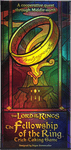
Yes, absolutely. And that leads us into the top five games list. We're going to be doing Trick Taking Games, which was Brian's choice because he loves it so much. And I might as well just say it. My first choice was the Lord of the Rings tricktaking series that you did with Office Dog. They are for one to four players. I think this is one of the few trick- taking games that are soloable. It is cooperative designed by Brian Broom Miller and published by Office Dog Game. The first in the series is the Lord of the Rings, the Fellowship of the Ring tricktaking game. And then the second one, which you did a great job following the books. If you're like the movies a little bit better, these do follow the books more. And the second one is The Lord of the Rings, the two towers, the trick taking game. And now I can finally say it. It's been released.
The Lord of the Rings, the return of the king, the trick-taking game. And that is is well, I don't know. We don't know if it's the last one, but definitely is the last book in that series. So that is really really fun and awesome. What was the inspiration for this, Brian? At one point, Luke and I right at the start of Office Dog, we were in a meeting and some bosses at Asthma Day were like, "Hey, think about Lord of the Rings and games." And that was that was basically all that came up in the meeting. Uh, and then we later learned that we would really have access to do this. And I was pitching Luke all kinds of ideas on different kinds of things and talking to a bunch of designers, right? And the other games we did, we did uh the hobbits rolling right game with Ranger Kenitzia and Jeff Engelstein and Steve Lmbonor did the circle of conflict game.
But I was Hey, cooperative trick taking very cool crew very popular. I think there's a room left in this kind of concept of cooperative trick taking games and it'd be a good fit for Lord of the Rings. Okay, that sounds good. And then a little later I was I've been thinking about it. I've got some kind of ideas on kind of how you could frame it out. I literally had the moment waiting to pick my kid up from elementary school one day where I was like the problem with theme and trick taking games is what's a trick? How does it feel thematic? Oh, the the deck is kind of like all these different environments that are very Lord of the Ringsy and that ties to Forest or Elves and Mountains or Dwarves. There's some theme there. And so, I've got some ideas. I'll put together a list of designers who I think could do this and we'll see. And at the time, Luke was I don't know. Sounds like you got some ideas. Why don't you just take a stab at it? And the initial idea was just basically when all the fellowships together leaving Rivendell, you can hear the Howard Shore music of all of them like going over the Misty Mountains. There's 10 characters with 10 goals. Some of the distributors at Asma, we need little card games.
Great. This will just be 50 cards, some characters and some cards and that's it. And I played it with people and oh, this is fun. And then I played it with people that don't play lots of trick- taking games and they're like, "This is a lot of characters. I don't know what to do." Taylor, my developer, and I were like, "Oh, maybe we do an intro chapter or something to get you started. We've got an intro. Maybe we have a intermediate chapter." And then pretty quickly I pitched to the studio, what if we just do every chapter in Fellowship of the Ring. And once once we sort of built out that framework, it was great. And with the sort of future promise of and then I guess we'll do two towers and Return of the King, but that's a problem for the future. We'll design those when we get there and let's just make fellowship as as good as possible.
Yeah. And you literally went chapter for chapter of the books. Is that correct?
It's not precisely that. Sometimes there's some chapters where it's like h maybe this is pretty close to just using that as a framework. And certainly it follows a story in order going through and and I mean we're very lucky that Fellowship has this really nice beautiful smooth arc that starts at a birthday party and you just you introduce some characters, you meet some little fun side characters along the way and it ramps up over the court very very gradually. Uh, and so we're able to follow that arc of it starts out very simple and can build and build and build. And then in Two Towers and Return of the King, it is a little less like the world expands a lot, but hopefully most of the people who are playing Two Towers starts with chapter 19. And I probably been along on this ride already and we'll be okay. Though always we use the first chapter to introduce the the key mechanics. Yeah, if you know trick taking very well, then you technically wouldn't have to finish all the chapters for the first one to just at least jump into the second one and so forth. Is that correct?
Yeah. Yeah. Know, each of the boxes are standalone, which sometimes you hear people, I'm not one of them, but doing all this research into people that are Tolken fans, there's lots of people that are like, "Actually, I read Return of the King first and then I went back and read the other ones." Maybe that will be someone's experiences with my games. And it also lets us because that main deck are like the suits of the game. And so it lets us change the art to be thematic to each of the books as well. So in fellowship the hill suit has little hobbit holes and it's you know under hill it's the hobbit hills but there's the shy and then two towers. And so in two towers the hills suit shows eros and the hills of Rohan and horses running on it. But Ederos isn't really in Return of the Kings. In Return of the King, the hills are like the view from the the top, the palace of Mina Tierth out into the hills stretching out in Gondor. So, I love that we're able to even though we're reusing those cards in spirit, make sure they're thematic to each of the games. So, that and that means that they're all standalone,
which is lovely because sometimes it is hard to get the same people to play the same game over and over again. And throughout the campaign, you can have people jump in and out because it's like each chapter is in is their own trick taking game. So yes, if someone wants to jump out and someone wants to jump in, that's totally fine. And it does play one to four. So I feel like one you're playing a solo game where you're handling all four characters, but then you don't have perfect information, which is very interesting. I've never really played it at two. I've played it at three and four. So, how does that feel different? Because like three and four definitely feels like a normal trick taking game. I feel like there's not that many two-player trick taking games out there.
There's some really great two-player only trick taking games, right? Sale cave is like the classic one.
Do in the forest. Yeah.
Do in the forest. Yeah. Jackal versus hid that are like specifically for two. You know, the challenge is with all of the different player counts, well, there needs to be enough characters in play to make the challenge work. So, two use this little pyramid of cards so that the bottom ones are visible and then there's some face down ones and there's a couple face up ones, but then are covered up. And so, as you play cards, you still get a little bit of information. I really like playing it, too. I've played through all the games with my my kid who's 11 now at two players to look for any weird exceptions or things that you need we need to call out. So you have maybe a little more information at two than the other player counts. Uh but also you have some cards that are kind of locked and you just don't and no one can play right away which can make uh some of the chapters trickier as well. So every player count feels a little different but every hand of a trick taking game always feels a little different as well. And then also every chapter of my games feels a little different. In Fellowship it's what is it? Chapter four with Fatty Bulier.
There's a bunch of characters in play. Three players. You have Mary and Fatty Bulier who both don't really want to take very many tricks in play. So, it's really hard at three where you have 12 tricks uh to deal with and Froto has to really do a lot of work.
I don't feel like these games just get harder and harder and harder. I feel like it it just feels different. There are some chapters in the middle of the game that I feel are very very hard. Then you're like, "Okay, I got through that. This seems easy."
Yes. And and there's some there's some that are hard that are real bumps that are like, well, you have to be kind of lucky with the way the cards are dealt out to make it easier then. But you really have to calculate how to play this game.
When you play with Taylor, my developer Taylor Reiner from Taylor Tables, and you fail a chapter, he immediately is like, "All right, everyone, huddle up. Let's talk about what we're going to do." Right? Because every chapter you've got some tools usually to help you deal with it and you need to figure out, okay, what's everybody's lane? Froto wants rain cards. Okay, how are we going to make sure he gets those? And I know one of my favorite things to do is when we're working on these games is to watch how people are playing and whenever I see people sort of getting into a habit of great, we can always do this. How can we throw in one new small rule that just you can't do that anymore? You have to figure out a different way to to solve this problem. And I find that very very satis. So in Fellowship the ring at one point they're at the prancing pony and Mary goes outside and he gets hit with the black wrath of the Nazoulool and you can't win an eight anymore. And the classic way to play Mary who needs to win one or two tricks. It's like great.
I've got one eight and a bunch of low cards. I play my eight. I win my trick. I'm good. Figure out a different way to do this. This this the same goal is I I love
You love messing with people. No, I'm just kidding.
I do. I do. I mean, that's But cooperative games are very much you versus the game designer, right?
No, I'm just kidding.
No, absolutely. He's the best at it. How do you make this system where it's like I've got to figure out this puzzle that's been set up for me?
Yes. Yes. I I'm excited to get and playing the Lord of the Rings, the return of the king, the trick taken game, the third in the series for sure. But that is that was a lot of great information behind the scenes. sneaky pee for that game coming from office dog game and designed by Brian himself. What is your first trick taker for our top five?
All of my games on the list here. I didn't put my own games on there. I'm from the Midwest. I can't do that. That's too much. These are all mostly older games and they're all games I've played probably at least 100 times which is just so against my nature. I know I really love them. Uh, so my first game is Doppel, which is a traditional German tricktaking game. When I was in college working at the game store, I ran a board game night at the game store just out of like my own personal collection of of board games, just teaching people games. And one of the people who came was a guy from Germany whose name was Thor, and was playing all these German games in English in America. And as we got to be friends and he was a regular in the group, he's like, "Well, I want to teach you guys like a real German game." And so he taught us how to play doc and and we played a lot a lot of hands. Uh so it's many sort of central European games. It's like a point trick taking game where the cards are worth point. So the thing I really love about Doppel is it's a four-player game and it's played in partners, but you don't know who your partner is after the hand is dealt. It's the top half of a deck of card, traditional deck of cards twice. And if you're using, you know, American French deck of cards, it's the two people with the queen of spades are partners, but you won't know until they get played, then you'll know, okay, we're the partners. And there's some bidding on, okay, well, will our will my team get a certain amount of the points or not? But I just love that hidden partnership
thing to the point where I uh was inspired by it in two towers and there's a bunch of characters that have the white and black tower card and are a partnership within the the cooperative game. So love Doppeloth. Always happy to play with that. I was in Germany and you can buy a deck of specifically for Doppel for a few always got to pick up a new new deck.
That's really cool. I've never tried this game. I would love to learn it and play it with you if we're ever have some time at a convention. But
yeah, happy to. In Wisconsin, you know, a lot of people play sheep head. Sheep's head.
Doppelc is essentially double sheep's head. So it's the doubled deck, but
not on VGA. That's hilarious. I've never heard of sheep's head either.
Here it is. Sepu made a nice deck. What is it? Shuff. Shuff is I think the German name for it. Maybe that's on BGA.
Yes. Okay, that's on VGA. And that's the same thing as sheep's head.
Yeah. And then Doppelov is just the same deck doubled with the hidden partnership thing. Yeah. There's like this whole school of sort of traditional German central European games where the 10's worth 10 points, the aces worth 11, kings worth four, queen's worth three, jacks worth two. A lot of the English French trick taking games, you're more like counting tricks. Wist bridge and things. And in the German ones, you're it's not how many tricks you win, it's how many of the points you win. Oh, I win a bunch of aces and tens in one trick. I've got most of the points. which is just kind of a different way to think about it.
Really cool. That's awesome. And the designers uncredited and it's a public domain game. I'm guessing like spades or hearts.
Oh yeah. No, there it's hundreds and hundreds of years old, right?
Which leads me to my next pick. It's Rebel Princess for three to six players. Designer is Danielle Burn, Jose Gardo Guerrero, Kel Kevin PZ, I'm sorry about that. Triso Virgos and it is published by Bezier Games in the US and this is based on hearts with a theme of being princesses that don't want to get married at the ball and are trying to get rid of all the princes which is the I do believe it's the spades I think and everyone has a different princess and a different power and it's really funny that there is a prince frog right the frog and the prince in the It's like the queen of spades and hearts and all the princes are the hearts cuz they're like kissing your princess, right?
Oh, they're the hearts. Yeah.
They want to fall in love with you and your rebel princess once and they're like,
"No, thank you."
Yes. It's a really fun game and I always have a great time and it's it's hard for me to pick which princess I want to be. This is one that I'm always going to be a be saying yes to when wanting to play. And it's easy enough if people know hearts. It's also easy enough to learn if someone just knows trick taking games as well because I never really played a lot of hearts as a kid. And the art's really cute from Alfredo Carus. I apologize. That's
Yeah, it's it's originally by Zombie Pa, the Spanish publisher, so I assume they're all Spanish names.
Yeah. Yeah. [clears throat] But my Yeah, my pick is Rebel Princess from Bezier Games. What is your next one? So my next pick is Moo, which is usually part of like Moo and Moore, which is by Doris and Frank. I think both Doris and Frank games and the the Doris Mat Matias and Frank Nestle, who I believe were a husband and wife pair making games in Germany a while back. And you can always they always have a hedgehog somewhere in their art, which is is very cute. Their first name is
Yeah, their first game was Idigel Argon. Sorry, Germans. Hedgehog's in a Hurry, which is a really great racing game. But Moo is again a game I played a ton. There was a very long period of time when I worked at Fantasy Flight where we would play it every day at lunch. And in its best form, it's fiveplayer trick taking five players is I'm sure that's what BGD says is best. At least what I say is best. And you're bidding. Many trick- taking games. What I love in MOO is you're bidding with information. So, you're revealing cards from your hand to make your bid and then the person with the highest bid is going to form a team with one other player of their choice and then it's two against three sort of thing. That's amazing. When we were playing this constantly at Fantasy Flight, we made one big change, which is normally when you're playing the game, you're playing a thousand points, but it has that thing in many games where if you're playing and you're playing the best hands you can, and then eventually you're like, "Oh, Amanda's really winning. I'm gonna not include her on my team because we could do a good job, but I don't want her to get any points in this, which we didn't like. And so eventually, Corey Ketska just started keeping a spreadsheet on his computer of everyone's scores from every lunch break. And so we were just going for lifetime high score, which was was very fun. And he would send out updated rankings occasionally to all of us on on how we were doing. But really, really cool game. Totally unlike so many other trick- taking games. and works at five is think very good. I I don't remember
what the team captains are called because someone around the office had just made us a they were always the president and the vice president and it was like a picture of Nixon and Spiro Agony that we use to mark who those were which is not not included in the base game but love Moo and it's that one's back in print too. I think Hidlebear Games brought that that back so that made me really happy. Yeah, I think the original was two to eight players, but H Highleberg changed it and now it's two to six players and then in the US you can get it from CG check games edition and the same day. Yeah, designer Doris Matus and Frank Nestle and yeah, I have the CG version. It's very very pretty and the Trump suits or the Trump numbers are changing because you're actually choosing those things. And so it's a very interesting push and pull of your partnership that also changes from trick to trick, right? And or hand to hand, I should say, versus
Yeah. Everything kind of just changes and really just feels different. Then you have to re-re yourself that you're on a different team. But it is really really fun. Yeah. Yeah, you're you're picking multiple trumps and they're super trumps and it's quite advanced but very very satisfying when you get into it and if all five people are really familiar, someone reveals a yellow seven and there'll be an audible gasp at the table and I just love it. It's something I love about trick taking games where it's Oh yeah, this colored number is thrilling. It's such a such a great magic trick.
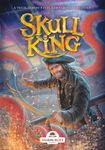
Yes, absolutely. That is moon more from Haidbar or Czech games edition currently. My next game is going to be Skull King for 2D players. Designed by Brent Beck and Jeffrey Beck from Grandpa Beck's Games. And this one kind of has become a classic to me just because people love it. It is that tricktaking game with points, but you have powers because the pirates could do different things. There's different ways to play it because you could do it base where they you don't you just ignore the powers or you can add in the powers. There's expansions to it too that changes things a little bit and there is that whole this can beat that but then this beats that. So it's one of those things you got to keep keep an eye on, keep attention to what people are playing your betting. And I love the betting of starting with yo ho ho and then you put your number of fingers of how many tricks you can win and it really kind of snowballs because you're starting with only one card and then you're going to play two and then it goes all the way to the number of players and it is really fun small box game that I think really has for at least my gaming groups and the people I play with it's become a classic in that way. I was actually inspired specifically by Skull King and this increasing hand size for the Helm's Deep chapter in Two Towers. It has has a sort
of spin on that. You're going to play multiple rounds and you're going to get more and more cards and it's just so exciting. Skull King's such a great introductory trick taking game because we're just going to play one card and you'll see how this works, but it's part of the game. And then as you go to two and three, oh, now I have some moves and some control. And it's always funny, right? I think the mermaids can deal with the skull king and they're also trying to figure out, oh my gosh, how many can I lose? And I love the card that says that you can either be a pirate or you can just run away and I'm just like, yes, let me just run away. But yeah, it's a it's really a great game. That's Skull King from Grandpa Bax Games. And your next one, sir?
So my next one is called Cosmic Edicts. It's uh by Urs Hostedler, who's one of my favorite game designers. I have another one of his games on this list. So, this is a threeplayeron trick taking game. It's inspired by the traditional Swiss card game which is called Yas. There's a lot of gimmicks to this. It's a small deck. It's a 36 card deck, which is one of the reasons why I think I use 36 card decks in my games cuz I'm very used to it. It's another point game like Doppelov where the cards are sort of worth points in the traditional European style, but the person who gets the most points and the fewest points of the three will each get a victory point in the game. Except if someone goes over uh I think it's 100 points, then they bust and the other two players get 100 points. So, you have this really great tension of I have a good hand, I need to win some tricks, but I can't win all of the tricks. for I have an okay hand. Am I going to go for points or am I going to try to bust the person who has a better hand than me? So all that is great. On top of that, at the start of the game, you reveal one of the cards, and each of the 36 cards has a unique player power associated with it. And this is a game from way before when unique player powers were common in any game. Uh, and they're crazy. And then on top of that, every round you reveal the last card that's dealt and
depending on what it is, it can change the rankings of the cards for the hand. So maybe, oh, the lowest card, the six, is actually the highest, and you invert the rankings. Or maybe now for this hand, we're going to use like WIS rankings. And it can be quite intimidating to get your head around. But I I think I played this basically every day at lunch for a year with my friends Dan and Zoe who also worked at Fantasy Flight and we would go to the pizza place down the road from the Fantasy Flight office and we would order a Hawaiian pizza and we would play Cosmic Edicts. Uh and there's so much depth to the system. I'm pretty sure we came up with a whole additional 36 player powers that we were playing with at one point. We played it so much. It's not in print, but I always find there's copies floating around and it has its own funny art on a deck of cards, but you could totally just play the regular deck of cards. Whenever I have a Hawaiian pizza, it just reminds me of playing Cosmic Edex. It's a total total sense memory. I promised uh Zev, the founder of Zman, I would teach him this game at a convention next year. Maybe I'll have to order us a Hawaiian pizza to eat while we while we play.
I think you need to reprint it with the Hawaiian pizza theme for some.
Yeah.
Yeah.
And can you find the special asymmetrical powers on BG's in the rule book so that you could just play it if you wanted to?
This copy I have is in German. I think it was only ever published in German, but maybe German in Switzerland by Abacus. I only ever played this off of off of BGG. And I'm pretty sure I first heard about this on the all these old BGG podcast cuz they would do games for player counts. I'm pretty sure this was someone's favorite three-player game. Oh, I got got to check that out. Prayed for a copy.
Awesome. So, if you can find a copy of Cosmic Edex because I don't think it is in print right now. And I took off a game. So, I might as well continue on within that vein of maybe it's a little bit harder to find and maybe we can find someone or we can ask the original publisher to to publish again. But my next trick taker is Macaron for one to five players from Tate Woo and Sunrise Tornado Game Studio. Except this one is you're also betting on how many tricks you want to win. And people choose the Trump suit versus the not the actual anti-Trump suit. It's the allergen suit that you actually don't want because there's good points. And so it's very interesting that whole score tracker in the middle because you are betting on what level you're going to be at and then if you miss it or then you get negative points. But if you get it, you get a lot of points. And then you're trying to push people to miss it in some way. And it's very very interesting how it changes the different flavors of the macarons or your different suits of the hand and it will change from a hand to hand from game to game. And he did a Kickstarter for this and I really enjoyed the game, but I don't think he's reprinted it so far. But he might have there might be some games floating around at your local friendly game store. But this one I really enjoyed and
it was a definitely different enough and it had of course a way different theme to the game that I it's definitely staying in my collection. It's it's really interesting to me for me to play it.
I haven't played this one. That the allergen soup thing sounds cool.
It's really really interesting. So definitely if you can check out Macaron from Tateu and Sunrise Tornado Game Studio. So that is my penultimate one. What about you? What is your penultimate one?
So, my next one I liked enough to get Office Dog to publish it is Shoden Freud, which is I think the funniest card game I've ever played. You're uh it's a trick-taking game where the second highest trick wins the trick, which if you've played a lot of trick- taking games really messes with your head because you can't just play the highest card of the suit and know you've won. Every card really matters. Every card can be effective. And then when you win the trick, you win. you get to keep the card you won with and any cards that didn't match the lead suit as points. Although, if you ever get two of the same number in front of you, if you have two fours in front of you, they cancel each other out and you don't get points. And you want points cuz the player with the most points at the end of the game wins, except everybody who goes over 40 points loses and ends the game. And so you it has this really great tension of winning tricks, earning points, canceling everything out. Sean Freud, of course, is one of those great unique German words that means taking pleasure in the pain of others. So, the game gives you lots and lots of opportunities to cause pain to other people. Well, looks like you're winning that trick. I don't have that suit. Have a nine and have nine points. It's very funny. It's very mean, but very straightforward as well. And so to me, it's one of those great games that you can show to people and they can learn really fast, but then you can also just play it over and over and over again and find some new depth because it is different enough from other other trick taking games as well.
So the office dog edition just debuted at Essen last weekend and looked like it was really popular. I got to meet the designer there. He came over from Japan to do a signing at Essen, which was really awesome. It's really great. very global game. It's a Japanese designer whose game is named after a German word by an American studio, but it's been very hard to get out outside of Japan until now. So, I'm I'm happy that there's lots of lots of different people will get to try the game. And then the obviously the Brie and the studio at Office Dog really made it look beautiful with Weerson Santiago art. So, sorry if that's a a shameless plug, but is a game I I truly love. No, that's really great because a lot of Japanese games are harder to find unless someone picks it up and I find that a lot a lot of Japanese games are trick takers too, which is very interesting.
Do you happen to know how to say his name? The design?
He has a pen name. So his publishing circle is called Studio Turbine and then his specific publishing name is just the letter CTR.
Very interesting. I only know names from Japanese designers and then from authors, right? because people can name the author which is very interesting. I guess it does make it a little bit easier for other countries and people to say or remember their names. But yeah. Okay. Really cool. I definitely am looking forward to trying this because I did not ever play this game. And so I I want to see how exactly how mean this is going to be.
Pretty mean. Pretty mean but in a in a wonderful
keep that in mind. I'll keep that in mind. I'll play it with more competitive people so that I know everyone's going to be mean instead of with new people where I don't want to be mean to you or or couples where they don't want to be mean to each other and you're like no you have to be mean.
I mean it's one thing that's great about tricktaking games is cuz they're not that long. Right? So, it's not, okay, we're at the end of hour five of this really intense Euro game and now I'm going to ruin your day or we're playing Twilight Imperium and I wipe out your whole fleet on round three and you just have to play for another 6 hours. It's 15 minutes. If you get tanked, it's it's all right. And and in Shot and Freud, right, I push you over the edge and you bust and that's the end of the game. And so, you can everyone can just laugh about it.
My last trick taking game is Trickerous. And this one I just learned this year. It is a Japanese game that Smirk and Dagger Games is bringing to the US. It is designed by Bajour Cannon. It's for two to five players. Uh it is coming to North America from Smirk and Dagger Games. This one also has that a little bit of meanness where you're trying to force someone to yeet themselves into the sun.
Yes. because it has that whole board where when you win a trick, you go up it, but you also jump over anyone that's right in front of you and you're hoping to just stay at the very end right before the sun because that's the most points and whoever has the most points at the end of the hand wins the game. But there are some tricky bits to it because there are the number five cards that can flip a token and change the trump suit. And so it flips not only the token that changes the trump suit, it also flips everyone's card that's played already on the table and everyone's cards that are in their hand, which might change the value. Plus changing the trap suit, which might force someone to win versus someone else who thought they were winning. And you're hoping that this will kind of yeet them into the sun and get them into the back of the line
because it's Icorus, right? And it's really really fun. I I feel like the two players definitely more tricky. You do get to a third hand that you're only seeing three cards at a time, but it's not about being the person with the most points at the end of the hand or at the end of the game. It's more about where that third person is be at the end of the hand. So, is it that third player, that AI player is going to be in the middle of you two or on the ends of you two? At the end of the hand determines who wins, which is a little bit more interesting, right, for a two-player, but it does take at least one or two games to wrap your head around it. So, it was it was a definitely one of those. This is something I have not seen in a trick taking game before. after playing so many trick taking games and I'm very excited to have more people play this and so glad that Kurt brought it to the US after playing the Japanese version.
I also like Tricker and I have Beir's next game which is called Dualis in my two play pile but I haven't played it yet so I don't know.
You are very lucky to have gone to Essen and the Tokyo game. I am very much in from boom for I didn't get to go this year to Essence spiel and I have the Tokyo game market on my bucket list but I feel like I need to save a lot of money. There's a lot there and a lot of stuff that feels like this is by one chance to get it. I'm also very lucky that here in the Twin Cities there's a really really great group of tricktaking fans that do a monthly meetup and a lot of times even when I bring some weird imported game to it, someone else is there who's also imported a copy. So there's a a great network of people to to be able to try stuff out.
Okay. What is your last one, sir?
My last one is it's more of a shedding game than a trick taking game. I I fully acknowledge the difference between these two. But as I was thinking about the games that I have played the most is also by Earth Hostedler is Tichu which needs no introduction and was also a mainstay on the old school board game geek podcast as best with four players. Uh but no I've can't even count how many hands of teacher I played. Right. Classic shedding game partnership uses a regular deck of cards with four special cards and you get to call Tichu and bid that you'll go out first and then you get a bonus big bonus if your team goes out before either player and then there's a few points to be won on top of that and it's just a game with infinite depth to it. I don't know that I consider myself that great of a T2 player. I know so many people who are way better than I am at at it but I but I love it. I remember learning it and going, "This is okay." But then eventually you play it enough where you just can see the matrix and you look at your hand and you're just, "Yes, this is how this is going to go. I'm gonna get rid of this eight and I'm going to play this pair. Then I'm going to do this run. It's going to be awesome." And then someone plays a bomb and messes it up.
And I don't know, just it's very hard to turn down a game of Tichu. Even if everyone else is way better than me, I'm still happy to play.
I have seen this game played at least once at almost every convention. And I know there's this group of guys whenever they're at the same convention, they will always play this game. Is it Bonacor that always has this game on him? I forgot. There's this one person that always has this game on him.
Oh, there there's multiple people that are always up for the game of teach. And we'll we'll shark you. And of course, our mutual friend Lupe from office. Is absolute teach.
Lupe is a shark anyways.
No, no, no, no. However, however good you think Lupe is at games, it's just even more for teach. So, but it's it's great.
Never has enough time, though. I would love to play teach you with you, too.
The publishing history of it is such that it's been published by many different publishers all over the world. So, there's also the great depth of going, "Oh, I want to get the plastic Korean deck of Tichu," or, "Oh, there's a really pretty French deck." And so, there's all these different versions of this game. and but just you know tonally calling out rights stuttler one of my gaming heroes I haven't been fortunate enough to meet yet so
I I don't know if he even speaks English and listens to podcast but if he hears this let me know
love to just thank him for creating something that's occupied I don't know months of my life a year of my life if you add it all up it's it's a lot
it is true that a lot of designers will go to Essen a lot of German or Korean Japanese designers go to Essen. I've met most of them at Essen. I think you can meet a lot of the American designers at Gen Con or Pass Unplugged, but it's always fun to meet designers. I'm sure people are like that with you, Brian. Occupied so much of my life with your Lord of the Rings taking it.
I will say one of the greatest thrills I've had on that front was I was I was at Tokyo Game Market and one of the things that's different about that than a lot of other shows is you can like reserve the games ahead of time from the individual designers. Uh, and so I was just going around like picking up all the games I reserved. Uh, I'd made a card with my name on it and a business card, but I'd put it in English and Japanese and I'd put when I'm the designer of this game just so people had some some context of who I was if I couldn't really cuz I don't speak Japanese. And I uh went to pick up this little game and the guy through a translator was like, "You made my favorite game." And then he reached down into his backpack under his table and he pulls out an English copy of Fellowship and he opens it up and he has done this beautiful paste up of the whole game and there's 150 cards in Fellowship and he's done it all in Japanese and not just white stickers laid it out in Photoshop or something. stand the card in and play laid it out in Japanese. And it was just absolutely the most surreal moment of flying around the world and coming up to a stranger, buying his game, and then him going, "Oh yes, no, you you made my favorite thing." And it was just totally uh very very humbling moment.
That's awesome. What a great memory. And that is our top five trick taking games, but the last one was teach you. I do believe you can find it from Rio Grande games in the US and North America
or just look for very serious looking people sitting across from each other in the corner of a convention. Uh
being very quiet or or yelling at each other alternating. Yes.
Yes. And now we've come to our moment of positivity. Even though there's been multiple moments of positivity in this uh current podcast episode, but we are at the moment of positivity where we talk about something big, something small, something that just brings a little bit of joy into our lives. Uh Brian, do you have some other story you would like to share? The other teacher's story that I I didn't get to share is that is a very very happy memory for me when I this was like at fantasy working at fantasy flight uh playing games at lunch again but this is when fantasy flight had gotten pretty big and at one point a group of us organized it was a 64 person Tichu tournament and we're in teams so 32 teams of two and you'd have a week to play your matchup at lunch right cuz you play a bunch of hands at tichu to finish a game and I did not win that tournament. But Anton and I did do very well. I think we got second or third. I don't remember. It's one of the things to me that of games that's just so great of the memory of playing a game and just bonding with people and getting to getting to do all that. So great.
Yeah. I remember I took a calculus class in in a community college and I just somehow found a guy. I met him at class where we both liked Jin Remy. So every day before class, we'd have to play a couple plans of gin rummy. And I feel like that's the same thing with you and your lunchtime trick taking games. And it it just made me look forward to the class. Even though the teacher was awesome. I think the teacher was the best teacher for teaching me calculus and making it very easier to understand and relatable. But I always still to this day are looking for that one person or that group of people that I can play something every single day with and I have a bound of my person from a previous job where we actually went every Saturday to the game house. I got her into the hobby board games and it's just me and her, my friend Ruby. And every Saturday we would go to the game house and pick up some games, get a piece of their homemade pie and eat and and play until dinner and then leave and go have dinner at home with the families. And then we of course the the company that we work for closed down. So we don't see each other that often. And now she's married and she has a baby, a brand new baby, which goes into my moment of positivity. But it's very sad that I don't get to play with her every week anymore. And it's one of those things that is really nice when you can you have that group that can play every
day or every week.
Yes.
Yeah. But my moment of positivity is finishing her baby blanket. She had me knit her baby a blanket and I did it in her favorite color which is red. And I did it in a way that because we're in Southern California that she can use the blanket both during the summertime and during the winter. And I made it out of bamboo yarn, which is harder to work with than you would think, but also extremely soft. It's one of the few craft projects that takes a long time. Literally, two rows will take me an hour that I actually finished. So, I'm very proud of myself.
No, that's that's amazing. My wife just knit me a really lovely new scarf for winter time, but I know nothing about knitting. She she was cursing her choice of using alpaca yarn. Maybe this means something to you, cuz it's very Yeah, it she's not making progress nearly as quickly as she had hoped for, but the cold is just coming in Minnesota, so it will be be much appreciated here soon.
Yeah, y'all definitely need it a lot more than us in Southern California.
Yeah. Y
I I was thinking of trying It'll probably mean nothing to you, but your wife would understand. It is double knitting colorway. So that means that you're knitting two at the same time that's interconnected with each other. And then you're doing in a color way so that the mirror is the reverse of the color is on the other side of the scarf. And I was like that looks so cool and I definitely want to try it,
but I would never wear it because it would be way too warm for Southern California. It's like a double layer scarf. It just looks really cool though.
Yeah. But that's our moment of positivities which is absolutely lovely and very happy. But Brian, thank you so much for joining me. This has been so much fun. Now, where can people find you on the internet?
I think my best public place is on blue sky where I'm just be born, I think, cuz I'm a boring grown-up, but I I tend to post uh things about someone says something about one of my games, I'll post it there. If I also will always post there when I'm going to be at a show looking for pitches. So, I'll be posting soon there about uh how people can get in touch with me if they want to show me a game at packs unplugged because I'll be there with the pre-release of Return of the King, but we'll still have a little time to uh look at pitches or they can always just email me at bourmulerasmday.com and send me send me a game pitch and I will I'll look at it eventually.
You probably have a backlog of emails after coming back from spiel.
Yes, I try to get through the the folder once a month uh or so at the at the latest. Oh, that's very nice.
The nicest thing is a yes, and the second nicest thing is a fast but polite no. So, I I do my best.
Yeah, that's very true. I think people hate the uncertainty of a ghosting. They don't know, right?
Yeah. Yeah. Yeah. Absolutely.
And if we're at Paxs Unplugged and we see you, can we ask for an autograph? Will you sign your games?
Yeah. No, I'll absolutely sign I'll sign the games. What's sign a card? Anything like that. I'm always very grateful of anyone who's taken time to play any of my games.
Hey, that's so great. And thank you once again. If you have any questions for Brian, I'm sure you could message him on Blue Sky or send him an email or see him at a convention. And this was a lot of good information for designers who are wanting to see a little bit of the other side of pitching and some tips and tricks for you all. Definitely also check out the tabletop designers guild of America that has a lot of great resources for designers and check out some of these trick- taking games. There's so many more trick taking games than this. This was only 10. Literally, there's hundreds of trick taking games out there. And I would say if it looks very weird, try it because you never know. Yeah. And and my other plug is for playing a trick taking game you already like more times than you think you normally would because sometimes you just will discover something really magical beyond just the cool gimmick or cool idea of it.
Absolutely. Absolutely. Well, thank you all so much for listening and I hope you have a wonderful day. Bye. You've been listening to the BoardGeek podcast produced by Amanda Wong and edited by Amanda and Moonlet May. Be sure to visit us on the web at boardgamegeeek.com. You can also find us on YouTube at Blue Sky, Instagram, Facebook, and Tik Tok under boardamegeeek and Twitch under boardamegeeektv. You can reach us by email via podcast at boardgamegeeek.com. Thanks for listening and happy gaming.
Heat. Heat.