Top 10 Synergy Games
Games in This Video
9 games are featured in this video — they unlock as you watch.




Transcript
Nick, if we like anything, okay, so when stuff comes together, like this synergizes, we're talking synergy.
Hey, hey, hey.
What's up everybody? My name is Nick.
My name is Synergy Jones.
Synergy Jones over here. That's Mike.
Uh we are the brothers of Murf and today we're going to talk about our top 10 games that have really really good synergy. So Mike, what does synergy mean?
So mostly stuff just comes together.
It's a games where like
stuff's working off of each other.
Things are working off of each other. Uh you know, you might be like, I want all these things to feed into this point engine I'm building or this thing leads to me being able to build that thing to that thing to that.
This card bounces off of this card then bounces off of this card.
This card can be like efficient and whatnot. sort of our synergy definition.
Satisfying kind of game to play. Let's talk about our 10 favorites. So, number 10 for games that have great synergy, this is going to be Everddale or any of the different kind of versions of Everddale. Now, there's uh kind of they've explored the wider world, but in Everddale, let's kind of kick things off. This is a game where you are going to be uh placing out workers. You're in this kind of beautiful forest woodland and you're a bunch of anthropomorphic uh woodland creatures. You're going to be placing workers out to collect supplies, um, uh, do events and things like that, and you are going to be feeding those supplies and stuff into building out your part of the town, which is going to be represented by this kind of display of 15 cards. Uh, that's going to be different constructions, uh, and then different critters. And so the critters and stuff are often or always going to be paired to a construction. So that's kind of the first area where synergy can happen because if I build a certain construction that can allow for the barge toad, for example, if I then later get the opportunity to play the barge toad, I can play that critter for free because it's them going into essentially their house. That's where they they live. Uh, and so that's really cool, like being able to kind of figure out and pair together cards to not have to spend some resources because resources are fairly tight in this game. But then beyond that, the cards that you're building, the critters and stuff are going to be colorcoded to different styles. There's, you know, one time uh
things that trigger when you play them, and that's all they do. There's these green uh kind of income cards that will trigger when you play them, and then potentially a couple more times throughout the game. There are uh uh red cards that give you additional worker placement spots, uh blue cards which will give you like discounts and things and kind of perpetual boounds throughout the game. So, you're really kind of trying to, you know, as you build, find the path of least resistance to be able to build all the other stuff you want to do, trigger those abilities, uh, you know, turn stuff in to score in-game points, and the cards you're building, of course, are going to be worth your kind of main hit of points as well at the end of the game. So, it's really about that kind of journey throughout. you're not necessarily going to have your entire plan laid out at the very start of the game, but this card comes up that gives you this opportunity, which gives you this discount that you can build that card and stuff. It's really, really fun to try to build this kind of like beautiful cozy, you know, part of this village and have it all kind of work together as seamlessly as possible.
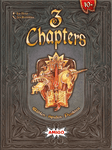
Number nine is going to be a great game called Three Chapters. Three Chapters is really kind of a weird one. It's very, very interesting because of the fact that there are three chapters to this game. And you're kind of playing like three kind of like separate games in one, but they all come down to that synergy and kind of like a a pseudo fantasy realms by the end of it. Talk about fantasy realms a little bit later. Um, but nonetheless, this is a game that again has three chapters. So the first chapters you're just doing a draft. So you have these cards. There's all these different kind of cards. Lots of different fairy tales. That's kind of the general theme of this one. So you're drafting out these kind of fairy tale cards. There's going to be certain cards that go with each other. Tweedled D, Tweedled Dum, things like that. You know, all these different kinds of things. And so you're drafting out these cards. They believe it's eight in the first round. And then in the second round, you're playing a trick taking game where you're going to take these cards and you're playing out tricks. And there's going to be cards in this round that will basically like work off of cards in the trick. So you start kind of having that synergy of like cards that then like maybe allow you to boost up a card, boost down a card, whatever, things like that. And then the third um the third round is basically like a fantasy realms thing where you're basically then taking all your cards and then you're trying to score them. So, it really comes down to trying to get this big synergistic thing where you have like these cards that work with these cards like Tweedle Dum which works with Tweedle D. You have this card. You have a dragon and a wizard and all these different kinds of things. Again, kind of like Fantasy Rebels, but it's got this other two chapters to that story and that's kind of the way that you gain
these cards. It's really really interesting and really fun. I believe it's by um Amigo and I feel like it came out and a couple people were talking about it and then like no one ever talked about it again and it's still like a relatively newish game. It's only a year maybe two years old but like I really thought this game would take off a little bit more than it did cuz it's super super cool because you have those kind of mini games. But that kind of synergy is really starting at the very beginning of the game when you're drafting out these cards. You're really trying to get cards that help you, trying to pay attention what cards you're giving, potentially giving to other people so you can kind of counteract that things like a trick- taking phase. It's really, really interesting, but it's all about synergy, which really carries all the way through all three of those chapters.
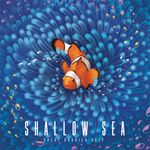
So, Shallow Sea is next, and this is in that kind of uh, you know, style of these kind of cozy tile laying games. Has a similar drafting mechanism to Cascadia. Here, you're going to be drafting a tile showing uh either a sea creature uh that you have in the game or coral, and then there will be a certain color of fish that will be essentially tied to that. So, you'll be taking one tile and one fish. Uh, and you can choose kind of which tile type you take. You're gonna be adding that to your display here. And you're trying to for the coral, get the coral surrounded with the color of fish showing on its various sides. And if you get to do that, you can then flip uh that coral uh which will be worth more points and will be uh help you kind of fill out the conditions for those sea life tiles that you're building. So you're kind of trying to build everything in such a way that you can be working toward multiple goals uh with a single move. So for example, these fish go in between all the spaces of the tiles. So if I can, I want to have a coral here that needs maybe purple uh above it and have a purple fish and then a tile above that that needs purple on the bottom. So that this fish is now working toward two uh conditions. As you complete coral, you are going to have to put one of the fish surrounding that tile onto the tile. you are also losing fish, but there's abilities and sea shells and things you can spend to move your fish around to again kind of extract as much, you know, usability out of these pieces as you go.
The sea creatures are going to uh largely be able to flip over based on kind of the conditions of your board. So, having certain colors of tiles in a straight line or certain things surrounding these tiles. So again, I'm now kind of considering where my fish are going, where those coral tiles are going, where those uh sea life tiles are going in a way that I can hopefully put one thing down, everything kind of clicks, everything gets to flip over, and life is good in the sea.
Next up is going to be Seven Wonders Duel. You could really I mean, you can also just choose Seven Wonders for this. And honestly, a lot of engine building games are going to show up on this list because the whole point of like uh you know, like say a Splender could have very easily just been on this list because the whole point is that synergy. The whole point is getting things that allow you to put other cards into a play or do other things easier or cheaper or however you want. So, Seven Wonders Duel is our personal favorite version of Seven Wonders at this point. There's quite a few of them actually. There's Seven Wonders Architects and all these different kinds of things. They're all very fun. But this is a game where you are uh getting cards. And these cards are going to be a lot of times resources like bricks or wood or stone or things like that. And then once you have these cards, you then can put other cards into play cheaper because these cards are going to require you to have wood or stone or something like that. And if you have a permanent resource of that, you then have a permanent resource. You're not having to spend anything, which is very, very useful. So, it's all about building up this engine. The nice thing and the more kind of tactical part of Seven Wonders Duel as opposed to Seven Wonders. Seven Wonders is a pure drafting game. Seven Wonders Duel, you're drafting out of a card pyramid kind of pyramid solitary style. So, this one's got a ton of like jockeying for position because if you take a card and it uncovers other cards, they will then become available, maybe even flip over if you didn't know what they were. And so the whole thing is trying to get the cards that you need to really synergize with your engine while trying to deny your opponent from getting what they need. And on top of that, there's three
different ways to win this game. So you have to be paying attention and kind of like being on the offensive and the defensive on multiple different fronts at the exact same time. It's really, really outstanding. At this point, Seven Wonders Duel is not a new game. It's been around for quite a while. And again, there's really any Seven Wonders game, really any big engine building game can work very very well for this. Um, but Seven Wonders Duel is just like the cream of the crop. The Lord of the Rings version, the Seven Wonders Duel for Middle Earth is really, really good as well. They're just wonderful.
Next up is going to be Point Salad. This is one of the first games that kind of made us think of this synergy idea. This is a really simple, straightforward set collection style game where you are going to be drafting vegetables from this display. There will be six vegetables on offer. Uh, and then there are on the backs of all of those cards, uh, scoring condition cards that are going to give you points for the types of things you collect, those types of vegetables you collect. So you can either get two uh veggies, you can get a scoring card on a turn, and you are trying to build out, you know, this tableau of veggies that are going to satisfy as many different scoring cards as you can. So one thing that's nice is if I have a scoring card, you know, two scoring cards that require carrots, I don't have to divvy up those carrots, one for one scoring card, one for the other. Those carrots can work at all of those scoring cards. So you're really trying to a get the right kind of assemblage of vegetables in front of you as you can and then get those scoring cards that are really going to make those veggies as valuable as possible. A lot of the scoring cards also give you negative points for certain types of uh veggies. So, you're having to consider that. Maybe it's like, man, for this cabbage, you know, these I get all these points from this these scoring cards and if I grab this other one, I have carrots as well. Like I mentioned, I get some points for that, but I'm going to get negative one point for all my cabbage.
Is that worth it? Or do I let that one go? You know, kind of focus in on the things I already have and try to pump up that scoring. It's really fun, but it's super simple to get into. So, it's nice to have something that is feels really satisfying because you're going to be able to build, you know, a cool kind of point engine, but have it be really easy to get into as well.
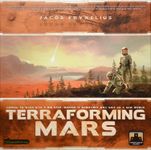
Number five is going to be a massive engine building game. It's all about synergy, and that's going to be Terraforming Mars. Again, you can kind of choose a lot of these different kinds of games that have tags and engine building and things that want other things to work off of them to choose this one. Terraforming Mars is a classic at this point, but this is a game where you are terraforming Mars. You're basically trying to uh do three things. You're trying to have a certain amount of oceans on Mars. You're trying to get the general temperature up to a certain amount and try to have a certain amount of oxygen in the atmosphere and that will successfully terraform Mars so that we can then go live on it basically. And you do that through card play basically. you're getting these various cards and you're putting them into play. These cards are going to have tags all over them, like, you know, a kind of a a plant tag, an animal tag, and these kinds of things. And very often other cards will require you to have a certain amount of tags in place for you to put that card into play. Or it might be like now whenever you put another card with this tag in there, you then get to put a thing, a biome thingy on this card or whatever. You know, there's all these different kinds of engine building and synergizing. Again, engine building is a big big thing with Synergy, and this is one of those kind of big engine builders where you could really explore the depth of this game and really explore all the different ways you can play, all the different strategies you can in like kind of go through and try to do. It's just a big experimentation really as space travel is, right? Theme stuff, I don't know. But nonetheless, the synergy in this game is off the charts because yeah, it's just big old engine builder.
Next up is Castle Combo. And as its name kind of evokes you, it's a game where you're trying to make everything kind of combo with everything else uh to score as many points as possible. So this is a game where you're going to play over nine turns. You're going to end up building a 3x3 grid of cards and you want all of your cards to feed into the scoring of all of your other cards as much as possible. And you're also getting in-game benefits when you play cards largely based on what other cards you have in your grid and where. Uh, and you're just trying to make it all kind of blend together as beautifully as possible. So, on a turn, you're going to draft a card. There's a row of of villagers and there's a row of kind of like royalty, the castle dwellers, uh, and a messenger that's going to be at one of those, which gives you control over where you can draft from from, and you can spend, you know, keys to move them around and stuff like that. When you draft a card, there's always going to be an immediate ability that happens that will often give you money, which is important for buying future cards, uh, or keys, which can be used to give you a little more control, uh, and be worth endgame points. And you're going to trigger the ability when it goes in. And it might be something that, you know, each card has at least one shield, one or two shields. It might be for every blue shield in your tableau, you get a coin. So, ideally, I can get that when I already have some blue shields in my display. And then at the end of the game, it might give me three points for every blue shield I have in this row or this column or something. So now I'm trying to focus on where I arrange cars
in my grid uh to make sure that I can kind of get something now and also be able to score points later. It's a really fun game of, you know, taking what you have available in front of you in terms of like what's on offer and trying to make it, you know, feed into your in-game ability to keep buying cards and managing your money and then making sure that there be cards that at least score you some points at the end of the game because you're only going to have those nine cards to score from. And you need things to kind of be able to score in multiple ways by having their own scoring condition satisfied. and then ideally being part of another card's scoring condition as well.
Number three is going to be another big engine building game and this is going to be Arknova. Now Arcanova has more going on than a kind of a more pure engine builder. I would say like something like terraforming Mars is, but Arc Nova still has the base of that kind of engine building with tags and all this different kind of stuff where you are getting these various animal cards for the most part. Um, and you're putting them in your zoo. You're building out a zoo. You also have a zoo board with like polyomino tile type things on there and you have to get enclosures, put these animals in, of course, naturally. And you're building out this kind of big tableau of various animals. And this again is one of those games that has like 200 cards in the game. Every single one of them is unique. They are all technically different. Different animals, different ways they work together. And so the synergies in this game are just like off the charts. There's so many different ways you can play this game. And this one also with the synergies is a kind of synergy that I really enjoy, which is you kind of have to figure out what your synergy is going to be as the game goes on. There's so many cards in this game and you only see so many of them. So, you can't really necessarily choose like I'm going to do like bird synergy. I'm going to get a bunch of bird cards. I'm going to do this, do this, and this. A lot of people don't like that about ArcNova. I personally really like that about ArcNova. I really like the fact that you're constantly having to pivot.
You're like, "Oh, I was planning on doing this." But, you know what? There's a couple bird cards out there. They synergize together. They work together. You know what? Screw it. I'm pivoting. I'm going to go start doing this. I really like that in games. I enjoy having to pivot in games. I think it's very, very fun. And Archanova is great for that. You get these synergies. get these really fun engines that you get to play around with, but you kind of have to go with what you're given to some degree. And I really, really like that about Ark Nova. Other than that, I mean, it's number two of on all time on BG. It's number two game overall. It's probably be number one one day. We'll see if Brass Birmingham ever gives up that title, but nonetheless, it's Ark Nova. It's really incredible. But the synergies are very, very good. Very satisfying. I think it's one of the main reasons why it stuck around.
Number two is going to be forest shuffle. So, this is a game where you are drafting cards and then playing cards down uh into your part of the forest, I suppose, your big display of cards. And all of these cards are going to combo into each other, feed into each other, and there's a whole bunch of different ways things can score. Uh, these cards are going to have either trees on them or they're going to have these s divided cards either divided down the middle so they have a left and a right or divided down the middle this away so they have a top and a bottom. And these cards are going to be able to be slotted around onto the four sides of the trees that you play. So you're kind of, you know, building out your forest. The animals live amongst the trees and things. That's sort of thematically what's happening. And these cards are going to uh give you tags that are tied to the species of trees in the game.
They are going to be at times like animals or uh insects or reptiles, you know, uh things like shrubs and whatnot. They have all these kind of different tags. And a lot of the cards are going to be like, hey, for every uh you know, deer symbol you have or kind of hooved animal symbol you have, you get three points for like the wolves and stuff because that's what they would hunt. So, I want to have a bunch of those symbols. And so, I can make this wolf as kind of strong as possible. And what's really fun is the animals that are in the game appear multiple times. So, I could get another wolf and now I have two of them. So, essentially, all of those hoof symbols are worth six points each. So, I can really kind of find a certain combination that I want to try to hit as hard as I can and just feed things into that as best as you can. Now, what's extra kind of spicy about your stuff is that playing cards is not free. You have to play cards by discarding other cards from your hand to this kind of meadow in the middle, which could be things that people then draft from. So, you could be handing them a card uh unknowingly that they have been looking for the whole game. Uh so, you have to give up stuff from your hand to pay for things. And really, it's a situation where every card that you have could be really valuable for you. You could feed that into this thing I'm building with all these birds over here, you know, and stuff like that. So, you're making these tough decisions about which cards do I give up? Which cards do I maybe put in
the meadow? Hopefully, I can draft them again so I can use them in the future. Uh, and then also there are a lot of cards that have bonuses where if I pay with cards that show a certain species of tree and I pay with only cards that show that symbol, I can get this bonus action. So, you're really kind of weighing a lot of things, but everything comes down to once it's on the table, how do I make those cards as valuable as possible, finding a direction, and then really trying to drive down that road so that everything feeds into everything else. It's immensely satisfying when you pull off that kind of like massive combo throughout the game and it's just delicious and fun every single time.
Number one is going to be Fantasy Realms. I feel like this, at least to us, is like the quintessential game about synergy because that's literally the entire point of this game is just trying to build a synergistic tableau of cards is what you're doing. It's a very very simple game where on on your turn you're going to draw a card and discard a card. That's it. You're going to have a hand of cards and so you always have the same amount of cards in your hand because you're going to draw a card and you have to discard a card. That's the whole game. When you're drawing cards, you can draw cards from uh the deck and then you'll have the discard down to the discard area. And once there are 10 cards in the discard area, that is when the game is going to end. But the thing is is you can draw from the deck or you can draw from the discard area, which again slows down the game a little bit more. And basically what you're trying to do is you're trying to get a synergistic hand of cards. That's literally all you're trying to do this game. Once that part is done, you're then going to lay out your cards and score them. And your cards are going to have usually a base kind of scoring and then usually something else that they do. So the base scoring might be like 10. And it might be like, you know, let's say a scepter, right? It's a scepter. And so it's like or let's say it's a staff, like a wizard staff. It's like the staff is worth like 10. But if you also have the wizard in your tableau, that means the scepter is now the wizard staff is now worth 50. It's a lot of that kind of stuff. It's like this is the base points for this one.
But if you have this card with it or these two cards with it, this is now worth way more or maybe even less. It's one of those things where sometimes it's negative, sometimes it's positive. There are certain things that will like blank out other cards so they basically don't have anything on them. But it's literally just about synergy. It's about getting the best possible tableau you can by just drawing a card and discarding a card. Like I said, you will always have the same number of cards in your hand because you'll draw one, you discard one. That's the entire game. And it's just about trying to get the best synergy you possibly can. That's the entire game. It's so simple, but it's so interesting because you have a ton of cards in the deck. And so you're like, "Ooh, if I have the wizard staff, if I get the wizard, I'm going to get so many points." But it's not a guarantee the wizard's going to come out. And so you're having to constantly do some like cost analysis like is this worth enough on its own to keep in the hopes that I get the wither wizard staff or should I just discard it and try and do something else. Oh gosh, Fantasy Realms is so good. Every single time I play Fantasy Realms, I'm just like that's right. This is just one of the most elegant, easy, so much fun games in the whole world.
And it's all about synergy. That's the entire point.
So 10 games that have particularly great synergy for us. That's just our personal opinion. Gumbo,
we want to know for you. Yeah,
everything's marinating in there.
What games can Gumbo? Can it gumbo?
Can it put in the comments below? What are your favorite games uh with like what you think of as like great synergy? Put those in the comments below and we'll see youall next time.