My Top 10 Favorite Games that Self Balance
Games in This Video
7 games are featured in this video — they unlock as you watch.




Transcript
Hey, I'm Jamie from Stonemire Games and today I'm going to discuss what I'm calling games that selfbalance. This is an idea that I believe someone mentioned on a live cast recently or maybe an ambassador. Games that uh that really that self balance. I'm going to use that broadly because you'll see a lot of different examples today of how different games self balance both in terms of the choices players make during setup and during the game, but also things that the game almost imposes upon you to make sure that they remain balanced while you play. And I think this leans a little bit into the idea that I shared in a video last year, 2024, that I think balance, perfect balance, I think is kind of boring in games. I like games that are have a card that might be might be and feel better than a different card either circumstantially or always. Uh as long as you have a fair shot at getting that card over just a random draw. Um but yeah, let's talk about this as we go through this list. And I'm going to start out with uh four panelist picks that I'm going to include in the top 10 because they give some really good reasons here. So, the first panelist is Aaron and Aaron mentioned the game Worms Span, a game from Stonewire Games.
Specifically, Aaron is our solo gamer specialist or panelist and specialist. And Aaron mentioned the the ravel mode in Worms. So, Aaron says, "I love Worms Span. Wingspan with Dragons. Yes, please. The Otama Factory outdid themselves with this title. Not only did they include a traditional Otama to play with, they included a new Otama called Ravel. depending on how you are doing with your keep excavation in the auto the the automa will adjust accordingly such a d a d d d d d d d d d d d d d d d d d d d d d d d d d d d d d d d d d d d d d d d d damic Otama. If you like solo games, you owe it to yourself to check out. And this is while this is specific to ravel mode in Wormspan, I think it's also indicative of the solo modes that Automa creates. This idea of an Otama is an intelligent opponent that isn't difficult to maintain, but that it feels like you are competing against someone who is a little bit reactive uh to what you are doing even though they're completely automated through a deck of cards. Um so yeah, I think Worm Spin, especially the Ravel mode, is a great example of this at number 10 for this list.
At number nine, we have our heavy gamer panelist Dylan who picked Tracarion. Dylan says, "This does the tried andrue self-balancing loop of using victory points to determine turn order, but it takes it a step further. Each round, you can choose to buy a small amount of victory points, which become more expensive based on that turn order, giving the player in the lead tougher choices and throwing other players some cheap points. The turn order in this game, however, is really important. It is so important that you will usually be frustrated at the end of a round if you get just a few more points than someone else. Turn priority could be the difference between getting the master trick you've been preparing the whole game for or having to watch another magician perform it at the theater that you're still resigned to pulling a rabbit out of a hat. This can be frustrating in a game this heavy, but you learn to play around it and pay close attention to what tricks and actions your opponents may be gearing up to perform. It's been a while since I personally played Tracarion, but and so I actually don't remember this specific mechanism throughout the game. The standout mechanism to me are the the spell books that each player has. But I think this is a fantastic example of selfbalancing from Dylan.
Next up, we have from our digital gamer, Caitlyn X Librus. And I'm not actually sure that this is a digital game, but Caitlyn is welcome to pick a variety of games. Uh she's specializes in digital games, but she says, "Ex Librus requires you to place your books, which are cards. You can see these cards in alphabetical order. As you go along and place more books down, some become impossible to place unless you can somehow move stuff over, which isn't always doable. And you can't cheat because your neighbor does a check at the end of the round will flip over cards that don't follow the alphabetical order rule. I think this is two different systems in one that are both both very clever that a the game kind of restricts where you can place things and how much you can move things around. That is a nice self- balancing mechanism, but also to have the players to your left and right do a quick check because I guess the game during play testing they realized that players maybe commonly messed up this mechanism. And so they use the other players, your neighbors as a check, self-balancing check in this game, X Levers. Again, it's been a little while since I played this one, but I do love the aesthetic of the game and the names on the books are very charming. And last up, I guess this is our number seven pick. This is from Family Gamer Skyler. This is a game that would have been on my list as well. This is the Quacks of Quinnberg.
Um, so this game uses a catch-up mechanism, which I'll link to a video at the end or in the description of this video about catch-up mechanisms because a lot of games have them and this is a type of self-balancing mechanism. Skyler says, "This game includes a rat tail or includes rat tails that are scattered along the scoring track. At the end of each round, players who are behind the leader get benefits for how many rat tales they are behind." I think it might happen at the beginning of the round, but doesn't really matter. This game is wonderful fun for those who like to push their luck and bag build. We especially love this as a family game as the joy of trying not to explode your potion is fun for both the young and the old. I'll also mention this is Jamie again that is of sky does something like this. So the the rat tail mechanism basically means that you count the number of rat tails between you and they're built they're kind of interwoven within the scoring track between certain scores on the scoreboard on these rat tails. And if I am three rat tails in front of you, you get to start a little bit further in the potion area here. If you can see this player, wow, this player, their rat tail token is way up here. Um, so they get to start way ahead on this track at the beginning of the round. Uh, so yeah, that is the the rat tails element of this game.
Let's see here at number what was this? Uh, this is number six on the list. Actually, no, before I get to number six, let's do this. Uh, let's jump over and talk about honorable mentions before I get to the top six. So, yeah, I actually have a bunch of honorable mentions today with a bunch of different categories of um self-balancing mechanisms in games. In alphabetical order, we have adrenaline. In adrenaline, you become more of a target as uh as you become as you advance in the game, if you're ahead of other players. Arkham Horror LCG. There's player difficulty scaling, a whole category of things. I have a whole video about difficulty scaling in games. Arkham Horror is one example of that. Cosmic Encounter uses a lot of player participation to selfbalance the game. That's a whole category of games as well. Games that use the players to selfbalance it, especially if there's a lot of direct interaction in the game.
Galaxy Trucker. This is cool. I haven't played this one in a long time, but someone mentioned that players in front, so I think if you're winning the game, you're in front of the other ships. They take more damage because they are leading the armada through the galaxy. Heat. You get to choose in heat when you when you use your catch-up cards. You have these cards in heat that help you make certain maneuvers to advance in the game, but you get to choose when you want to use them. So, that's a nice self- balancing mechanism in a racing game where it's pretty important. And hegemony. Uh hegemony has a couple different mechanisms like this. One is the voting mechanism and one is just how everything in hegemony is interconnected. If you pull one lever up, something else is going to go down. That might hurt you or might hurt another player. Legacy of you and mind management. These get easier or harder as you win or lose the entire game. So, if I win a game of Legacy of You, the game gets harder the next time I play the game. Um, same with mind management.
In the game nations, this is one that inspired a mech a similar mechanism in my game Vantage. In nations, each player chooses their difficulty for the entire game at the beginning of the game. So if you know nations really well, you could choose an easy difficulty. If you all right or make it hard. If you don't know it very well, you could choose an easy difficulty level. Pandemic legacy has win or lose benefits. This is a little bit similar to legacy of you and mind management depending on how you do in a game of pande pandemic legacy might get you. The types of benefits you get at the end of the game or penalties vary. In Routt, uh this is another game where players keep each other in check. And crucially in Routt, you can pretty easily see um the progress that each player has made. Root is a very asymmetric game, but it uses a 30 point victory point track to show the progress that all players are making. Each player has different ways of getting victory points. And I think that's crucially important that it isn't abstracted, that you have a clear view of who is in the lead at any given time in route. And last in our game, Tokaido. Tokaido uh if you literally Tokaido has a one-way action selection track and if you are further behind on the track then you have a better chance at taking more actions because you jump to somewhere up in the front of the track. Um so yeah any open action in front of you you get to take that into because it's your turn. Um let's jump into the top six now. And at number six is Mario Kart. Uh the Mario Kart that I know and love is Mario Kart 64. I know there are many versions that have come since then, but this is the version that I played almost
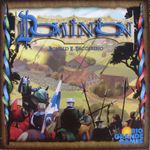
every day in college for uh for one Grand Prix at the very least. Um, in Mario Kart, if you are in eighth place, if you're in the last place, the random benefits you gain have a much higher chance of being more powerful than the random benefits that you get when you were in first place. And they often include things that help you catch up. They're they're built-in catch-up mechanisms, but they're not a guarantee. You don't know exactly what you're going to get. there just there's just a much greater chance that you will get these powerful catch-up mechanisms. Um, so I think this is really clever in a racing game that you have better you have a better chance at getting better things when you are further behind in the race. That is Mario Kart number six. At number five, we have the modern classic deck building game Dominion. Deck Dominion does something really clever in that as you start to get points, you uh clog up your own deck. So, if I'm if I am one of the first players to have enough money that I can afford a six-point card, I might gain this card, but that card does nothing for me for the rest of the game.
I think this is sometimes viewed in modern deck building, more modern deck building games as a detriment, like, oh, I'm getting this useless card. But I think it's a really clever catch-up mechanism, and it means that it's a tough choice between getting these lower value points and maybe these should have maybe the lower value points should have had a minor benefit and there's no benefit for the top value point card, the province. But it does mean that you are going, if you are in the lead, you're better at getting points already. You are going to clog up your deck with these point cards that don't do anything else. That's Dominion. At number five, number four, we have Power Grid. So, Power Grid is kind of built on this auction system where going first in the auction has a pretty big benefit. The idea is that uh you you are in the lead in power grid if you have more uh more control of more cities or a power grid settlement whatever these are called power grid in more cities. That's the the the goal of the game to have as many of these as possible and to reach a certain number to trigger the end of the game. Players who have fewer houses, these lagging players, they get cheaper stuff and they're the first to buy. they they get cheaper stuff because they are the first to buy both in the auction like these power uh uh power facility cars that they're gaining and the resources that they're buying. They get first choice of them. So, it's actually a viable strategy in power grid to try to lag behind a little bit to get cheaper stuff early on in the game and then shoot ahead and try to catch up.
But you make you want to make sure that you don't wait too long to try to do that. That's power grid number four in Century Spice Road. This uses a mechanism that I think again I have a whole video about this. This is uh I've called it a few different things, but basically in Century Spice Road, there are cards that are I don't want to call them objectively better because you're creating combinations of cards, but there are certain cards that that are very enticing to get. These are cards that improve your engine in the game, and they come out randomly, but if you really want one of them, you need to spend your resources to get to it from left to right. So I need to put resources on the cards from left to right. Uh which increases the relative value of those cards because when someone takes one of those cards, they not only get the card, but they get the resources or or resource or resources on it. So it means that a card at the very front of a row that is not very enticing early in the game um or early in however long it's been there becomes more and more enticing as it piles up with resources. This actually reminds me a little bit of the game No Thanks as well, which I didn't think about for this list, but in No Thanks, uh there there's increasing value as players pass on taking a card because you're getting more and more chits as you are playing.
Yeah, that is Century Spice wrote a balancing mechanism for the specific cards and the order in which they come out in the game. That's a number three. At number two, I have tapestry. So, my top six, I should have said my t top six is in order of uh how much I like these games, not necessarily how great of examples they are at self balancing, but I think Tapster has a nice little slightly subtle self-balancing mechanism, which is that in tapestry in general, um if you are in in Tapestry, you you choose when you want to have an income turn, you have a limit limited number of income turns per game, you choose when you want them to happen. Um, and in general, if you are taking income turns before other players, it means that you are taking fewer turns and you're doing less before those income turns. It it kind of means that you're doing slightly worse in the game than someone who's taking more turns before they have to take an income turn.
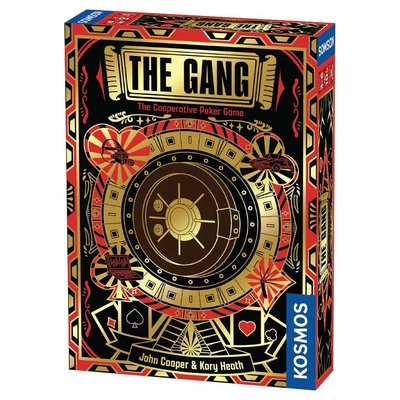
However, the game or I tried as the designer of this game, I tried to balance this out a little bit by saying that if you are the first of your neighbors to pass into the second era and play a tapestry card here, you cover it up. You'll gain one resource of your choice. And then as the game moves on, if you're the first of your neighbors to pass into era era three, you get two resources of your choice. And then finally, era four, you get three bonus resources. Um, so there's this way that the game kind of doesn't necessarily encourage you to pass before other players, but it gives you hopefully an interesting choice there and a little way of catching up if you are falling behind on resource uh production in the game by taking fewer turns. That's Tapestry at number two. And last, we have one of my recent favorite games. This is the cooperative poker game called The Gang. And this game this game does this self balancing mechanism or has self balancing mechanism that is akin to some of the examples I g in the honorable mentions like pandemic legacy legacy of you mind management but instead of being about winning the entire game when you are successful in a round of the game which can be up to five rounds um you either need three victories or three losses to end the game. um after a round instead of after the entire game, if you were successful, you gain a card that applies only to the next round. That makes it a little bit more difficult. Like for example, you might encounter security cameras. Says immediately after dealing pocket cards, each of you receives one additional pocket card. You may play with three pocket cards. That makes it a little bit
more difficult, even though it sounds good. Um and then if you lose a round, you get a random card that makes the next round a little bit easier. Just a little bit. like this mastermind. I don't know if I can read the full text here, but choose a card value from two to ace. Each of you shares with everyone how many pocket cards they have of this value. So, it gives everyone a little bit of information about a specific card in the game. Or it might give you a little bit of information. I think this is a really brilliant way um in the game of self-balancing based on how you are doing so far in the in the game. And it also adds just a little twist, just like a little dose of theme uh in a game that otherwise is largely just about poker and just a little twist to make each round feel a little different. Those are the self balancing mechanisms that um that I'm going to talk about today. I have three videos that I'll link to below. Balance is boring, catchup mechanisms, and difficulty scaling if you want to check those out to see other ways that you can help your game self-balance as you play. Um but I'd love to hear your examples in the comments as well. What is an example from a game that maybe you have played recently or really love where either thanks to the game or thanks to what the game enables the players to do during setup or during the game, the game offers a selfbalancing mechanism either for the entire game or just for like one mechanism like in Century Spice Road.
Let me know about that in the comments below or let me know your favorite game that I mentioned in today's top 10. Thanks.