New Year Rant 2026
Games in This Video
7 games are featured in this video — they unlock as you watch.




Transcript
Hello, welcome back to the channel and this is a channel where we give you reviews, don't do unboxings. We might do a few playthroughs in the new year if you behave yourselves. But today we are going to be giving you our annual New Year rant. The topic for today's rant is that the golden age of board games is effectively over. It's [ __ ] dead, right? So, I've done a little bit of research on this topic. The format for today will be giving you a little bit of a history of board games. In effect, how we got into the TISW was that we're in today, right? We'll be giving you some evidence to support our thesis and then we'll compare and contrast some ideas and at the end of the video, we'll give you our final thoughts and the conclusion to our hypothesis. Right? So, remember, if you're new here, consider subscribing to this channel, hit the like button, and all that YouTube [ __ ] We'll see you after this,
Alex. So, like we said, we're going to give you a little bit of a condensed history of board games. People have been playing board games for [ __ ] thousands of years. So, you got those univilized [ __ ] to blame for all the [ __ ] that you got to deal with now, right? So, what we're going to do, we're going to divide the history of ball games into nine different epochs. Yeah. And that will give us a thorough grounding on the context of what we are experiencing today and why I feel that the golden era of board games is effectively over. So like we said, people have been playing board games for [ __ ] ages. Yeah. And I suppose you could call this the ancient or classical era of board games. Yeah. There was a game called Senate which nobody knows the rules of and it became a sort of curio piece where shops online now sell it as one of the first ball games ever made but nobody knows the [ __ ] rules so there's no point in picking it up right there was also the royal game of uh again nobody knew how to play this so when they sat down with a set they went how'd you play this uh but then some clever [ __ ] found a tablet not a [ __ ] iPad you [ __ ] millennial with the rules on it and then everyone knew how to play it. Yeah. So I had to just call it the royal game. Other games like go with which I picked up a set a couple of weeks ago and uh yeah not a big fan of it. Early iterations of chess were played in India and China and you had a game called Manala which was sort of different to all the other games that were out there in the sense they weren't played by royalty or upper class twits,
right? They were played by normal people on the ground because Manala uses seeds. And I suppose there's a link between sort of working people and seeds and [ __ ] farmers and whatever. And most of these were sort of abstract strategy games with no theme for two players, right? The rules for these games are passed down orally. No, not that sort of [ __ ] oral. And they were handcrafted out of things that were to hand like sort of chess pieces carved out of stones or ivory or whatever. They weren't products. They were traditions. Yeah. So this sort of thing carried on, I suppose. I mean, you had the medieval era, didn't you? Where not a lot of stuff was documented, but people still played games. Yeah. There weren't any methods of mass production of games, but people still played games up until the industrial or commercial era. Yeah. These games tied in heavily with the ethos at the time, which was the industrialization of society and the advent of capitalism. Yeah. Perpetuated by Adam Smith's wealth for nations.
Yeah. You had chess sets being mass-produced. Ludo was mass-produced as well. This was a game that brought into the UK by the Royal Navy, but they called it Auckers yet. And the game of life was first produced because people weren't satisfied with being born into money. They wanted to simulate a sense of progression and getting more money in a game. Yeah. There was a big focus on the family. Games were played in parlor in Victorian England. And there was also a huge push towards morality in games. There was a game called the landlord's game which warned against capitalist greed. This ironically would be turned on its head in a later iteration. Right. So yeah, board games started to become consumer products with the advent of industrialization and capitalism. Yeah. We fast forward and we're moving into the classic mass market era games such as Monopoly, which is a re-imagining of the landlord game where you're going to be trying to make everyone [ __ ] bankrupt. Risk Cludo and Scrabble also make an appearance in this era. Player elimination is a thing. It's almost like everyone's trying to get one over on each other. And it's true that games do mirror social norms. At the time, there was a big scramble for everyone to get ahead. The American dream and all that.
And it didn't matter who got in your way as long as they were eliminated so you could profit. Yeah. Roll and move mechanics were also a big thing. Think about Monopoly where you're going to be rolling two dice, moving around the edge of the board, and then buying something. And skill is often secondary to luck. It was a case of roll the dice, move the piece, and see what happened. And if you ask anybody in the street, if you pulled over some numpty in the street and said like, name a couple of ball games, I guarantee you they would say something like Monopoly or Risk or something like that. Yeah. So games stayed like this for almost like 15 years. Yeah. And we had something called the role playing game make an appearance. Yeah. This era was primarily instigated by a game called Dungeons and Dragons designed by Gary Gyax and Dave Arnison in Geneva in the United States. Gyax had been a member of a war gaming club for a number of years and he had this idea of what if you could actually be one of the soldiers in the army rather than taking on a whole battalion. Yeah. And he come across this guy called Dave Arnerson. He created this role playing game setting called Blackmore. They merged the two together and D and D was born and the world changed forever. Dungeons and Dragons is still one of the world's most popular games. Okay, fifth edition is a [ __ ] joke now. But you don't have to play that, do you? You can go back to the first edition or whatever you want to do and enjoy it that way. DND changed the world. You had the Advent Games Workshop in the late '7s producing games into the 80s and 90s until the Eurogame German Revolution happened in 1995. This
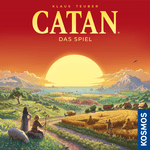
was where Klaus to t toba wherel Klaus tlaus toba bad pronunciation probably created the settlers of katan. Yeah. This made its way over to the United States and it exploded in popularity. Yeah. Player interaction became almost non-existent in some of these games. Luck was minimal. If it was there, it was able to be mitigated. Player elimination tended not to be a part of these types of Euro games. There's no player elimination in Kerazone or Tigris and Euphrates for instance and competition in the game was kind of indirect. These were the first true modern games and it ushered in what we now call the golden age of board gaming. Yeah. So once Katana had gained a strangle hold on the industry, we moved into the early 2000s up to midway point in the 2010s where we had a glut of modern strategy games. games such as Agricola, Puerto Rico, and game that was number one on the nasty little websites top 100 for quite a while, Twilight Struggle. Yeah. Strategy became deeper.
The worker placement mechanism was born, as was engine building. Asymmetrical play became a thing. Yeah. You weren't all doing the same thing. You had different player abilities and stuff. And with the advent of the internet, the hobby found a space online for the first time. And this era is often cited as the true golden age of board games from 1995 to say 2014 2015. Right. As board games become more and more popular, so the huge international corporations start looking at it with wide eyes. Yeah. As Mday buys up a load of the most popular board game companies like Days of Wonder, Zman games and becomes an international conglomerate. And this forces a lot of independent publishers to seek out funding elsewhere because they can't get their games to market through the normal channels anymore.
Yeah. As they start looking towards new crowdfunding platforms like Kickstarter, games such as Kingdom Death Monster, Gloom Haven, Blood Rage, all that sort of thing. Miniatures and premium components become the norm because people want something for their money. Yeah. And you have a mishmash between European designs and American designs. a blend of theme and mechanics, right? Games such as Zombicide had a huge amount of miniatures, huge amount of content, and for the first time, you had these narrative campaign games such as Gloom Haven that tried to mimic the experience of Dn D in a board game without having a dungeon master, right? Spectacle, scope, and scale became the norm in this era. So once Kickstarter had become the go-to way to fund your board game idea, we move into the eighth epoch of board gaming, which is the era of saturation. Thousands and thousands of games were being produced each year.
A lot of them forgettable, a lot of them falling by the wayside, nobody ever playing them. Iterations over innovations. Yeah, you had 2.0 versions of games, reprints, second editions, deluxe editions became the norm. deluxe editions of ticket arrive for example and the shelf of shame became a thing. It became a cultural thing. Yeah. People actually had so many games on their shelf that they hadn't played. It became a thing online. Yeah. And people started discovering new games on YouTube and other social media platforms. Board GameGeek started in 2000 as did the Dice Tower podcast in the early 2000s. Yeah, there's literally too much choice and not enough time to play everything that people bought. which moves us into the present day. Games such as Heat, Ark Nova, and Earth, very very popular games, but are effectively reproductions of ideas that had already been popularized previously. Heat pedal to the metal is Flam Rouge or Arve Caesar and Ark Nova really at the end of the day is a mishmash of Rogers of the Ganges and Terraforming Mars. Right.
Second editions again, reboots, reprints, rethemes. We're now concerned with sustainability. Yeah. Whereas Kickstarter games were just thrown full of plastic and components, we had games such as Earthborne Rangers that charged 100 quid for a game that was made out of a bog roll. Digital apps became a big thing. You got more and more games that require an online app to be used. But this is perilous in itself. Look at games like Gollum Arcana, which which was really only playable with an app. The app disappeared off of the app store and the game is now dead even though people paid hundreds of pounds for it. So yeah, we got a sense of nostalgia now, aren't we? People are pining for a return to the golden age of board games. And the hobby is now more of a professional space rather than a wild west of crazy ideas that may or may not come to market. Yeah. So you go, that's a very, very short history of board games and where we are at the moment.
So, now we're going to go and tell you why, based on what we have learned from that little chronology, why we think the golden age of board games is [ __ ] dead. So, yeah, the golden age of board games is dead. Yeah, it's not dying. It's over. And the worst part of this, no, it wasn't killed by video games. It wasn't killed by Asthma Day. It was killed by you, [ __ ] murderer. There was a time where games had to earn their existence. Yeah. They had one shot. You had an idea. It came to market and that was it. You had to make it a success. If it didn't become a beloved game, it disappeared off the face of the earth. Designers kind of were afraid of their game bailing. And this meant that games that did become popular were absolutely [ __ ] awesome. The real golden age of board games wasn't big boxes or tons of [ __ ] plastic. It was where design was king. It was tight designs, right? Games punished your mistakes. Yeah. Games didn't bother to explain themselves and they assumed that you knew what the [ __ ] you were doing. Yeah, they assumed that you were smart. Yeah, a grier didn't give a flying [ __ ] if you were having fun, but it did reward you for smart and efficient choices. El Grande didn't care whether it looked like a [ __ ] manta crawling out of Joanna's on a Saturday night, but it did give a [ __ ] about structure and efficient gameplay. Right.
Kickstarter didn't save the hobby from oblivion. Yeah, it literally gutted it. Crowdfunding didn't democratize design, so to speak. It monetized hype. Yeah. The louder and more lavish the game was, the more money it generally generated. We stopped funding games themselves and we started funding promises. Yeah. Games promised the earth. They promised everything. They promised a cooperative version. They promised an automata. And stretch goals replaced development. Yeah. People were less concerned about the game and more concerned about whether or not the amount of money generated was going to give them more [ __ ] And in turn, the prospect of miniatures replaced interaction in the game. We had loads and loads of games in this era that were released completely and utterly broken. If you remember a game called Dark, Darker, Darkest, it was released with an incomplete rule book. Nobody really knew how to play it and they had to release a second rule book online that completely changed the game yet. And the play testing, I suppose, outsourced to the customers themselves after they had bought the product. Yeah. Erata was published online in almost every single [ __ ] game. And developers effectively got lazy. Games like this didn't mean you got a deeper sense of gameplay. Yeah, they just got [ __ ] heavier. Boxes got bigger. You needed stronger tables, and you needed a bigger wallet for all of it. People complain that if games didn't have enough miniatures, they were [ __ ] boring. Yeah. And I suppose you could argue that the miniatures actually became the game. Yeah. Games became more like toys rather than social
experiences. And content creators were kind of responsible for this. You know what I mean? Around this era, reviews started to die. We had first impression videos, which is a code word for I only played this game for an hour. We had wishlist videos, haul videos, unboxings, videos about games that were most anticipated, games that you never [ __ ] played or weren't even released yet. Nobody wanted to say that a game was bad because they were scared that the publisher would pull the plug on their free [ __ ] So everything became solid, everything became elegant, and nobody was [ __ ] honest. But here is the real crime. Yeah, we started buying games we didn't even like. Yeah, we just ended up investing in hyped [ __ ] We just wanted to own something. Yeah. The anticipation of owning something or acquiring something took precedent over what actually mattered, and that's actually playing the [ __ ] thing. Now we're looking around wondering why nothing feels special or new or innovative anymore. The truth is, all gamers, you and I, have [ __ ] the industry. Today's games aren't bad, are they? They're not intrinsically [ __ ] They're just sort of safe. Nobody wants to take risks anymore. Look at games like Libertalia. They stripped out everything that was fascinating in the original and replaced it with a sterile mush of [ __ ] all games became too balanced and they were just sort of driven by focus groups by one or two people that became consultants but supposedly knew what they were talking
about. Nobody wanted to offend anyone which meant that you were not allowed to challenge anything and publishers are now petrified of being pillaried. So yeah, the golden age of ball games is well and truly over because golden ages require courage and risktaking and this and this industry is terrified of just that. The next golden age won't be crowdfunded. It won't be online. It won't be popularized by the latest influencer. It will be created by people like you and me in spaces away from all the noise at tables where you'll be playing games with the people that you love. Well, sort of. The next golden age will be ignored when it happens. And it will only become apparent 10 years later when the latest corporate behemoth machine or the 1 million subscriber count YouTube channel takes notice trying to capitalize and rob it of everything that it has created. Yeah.
The next golden age of board games will be created by you. So, am I going to end on a [ __ ] downer? Yes, I am. Yeah. The hobby faces a lot of challenges, but ultimately it's down to us to decide what we want out of it yet. I'm not going to tell you what you want. I know what I want. I just want to sit at a table and play games with actual real people and have a laugh. You know what I mean? I don't give a [ __ ] about what people are saying online. I don't give a [ __ ] about whether Harry Potter's in a [ __ ] game or not. If the game is good, I will [ __ ] play it. Right. So yeah, the future is in your hands. Take it and do with it what you want. So there you go. That concludes our New Year rant. Do you agree with what we've said in this video? If you don't, leave a comment down below and I'll tell you a new [ __ ] But if you don't give a [ __ ] all that remains to be said is happy new year to you and your family or the people you play games with. Come back next year for more of the same [ __ ] or not, as the case may be, cuz at the end of the day, I couldn't give a [ __ ] whether you watch this [ __ ] or not. It's still going to be put online as long as online exists. So remember, if you're new here, consider subscribing to this channel with the like button and all that YouTube [ __ ] We will see you next Tuesday.