Top 10 Games of 2020
Games in This Video
6 games are featured in this video — they unlock as you watch.



Transcript
2020 is five years ago and so we're gonna look back and see are any games from 2020 still playable?
Probably not. What's up everybody? I'm Mike. I'm Nick.
We the brotherly smurf. And yes, we are here to take a look five years later. What games have held up? What games are still really fun to play? Because I think once you hit that fiveyear mark,
that's a sign that a game is truly good. You know what I mean? It's got staying power. There's so many games nowadays that if a game not every game lasts, right? A game a flash in the pan kind of thing. So after five years is where you can really start to be like, "Oh, is this game still around? Is this game still good?" We really like doing these kind of look backs five years, 10 years. We just do one or two of these a year because it's always interesting. Yeah. And it's and it's really really good to see like, oh, these games stick around. You know, we got 10 that definitely did.
Number 10 is going to be Vic Counts of the West Kingdom. This is the third and final game in the West Kingdom uh trilogy from Garfield Games. They've also done the North Sea and the South Tigris. Uh and this one uh really, for our money, kind of hit a really sweet spot in terms of gameplay. This is one where you're going to be moving your VI count around a rondelle the board. Uh taking one of four main actions. Uh and the you're going to be adding cards to your tableau, one kind of card per round. And it's going to act kind of like a deck builder, a tableau builder that is slowly shifting. So I always say it's sort of like a deck building game in slow motion where the cards that you're gaining and which ones are in front of you are going to be changing but not completely every single turn.
you're just going to be sort of generally progressing your cards. These cards are going to give you icons and things that are going to power up the four types of main actions. There are different icons and resources you can use to take stronger versions of actions. Whether it's going to be building your buildings, uh doing trades of resources, putting your kind of uh people into the main castle for a little bit of control, area control and influence, and then uh using your ink, uh to do produce these manuscripts, uh which are going to largely give you in-game benefits and endgame scoring and a bit of set collection as well. The thing I like about this game is the turns are really kind of slick and and easy. uh you can hire towns folk and kind of you know customize your deck a little bit. Uh and then it's largely about managing that tableau of cards that are in front of you at any one time and using the icons that are present to take as strong of actions as possible. But then of course you're going to be cycling things through. Certain cards will have a bonus effect that happen when they get added to your tableau.
Other ones are going to have a persistent effect uh and other ones are going to trigger an ability when they leave your tableau. So, it's really about kind of timing everything up, moving your VI count around uh to take actions and be as efficient as possible. And it's just kind of like really satisfying. Gives you a lot to think about, but the turns are like really smooth.
Number nine is a game that I actually came into a little bit late and this is Marvel United. And I've actually kind of gone back and tried to get a bunch of stuff from the Kickstarter after the fact, which has been a whole saga. But nonetheless, I really, really like Marvel United. And Marvel United is a ultimately very simple, cooperative Marvel-based game where you're going to take on each person will have a hero. They're going to have a unique deck of cards, but that deck of cards is very technically unique. There's a couple unique cards, but then the rest of them are all pretty generic. And you're going up against a kind of a big boss. the big bosses and you know there's like Thanos as one there's a whole set of Thanos there's like uh in the basically there's like Red Skull, Taskmaster and Ultron and stuff and basically every one of those villains is going to work differently have slightly different rules and there's kind of a big circle of different locations that you can go to and you're moving around those locations rescuing civilians beating up thugs and you're basically trying to get to the point where you can hit the the kind of big villain which a lot of times you have to do certain things to be able to hit them in the first place. I.e. if you're playing against the Green Goblin, if the Green Goblin has captured any civilians, you can't hit them because the Green Goblin's always swiping people up when they're driving by in their little jet thing. I really, really like Marvel United a lot. It kind of is exactly what I had been asking for for years where a lot of times with these kind of massive Kickstarter games, you get tons and tons and tons of content, right? you get like 200 heroes and all these villains and all this stuff, but a lot of times all that content is attached to a game that is very big and
very long. I.e. something like Zombie Side. It's a cool you get all these heroes, all these different abominations, but each game of Zombie Side is pretty long and sometimes can go very very long. I was like, I want this much content for like a 30 minute game. And that's what Marvel United is. You can actually play with all this stuff. You can actually get through it all because it's a short, simple game. I really like Marvel United. I've been kind of again going back through trying to collect all of it and I really really enjoy it.
Next up is going to be Ano 1800. This is a game that we actually just played for the first time like the in the last month. Uh but we'd heard a lot about it. It's a Martin Wallace game uh based on a video game. Uh and in this game you are building up industries, types of goods that you are producing. uh you are managing your kind of uh types of workers and things to produce these goods and ultimately fulfill the needs of your population. You're going to have a a hand of cards uh that are representative of your population of folks that are living here on the island and moving in and they all have certain goods and things they require to be satisfied. Uh and every time you add a new worker to your kind of pool, you're going to have to draw a new card that's representing that person moving there. And then now I have more ability to use my workers and things, but I also have more needs that I have to fulfill. So it's this really interesting kind of buildup of certain, you know, again, types of productions and things that I have. Uh making use of what my neighbors have and what they build. So if they have a production something, I don't necessarily need that for myself. I can use theirs, they're going to get some gold out of it. Uh but, you know, it's it's all kind of friendly here. Uh, and you're trying to kind of build up and then get over the hump where now I have a bunch of ability to produce things and now I'm going to complete a bunch of these population cards to generate your points and also trigger the end of the game. I just really enjoy the cadence of this one. It's got a really kind of a slick smooth thing where there's all types of goods you produce, but once they're on your board and you put workers there, you've just virtually produced that good uh on this turn. you
don't need to like have a bunch of chits to give you, you know, representations of those resources. So, it stays fairly kind of quick and easy to uh use. You have this big menu of types of uh you know, goods you can produce and stuff like that. And it's really just a fun uh you know, puzzle to try to gain more population cards, to give yourself more ability, but then eventually make the turn and start to play out a bunch of those cards to score your points and end the game.
Number seven was actually a huge surprise for us and this is King of 12. King of 12 is a game that we kind of like just kind of got. Um I think the publisher sent it to us and we give it a shot and really liked it. It's kind of one of the biggest surprises we've ever had. This is a game where you have a 12-sided die, hence King of 12. And generally each round you are trying to have the highest value of die. So, it's not just rolling the dieice. You then can add values on top of that. You're basically trying to have the most. And every single round, you are going to be playing out a card and that card will can do a lot of different things. It could be like it is going to add this amount of value to your die. Or maybe it could even be the card that means that this round actually the lowest value is going to get the point. Things like that. They're going to manipulate various things, adding, subtracting, doing all these kinds of different things um in the game, but it's all simultaneous and everyone has the exact same hand of cards. And this is one of those games where matching with anyone on anything is bad. Basically, everything cancels each other out. So, if at the end of the round, me and Mike both have the same value, we cancel each other out, and the next highest is the one who actually wins the round. If you and me play the exact same cards, those cards cancel each other out and they don't happen. At the end of the round, when you're deciding who actually won the whole round and you're trying to win two rounds to win the game, if two people have the exact same amount of points, guess what? They cancel each other out and the next highest person is
the one who wins the round. So, this is a game where you are desperately, desperately not trying to be the same as anyone else in any way. And it's really, really interesting. And it just creates laughs and it creates fun and it's just really great. And I can't really adequately explain why this is so much fun, but it just is. I absolutely love King of 12. It was one of the biggest surprises we've ever had. It's outstanding.
Next up is Toan Suyu. This is uh a big tea game as they're called from Board and Dice. uh games that start with the letter T that are these kind of mid and heavyweight Euro games from David Turtzy. Uh and this one you're kind of the Inca Empire and you are navigating this giant board which is a a kind of a menu of worker placement spots that is quite like uh you know startling to look at at the start. It seems very overwhelming. Uh, and you are going to be moving around and placing out workers, uh, these different color meles, uh, onto these spaces that are surrounded by three actions. Uh, and depending on what type of worker you place and different things, you will be able to take one or more of the actions that surround the space where you place a mele. You're going to do this to gain resources, uh, to build buildings and and place stairs and do these different things to kind of explore the map. Uh, and as you go and kind of build up, you can kind of go further from the very center. The very center is sort of the hub and you are traveling down to gather resources and things like that. And at the top you have kind of your high priest that's moving in a little rondelle at the top to take different actions. And when they activate you are going to get a a strong version of whatever this main action, but then all the other players are going to be able to do a follow version of that action that'll be a little less powerful. But there is that kind of give and take of like, okay, I'm taking this turn, but everyone else might also benefit. And how do I manage that? The
thing that's just really interesting and fun about this game for us is there is this huge menu of options. There's all these different places you can place workers. The god cards you have are going to have certain symbols, so that actually does limit where you're able to place. So, that kind of makes it a little easier to gro. The types uh the colors of meuples are going to have different abilities when they get placed. kind of like five tribes where the different color meles have different abilities. So, there's all this fun stuff to consider. It can seem overwhelming, but once you get into it, it is really, really fun and for our money, kind of our favorite of the tea games.
Number five is going to be The Loop. I actually just played this game the other day. Um, and I actually played it solo because The Loop is also very good at solo. This is a cooperative game and this is a cooperative game that we have dubbed um crisis management games. Kind of like the classic pandemic is a crisis management game where bad stuff's happening along the board and y'all are trying to manage all that while also trying to complete your goal. In the loop there is Dr. Foe who's the big kind of like evil mastermind in this world and they are traveling through time. This is kind of a time traveling kind of game and there are seven different times. There's like age of antiquity and like the medieval age and the renaissance and the industrial age and the modern age and like the robot age and then like the end of times kind of thing. And so it's like the septagonal board seven-sided board and there's a cube tower tower in the middle and that is like Dr. Foe's time of time machine.
You're dropping these rift cubes in there and these rift cubes are going then spllaying out onto the board. And then basically if you ever get four of these rift cubes in one of those sections of times, it'll create a vortex there. And that's one of the ways you can lose the game by having too many vortexes. And then you are all kind of time travelers working together to try to complete missions because each part of this board will also have a mission. And those missions might be to try and have no cubes on that spot at all. No rift cubes. You can try and destro destroy a bunch of Dr. Fo's clones because he's putting clones out and you can destroy them by getting them back to their proper time frame. So, you can do all these different kinds of to try to complete four of these missions before you lose the game. It's very, very difficult, but it's got this really cool mechanic which is called looping because it's a deck building game. And on your cards, there's going to be a symbol in the top left or right corner. And on that in that symbol, if you have multiple those symbols in your hand, after you use those cards, you kind of tap them, you can use an energy cube, which are these green cubes on the board to then loop and bring back all cards that have the same symbol. And you get to use them again. And then you can loop again by spending two energy cubes that are on the board. And then you can loop them again and use them again. You can kind of keep doing that as long as you have energy. You won't be able to do it more than once or twice, but it's a really really cool mechanic and it's really cooperative because you can like really set each other up like, "Oh, I'm going to drop an energy cube over here so that you can use it on your turn and you can loop something and you have to really work together in this very tough co-op game. It's also really really good
solo. It's one of the best kind of you're playing multiple characters solo games out there in my opinion. It's one of my favorite solo games. Um, I really like the loop. I feel like this is it's not super available right now and I feel like it kind of did okay but not as good as I feel like it should have. I don't know. I really like the loop. It's one of my favorite games and I just really really enjoy it.
Next up is going to be The Lost Runes of Arnack. Now this is a game that's been wildly successful for now five years and it's just had a big box and new expansion come out even just this summer. Um, and it's one that we, you know, there was always a debate at the top. Uh, is it Dune Imperium or is it Lost Runes of Arnack? And you can make arguments for both games. They are both very well, uh, received and and well regarded. Uh, and for our money, we like Lost Runes of Arnack a little bit more. I love the theme. This is a game where you are archaeologists who are studying. You're kind of uh, digging into the past of of an area. And this is represented by you discovering kind of worker placement spots on the board, doing digs, uh, and you are then gathering your resources and then spending them to move up this kind of research track because ultimately we're here to do research and we are trying to progress up these tracks. Um, the thing I really like about this game is it's sneakily thematic. You're going to play over five rounds and there's a menu of cards that you can purchase to make use of. There's some, you know, a little bit of deck building in the game. Uh, and in the first round, you have four item cards and one artifact card. A artifact being, you know, representative of something you found. Uh, as you go through the game, there will be fewer and fewer items and more and more artifact cards because you're getting kind of further away from civilization. You're also going to be discovering these different dig sites, which give you more actions.
And that's also representing you kind of mapping out the area. And I love that ultimately you're just trying to journal all this stuff and and learn as much about, you know, these ancient people as you can. Uh, and so the main way you get points is going up this research track. I just think it like all works really well. It's a really interesting resource management game where a lot of things are going to give you resources, but maybe cost certain other resources. So, you're trying to get the right resources at the right time to be able to kind of maximize each round to its fullest.
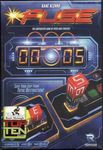
Number three is a game called FAME. This is a game I think you can still get through the BG store. Don't quote me on that one. Uh but this is a Freriedman Freeze game. We have really grown to love Freedman Freeze and his games uh over the years. And Fume is no exception. Really, really adore this game. Uh this is a game where it's kind of a deck programming game more so than a deck building game because you're never shuffling your deck in this game. This is a game where you are in Egypt and you are kind of building up the infrastructure of Egypt, but everything is owned by the Pharaoh. You are kind of like architects. You're not the Pharaoh. And so you don't really own anything on the board. When you put something out, other people then can use that thing or maybe even iterate and build on on top of it. And you can't really do anything about that because you don't own that spot. The Pharaoh owns it. The Pharaoh owns everything including all the crocodiles all over the board because there's crocodiles everywhere. It's a whole thing. But nonetheless, you are gaining. You have a kind of a a basic set of cards and you can gain more cards and then as you play your cards, they'll go into your discard pile and then you can eventually do a administrative action which is just the most Eurogame sounding thing ever, but it's true.
You're doing an administrative action where you'll get a little bit of money and then you'll basically get to draw cards off the top of your discard pile. I think it's three cards back into your hand. the cards you played are going to come back and then you can draw more cards than that by paying a dollar for each card that you want to draw. So the thing is the kind of bad cards you don't really want to use anymore, you want to bury deep down and the cards you want to be using a lot, you want to keep at the top of that pile so you can get them back into your hand. So you never shuffle your discard pile. You're never going all the way through your deck again. You are kind of programming your discard pile to be as effective as you want. And as the game goes on, some of your priorities might change. So you're like, you know what? I can let that card go. It can get buried. I don't think I'm going to use it again because I'm getting these new better cards. It's really, really, really fun. Again, didn't have a big US release if you're in the United States. Um, but you were were able to get it through the BG store and it's really, really good if you like if you can give it a shot. Um, I love Freedom Freeze and Fyom is still probably uh it's still probably my favorite of his.
Number two is going to be Prog Kabet Rainy. This is from Vladimir Suki. This is uh probably our I don't know I don't know I'll go into which is our favorite Suki game or not, but it's one of our favorites. This is a game where you're building up the city of Prague. Uh, and you are using this kind of I think they call an action crane where there's this kind of rotating uh device that has these action tiles and on turn you're going to choose one tile uh potentially having to pay a little money or get some victory points and then choose one of the actions on the tile to to do. And there's kind of uh six main actions you can do. You can build buildings kind of in the city area. You can uh build up the hunger wall around your part of your player board. You can gain resources. You can increase your ability to produce those same resources. Uh you can walk down the king's road. Uh and you're kind of traversing up the hunger wall and the cathedral. Uh and this is a game where you have 16 turns. You have a very kind of finite amount of turns and you really feel that time ticking as you play the game.
you really kind of feel like, how am I going to get anything done? I don't have enough time. I don't have enough resources. But with clever play and stuff like that, you really can get a lot done. You're trying to build those buildings uh and kind of surround these plazas to get different bonuses. Everything can kind of generate points for you uh and give you bonuses. You can spend these window tokens to move up in the hunger wall and cathedral and on and on and on. And every time you take a tile, you're going to get another little bonus as well. So, this is one of those games that like you just feel like you're getting goodies all the time and you really need every one of them because you're also so pressed for time. Only having 16 turns, every one turn you take feels really kind of monumental. Uh, and so it's a good kind of stress in games, which I think if they ever make a game that's stressful, but I enjoy it, it feels kind of like a magic trick.
Number one is going to be Conbon EV. Uh we really love Conbon EV. Uh this is a Vital Lacer game, big heavy game where you were working in a um car factory. But this one is building EVs, electronic cars, because Conbon was already a game. So they kind of revamped it, redid it, and we're like, "Hey, you know, EV cars are kind of the cars of the future. So let's make this about that." Other than that, you're still just working in a factory. But this is um a vitality game where you are doing some worker placement or I guess worker movement because you only have one worker and you always have to move to a different department of the factory and the factory is making cars. So you can go to certain parts spots to get like designs of cars. You can go over here to get parts for those cars. You can go over here to actually build those cars on the assembly line and then you can test the cars out on the racetrack. And that's what you're kind of doing. It's one of those very linear type games where everything you're doing kind of makes sense in a linear fashion where it's like well if you want to make a car you got to have car parts before you even make car parts you got to know what you're making so you need to design.
It's very intuitive in that way but it's still kind of a big heavy laser game and it's just really good. This is one of those games that for whatever reason of all the kind of Lera games this one always appealed to us the most. Mike and I have a really big love for games set in like factories. I think factories are fascinating. Anyone out there watched How It Made when they were a kid? I freaking love How It's Made. I think it's still one of the coolest shows ever. I just I've always been enamored by like factories and stuff. And so that kind of theme is cool. And then it's just this big heavy laser. It's got beautiful eno tool art. Conbon V is just so darn good. It's still probably our favorite laser. Um and it's also a good entry point into LERA because of that intuitive linear nature of it. It's a little bit easier to get into than some of the other laser games out there. But um we really really really love Combine Eevee and we just don't really get tired of it.
Those are 10 games from 2020 that we think really still uh do a great job and we still play them five years later and in theory we'll be playing them 5 years from now. We will we'll have to see and we'll give you that top 10 in about 5 years. So stick around.
But those are our picks from 2020. There's of course many more games from that year that came out. So, what we want from you is in the comments, give your favorite games from that year. Especially those ones that you are still playing now, five years later. What are those kind of evergreens that came out of the year? Let's get a big list of recommendations for people going in the comments. We'll see you next time. Bye, everybody.