Beyond Solitaire Podcast 221: Diana Toma on Meeple Foundry




Transcript
It's adbreak time. I'm proud to announce the Beyond Solitire podcast is sponsored by Central Michigan University's Center for Learning through Games and Simulations. And as usual, they have exciting projects coming up. First, they have a spring course called Deep Dive by Doing Taught by none other than Kathleen Mercury. She is a very experienced teacher and specifically an expert at teaching game design. So, if you take her class, you'll be in very good hands. The course starts February 3rd, so register soon. There is a link in the show notes. Also, CLGs has a springtime crowdfunding project on the way. They'll be publishing a revised edition of Jason Morning Stars The Blue Way, a role playing game about the stories of cultures being assimilated into a larger empire. You'll be learning more about that one soon on this very podcast. For now though, let's get on with the show. Hey gamers, this is Liz David from Beyond Solitaire and I'm back for season 12 of the Beyond Solitaire podcast and I have a very special guest. Uh this is Danna Toma of Mele Foundry. How you doing today Diana?
Hello everybody. Thank you for thank you for having me today.
Yeah, I'm super happy to have you. So for people who don't know what Mele Foundry like encompasses as a business, could you give us just the rundown of what y'all do collectively?
Yes. So um some of some some people call us a studio a board game studio and they call it that way because we provide different services. Um we we sometimes don't like to call it ourselves a studio because we feel that we'll make like a sort of a distance you know we look we we seem bigger than what we want to to seem and we we do like to be close to the people that uh we end up working with. So yes let's say that we are a studio. Um and now at the moment it's five of us. Um and what we do is we give different sort of services related to board games. So um when we started it was just translation and graphic adaptation and now we do much more than that. So we do also graphic design, we do um artwork, so illustration and then we also do 3D. Uh so it's all different people specialized in different areas.
So we work as a team to give uh well different sort of services for board games.
What made you and Samu uh decide to start this project?
Uh yeah well that's that's kind of a funny story sort of. Um we I am a translator, professional translator. That's what I studied and Samu has been a graphic designer for many years and back in the day we moved in together. This was in 2018. Um, and we love board games and he's a graphic designer. I'm a translator. So, we found out a few games that we really liked and they were not translated into Spanish. Um, so yes, I do speak of course English so I could play it in in English, but Samu would rather prefer to play it in Spanish. So, um, we approached the company and it was a really big company and we said, "Oh, we're really big fans of your games. um is there any way that we can help you out with doing just a let's say a fan base but at the same time professional translation for you and graphic adaptation and then you can just post that on BG um just because we were fans and they said oh no this is not something that we accept if it's not in our plans we're not going to accept anything um and actually on their web page they had like a statement saying oh if you have a prototype don't write to us because we don't accept anything so it was a bit it was a bit strange because we thought that was something interesting but then it kind of you know spiced us up a bit and then we thought what if we try to do this in a good way like in a professional way I mean we are professionals we have been doing this in our industries why don't we do it for an industry that we love which is war games so um we reached out to other publishers
and there was a good response and that's how we founded Mipple founder we said okay let's do it I think there is something here so so that's how it started started.
That's amazing. Uh, so I feel like being a translator must be a very interesting and difficult job. So what made you decide that you wanted to translate as a profession?
Um, in fact, and to be fair, when I studied, I wanted to be an interpreter, not the translator, because I wanted to, for me, it was much more dynamic. I was quite good at it at simultaneous interpreting and uh and all those different areas that that it's there and I didn't want to be a translator actually uh because for me it was a bit boring you know just sitting down but um at the end of the day I kind of mixed up um let's say the board games with the sort of hunger that I had for people and then the translation because at different events and conventions and so on I would kind kind of recharged my batteries with all the needed that I had from being with people. Um, and then doing the translation made me closer to them because I was doing something that they could use. So, it was it was actually, you know, a smooth transition sort of. Um, but it was never in my plan when I used to study translation. It was never in my plan to become like eight hours a day translator. Actually, that's interesting. How many um how many languages do you speak? I'm just curious now because you know in America we only we're not as m multilingual as people in Europe. So I'm always jealous. I speak five. Um Samu says that I speak four and a half because the fifth one is not perfect which is German. I don't speak German that well. So he says I speak four and a half. I rather say I speak
five because if I have a tr some trouble in Germany I can get myself out.
That counts to me. Um, so when you are translating a board game, what are some aspects of that kind of translation that are different from translating say like a book or a newspaper article or even something that somebody has said like what are some like special tricks to working with board games specifically um in your profession?
I think the most important thing is terminology. there is certain terminology that works in board games that in the let's say real world is not really like that. So we always say um a really easy example it's it's going to be a bit difficult maybe now to translate it in English because um you know the cleaning phase right in board games um if you if you would translate that to cleaning as properly in Spanish um that would be phase of cleaning right so that would be limpa in Spanish but actually in the Spanish board games when you look at rule books and how people talk about it and how you do it like properly ly is a maintenance phase. So if you can never translate it as a cleaning phase, as the word of cleaning in Spanish, you need it needs to be mainten which is maintenance, right? Um so just something that simple um if you do it wrong, you will mess up because then people will start reading the rule book and they're like what is this? You know, they will understand it but it's not correct. So the most difficult part is that in order for you to translate board games, you need to play you know, you need to know the industry, the terminology, the terms that are used, um, how people uh, basically understand the rule book. So, you need to put yourself in the like reader mindset and sometimes with an article or I don't know with a prospect or with um, I don't know like an instruction booklet for, I
don't know, a microwave or whatever. You don't really need to put yourself because that's very technical and that's straight to the point. And with a book, maybe you need to be a bit more creative to make it a bit more beautiful. But in board games, you really need to know how the people that are going to read that will perceive it and the way you explain the sentences because sometimes in Spanish, they are constructed the other way around and in English. So
interesting. So you know, translation is partially like about I mean we say like a microwave manual, right? It's very straightforward. But you know when I translated dead languages it was always like translation is partially knowing what the words mean and it's partially interpretation. So what kinds of rule books I mean I guess do you like to translate? Is it different if it has a lot of flavor text and storytelling uh versus a rule book that's just kind of very like this is what you do?
What I like you mean what I prefer?
Yeah. Well, I think I think I prefer going straight to the point and explaining the rules because um having some like really heavy flavor text, it takes a lot of time and that's already a different sort of specialization, let's say, within translation. So, for example, when I did Tinted Grail, that was actually my first project as a translator. So, that was like a huge one. That was that was quite difficult because it had a lot of like flavor text. it was more like a book, like a novel, right? Um, and then you had, of course, the board game. So, sometimes in those games that have so much flavor text or actually so much, let's say, character, you know, the text has character. Um it's a bit difficult because you need to kind of switch from creative to technical and then to creative again and to technical and make sure that on the technical side you maintain the same terms and the same sort of construction the building of the sentences it's kept the same. So I think for me I would rather prefer just to going straight to the point. You know if you have some flavor text on some cards or curiosities or things like that that's different because it doesn't take you outside you know of the proper translation if you know what I mean.
Yeah. Uh how do you how do you choose your projects?
Um well I think it's a matter of what it comes to us. Um nowadays I don't translate that much anymore. Um because I've kind of as we progressed as a team I've kind of switched to doing more the let's say project management between the international clients and then the rest of our team members. So I don't translate that much. Back in the day it was a mix of what we used to get the time frames that we had and what I wanted as a theme you know for board games. But nowadays it's um it's not that much a ma a matter of choosing the translation because I don't translate that much. So
interesting. Has that been I mean that's a sign of growth for me foundry. So that's very good. Um but do you miss it or do you like doing the project management role better?
I think I I enjoy much more the project management. Yeah because I come back to that interaction that I mentioned before and uh and that's what I like. I like you know discussing with the people and seeing what they want and trying to find the best solution for their problems and problems I mean you know what the what the game needs and um and that's what I like to do rather and then do all those sort of filtering from the client to what they require from us and then how I translate that to the colleagues that I have. So then, for example, Carlos, which I know you've you've interviewed before, of course, um then he can just focus on doing the job that he's required to do. So I'm kind of like the filter between the client and the rest of my colleagues most times when it comes to illustration. And I like doing that. Um and I like going to the conventions and being the first point of contact and um you know that sort of relationship aspect of it. I think I enjoyed more. Yeah.
Nice. So, speaking of conventions, we were just chatting before uh this. You are hopefully going to be at UK Games Expo this year and you've got some big plans. So, yes. Um last year we didn't manage to go. Um we had some sort of alignment with other events and we didn't manage to to travel to the UK Games Expo. We have been going for five years in a row now except for last year. Um, and the year before we had of course planned for last year to do a talk. Um, and that was something really interesting that I was I was kind of sad that I couldn't do it. So, if everything goes well, I will be doing a talk at the UK Games Expo this year.
Nice. And what's the topic?
Um, it's actually from what we talked before. So, from the start of the project until the end of it. So, all the steps that it goes through. Um so from a prototype actually because that's not an aspect that we cover so we need to have that. So from a prototype to the final product. Yeah. So all the steps and all the people intervening and all the technical parts like doing the files in a certain way and um all the artistic aspects and everything. So that's how the speech is is planned. The talk is planned.
Nice. So um you work with Samu and who's your first partner? Of course, y'all have added since then. Um, but this this may be more of a question for him, but I think you can give the basic answer. So, when you mentioned graphics localization as opposed to just graphic design, what is the difference between those two things and what makes graphics localization like a special part of
actually that's the simpler one. So, doing the the localization is simple because what you get is you get a product in a language that already exists. Let's say in English, right? So a game that has already been published or maybe will be and everything is ready for you. So you just receive the files that everything is put into place. So the rule book is constructed uh with whatever number of pages and the board and the cards and so on. Maybe not all components have language dependency. Um but then you receive that you have the translation so that I can either do myself or somebody else does that. Um and then what you need to do is put let's just say plain word text into the files that you have received which are generally done on Inesign. So what you need to do is simply let's say simply kind of take the text and make it into the other language version which in our case was most of the time Spanish. When it comes to graphic design everything is empty. So you have nothing. So you have just a prototype and in the case of the rule book that's going to probably be coming in just a word plain uh a lot of a bunch of pages of word. Um and then the cards is more or less the same.
Sometimes in the prototype some designers they do maybe some illustration that they've taken as inspiration from the internet. So maybe you have some guidance but you have nothing more than that. So you need to create all the iconography. You need to bear in mind all the user experience, where to place what, how the cards, if you have cards, how if they're in hand or if they're on the board or if they go on top of each other, and how you make um a sort of hierarchy on how you display all the information that needs to go on the card, what needs to be bigger, what needs to be smaller, and then on the rule book, all the examples. So basically graphic design is doing everything on a blank space on a blank um canvas and graphic adaptation is you take the job that somebody has done and you simply put a new language into it.
Sometimes you will need to adjust of course some spaces because in the case of Spanish that's larger than English for example when it's written it's always larger so you need to adapt things a little bit but it's much simpler. Interesting. So you know we just kind of talked about getting like a blank prototype and a rule book with a bunch of words. You know, I think um people who are designing games, especially new designers, want to know like how far along should I try to make my work graphically? Do I need to have pretty pictures of my prototype? You know, do I need to have like fancy like art even if it's just going to get redone by the publisher? How do you feel about that stuff as somebody who is receiving the prototype and then putting your work on it?
It doesn't need to be fancy. It needs to be useful. So, I think that's the most important. What you need to think of if you are the designer, what you need to think of is who's going to receive my prototype? Will they understand what I given them without me explaining it to them? You know, so it you don't need to have beautiful artwork. You don't need to hire like an artist, but do things how you think they will be well understood because you have probably done a million of testings with that. you have probably experienced and have switched things from place to place and numbers and you know iconography maybe. So do something that if a person takes that if they start reading the rule book and then with the rest of components they could already start playing that.
Yeah. So it's not the matter of being fancy is a matter of being useful.
What about for rule books? Um for rule books um something that it's not that frequently uh found and that is something that Samu needs to generally do is because he receives a rule book that's just let's say I don't know 12 pages 15 pages 20 pages and it's just you know title subtitle and then text and that's it. But what he always needs to do is he takes all those pages and he creates some sort of like a scheme seeing exactly what's the big title, what's the subtitle and what sort of parts go within that. So he needs to see let's say the index sort of and see exactly what fits in where. Um and that sometimes is a bit more difficult to see that if everything is just written without any sort of section if do I make myself understood I'm not sure.
Yes. Yeah. Um um so I think the useful things would be to sort of show okay this is the most important this is like the big title how to play or I don't know components and then of course you have the components but then you have how to play and then you have second section how to start first round or something like that and then cleaning phase and then within the cleaning phase maybe you have different steps so this just doing like a hierarchy basically and I think that's one of the things that when a designer gets that a graphic designer gets It's the most useful to know how everything will be displayed.
Nice. Yeah. Also, uh I'll just apologize on error. Uh for Queen of Spies, which we found you did for us, uh we put in a lot of just tabletop simulator screenshots for the examples,
but that's useful. It's still useful.
Oh man. Because in that case then those examples can be reproduced as examples. So for example that is much more useful than just having a written example because the visual is there. So the graphic designer knows already where everything needs to be placed because you've done that rather than just having a five um you know sentences of you do this and that player does that and they get these points and whatever you so it's good it's not bad it's not bad okay so um I've I've been curious about this since I'll ask more about queen of spies specifically later just because it's kind of fun for me to know but um so the other thing that's sort of interesting about this is so y'all will get say a prototype that's in English.
Um, and English rules too for a game that's being published will change. So like at what point after getting the rules do you translate them? And then how do you keep the versions together without making too much of a mess? Well, first of all, everything by the time that it comes to us, even if it's from a prototype, everything should be as close as possible to final, if not 100% final.
So, if we have received, for example, in the past some games that we've done and they were not completely finalized or maybe they were not fully tested or maybe they will not, oh, this might suffer some changes. No, it shouldn't because when we receive something, we calculate, for example, number of pages of a rule book based on what we have and the structure and how everything is placed. So if you end up moving things around, that's double work. So everything should be as close as possible to final if not 100%. um when the graphic designers receive that when it comes to translation that needs to be 100% closed like 100% finished there should be absolutely no changes by the time the translator gets that. Why? Because by the time that translator gets that the game should be finished. So generally the step is prototype of course the editing you know by the editor they can change theme or do some finding on the rule book or whatever. Then it's the let's say the artistic part and that can be only the um the illustrator first and then the graphic designer or preferably at the same time because in that way they can merge their work and make it as cohesive as possible. Um so preferably if both work at the same times and in tandem that will be ideal and only when they have finished that means when the
product is finished the game is finished then the translator comes into place.
Interesting.
That's generally how it works. Um sometimes if you do you know if you publish for example a game both in two languages at the same time yes maybe the final tweaks of the graphic designer can be here and there but ideally it should be finished and then the translation is being done. So actually when an publisher or when somebody's planning they should always leave some time and that's something actually that's a problem and that is always that generally the translation the translation has very little time uh because nobody considers that you know when when it comes to creating the time frames.
Yeah. What is the most challenging board game translation project you've ever done?
Okay. So um the the hardest translation that I've that I've done was by rage actually um and that it was uh it was my first one actually um and it was the most difficult because I suspect that the English was not perfect. So that was taken from the original which was in Italian and that was translated into English and then I received the English and I needed to put that in Spanish and some of the sentences were really really strangely build up and they didn't sound really good in English. They didn't sound natural. So there were some sentences that I couldn't properly understand them. So for me it was a a very big frustration because not understanding them I wouldn't be able to translate them. So that was definitely the most difficult I cried a bit.
So yes but rage was the most difficult for for me.
Yeah. When you um when there is a misunderstanding like I mean I guess you just have to write the publisher and ask what they meant.
Yes. The thing is that sometimes the the chain is quite long. So um you know generally the translator doesn't have the contact of the main publisher. So the translator would need to write to the in this case Spanish publisher and then they would need to pass on that question and then it depends on how fast they answer. Maybe the publisher doesn't know that and they need to ask the designer. So that sometimes is a really long change. So what I've done in the case of Berge because the original was in Italian, I managed to get the Italian rule book and then I kind of um I kind of tried to understand what the Italian meant and then being friends with some Italians I was like okay what does this sentence really mean? So I tried to find like faster solutions but um but it was not it was not easy and I couldn't contact directly the the publisher nor the designer of course
right oh that's tough uh and I take it Italian is not one of your not one of the five languages you know
I wish but it was not at that time
oh man yeah I mean Spanish and Italian are close but they're not that close Um,
exactly.
So, you know, kind of speaking of, you know, language sounding natural and,
you know, wanting that kind of human touch for interpretation. Um, you know, um, one thing that I've noticed when talking to other friends who are translators and also like as a former classroom teacher who got out of the classroom right as chat GPT was becoming so standard used in classrooms that it was making me really frustrated. um you know do you think that AI is a threat to translators jobs right now and I guess just how do you feel about the situation in general? I think the question um cannot be really raised as generally speaking in the sense of um so both let's say even before AI even before chat GPT we had Google translate right
yes we did
um and in some languages Google translate worked really well and in others didn't why because that's based on texts that are already used so there are certain combinations of languages that they're very frequent Spanish and English is one of the most frequent ones. So of course everything that is AI based, Google translate, chatbt, any other that might come in, they are as the day pass by more and more perfect because they have more text to be taken off. That is as a rule. So that would make us think that is more perfect and therefore the jobs may be in some trouble for the translators that do generally do English into Spanish or vice versa. Right now we have to think that if the all this AI based technology is taking what is created, it will also take things that the AI itself has translated.
So for example, a small mistake that might be not seen as a really big thing because you may understand the sentence or the paragraph or the text or the books or the article as it progresses small mistake by small mistake it will end up growing big. So actually something that has been improved if it's only based on other AI related or translated text I personally think it will end up having more mistakes because the base of the AI will not be human. You know what I mean? So in that case we will end up coming back to the humans because they will need to do maybe not translation but proof reading like a really heavy proof reading. That's for the languages that I think they they are mostly used, you know, with more frequency. When it comes to other combination of languages, I think they're not in danger because especially because of that they don't have enough text, you know, like mother text to base their um, you know, uh, mechanics or engine on.
So I think there is change and I think we the translators will need to adapt to certain things and I think the most frustrating is trying to make the clients and I'm not talking about board games but just in general clients
understand that humans are still necessary.
Yeah. So yes, we as users can use these sort of AI tools to translate a web page or translate things that we just want to get information off, but if we need to do something professional, we should not rely on AI. Uh, as a Latinist, I definitely agree because I saw some crazy stuff come out of student homework, especially during the pandemic when they were all at home on the computer. Oh yes indeed indeed. So I think there will be a transition. Um I understand the worrying.
Yeah.
If somebody does this on a daily basis and their mortgage depends on it. I understand the worrying but I personally don't think we will be fully replaced.
Yeah. Makes sense. I mean I would obviously I prefer the human touch but that's also because when you are picking which word you choose and like how the words are arranged and all that matters too like languages aren't one to one
so
absolutely absolutely and in board games it doesn't work because of the terminology and everything that I used to tell you so um I don't think it will ever work
so after you translate um a game into Spanish do you also test it with Spanish testers to make sure that everybody is like playing right. Like how do you how does everybody check that everything made it parallel in the right way?
Actually, I wish I could test it, but it's never you you'd never have time for that. You'll always rushing so much that if you're lucky enough, you will have time for one or two preferrators to have a look at your work.
But you will never have time to do that. First of all, because nobody will bother to put your work, your translated work into either a rule book or cards or a board and then play test it with more people. So, nobody will do that work. Um, second of all, there's never enough time. Um, and then as I said, what we used to do is we always used to have somebody that would proofread either one or two or even three people depending on the the text and the sort of game. If it's very specialized in something in a special theme. Um, we would try to have as much as many people as possible. Um, but that's the maximum you can do. And then just give it to somebody that has never seen it and take it as like firsthand. That's the the only thing you can do to be realistic. You don't have time to test it.
I mean, fair enough. So, um, okay. I I don't know if this is too general a question, but I'm going to try anyway because I'm just curious. So, I'm very lucky in the sense that I speak English. Unfortunately, it's only English, but most um most board games are catering to my language audience. So, I get to see most board games. I have easy access to most board games. um what does the Spanish board game market look like? You know, how big is the variety of games that are getting translated into Spanish right now? And like what markets are driving that?
I would say it's very big. Um I would say that most of the most well-known English games, they're translated into Spanish and they're brought into Spanish. Um, back in the day when we started the timeline between an English lounge or the let's say the original lounge and then the Spanish one could be maybe even a year. Nowadays it's maybe a few months. Um, back in the day I don't know 2018 2019 you would go to Essen to the spiel. You would get a game in English because you knew that would take a year maybe to get into Spanish. Nowadays, sometimes you go to the spiel, you visit the spiel and the week after it's already announced that it's going to be coming in Spanish in two months. Um, so actually we're we're very lucky that uh we are having most games or let's say most mainstream or well-known games in Spanish. Um, it's there are a lot of publishers and they're bringing a lot of the let's say most hype games.
they're bringing those into um into Spanish. So yeah, I think maybe it's more difficult to to get indie games or less mainstream or maybe a game that has a really good production, but maybe it's not that well known. So the cost is too high for that to be brought into Spanish. Um but I would say that most of the well-known games there are in Spanish. Yeah,
that's awesome. Um, so I don't know. I mean, I feel like I my Spanish is very bad, but um, the Spanish that I know because I'm from Texas is, you know, basically Spanish from Mexico. I know that Spaniards speak it differently. Um, and that there are other dialects throughout Latin America. So,
I guess my question is, so if it's like an American English versus British English thing, it's pretty easy to just jump. Is worldwide Spanish like similar enough that whatever you translate will just be fine in any country in Latin America
for board games? I would say so. Um you need to be careful with certain words that maybe here in um let's say in in Spain we use it differently than in certain countries in South America. So you would want to avoid the use of certain terms because they mean a different thing there. But other than that, if you're just focusing, you know, your question on board games, generally speaking, it's fine. Um,
I I've never seen actually a a board game being translated in one of the Latin American, let's say, countries, whatever it might be. I have seen that happening with Portuguese, for example. So, the Portuguese from Portugal is quite different from the one from Brazil. So, I have seen um you know different board games with either Portuguese from Brazil or um you know specified but in Spanish I've never encountered that. So I think if you're just a bit more careful on how you do how you put some words into place I think it should be fine or at least that's on my experience not only as a translator but as a vivid player you know I love games so I consume a lot.
That's awesome. Um, so kind of swinging it back around to Queen of Spies. Queen of Spies was done in Spanish and English at the same time. So, you know, basically we handed things off to Gonzalo and then we got a magical game back like a few months later. What did it look like while David and I had just like sent the game to college or whatever?
And how did you find that? Was it was it like a good surprise for you or
Yeah, it was great. like you know we sent our ugly prototype over and then suddenly it came back and it was beautiful. So
okay so you were happy with it.
Absolutely. Yes.
I'm glad I'm glad to know that because I actually I wanted to ask you how are you feeling now as a designer of of board games. Um but yeah I'll I'll ask you that in a minute just to answer your question. Um well I think that's the magic that Gonzalo does also. um because he of course the editor that's a very important figure and they're the ones taking big decisions when it comes especially to components and sizes and materials and things that are being used. Um so in that case he takes some decisions that we already receive um and that's the starting point for us. Um so for example it may be in this case of queen of spice it was for example the art inspiration. So the idea of that he came up with that and he discussed with Samu and he was like oh what do you think of this? I think this would suit really well. Oh yes this would suit really well. And then it end up everything merging really good together.
Um and then it's also a matter of feedback between them. And then Samo would also filter what I mentioned before. He would in that case filter as um as the as the art direction towards Carlos and then they worked really well together to make sure that for example certain iconography would be drawn instead of being flat. Yeah. Um, so that's I would say one of the very big advantages of working at Mele Foundry as a team because we do it in a in the most possible professional way, not only for the publisher or the designer, but for the people that will have the game in their hand. So we always have them in mind. So instead of just doing a flat icon, someone would be like, "Oh, Carlos, what if you draw an icon like this and this represents this?" And then it would be applied in this way. So it's a matter of let's say juggling is like a tennis, you know, you're at the tennis court and the ball is coming back and forth and it's at the end of the at the end of the day it's a nice match because the result of it is very cohesive.
So um I hope you're happy with the result. you and you and David.
Actually, one of the best parts about becoming a game designer is seeing how much interacting with artists and graphic designers makes your game better. Um, because you take it as far as you can. You know, you do the best that you can with your prototype. And, you know, David is definitely more he's better at graphic design and Photoshop and all that stuff than I am. My cards are like super plain, like way more plain things that David makes. Um, but even so, like we get it as far as we can and then it's really great to see, I guess, a professional interpretation of what we're doing and like sometimes it changes mechanisms a little bit even to like make, you know, the graphic design work well with the game.
Um, and I I sort of feel like it's just like adding a teammate, like you when you add art and graphics, you're adding another designer almost to the project
because Oh, nice. how y'all think about the game makes the game better and like into what it's supposed to be at the end of the process.
Oh, that that's it's a very interesting and nice perspective of you, you know, seeing this. Um, and I I think I agree with you in in certain ways. And the most the the biggest difference is when the when the director of the orchestra let's say in which in this case is Gonzalo he allows you on what to do on how much you can do um you know on how many ideas he accepts because there are other maybe editors or publishers that are um you know a bit more like this is what you need to do and you cannot come up with ideas but in that case. I think it's very interesting because as you say it gives up a bit a bit over and um I' I've never seen it this way that that you've mentioned it and for us some people sometimes they ask us oh with so much experience that you have you know you've done 170 games or around that number. Um they said why don't you design a game and we said we we could never design a game you know never we play a lot we love games we worked on them and we play a lot of games that we don't do
but we could never design a game so we think that that's something that we really admire and we think that that's something really difficult um so seeing this perspective from you is really interesting to me personally. Yeah, I mean y'all are least developers. We can't do it without you. The um it's uh No, it's really really wonderful. Like one thing I think that people don't I've been very lucky I think because um Gonzalo and Kevin and also working at leaders. So getting to work directly with Kyle and now whoever we have next. Um, being able to work directly with artists is really wonderful because I think that it helps me understand how people see my work
and also how to improve things that aren't right or that could be better.
So, it's it's a really necessary part of the process to me. Like I would really really sad to work on a game where I never got to interact with the artist at all.
Okay. Well, I'm happy that you're happy and that uh you take it as also like like a learning process for yourself. So, it's um it's a very nice view from your end and I'm sure you will be coming with very interesting things up in the future. So, I'm very much forward to looking forward to that.
Oh, yeah. I would absolutely work with you again. It was great. So, hopefully many projects.
Yes.
So, Meeple Foundry has expanded. So it started with just you and Samu and then it grew to encompass art and illustration and also 3D modeling. Um
what drove that growth?
And then also do you think I mean it's so when publishers come to you they don't have to use every aspect of your services but is it I guess better to just put the whole game through your system?
Um well it depends. um it it it doesn't necessarily mean it needs to be better. So what has come up uh with this growth I think it was our eagerness for better games. So we have had for example people coming to us um with CVs and you know expertise as illustrators or graphic designers or even translators and they've sent us you know their CV and I love board games and I would love to work with you and the thing is that for us we never meant to grow when it comes to doing more games because then you lose control of things.
Yeah.
So we always wanted to be in control. So for us the most important aspect was to have each team member specialized in something and that would be their expertise. So when we started with Samuel it was just translation and graphic adaptation because those were the games you know we just wanted to do um you know to to be able to reach let's say more public and then we also did a lot of Kickstarter campaigns for example where you would only have the original and then maybe a stretch goal with Spanish and things like that. Um so that worked for that at for us at that time and then a company like publisher reached us reached to us and they said oh would you would you be able to do a prototype like a game from a prototype and we said okay we could and then we had Andrea and Carlos coming in we actually know them so everything kind of aligned at the same time um and then of course progressing which is the most recent member um is David he does the 3D and we worked with him on rule books. So of course if you are able to have examples in the rulebook that are 3D they will those will look amazing. So this growth in the team let's say was to make a better product not to make more games but to make better games or as good as we could
because yes we could have hired for example more graphic designers, more illustrators, more translators just to have more on our portfolio but then we still needed to be on top of those and we had no time. I think that's what we struggled with the most is timings with the projects. So for us it was the most important was okay if we do things let's do them right. Um and if we put our name on something we need to be proud of it. Yeah definitely. Um so for people who are looking for localization partners and translation partners for their games obviously if it's in Spanish we should just go to you. Uh but but um when you are having those conversations like let's say that you are trying you're like a small publisher or you've independently published your game and you want to see if you can get it translated. What kinds of conversations are important to have with potential partners and how do you like what are some things that you need to establish to make sure that it's like a good working relationship?
You mean from the design from the publisher perspective or from the translator perspective? um your perspective since you're the translator.
I I think I do have a more than one perspective.
Yeah. Yeah.
Because besides besides being a translator, I do um my let's say my eight hours a day uh of of work is actually as an export and licensing manager for the ver. So I I touch base with the publishers from all around the world that want to publish the games that the ver does and that sul for example does with a with a graphic design. Um so in that case I have all the different perspectives let's say um and it comes with the different ends of business but I think that the most important is if you are a publisher and you want your game to be published in as many languages as possible. The best advice is make the files as easy as possible. Just as what I was saying before when you ask the designer what they should deliver to uh the graphic designer right
is make it as easy as possible. In that sense, what I mean is try to make the files in the most comprehensive way possible because if you want for your game to be localized, you will probably want it to be localized not only in different languages as such like with a Latin uh alphabet, but probably also in languages that have a different alphabet. So you need to make sure that they will be able to work on their files properly and they will not encounter difficulties or when the graphic designer like you're a publisher you're hiring a graphic designer just make sure that they do things right like with the inesign and the packaging and the links and everything is well connected so when somebody receives those files it can be easy for them. We have received in the past files that we were meant to do a graphic adaptation that come to us in PowerPoint.
How did they publish that game? How did they print the game based on a PowerPoint? We have no idea. And that hurt me physically when you said that.
Um, how they did it, I have no idea. We told the Spanish publisher at that time, we said, "Look, we can do it, but we don't want you to risk your money with the manufacturer because we don't know how this is going to be printed. You're going to risk thousands of euros and we don't know how this is going to be printed because it's in PowerPoint." So we said, "Yeah, we can do it, but do you want to risk it? Better not." So we said, they said, "Okay, let's ask the main publisher to do things properly and not deliver us a PowerPoint." Um, and they needed to hire a new graphic designer and do everything again in in design so they can license it. So why don't just do it right from the first moment because it's a bit more expensive. Yes, but it's worth it if you want to publish it in different languages and get um licensing fees.
Wow.
That hit you hard, huh?
Yeah. I just can't I can't even imagine it.
Yeah, that was the one I think that we struggled with the most and we received it was like, "Oh, no. We're not doing this."
Yeah. So, basically, clear communication, clear files. Yep.
Um, how much time is it reasonable to allow? So, you mentioned that at the end of a project, you never have enough time. Like, how short a window are we talking? And then how short does the window have to be before you'll just say no, like I can't.
Um, well, I think it's a matter of how big the game is. So, you need to make sure that it's properly calculated based on the size of the game. Um, so if it's, I don't know, let's say a barrage or like a really huge game and then they tell you, oh, you need to do the graphic design of a game like this in a month, that's definitely a no because it's impossible.
So, I think that's more on the editor side to calculate well and to measure well the timings. Um, but it's definitely not something that you should be rushing on because yes, you can do things, but the more you rush on, the more probability you have that you're going to mess up with something.
Yeah. So, the most important I think is the size of the game and then of course how much you allocate to the illustration and then to the graphic design. the translation that's always allocated very little I can tell you and I'm sure that cannot be changed um but uh for illustration and graphic design is something that time should be really taken in consideration because also when you don't rush the professional in charge has enough time to kind of like make a you know um like they think about it and they see it with different eyes and the more you advance with the more you see it and the better you see it and you'll understand how things can be fixed. So if you do it calmly, it's much better than if you do it in a rush and then you just use things maybe wrongly or you don't explain the rule book well or you maybe forget a paragraph that's very important or things like that. So times should be measured in a good way because at the end of the day you as a publisher if you rush and you mess up with something you're going to publish a game that's a lot of like a big cost for you not only in production but you still need to pay the designer anyway. You will still need to pay the manufacturer anyway. You still need to pay the shipping anyway. So why would you risk all those payments and then have the
game being distributed and published in let's say just one country maybe in English but then people will not like it. You will end up with games in a warehouse
bad reviews on BGD and you know just bad fame let's say so why would you jeopardize your own work and your own effort your and your own money just allocated the right time. Yeah,
it's a good point. So, um, kind of as we're reaching the end of our hour, I want to ask, so which of y'all's games, uh, that Mele Foundry has worked on are you the most proud of? And also, what are some other games that y'all have not worked on that you think are beautiful?
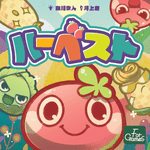
Oo. That we we think we're pretty and we admire. Oh, there are so many. Um, we recently, let's say quite recently, we played Harvest. We think that's so so so beautiful and so well done. Uh not only the art but the graphic design is so so well done. Um that we we would love to see more games being done like that. Um we have lately we have tried from and we really like also the production. I think that's done really well and we can feel that it's well thought. Um, generally speaking, we really like the productions by IV Studio.
Um, we used to work with them in the past. We done some uh translations for them for their Kickstarter campaigns a few years ago. Um, and they do amazing work. Um and I and we think one of the main reasons is because they come from a very graphic background.
Yeah.
Um they used to be like a division within like a marketing um advertising sort of agency I think it was and then they kind of branched out a couple of of the guys and um started with IV studio and probably now they're more in the team. Um, but you can really see how that they know how to do stuff and when we received their files, those were amazing. Um, and then what else that we really enjoyed? Let me ask Samo that's next to me. Um, lately something very very beautiful that we very much enjoyed. Something that we enjoyed very much both artistically and as a play was Pagan.
No, Bagani is really well done. We really like it. Um, and then games that we're proud of that what we've done.
Um, I would say all but sounds cheesy.
Okay.
So, I will I will just maybe focus on the games where we have done illustration and graphic design. Um, such as for example, Queen of Spice. We're very very very happy with the outcome because we think artistically looks very different from what you're having launched nowadays. Um we also really like how Operation Barclay came out also by Salt and Pepper Games. Um and then of course we're very proud of um games that are more mainstream that we haven't done the artwork on but uh the graphic design such as the White Castle for example. So, we're very proud of that because it has a lot of exposure. Um, but then if we also look at smaller games, there is one that's been done for a Spanish publisher. Um, it's called Feliso Complanos, which is happy no Birthday or
Yeah. I was like,
yeah, because that's it's coming from Alice in Wonderland.
Oh, a merry unbirth. Yeah,
merry unbirth. That's it. So, that will be how it's in the movie. Um, and this is actually an adaptation of Kings Up of a game that's quite well known. Um, and this is a game that it's Alice in Wonderland based, very fun, family oriented. Um, and it we did it for a small Spanish publisher. So to to kind of give you like an to resume or to give you an overview, we like working with big companies, likewise with indie companies or smaller publishers. Um, and we like to treat them the same way and we like to treat the games the same way. So, we give the same professionalism in both. Um, and this is something that we as a team were very proud of, you know, to to be able to work with maybe people that are starting in the industry or small company and then big companies.
Um, so yeah, I think that was a very long answer, but
no, it's okay. I like long answers. I'm a podcaster. Um, and then, uh, so if people want to follow your work online, uh, where is the best place to find you?
Yes. So, the best would be Instagram because there's where we update the most and that's going to be Mibble Foundry at Meibble Foundry. Just that that's it. Um we also have our web page that we update with the projects that we work on but um on the web page you have no interaction and on Instagram we do have some more interaction and then we publish a lot of stories and even on projects that we haven't worked on but maybe we've seen something really cool in a game and we like to share that. Um, and we play a lot. So, we also like to, you know, show what we play and because we always learn also from the work that others do. So, yes, follow us on Instagram and interact with us and uh tell us your favorite games and uh you know when when we publish things on stories, we always have questions or interaction. So, so they can do that.
Perfect. Diana, thank you so much for coming on the show. It's been so fun to get to talk to you about what you do. Like obviously I've benefited from what you do, but I feel like I appreciate it even more now.
Oh, thank you, Liz. That's very, very kind of you. Um, thank you once again for inviting me over here. I hope I uh I did it well. I'm not that much used to it, but uh I hope it was entertaining also for everybody who's listening. And um yes, if everybody if if anyone has any question about something, just feel free to drop us a line. Um maybe if you visit the web page, we may seem like a big company. It's just a few of us and we're very reachable. So feel free to to drop a line. And once again, Liz, thank you also for uh the work that you've done on Queen of Spice and all the feedback and everything that uh that you've mentioned and all the interactions that you've had also with Samo and with Carlos. We're we're very happy of the result and we hope you are as well.
Definitely. Definitely. Um all right, everybody out there, please like, subscribe, comment, ask questions, and most of all, happy gaming.