/pic1399091.jpg)
In The Cave, a board game from K2 author Adam Kałuża, players take on the role of a speleologist team tasked with exploring a newly discovered cave. Players start from a base and explore a cave, tunnel after tunnel, effectively building the board (the cave). They have to overcome steep descents, underground lakes, and tight squeezes. They will be given a chance to admire the wonders of the underground, like halls full of stalactites. To make it all possible they must take the right supplies with them, like ropes, oxygen and batteries.
Each turn players have five action points to use for moving, discovering new cave tiles, exploring them, and packing their backpacks when they go back to the starting base. They need ropes for descents, oxygen to explore underwater parts, and a camera to photograph underground wonders. Planning what to take with them is one of the most important things in the game. Each turn that their pawn is not in the starting base, players must use (i.e., throw out) one basic supply from their backpack; these costs, along with the expenditure of other supplies during exploration, forces them to return to the starting base a few times during the game. To keep them from having to carry everything, though, players can raise a camp somewhere in the tunnels where they can store some of the equipment.
The cave differs every game, so players have to be prepared for everything or they will lose time. Players earn points for exploring different tiles: underwater, wondrous, descents, and so on – but to win they'll need to acquire bonus prizes for exploring the most tiles of each type. This make decision-making during trips very difficult.
When the cave is fully explored, the player who made the biggest effort in the most spectacular way wins the game.

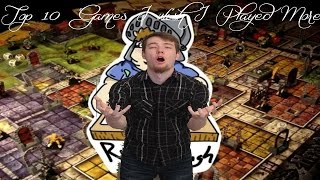
- Brilliant game, thoroughly enjoyed
- Immersive with soundtrack
- Not confrontational for a non-co-op game
- Only played once
- Would like to play with five people for more immersion
- Delving into caves for exploration and points
- Caves
- K2
Mechanics (from transcript analysis)
- Action Point Allowance — Players use actions to explore and perform tasks.
- Push Your Luck — Deciding how deep to go based on resources and the risk of not making it back.
- Resource Management — Managing food and inventory items is crucial.
- Set Collection — Players can collect points by taking pictures or descending far.
- Tile Placement — The cave layout is formed by tiles.
Video topics + discussion points
Quotes (from this video)
- this top 10 is not really that special because I actually stole the idea from rado
- I really want to play that one but I need to play this one so I push other games aside
- no two games are the same
- this game is so epic
References (from this video)

- Exploration and photography
- Underground
Mechanics (from transcript analysis)
Video topics + discussion points
Quotes (from this video)
- So, because of that, I actually never got a copy of it um and haven't played it.
- Um so, you drive cars around and shoot at each other. That's basically the game.
- Looks like Carcassonne with Islands. That looks pretty good.
- Do we need a card game version of it? And the answer to that is we really don't. Just play Camel Up.
- This is a war game from Don Greenwood, Avalon Hill.
- But if you like choose your own adventures type games, that's what this is.
- It is a tile laying game that is about as exciting as it looks in this picture here.
- So if you like Klask, um which is a fantastic two-player game, this is just a version for four.
- I really like awkward guests, so why didn't I play the second one?
- He gave it Seal of Approval. A seven out of 10. Well, there you go.
- I think I'm going to have to go with the Bottom of it. It is a fantastic three-player trick-taking game that I like very much and think you definitely should check out.
- If you really like what we're doing here at the Dice Tower, then there are different ways to support the Dice Tower. One of those ways is through Patreon.
References (from this video)

- Really quirky
- Neat crunchiness
- Feels like you're on an expedition
- Cool roguelike vibe
- Just exploring a cave, that's it.
- Can feel a little bit like piggybacking off each other.
- Spelunking, exploration, uncovering treasures
- A cave
- Procedurally generated narrative through exploration and tile discovery
- Carcassonne
Mechanics (from transcript analysis)
- Action Points — Players have a limited number of action points each turn to manage their exploration and equipment.
- exploration — The core of the game involves exploring the cave, uncovering treasures, and reaching different depths.
- Resource Management — Players need to manage equipment and action points to explore depths and return safely.
- Tile Placement — Players carve through tunnels by placing tiles, similar to Carcassonne.
Video topics + discussion points
Quotes (from this video)
- hey everybody welcome to another top 10 list today as you can tell from the title we are covering the top 10 misfit games
- jamie from the secret cabal he's a friend of mine and he's struggling right now he's recovering from esophageal cancer he's on the mend
- these are games that for whatever reason kind of just flew under the radar didn't really make a splash there's something kind of weird about them but games that i really would enjoy and recommend
- the order is actually i'm going to go from oldest to newest so we're going to go way back way back when
- this is the one game on the list i do not think you will be able to find if you can find it good luck to you
- it's hard to explain in short summary
- i think the best resident evil style board game that i've played
- i loved it and had a blast with it so there you go
- i think all these you can get on the cheap
- it's going to take a couple of plays but the rest of these it was like huh this game's kind of weird let's play this again this is weird and then we'd play it a couple times and then then actually this is actually really neat game really different and kind of a unique experience
References (from this video)

- cooperative storytelling
- improv-friendly
- no stats or GM
- guided storytelling/improv storytelling with trait prompts
Mechanics (from transcript analysis)
- no GM — No game master; players collectively guide the story
- Storytelling — Players tell a story with prompts from cards indicating what to steal and traits
- trait prompts — Cards give players traits that guide what they can do in the story
Video topics + discussion points
Quotes (from this video)
- this is a game called ecosphera rewilding the world
- it's language independent
- the transparent is not just a gimmick it's actually part of the mechanics
- Great Western Trail Argentina compared to the previous versions
- my number one for both of us was Great Western Trail
References (from this video)
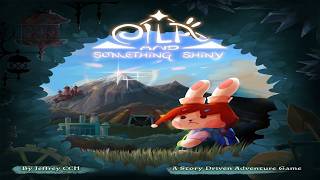
- Engaging narrative with multiple endings.
- Dark and mature themes that are impactful.
- Mechanics that encourage strategic decision-making.
- Interesting item and character interactions.
- Brutal and punishing mechanics.
- Consistently sad or tragic endings.
- Some mechanics can feel overwhelming.
- Exploring a castle, dealing with its inhabitants and demands.
- A castle
- Blackmint Wukong
Mechanics (from transcript analysis)
- Choices and Consequences — Player decisions directly impact the narrative and lead to different outcomes and endings.
- Combat — The game involves combat encounters, with mechanics that provide bonuses or abilities to confront enemies.
- contract fulfillment — Players can take on contracts which cost knowledge and are beneficial, such as tracking a thief or becoming a writer.
- Endings — The game features multiple distinct endings (A, B, C), with the host exploring and discussing the outcomes of each.
- Item Management — Players acquire various items like an oil lamp, velvet pouch, and fortune watch, which provide different benefits or abilities.
- Privileges — Players can purchase privileges with money, granting access to locations like the apothecary, library, or a private room.
- Resource Management — Players need to manage resources like gold, knowledge, food, and items to progress and meet demands.
- Tribute System — Players must pay daily tributes, such as food or gold, with penalties for small or failed contributions.
Video topics + discussion points
Quotes (from this video)
- Maybe one of the endings is killing him. I might try that.
- Oh my god, that was [ __ ] embarrassing.
- God damn.
- This game gets dark. I was like, 'Yeah, dark for like a [ __ ] fouryear-old.' No. This is actually like pretty up there.
- Leo. [screaming]
References (from this video)

- Neat concept that merges time travel with card play.
- Accessible twist on a familiar mechanic.
- Thematic integration with mechanics may hinge on execution.
- Temporal manipulation of events
- Time-traveling trick-taking
- Technical yet poetic twist on familiar trick-taking
- Joking Hazard? (not a direct match)
Mechanics (from transcript analysis)
- Event-based replays — Players can revisit and alter outcomes via events.
- Events — Players can revisit and alter outcomes via events.
- Trick-Taking — Standard trick-taking with a time travel twist.
Video topics + discussion points
Quotes (from this video)
- this is four games in one complete with 125 plastic teeth in five different colors
- the only problem that I have with this game is that I always miss here its title as Rock Raider
- there's always room in my collection for another fun fast-paced family game which has enough strategy in it to keep my wife and I engaged
- what's mine is mine and what's yours is also potentially mine
- I'm torn on the undo series I'm very curious about what its gonna present but I'm also quite skeptical
References (from this video)
- tight decision space and meaningful choices
- engaging with the expansion element (Matcha expansion) for variety
- significant playtime complexity for a lighter intro game
- potential AP-prone moments depending on player group
- feudal economy and tile placement
- medieval castle development and town-building theme
- abstract euro-style with thematic castle-building flavor
- Castles of Burgundy
- Age of Innovation
- Terra Mystica
Mechanics (from transcript analysis)
- Action Drafting — selects actions from a hand or display to optimize turns
- Set Collection — gathers resources/tiles to enable further actions and scoring
- tile/area control — placing tiles to develop castle areas and score
Video topics + discussion points
Quotes (from this video)
- remember you are somebody's reason to smile
- these three are in here already I have really high hopes for solo play
- I am so excited for the future content on the Channel
- open Season is one that I really want to play again
- I really want to do a full office make over
References (from this video)
- Innovative use of dice as workers
- Tight, tense pacing with a twist on worker placement
- High replayability through tableau progression
- Theme may feel abstract to some
- Learning curve around the placement rules and tempo
- Worker placement with a twist
- Fictional medieval/industrial city
- Procedural, highly interactive tableau-building
Mechanics (from transcript analysis)
- Deck Building — Acquire and play cards that become part of your tableau for ongoing benefits.
- deck-building / tableau building — Acquire and play cards that become part of your tableau for ongoing benefits.
- Nine-move game length — The entire game unfolds over nine turns, creating tight pacing.
- Real-Time — The entire game unfolds over nine turns, creating tight pacing.
- worker placement with dice — Roll dice at the start of each round and place them as workers on a bridge or tableau.
Video topics + discussion points
Quotes (from this video)
- What a great game.
- This blends those different mechanisms together beautifully.
- It is a flagship game.
- It's the sweet spot of advance.
- Stunning product.
- This is so finely tuned.
References (from this video)
- Compact box, strong theme, great production
- Not as expansive as bigger box games
- Tight Euro-style decision-making
- Japan-inspired thematic elements with castles and samurai
- Old-school euro vibes with modern polish
- Other tight Euro releases from Japan
Mechanics (from transcript analysis)
- tight action economy — Very tight decision tree, short playtime
Video topics + discussion points
Quotes (from this video)
- Cascadia is released in the last 5 years and it is already considered a modern classic.
- It's endlessly customizable where you have you can just release new tracks, you can release new cards, new modules.
- This is a two-player game that is not the usual car button games.
- The theme is so strong. It gives you so much of that Indiana Jones feeling.
- It has this almost Dungeons and Dragons feel where you are the storyteller creating the environment.
- Legendary is significantly better. It has more replayability. It is in a nicer production.
References (from this video)
- Mainstream appeal with strong exposure
- Strategic defense and expansion
- Historically-inspired kingdom/fortress theme
- Rule-forward with strong production cues
Mechanics (from transcript analysis)
Video topics + discussion points
Quotes (from this video)
- It doesn't need to be fancy. It needs to be useful.
- Clear communication, clear files.
- AI is not going to replace humans, at least not fully.
- We like to treat big companies and indie publishers the same with professionalism.
References (from this video)

- high replayability due to board customization
- tight design with no margin for error
- potentially brutal if misplayed early
- tight, highly-interactive euro with re-playability
- castle-building board game with worker placement and scoring variance
- mechanism-driven design
- Patchwork
Mechanics (from transcript analysis)
- variable scoring / board customization — customizable scoring cards and boards yield high replayability
- Worker Placement — limited action economy with careful timing
Video topics + discussion points
Quotes (from this video)
- it's our monthly roundup
- this is more viby
- the game is an experience
- we're going to go to Birmingham very soon
- it's the best artwork that I've seen
- the art in this made me a little bit emotional
References (from this video)

- clever thematic-mechanic link
- distinctive take on trick-taking
- less mainstream compared to modern classics
- manipulating timelines to control past/future tricks
- time-traveling adventure
- timeline-centric tricks with fuel mechanics
- Time Chase
Mechanics (from transcript analysis)
- Compound Scoring — control three parts of the timeline to win
- multi-axis scoring — control three parts of the timeline to win
- timelines and fuel — spend fuel to travel back to past tricks; manage multiple timeline tracks
Video topics + discussion points
Quotes (from this video)
- "one of the most underrated, most thematic trick-taking games out there"
- "cooperative trick taking game, but there's a hidden trader"
- "neat connection between its theme and its mechanisms"
- "this is not a persuasive essay to convince you that arcs is a trick-taking game"
- "Skull King is one of those games where every round has a big moment"
References (from this video)
- Dense, tactical decisions in a compact footprint
- Excellent value and quick play
- Limited turns can feel constraining for some players
- fast food empire
- Dice placement in a burger joint theme
- short, tense turns
Mechanics (from transcript analysis)
- Dice Placement — Nine turns with dice-driven actions; synergies emerge from combinations
Video topics + discussion points
Quotes (from this video)
- the number of centimeters away you are from the location is the number of points you will score at the end of the game
- lowest score wins
- the score you score will be two times the number of centimeters we are from the right question answer the right answer
- it's blackout Hong Kong yeah it's by Alexander V
- not luck of the draw this game is seeing those combinations and being able to work through them on the board
References (from this video)

- deep strategy in a fairly short time
- high density of decisions
- potential analysis paralysis for some players
Mechanics (from transcript analysis)
- Dice Drafting — players draft and use dice to influence actions each round
Video topics + discussion points
Quotes (from this video)
- I love push your luck games.
- Wavelength is one of my favorite party games of all time.
- Quacks of Gwedlinburgg is still in my collection, and it's one of my favorite games of all time.
- I believe Starship Captains is both my favorite game and I think the most underrated.
- So Clover is a great party game. It is one of those that has never failed when I introduce it to any group.
- Camel Up is just silly fun, right? Every time I play it, there is laughter.
References (from this video)

- highly approachable, quick to play
- matches Rosenberg design style with a compact box footprint
- solo mode may be over- or under-powered depending on rules
- Red Cathedral
- Glass Road
Mechanics (from transcript analysis)
- Dice Placement — dice rolled and placed to gain actions; area majority flair with a light weight.
- dice placement with action spots — dice rolled and placed to gain actions; area majority flair with a light weight.
Video topics + discussion points
Quotes (from this video)
- these were the games that I was able to play at the time this time last year and rank accordingly
- I really bounced off of hard out of Disney and keeping with the latest releases and sets
- Earth is a staple in my collection
- Orani and Burger Canal… one of my favorite games to play of all time
References (from this video)
- Gothic theme and storytelling
- Limited published details in the segment
- Horror/mystery with a macabre twist
- Edgar Allan Poe-inspired tale of a man bricked in a wall
- story-driven
- Caper
- Caper Europe
Mechanics (from transcript analysis)
- asymmetric roles — distinct roles influence objectives
- Hidden information / deduction — players deduce outcomes from limited information
Video topics + discussion points
Quotes (from this video)
- This is coming out March 13th. And well, no, the new set.
- We want to say thank you to some of our game found backers.
- Walk in and just say, 'I want that character' — plug-and-play is the reason Marvel Champions is so popular.
- In 2026 Exit will turn 10. Four new entries are coming that year.
- Three sets a year for Star Wars Unlimited.
References (from this video)

- has a cave exploration theme
- basic game design
- not very engaging
- tile collection for points is generic
- cave exploration
- spelunking
Mechanics (from transcript analysis)
Video topics + discussion points
Quotes (from this video)
- I'm very Cutthroat here - I much rather save budget for a new game, save space for new games
- not all games are forever games - sometimes it's totally okay to buy a game with the expectation of playing it for about five years and then not wanting to play it again
- I can still respect I played a lot of Steam, but I just don't want to play it anymore
- there's so much hate on like oh you can't be like dipping your chosen to miniature games - but as adults there's so much hate on that
- when you own a lot of games there's a lot of rules up here and the tough thing is that when there's so many rules up here you need some games that you teach or play later to be a little intuitive
- the difficulty I have with it is that when I explain it to new players it's tough to explain - each player has a different ruleset
- I think that's one of the first games that if it didn't invent that concept at least popularize it
- if the game is going to warrant me having to do separate explanations for everybody, extra effort - it's got to be really damn good and Vast isn't really damn good
References (from this video)
- unknown
- unknown
- unknown
Mechanics (from transcript analysis)
Video topics + discussion points
Quotes (from this video)
- Which board game looks the best after the googly eyes treatment?
- Vote on your favorite in the comments.