Top 10 Relaxing Games
Games in This Video
9 games are featured in this video — they unlock as you watch.






Transcript
Don't even speak, man. Don't even speak. I'm too chilled out right now. Okay. If we're going to play a board game, men, it better be really relaxed. What's up everybody? My name is Nick. I'm Mike. We are the brothers smurf. And that's right. Today we're talk about relaxing games. These are great games you can play kind of at the end of an evening, maybe the end of a game night with a a a brother, a sister, spouse, kids gone down for the night. You're trying to just chill out.
It's a game where there's, you know, some strategy, some thinking, but you're not going to be stressed out. You're kind of just be like, "Okay, cool. You can kind of just play relax. You play." Yeah. Cruising is the This is the top 10 cruising games. Number 10 is going to be Acropolis. This is one of those tile laying games that again, there's strategy, there's thinking, there's things you're trying to do, but just none of it's super serious, none of it's super difficult. You're just getting tiles, placing them out, and trying to score the most points. This is acropolis where you're kind of building up an acropolis and there's these different colored tiles that you're putting out there and the different colors on the tiles will want certain different things. So like there's like the red barracks and the red barracks want to be on the outside of town because that's good. Certain things want to be higher. Certain things want to be surrounded by other things.
It's just one of those kinds of games. And I feel like I I I don't know why I feel this way, but I feel like a lot of tile laying games work in this because a lot of tiling games acrop is very very much included in this. You know, there's always those kind of ramifications, not ramifications, all those kind of stipulations that you want to do like you want, you know, green things next to yellow things, you want purple things surrounded, you want blue things next to other blue things, you want red things on the outside, you want all these different kinds of things. But just in a tile lane game, you're just kind of picking up a tile, putting it down, and even though you're paying attention to all these things, it never feels that stressful. And I think Acropolis is a perfect example of that, of a game that's like pretty simple. Definitely some stuff to think about with the different colors about where you want to put them, how high you want to put them up, but it's not going to bog you down and it's not going to stress you out.
And you just kind of play this game and try to score the most points. And it's just lovely. Number nine is Let's Go to Japan. This is a uh fantastic game uh if you're planning to go to Japan and want to get ideas for your trip or if you just want to kind of uh have a game that focuses on kind of having the most enjoyable week possible. This whole game is about you planning out a trip, going to Japan where you'll be spending your time between Kyoto and Tokyo, uh and doing different activities. And all of these are real things that you can find in those cities in Japan. Uh and different activities are going to provide kind of experience tokens like different types of experiences.
Uh and many cards uh are going to give you certain types of you know experiences while requiring other types of experiences in order to score. So each day you're going to be playing three cards to that day and one of those activities will be the highlight of the day. And this is where your scoring will come in based on certain uh kind of movements of experience tokens you've collected uh prior and you're going to be building this whole thing out. And then eventually you're sort of going to run your trip where you're going to go through the week in order collecting uh you know your victory points and your experience uh markers. you're going to move them up and stuff as you go through the week and sort of see like how enjoyable was your time. It's really about just having the most kind of fun trip possible. And I love that setting.
The art is really appealing and just really kind of comforting. Uh I know people have used this to actually get ideas of what they can do when they go visit Japan, which is like really really cool. Uh it's just a really interesting kind of fun card drafting game.
Number eight is going to be Riverside. There's actually a lot of like rolling rights that I feel like kind of fit into the kind of like relaxing, cozy. It's not super serious. You can kind of just play at the end of the night. But I really like Riverside. Riverside is all about taking I believe it's Alaskan cruises. It's some kind of uh uh winter cruise, but I think it's set in Alaska. Um and you're going on these Alaskan cruises. And so, uh, one player is going to roll out all of these dice. And they're going to be kind of like they're going to be, uh, separated by high dice and then kind of low dice. And then you're going to be choosing these dice and then, um, marking off spots on your board. And what you're marking off are mostly going to be various seats on these various boats uh, because you want patrons on those boats. And so the lower dice, obviously, you are marking off less things, but the higher dice will require you to use fire. and fire you have a limited resource of. So you can't always take these really high dice.
There's also like kind of a green die and a green dye you can always add to your dice, but again you have to pay fire to do so. And then basically every round the kind of big cruise ship that you're all on is going to be moving down the river. And then these boats that you're filling in are various excursions that you can take people on. And so whenever the boat moves, you're always going to be near certain docks. And those docks are going to have these various excursions on them, like the polar bear sighting excursion, the northern lights excursion, or whatever they are. And you can basically take them and all these excursions have a certain value to them. And you're basically trying to score the most points, going to the most valuable ones, trying to do the most stuff there. It's really, really fun, but it's very, very chill. You're just kind of getting these dice. you're marking off spots, trying to decide which um which various excursions to go on, when to go on them, because like I said, they have different values, and you are a lot of times multiplying the amount of tickets you have by those values. And so, you're kind of like, oo, can I wait for this one to come back around? It's just pretty chill in terms of what you're deciding. You you're making decisions.
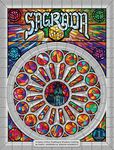
You have strategy, but it's just it's not that serious. You're just going on a cute little Alaskan cruise and it's just it's just really really lovely. Next up is Sigrada. This is a game that I feel like was the first game that we came across in our early, you know, board gaming days that like felt like a cozy, relaxing kind of, you know, pretty uh game. This is a game where you're going to be drafting dice to fill in a stained glass window. The dice are of different colors and stuff and you're going to be kind of filling in uh on a plan that at times will allow you to put any dye. Other times will require a specific value of dye. Other times will require a specific color of dye. And you basically can't, you know, put colors together and stuff. They have to kind of spread them out a little bit uh to kind of make it all harmonious and nice. And this is something that like was really cool to see a game that was beautiful. It was about creating something beautiful is ultimately, you know, not super rulesheavy. Uh as you're drafting these dice and stuff and it gets a little bit puzzly and a little bit tight as you go at the end of the day, but like you're just creating this awesome kind of almost piece of art. Uh and that was again for our money uh early on in in the board gaming career was uh something that like we had not seen before. So, we were like at a board game cafe like, "Whoa, this is what board games can be." And it was kind of like one of those level up moments. Uh,
and it created a lot of joy just kind of in its kind of beautiful simplicity. Number six is going to be a great game named Kagawa. This is not a new game anymore, but Kanagawa is a really, really fun game. This game um is kind of relaxing both in terms of the gameplay but also the theme because this game you are trying to paint a large uh very big kind of panorama landscape type painting. And so you are basically at school for these kinds of paintings specifically and you are going to be going up in various things that you can um going up various skills like painting mountains or painting seascapes or these kinds of things. And you're going to be drafting out these cards. And these cards are going to be again things that will add into your panorama art pieces or they can be flipped over to essentially give you skills. And again, skills and those various things we kind of just talked about. And it's got this really interesting card drafting system where you are going to be putting the cards out there on a little grid and you'll put up the top of the grid first, the first row of cards. And then basically in turn order, you will go around and say, "Do you want to take a column of cards?" Now, right now there's only one row of cards. So, you'll only be taking one card. So, if you pass, you say, "Nope, I'm not going to take cards right now." And then it goes to the next person. They have to either choose to take a column or pass. And then once everyone has passed or taken a column, you will then fill in the next row. And
then again, you have to choose, do you want to take a column? Now, there'll be two cards in one of those columns or pass. And then you can eventually get to three and then maybe four. I think it's just three. But either way, it's one of those things where like it's got this really juicy um decision space because sometimes you're like, "Ooh, I really need that card." But if I take it right now, I'm only getting one card, but if I pass, I'm last in turn order. Mike might take that column before I can. Gosh, do I really want to do that? And it's a really, really juicy decision and what is ultimately a pretty chill game otherwise. It's really, really nice. So when as you get these cards, you can either add them into your panorama as things that you have painted um or you can again choose them as skills and then as you're painting these things, you have to put your little worker apprentices on these various uh skills to be able to paint those things. And then there's also set collection you're going for in your painting. There could be like people, buildings, animals, and as you get two people, you then can claim the kind of scroll that gives you points for having two people. Once you get to three people, someone else can claim that one, things like that. So, you're doing a little bit of set collection, a little bit of of drafting, kind of like stress, but overall, it's a pretty chill game that does have some speed bumps in there that keep it a little bit spicy, but nonetheless, it's just a really pretty, really fun game that's really relaxing to play, and I feel like it ever since it ever came out, it's never gotten talked. Kag was great.
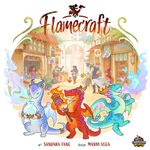
Next up is Flamecraft. This is a world in which we have kind of befriended dragons and now live harmoniously with them and they sort of uh you know work with us and stuff in our everyday life. This is a game that is like some of the best art ever. It's just absolutely gorgeous. Uh it's a world that like I desperately want to live in. It just seems like very idyllic and nice and relaxed and we're going to make bread today and it's going to be awesome and my dragon is going to fire up the oven for us and stuff like that. Uh, and I think the uh kind of cadence of the game of gathering up resources, spending them to kind of complete these contracts and stuff and living in this world and enjoying the art and the the production of it all is just one that creates like really relaxing results every time. Uh for us, you know, it's a nice game to to create board gamers, frankly, because it is, you know, not a heavy game in terms of strategy and stuff like that or rules overhead. And there's so much appeal of like the world building they did, the setting of this game, the art and execution of the components and everything. It's just one that like more than just about any other game I can think of. It's like this is the game I want to play with people who are new to board games to create a cozy good vibes experience that hopefully brings them back before I show them like Castles of Burgundy.
Next up is going to be Dolphantique. I've talked about tile lane games. I just feel like I just feel like they're relaxing. Dolphant antique is very relaxing and Dolphantique is an interesting game because you technically can't lose this game. You can only score points and basically how well you score is kind of how well you did but you can't actually lose. There's no way to lose this game. This is based off the video game Dope from Antique which is another tile laying game. It's kind of like a slay the spire thing where this is already kind of a board game but it was um digital so you can play it on Steam or the or on your Switch or something like that. And then they made a board game out of it, which is great because I've actually never been a massive fan of the video game for whatever reason. I should be, I just wasn't ever. But I really like the board game. But this is a game where you are cooperatively working together to try to complete these tasks. These tasks are going to be like you want to have a forest area that is five tiles big. You want to have a railroad that is four tiles long. You want to have a field that's three. Certain things like that.
Once you make that, you then get to complete that task. That's wonderful. And then you'll bring out a new task because you always have to have three. And basically what you're trying to do before you run out of tiles, which will signify the end of the game, you're basically trying to score as many points as possible. These tasks are going to be worth their points. So if it's a task that requires six of something, that's worth six points. And so you're trying to score as many points as you possibly can. As you score points in the game, at the end of the game, you will basically mark off how many points you scored and you will start to unlock other things. So now there's like these flags and these flags you can put in an area and these areas it will basically give you extra points for those as long as that area is completely closed off. And so there's all these other scoring opportunities that you will unlock throughout the game. But the game itself is very very relaxing. You are just working together to try and build this out the best way you can. But it's just not stressful. This is also one of those games that you can jump in and out of.
You can just stand by and kind of be like, "Oh no, I think you should put it here." Or you can come in, flip over, put on a couple tiles, and then just like leave. It's just it's not one of those games that requires you to like sit down and like really play and really think. You can kind of jump in and out. It's so casual. It's so nice and lovely and relaxing. It's a great thing to have people kind of playing maybe at like a just a relaxing party or something like that. If you want like a game going on, you can have some games of dope from Antique going on and people can kind of jump in and out and kind of chat and kind of work together. It's just really really nice. And that's it. It's just really, really nice and relaxing.
All right, next up is A Gentle Rain. This is a game that uh my wife and I sometimes will play and just sort of, you know, two-headed monster co-op it. Uh or you can solo play it. And this is a game that is literally designed with relaxing in mind. It's almost more of an activity uh than a game by design. This is a game that as part of the instructions for setting up the game, they say, "Hey, go get a blanket if it's chilly. Go make a cup of tea." It says to do these things and get yourself ready. Because this is really kind of a a mental reset kind of game. This is a tile laying game ultimately where you're going to be putting down uh tiles that along the four edges have half of a flower and you're trying to make matches of flower colors as you place these tiles out. And each of the corners of the tiles are kind of scooped out. So when you have four tiles uh all around each other, it leaves a spot to put a flower in. And you're trying to put all the flowers out uh before you run out of tiles. This is one that like literally is so simple rules-wise that it's meant to just give you an opportunity to almost meditate, to let the rest of the world kind of fall away.
You can focus down at your table, have a hot beverage or whatever you need. uh and just kind of focus on something small which I think is really great in a world that feels chaotic and maybe out of control a lot of the time. Uh something like a gentle rain if it were to actually happen or playing a game like this is kind of meant to just quiet everything for just a second and give yourself a moment of peace before kind of continuing on with your day. Hey, so I think this is like a fantastic game to play at the start of your day uh with your morning coffee at the end of a night if you just want to put down the the you know the doom rectangle that we all carry in our pocket uh and just relax before bed. I think it's really um does a great job of doing that and it was very intentionally made with those kind of things in mind.
I'm sure there are very very competitive games of cribage out there, but for us cribage is a very relaxing game. We always played cribage with our grandparents. Our grandparents are not I was going to say mean. That doesn't necessarily mean your grandparents are mean if they play competitive cribage cribage, but ours are just very were very chill when we played cribage. We don't play like muggins. We don't play where like cutthroat where you get to get other people's points if they don't claim them. We've never played like that. Cribage has always been a game that you played like late into the evening and you just played a couple rounds of cribage, tried to win, but if you didn't, whatever, it didn't really matter and that's it. So, cribage for us is a very, very relaxing game, but I understand that that might just be us. Cribage is a uh game you play with a standard deck of cards and you'll need some kind of cribage board, although you could just keep track of the points on a piece of paper if you wanted to, but there are lots of cribage boards.
Oftentimes in the background, we have many cribage boards. We have this cool one. This is a cribage board right back here that our grandfather made, which is who we played cribage with. We love cribage. Cribage is just great. But this is played with a standard deck of cards. And look, another cribage board. They're everywhere in our office because we love cribage. And I think cribage boards are one of the coolest things in board gaming. But nonetheless, cribage is a game with a standard deck of cards where you'll be given a hand of six cards. You will keep four of them. Two of them will go to the dealer's crib, which is a second kind of hand that they'll get to score. And then you keep your cards and then you will play out your cards one after another. And you're basically trying to score points. And you'll score points by doing things like creating a pair. So if I play a three and then Mike plays a three, he did a pair. That'll give him two points. If then I played a third three, I would get six points for a triplet. If you get to 15, like I play a seven, Mike plays an eight. That makes 15. Then you'll get two points. If you get to 31, you get two points. You're basically playing out these cards trying to score points. trying to kind of set people up like, "Oh, I'm going to put out a I'mma put out a five and then Mike's going to hit it with a 10 and then I'm going to hit him with a pair or something like that." You know, certain things you can kind of bait people into.
And then once you're done um playing out your cards, you will then pick up your cards and then score them. And they score in a similar way where if you make 15s, you will score. If you make runs like 2, three, four, that's a run of three. That'll be worth three points. Pairs, triplets, things like that. And these things can kind of stack because if you have like 6678, the 78 will make a 15 and then six seven eight is a run of three. But then the other six and then 78 is another run of three. And then there's a pair of sixes. So that'd be 152 two three card runs is an extra six points. That's eight points. Plus the pair of pair of sixes is 10 points. So they can start scoring like that. So you really want to make a good hand. And then the dealer gets to score their hand. And then they get to score their crib, which is those two extra cards that you threw in. They would also throw in two cars. So the dealer gets to score some extra points, but the non-deer scores first. And this is a race to gosh, I can never remember.
It is 250 points, 201 18 points. I can never remember how many points it is, but you score a certain amount of points and then whoever gets there first immediately wins. So a lot of times these games really come down to it where you're like oo I'm the dealer. So I have a crib so I have a better chance of scoring points but I don't score first. It's just really really good. This is one of those classic card games that lived on forever for a reason. I absolutely adore cribage. I will never ever stop playing it. I cannot wait to teach it to Mike's daughter and kind of pass on that tradition um because it's so dang good. Cribage is the best.
For us, a game that we started off enjoying for its ability to let us relax and do something kind of puzzly and continues to be one of the best possible games to do that is Cascadia. Cascadia is a a tile laying game where you are going to be putting out these hexagonal tiles, creating uh areas of different landscapes, and you're also going to be drafting an animal token uh that's kind of paired with each tile. And the various tiles that you put out will be able to house one or more types of animals. And you just have to put your animal token onto any tile you have placed that can accept that type of animal. And the different animals want to be scored in different ways. Your salmon might want to be in one big kind of curving line. Your elk might want to be in a specifically numbered group. Uh your hawks might want to have a bunch of them, but don't have them next to each other and stuff like that. And this is a game that kind of perfectly blends that level of like puzzliness where you're building stuff in hopefully a synergistic way, but it doesn't become too too tight or crunchy, if that makes sense. Like it it's open enough that you can kind of build anything anywhere, but it's also got enough to think about that you can really be strategic in how you play stuff. So I think it kind of appeals to everybody and like the comfort level that they wish to have with this game. Do I want to think about it really really hard and minmax it? Do I just want to kind of chill and like let the you know go with the flow and let what happens happens? This game kind of I think can sort of accommodate any type of style of player. And I think that's what makes it really kind of the thing that we keep coming back for. If we want a little bit of stuff to think about, Cascadia works. If you just want
to chill out and enjoy the art and stuff and and have a good time placing your tokens out, Cascadia's got your back. Uh there's just a lot of fun stuff. nice art by Beth Soil which always helps you feel relaxed. Uh and it's one that yeah has had a lot of staying power over its kind of many years of release now. Those are 10 games that we like to play when we're just trying to relax but still use our brain a little bit. Uh those are the ones we like. Get your picks in the comments below so other people can see what they like to relax with and stuff and get some recommendations. And until next time, I am Mike. I'm Nick. We are the Brothers Murf and we'll see you on the next top 10. Bye everybody.