History of Board Games




Transcript
Hi, I'm Admin Wales and this is my board gaming vlog. And today um I want to talk about the history of board games. Now uh that means I'll be spending a little bit of time in the ancient era, but not that much because ultimately what we're going to get to at the end of this video is a little bit of discussion about what's going on right now in the industry. um particularly in relation to the asthma day sort of mergers and consolidation of the board game industry and what the future looks like for board games and board game designers and board game players. Um so that's where we're heading but of course that's not where we start. where we start is way back in ancient times when people were playing games like go and manala uh nine men's morris um those sort of games back gammon uh games which were abstract which need needed few pieces but could actually be often constructed into quite beautiful pieces and then you tended to find that these would be picked up by um religious uh people or by royalty and So you'd get these very lavish, beautiful sets and sometimes you'd see people being buried with their board games and this sort of stuff. So it was obviously a very significant thing to people's lives and to adults lives at that time. Then of course board games became about morality and we started to see people trying to put messages into their board games. So that ancient game uh deriving from India with the the the the sort of precursor to
snakes and ladders, this was a morality game and the fact that the the um you know the the the the players win or loss was entirely down to luck was was considered a good thing. It was about fate and destiny and and karma. Um these sort of things. is when it first came to England uh in the 1800s I believe it was it it became a Christian sort of morality tale and only later when produced for the mass market do we lose those moral messages and it just becomes a straightforward story um and in fact snakes and ladders of course doesn't have much of a story at all. So that was the uh the the sort of hundreds of years or thousands of years um leading up to the the the sort of 1800s around this time and then towards the end of the 1800s we start to see uh the production of of sort of boxed board games in in the form that we see now. Now I should go back a little bit further and talk about around the 1500s when we start to see the playing card decks arriving. uh ultimately culminating in a a 52 card deck as we have now. But you still see the sort of progenitors of that in other European countries. So Italy has a different st different deck of standard playing cards with um cups and spa uh cups and swords and uh coins um and I think I can't remember what the other suit is but but other suits and sometimes they play with a 40 card deck,
sometimes with a 52 card deck. So that 52 card deck while fairly um widespread now is not uh entirely the standard. It's the standard uh where we play I suppose or certainly where I play. And I think this is what we we we've seen with these board games. Chess is not a game that was designed by one person. It's the culmination of thousands of years of play testing essentially until eventually we settle into this rule set um that perhaps no one individual would ever have devised themselves. In the late 1800s, these games tended still to be fairly educational, not always about morality, I suppose, but we had in the in America the M Mc Mccclaclin brothers, I believe they were called, um, who produced a bunch of games, which now I can't I I don't I don't recognize any of these games. These were not games that took hold, but eventually that company was purchased by Milton Bradley, who were a major force and who who still I say they still are a major force.
They're now a brand under Hasbro. But Milton Bradley produced many of the memorable games of the 1900s. Of course, my main focus of interest is about the UK and the sort of games I've been playing throughout my life and and the games my dad played throughout his life. And if we go back to the 1920s, there was a company in the UK called Gibson's Games. And they were doing very well in the early 1900s with a series of games um originating with a game called Latac, a French game, Latac that was brought to Britain by HP Gibson and Latac followed on to DOA Patrol, a Navy version, and then aviation as version with airplanes. And then ultimately with this game, Try Tactics that has all three. It's got boats, planes, and soldiers. And essentially what we've got here is a precursor to Strateggo, that game that later came out with Milton Bradley. Now Gibson Games collapsed after the war.
The what they they I mean they they continued in a much smaller scale, but they sort of had to start again. Um and it's a bit messy working out what the origins of Strateggo are. How is Strateggo related to Lac? It's the same game ultimately, but what what about the copyright issues and the um all that side of things? And it's not very clear from any sort of internet research what exactly went on there. Whether this was purchased, whether it was copied, who knows? But Strateggo has became the become the game which has has stayed around for a long long time. Now, Doa Patrol was a game that my father played a lot as a youth. And so, it was his sort of childhood board game that he retained into adulthood. And then when I became a teenager, I would play Doa Patrol with my dad. And I absolutely loved it. And in fact, I've never actually played Strateggo, but I I I still um have very fond um memories of playing do patrol. Try tactics we always considered too complicated. I'm pretty sure I could handle it now. But at the time, uh I I never wanted to play Try Tactics. It was always Dober Patrol and then later we played a bit of Lac and a bit of aviation. Milton Bradley then dominated the scene for a while afterwards and they were competing with the the other company Parker Brothers.
Now, Milton Bradley had a great number of games that were very sort of fluffy, light sort of things like Yatsi and Battleships and in America Candyland, which I mean, I might be wrong, but I I don't think it's really caught on in the UK. I certainly don't remember hearing anything about Candyland until I got onto the internet and started looking at board games a few years ago. Um, although I know it's a big deal in America. And of course they had Game of Life and Twister and Strateggo and and later we get into things like Axis and Allies and Hero Quest and stuff, but that's not necessarily what you think of when you think of that broader sort of uh longer time frame of Milton Bradley. Parker Brothers, on the other hand, started out with the card game Rook was their big success that kept them going until they picked up Monopoly. Now Monopoly started out as one of those morality games. This was a game called The Landlord's Game in 1904, produced by a woman who was trying to sort of uh introduce children to the idea that inequality is bad and that landlords uh uh stand to make an awful lot of money at the expense of the of the poor tenants. So this was was a morality game based on georgist economic principles. It went through a phase where it was released as the Breer Rabbit game. And so Breer Rabbit was the evil sort of land owner and the tenant Breer Fox was the one that was being ripped off. But by the time Parker Brothers got onto it, it became a positive thing to be greedy and amass
this huge wealth and play this ruthless game of property acquisition and uh and driving your opponents into um you know uh poverty I suppose. So this was their big success, the Parker brothers, along with later Clue, uh which was released by uh Parker Brothers, but also by Wadingtons in the in the UK as the game Cludo. Um and then later the game Risk, which introduced this idea of putting uh little people on the map and spreading out around the map and controlling areas of the map. So sort of our first significant area control game. Um they weren't the only two companies around. There was also this company, I think it's called Celco and Writer. So Celco and Writer were the people who had control of the game Scrabble for many for for several decades. They were in control of that until later it was purchased by Hasbro and has since been seen under the brand of Milton Bradley and Parker Brothers which are now both owned by Hasbro. Um and then later the same company uh Celco and Writer had Trivial Pursuit. um a trivial pursuit went through quite a few lawsuits because of people firstly people claiming that they had invented the game but also people questioning the uh the origins of that trivia. Where had it come from? Had it been stolen from from their book of facts and in fact people had put fake facts into those books specifically to spot people trying to copy facts and trivial pursuit fell into that trap. But it was later deemed that
you can't copyright a fact. A fact is a fact wherever it came from. So, um, interesting little lawsuits around Trivial Pursuit in the in the 80s after it arose. So, now we're into the 1980s, and this is the era where I was a child, and I was playing all those sort of cheap little children's games. I was playing Monopoly and Buckaroo and Operation and um I I had a BMX board game and a Frankenstein board game. These were the roll and move sort of era. roll the dice, move around the track. Nothing very interesting going on there. Um, and in the in the mid sort of 80s, basically the mass market fell into this sort of rut of producing licensed children's games. Children's games was based on licensed properties, the Care Bears game, the My Little Pony game, you know, these sort of things. Um, and for adults, we had a bit of a boom of party games around the 80s. So along with Trivial Pursuit which perhaps brought on this era, we had the release of Pictionary and um Taboo and Articulate was a huge success and Rapido and then later and this is more around the time that I was heading off to university. We had Cranium and so my sort of late teenage years were were often about going to someone's house and we would we would have some drinks. We would play some board games sometimes or maybe it would be with my parents going to a dinner party with someone else's parents and we'd play Articulate or Taboo or
something like this after dinner. They're good games actually. Um often they drag on a bit too long. Um but generally quite nice party games. Boulder Dash being a particularly good one although also quite an intimidating one because you have to be quite creative to play that game. Um so this is the sort of mid to late 1980s and this is where the mass market has been stuck ever since. Now, we've talked a lot about the mass market, and I want to rewind a little bit to the 1970s because in the 1970s, there were three big strands in this world of board games. There was the mass market, which we've discussed, which was gradually sort of coming to this this point of of um uh where it's kind of I don't know. I don't know quite what to call it. A static this it's not really moving forward. It's not really innovating. But then we also had a hobby game uh sort of hobby game thing going on in the background somewhere. People playing in in these tiny little shops that were sort of out of the center of town, maybe in the back of a bookshop somewhere. Perhaps some slightly sort of geeky sort of people with very niche interests, interest in fantasy and sci-fi or in war games, cheaper components, that sort of stuff.
That that was just starting to come through in the 70s. But also there was something happening in Germany and around Europe. But specifically in Germany, these board games were starting to become a little bit more sophisticated, a little bit more beautiful, a little bit more craft and artistry going into them. Some more thought, some more innovation, and people starting to treat this as an art form rather than just as a a toy, which is what it had been up to this point. But before we get on to the European and the German games, let's talk about the hobby side. So in the 1970s, Avalon Hill, this American company, was quite a it had been around for about 20 years at this point, producing, as I say, sort of low qu well, lowquality components, but high quality games. Um, and I mean, the only Avalon Hill game that I ever owned was this one, Rrestlin, which uh let me show you the the stuff in here. Um, it's actually unpunched because my I've got another copy. I recently picked up this copy um off eBay because my copy is completely beaten up. But you see how the this is just cardboard. Um, and the cards are all in in this black and white. Um, and you know, it's a very cheap sort of production, but actually I I I really like this game. It's outdated. It needs all sorts of things to fix it. Um, but it's a lot of fun sort of take that battling sort of card play. So Avalon Hill was producing a lot of war games, a lot of fantasy games, those sort of things, as well as little
sports games, niche products, sometimes with fairly complex rules that you wouldn't see in the mass market. Avalon Hill picked up the game Diplomacy. Now, Diplomacy was an early example of a um a more sophisticated sort of game, a game with zero luck uh and all based around player interaction, a very social game. I mean, what we're seeing now in 2016 is the era of the social social games and and particularly the social deduction games, but diplomacy is an early example of that, a very social, very interactive game where it's all about players and and and rather than letting luck dictate what you do, it's the uncertainty of what another player might do and how they might betray you. Um, so diplomacy is a bit of a a landmark in our in our history. In the 1960s and in the 70s, there was a company called 3M. Um, Alex Randolph and Sid Saxon were involved in this. And Alex Randolph and Sid Saxon are two of the uh the big sort of um that they're they when you read about them, they sound like the modern designers that we have now. They sound like people who considered board games an art form. They cared about that art form. Sid Saxon had a collection of uh some I I think it's about 1,800 games, something like that, a library of games.
And bearing in mind that we didn't have the thousands of games coming out that we have now. And he would play the games and he would keep a journal in a leatherbound sort of journal of of what he played and the different mechanisms and that sort of thing. And he talked about games as an art form. Um, so Sid Saxon and Alex Randolph between them produced the games Acire and Incognito and um, Can't Stop. And these are very similar games to our sort of modern style games. In fact, they're games that are still around today and still played by modern board game players. They stand the test of time in a way that the mass market games don't. Um, 3M and Avalon Hill would work with freelance designers. Um, they weren't working with designers inhouse and they weren't buying games wholesale. they were signing into licensing sort of contracts with designers which is essentially the model that we have now and so as those companies folded over the years and then over a period of time the rights of those games will have reverted back to their original designers. Um so I'll come back to that point later because it's an important one. We also had around the mid uh 1970s Francis Trem introducing the uh the train games. So he developed 1829 which particularly became um well known in the game 1830 a very heavy stocks and shares train network building stockholding game um which is played by a niche of the of the board game market now who love it but a a sophisticated
complex game for a small number of players. He also introduced the game civilization which was the first board game to introduce a tech tree. So essentially where players can achieve new things which give them new powers as they sort of advance up a tech tree and they can take different branches from that tree as they like. This was then later incorporated into civilization style computer games as well. So he was a great innovator Francis Treasure. Around this time as well we also had the RPGs beginning to come through the role playing games. So, Dungeons and Dragons started in the mid 1970s. Um, Games Workshop opened in the UK. So, Games Workshop producing little miniatures for for for battles, fantasy miniatures, space miniatures, but also this big uh influx of of great board games from Games Workshop. So, in my early teens, this is what I was playing.
I was playing Blood Bowl and Talisman and Dungeon Quest and Mighty Empires and Rogue Trooper and Advanced Hero Quest. Um, wonderful games um in in that time and some of those have stuck around to this day. I believe we have a a new release of Blood Bowl coming uh next year, which is is very exciting um to see. Steve Jackson Games arrived around the late 1970s. Steve Jackson Games go on to produce Munchkin, a huge seller, which is has taken the industry by storm. Although it's sort of scorned by a lot of uh the the more sort of um hardcore board gamers, the people really into the hobby can can laugh at the mechanisms in Steve Jackson's games, particularly in Munchkin. But but it's sold very very well and it's very popular with a certain sort of market. And we also had Cosmic Encounter floating around. Now, Cosmic Encounter, again, an early landmark game. Cosmic Encounter wandered around. It went through different publishers. Games Workshop did some stuff with it. Um, I believe West End Games who were doing role playing games. Um, they they were doing stuff with it and it still really still played a lot to this day. Now, this was a heavily asymmetric game.
Every player had a different approach because every player had different abilities and different powers. Now, that's a big innovation and and and I don't mean it may not have been the first, but it was the one that really um brought it through successfully and brought it to everyone's consciousness. So, in Germany in the late 1800s, 1883, I think it was Ravensburgger was born. Ravensburgger, um the publisher of many board games over the years, I've got this one here, which is one of my favorites from my childhood, Scotland Yard. Um, so among all those, as I said before, buckaroo and operation and hungry hungry hippos and all that nonsense, um, I had Scotland Yard and I knew it was something different. I always Scotland Yard was my favorite game until I was introduced to those games workshop games in my early teens.
I loved Scotland Yard and I had no idea that what I was playing here is a straightup German Euro game, a Spielers Yares winner. actually one of the early ones because the Spielers Yares the game of the year award was introduced in 1979 I believe and 1983 Scotland Yard won that award and we start to see these these interesting games coming out um and some of them do filter through into our marketplace um so Enchanted Forest is an example, Labyrinth is an example from Ravensburgger um in 1983 3 also Essence Spiel uh the big convention arrives. Now this is now the the big convention that publishers from all around the world go to. We have thousands and thousands of people attending every year. It's massive massive networking sort of opportunity.
But it was born in 1983. Um and that is some 15 years or so after Gen Con in America. So Gen Con uh beats Essence Field by some time. although now they're similar size and of similar sort of importance although they've taken a slightly different track over the years. Now in the mid 1980s Wolf Gang Kramer arrives on the scene and starts to produce board games and he is the first big innovator in these European games um introducing the score track around the edge of the board in his game um Heimlick and Co. Uh so so yeah so that score track that's the Kramer track. Okay that's invented by somebody. You don't think about these things when you're playing games. It was Wolf Gang Kramer who came up with that. He came he well heavily sort of uh pushed this idea of action points. So some of his early games El Grande and Tical and Java and Mexico used this system where each player is allocated a number of action points and they can use them to do all manner of different things. So it opens up lots of options for the players, lots of interesting decisions. So action points were really driven by Wolf Gang Kramer and his collaborators at the time. And he was a frequent collaborator with other designers, still is. Um he uh in the game Princes of Florence, an early Euro game, um the idea of using individual player boards, uh as opposed to everyone playing on one central board, each player having their own
board that they play on. Um now I can't say he's the person who originated that. I mean, I suppose that's what you're doing in a game like Bingo, aren't you? But but these this game Princess of Florence was significant in bringing that forward um around the early 1990s. So in the late 80s, Kramer was just coming onto the scene and bringing about the sort of uh innovation in German games. So how does the mass market react to all of this stuff? Well, um, they start to produce, uh, hobby style games, sort of hybrids of hobby and mass market. So, we see things like Dark Tower, um, and, um, and we see, uh, Hero Quest and Axis and Allies, games with slightly more geeky sort of themes, fantasy themes, war themes, lots of little miniatures, that sort of stuff on big maps. And so they start to dabble in that sort of marketplace in the late 1980s. At this point, Hasbro was swallowing up the other companies. Uh in 1984, Hasbro buys Milton Bradley. Um in the 198 in in the early 1980s, Hasbro was sixth biggest toy maker in in the US. Okay. And and and by now it's it's at this point in 2016, it's the second biggest toy maker in the world after Mattel. Um, so over a period of about 10 years, it grows enormously, swallows up Middleton Bradley. Then a few years
later, Parker Brothers, it takes that on, well, it takes on its its parent company, um, Tonka. Um, in 1998, Hasbro buys Avalon Hill, um, and takes on board all of those games. And Avalon Hill, their back catalog pretty much disappears. So although games are still released under that Avalon Hill brand, um it's not really the same stuff that Avalon Hill used to produce by any means. In 1999, um Hasbro buys Wizard of the Coast. Now, Wizards of the Coast is a really significant um a really significant player in all of this because Wizards of the Coast uh was the maker of uh Magic the Gathering. Now, in 1993, Magic the Gathering introduced collectible card games um into into the marketplace. Um and and this was enormous, and it still is. It's still enormous. Uh 20 23 years on. Um Magic the Gathering, that game single-handedly keeps most board game shops alive. Uh players just buy more and more cards. what they're doing is buying those um those decks of cards where where you've got random random stuff in them. You don't know what you're buying. So, there's a lot of wastage there, but players just people keep buying them and the the market model is to is to basically make better and better cards so the players want more and more. This was followed by Pokemon. Um so, so that's you know that's an enormous property. So, Wizards of the Coast, they'd also uh taken
control of Dungeons and Dragons. And so when Hasbro takes this over, they've got Dungeons and Dragons and they've got Magic the Gathering and Pokemon. So this is a big deal. By 2000, the mass market is controlled by Hasbro. Mattel is the toy maker. Hasbro game maker and toy maker. And now in 2016, there are rumors of mergers. Now I don't know how seriously to take those rumors, but you see them on the internet. Talks between Hasbro and Mattel. Could they become one thing? in which case they're enormous. So in the 1990s in Germany we have the innovators coming through. Uh so we have Claus Toyber with Settlers of Katan. We've got Nitsia Rhina Knitia with his um auction trilogy. So suddenly games have auctions in them. Um so that's uh the games modern art and Medici and Ra hugely significant games.
He brings about some tile laying sort of games, tile placement games like Tigris and Euphrates and um Samurai and he introduces the first significant cooperative game. Now there have been cooperative games before but usually children's educational games. Lord of the Rings is the first big cooperative game. Um later of course Pandemic becomes the really significant sort of juggernaut in that in that um in that genre. And we have Kramer, Wolf Gang Kramer and his collaborators. So in 1995, Settlers of Katan is released by Cosmos and then eventually imported into the US by Mayfair Games and it's a mega hit and it's followed by more and Rio Grand takes up the the the reigns and and and and imports many of these Euro games into the US. Around this time, the internet booms and suddenly everybody has access to stuff from all around the world and people can talk about this stuff. In 2000, a website is born, Board Gamegegeek.
Boardgain.com. An encyclopedia of board games, every board game there ever was. And people are rating them and reviewing them and talking about them and sharing rules and ideas and pictures and the whole thing explodes. And with social media then coming in in the mid 2000s and people talking on Facebook and Twitter and YouTube becomes a major player. A guy called Scott Nicholson creates a a podcast, a video cast where he reviews games and talks about games in board games with Scott. Tom Vassel jumps on the case and and and brings about the Dice Tower with a podcast new at the time. Um podcasts, these radio shows you can download. you know, this this was a new thing and Tom Vassel um takes these things on and and the whole thing becomes big and more and more YouTubers start talking about board games and it all um sort of meshes into this this explosion in European board games. So in the naughties, the years 2000 to 2010, we have all these innovative board games and we have real big names. So we have Carcazison in 2000. We have Citadels in 2000. Then we have Puerto Rico and Princes of Florence and Ticket to Ride and Power Grid. Um in 2005 we have Kais and the arrival of of worker placement games. Now Kais not being the originator that's uh that honor it goes to Richard Bree um for an earlier game, but Kais is the one that that really makes a stand and worker placement games cross the board uh and
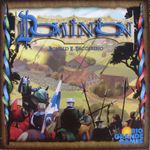
and become really popular. A griler really brings those to the four as well. Then Dominion arrives in 2008. Dominion being a deck building game, the first deck building game. And this spawns a whole load of imitators and and things, you know, people build on these ideas and and these games just get better and better and more involved and more complex. Um, Pandemic is is the the the big cooperative game that arrives in 2008. And then in 2009, The Resistance introduces social deduction. Now, previous to that, we had Werewolf, which was a sort of public domain party style game, but The Resistance gives us rules and and a little bit more, you know, deduction to work on rather than just hunches. And it's a mega hit. Um, Seven Wonders then comes through in 2010 and we see over the years loads and loads of these pass and play games where I hold a hand of cards, I pass one along and and and we go around the circle like that and build up sets of cards. So, we see games like Fairy Tale, which was a slight precursor to Seven Wonders, but um Medieval Academy and um Sheep and Thief. These they're not games that many people would have heard of probably, but let me think of better examples. NRAAM and um uh Among the Stars. Okay, NRAAM probably is a precursor to seven wonders as well, so I'm doing badly here, but card drafting games become very popular and Dixit in 2010. A beautiful sort of game um with this lovely artwork and a party style game in 2010 and around this
time and over the last six years, things have changed quite a lot. And I don't think we've seen a standout game in the same way that we've seen prior to that point. We have seen the birth of Kickstarter and crowdfunding. And suddenly there's a new way to publish games. So people can now self-publish without having the funds to back it up. Um, and they can do it with beautiful components and beautiful artwork because they're not taking any risks. What that does mean is that some of these games come out and they haven't always been the most brilliantly tested in the world. So sometimes you get the games and the rules aren't quite as good as they should be and okay the components are lovely and the artwork's lovely but it's not quite what you hoped it would be but not always. So there were some early big successes like Alien Frontiers and Flashoint Fire Rescue which really paved the way for future games and Kickstarter has remained a huge force in board games ever since.
Since 2010, the other big uh moves have been iOS games. So games you can play on your phone, games you can play on uh tablets, and so many many popular board games now have an iOS version that you can buy very cheaply and play. So that's a significant force in the industry as well. We've also had a sort of fad of micro games which doesn't seem to have gone away. Um started with Love Letter in 2012. And then we had Coup and and and all manner of these little games that just have like 16 20 cards, cheap to buy, portable. These are really popular now. Social deduction games have exploded in that six-year period. We have numerous games that are sort of imitators of the resistance. Um and and then the other big thing I think is licenses and licenses in quality board games as opposed to licenses in mass market board games. the the most significant being X-Wing and um Imperial Assault by Fantasy Flight Games. Um so there's been a lot of change but not those big sort of standout uh titles like we saw in the pre preceding 10 years. Now what what was happening with me? I keep wanting to go back to my sort of my board game origin story. So after my sort of uh teenage years of playing games workshop games, my late teen and university years of playing party games, there was then a good 10-year period where I tried to be an adult and not play any games. Um and unfortunately
that 10-year period pretty much coincided with the boom in European games, which I would have loved to have seen happen. I would have loved to have been playing Settlers of Katan and Carcass on Ticket to Ride when they first came out, but alas, I wasn't. Um towards I suppose 2009 something like that a friend of mine was working at Games Workshop um not in the shop, you know, behind the scenes. And uh he got me some some sort of product. We got a good deal on it and that sort of thing. And so I ended up with some some miniatures and things. I just fancied a nostalgia trip because I used to play those games when I was a teenager, albeit I didn't really play Warhammer and Warhammer 40k. So, I ended up painting a lot of these figures and uh and playing Warhammer 40k a little bit. Overall, I found it too competitive, too complex. I didn't like that aggressive sort of gameplay. Um so, although I dabbled with it for a while, um I then discovered Flux in a board game shop and I played that for ages just playing Flux. So, I can I can understand the people who who get stuck on that Flux and Munchkin and those sort of games. It's a good introduction to it, but I played that for a while. You know, I'd always have a copy of Flux in my pocket. We'd play it when I was um you know, on breaks from work and that sort of thing. Friends would come around and we have a few drinks and have a game of Flux. Um, and then one Christmas I went to the board game shop in Cardiff and I bought Carcasson and then I bought Dominion. And then I bought all manner of other games and the whole thing exploded for me. And then I started
designing games. And at this point now I consider myself a designer first, a player sort of second. I play games because I enjoy them, but I also play them to research I suppose for um for my own designs and and I like to meet with publishers and talk about designs and this sort of thing. and I've got some games coming out over the next few months hopefully. Uh so that's the situation for me right now. But what's happening in the industry? Well, Asthma is the major force here. Now Asthma was always a big um a big board game publisher in the European sort of market. And in 2014, Asthma was largely uh taken over by uh a group of venture capitalists. So they own a significant majority share in that company now. And things started to change. So Asthma has always produced very high quality games and they still do. Um they've got a bunch of different deals with different companies to distribute their games. So companies like Repost and Listari and Liberal and Matau, you know, lots of Bombix, lots of really good um publishers of games that Asthma has very strong close relationships with. In 2014, after this uh being bought out, well largely bought out by these venture capitalists, Asthma bought Fantasy Flight Games. So, Fantasy Flight Games being the publisher who produces all the Star Wars games, all the Game of Thrones
games, Descent, um Twilight Imperium, um all these sort of big box fantasy American style war type conflict, those sort of games. Um so they bought Fantasy Flight. Now that gives them the Star Wars license. It gives them Imperial Assault. It gives them X-wing. They then bought Days of Wonder. Now, Days of Wonder, that's Ticket to Ride, that's Small World, that's Memoir 44, the biggest some of the biggest selling games in the market right now. So now with those two companies, uh, Asmode is enormous. Then we see the following year it purchases the English rights to Katan, all things Katan. So Settlers of Katan is now under Asthma. Now, interestingly, it doesn't buy the company Mayfair um or or Cosmos. It buys Katan, English rights to Katan and sets up Katan Studio. It then follows this by purchasing Spottit. Now Spottit is a little card game a bit like Snap. Um it was produced by Blue Orange Games. Um you know a French publisher with an American division um who are doing very very well. Spot it was their their big thing. It was called Doble in Europe.
Um, and Dobble sold, I believe it was 8 million copies over 5 years was the thing I saw on the internet and that's that's several years ago. So, this is selling extraordinarily well and Asthma has now purchased this. Um, this is in every mass market store all over the place. It's, you know, in the UK it's in WH Smith. It's it's going to stick around for a long time, doble, and it's going to make a lot of money for Asthma. It's a hot property. Um, now this at this point Asthma was looking like a a juggernaut. It was getting bigger and bigger, but its main competitor was F2Z. Um, Zman. I don't like calling it Zman, but that's I want to call it Zman because I'm English. Um, but I'm so used to hearing it called Zman on podcast that I have to stick with it, I suppose.
So, uh, that was their big rival. Now, Zman, we're talking Carazon, we're talking Pandemic. big big games, big sellers and then Asthma day bought them Zman and so now Asthma has control of the vast majority of significant selling board games. They have Katan, they have Carcasson, they have Ticket to Ride, they have Pandemic, they've got Spottit, they've got Small World, uh Memoir 44, Imperial Assault, they've got X-Wing. Okay, they've got distribution rights for uh Seven Wonders and Dixitum through their various deals with other publishers. And the next question is, what games does Asthma still want to bring into its catalog? What are the other big names? There are some notable exceptions that Asmade hasn't yet acquired, and these are um The Resistance and King of Tokyo and code names. Munchkin, as we've previously mentioned, Dominion has probably had its day in my opinion. I love the game, but I I'm not convinced it would do well on a mass market store, but something like King of Tokyo, now that's going to sell.
So maybe Asthma's next move is to look at a company like Yellow, whether it takes the whole company or whether it just takes that one uh that one game or whether it works on the basis of those sort of distribution deals that it has with other companies, who knows? but it would love to get a game like Munchkin under its banner. Um, so acquiring something like Steve Jackson games would be a good step. Um, so I wonder if these are the sort of moves that we might see next. So that is a control of a huge section of the market and you start to see them now making arrangements with local board game stores telling them how they can price them, telling them how they can stock their their games, whether they can sell them online or not. these quite aggressive sort of marketing strategies and they say that it's about helping the local stores. Um, and maybe that is their their their uh motivation, but it's quite bold moves if that really is what they're doing. Um, they're certainly ruffling feathers while they're doing it. Um, and it will be interesting to see whether it genuinely does help those stores or whether it has a negative impact.
At the same time, we're also seeing um Target in America take these what what were sort of niche products and now they're having exclusive versions of them. So, we've got an exclusive version of Code Names in Target, an exclusive version of Machioro, uh one of Evolution, an exclusive Ticket to Ride. And so, uh these these games, these these these niche games, these modern games, they're starting to cross over into that mass market. So, you get the sense that stuff's changing. And what does it mean? Well, going back through that history and looking at Hasbro and when Hasbro purchased these companies, what happened to the Avalon Hill games? What happened to the 3M games? And the truth is the vast majority of them disappeared. Um, and and they're not around to this day.
A few are. And when you look at Parker Brothers and Milton Bradley and those companies that have survived in the mass market, they've tended to do so on the basis of a handful of games, you know, five games that are huge selling points and then maybe another five or 10 that are the slightly lesser games, but they have their big games. And that seems to be what Asthma have been going for. They haven't necessarily always been buying companies. They've been going for the games. They want katan. They want carcasson. They want ticket to ride. They want Pandemic and they want Imperial Assault and they want Spot It. It's that sort of maneuver and the other games may well fall by the wayside. Now, with the arrangements that we have now, going back to those sort of arrangements you have with Avalon Hill and 3M, where you've got freelance designers, eventually those rights will revert back to the designers. And there are lots of other board game publishers out there outside of Asthma who may be able to pick up those games and continue to produce them as long as the aggressive marketing strategies of Asthma don't force them out of the marketplace. As long as they can still get their games into distribution and still get them into the local board game stores. But if they're not able to do that, there is still a route to market for modern uh game publishers and designers, and that's Kickstarter. So this is has the potential to become a big player because there are more innovators out there than there have ever been. There are designers
everywhere because that is what the market has been over recent years. And these people are not doing it for the money. There is no there's very little money in it. I mean even a really popular modern board game like these games behind me, they might sell 4,000 copies, maybe 10,000 if they're really really successful. If they're a mega hit, yeah, okay, ticket to ride or something. We're going to we're talking millions. But the vast majority of these games are selling in their few thousands, potentially up to 10,000 or so. So, the designers aren't making a lot of money when you over, you know, that's over several years that they get to that point. So, they're going to be willing to go to Kickstarter. They're going to be willing to keep producing these games for low profit. And I think these games will still exist. Um, and we'll have more and more people playing those bigname ones from the mass market stores. But what you might start to see is that that back catalog falls away a little bit and that it gets harder to get some of those uh some of those games. Now, um I know on the Dice Tower, Tom Vassel often talks about this Vassel's law, which is that um if a game is is good, it will be reprinted and you don't need to worry about the fact that it's out of print. And I do wonder whether maybe a year or two ago that might have been the case, but I wonder whether that's still the case now um with this this this these these mergers um because suddenly if you've got a company that big, they got to focus on some stuff and that means other stuff needs to go by the wayside. So I wonder whether we might see some of these games disappearing um over coming years. But I
think the innovation will still be there. I think the prospects will still be there for people to make a living out of this stuff. Um particularly because as the mass market stuff, you know, things start to hit the mass market, the sales will start to go up. So people can make more money. Certainly already without the mass market, we have more full-time designers than we've ever had before. A few years ago, there were, you know, a handful, five maybe full-time board game designers, um who weren't, you know, part of Hasbro or part of Mattel. Um now I I meet them. I meet designers who are working full-time at it. Um, and I think there are, you know, a significant number. It's still not enormous. You know, there's still still a a few, and you'll know the names. It'll be the obvious names of the designers behind me here. But people can make a living out of this, and I suspect they're still going to be able to in the future. But it's an interesting time to be a designer. It's an interesting time to be a player. Um, games are of higher quality than ever and all you can really hope is that they don't suddenly uh go up enormously in price or drop enormously in component quality. And with venture capitalists at the center of this, you do wonder whether with profit being the primary motivation, whether that's the sort of risk that we have. So, we got to hope that Asthma and the and and the people involved and the companies that it's brought, you know, that that they're taking new people into the fold that those people keep the hobby at the center and continue to treat this as an art form rather than as
a toy um as it's been treated for far too long um throughout the 1900s. Right. Well, that was a rather long uh lecture, wasn't it? It's another one of my lectures. I did one previously um called R Board Games Art which got a bit lectury. So um anyway, I hope you've enjoyed it. I hope you found it interesting. Uh if you have, please watch some more of my videos. Please subscribe to my YouTube channel, uh Adam's Boardame Wales. Please follow me on Twitter, Boardame Wales, and on Boardgame Geek, I'm Adam 78. So thank you very much for watching. All the best.