How to design a FLICKING board game! *Top 10 Mechanisms*
Games in This Video
10 games are featured in this video — they unlock as you watch.




Transcript
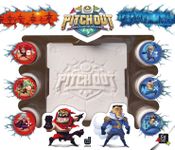
i recently received a review copy of pitch out from hashet board games uk and it's a great little flicking game in fact it's one of the best i've played it's simple it's portable it's tactical and it's exciting it reminded me of all the fun i've had over the years with catacombs cube quest flick em up and other flicking games so i thought this would be an opportune time to explore these games a little bit deeper which features crop up time and again in these chaotic dexterity games in this video i'll be looking at 10 mechanisms frequently utilized and if you fancy designing a flicking game yourself well this might be a good place to start so i'm adam porter i'm a game inventor from cardiff in wales and over recent years i've made many videos covering different mechanisms in game genres tile laying games action selection games trick taking games and most recently tableau building but i haven't yet done a deep dive into the world of dexterity games so today we're focusing in on one of the major genres within that little board game niche flicking the ancestor of all flicking games is marbles and of course this isn't really a game it's a component it's as nonsensical as saying the ancestor of all deck building games is cards but i'm not quite sure how else to put it i'm not a marble historian i don't know all the many many different rule sets used around the globe i know the one from squid game and the one i played as a kid and that's about it but i recognize the key role of this component in creating a genre so various elements of marbles have crept into later flicking games for
example in marbles the start player is often determined by each player flicking their marble towards a line and the player who gets the closest without going over the line plays first in pitch out players flick their discs towards the edge of the table and the player who gets closest without going over the edge plays first in my hometown of wantage circa 1988 this was how marbles was played a circle is drawn on the ground or laid out with string and a selection of marbles are placed into the center each player has a larger marble a shooter which they propel into the circle attempting to knock the other marbles out if you're successful you take another turn and if unsuccessful your opponent plays on subsequent turns you flick your shooter from its new position within the circle so any marbles that you knock out of the ring count as points for you or if you're playing for keepsies you claim ownership of them the game ends when all marbles are knocked out of the ring the next major innovation in flicking games came in the ancient indian game of carom now i haven't played karam though i'd love to it resembles the game of billiards except here we're flicking discs in an attempt to land them into the corner pockets like marbles carom developed into a wide range of similar games many coming out of canada and known as pistonaut games crocodile is the most prominent and the most well-loved among modern hobby board gamers in 1929 the english game designer william keeling created the game new footy a flicking table football game with flat cardboard players which rocked on their weighted plastic bases in 1949
designer peter adolf adapted and improved the game and released his version under the title cevitio the rivalry between the two products lasted for a decade but cebutio was ultimately victorious largely because of the superior maneuverability of adolf's players over the next few decades flicking games became the go-to method of simulating sports on the tabletop so beautio itself had ill-fated spin-off rugby and hockey editions and kids in classrooms would play table football with makeshift components flicking coins across their tables it wasn't until the mid-90s that another notable title in the genre hit the market calabande also known as pitchkar won the spieldesyares award for best dexterity game it's been a popular title ever since with players racing to maneuver their pucks around a racetrack in the early 2000s there was a boom in new board games and there's huge numbers of new titles hit the market it was inevitable that designers would start to look at flicking games and utilize the mechanism in ingenious new ways which brings us to our top 10 mechanisms used in flicking games and the first is what playing pieces are you using so perhaps this is the most pivotal decision to make when designing a flicking game your starting point what exactly are you flicking so many games have continued in the vein of carom and croconol and discs such a smooth predictable shape to propel across the tabletop it's really satisfying in crocodile the board surface is polished to a high sheen allowing the discs to almost float
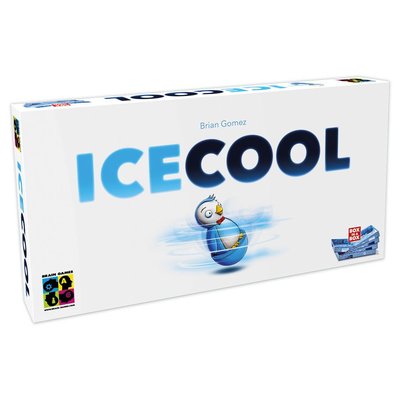
across the tabletop with minimal resistance zok verlag's safranito has players skimming poker chips across the board there's no flicking involved in that game but the motion doesn't feel a world away from the unique shooting technique used in traditional games of marbles the guys at brain games experimented with flicking the wobbly playing pieces from amigo spieler's memory game hoenig bienschen they found that they could put spin on the pieces if they hit them from a certain direction or even cause the pieces to jump if they flicked them on their heads so these playing pieces were adapted into the penguins featured in their hit children's game ice cool which also won a shield as yara's award the kinderspiel despite their superficial similarities to the wobbly-based cebuto players the ice cool pieces don't fall over however you propel them in cube quest and mondrian players flick dice across the playing surface these are a little bit harder to control they don't move as predictably or smoothly as discs or the bowl-shaped bases of cebu players or ischool penguins but they have other advantages which we'll come onto in later categories in the game attraction players flick magnets across the tabletop with the intention of attracting other magnets to form a large cluster of course magnets also have the unique property of repelling other magnets depending on their orientation creating some fun dramatic moments in the game now if you're planning on designing a flicking game you need to decide what sort of playing pieces could your players flick number two the mechanism or the goal of elimination
a key decision for a game designer regardless of the genre of game or mechanisms within it is determining the goal of the game what is it that players are trying to achieve so the sport based flicking games have objectives in common with the sports which they're simulating in subuto you're trying to flick them all into the net in pitch car you're trying to cross the finish line before the other players but most other flicking games have one of two different objectives at their core so the first is elimination and in marbles you're flicking your playing pieces to try and make contact with the pieces belonging to your opponents perhaps even to propel them out of the playing area in pitch out your goal is to eliminate the opponent's captain or to eliminate all of the player's other pieces so that only their captain remains in cube quest each player plays with a mixture of different dice but the only one that truly matters is the king each player's king starts the game located in their own castle protected by friendly cubes and the goal of the game is to eliminate the enemy king by knocking it off the game board mechanism number three is the objective of accuracy the other common goal in flicking games in one of the squid game episodes players are shooting marbles towards a hole in the dirt attempting to get as close as possible without falling in in safranito players attempt to land their discs on spice bowls on the board to claim spice cards to make point scoring recipes in crocodile players are attempting to land their discs in the central circle on the board or ideally in the small hole at the very center set and match is an excellent recent sports simulation game
which has players flicking a disc back and forth across a tennis court but of course if the disc ends out of bounds then the opposing player scores points just as in real tennis ice cool features asymmetric goals for the players so in any given round there's one player playing as hall monitor and all the other players are runners the hall monitor's job is to make contact with the runners the round ends when the whole monitor has contacted every runner meanwhile the runners have a very different accuracy based goal they need to slide through the various doorways collecting the colored fish above in order to score points after each player has been hall monitor once the game ends and points are compared to determine the winner of the game designers of flicking games might want to look at alternative goals can you think of a goal which doesn't focus on elimination or accuracy if not that's not a major problem there's no harm in falling back on familiar mechanisms you just need to find a way to make it your own mechanism number four is using reversible pieces so one of the great things about discs as playing pieces is that they reverse when you skim a disc in a game of saffronito you don't actually reveal the value of the disc it's hidden on the underside when the discs are revealed at the round end the values determine the order in which players can buy and sell spices and also the prices they receive or pay many of the monsters and catacombs need to be hit twice in order to eliminate them when such discs are hit they're flipped to their reverse side to show that they've taken a wound of course flicking cubes and dice gives
you multiple surfaces to work with and this increases the potential design space in cube quest the surface showing on the uppermost side of your dice when it lands indicates how the dice behaves and what effect it has so if the dice lands in the opponent's side of the board and it shows a silhouette there's a chance that it's going to be captured by your opponent if it's landed in your own territory well then the cube can stay where it is but if it lands in your opponent's territory with that silhouette side up you've got to roll the dice to see if it's captured or whether it escapes and if the cube escapes well then it's placed back into your own castle in mondrian players roll drop or flick dice to try and land them on high scoring cards and to collect sets of matching colours the number rolled on the dice is important because you can only collect a card if you've equaled the card's number with your roll and you have a higher total on the card than any other player light and dark turns the flipping of playing pieces into the entire game at the center of the play area are five torches when your disc makes contact with the torch is flipped to your color when your disc makes contact with an opponent's disc it's also flipped to your color and this time it becomes a playable disc for your own future turns and hence discs flip back and forth changing ownership throughout the game the game ends when one player manages to flip all the torches or all opposing discs to their own color and that player wins number five stacking pieces so this is another benefit of discs and cubes they can be stacked on top of each other and this is a recurring power in
lots of flicking games in cube quest freeze cubes can be placed on top of your opponent's pieces preventing them from being flicked until the freeze cube is knocked off the shadow power in pitch out functions in pretty much exactly the same way as does the ice shot in catacombs in cube quest it's not unusual to see players building multi-level walls from their cubes during setup to protect their king or just to create an imposing presence on the battlefield of course stacking can be used creatively even if you're not limiting yourself to discs and cubes in flick em up wooden cowboys ride horses which allows them double movement but the added height also makes them less vulnerable to gunshots mechanism number six using barriers and terrain so the rules to light and dark suggest that you position household items on the tabletop to create obstacles for your battlefield pitch out comes with plastic squares which form the barriers for the game but double up as the storage for the discs that are used catacombs comes with a variety of different boards with different layouts of large blocking pieces and pits which your pieces could slide into with a range of different effects flickrm features the most lavish obstacles and terrain structures the game comes with a massive box of wooden components which are used to recreate various wild west scenarios and shootouts each player controls five cowboys who are moved by flicking a disc across the table and then replacing the disc with the cowboy in its new position cacti and barrels provide cover for the cowboys and scenarios allow you to enter
buildings by sliding underneath them with rules for controlling them from within i think terrain has been underutilized in flicking games thus far this might be an element that you could lean into in your flicking design to make your game distinct from what's gone before number seven is table edge rules so one frustration with flicking games is the tendency for playing pieces to shoot off the table and get lost among the dust bunnies behind the game shelves catacombs comes with a large cardboard fence which sits around the edge of the board to catch the playing pieces which shoot off the edge crocodile has a built-in gutter which catches pieces which fall off the circular board pitch out makes a feature of the table edge the entire goal of the game is to knock your opponent's pieces off the table this does result in quite a lot of crawling around on your hands and knees looking for rogue playing pieces mechanism number eight is using different sized pieces so in flick em up players control cowboy figures and they shoot at each other by flicking small discs representing bullets additional rules allow players to use differently shaped items to aid their shooting so the winchester rifle could be used for accuracy with expansions there are even more options the gatling gun shoots a bunch of tiny bullets all at once and a little ramp can be used to give your shots some height when shooting it off cowboy on horseback native americans shoot arrows using a cardboard aiming device or they throw tomahawks by flicking them from alongside the figure if you want to catch a horse you flick a lasso and you attempt to land it between
the horse's legs if you want to mount a horse you need to slide your movement disc between the horse's legs catacombs similarly has heroes shooting different sized discs for ranged attacks it's a really immersive thematic system it's really satisfying to shoot a tiny disc at the enemy before flicking your hero disc behind some blocking terrain to take cover catacombs makes a big feature of differently sized discs rats and snakes are represented by tiny pieces dragons and other bosses are massive by comparison there's even a humongous gelatinous cube piece with its own unique rules for play number nine is special powers so pitch out assigns special powers to each of the discs in the basic game there are five discs used the assassin eliminates opposing players when it makes contact with them instead of needing to knock them off the table as usual the runner can be flipped twice in a single turn so long as it doesn't make contact with anyone on its first flick the guard can be removed in place of another piece to prevent them from being eliminated the immortal cannot be eliminated from the game by falling off the table edge on its own turn and the captain can utilize the power of any of your other playing pieces which have already been eliminated the advanced game of pitch out allows players to select a variety of additional elite playing pieces with differing abilities and cube quest works very similarly the various cubes included in the box each have different powers and players form their own team at the start of the game by selecting the abilities they wish to use in light and dark each player has one or
two randomly selected special power cards which allow the player a one-off bonus to be used at any point in the game now catacombs has an enormous variety of different heroes monsters and bosses all with different unique powers so some pieces can shoot fireballs or use area templates to damage opponents or move in some special way or teleport across the board so mechanism number 10 is a variable setup cube quest and pitch out introduce variety by allowing players to select a team of tokens with different powers each game catacombs and flick em up go one step further they introduce scenarios so in catacombs players work through a series of dungeons each with different monsters in them they can purchase upgrade items weapons and abilities between dungeons and build up to fighting big bosses it's a massive rich immersive system and the sheer amount of content between the base game and the various expansions can be overwhelming flick em up is similarly ambitious each game is based on a scenario chosen from the enclosed book and they play very differently with totally different thematic goals there's no doubt that flicking games aren't for everybody there's a high degree of skill involved particularly with the precision flicking which can be achieved with the ice cool penguins or with crocodile discs on that highly polished surface and if you're not great at flicking or if you simply don't enjoy it or no amount of scenarios or variable player powers are going to make the game fun for you but if you're open to dexterity games as a genre there's a lot
to explore here if you just want something light and breezy an attraction or ice cool would be ideal for you if you're looking for something portable light and dark or pitch out are great for a competitive head to head well set and match is incredibly tense regardless whether you're a tennis fan or not but for something a little bit more offbeat mondrian or safranito are both loads of fun although they're probably quite hard to come by right now and if you want to get in deep well there is a ton to explore in catacombs and flick em up if you're looking to design a flicking game hopefully you've found some ideas in this video which you could utilize or subvert to create something of your own please leave me a comment below let me know what your favorite flicking game is and why you love it is there one that i've just missed and i really ought to be playing and don't forget to subscribe to the channel so you'll be kept up to date on videos like this until next time all the best