Beyond Solitaire Podcast 209: Efka Bladukas on Game Coverage as Story
Games in This Video
5 games are featured in this video — they unlock as you watch.


Transcript
It's ad break time. I am proud to announce that the Beyond Solitire podcast is sponsored by Central Michigan University's Center for Learning through Games and Simulations. On October 1st, they will be launching a new series called Art and System, which will be headed up by Tim Hutchings. The goal of the series is to showcase indie games and to push the boundaries of gaming. The first games to go to crowdfunding will be a revised edition of Liam Burke's Doggat Dog and Anthropy's Princess with a Cursed Sword and Timothy Kleiner's The Mountain Witch. This is a fantastic initiative that I'm personally excited to support. Also, if you want to help me keep the lights on over here on the podcast, you can support me at patreon.com/byondsolitire. For now though, let's get on with the show. Hey gamers, this is Las with Beyond Solitire and this week on the pod I have a very special guest. We've got Efukas from No Planet Included and I'm happy to see you on here again. Fa, how you doing?
I'm doing great. How are you doing?
Uh, you know, I'm doing all right. I'm here. It's the morning. I'm having a nice podcast interview. That's like where I want to be. So, I uh I think that you and I are both in the same like wake up timeline right now, though. So, it's perfect. I I mean I've I've been awake for a while. I've I've walked the dog. I uh made myself breakfast, got some shopping in. Fully awake now. Ready to podcast.
Yeah, we're going to say all kinds of drama here. No, I'm kidding. Um I did want to have you on. You know, we we had um I really enjoyed having you on for like a short interview in episode 200 because we kind of talked about your approach to making videos about board games. I thought it might be fun to like have a full hour. Um, so I guess the obvious question is what are you what are you playing right now that we could expect videos about soon?
Um, so I'm playing uh a lot of uh Dune Imperium lately because I'm working on pretty big video about Dune Imperium. So I guess I guess I can I can sort of drop the title of that video uh you know for the first time. reveal reveal the you know the the upcoming thing. Uh it's everybody is wrong about Dune brackets Imperium. Uh and it it is going to I don't know if it's going to rival the length of the arcs video that we've just done which I was the longest thing we've ever made. I think it was an hour and 36 minutes. Uh so I don't know if if it's going to be that long but it's also really quite long. And one of the most fun parts about this project was that I had to travel to a different country to take some footage for this video. I had to uh read a number of books about not just Dune but Frank Herbert. So I've got them here with me. This is uh one of the worst books I have ever ever read. This is called The Spice Must Flow. Uh and it is it is a book about uh the writing of Dune. uh one of the most peculiar works of like I almost want to like it redefineses the term fanfiction because because it it presents itself as authorative fact but it it it a lot of it feels fictional and it's definitely a lot of fan service. This is the road to
Dune. Uh this is this is uh by Frank Herbert, Brian Herbert and Kevin J. Anderson all of whom who wrote about Dune. Uh, and uh, there's like various discarded bits uh, about the creation of Dune, you know, letters between editors and stuff like that. And uh, you might be rightfully asking why so much time spent reading about Dune when Dune Imperium is just kind of like a deck building game. Sure, it has the Dune theme and whatever. There are so many strange parallels between the sort of uh ludological journey of Dune Imperium and also Dune itself and getting into those is going to be I think really interesting. So that's that's the next big project I'm working on. Um and I'm very excited about that.
Yeah, that actually sounds awesome. Um, and I also, so your video on arcs was probably the last leader video from you I'll be able to watch because it's the I haven't worked on arcs, so I can enjoy it without like, you know, feeling like it's my stuff. But you read a whole bunch of sci-fi um for that as well. So you've been doing like these kind of like big reading projects. Yes.
For some videos. Is that something that you know in advance you're going to do or is that something that like emerges as you think about the game like it turns into something bigger?
Oh, that's a great question. So, I think it's both, right? Um, sometimes I I consciously pick up books that are adjacent to something that I'm working on. um because they like align in the sort of um stories that should emerge from a game but also I try for them to be things that I am actually interested about you know so with Dune I am really interested in Dune not because I am interested in Dune but the sort of narrative around Dune and how it emerged and how it developed and um you know how it changed over time what Dune means to people because unlike unlike a lot of sci-fi that is popular as you know amongst the speculative fiction kind of circles uh Dune is one of those pop culture franchises that transcends that it's like Star Wars or you know Star Trek or whatever and so people have a very different mythological perspective of pers perspective of what that is uh and so uh with that I had to very consciously you know, obviously read Dune, but also read books that were written about Dune. Uh, and and and that's kind of a more direct research research based work. But with something like ARCs, you know, again, I knew I had to do that because I had a strong suspicion that, you know,
foundation is the foundation of that work. And I what was funny was that like I was like I hope I'm right with this and then when I finished the video I thought I'll check back in on O and I was like oh the expansion for all for O the new expansion is called what's it called? Oh it's called New Foundations. Okay. Okay. Um regretted not putting that in the video but I I kind of noticed that too late. Although, have we talked about the source material for Oath before together?
Uh, I'm not sure that we have.
So, it's the Chronicles of Predane.
Oh, yes. No, you didn't mention that to me.
Yeah. Yeah. Yeah.
But, um, actually, that source material ended up being really important for me because the Queen of Shadows co-op mode we made is based on like the death lord from those books because we got Li and I got really into like the lore and like try to draw off of it. So before I start work on I'm not breaking any promises people. I'm looking at arcs obviously because I work there. Uh, but I'm going to be reading Foundation and like Hyperion and stuff in the next uh in the next months as I like my
they the Chronicles of Pain.
No, sorry. the Foundation and also Hyperion, you know, like they they are not
they they have they have some issues surrounding them and I I wouldn't necessarily recommend them, but like uh but it it was interesting to explore them as oh god this is not a pun as foundational works, you know, like yeah as as something that
that clearly a lot of sci-fi has built on and and sometimes that kind of like is inescapable. able to have that in the background. So, uh, rereading Foundation was interesting, but when when I was writing the arcs video, uh, you know, there were a lot of books I was just reading at the time that, uh, I happily found like important parallels and and, you know, um, they they complemented the work. So, you know that whether that was like uh Aurora by Kim Stanley Robinson, which is, I think, one of the best sci-fi books written in
Oh, yeah.
like 20, 30 years or something like that. Um, and it's remarkable how how visionary it is in terms of and and how like, you know, because we have this whole like tech bro narrative about, you know, like, oh, we're going to expand into space and colonize everything and then, you know, we're going to leave Earth behind, you know, and and how confidently that book just crushes that viewpoint. point. Uh it it's it's it's a sight to behold. Uh but so the you know but there were there were like parallels within that narrative that kind of I found uh interesting in in relation to arcs.
But uh but also like sometimes you just have to not read the books themselves but stuff around the books like uh I put in a quote from Ursula Kwin uh in her own introduction to Left Hand of Darkness um that that I I found incredibly pertinent uh to how one views arcs and that sci-fi you know pe people dismiss this sci-fi because they think it's escapist, but what they actually don't like about it when pressed on it is that it makes them uncomfortable. And and I think that's that's, you know, such a kind of a profound way of looking at it because we're we're always thinking about like speculative fiction as as something that's kind of just like a goofy fun time. But actually,
most often its purpose is to probe you, you know, in a way that makes you consider the unconsidered. And I I think that's very appropriate for arcs because it's a game that really wants you to sit with it and and and think about why you're doing the things that you're doing and what kind of narrative you're actually creating out of play. Um so yeah.
No, that makes sense. I do want to have a side shout out for Aurora. So, actually, I was talking to Cole like years ago now, and I mentioned that I had a hard time like getting into sci-fi and I didn't really know how to appreciate it. Did he have a recommendation? And that is the book that he recommended. So, I took him up on it and like a couple days later, I was crying over a spaceship. So,
yeah,
Aurora, read it if we get nothing else from this.
Yeah, it's such a great book.
It's really good. It's just really, really good. So, I I love that you're doing projects like this. Um, it makes me really happy. Uh, but you know, you're a YouTuber. You have probably some sort of schedule to keep to.
Yes.
So, what does your balance look like between larger and smaller projects right now?
Um, it's always like this is I think this is one of the trickiest things that I have to juggle right now. uh because we work from home and we both so uh we live together and we work together and we work in the same place where we live, right? So me and Elaine definitely struggle with this because as much as it would be lovely to just kind of launch yourself into these big projects that everyone responds to really well and they they always well not always but most of the time they do really well. you know, people are interested in in these sorts of videos. And even if they don't do well, the people, you know, that are into them respond to them so positively that it always feels very validating to do them. But at the end of the day uh being like a niche within a niche you know you have to you have to kind of feed the algorithm and and and it's it's a very cynical way of looking at it and saying even saying you know feed the algorithm kind of has a lot of connotations surrounding that that makes it you know like sound like you know sometimes we have to put out slop but it's really not the way we see it either you So I I I found that I work best when I actually really passionately care about speaking about whatever subject that I'm choosing
to speak about. And I have made videos in the past that I feel, you know, kind of nothing about now. And and I could feel when I was making them that somewhere along the way I made the wrong call. I made the wrong decision in what to cover. But now the gears are in motion and I can't stop, right? Like so I have to go through with it and then I will do the best work that I can. But
yeah,
I've noticed that like those are the videos that I usually forget like, you know, and then I go back and go, I've made this. This is something I've made. This exists out there. People have watched this. Uh I don't remember it, you know. So if I don't remember it um you know like what what value and worth is it to people? So I think the answer to that question is that I have to you know I I have to try and gauge and I don't always succeed like is this something I actually care about you know or is it just like a temporary flight of fancy uh that I am fascinated with for like a hot minute and then I'll forget about it. Right. Um, and so, so it it's it's tricky. Uh, and I don't always get it right. So, like right now I'm really debating whether I want to cover Fate of the Fellowship because that's the rings pandemic game and I'm having a very good time with it, you know, but but there I don't know if it's just, you know, like my fascination with Tolken and the game isn't actually that interesting or is the game actually quite interesting and it's not just my fascination with Tolken. So, you know, I have to spend time kind of with the game and play the game before I even want to figure out whether I want to talk about it. And the answer is probably yes, I do because I'm having a good time with that game. Uh, but but I don't I don't want
to make the wrong call and cover something that I will regret spending so much time on because every video we do make, even the smaller ones, they they take I I I every video I make, I forget how much time they take. like and then you know you spend like days filming and editing and and you go wait does this really take that this much time? I don't remember this taking this much time and every time I was like yes it does it does EFA. Um, so yeah, I guess I guess that it's a very long-winded answer, but but I I am trying my best to pick the right projects to cover even when they are smaller projects. And I'm starting to feel like even even by our standards like what we consider small is not actually small, you know, because all of them take a lot of work to do.
Yeah. It's interesting you say this because I feel like most people covering Fate of the Fellowship, including me, like when I was working harder to like be good about posting on YouTube, would probably just post something. um and not play it a bunch before even deciding whether to make a video for it. I think people just want to make the video for the most part. So, is that is this an attitude that you've always had or is this something that's kind of like developed over years of doing the channel and kind of figuring out who you want to be as a
commentator? It's definitely something that's developed. I used to be a lot more kind of freewheeling and uh sometimes you know I've I've gotten really good about not just um you know making videos because I feel like making a video. I I used to be like no I just really want to make a video and sometimes I would start with a basis that isn't strong enough and and that usually means like not scripting things enough. uh and kind of going, "Oh, this bit, whatever. I'll just improvise, you know, uh and it's fine." And I I think I found that when I have to improvise, I can do it. I I think I can do it okay, but I don't feel as comfortable doing it. And so, it's not as much fun for me.
I much rather have something structured that that, you know, I I can kind of build on. And then sometimes you you even have like a finished script and you you'll be like, "Okay, this feels solid. I'm ready to film." And then you start filming and go, "No, no, no, no. This this is wrong. This doesn't feel right." You know, go back. Uh and and so you go back and uh you know, change the script and then go again. Um but but yeah, like I I I think I used to be a lot more like, "Yeah, let's just do it. You know, this is going to be fun." and and as what we do sort of expanded, you know, we we we plan out a lot more, we prepare a lot more and so everything takes more time. And so you kind of want to be respectful of that time of my own time, of Elaine's time. Uh and and so, you know, I don't want to just be like, "Ah, yeah, it'll be fine." you know I I am trying to be a lot more rigorous and structured and so that expands the scope but then because it's like an a robberous right you know like you're trying to be more respectful of your work and because of that the work becomes bigger and because the work is bigger you're trying to be more respectful of your work.
Yeah. No, it makes sense. So okay I'm very curious about what your scripts look like. I don't script anything because I'm a bum. Um, I just want to I just want to chat. Uh, but you know, when you do a script, like how detailed are we talking? Are we talking like word for word? Are you a bullet point guy? And then like when you and Elena are working on a project, how much of like I mean her cinematography is also like a major part of your channel. Are y'all also like planning down to the shot? Um, so I like for the arcs video, I think Ela did over like something like definitely over a hundred. I I want to say like 120 or something like that, but I might be wrong. I might be like making this sunburn up. Uh, but I think she did about 120 shots of B-roll. Um, I know that she planned all of those out, right?
Like I know that when she started filming, she had a structured plan of what every one of those shots was going to be because if you don't do that, what you end up doing is you end up doing a lot of setup and tear down for very similar shots,
right? So you need to know which shots are like this is just a card, I'm showing a card, which shots are like this is a top down board, you know, like and I'm panning. or which shots are like hey uh you know this element needs to come in and this element needs to come out and these are the things that are in the background you know so it's very it's very mechanical it's very technical um so if you don't do that if you don't plan everything out and you just do things chronologically you'll end up like doing the same angle you know 20 different times because like um you know it's it's moving living in the chronological pace. Whereas if you group group everything up and say these are the shots, then you know all the cards. You just set that angle at once and then you do all the cards and stuff like that, right? So I know that she plans everything out. I don't plan that out myself even though like I'm the one who like we play the games together. We talk about them together. We decide what we want to say together and what's important. But I then go and write the script and what I say in the video is usually about like the words themselves.
98% is has been like written down. Um this you know 2% wiggle room for like this doesn't work. I need to change this a little bit, you know, or you know, because when you write it, you even though when I write, I'll often like I'll write three paragraphs and I'll be like, "Okay, now I'm going to read these out loud in Eka voice, you know." Uh, uh, but but then, you know, like, and that sounds fine and you think, "Oh, yeah, this is good." Uh, but then you're actually filming and you're going, "Oh, this doesn't work, so I need to change something." So there is that you know uh but yeah the words I will write uh you know almost forbading to what they are in the video uh but then I also need to plan out like scene structure in terms of like hey here I'm talking about something that happens like on a player's board right so I need to think about what angle I am going to show that from uh and so there's some planning there.
But that kind of scene structure is a bit loose. And these scenes will like normally come just before we start filming. We we will plan them out again because we don't shoot chronologically, but mostly that that's that's kind of the slightly improvy bit. And sometimes I will write to Elaine like a little note on the script saying this is I what I want this specific part of B-roll to be because I think it works if it's that and not something else. But most of the time I just leave that for her to plan out and structure and so however she sees that. And then, you know, we use like uh the old triedand-true clappable technology of her filming 120 different scenes that I then have to put together in Premiere Pro in some sort of a way that makes sense.
So, this is very labor intensive and I I just respect this so much, especially compared to my own sort of slap dash work. Um, but you know this also, you know, you talk about being like stuck thinking about the algorithm. So when you're putting this much into videos, what I guess happens if you have a flop and what kind of like, you know, we were talking about thumbnails and stuff before that, like what are all like the little things that are going into making sure that your work is like shown off in a way that gives it the best shot at life? Well, the first thing that happens is that I have a little cry um you know, and feel a little bit for myself, right?
You know,
uh but no, well, it just, you know, it's the nature of the work that you just you can't dwell on it too much. You have to move on. You learn some lessons, you know, like you go, well, now we're doing that again, you know. But I I think I think the the yeah, thumbnails definitely a big part of like you have to you have to present the work in in an appealing package. I imagine publishers will probably relate to this because it's the same way with like board game covers, you know, like you made this board game, you believe in this board game, but then there's this like entirely other thing that you have to do to make it actually sell that feels like connected to your work, but not necessarily representative of your work. Because sometime I I I think that that's part of it because when I make thumbnails sometimes I deliberately don't want to put the thumbnail that I think will make the video very successful because it feels a little bit icky and trite. Not icky asn't like gross, but icky as in like this is this is the easy way out and I don't want to do it. But but like you have to do it because because you know you don't you don't want your video to be in the YouTube graveyard.
Um, but like yeah, I don't know. You don't I often don't get it right, you know, with thumbnails. I I like we just did the the old King's Crown video and the when the first like day was terrible. like that video was not doing well and I knew it within the first 15 minutes of that video launching just by just by seeing what the numbers are. You can tell like oh no one's watching this. So I had to quickly change the thumbnail and the title of the video because the title was originally the two braveries of the old king's crown which I think is a very poetic title that's representative of what the video is about. And now the title is the most exciting board game of 2025, you know, like
Oh, yeah. I know. Everybody immediately clicked that. Although, I will say that the crown that you're wearing in the thumbnail is fantastic and I want
Thank you. I love that crown. It's so good, isn't it? Like, it's it's just a cardboard crown. It It looks really good. The person that made it knew what they were doing. I I just got it off of Etsy. I was like, "This looks this this crown looks really good. I'm going to buy it." And they came and I'm like, "Oh, it's cardboard. Okay." Um, but yeah, no, it it looks good on camera. Um,
for real.
Uh, it felt empowering wearing that, you know, like I was like, "Yeah." So, I just clicked on I just went over YouTube and clicked on videos and like the thing that's showing up first is you holding your nose tossing tickets right into a trash can.
Yeah.
Um, did that feel like the easy way out or did that feel like the hard way?
That felt like the fun way. That's just what I wanted to. That was just for me, you know? Oh man. So, okay, here's a question. To what degree do you allow your need because I mean it is a need for your channel to continue to do well because it is your livelihood
um for for that aspect of your work to you know for it to be successful in that way. Like, have you ever nixed a project that you wanted to do, but you just didn't think it would do well or like held yourself back from something because you were balancing between the commercial and like artistic aspects of this work? I often nix projects because I find myself too bored with with like I I like I find that sometimes I will try to cover something that people are very excited to hear about, you know. I was like I think I think I should cover this because this will do numbers, right? And then I spend time with the game and I find that I don't have an interesting story to tell, right? And that's kind of always been my barometer on on what I should be covering and what I shouldn't is like forget about like the hype or whatever. Have have I got an interesting story here, right? And by by that I don't necessarily even mean that the video has to be positive or negative or whatever, right? Like have I got a good angle, right? Can I say something that hasn't been said, you know? So, with the Old King's Ground, that was pretty easy because there was almost no coverage of this game. Uh, there were a few reviews of it that were of the finished product because there were there were a bunch of, you know, like there was a bunch of coverage of it when it was on
crowdfunding, but the game
I mean, I previewed it.
Yeah, the game is substantially different now, right? Like I know that they've done a lot of changes. So there wasn't that much with the finished product and mostly because you know the game's not out yet. But I I felt very strongly about it. I felt like this is this is going to be this I love like I love this game. I think this game is absolutely great. I really really like it. and and I my angle was very simple like hey you know I'm early um I I get to tell a lot of people about this game from a first-time publisher first time designer so like it's not on the radar yet you know but I maybe can do that maybe I can be the person that kind of brings attention to it so the angle was very simple here you know it's a very simple story just get excited about a game, which is easy cuz I love it and you know like just just try and kind of relate that to people.
So that's fun, but sometimes it's more complex than that, you know, like and again with, for example, Dune Imperium is a much beloved game. And the video that I'm working on, you know, like very consciously calling it Everybody's Wrong About Dune Brackets Imperium is is a very provocative title, but like but it is it is it is something that I actually genuinely mean. And I don't want to, you know, it sounds antagonistic, but I actually I don't think I explore it in an antagonistic way at all. I just think we all missed a trick. Uh and you know I I think that is an interesting story to me you know and I think I hope that people can relate to that you know so or you know I did a video called this is arousal which I think is a very funny title you know
that was a great title
right like that's it tickled me but um
did it sorry
with that I with that you know that story emerged out of something else entirely because I was writing a video about like tutorials and rule books and
um I through the process of that an entirely different story emerged right and I was like this is a much more interesting story so I'm going to bend this stupid video that I don't feel about you know tutorials in rule books and actually you know chase the more interesting story which turned out to be the study about arousing in board games.
Too little of that from what I know. She
It's not dirty. It's not that kind of arousal. It's sweat. It's talking about sweat.
Yes.
Yeah.
Um, so I like the way that you talk about you're looking for a story in your videos. So, I mean, I think that people could just see you as like an actor, a person who has videos, but um, do you maybe see yourself more as a writer sometimes?
Oh, yeah. It seems like the medium you're choosing is visual and audio, but the process behind it is something else.
Oh, I'm 100% a writer. I have a I have a creative writing degree. Like, so, you know, I always saw myself as a writer since I was 17. I think I instinctively from then on like I tried it and something immediately clicked and I knew my entire life from then on that all I want to do is write really. Um the video part I don't know where that came from. There was definitely a part of me that was fascinated with creation of video as an art form uh as a process and YouTube is the right platform for that because I'm not trained in it or anything like that. I'm just like a guy, you know, with a camera. Uh sorry, let me rephrase that. I'm just an idiot with a camera. Um and and like you know with YouTube you can experiment, you can try things without knowing really what you're doing. Uh and through the process of that maybe learn something. So video was a fun journey for me and it still continues to be and I think when it gets really sloggy I try to remind myself of that
yeah it's not the thing that I'm most passionate about but it is an adventure and a fun adventure but like if if I could now that I've built myself this silly platform you know um you know that's that's where I am that's where I do things Um, I don't know how Elaine feels about it. Like I I mean to an extent I do know she doesn't like being on camera at all and that's why she's not on camera anymore because we can allow for that. Uh, but she loves doing B-roll. You know, it this something that she finds very satisfying. So, you know, um, we've kind of slaughtered perfectly because I don't I don't like filming things that much. Um, but uh, you know, yeah, like I remind myself that this is this is a fun adventure and it's fun to do, but if I could just write, I think I would just write, you know? I I don't particularly relish being on camera, I just I think the the desire to tell an interesting story kind of supersedes that. And so I am on camera if that makes sense.
Yeah. I did not know about the creative writing degree. That's super cool.
I I already knew you were a reader because the way you talk about books is like it makes it really obvious, but I didn't know you were That's really neat.
Yeah. I It's It was the second time in university. I The first time I was doing an English degree and I didn't finish it. um like I was doing English and translation and uh very late in the process I've realized it's not something I'm actually passionate about or interested in and what I actually want to do is writing. So I moved countries and uh and then got myself a creative writing degree and it was fun. I enjoyed it. I did a masters as well that I also didn't finish because once again I realized this is not something I want to be doing. Um, and uh, yeah, no, I I really like writing. It's fun. And I think the most fun part of the job for me is after we've, you know, played the games as many times as we needed to to sit down and kind of make a story out of that to put everything together, you know, to to take all the experiences we had and contextualize them and put like a through line through it. Um, it's really rewarding and it's really fun because when you do finish and you do have like a script, it it feels like like that journey that we went through uh through playing these games is somehow reflected in that.
Yeah.
And I know I've done well when Elaine says that as well because, you know, she's very good at editing me and and picking up on things that work or don't work. But if she says, "Yeah, you know, you you've managed to somehow put on paper what we experienced, you know." And I'm like, "Oh, yeah, okay. I nailed it this time. That's cool.
That is really cool." So, I initially decided like I just had to have a chat with you because you made a video about all games being political. Um, and I do very much agree with you that games are all cultural objects. However, having dug up lots of pots in the desert, I can also tell you that not all cultural objects are that interesting. So, when you think about So, for me, I think I gravitate towards covering historical games, and that's what I like the best because I feel like the story is the most obvious. Like, you can very quickly assess what is this person trying to cover? Do I think it was successful? And like, let me look at actual background information that I can verify because it's a history game to like give myself some grounding. How do you look for that kind of story in I guess games that don't have such obvious footing? And then even if they're all cultural objects, do you think that all games have stories?
I I do I think everything has a story. Right. The question is I think and correct me if I'm wrong. Right. Is the question here intent? Right. Like because because when when we ask like does this game have a story, do we mean did the author intend for the story to be there or or like do we mean like is there a story here at all?
Oh, I think uh definitely you can't include intent partially because I think that authors lose control of their story or whatever they thought it was the moment it leaves them. Uh but also because
the death of the author.
Oh, absolutely. But I also think that um we're all unintentionally saying something even if we think we're saying nothing,
right? And and and that's kind of you know that's my take on it really. You know that that like it doesn't matter really what the intended story was but like you know every everything has a story. The question is whether that story is interesting, you know, and and most of the time it, you know, with with uh especially like fairly abstract games, you know, like, okay, let's let you know, let me be less diplomatic. Thousands of board games come out every year. Most of them are not that interesting, right? Like, let's be honest. Like, most of them are fine, right? Or not even fine, just dumb. Um but
but but there are games right that are sometimes I think unintentionally interesting you know like where you look at it and go well this is nothing but the more you start like you know like like that meme of like the two persons poking something you know like in the center come on do something you Yeah,
like you kind of just poke at it like lacadasically and then suddenly go, "Wait, whoa, there's this there's way more here than I expected," you know,
and that's that's often funny, I think. You know, I think games have like almost unlimited scope to be unintentionally funny. Um because sometimes like whoever made them I think maybe made them like very seriously but the end result is is very silly and um and and I think there's kind of a humor in that, right? And recognizing that humor and expounding upon it, you know, sometimes in your own absurd way. I I have I I love exaggeration as a person. uh you know so I I like to take something that's small and make it way bigger than it needs to be. Um, and so if if I take like a very like, you know, simple board game and overanalyze it to death, I think you you can come out with something that is hilarious, you know, and that is a kind of story because if you can, you know, you can you can, I think, sometimes take a game that, you know, maybe isn't that fun to play, but like analyze it in such a way that makes it kind of preposterous.
and therefore brings more joy to people than it otherwise would. Does that make sense?
Yeah, it does. It also makes me think, you know, this is actually a great question to ask of you. You're a writer, you're a reader, you're a gamer. Uh, you know, one thing I think about is we always, we like to talk about, oh, board games telling stories, narrative board games, like open world board, like we're trying to get board games to be a lot of things. And I wonder sometimes if my attachment to historical gaming is because I need a lift of some sort of external input to help me see the game and feel its story more. But I don't know if that's a me thing like what do you think is the actual capacity for a board game to tell stories? And then how much sort of external reading and stuff like do you need it to make it better for you or you know what is what is a board game intrinsically able to do narratively?
Oh yeah, that's an easy question. Thank you for that. Uh I will I will not have any difficulty answering this at all. Uh so uh h I think that when it comes to like external reading, which I I know is something I do, but again that's just because I like to read, right? Like there are people who don't like reading that much or don't like reading fiction that much for example, right? Yeah. And
so so a person who mostly reads non-fiction is going to take away like very different context from a game than a person who reads mostly fiction like I do. Um and and this is no right or wrong here, right? I think games have like this sort of intrinsic capacity for storytelling because they approach things in very different ways. They are they are like inescapably already a story because most games try to simulate something, right? And then like through that act of simulation, they try to like it's it's almost like creation. You're like evoking something, right?
And so I think that therefore like every game has capacity to tell a story but it needs to be conscious and when I say it I mean the designers um it needs to be conscious of the frame that it is telling the story from.
Yeah. This is all about framing, you know, like if if you consider the strengths and weaknesses, you know, like this this this video I did uh where I talked about what a frame of a board game is, you know, like if you if you look at a picture uh you know, of like a still from a movie, you know, you can see everything that is in a frame, you know, and that's the story. But as soon as you like hit unpause and the frame starts going, you know, all the like things don't just move in and out of frames, but there's also, you know, story happening by the things that you can't see in the frame. They're are deliberately offscreen, right? You know, and there's sound and everything, right? So, but but you are limited sort of to what's in frame and what's not in frame, right? That's kind of your storytelling motif. A board game has much greater potential than a movie because it's not just like so so your frame is first of all holistic because it encompasses everything that can be, right? Like it almost like creates a world. If you look at a board, right?
That's like the universe that this world inhabits, right? And then not only is that universe alive because you can like move pieces and stuff like that, but also it's it's like improvised input. You have sometimes one or sometimes multiple people who are like actively doing things without any directorial valition. You know, the designer of a board game can impose rules and say, "Well, this is how you must do things." But then the rest is for the players to interpret, right? So, I think I think the scale for like potential storytelling is enormous, but I think we're just like discovering that still. I think board games in so many ways are so very old and that simultaneously so very young because of their journey as as cultural objects. You know, they they they have like games have always been a part of us, but it is only now that people have really started to very seriously explore this, right? So, I think we still have a lot to discover and uncover as it were.
Um, and the potential is definitely there. I hope so. I'm looking forward to like more interesting work in board game criticism in coming years. Although I do think our cultural current is against it.
Well,
um
there is that. Yeah.
Our economic one too possibly right now, but I don't want to dwell there.
Yep. Um, so on a more prosaic note then, so like when you talk about stories, like you mentioned earlier in our conversation that you don't really care if your feelings about a game are positive or negative as long as there's a story there and like that that is what interests you as the impetus for a video.
Um, do you I mean to what extent do you think much about whether um about I guess about negative reviews, what their place is? I feel like everybody always has this conversation. Um, but you know, where are you at on it currently? H so I've noticed this this sort of like sentiment sometimes uh that I hear including from some people I very much respect where they'll say that they'll only do positive coverage because hey they want to bring the joy of board games or whatever you know or then there's obviously you know that sort of counterargument not counterargument but like a parallel argument that you see from a lot of audiences where they'll say things like, "Oh yeah, that person's just like negative for clicks or whatever." And that's been attributed to me as well. Um because I think that's been attributed to anyone who's done any kind of negative review.
Um, I tend to ignore that as noise because I think it's the job of a critic to not only assess games, um, that's the primary function definitely, but also to to kind of give a sense to their audience that this is this is a serious person who takes their job seriously, right? and and like because if if you don't relay that sense then you are and and I mean this it sounds very definitive you can be as silly as you want to but you know I think people need to get a sense that you put in effort and time into your work right
um because there needs to be a relationship of trust right and trust is such a rare and finicky commodity you know because because as soon as you can say oh wow Well, you know, you can trust me. The immediate response to that is, "No, no, no, I can't." Right? Like, so, so how do you, so how do you, you know, kind of build that sense with your audience? Because you need to as a critic, I think it's imperative, right? How do you build that sense as a critic with your audience where they can feel like they can trust you? not necessarily like as a definitive statement but like there's a like a modicum of trust right and I think the only way you can do that is if you what's the what's the like normal way of putting this? Um like lay yourself bare, right? as many times as you can, as often as you can. Right? Like that that that that's that's how I see it, you know, like if I don't like something and I feel something about that, I feel like there is something here. There's something here that people can relate to. There's something here that is more than just, oh, I don't like this, you know. Uh I should tell that story, you
know. And if there's something here that's like, hey, this is really good. I'm really enjoying this and it's more than just, oh yeah, I'm having a nice time, you know, I should tell that story as well, right? So, so I'm hoping that by doing that we can, you know, as no pun included, we can we can come across as as people who will, you know, not'll be as honest as we can, right? because there there's no such thing as ultimate honesty. I can't like I can't account for every bias that I have or you know because everyone and I think my biggest sorry I'm going to sort of divert myself. My biggest pet peeve go for it
is when I go on BG
and I see a review for a game and it'll say something well you know this is my unbiased opinion. No it isn't like everyone's got bias. I'm sorry. like for everything you know like there's so many unconscious little things right I am biased all the time but the thing that I can do is I can at least try to and will inevitably fail try to examine like what bias is there where is it coming from does it even really matter you know like and and relay that right so so you know that's what I mean by honesty you know I will try to be as as raw and sincere as I can be in the work that I present, right? And I hope that through doing that repeatedly, I can build some sort of a sense from people that like what I say is, you know, I I thought about it. I've put in effort, you know. I don't know. It's very hard to articulate for me, but I'm hoping that I'm getting something through.
Yeah, I think so. Um, actually, you know, it's funny. One of the questions I had I don't plan a ton of questions in advance, but one of the ones I'd kind of wondered about, but I think you've answered it um through the course of this interview is how do you maintain I guess your passion for what you are doing? Uh, and this is maybe just a me thing, but you know, one of the reasons that I mean design has worked out differently for me. the more I worked with games, the more I want to. But with you doing my YouTube channel, I I experienced and still do like very frequent burnout
because sort of the pressure to keep playing, the need to film something, the sense of obligation, I guess, that comes with looking at a pile of games and being like, "Oh god, I got to play this. God, and like it's not that I don't like games, it's that I look at when I when it starts to feel like a chore, I start to get like agitated." How do you, I guess, manage that in your life? It sounds like part of it is through looking for the story so you're at least keeping yourself pleased and entertained with the work you're putting out, but how else do you handle that burnout?
It's coming to that time of year now, uh, which is November, where like the inevitable burnout kicks in. I It's become seasonal for me. Um, and I can always clock it. It's it's right after Essen, right? Like give it about like I come back from Essen, I'm really energized. There's all these cool games, right? And in about two weeks after that, it starts to really set in. And I don't know why. I don't know. Maybe it's also to do with seasonal, you know, disorder, mood disorder, whatever it's called. Do you know what I mean?
Seasonal effective disorder. Yeah. Something like that. Yeah.
Yeah. That one, right? Maybe it's that as well, you know, like a combined kind of thing. um with the post Essen blues, you know. Uh but like last year I couldn't put out videos for two months after Essence. Like it was really bad. It was very very bad. Um so it's coming up to that time now. Uh but and then usually the cure for that is making the game of the year videos. It's like, hey, here's all the games I've been excited about. Let's talk about them. Um but yeah, so it's it's definitely been up and down. Uh 2023 was really bad for me. I felt like really down in the dumps where it was, you know, postlockdowns socializing for me and Elaine was still low because uh you know for medical reasons we have to be still extra careful that I'm not going to go into but like it's something people who follow us know about. So, um, you know, mood was pretty pretty low, but I this year's, you know, don't want to jinx it, but this year's been I've been pretty excited about games. I think it's mostly because I've worked on some very interesting projects. You know, the the the arcs video, the This is Arousal video, the Dune video I'm working out on now, and the uh the King is dead video.
But also this year, I'm just gonna, you know, I'm just gonna take some time to gab about some really cool games because this year I've played so many games that are so interesting and so different and like I'm just really jazzed. I'm jazzed to talk about these things because there's so many just exciting games coming out. Have you like Have you heard of Eternal Decks? Um
yeah, we played it.
Oh, we played Yeah, we played it together. Ah, yeah. How great is that game? It was great. I'm really excited for it to get the re-release because I will be picking it up for sure.
Right. So, that that was really good. Uh the Old King's Crown really good.
Yeah. You know,
right. And it that couldn't have happened to a better person. Pablo is delightful.
I've spoken to him for 5 seconds at the convention floor. So, but so I don't really know Pablo, but he seems very nice. Um but the game is fantastic. Um, and you know, even even the like pop culture hits like The Fate of the Fellowship is really exciting.
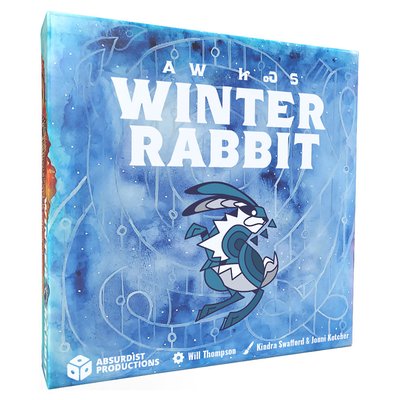
Um, you know, but there's there's a lot of like weird like indie gems that are just springing out. Like uh I've played Winter Rabbit and that was such a strange um different experience of like of approaching the idea of of like semi-ooperative play. You know, I've never played a game before where like everyone just v deliberately deliberately strategically vocalized their plans, strategic plans, right? Like this is what I'm going to do. This is what I'm planning on doing. And this is why because if I do this, I will then be able to do this in a competitive game, right? Like I've never seen another game do that. And it's just, you know, like there's something there's something in the air in 2025 where games are just so fresh and different and vibrant and exciting. I'm just I'm just jazzed to play things right now. So, I think I think it helps I think it helps with with the with the onwei and the and the burnout or whatever when you feel like despite the world being like a pretty horrible place right now. There there is a sense of like just people trying things and doing things, something new, something fresh, something exciting, and uh Oh, that really energizes me. I feel
pumped, for a lack of a better word.
That's awesome. I I normally ask people what games bring the joy, but now we know. I really can't wait for more Eternal Decks, too. I'm very serious about that.
It's such a It's such a fresh design. like it just it just really kind of like takes this I don't know I really like this idea of of of the cooperative play that emerges from the crew but to kind of like really gify it and you know
ma mathify it you know like that that made it so fun and crunchy and and joyous and of course like the presentation of that game really helps that that kind of like you know like matte black cloth board with the silver like on it. Uh it looks so good.
Oh yeah. I mean games are also physical objects and it helps when they play into that. But you know it makes me think too like people are like oh well are we have this is the golden age of board gaming. Have we reached the end of the road? And having this conversation kind of reminds me like no we'll probably never reach the end of the road. That's like saying that painting ended in the Renaissance or that there hasn't been a good book since like Dickens or something like that. You know what I mean?
I think I think we're just scratching the surface honestly. I think this is very early days. There's so many things that people haven't tried. And I think I think part of the problem was that uh people felt like I think people felt like the hobby was established and that there were a certain way of doing things when it comes to game design specifically. I'm not talking about like publishing or anything like that. I'm talking about like the codified kind of like sense of
you know the BGG ethos of what a game should be and what what it shouldn't be you know you know roll and move is bad and then you know like we don't like player elimination and you know we don't like kingmaking and like it's nice to see you know like these sorts of ideas being challenged and reexplored and like because by saying these definitive statements well this is bad and and And and I'm just as guilty of it as anyone else, right? I'm not throwing shade at anyone because raise my hand up. I'm, you know, the first one who would have been like, "Yes, don't do things this way. Do it that way." How we've all been doing them, right? Like, and it's it finally feels like people are kind of breaking out of that shell and going, "No, I'm going to try something different now." You know, like I'm gonna explore these things and and actually maybe there's something here. And and I think we're just we're just like getting to this point and then from there on who knows, you know, like ah we're at the beginning.
Fantastic. So that means that we're at the end of this episode. We've been going for about an hour, but I'm really excited to do this again in a few years and see where we're at. Uh but for people who don't know, where do you like to be found online?
So I like to be found online on a website. Uh not many people heard of it. It's called YouTube.com. And uh if if you go into that, there'll be like this little search bar at the top. There'll be a lot of other distracting things. Ignore those. Go into that search bar and type in no pun included. That's pun. Uh and uh and then you'll find my face. Uh and then you'll click on that face and I'll start talking at you. That's where I am.
Perfect. Uh, I can be found anywhere online as beyond a solitire. Eka, thank you so much for coming on. This is an absolute delight.
Thank you for having me. I I had a really nice time chatting to you about things that I don't normally get to chat about. This was really Thank you for giving me an opportunity to gab about all these things. I had a really good time.
It was a good gab. All right, everybody out there. Uh, thank you for watching. Please like, subscribe, comment, ask questions, and most of all, happy gaming.