What makes a rulebook great?
Games in This Video
5 games are featured in this video — they unlock as you watch.


Transcript
Y'all, I've read a lot of rule books in my life and a lot of them are real bad. I mean, I've been doing the cardboard herald in one way, shape, or form for 10 years now. So, I put in my time. I've thought a lot about these things, the goods, the bads, and how even some rule books that are in general [clears throat] pretty good have some glaring flaws. And us dorks are nothing if not wanting very explicit rule books. So, without further ado, here are five things that I think make rule books great. The first thing that I want to emphasize in a rule book is flow. You got to have good flow. You can't just have this be like a dictionary or an encyclopedia where everything is in alphabetical order. You need to logically flow through this document because, first and foremost, it's a teaching material. It is teaching the user, theoretically, how to play the game out of the box if they don't have access to a friend to teach, to the internet, to videos, whatever.
And there are other resources out there. And I'm not saying you can't have a separate document that is that encyclopedic reference, but as far as your rules, your primary rules document should have good flow. Start as if you are teaching the game. Overall concept, what it is you're doing in this game. Maybe even here, specifically here, use a couple thematic terms to help ground what it is that you're doing because the reason we like theme in games is because it helps reinforce the aspect of playing the game and then the playing of the game reinforces, brings that theme to life. So, it gives you a place to hang your hat on. Explain the game a little bit in broader concepts, what it is you're doing, how long it's going to last, and your objective, and how your success towards that objective is going to be measured in the end. This could probably be one or two paragraphs. Then the overall structure. Go through a turn sequence. Now, there are going to be certain things that need to be removed to the back. Say like combat in a game.
Maybe Blood Rage: Valhalla would be a good example here, where you don't necessarily want to interrupt the overall sequence of play with your combat, so you put that into a separate section after the general round sequence, but you want to reference that. You want to have it flow nicely, and then at the end you're going to wrap up with what is the end of a round, what sort of setup is there for the following round, all the way to the conclusion, end of the game. And then afterwards, you can have your appendix that has reference clarifications, FAQs, and other materials that would be more minutia that doesn't necessarily bear out for you learning the game, but is extremely helpful for referencing the game. Number two, as much as I think a rulebook should be a teaching device, you got to think about function. This is also a reference material. This is the Bible, the legal document that governs the overall gameplay that people are going to be splitting hairs about at the table, and you need to be able to look up specific rules easily. And nothing is worse than remembering one specific rule, and then you can't quite remember the exact phrasing, the wording, the clarification, and having to rush all over the rulebook, even in the logical areas where you would think that it would be found, and not finding it anywhere. You feel like an idiot. Your table feels like this is wasting time,
and then you end up having to Google and go to BGG or whatever. It's not a good experience. I had this experience just recently with Valhalla, where I was trying to clarify what monster strength was because I was getting a little bit of mixed wires from this and the original Blood Rage and I was like, "Wait, what is the strength of monsters?" Because the section on combat definitely talks about comparing strength, that's great, and it talks about units, and that's also awesome, but it doesn't at all define what a monster's default strength was. And I was like, "I'm pretty sure it's it's rage cost." But what the heck? Where Where is it? Why Why isn't it anywhere in here? Until eventually finding it at the very beginning, almost in the component manifest of it. I found it in basic concepts, which yeah, I get it. I understand you're you're clarifying here on the rage cost and then getting a little bit into monsters. But again, if that isn't measured, the strength of very important units that are used ubiquitously throughout this game is not well-defined or at least referenced in the one area of the game in which it's utilized, you should at least have citations to help navigate this. I also really love an index of different terminologies and page numbers where you can find them, uh a glossary uh of different uh terminologies, and clearly defined sections throughout the rule book. It should be created in a way
that you can easily look up anything. And Gloomhaven first edition was abysmal at this. Gloomhaven second edition is a tremendous example of a rulebook that is forward-thinking about how it's going to be used at the table for all kinds of minutia and has wonderful functionality for searching for anything in the rulebook. Huge ups to Gloomhaven second edition and Cephalofair, who deserve accolades for such massive improvements from the first edition to the second edition. Number three, I'm a big fan of quick reference on the back. I've been learning a lot of Voidfall recently, which will will get back into Voidfall and yeah, overall, there there are some interesting smart things that are done in this rulebook that well, this and the other two rulebooks associated with Voidfall. There's a lot going on in Voidfall that are helpful and there are reference materials in general, but one thing it doesn't do is none of the rulebooks have some sort of quick reference on the back. I love a good quick reference and this is separate than the overall player reference, which should also exist. Like every game that is sufficiently complex should have some sort of player reference that's given to everyone so they kind of know what things they can do on their turn. Well, the back of the rulebook is an excellent place to kind of go over the general flow of game. I know so many games where
I have almost 90% of the game completely memorized, but it's that extra 10% that's like setup of the game, the cleanup at the end of a round, maybe a clarification on specific what actions you can take or what certain symbols mean. Having an overall reference on the back is huge and you know what, Valhalla? You're a great game, first off, and I may besmirch your rulebook in general, but there's a good quick reference on the back here that kind of does everything that you need to know so that way you can quickly reference this as you're playing and it just takes advantage of the materials and kind of the global information that's not individual player information that you want everyone to have at their fingertips. Number four, let's talk about it, Voidfall. Let's talk about it. I mean, I I imagine Void Fall diehards out there might, you know, have some words with me over this, but the stop using over lee thematic or specific proprietary language in your rule books.
I mean, again, Void Fall I think does some really interesting things with tutorialization, but one thing that kept coming up while I was reading all the different rule books and going through the tutorial was it would talk about your focus, your focus for the turn. If your focus is then blah. If your focus is that, then blah. And what it really is saying is what action card you've chosen this turn because every turn you're going to pick one action card from your hand and that's going to list three different actions that you could potentially take, up to all three of them conditionally, but there's just not really good clarity or at least I wasn't getting very good clarity as I was learning this that when they say your focus for the turn, what they're saying is your focus card is an action card played at the beginning of each turn that defines the three actions that you could potentially do and many effects in the game will trigger based off of the name of your focus card. Once played, it goes into your discard pile and at the beginning of a round, certain focus cards [clears throat] will return to your hand. Having that to grasp onto like a sailor in a storm would have meant so much. There's fair. There is a section that talks about you playing a focus card per turn, but it doesn't really get into what that means, what that represents. There are far greater sins of over lee thematic language.
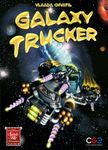
Using a lot of thematic terminology always convolutes things and makes it harder to grasp all the core concepts that you got going. One rule book that I think managed to thread the needle either in its original iteration or even better in the second edition, was Galaxy Trucker, which always managed to have a great thematic presentation, but at the same time is giving you extremely clear rules. And now this last thing, look, I know. I know I've talked about this before. And, you know, it's this is probably the most personal subjective thing here, but are we are we still doing this big floppy square rulebooks in the big floppy square rulebook box? Rulebooks, like I said, are your your first component that you're working with. These things should be functional. They should be easy to hold, easy to read. You should be able to take these to bed and read them, sit them in a chair and read them, and not take up as much room on the table as another board game. I'm not disparaging just big rulebooks in general, but these big floppy square rulebooks are never good for anything. And I know there may be some defenders out there where they're coming after me and saying, "But I love the extra space and it gives so much room for clarity." I have not seen one of these that takes full advantage of the format and becomes any more clear or
functional of a rulebook because it was in this big giant dumb square format. It is stupid and I hate it. Now, broader, taking it away from my personal
uh trials and tribulations with these types of rulebooks, the thing that I want you as a rulebook writer, as a publisher, as a game designer, as an audience, the as a gamer, to really think about is that rulebooks, they should be designed functionally, physically, with the user in mind. Not just the graphic layout of where things can fit on pages, not just the fact that you want to have the right type setting and you want to have clarity and you want to have good visuals, but actually think about who is the person that's reading this and where are they reading it and what are they going to be doing with it as they're reading it. This is not just a book that is meant for a narrative. It is a vital component. It is a reference and should be designed in such a way that is going to be manipulated. It's going to be held. It's going to be put on to the table that is already being taken up by a large amount of gaming space. And in my case, that means it shouldn't be a big dumb floppy useless square. Those are my five things when I was really thinking about what makes a rulebook great and things that I measure rulebooks by when I'm like, "Ah, that was a good one. That was a bad one."
Whatever. I want it to have good flow. I want it to have good functionality as far as looking things up. I don't want it to be convoluted with overly thematic concepts. I want it to have good reference materials. Dune Imperium, you did that. You got to have good reference materials on the back, maybe even some reference cards, but that's kind of ancillary. And I don't want it to be something that's cumbersome to wield, to read, to actually physically go through. Now, as part of this series, I'm going to be asking some questions to the audience in advance of doing these videos. So, if you want to participate in that, then you can follow us primarily on Blue Sky or here on YouTube and we'll be asking questions about similar topics or you could go check out the discussion that was really great about rulebooks that happened over on Blue Sky that informed a lot of this discussion over here. But, let me know, what are your thoughts? What are the things that really make great rulebooks to you and what are the things that you fundamentally disagree with? It's good to be challenged. I I to hear about it.
Put it in the comments. And as always, thanks for watching. Thanks for supporting. Thanks for doing all the things that help us grow. Likes, comments, subscribes, checking out our Patreon, and sharing these videos across the webs. But above all else, thanks for being such a great community. You know that I've been Jack Ford, the cardboard herald.