












Blood Rage: Valhalla Deep Dive
What the Community Thinks About Blood Rage: Valhalla
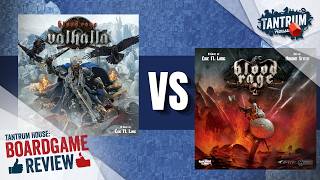
The community response to Blood Rage: Valhalla is genuinely mixed, reflecting both enthusiasm and legitimate skepticism about its place in the Blood Rage legacy. Those who have played it speak enthusiastically about the experience. Reviewers who engaged with the prototype describe it as a fresh evolution of a beloved classic, one that respects what made the original game great while introducing meaningful improvements. However, the Kickstarter campaign itself sparked considerable pushback. Concerns about the board design, component value, and whether a sequel was necessary at all surfaced prominently. Some potential backers question whether Blood Rage: Valhalla is truly innovative or merely a cash grab by Tabletop Tycoon, who acquired the license from Sean Publishing. Yet those who set aside these initial reactions and focus on the actual gameplay find themselves pleasantly surprised. The consensus among players leans toward genuine quality, not a blatant reskin. The game delivers Blood Rage with a fresh new taste, and for longtime fans, the variable deck system offers something the original never had: meaningful gameplay variety from session to session.
Core Mechanics That Define Blood Rage: Valhalla
Variable God Decks and Card Drafting
The headline mechanical innovation in Blood Rage: Valhalla is the variable god system. Instead of cycling through the same deck of cards every game, players select three gods for each session, and those gods determine which card sets are in play. This creates a genuinely different flavor to the cards you are drafting and the strategies available to you. Reviewers emphasize that this solves the one criticism that haunted the original: the sameness of repeated plays. After many sessions with the original Blood Rage, players fell into familiar patterns and known strategies. Valhalla breaks that pattern by making each god combination offer different card pools, forcing players to adapt their approach. The drafting itself remains core to the experience, but the variable decks inject meaningful unpredictability and replayability that players cite as the game's biggest quality-of-life improvement over its predecessor.
Area Control Across Three Rounds
Blood Rage: Valhalla plays out across three rounds of conquest, with players drafting cards, taking actions, and building asymmetric abilities through their tableaus. Each round cycles through phases where clans summon warriors, march across territory, perform quests, and contest control of regions. Players gather monsters and power-up cards while managing a rage track and upgrade slots that persist across rounds. The core loop feels instantly familiar to Blood Rage veterans, but the refinements matter. Players get fewer cards per round but can save more cards between rounds, creating different decision spaces. The rules have been streamlined in ways that feel small but collectively improve pacing and clarity. Combat resolution, territory control, and the push-and-pull of area dominance form the heart of the experience, with the god system determining which tools players have available to pursue their conquests.
The Blood Rage: Valhalla Experience
Drama and Conflict Familiar Yet Fresh
Blood Rage: Valhalla captures the same bloody, competitive spirit that made the original a favorite, but with a sharpness that reviewers didn't expect given the skeptical campaign response. There is drama in every draft pick, tension in every conquest, and the satisfaction of unleashing monsters upon your opponents' territory. The original Blood Rage became a cult classic because it delivered genuine theme through its systems: you are clans fighting for the gods' favor in a world ending with Ragnarok, and your actions matter. Valhalla preserves that feeling while tightening the mechanics. Reviewers who have played it describe being surprised by how good the experience actually is after the campaign's mixed reception. The variable god decks ensure that the 75-minute playtime never feels like you are retreading old ground. Instead, each session feels distinct. This is the same bloody clash that Blood Rage fans adore, but it respects their intelligence enough to offer genuine variety.
From Original to Sequel: How It Compares
Those who know the original Blood Rage will recognize most of what Valhalla offers. The five clans (bear, raven, wolf, stag, and serpent) return with new figures. The upgrade system, the rage track, the draft-and-conquer cycle all persist. Players who have played the original many times inevitably ask: is this necessary? Reviewers provide an honest answer. Blood Rage: Valhalla does everything the original does, and then the variable gods provide that additional layer. It is not a revolutionary redesign. It is a classic, refined and enriched. For players burned out on the original's sameness, Valhalla offers genuine relief. For those still enjoying the original, Valhalla remains optional. But players who love Blood Rage and approach Valhalla with an open mind consistently report that the game feels like a maturation of a system they already cherished, not a cynical re-release.
What Makes Blood Rage: Valhalla Stand Out
Variable Gods as an Elegant Solution to Replayability
The variable god deck system deserves special attention because it solves a real problem that plagued the original. In Blood Rage, the card pool never changed. This meant that after enough plays, optimal strategies crystallized. Players who had internalized the deck began making similar plays game after game. The gods in Valhalla flip that script. By tying the available cards to which gods are chosen for the session, the game guarantees that players cannot rely on their previous strategies. A card suite that was dominant when one pair of gods was active may be weak or irrelevant when different gods take the table. This creates a fresh decision space each game without requiring expansions or modules. Reviewers consistently call this out as the feature that makes Valhalla feel genuinely different and worth playing alongside the original.
A Blood Rage That Respects Your Time
Blood Rage is not a light game, and Valhalla respects that. The playtime of 75 minutes feels earned, with meaningful decisions in every round and consequences that carry forward. However, Valhalla makes those 75 minutes count more cleanly than the original. Streamlined rules, fewer cards to track each round, and the ability to save cards between turns all tighten the experience. Players spend less time managing housekeeping and more time engaging with strategy. The smaller card counts and smarter design mean setup is slightly faster, turns flow more smoothly, and the rhythm of the game breathes better. This is not a revolutionary change, but it is the kind of refinement that experienced players notice and appreciate. You get everything Blood Rage offers in a package that trusts you not to waste your time.
Potential Drawbacks
The Aesthetic Skepticism: A Map That Divides
Blood Rage: Valhalla's board sparked considerable controversy during its Kickstarter campaign. The original depicted a world tree (Yggdrasil) rendered in rich, detailed fantasy art; Valhalla reimagines this as a different aesthetic that some reviewers described as less immediately impressive, and the campaign trailer itself raised eyebrows for feeling less polished than a game at this price point might promise. One reviewer was deeply disappointed by the trailer, pointing to the board design as a letdown after eight years of anticipation, though notably that critique came before they had played the actual game. Players who have sat with the final product report that the board works fine and does not significantly detract from gameplay. The aesthetic is a matter of personal preference, but some players had hoped for something more visually stunning given the time between releases.
The Legitimacy Question: Is This Really New?
Blood Rage: Valhalla faces an unavoidable skepticism: is it a meaningful sequel or merely a cash grab? The clan sheets, upgrade slots, rage tracks, and axes-and-horns system all persist almost unchanged from the original, and some observers questioned whether a reprint with new aesthetics and monsters would have sufficed rather than a full new edition. Reviewers who evaluate this honestly acknowledge the concern: Valhalla does not reinvent Blood Rage, it takes a proven system and injects variable god decks, which, while meaningful, are not revolutionary. Players already satisfied with the original and still playing it regularly may find the investment difficult to justify. But for players who own and actively play the original, Valhalla is an optional upgrade: a thoughtful answer to one of the original's real limitations, not a must-have replacement.
If You Enjoy Blood Rage: Valhalla
Blood Rage (the original, 2015) is the obvious next step for anyone who has not played it: the spiritual predecessor and direct inspiration for everything Valhalla attempts, with the core experience of drafting cards, managing your clan's tableau, and conquering territory for the gods still excellent today. Rising Sun, also by Eric Lang and published by CMON, shares Blood Rage's conflict DNA but shifts toward political maneuvering and seasonal play, offering a complementary experience for players who love negotiation and player interaction. Ank, the third game in Lang's area-control trilogy, is generally regarded as the lightest and most streamlined of the three, a good fit if Valhalla feels too heavy but you still want Lang's design sensibility.
What Reviewers Are Saying
"I think this delivers an excellent Blood Rage experience. I think the drama around the board was completely overblown, but I will say I had the opportunity to play the game, so I was able to look past the board and into the experience. But this gives you Blood Rage with a fresh new taste to what Blood Rage is doing, as well as the variability of the fact that different gods means different structures of the decks each time."
— Alex Radcliffe, BoardGameCo
"It was Blood Rage with significantly more variability to the experience. A fresh new take on a classic done well. I thought this was absolutely fantastic. I will admit the setting of the original Blood Rage is definitely better than the setting that you have over here. I just don't think it meaningfully matters. I'd rather better gameplay over a better board."
— BoardGameCo
"Hey folks, kind of an unintended video, but I just got Blood Rage Valhalla, which is super dope. Had a great time. Had my first play of it. Friend of the show, John, kicked my butt, and I loved every second of it, but that can be more of a discussion for the review."
— The Cardboard Herald