/pic905905.jpg)
A Few Acres of Snow is a two-player, deck-building Strategic level board-wargame about the French and British conflict in North America.
The card-play contains a focus on a deck-building mechanic similar to Dominion, each card will have multiple uses like card-driven games. The players have to choose only one aspect of the card to use when it is played. Each space captured by a player will add another card to the capturing player's deck.
From the box description:
A war fought at the edge of two mighty empires. For over one hundred and fifty years Britain and France were locked in a struggle for domination of North America. Thousands of miles from their homes, settlers and soldiers were faced with impenetrable forests, unpredictable American tribes, and formidable distances. Despite these obstacles they were able to engage in bitter warfare, with the British ultimately taking the prize of Quebec. A Few Acres of Snow is a two-player game that allows you to recreate this contest. You can change the course of history by your decisions.
A Few Acres of Snow takes an innovative approach to the subject, using cards to represent locations and manpower. As the game progresses you add to your selection of cards, increasing the range of actions available to you. There are many strategies to be explored. How quickly should you build up your forces, do you employ Native Americans, what energy should be expended on your economy?
The game is about more than just fighting – you must successfully colonize the land to have a chance.
Online Play
Yucata (turn-based)


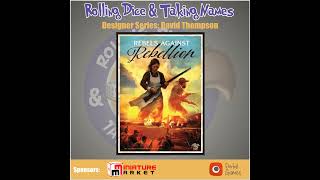
- Probably the single most influential game to me that I've I've played.
- Rebels Against Rebellion
- Undaunted
Mechanics (from transcript analysis)
- Deck Building — A deck-building game where units are added to the deck.
Video topics + discussion points
Quotes (from this video)
- There's no question too embarrassing for Amazon Health AI.
- To me, it's the remarkably advanced vehicle.
- We call it the dynamic duo.
- Niroshima Hack and War Chest are my two favorite twoplayer abstract games.
- War Chest is very, very popular internationally.
- What if I designed a game about this story that Rebels Against Rebellion tells?
- The irony of course, hey, we can secede from the Union, but you cannot declare your independence from us.
- The bottom line is um the answer is slavery, but not for the reason that people might automatically think.
- Well, I mean so so what you want the players to feel you want the Scott County player to feel overwhelmed, right?
- The cards in your hand are the is an abstract representation of the forces you happen to have available to you in that area.
- So, the game, that's how the game models this sort of restrictive nature to make sure that you're doing things that are sort of consistent with history without having a whole bunch of rules about it.
- The art in this game is absolutely amazing.
- Quantise cover for Rebels Against Rebellion is probably the the my favorite cover of any game I've worked on.
- This is not your, you know, your your typical Civil War game. This is the people of the town defending it or the county defending it from, you know, the Confederate army.
- My hope for this game is that um it finds an audience with people outside of the typical, you know, American Civil War uh fans, right?
- It's it is a two-player French and Indian War sort of version, if you will, of Blitzkrieg.
- It's a sort of an abstract area control game that does some interesting stuff with back building.
- So, the two ways to get in touch with me easily are on board gamegeeek if you just go and geekmail me.
References (from this video)

Mechanics (from transcript analysis)
Video topics + discussion points
Quotes (from this video)
- it's not about like being the best
- there are somewhere between 100 and 150 games nowadays it's nine days of gaming
- the thing that's really cool about WBC is that it is very much couched in this tournament structure
References (from this video)
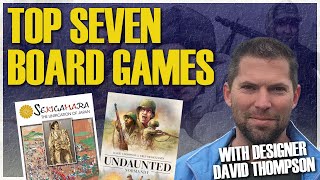
- Single most influential game in terms of game design
- Still one of the favorites of all time
- Sparked creativity and focused design
- Some of Martin Wallace's designs could use a little more development and polish
- French and Indian War
- French and Indian War
Mechanics (from transcript analysis)
- Deck Building — One of the first deck-building games played by the reviewer.
- Historical wargame — One of the first historical wargames played by the reviewer.
Video topics + discussion points
Quotes (from this video)
- Do you know what just happened? I have no idea what the game was. I couldn't get it. Like, not.
- Maria usually takes about three plus hours to play but it doesn't feel like it time flies by and it is a magical game.
- it is a in my opinion the absolute perfect Fusion of like war game Euro mechanism hybrid historical game.
- Halls of heger is my favorite soliter game.
- it's probably the first deck builder I played.
- it is the single most influential game in terms of game design.
References (from this video)
- One of the host's top three favorite games
- Provides deep engagement and replayability
- Maria
- El Grande
Mechanics (from transcript analysis)
Video topics + discussion points
Quotes (from this video)
- We're not trying to simulate a battle or simulate. We're trying to evoke feelings, right? And we're trying to communicate key points.
- If you're too accurate, you lose the vibe. And if you're very viby and you're going for that authentic feeling, then you can't have too much chrome on it.
- The dangerous part is the video does a really good job... it just gets off the rails and starts to hallucinate when it jumped from the unit being deployed to the UK...
- We have officially reached the point where there's just stuff out there that is slop and you have to follow up.
- I feel like the artists we've worked with have also impacted our design like mechanically even on the when graphic starts to get done.
- the game doesn't exist without all of those people, right?
- I never get to play my favorite games often and I certainly don't get to play my favorite games a lot.
References (from this video)
- Fantastic asymmetric and card-driven gameplay
- Strategic depth
- Historically inspired
- Gameplay focused
- Original production wasn't lavish
- Controversy over the 'Halifax hammer' strategy
- Conflict and Strategy
- French and Indian War
- Wildlands
Mechanics (from transcript analysis)
- Area Control — doing area control as well.
- card-driven — asymmetric card- driven game
- Deck Building — deck building is part of a greater whole
- Multi-Use Cards — multi-use cards.
- Timing considerations — It has a lot of timing considerations.
Video topics + discussion points
Quotes (from this video)
- This is a two-player trick taking game competitive this time, mixing it with the lane battler.
- So, you're just as invested in win in losing as you are winning. But if you lose too much, you're not going to ever have enough power.
- My number one is not joking a political uh themed game. It's also in a way a a war game, but it is card driven.
- This is Twilight Struggle.
- It is so smart. It is so strategic.
- If you really want to play this well and have the best version of the game you can is is both players know both decks.
- It's got a tug-of-war style to it. Has multiple victory conditions, which I also love.
References (from this video)

- Depth of strategy within a two-player card-driven system
- Rich mix of sieges, raids, supply, and fortifications
- Clear endgame conditions with meaningful VP scoring
- Initial complexity can feel daunting
- Deck-management and tracking many mechanics may be fiddly for newcomers
- French vs. British colonial conflict with sieges, supply lines, and frontier expansion
- North America during the 17th–18th centuries, colonial contest between Britain and France
- instructional/tutorial
Mechanics (from transcript analysis)
- Card-driven actions — Actions are executed by playing cards from a draw/deck; cards also drive what you can do on a turn.
- development of villages to towns — Upgrading settlements increases strategic value and endgame scoring.
- drafting and deck improvement — Players add new cards to their draw deck through expansion/drafting to increase options.
- economy and coin generation — Money and special actions generate coins; certain cards reward specific coin-based actions.
- Endgame triggers and scoring — Endgame can trigger via sieges or captured pieces; victory points are tallied with towns worth double.
- fortifications — Fortification discs provide defense against raids and influence siege resolution.
- location-based sieges — Sieges determine key outcomes, including immediate victory conditions in home provinces.
- raids and ambushes — Raid/ambush mechanics allow targeting adjacent enemy locations; defenses can block these moves.
- reserve and retrieval — A reserve area allows one-card storage and free retrieval with some limits.
- supply and connectivity — Supply chains run through controlled locations; ships and roads/rivers connect provinces.
Video topics + discussion points
Quotes (from this video)
- A Few Acres of Snow. That's another game about the conflicts of the French and the British in America
- The game is now ready to start.
- The British win immediately after they win a siege in Quebec.
- The French win the game immediately after they win a siege in New York or Boston.
- Important! When players finish their turn with more than five cards, they don't discard down to five.
References (from this video)

- Elegant concept and tight two-player design
- Historical flair and strategic pressure
- Historically infamous for a balancing flaw that made it feel unenjoyable for many players
- Relies heavily on the self-balance contract without robust tools for counters
- Deck-building war strategy with execution emphasis
- Two-player colonial conflict in early North American context
- Historical confrontation with tight, one-on-one duel dynamics
- Halifax Hammer
- Root
Mechanics (from transcript analysis)
- Area Control — Control of key locations and strategic footholds to pressure the opponent.
- area_control — Control of key locations and strategic footholds to pressure the opponent.
- deck_building — Deck construction to generate actions and options each turn.
- Hand Management — Careful management of a thinning deck to maximize tempo.
- hand_management — Careful management of a thinning deck to maximize tempo.
Video topics + discussion points
Quotes (from this video)
- Banned combinations. The player with the industrial player mat may not choose the Rusviet faction.
- This combo is so powerful it needed an official ban.
- A game is truly balanced when both sides hold up their end of the deal.
- Root works for the most part. And why is that? Because of the second layer, the relational balance.
- The Halifax hammer doctrine is designed to outpace and crush any response.