/pic5726297.jpg)
/pic175966.jpg)
/pic4912015.jpg)
/pic5726297.jpg)




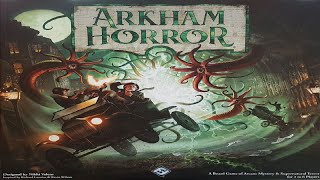




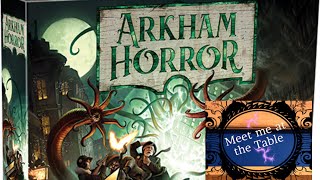

Arkham Horror (Third Edition) Deep Dive
What the Community Thinks About Arkham Horror (Third Edition)
Arkham Horror Third Edition represents a remarkable transformation for the franchise. The Secret Cabal Gaming Podcast, who disliked the second edition, came away describing the third edition as essentially a different and far better game, while Meet Me at the Table walk through its scenario-driven structure in detail. What stands out most is the shift from a thematic but chaotic experience to a tightly designed cooperative adventure where every component, from the modular board to the encounter cards to the mythos draw itself, serves a coherent narrative purpose. Reviewers consistently highlight how it feels both mechanically tight and deeply atmospheric.
Core Mechanics That Define Arkham Horror (Third Edition)
Scenario-Driven Narrative Structure
Each session of Arkham Horror Third Edition, published by Fantasy Flight Games, tells a distinct story through branching scenario cards and a codex system. Investigators are drawn into the city of Arkham with specific mysteries: gang violence threatening the streets, cultists summoning ancient evils, conspiracies lurking in neighborhoods. The codex evolves with player choice and success, flipping cards as milestones are reached and creating a narrative arc that feels earned rather than predetermined. Clues gathered throughout play accumulate on the scenario sheet itself, directly advancing the story toward victory or doom, so every action feels consequential to the larger mystery.
Cooperative Dice Rolling and Skill Tests
Resolution hinges on dice rolled against investigator skills like lore, strength, observation, influence, and will. Each action, whether moving through neighborhoods, warding away doom, or investigating, triggers a test where high rolls count as successes. Investigators can gather resources to focus skills before critical tests, bank focus for future rerolls, and coordinate to make the best use of limited action slots. This keeps tension present throughout while ensuring that player choice and group strategy matter more than pure luck, and the scarcity of actions creates constant dilemmas about whether to chase clues, fight, or push back the doom.
The Arkham Horror (Third Edition) Experience
Cooperative Storytelling with Mechanical Weight
What separates this edition from its predecessors is the integration of theme and mechanics. The game is cooperative not merely in its win condition but in moment-to-moment play, as investigators discuss where to move, who should attempt which mysteries, and whether to pursue clues or clear accumulating doom. The Secret Cabal Gaming Podcast note that locations have logical encounters tied to the setting, and that every encounter card carries a piece of story. The narrative feels alive because the mechanics reflect cause and effect, with pursuing gang alliances carrying consequences and accumulating doom threatening outbreaks that force a reckoning.
Rich Content and Scenario Variety
Arkham Horror Third Edition ships with substantial content: investigators with distinct skill distributions and abilities, a deep deck of neighborhood and location encounters, equipment and allies to discover, and scenario-specific codex cards that create unique win and loss conditions. This breadth ensures repeated plays feel fresh, since each scenario introduces new factions, monsters, and branching choices. The modular board shifts with each scenario, changing which neighborhoods exist and how investigators navigate the town, and reviewers appreciate how meaningfully different the scenarios feel out of the box rather than reading as rearrangements of the same puzzle.
What Makes Arkham Horror (Third Edition) Stand Out
A Complete Redesign That Respects Lovecraftian Horror
For reviewers who dismissed earlier editions, the third edition feels like a different game entirely, one that finally captured what the Arkham Files universe deserves. The shift from a chaotic experience where events simply happen to investigators, toward a structured cooperative game where investigators make meaningful decisions, fundamentally changes the feel. The Lovecraftian theme is no longer window dressing but embedded in the mechanics: gathering clues to understand cosmic threats and warding away doom that represents encroaching ancient evils. Players describe moving from one of their least favorite games in the franchise to genuinely loving the experience.
Tighter Design Than Its Siblings
Compared to Eldritch Horror or Mansions of Madness, Arkham Horror Third Edition opts for elegance and focus. The mythos cup system gives the game a fixed rhythm, so games reach their climax at predictable pacing. While this removes some spontaneity, reviewers argue it creates tension rather than chaos, since knowing clues must be gathered before the cup empties forces deliberate strategy about which mysteries to pursue. The scenario-specific codex cards mean setup matters, rewarding replay and mastery rather than relying purely on random card luck, and the structure guides choices enough to remain accessible despite the complexity.
Potential Drawbacks
Length and Commitment
Arkham Horror Third Edition is a substantial commitment. Scenario playthroughs commonly run two to three hours, and a full campaign demands significant table time. Reviewers note this is not a casual evening game; it requires focus, discussion, and engagement with the narrative. Some players find this appealing, treating it as an immersive story worth the investment, while others find the duration combined with the rules complexity creates barriers to regular play for groups with limited time.
Managed Gameplay and Predetermined Pacing
The mythos cup system, while creating structure and tension, also constrains player agency. Because clues arrive in waves tied to the cup's draws, the optimal action can become obvious: ward doom when the cup is depleting, or focus skills when you need the next clue. This tight management occasionally makes turns feel less surprising, and groups seeking emergent, unpredictable play may find the fixed structure limiting compared to earlier Arkham games that embraced controlled chaos.
If You Enjoy Arkham Horror (Third Edition)
Players drawn to Arkham Horror Third Edition often gravitate toward Eldritch Horror, which shares the Lovecraftian setting and global scope through a more sprawling, less scenario-driven experience. Mansions of Madness delivers similar narrative depth through app-driven exploration and puzzle-solving. For cooperative, dice-driven tension without the Lovecraft theme, Robinson Crusoe: Adventures on the Cursed Island offers comparable mechanical depth and emergent survival stories, while Arkham Horror: The Card Game takes the same investigators into a campaign-driven, deck-building format.
What Reviewers Are Saying
"I love that this game is on my list, because if you would have asked me six months ago, this game would not be on my list, because I did not like the second edition at all. This game comes along and really, it's not even Arkham Horror in my mind, it's a completely different game. All of the game systems have changed."
— The Secret Cabal Gaming Podcast
"This really changed it from just a whimsical run-around-and-things-happen-to-you game to a full cooperative game where you have to work together. The locations have logical things that happen at them, and every single card you draw has some kind of story on it."
— The Secret Cabal Gaming Podcast
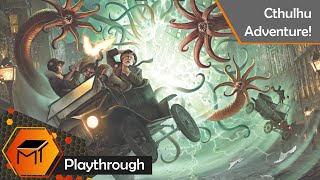
"We had our patrons vote on which scenario to do next, and they recommended Shots in the Dark. Let's take a look at our scenario sheet, meet our two investigators, and then start our adventure."
— Meet Me at the Table