/pic3596681.jpg)
/pic2582929.jpg)
/pic3476592.jpg)
/pic4390414.jpg)
/pic3626220.jpg)
/pic3596681.jpg)
/pic4281839.jpg)


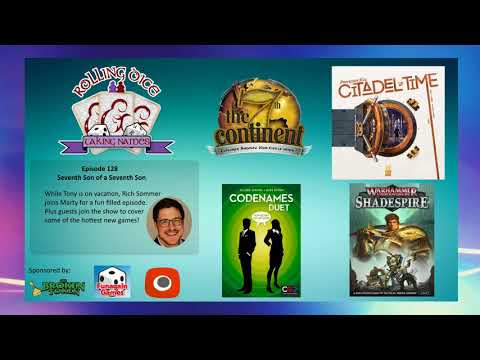





Codenames: Duet Deep Dive
What the Community Thinks About Codenames: Duet
Every channel that spends real time with Codenames: Duet lands in the same place: this is a worthy, clever member of the Codenames family rather than a watered-down two-player patch. BoardGameCo called it a great addition to the Codenames family and noted that, in play count, it has come very close to catching regular Codenames. Board Games UnLocked went further, saying the cooperative nature is easier to sit with than the team version because there is no opposing side to feel frustrated at, even though the two hosts agreed Duet is the harder, more tactical of the pair.
Where the channels split is on what kind of two-player game it actually is. Game Night Picks - Pair Of Dice Paradise treats it as a genuine challenge for people who already love the original, framing it as the answer for anyone who wants a serious test rather than a party filler. Quackalope's playthrough leans the other way, presenting Duet as a lighter, funnier couple's activity where losing repeatedly is part of the appeal, and admitting that the team version still gets more table time when a bigger group is around. Jamie, Tabletoptiktok, walks through the 10th anniversary edition and frames Duet as keeping the core Codenames feel while trading the team-versus-team structure for a shared fight against the clock. In a GenCon interview aired on Meeple Mountain, a publisher representative described the double-sided card system as one of the cleverest design solutions the representative had seen applied to Codenames, saying it took a separate designer approaching the publisher with the idea to make the two-sided grid happen at all.
Core Mechanics That Define Codenames: Duet
Shared Grids, Split Knowledge
The mechanic every channel returns to is the double-sided key card. Each player sees their own side of a shared word grid, with some squares marked as their own agents, some as innocent bystanders, and some as the other player's assassins. Jamie, Tabletoptiktok explains that this is a cooperative game where the tile showing where the words are goes in the middle, with one side facing each player, and that together the pair has a set number of rounds to get each other to guess all fifteen green words. The GenCon interview aired on Meeple Mountain singled out the double-sided cards for having both sides work on the same puzzle at once, calling the result super clever precisely because neither player can see the whole picture their partner is working from.
A Ticking, Shared Clock
BoardGameCo frames the clock as the thing that makes the cooperative structure work at all: since there is no opposing team to race against, the game needs a countdown players are working against together, and that countdown is represented by cards that track how many turns remain. Board Games UnLocked describes how that clock interacts with the bystander rule: guessing an innocent bystander both burns a token and costs a turn, so every clue is also a bet against a shrinking timer, not just a shot at the right word.
The Codenames: Duet Experience
Reading Your Partner's Mind
Board Games UnLocked spends a long stretch of their discussion on how much of Duet is about modeling the other player's brain rather than the words on the table. One host describes psyching themselves out over an assassin word that turned out to only be a bystander for the other player, saying the game gets you into the mind of your partner in a way regular Codenames never does because there is no teammate to bounce a guess off first. That same host notes the reward when it clicks: giving a clue for five words and watching a partner run through all five correctly is described as the moment the switch in your brain goes off.
Playful Tension for Couples
Quackalope's playthrough shows the other side of that same tension played for laughs. The couple bickers over clue quality in the middle of a round, celebrates wildly after finally winning a game after a long losing streak, and jokes about never playing again before immediately agreeing to go another round. The banter itself becomes part of why the channel enjoys the game, even as one player admits Duet is not the one they reach for when more people are around to play the full team version.
What Makes Codenames: Duet Stand Out
A Clever Cooperative Twist on a Classic
BoardGameCo calls the two-player cooperative system a clever system that lets Codenames work at a count the base game was never built for, and credits Duet as the biggest innovation the Codenames line had seen before Critical Role Adventures came along. The GenCon interview aired on Meeple Mountain frames the double-sided cards the same way, saying the design solved a problem the interviewee did not think was solvable: making Codenames genuinely better for two players rather than just smaller.
Genuine Challenge for Two
Game Night Picks - Pair Of Dice Paradise tells people who want an actual challenge to go try Codenames: Duet, saying it is significantly harder than the standard game and that losses happen often even to experienced players. Board Games UnLocked backs that up, describing Duet as a much more tactical game that demands more concentration than the party-oriented team version, since both players are giving clues and neither has a teammate to lean on for a second opinion.
Potential Drawbacks
The Bystander Penalty Feels Harsh
Board Games UnLocked calls the bystander penalty their one real complaint with Duet: guessing an innocent bystander costs a token the same way an assassin nearly does, on top of already losing a guess, which one host argues is a doubly painful punishment for a wrong guess that was not even shared knowledge between both players. The hosts discuss house-ruling the penalty down to a single lost token rather than two, while noting they assume the publisher playtested the current balance carefully.
Less Suited to Bigger, Rowdier Groups
Because Duet is built for exactly two players, several channels note what gets lost compared to the team version. Board Games UnLocked points out that Duet by nature is not a party game, since technically owning two copies lets more people join but at that point it makes more sense to just play regular Codenames. Quackalope's playthrough echoes this from the player's side, with one half of the couple admitting Duet is their least favorite way to play the Codenames family specifically because the team version is better once more people are available to play it.
If You Enjoy Codenames: Duet
BoardGameCo reviewed Codenames: Critical Role Adventures directly against Duet, calling it the next big innovation to the Codenames formula since Duet and pointing out that its countdown-card structure works the same way Duet's clock does, just wrapped in a branching campaign. Game Night Picks - Pair Of Dice Paradise recommends Cross Clues to anyone who likes the deduction and clue-giving loop that makes the Codenames family work, describing it as a cooperative party game built around finding connections between words that are not obviously related, in the same spirit as Codenames but built from the ground up as a shared grid rather than a fixed board.
What Reviewers Are Saying
"This is the biggest innovation Codenames has seen since Codenames Duet came on the scene, which I thought was a great addition to the Codenames family. It allowed you to play it cooperatively. And I'd say over time, I think I've still played Codenames more, but Codenames Duet has come very very close to it."
— BoardGameCo
"It's a great system, I mean, we can help each other out and not even know it. You covered up one of my words. I made you guess a word, now I don't have to guess that word."
— Board Games UnLocked
"Having two-player games is is probably the number one thing I get asked about on the internet, and stuff like that, where so many people are like, I just want a game to play with my partner after we put the kid to sleep, or I can't get a bunch of people over all the time, and so I'm super happy that codenames duet exists."
— Game Night Picks - Pair Of Dice Paradise