




















Eclipse: New Dawn for the Galaxy Deep Dive
What the Community Thinks About Eclipse: New Dawn for the Galaxy
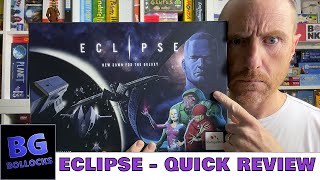
Eclipse: New Dawn for the Galaxy is widely described as a seminal 4X game, a genre built around exploring, expanding, exploiting, and exterminating. Across the reviews gathered here, the consensus is that the original 2011 design still holds up. Reviewers praise the way economic management and space combat fit together, and many describe the game as a long, deliberate experience that rewards players willing to commit an entire evening, or sometimes several, to it.
Enthusiasm tends to center on variety and unpredictability. Because the galaxy is built from face-down tiles, the board develops differently in every session. Reviewers stress the tension of flipping a tile that might reward you or hand a neighbor an easy route into your territory. Asymmetric species add another layer, since each civilization begins with different strengths and invites a distinct plan. In Board Game Replay, one alien race is described as able to move four ships with a single action while being unable to build the largest warships, which illustrates the tradeoffs built into the roster.
Criticism is just as direct. Reviewers agree the game is long and dense, that its reputation tiles inject a large amount of luck into scoring, and that the expansions can make an already heavy game harder to manage. Most reviewers still recommend the game despite these objections, but they tend to suggest choosing expansions carefully and planning for a long session.
Core Mechanics That Define Eclipse: New Dawn for the Galaxy
Engine Building Through Actions and Economy
The strongest engine in the game is the economy. Every action disc a player spends pushes the cost of the next action higher, and the upkeep phase at the end of each round charges the empire for its size. Expansion works in the opposite direction. Populating planets moves cubes off the resource tracks, and each cube removed raises the amount of income or materials a player collects every round. Early exploration therefore becomes a race to start the snowball. Reviewers describe the central tension as a balance between taking more actions and affording the upkeep that comes with them, with a healthy economy eventually letting a player act more often each round.
Research feeds the same loop. Technologies are bought with science and become permanent options, and the research board refills with new tiles, so the economy and the tech tree reinforce each other. A player who builds a stronger economy can afford better technology, and that technology opens stronger ships and more profitable territory. Board Game Replay framed the early rush to explore as a direct result of how much the compounding matters, and the group found that patience could pay off when a valuable technology was about to appear.
Tech Trees, Ship Customization, and Dice Combat
Technology is also where most of the customization happens. Players buy tiles from a shared research board, place them on a personal track, and later use the upgrade action to install them on ship blueprints. Upgrades can replace the default parts on existing ships, so a fleet can keep improving as better components arrive. Board Game Replay highlighted this as a major source of replayability, because each player ends up with a fleet shaped by their own research path rather than a generic one.
Combat is resolved with dice, and reviewers often describe it as the game's climax. Computers add to hit rolls, so basic ships may hit only on sixes early on, while stronger computers can make a fleet miss only on ones. Plasma cannons deal extra damage regardless of the roll, and plasma missiles fire before any other weapons, which makes them a frequent source of debate. The Cardboard Herald admitted that dice combat is not usually to its taste, but said the probability modifiers and upgrade options give players enough control to produce a reliable and satisfying result.
The Eclipse: New Dawn for the Galaxy Experience
An Epic Space Opera Scale
Reviewers repeatedly describe the game as a space opera in a box. The map grows from a handful of tiles into a sprawling galaxy with rival empires, wormholes, and ancient ruins, and discovering new systems gives the session a sense of expansion that matches its theme. The Cardboard Herald said the game captures the feel of the genre better than most, praising components that look as impressive on the table as the theme promises.
The scale also makes sessions feel like events. Board Game Replay's group described a game long enough that they had to return on another day to finish it. The final round felt like a moment of its own, with every move carrying weight as players fought over the last valuable systems. That sense of a long, shared story is a large part of why reviewers call the game memorable.
Tense Combat and Diplomacy
The emotional peak of a turn comes from combat, which resolves only after every player has passed. That delay lets rivals gather fleets on the same system and watch the tension build before any dice are rolled. Reviewers describe this as a climax that makes each round feel meaningful. Even a player who loses a fight can draw reputation tiles, which keeps the stake in the outcome high for everyone involved.
Negotiation sits alongside the fighting. Players whose influence discs sit next to a rival through a full wormhole can trade diplomacy markers, which later count toward victory points. In a four-player game, alliances are capped at two players per team, and allied players average their final scores, so a partner's success matters to you. Breaking a truce by invading an ally's system carries a penalty, which makes every alliance a tradeoff between safety and opportunity. Board Game Replay's session showed how quickly a threatened player will propose a partnership, and how that partnership is tested once a shared victory is at stake.
What Makes Eclipse: New Dawn for the Galaxy Stand Out
The game's identity comes from the balance between restraint and aggression. Taking more actions makes an empire more powerful but also more expensive to run, and combat is designed so that taking part has value even in a lost fight. BoardGameBollocks valued this design because a player who enters a battle still has a chance at points, which keeps conflict tempting without making victory mandatory. Reviewers also note that the galaxy itself is not predetermined, which keeps every session uncertain and makes each new tile feel like a small decision with big consequences.
Expansions broaden the appeal further. Board Game Replay's group played with Rise of the Ancients, a modular expansion that shuffles rare technologies into the bag so they can be bought at discounts, and the group argued that such expansions make the base game feel fresh even after many plays. On the subject of the newer release, The Cardboard Herald described the revised edition as mostly cosmetic, a refreshed box that keeps the original game intact. Reviewers who value the original tend to see it as a complete package that holds up on its own.
Potential Drawbacks
Length is the most frequent warning. Eclipse is often pitched as a game that fits into a two and a half hour slot, but BoardGameBollocks reports sessions running closer to four or five hours, and the heavier the expansion load, the longer the table commitment becomes. Board Game Replay's group needed more than one day to finish a single game, so players who expect a quick evening should plan accordingly. Two-player games are a particular concern, because a lopsided match can leave one player waiting through a long contest that was decided early.
The reputation tile draw is the most cited scoring problem. After combat, players draw from a bag and choose one tile, so the luck of the draw can outweigh the strategy that led to the fight. BoardGameBollocks argued that the draw is unbalanced and suggested that using the fixed values from the cheat sheet works better for many groups. Fans acknowledge that the scoring mechanism itself draws criticism, and the luck it introduces can make or break an individual experience.
Complexity and table management are the final frictions. The expansions add a large amount of material and rules, and reviewers warn that using everything at once can overwhelm players who must track many systems simultaneously. The components also spread across a big table, and the teardown is described as a chore, since small cubes and ships are easily scattered. Opinions about the second edition are mixed. Some reviewers say the original already contains everything they need, while others see the newer release as largely a presentation update, so readers should weigh whether a refreshed look justifies buying the game again.
If You Enjoy Eclipse: New Dawn for the Galaxy
If you enjoy this game, reviewers most often point toward Twilight Imperium as its natural neighbor. Both are space 4X games built around exploration, diplomacy, and large fleet battles. BoardGameBollocks compared the two directly, with one reviewer describing Eclipse as a more streamlined take on that style, while another argued that it plays differently and runs far longer than advertised. Concordia also appears in these conversations, valued for its economic planning and card-based scoring, so players who prefer the euro side of Eclipse may find it a natural next step. Players who enjoy tactical dice combat and an engine that snowballs over time should feel at home here.
What Reviewers Are Saying
"Combat is always resolved at the end of the round so players can move ships on top of one another and you know have their armies move into a space and get ready to have this big fight. You can kind of all see a brewing but that combat doesn't resolve until the very end of the round after everybody has passed. So combat is kind of this cool climax of every round it's really neat."
— Board Game Replay
"It's a seminal 4X experience that has a wonderful blend of Euro economic style management with a trash miniatures combat. It does suffer from an unbalanced, uneven, random reputation tile draw, which is the place where you're going to get your main bulk of victory points."
— BoardGameBollocks
"It looks great out the table. It's an incredibly immersive and thematic game and the strategy is just it feels so good. It's the best space opera game out there."
— The Cardboard Herald