/pic4624124.jpg)
In Little Town, you lead a team of architects and must dispatch workers to the town, collect resources and money, build buildings, and develop this little town.
In the game, which lasts four rounds, you can acquire resources such as wood, stones, fish, and wheat from the surrounding squares by putting workers on the board, with three workers being placed each round. When you place a worker, you acquire the resources available in all eight surrounding spaces. You can build buildings by using these resources, and you — or any other player — can gain the effect of the building when place a worker next to it; if you place next to a building owned by another, however, you must pay them a coin before you can collect those resources.
Players collect victory points by using the powers of buildings, by constructing buildings, and by achieving goals dealt to them at the beginning of the game. After four rounds, whoever has the most victory points wins.
—description from the publisher


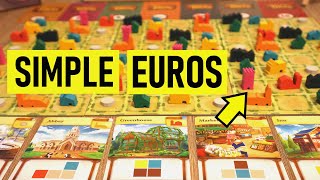
- Simple yet interesting and unique worker placement
- Geography of the map and grid really matters
- Creates a cool geographical resource engine
- Spatial element and changing board geography add replayability
- Building drafting variant adds variability
- Uniquely named to avoid 'medium town' or 'ginormous town'
- Building a town through worker placement and property development
Mechanics (from transcript analysis)
- Resource Management — Players gather resources which are used to purchase buildings and monuments.
- Tile Placement — Players place building tiles on a grid, strategically positioning them to benefit from surrounding resources and actions.
- Worker Placement — Players place workers on a grid to acquire resources from surrounding spaces. Players can also place buildings, which others can use, generating income or resources.
Video topics + discussion points
Quotes (from this video)
- do you remember that feeling that you got when you learned to play your first ever deep strategic euro game or are you someone who's currently standing at the edge of the precipice deciding whether to take the leap of faith or not
- What makes those three games incredibly unique is the idea that all three games are relatively easy to teach they provide players with actions that have incredible scope as well as having a theme that players can really dig their teeth into
- there are other board games out there that allow players to dabble in some of the mechanics that are commonly seen in euro board games
- Board games are great at making you spend money so much money in fact that it's naturally fitting that this next euro game has you dabbling in auctioning and tile placing
- Never has there ever been a game so uniquely named it's like they tried to avoid calling it medium town or for goodness sakes ginormous town
- Cube pushing is a common thing that happens in many euros
- Euro games are often themed around some of the most spectacular and culturally diverse places around the world
- Engine building in euro games has nothing to do with cars but rather to do with toying with what you have and making it grown work for you
- If you really want to connect with the board game sanctuary community don't forget to head over to my patreon page on my facebook page and start a conversation there
References (from this video)
- Brilliant introductory worker placement game.
- Hasn't seen a lot of plays due to having many other worker placement games.
Mechanics (from transcript analysis)
- Worker Placement — Host describes it as an introductory worker placement game where you place buildings on a map to gather resources.
Video topics + discussion points
Quotes (from this video)
- here are five games that have really struggled to get to the table
References (from this video)

- I enjoyed playing it so much; I was very likely to buy a copy
Mechanics (from transcript analysis)
Video topics + discussion points
Quotes (from this video)
- I'm not happy right now
- I'm seriously considering some small to significant changes
- I wish I had something concrete to tell you but I didn't really want to sit here and say everything is fine when everything isn't fine
References (from this video)

Mechanics (from transcript analysis)
Video topics + discussion points
Quotes (from this video)
- i decided to stop doing it at this point
References (from this video)
- strong engine-building potential
- interactive and dynamic with blocking opportunities
- thematic atmosphere (bread, bakery) and quirky components
- rules/board complexity in two-player mode can be challenging
- featuring heavy feeding penalties which can be punishing
- requires careful planning to manage shared resources and block strategies
- town development; feeding people
- collective town-building with resource gathering
- Happy Pigs
- Seastead
- Furnace
Mechanics (from transcript analysis)
- building construction for points — Construct buildings to gain victory points; buildings have costs and points in corners.
- Compound Scoring — Four objective cards drive ongoing goals and scoring.
- feeding mechanics — Feed workers with wheat or fish; failing to feed costs points.
- Objective Cards — Four objective cards drive ongoing goals and scoring.
- residence as an extra worker — Residences function as an extra worker that activates adjacent spaces.
- resource gathering from defined locations — Gather resources from fishing spots, forests, and mines.
- terrain-adjacent scoring — Some buildings score based on adjacency to terrain features (lake, forest, mountain).
- Trading — Certain buildings allow trading or conversion that yields points.
- trading/building interactions — Certain buildings allow trading or conversion that yields points.
- Worker Placement — Place a worker and activate every surrounding building/location (eight spaces, orthogonal and diagonal).
Video topics + discussion points
Quotes (from this video)
- it's a collective town building game
- the mechanic is you place a worker and then you activate every space around this one
- it's really good engine building
- bread smell and this is thematic you know
- you block everything that i want ... quite ruthless
- it's standalone
References (from this video)
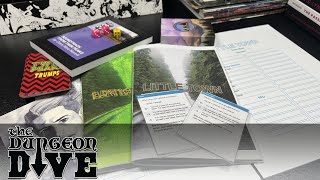
- Simple, quick-to-pick-up gameplay well-suited for solo play
- Strong Twin Peaks/David Lynch atmosphere and investigative focus
- Move/card system supports narrative progression and discovery
- Eldritch Town supplement enables a cosmic horror variant
- Well-structured materials with helpful example scenes
- Some translation quirks in the book (Brazilian origin) noted but not prohibitive
- Luck-based elements can feel swingy to some players
- murder investigation with dreamlike, surreal, and potentially cosmic horror components
- Cypress Falls, a mountain town in a Twin Peaks-inspired setting with a supernatural pandemic running beneath ordinary town life
- investigative noir with Lynchian dreamlike sequences; uses moves and scene-based storytelling to reveal clues
- Solitary Defilement
- Paranormal Inc
- Brindlewood Bay
- Dungeon World
- Noir World
- Mythic Game Master Emulator
Mechanics (from transcript analysis)
- 2d6 + attribute + MPC attitude — Roll 2 six-sided dice and add a character attribute (Agility, Strength, Mind, Presence) plus a modifier from an NPC's attitude to determine outcomes; failures or partial successes can cause wounds or other consequences.
- deck-based scene mechanics — Investigation progress and scene resolution rely on drawing from a suit-divided deck (diamonds, clubs, etc.) with defined meanings for events, anomalies, dangers, and clues.
- Narrative Choice — A luck-based oracle (1d6/2d6 outcomes) guides yes/no style answers for open-ended questions, shaping narrative direction.
- scene setup and progression — The game is divided into scenes with location, weather, time, and a scene event; each scene advances the investigation and offers new clues.
- secrets and instability — Characters have secrets; starting instability is tied to the secret; accumulating instability or wounds can trigger a game over.
- Yes/No Oracle — A luck-based oracle (1d6/2d6 outcomes) guides yes/no style answers for open-ended questions, shaping narrative direction.
Video topics + discussion points
Quotes (from this video)
- Twin Peaks influence pervades the game's mood and setting.
- this neat little game does a really good job of creating and telling interesting stories.
- the Eldritch Town supplement turns the Twin Peaks vibe into cosmic horror.
References (from this video)
- Pure Lynchin, pure Twin Peaks.
- Town is an important character.
- Utilizes a standard deck of playing cards.
- Lots of random tables for investigation.
- Eldritch horror supplement available.
- Requires some effort from the player.
- Lynchin, Twin Peaks, supernatural mystery, peculiar horror, Eldritch horror (with supplement)
- Quaint town, modern Japan (optional Eldritch supplement)
- Journaling
- Twin Peaks
- Iron sworn
- Star forged
- Morr Borg
- Solitary Defilement
- Eldritch toown
Mechanics (from transcript analysis)
- Card draw (standard deck) — This game also utilizes a standard deck of playing cards.
- Character Archetypes — You will need to choose an archetype.
- Dice rolling (2d6) — If you wanted to interrogate somebody when you try to extract information from someone you would roll 2d6 plus your presence.
- Journaling (optional) — This game does utilize a little bit of journaling but you don't need to get that into it.
- Oracles — The book itself has a whole bunch of different oracles for coming up with your answers to questions.
- Powered by the Apocalypse (PBTA) — This game is based off of the powered by the apocalypse.
- Town Creation — At the same time you will also create your town because there is a synergy between those two.
Video topics + discussion points
Quotes (from this video)
- horror is a fascinating genre but it's not just a genre it's a genre modifier
- horror games are also perfect for The Soloist because as a solo player you are in complete control of the mood and the atmosphere
- this is probably the most complex game on this list
- reject death Embrace power
- this is really not a game of cosmic horror this is a survival RPG this is survival horror
- this has some amazing solo rules absolutely amazing solo rules
- the solo rules and charts are amazing there are so many Fantastic charts for rolling up random things
References (from this video)
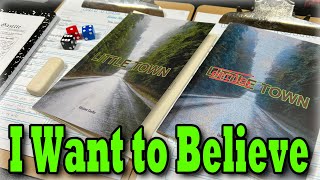
- Plays fast and scenes are quick.
- Does a good job of pushing the narrative forward.
- Highly recommended.
- Solo paranormal investigation
- A small town, possibly inspired by Twin Peaks
- The Unseen World
Mechanics (from transcript analysis)
- attribute checks — Actions are resolved by rolling dice and adding scores from attributes like Agility, Mind, Presence, and Strength.
- Card drawing — A standard deck of cards is used for resolving dangers, clues, and other game events.
- clue gathering — Players collect clues (represented by cards) which are essential for attempting to solve the case.
- Dice Rolling — Core mechanic involves rolling 2d6 and adding attribute modifiers for various actions, with results determining success and narrative outcomes.
- Move-based actions — The game uses a system of 'moves' that trigger narrative results based on dice rolls, similar to Powered by the Apocalypse (PbtA) games.
- narrative generation — The game uses charts and dice rolls to generate scenarios, characters, and plot points, creating a unique story each playthrough.
- Oracle system — Uses yes/no oracles to answer specific questions during gameplay.
- Resource Management — Players manage 'instability' and 'wounds', which can lead to game over if too high.
Video topics + discussion points
Quotes (from this video)
- The goal of these games is to have an experience and the Mystery is just kind of a McGuffin to get you to travel along the plot route.
- The game is is is rather simple and once you get going I think it does play pretty fast.
- This game is so so cool I love this game I love coming up with stories like that super fun.
- I do highly highly recommend keeping the jokers in and when you draw both of them push the story in the direction that you want it to go.
- This is your license here the two jokers are your authoritative license to do what you want to do to make something really cool happened.
References (from this video)
- Paranormal investigation, Cthulhu, X-Files.
Mechanics (from transcript analysis)
Video topics + discussion points
Quotes (from this video)
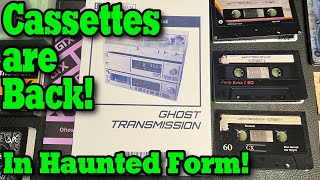
- And the theme of this game, it's all centered around a haunted stereo system that you might have purchased at an old thrift store or antique store, some kind of flea market.
- So this is a pure journaling game.
- if you are interested in physical media and that kind of nostalgia that comes with physical media or that superior uh audio that maybe comes with physical media, you might really like this game.
- But I I love just absolutely love that he made these tiny little scenario books in uh the size of a cassette.
- And sometimes a novelty, sometimes something novel can go a long way in making something feel special.
References (from this video)
- Love the paranormal investigation theme and Twin Peaks setting
- Moves are easy to track
- More than just a journaling game
- Generates imaginative elements
- Fun game with good story creation
- Supplements allow for different thematic experiences (Lovecraft, X-Files)
- Some people dislike journaling games
- Gets more out of it if you enjoy writing responses
- Paranormal investigation, mystery
- Twin Peaks-esque
- Clue
- H.P. Lovecraft
- X-Files
Mechanics (from transcript analysis)
- Card Play — Requires a deck of cards for the game, used for prompts or other mechanics.
- journaling — Involves journaling as part of the gameplay, responding to prompts.
- Moves — Uses 'moves' which are containers for rules and narrative outcomes based on player actions.
- random tables — Utilizes random tables, sometimes with 2d6 rolls or card draws, for generating prompts and elements.
- Supplements — Has supplements like Eldrich Town and Eerie Town that change the setting/theme.
Video topics + discussion points
Quotes (from this video)
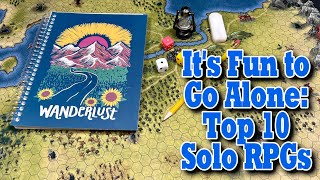
- It's Fun to Go Alone. This is the top 10 solo RPGs.
- As a matter of fact, I've done an episode on uh solo analog dungeon crawl.
- And boy howdy did I fall in love with this game.
- This is a game that that treats the kind of spirituality and folklore and mythology of the Japan in a very very respectful nature.
- Holy crap, what a game. I love this game. It is so much fun.
- This game is super super simple.
- The simplicity can be a little confusing because as you're reading the rules, you're kind of like, 'Oh, wait. That's it. I don't get it.'
- Morgborg, man, what a game. I love this game so much.
- The solo rules that made me understand solo role playing.
- The generosity liberal thirdparty licensing.
- Scarlet Heroes really is the game that made solo role playing click with me.
- This is an all inone solution with some of the best, most useful solo oracles and rules I have ever played.
- The urban adventure rules in Scarlet Heroes handle that really well, better than just about any other game I've played.
References (from this video)
Mechanics (from transcript analysis)
Video topics + discussion points
Quotes (from this video)
References (from this video)
- High interaction; satisfying building and farming vibe
- Engaging decisions about building for self vs others
Mechanics (from transcript analysis)
- Shared grid builder — Build in a shared grid with interaction affecting both players.
- Worker Placement — Place workers to activate adjacent buildings.
Video topics + discussion points
Quotes (from this video)
- it's very difficult to come up with a top 100 board games over a long period of time
- it's an icebreaker
- two players can play up to four players
- this is a trick taking game which came out late in 2024
- the tile placement is what is different
- wake up order as I'll call it
- pandemic style cooperative game
References (from this video)
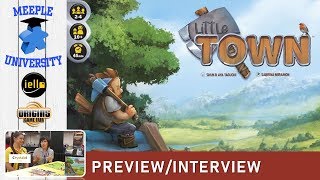
- Cute artwork
- Variable board setup for replayability
- Family-friendly
- building a town
Mechanics (from transcript analysis)
- Resource Management — resource management as well.
- Secret Agendas — Each player has a certain amount of carbs yep and they are trying to accomplish these goals yep by the end of the game to gain more victory points yeah but you don't want your opponents to know what kind of goals you are trying to provide yeah secret agendas.
- Tile Placement — this is a family strategy game with Ohio placement.
- Worker Placement — this is a family strategy game with Ohio placement and work their management.
Video topics + discussion points
Quotes (from this video)
- so it's a family strategy game with Ohio placement and work their management.
- I like the artwork of it it's really cute and these little pieces very little.
- so it's a family strategy game with Ohio placement and work their management. resource management as well. it's a H 10 plus family can play this
References (from this video)
- Strong combination of worker placement with building activation and coin economy
- Variety and replayability through randomized building tiles and objectives
- Interactive element where you can activate opponents' buildings adds tension
- Clear endgame scoring via cathedral-like bonuses and end-of-round awards
- Resource/coin management can be fiddly and heavy for new players
- Three-player interaction can feel congested in tighter layouts
- Complex scoring and endgame rules may be intimidating without a guide
- Urban development and resource management in a small agrarian town.
- A rural town-building setting where players place workers to construct buildings on a shared map and manage resources.
- Instructional playthrough with live commentary explaining rules and strategy.
Mechanics (from transcript analysis)
- Building activation — Adjacent buildings can be activated to gain resources or points; players can activate opponents' buildings for different costs.
- Coin economy and resource conversion — Spend coins to buy resources or to activate benefits; three coins can be exchanged for any one resource.
- End-of-round feeding — All workers must be fed at end of round; underfeeding costs points.
- endgame scoring and objectives — Objectives and end-of-round bonuses influence strategies; endgame buildings score points based on adjacency and other conditions.
- Resource Management — Manage wood, stone, fish, food, wheat, coin, etc. to construct buildings and pay costs.
- Round progression and turn order — Rounds progress with a round token; starting player passes to the next player (with special rule in 3-player last round).
- Token-based ownership — Building tokens show control of a building by placing a token on the building.
- Worker Placement — You send workers to spots to gather resources or construct buildings.
Video topics + discussion points
Quotes (from this video)
- the goal of this game is to try and have the most victory points
- you can turn a coin into four points
- fish is ample in particular
- end of round special buildings
- this is going to give them two coins from the supply and then they can spend those two coins over here to take two stone from the supply
- I hope you've enjoyed learning how to play Little Town
References (from this video)
- Beautiful production quality from Yellow
- Simple but engaging gameplay
- Good gateway euro game
- Lots of variety in small box
- Well-crafted package
- Not as exceptional as Sky Lands
- Familiar mechanics not revolutionary
- Doesn't reach highest heights of similar games
- town_building
- worker_placement
- resource_management
- medieval
- Sky Lands
- Oregon
- Carcassonne
Mechanics (from transcript analysis)
Video topics + discussion points
Quotes (from this video)
- I'm moving away from those big strategic games more and more and tending towards that lighter stuff
- It's been a big strange wonderful year for me
- I can't honestly say that this list is any sort of authority
- I'm looking for innovation and that's harder and harder to find year after year
- These are the 10 picks but I've really really enjoyed ten real gaming highlights for me
- I don't have the time anymore to invest in playing these big heavy games
- Happy salmon went over fantastically because everyone could play together
- Innovation is harder and harder to find year after year
- There's nothing innovative in this gameplay but it is slick it plays so well
- The watercolors in the artwork make it feel so stylish and mature as a game