/pic4325841.jpg)





























Star Wars: Rebellion Deep Dive
What the Community Thinks About Star Wars: Rebellion
Star Wars: Rebellion occupies a unique position in the board game landscape: it is consistently praised as a tour de force of thematic design and one of the finest representations of the Star Wars universe in tabletop form. Reviewers agree that the game succeeds in translating the core conflict of the original trilogy into a playable experience, delivering a cat-and-mouse narrative that resonates with fans and strategists alike. However, opinions diverge on the experience itself. Some reviewers celebrate the asymmetric mind games and emergent storytelling, while others acknowledge that the game's complexity and playtime can feel demanding, particularly on subsequent plays when the tension and discovery of the first game fade. The expansion, Rise of the Empire, is widely regarded as a transformative improvement that addresses the base game's combat mechanics and refreshes the content for veteran players. Overall, Star Wars: Rebellion is recognized as a masterwork of asymmetric design, though it is not a game for everyone.
Core Mechanics That Define Star Wars: Rebellion
Hidden Movement and Asymmetric Objectives
At the heart of Star Wars: Rebellion lies a deceptively simple asymmetry: one player controls the vast Galactic Empire, while the other commands the Rebel Alliance. The rebel player selects a location for their hidden base at the start of the game, and the empire must deduce its location through a combination of direct evidence, probe cards, and the patterns of rebel activity. This hidden movement system creates continuous tension. The rebel player, playing from a position of weakness, must accomplish objectives while staying hidden, earning progress points toward victory. The empire, meanwhile, must narrow its search using limited probe information while simultaneously maintaining military presence across the galaxy. Neither side plays the same game, which means learning to win requires understanding both the hunt and the hunted simultaneously.
Leader-Driven Actions and Asymmetric Powers
Leaders form the operational spine of Rebellion. Every action in the game, from missions to troop movements, relies on assigning leaders to tasks. The empire has access to legendary figures like Darth Vader and the Emperor, each with unique capabilities. The rebels field characters like Princess Leia and Mon Mothma. What makes this system fascinating is that leaders are finite and shared: once assigned, they are unavailable until the next round. This creates a constant calculus of timing and resource management. Leaders also have matching bonuses when assigned to certain missions, encouraging both players to anticipate their opponent's strategy. The design ensures that every decision ripples across future turns, building a web of consequence and bluff that reviewers consistently highlight as the emotional core of the game.
The Star Wars: Rebellion Experience
Narrative Emergence and Storytelling
Reviewers emphasize that Star Wars: Rebellion transforms a structured game into a vehicle for emergent narrative. Each game unfolds as a unique retelling of the Star Wars saga, where Han Solo might be turned to the dark side, Luke might become a Jedi under Yoda, or Princess Leia could be captured and interrogated by the empire. The game does not prescribe outcomes; it creates the conditions for them to arise naturally from play. This narrative dimension is what elevates Rebellion beyond a mechanical puzzle. Players frequently describe the experience as writing their own Star Wars story in real time, where the triumph of a last-turn mission or the climactic hunt for the rebel base carries genuine emotional weight because it emerged from the unique circumstances of that game.
Tension and Mind Games
The asymmetric nature of the game generates sustained psychological warfare. The empire player must carefully read the rebel player's actions, looking for patterns or tells that might reveal the base's location. The rebel player must balance aggressive missions with defensive subtlety, sometimes bluffing by protecting planets where the base does not actually exist, or conversely, placing the base in a location the empire overlooks because it seems too bold. This mind game dimension transforms the experience from a mechanical exercise into a deeply interactive competition where intuition, reading your opponent, and maintaining composure all matter. Reviewers note that this tension is part of what makes the game thematically authentic: the Galactic Civil War was, at its core, about information, deception, and the game between two asymmetric forces.
What Makes Star Wars: Rebellion Stand Out
Thematic Authenticity and Component Integration
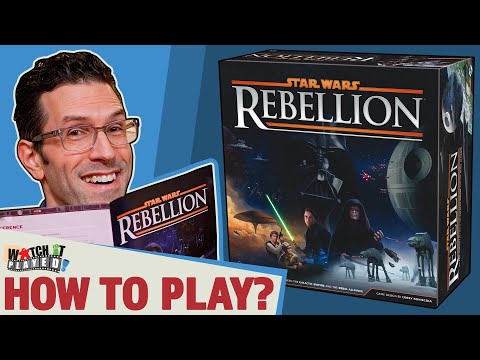
The game's 150+ plastic miniatures, including three versions of the Death Star, immediately signal that Rebellion is a premium production in service of theme. What distinguishes this game is that the components are not mere decoration. The asymmetry between the rebel's nimble fighters and the empire's lumbering Star Destroyers is reinforced by how combat works. TIE fighters roll black dice, while X-wings roll against them with the same dice pool, giving smaller craft a genuine chance to triumph. The Death Star represents an existential threat that cannot be destroyed through normal combat but can be eliminated through specific rebel objectives, mirroring the films. Every planet on the board carries thematic resonance: Coruscant is always loyal to the empire, while Dagobah offers the chance to turn a hero into a Jedi. The game proves that thematic depth and mechanical sophistication can coexist when design is in service of the setting.
Asymmetric Design and Replayability
Star Wars: Rebellion excels at ensuring that no two games feel identical, even with the same player pairings. The rebel player draws objective cards in random order, meaning the strategic priorities shift from game to game. The empire's access to building projects and the specific leaders both sides recruit create a constantly shifting resource landscape. Reviewers note that this variability prevents the game from calcifying into a solved puzzle. Each play requires adaptation, and the asymmetry ensures that the two players will never have the same experience of the game. A player who dominates as the empire might find themselves struggling when forced to play as the rebels, and vice versa. This variety fuels long-term engagement, even as players become more skilled at reading the board and their opponent.
Potential Drawbacks
Complexity and Rules Overhead
The rule book for Rebellion is substantial, and the distribution of critical rules across two separate volumes can make the first play disorienting. Concepts like tactic cards, probe deduction, mission opposition, and combat resolution do not flow intuitively from a single reading. Reviewers consistently report that the first or second game involves frequent rule lookups that slow the pace. The distinction between different die results, the resolution of opposed missions, and the timing of combat rounds can confuse newcomers. While experienced players report that subsequent games move smoothly, the learning curve is steep. For players drawn to the Star Wars theme who expect a pickup-and-play experience, the cognitive load may prove frustrating rather than rewarding.
Combat Mechanics and Tactic Card Variance
Combat in Rebellion operates on a system of tactic cards drawn during fights, where each card offers options based on the units present. While functional, combat introduces randomness into a game otherwise dominated by decision-making and bluff. Reviewers note that some tactic cards are strictly better than others, and drawing lucky cards can occasionally determine the outcome of a skirmish in a way that feels less than elegant. The base game's combat system was deemed clunky enough that the expansion, Rise of the Empire, overhauled it entirely by introducing face-down card selection, allowing players to commit their tactics before seeing their opponent's choice. For players who prefer precision and control, the luck factor in combat can feel at odds with the game's otherwise tight strategic layer.
If You Enjoy Star Wars: Rebellion
Players who love the asymmetric deduction and narrative emergence of Star Wars: Rebellion will find similar satisfaction in War of the Ring, which applies the same design philosophy to the Lord of the Rings universe. The game features hidden movement, asymmetric win conditions, and a deep thematic integration where every card and action carries narrative weight. For players seeking a shorter, less complex asymmetric experience, Star Wars: Outer Rim offers a lighter journey through the Star Wars universe, though without the political depth. Those interested in strategic deduction and hidden information may gravitate toward Twilight Imperium, which combines space exploration with negotiation and conflict resolution. Fans of pure mind games and bluffing will appreciate how Rebellion's asymmetry creates space for psychological gameplay, something Coup and similar deduction games pursue in miniature form.
What Reviewers Are Saying
"Undoubtedly this game's premise just sells itself to any Star Wars fan. You get to play the original trilogy. There's swarms of TIE fighters, Super Star Destroyers, AT-ATs, and then for the rebels Corellian corvettes, T-47 airspeeders, and even Y-wings in this game. Oh my gosh, slow down there, Anakin. Don't let your reason be clouded by these fancy things. See, for all the minis in this game, this is not a minis game where the Imperials and Rebels just slug it out turn after turn across space systems and whoever wins more fights just wins."
— Shelfside
"It's the closest anyone has come to really making you feel like you're in command of a side during the Galactic civil war."
— 3 Minute Board Games
"It's a cool way to like make something new out of something very familiar. We know these characters, we know these worlds, but doing something that is deliberately breaking away from the story is really cool and it's also really fun when it does line up the story."
— The Brothers Murph