/pic2673763.jpg)
/pic4340969.jpg)


Description from the publisher:
Sword & Sorcery is an epic-fantasy cooperative board game in which 1-5 players fight together against the forces of evil, which are controlled by the game system itself.
Each player controls one or more heroes – legendary characters brought back to life by powerful sorcery. Weakened by the resurrection, they grow stronger during their story-driven quests. By acquiring soul points during battles, the heroes' souls regenerate, restoring their legendary status with multiple powers, magic and soul weapons, and powerful artifacts.
Designed by Gremlin Project (the same team who created Galaxy Defenders), the game system in Sword & Sorcery represents the perfect evolution of its forerunner. Gameplay is faster and dynamic, thanks to an innovative area movement and area control system, with new features never seen before in a game of this category.
Key features of Galaxy Defenders are also preserved in Sword & Sorcery, such as the advanced AI system for monsters, a high degree of character customization, and the multiple tactical options during battles. Sword & Sorcery packs, in a top-quality board game format, all the excitement of the best MMORPGs and action RPGs, to provide the ultimate heroic fantasy board game adventure.
This base game contains ACT I of II.
This page includes videos and mentions from the whole Sword & Sorcery family. Drill into a specific game below.
/pic2673763.jpg)


- Abundance of experience and fun.
- Nostalgic combat system.
- Immersive narrative integrated into gameplay.
- Dynamic and varied enemy AI.
- Charming mess to play in.
- Stood out among other campaign games.
- Cumbersome and heavy game.
- Always something to keep track of.
- Overwhelming amount of abilities at first.
- Tracking recharge timing can slow down the game.
- Pauses for story breaks can slow down combat.
- Complete mess at times.
- Buried in rules.
- Branching and choices in narrative feel mostly illusionary.
- Fantasy pop culture references can be immersion-breaking.
- Narrative sweep differs from traditional Sword & Sorcery genre.
- Heroes awakened from the dead and made immortal by the gods to destroy corrupted deities.
- The Under Reign, a starless stone ceiling realm
- Narrative maintained throughout the dungeon crawl via triggered story events.
- Forgotten Realms
- Conan
Mechanics (from transcript analysis)
- Ability Recharge — Every ability needs to recharge after use, turning face down for a set amount of time depending on the strength of the power.
- Dice Symbol Activation — Spending dice symbols to trigger abilities, stacking modifiers, and managing positioning.
- Enemy AI — The AI running the enemies is varied and dynamic, rather than predictable.
- Hero progression — Heroes are resurrected and made immortal, regaining abilities through leveling up. If they die, they come back as a ghost.
- narrative integration — Bits of story trigger at waypoints and story events, maintaining narrative throughout the dungeon crawl.
Video topics + discussion points
Quotes (from this video)
- We have the new hotness that is sure to bring down a hellstorm of angry comments when I'm done.
- This was easily the greatest idea I've ever had in my entire life.
- The system works, it's just shallow and that's a feeling running through every mechanical piece of this game.
- Elder Scrolls respects my time.
- It is a complete mess at times. But, it's a charming mess to play in.
- You can give me money so I can just waste more hundreds of hours playing campaign board games.
References (from this video)
- No game master needed
- No player elimination
- Sophisticated tactical battle system
- Familiars a new type of faithful companion
- Has a feel of a throwback game
- Has a muscularity amongst the Miniatures
- Looks like it's from 1998 but in a fun way
- The sun has changed
- The sun coming out is an issue
- fighting against the forces of evil
- fantasy
- narrative engine
Mechanics (from transcript analysis)
- battle system — A sophisticated tactical battle system and familiars a new type of faithful companion for all your Heroes.
- cooperative play — Cooperative Epic Fantasy in which one to five players fight together against the forces of evil.
- Familiars — Familiars a new type of faithful companion for all your Heroes.
Video topics + discussion points
Quotes (from this video)
- People's Choice top 10.
- This is now my all-time favorite game.
- This is the perfect Adventure series for short attention spans.
- This is the game I own that I most want to play but won't until five other Campaign games are at least good but not yet finished.
- This month's top touted game is Scarface 1920.
- I like more pretend Bloodshed than actual Bloodshed myself.
- This game was the perfect thematic gangster board game we needed.
References (from this video)

- Publisher allegedly shorted the host on a game copy
- Convention booths lack excitement
- Heroic fantasy, dungeon crawling
- Fantasy
Mechanics (from transcript analysis)
- Campaign play — Features a campaign mode where gameplay progresses over multiple sessions.
- Cooperative — Players work together towards a common goal.
- miniatures — Uses miniatures for characters and enemies.
Video topics + discussion points
Quotes (from this video)
- The Gambler is correct such a good song
- The Gimper used as a plot hole in a certain film
- Spotify DJ is amazing like it's super cool AI driven
- hey here's some new artists that we think are really going to be about your style
- wow you phone does that my phone yeah
- I'd hold a gun to its head and say shut the [ __ ] up I don't that's scary
- have you never seen Terminator
- well we have some after dark stuff to talk about anyway
References (from this video)
- Favorite dungeon crawler for the speaker
- Engaging combat and complexity
- Satisfying character progression
- Modular campaign structure is appreciated
- Pre-colored miniatures are a plus
- Adds a town phase between scenarios
- Has elements that don't overstay their welcome
- Not perfect, has annoying elements
- Not a ton of surprises in the narrative
- Nostalgia might be clouding some judgment
- Some aspects might blend together after playing many games
- generic fantasy
- Madara
- Chronicles of Drunogore
Mechanics (from transcript analysis)
- Character/Ability Upgrading — Players can upgrade their characters and abilities.
- Combat — Combat is described as complex and engaging.
- custom dice — Uses custom dice for gameplay.
- modular campaign structure — The campaign is structured with in-box chunks.
- Pre-colored Miniatures — Miniatures are pre-colored.
- Town phase — Includes a town phase between scenarios.
Video topics + discussion points
Quotes (from this video)
- This is episode two. Episode one already happened. Surprise.
- It's down below in the video description. There is a playlist and you can find past and future episodes there.
- I did it a long time ago and now I see people do it.
- This game, however, since it came out in 2021, I think it's considered a old, busted, dead game.
- This is the best dungeon crawler ever made.
- It's like I feel like it feels like a band-aid solution made to like they were like play testing without it and then like they were like oh in dungeon crawlers people always like start getting really good
- It's like I mean, it's succeeding at that, but yeah, it's just it's a frustrating mechanic.
- For me, it's not such a big deal to replay a game if I wasn't streaming it and if it's just you and I playing in our home. But I always just think of that worst case scenario of like you have four buddies that that take the time away from their family, their life, their school, their kids or whatever they're doing to come over for game time or meet at a game store or go over to their house.
- I don't know if that's like good game design. I think that's like it's very the opposite of respecting the players time, right?
References (from this video)
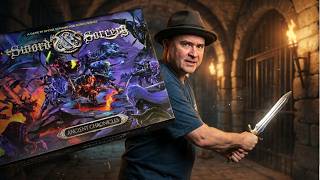
- Outstanding production
- Minis look good
- Monsters are cool
- Modular tiles are cool
- A lot of different cards, weapons, and items
- Interesting stories that move the game along
- Fun scenario-based play
- Could be a fun campaign game
- Great production
- Token overload (tedious organizing)
- Bit of a learning curve
- Some things weren't intuitive
- dungeon crawl fantasy adventure
Mechanics (from transcript analysis)
- Action Points — Heroes have movement points and can perform attacks, interact with objects, and take free actions.
- Card Drafting — Event cards are drawn and advanced when certain events trigger.
- Character progression — Players control characters with unique abilities and items, indicated on player boards.
- Dice Rolling — Combat involves dice rolls influenced by weapons.
- Modular Board — The game uses modular tiles to create passages, dungeons, and rooms.
- Quest System — Players aim to fulfill scenario-specific victory conditions.
- Turn phases — The game plays out in specific phases: Time Phase (housekeeping, effects), Combat Phase (hero and enemy turns), and Event Phase (story advancement).
Video topics + discussion points
Quotes (from this video)
- I think it's dangerous to make blanket statements like that.
- token overload. There are a massive number of of different tokens, just kind of organizing them and bagging them and whatnot. That gets really tedious as far as I'm concerned.
- it's just an outstanding production.
- What I what kind of I really liked about this one, what I thought kind of made this one a little more interesting is is the stories and how this game really does move you through.
- There's a bit of a learning curve here.
- I like this game. Didn't quite love it, but I really see the merit in it.
- On the Cody scale, I'm going to go ahead I'm going to go ahead and give it a seven.
References (from this video)
- Faster and more dynamic than Galaxy Defenders
- Innovations to area movement and control
- Uncertain if it will climb higher in the rankings
- epic cooperative fantasy
- Galaxy Defenders
Mechanics (from transcript analysis)
- Area Control — and area Control Systems
- Area Movement — innovations that they have made to its area movement
Video topics + discussion points
Quotes (from this video)
- this top 10 list is based on the daily averages from boardgamegeek.com hottest game list over the past 30 days basically these are the games that people are looking at and talking about the most over on the internet's largest board game database website
- the quality of the single player experience keeping the quality of its solitire gaming as pristine and as high a priority as possible
- now will this game have been worth the wait well let's hope so
- the eighth most popular game in the BGG hotness this past month was the newest offering by designer Emerson matsuuchi Century spice road
- Arkham Horror the card game is what's known as a living card game or lcg
- a periodic point of contention with Arkham Horror the card game is that in order to have enough potential cards to accommodate multiple players at least two core sets of the games need to be bought
- in dice Forge players fight to gain Valor with the gods using an Armory of dice with removable faces
- I'm wondering will dice Forge suffer the same fate or does this dice game have more to offer in terms of its gameplay and Longevity than its predecessor did
- a bold statement one that leaves me wondering if these strides towards improving the game's functionality will really cause it to continue to LEAP froggit way to an even higher position in our top 10 next month
- first Martian aims to bring several Innovations to the board gaming scene by hoping to take app integration to the next level
- now that the game is starting to ship initial reports are that the game has been worth the wait
- for the past 4 months the number one spot on the list has belonged to one and only one game Gloom Haven
- even though Gloom Haven is technically the game in the number one spot we're going to take this opportunity to highlight a different game that's worth talking about
- it sounds like even though this is another game set in the Gloom Haven universe it is vastly different than its predecessor which is very neat and encouraging to see
References (from this video)
- strong character progression
- rich spell and equipment options
- complex rules can deter casual players
- learning curve
- moral alignment, growth, and exploration
- high fantasy realms with magic and monsters
- character-driven progression and spells
Mechanics (from transcript analysis)
- character development and moral alignment — choices influence abilities and story directions.
Video topics + discussion points
Quotes (from this video)
- tiny epic dungeons
- every time when i reach another envelope and i open it to see what new scenario what new adventure awaited me
- the app adds even more to the atmosphere
- the entire zombie side series for being a dungeon crawler that i can easily play even with completely casual players
- compression of the big version of gloomhaven
References (from this video)
- Stunning artwork and highly thematic presentation across cards and miniatures
- Interlocking tiles and modular maps support varied dungeon layouts
- Rich campaign structure with acts, quests, and multiple decks for variety
- Dual-sided cards and rotating power states add strategic depth
- Comprehensive and well-organized rulebook with extensive reference material
- Impressive range of miniatures and diverse monster designs
- Cooperative play scales from 1 to 5 players with adaptable difficulty
- Setup and organization are complex; vast contents can be intimidating
- Box is heavy and repacking can be challenging due to sheer volume
- Some paper components feel thin and may wear with heavy use
- Rulebook length and depth create a steep learning curve for new players
- Epic mythic quest against divine and elemental threats; gods, fate, and heroism drive the campaign.
- Fantasy world where awakened mortal heroes traverse a land afflicted by deities and evil, exploring dungeons and ruins.
- Campaign-driven, act-based storytelling with quest books, events, and map-driven scenarios.
- Space Hulk
- Descent
- Doom
Mechanics (from transcript analysis)
- Boss Battler — Bosses, master enemies, and minions use a defined AI to drive combat and encounter variety.
- Cooperative Game — Players work together to complete quests, survive encounters, and defeat challenging enemies.
- cooperative play — Players work together to complete quests, survive encounters, and defeat challenging enemies.
- deck-based equipment and powers — Character progression and combat options are managed through a large deck system with many dual-sided cards.
- dual-sided cards and power-shift — Cards have two sides; rotating or upgrading sides changes their effects, enabling strategic depth.
- enemy AI with masters and minions — Bosses, master enemies, and minions use a defined AI to drive combat and encounter variety.
- hit point dials and resource tracking — Physical turn-dials and counters track health, status, and soul/resource counters.
- Miniatures and terrain components — Physical figures and terrain pieces enhance immersion and tactical planning.
- modular interlocking map tiles — Dungeon maps are built from interlocking tiles that create varied architectures and layouts.
- quest and story decks — Structured acts and quests guide progression with story events and objective decks.
- turn phase structure — Clear phases for movement, actions, combat, events, and enemy turns organize play.
- Variable Phase Order — Clear phases for movement, actions, combat, events, and enemy turns organize play.
Video topics + discussion points
Quotes (from this video)
- I love dungeon crawlers.
- Sword and Sorcery Ancient Chronicles from Aries Games looks amazing.
- There is a ton to go through in this box.
- This game just looks really cool to me.
- There is so much stuff in here; this is a day to learn the enemy cards.
- I'm curious to see how this one's going to stand up to some of the newer games.
References (from this video)

- co-op play and strong story integration
- great art and modular storytelling
- expansive feel with boss-like encounters
- initial character variety can feel similar early on
- book/story density may be intimidating for new players
- resurrection of heroic power and exploration
- fantasy dungeon-crawling with Book of Secrets and epic questing
- campaign-driven with a guided but branching path
Mechanics (from transcript analysis)
- Campaign adventure with Book of Secrets — players uncover chapters and story moments
- Cooperative dungeon crawl with modular storytelling — team-based play and evolving encounters
- Dungeon Crawl — team-based play and evolving encounters
- Story-driven progression via map and tokens — full map setup with hidden story moments
Video topics + discussion points
Quotes (from this video)
- this game is fast and fun
- the themed aliens is a wonderful sci-fi universe it's probably my favorite one of all time
- the living world of folklore said in the dark fantasy comes in at number 9
- it's such a unique game and has a really cool feel
- the continent is absolutely huge and the crafting system is unique
- fail forward is a huge bonus in my book
References (from this video)
- introduces the under reign area with distinct exploration routes and site types (bronze, silver, gold inlays on locations)
- crafting system with jade gems adds depth to equipment and long-term strategy
- campaign progression via venture cards and outposts provides ongoing goals beyond a single quest
- dynamic narrative choices with visible narrative consequences on map flow and encounters
- tension between errata and rules interpretations adds real-world flavor to the playthrough
- errata discussions can create confusion around shard usage and early power progression
- the amount of token management (time, loot, crowns, shards) may be fiddly for new players
- references to rulebooks, site sheets, and various sources can slow down onboarding
- combat can feel heavy due to multiple modifiers and nested effects in certain encounters
- cooperative fantasy adventure driven by narrative storybook elements, site sheets, and venture progression
- fantasy realm under reign with a focus on temple paths, dwarven villages, and shifting loyalties among factions
- storybook-driven narrative with story paragraphs, site sheets, and event cards shaping the journey
Mechanics (from transcript analysis)
- Card Crafting — gems found from loot can be forged into weapons or armor, with side effects and upgrade paths
- combat with dice pools and armor — combat uses red and blue dice; auto-hits, armor, and special symbols (star, lightning) influence outcomes
- Combat: Dice — combat uses red and blue dice; auto-hits, armor, and special symbols (star, lightning) influence outcomes
- cooperative party as a single entity — the party token moves as one and an active hero is elected to decide actions when needed
- forging and crafting jade items — gems found from loot can be forged into weapons or armor, with side effects and upgrade paths
- loot, crowns, and soul shards — defeated enemies yield loot and crowns; soul shards are used for upgrades and potentially leveling up, feeding campaign progression
- Multi-Use Cards — acquired venture cards introduce long-term objectives; completing them unlocks rewards at venture outposts
- story events and site sheets — story-driven decisions occur via event cards and site sheets that guide path choices and encounters
- time reserve and exploration — time tokens are earned and spent to explore and resolve story paragraphs; time management influences journey options
- venture cards and outposts — acquired venture cards introduce long-term objectives; completing them unlocks rewards at venture outposts
Video topics + discussion points
Quotes (from this video)
- this is awesome we're going to be traveling through this entire little area here
- it's pretty cool new feature
- we're going to read our story event one thank you so much for watching
- we're excited to see what continues our story here
- this crafting mechanic is a great addition to the game
- we're going to check out the old court, one two millberg old court
- that forge and jade item system is really neat
- we have a venture card, this is new to the Ancient Chronicles
References (from this video)
- Interesting book of secrets mechanic
- Character variety and customization
- Rules learning curve
- Hero-driven cooperative combat
- Fantasy dungeon-crawler
- Book-like progression with a secret 'book of secrets' that unfolds across scenarios
Mechanics (from transcript analysis)
- Persistent characters with growth — Heroes level up and customize through cards
- Puzzly combat system — Card-based puzzle for encounters rather than pure dice
Video topics + discussion points
Quotes (from this video)
- you'll never leave my collection
- it's not a forever game this game is a lifestyle game
- the world is your oyster in the world of shadows of brimstone
- it's the only party game you're gonna see on my forever list
- madara unintentional malam act 1
References (from this video)
- story-driven progression via Waypoints and Book of Secrets
- flexible hero customization through stash deck choices
- dynamic enemy AI and area-control elements add tactical depth
- initial rule teaching can be dense and slow to start
- combat system uses many symbols/dice which may overwhelm new players
- heroic fantasy adventure with relics, gods, and a linked quest narrative
- Talyn's Coast, Heaven Shire, ancient kingdom under threat from dark forces
- storybook/Book of Secrets driven with waypoint-based progression
Mechanics (from transcript analysis)
- area dominance — control of an area is determined by the ratio of enemies to allies; domination adds combat advantages
- event and treasure flow — night/day event deck and treasure/consumable draws drive rewards and turn progression
- line-of-sight and tile interaction — movement and visibility use a map with movable tokens; line of sight between points is determined by map geometry
- shadow tokens and enemy AI — opening doors/chests reveals shadow tokens and may trigger enemy behavior via encounter/scroll cards
- stash deck and equipment selection — heroes draw and equip items from a stash deck with symbol-based class restrictions
- turn order and action economy — each hero has a Soul Gem with a limited set of actions; turns move through time phase, battle phase, and actions
Video topics + discussion points
Quotes (from this video)
- standalone quest value you could play this quest just as is
- we begin up here in this altar area
- read Waypoint 1 story now
- this is what you would start with
- we're going to move on to our battle phase