/pic5325153.jpg)
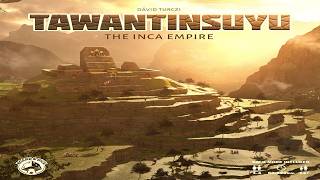
The great Sapa Inca Pachacuti turned to his offspring and ordered them to worship Inti, the Sun God, and to expand the Inca Empire as far as the llamas roam. With Chinchaysuyu, Antisuyu, Qullasuyu, and Kuntisuyu — the four regions of the new empire — now ripe for conquest, the time has come for Pachacuti's true successor to arise.
Gather your people from the villages below and use their unique abilities to strategically place them where they can perform the greatest tasks for you. Climb the steps of the Sun Temple, reaping the rewards of your piety. Build structures that both nourish your people and provide you with benefits no other has at their disposal. Muster an army and conquer villages in the four realms of Tawantinsuyu. Prove yourself a worthy successor to Pachacuti and lead the Inca to glory!
During Tawantinsuyu: The Inca Empire, players place workers onto various locations on the game board, performing actions, collecting resources (potatoes, corn, stone, and gold), constructing buildings and stairs, sculpt statues, expanding their military strength, and collecting weavings.
The game board features a hill located within the old Inca capital of Cusco, the sides of which are terraced and divided into five sections. Atop the hill sits the Coricancha, The Golden Temple, the most important temple of the Inca Empire. Within the Coricancha, each player has a High Priest. On the terraced sections below exist a variety of worker placement locations, interconnected by paths and individually marked by symbols. On your turn, you must either place a worker onto a location outside the Coricancha OR choose two of the following:
Recruit one worker.
Take two god cards.
Draw two army cards and keep one of them.
Move your High Priest one or two steps clockwise within the Coricancha.
When placing a worker, you must first discard a god card with a matching symbol or pay one gold. Once placed, the worker remains on the game board for the rest of the game! Each worker placement location is connected to exactly three action spaces. You must always perform at least one of these actions. However, for each adjacent worker (i.e., connected to your worker's location via direct path through one of the action spaces) that matches the type of worker just placed, you receive one additional action!
While some locations will result in you being able to perform multiple actions, other actions and placements may be more desirable, especially since each of the five types of workers has a unique ability:
Warrior: Remove one of the adjacent workers, placing it in your player area.
Craftsman: Gain +1 action if placed onto a craftsman space.
Architect: Gain +1 action if placed onto an architect space.
Courier: Decreased placement cost; +1 action if it's the first worker placed within a given area.
Priest: Take one god card; you may pay one potato to gain +1 action.
All god cards feature one of the different symbols found on the worker placement locations. Before placing a worker, you must either discard a god card with a matching symbol or pay valuable gold resources. God cards also depict special abilities that can be activated only if you have previously built a matching statue!
Army cards allow you to send one or more units to conquer villages in nearby regions. You must compete against the other players for control of each region as well as for valuable rewards that can be gained as a result of military conquest.
The position of your High Priest within the Coricancha has a significant impact on your overall strategy, affecting your access to powerful actions and determining any potential resource costs when placing your workers. More specifically, when placing a worker, you must pay additional resources the farther your worker is from your High Priest, from nothing all the way up to eight potatoes or corn!
Additionally, when moving your High Priest, you can activate powerful actions available only within the Coricancha:
Produce: Gain all rewards from your production buildings.
Worship: Sacrifice previously sculpted statues to gain permanent temple advancements.
Offering: Pay resources to gain temple advancements.
Conquer: Engage in military conquest of nearby villages.
Rejuvenate: Refresh previously activated buildings and military units.
Throughout the game, you score victory points whenever you construct stairs or sculpt statues. Gain bonus victory points whenever another player makes use of the stairs you have constructed. Score victory points from temple advancements and control of the four regions.
The game ends when the worker pool has become exhausted, symbolizing the full incorporation of nearby regions and villages into the newly risen Inca Empire. You then score bonus victory points from reaching the top of the temple, from your woven tapestries, and from various buildings and resources you have accumulated.
—description from publisher

- It's a really fun game.
- The mechanism with the dice drafting and trying to see where the action that I want to do next will be is really liked.
- It is a cool game.
- I usually want to go for this like car strategy that I get all of these bonuses and stuff. And now I it didn't really work for me.
- It didn't really happens. I ended up doing something completely different.
- Sometimes you go for something that you feel like oh this I'm working like um what you call it um u not with the stream but against the stream.
- The Inca Empire
- Trajan
- Austria
Mechanics (from transcript analysis)
- action selection — you have to plan. I do enjoy games where I have to be like, okay, this turn I'm gonna do that and then like, oh, but then it's tactical choices.
- Area Majority — Every space you play, and this is why the board is so symbol heavy, is that there's all these symbols that you can place workers on. And you do that by having the correct card, but then there's also actions, three actions around each of these symbols that just makes it a tapestry of symbols basically. And then you want to have the possibility to do more actions because then you will be better, of course, because less actions bad, more actions good.
- Worker Placement — The mechanism with the dice drafting and trying to see where where the action that I want to do next will be.
Video topics + discussion points
Quotes (from this video)
- My number three is H Teanu Discover the Sun.
- This uh I think might have been my favorite game from the year it came out, which I think was 2021.
- The game is a dice drafting game and there is a little obelisk.
- My number two is Teu Oelisk of the Sun.
- My number two is Sulkin, the Mayan calendar.
- I want to say elegant because it is the rules are so straightforward like there are some things here and there but mostly it's one of those where I'm going to either place my workers or I'm going to take some workers in.
- My number one is then a big surprise to me and a big surprise to you and also probably a huge outlier and also might change. But it's right now I just had a blast playing this game.
- I was thinking before we made this list if I had made it before we played things again uh Taminsu would be my number two.
- Of these nine games, we have eight of them.
- Uh Tabanusi. Yes. Uh I I want to keep it but that I think that's because we kind of opened the door now to and it's so unique.
- Uh next is for me tantuy.
- So, we have played them now. Yeah.
References (from this video)
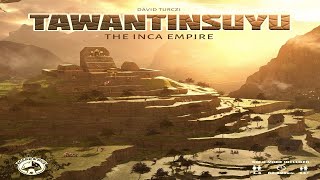
- Replicates a very good two-player game experience.
- Phenomenal and best-in-class player aid.
- Makes the game more manageable.
- Allows the player to get the gist of the game.
- Functions like an actual player, doing things like building and getting points.
- Offers adjustable difficulty.
- Gets end-game points, similar to a human player.
- Can be complex with many little rules to remember for the autonomous player.
- The way the autonomous player's turn is set up is a little odd.
- The autonomous player can sometimes feel like too much to manage alongside personal actions.
- Can feel repetitive compared to the multiplayer game.
- Doesn't have the same competitive vibe as playing against another human, as its moves are predictable.
- The autonomous player never built a statue in the host's playthrough.
- Anachrony
Mechanics (from transcript analysis)
- action selection — The autonomous player has specific conditions for activating its high priest actions based on triggers.
- card drafting/playing — Army cards are drawn and used for conquest, and god cards are used and discarded.
- conquest — The autonomous player aggressively pursues conquest, often performing multiple conquests per turn.
- Resource Management — Resources like potatoes (for points) and army cards are important for actions and conquest.
- Statue Building — Players can build statues for points, an action the autonomous player did not perform in the host's playthrough.
- track movement — Players and the autonomous player move up a track, which provides points.
- Worker Placement — Players place workers to perform tasks, and the autonomous player also places workers, primarily to block spots.
Video topics + discussion points
Quotes (from this video)
- the play raid for this is phenomenal and the player aid once again for this game is one is pretty much I think the best I've ever seen in any game
- this game set the bar so high for player aids for these kinds of games
- on a scale of one to ten I'd probably give it a seven
References (from this video)
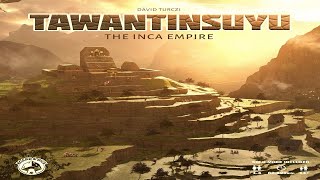
- The solo variant provides a challenging AI opponent.
- The game offers strategic depth and planning.
- Multiple pathways to victory through various actions and scoring opportunities.
- Engaging theme related to Inca mythology and empire.
- The mechanic of building stairs to make movement cheaper is a good design.
- The AI's ability to gain multiple army cards and points can feel overwhelming.
- The complexity of the AI's actions can be difficult to track.
- The host expresses frustration with drawing 'ugly' god cards.
- The host mentions forgetting to utilize secondary actions, indicating a learning curve.
- Inca mythology, agriculture, and empire building
- Inca Empire
- Anachrony
Mechanics (from transcript analysis)
- Area Control/Conquest — The game involves placing markers in regions and engaging in 'conquest' actions.
- Building/Table Presence — Players build structures like 'stairs' and 'statues', and 'production buildings'.
- Card Drafting — Players draw and play 'god cards' and 'army cards' which influence actions and scoring.
- Dice Rolling — A die is rolled to determine the actions of the AI opponent (Axo Mama).
- Resource Management — Managing resources like potatoes, stone, corn, and gold is crucial for performing actions and building.
- Set Collection — Collecting specific combinations of resources or cards is implied for building and scoring.
- Worker Placement — Players place workers on action spaces to gain resources, build structures, or perform other actions.
Video topics + discussion points
Quotes (from this video)
- Viewer discretion is advised.
- It's me a mortal versus a god so that does not bode well for me.
- I must score at least 120 victory points and be ahead of the axo mama to win the game.
- This is kind of like um if you've seen my run through for anachrony the solo variant for that one similar kind of ideas there's a die and that's going to dictate what what it does so we will roll it is a three so it's going to place a worker in its zone.
- I really need some freaking god cards.
- It sucks though because the colors that I want are like in the middle or they are over here to recruit from from the nomads.
- I'm trying to figure out a way that I could produce to do my production here which would give me a corn which would bring me up to four and a spot that lets me get two two corn as well but that's also not going to cost me out the ass alright.
- I don't want him to do that I think.
- I think we're both getting 12. yeah because we tie there and I'm first to the right so we're both getting 12 points.
- I'm winning there I'm winning there she's winning there and there okay that's fine.
- I really need to now I need to really try and shorten the game because that is going to be a problem if it's basically gaining as much points as me.
- I really like the idea of I mean that one I could go after so how many could so two four six seven.
- I definitely think I'm getting to 120 now.
References (from this video)
- Intricate worker placement
- Potential for combo effects
- Strategic depth with worker colors and card play
- Unique T-Series game with ancient civilization theme
- A lot of things going on, potentially overwhelming
- Ranked lower than other T-Series games by the reviewer
- Appeasing gods and fulfilling conquests
- Ancient civilizations
- Zooloretto
- Taiken Obelisk of the Sun
- Tabernushi Builders of UR
- Five Tribes
Mechanics (from transcript analysis)
- Area Control — Conquest regions around the board using army cards, similar to mini area control games.
- Hand Management — Using God Cards with symbols that match symbols on the board to place workers.
- Resource Management — Gaining resources like stone, corn, and weaving tapestries.
- Set Collection — Building a tapestry by connecting bonus resources.
- Worker Placement — Placing workers on a pentagonal structure to gain resources, appease gods, and fulfill conquests. Each worker color has a bonus ability.
Video topics + discussion points
Quotes (from this video)
- I'm always intrigued by how they might make an experience or a gaming experience feel different and feel fresh
- when I first heard about this board game it was described to me as a blend between Minesweeper and Sudoku
- there is a big risk to making a big guess because if you get it wrong you actually lose points equal to the crop level that it's supposed to be
- party games are opportunistic you know some party games really go well over with a group of people and some don't
- I can kind of describe Earth as being like wingspan 2.0 or 3.0
- everything just keeps churning and it's like a little system of actions I like to kind of describe it as a chain reaction of effects and bonuses
- this is basically the arrival the board game
- it's this leveled nuanced connection with vocabulary language acquisition that just really draws me to this game
- this game has a lot of things going on but don't let that deter you
- so I still have to explore these games a little bit deeper and these ranks might change
References (from this video)
- Excellent player aid
- Satisfying progression despite complexity
- Unique player buildings offer variety
- Ways to circumvent roadblocks in action selection
- Expansion modules add variety without bloating the game
- Overcomplexity
- Some underdeveloped or poorly meshing elements
- Underdeveloped conquesting mechanic
- Overwhelming board iconography
- Periods of stalling due to lack of player progression urgency
- War element feels like an afterthought
- Inca Empire
- Inca Empire
- Teot Walkon
- Tobi
- Tonzia
Mechanics (from transcript analysis)
- action selection — Players choose actions from a board with various icons and effects.
- area control/area majority — The conquesting mechanic has elements of area control where players compete for dominance in regions to score points.
- building — Players can construct passive and production buildings.
- Card Drafting — Army cards are drawn and can be played for abilities or used for conquest actions.
- Hand Management — Players need to manage their hand of god cards, which are used to enable worker placement.
- Resource Management — Players must manage various resources like corn, potatoes, stone, and gold to perform actions.
- Set Collection — The game involves collecting tapestries for scoring or activating abilities.
- Worker Placement — The core mechanic where players place workers on action spaces to perform actions. The host describes managing worker placement alongside other elements like god cards and high priest location.
Video topics + discussion points
Quotes (from this video)
- I do still think that this one years later now kind of has this feeling of overcomplexity.
- it rectifies this a little bit by actually giving one of the best player aids that I've seen in any worker placement game.
- the board is broken up into five segments. Uh, and there's no I wish they would have just put lines to really separate where certain actions are. Uh, because some of them are not quite clear and I think it's just a design flaw.
- this game still has to man has managed to be uh after all these years still fun.
- Overall, I really I mean, this game, spoilers, is not a 10 out of 10 game for me at this point.
- However, I I also still think that this Euros have have become so clean or streamlined lately that games like this just don't really do it for me all that much.
- It feels like I feel like I'm going to be coming to work more than coming to play a game.
- there are periods of stalling that I feel like just didn't need to be there.
- core game, I think I'm going to give this game a seven.
- the expansion, I don't think it really moves the needle for me.
References (from this video)

- Still a liked game
- Interesting to revisit games with different expectations
- Was a letdown compared to previous enjoyment
- Didn't live up to high expectations on revisit
Mechanics (from transcript analysis)
Video topics + discussion points
Quotes (from this video)
- It's been a lot of good games we played this month. I could make like a top 10 team.
- The most important thing other than having fun is winning. You know, winning is like it's not really, but it's a thing.
- We're in it to win it.
- Because we cry a lot while playing this game and with our friends.
- It is really group dependent.
- I really like spatial puzzles, but I like spatial puzzles which doesn't just feel like randomness.
- It's just boring.
- It is interesting when you get let down with games you already played because you are sometimes you're very hyped about a new game, but then you're like you have these feelings and experiences of the game and it kind of feels different.
- It has a few things in it that I shouldn't like that cooperate cooperation.
- This is a word game and I think it worked very very well because it is a language independent.
- It was easier than I thought it would be and also more fun.
- Drillers just gave me that oh, I want to go again feeling and it's been some time since I played a deck builder that gave me like this amount of joy.
- It's really fun uh resource management puzzle all to do the best and score points which I have been kind of good at but then you are getting more and more efficient and winning.
- I liked the expansion but I didn't like the expansion.
- It has like like cog system that revolves like
- It's this and of course it's it's cool with the gimmick of it's actually moving around in the adding to the board.
- It is a action selection game with a Mancala style energy revolvement.
- It is really nice, especially the four-player version has so much interaction in like a positive and if you don't like interaction in the four-player game there is quite a lot of it, but not not negative take that the like great positive I'm saying positive interaction.
- It's been a blast to play it again.
References (from this video)

- Did something innovative
- Found it quite fun
- Inca Empire (implied by name)
Mechanics (from transcript analysis)
- Action space utilization — Each action space can only be used once collectively by any player.
- Area Majority — Mentions majorities that need to be targeted.
- Engine Building — Has engine building mechanics.
- Worker Placement — Features worker placement with action spaces everywhere.
Video topics + discussion points
Quotes (from this video)
- our top 10 games of 2020
- it's the games we associate with this year
- all the games i really liked were mid-weight games
- i haven't seen any party games in 2020
- i'm not a stagnant object i vary from time to time
- i was super surprised when i played the crew and i love it love it love it
- it's such a simple idea taking trick taking you know traditional style essentially traditional trick taking and turning it into a cooperative puzzle
- it is the most innovative thing that I've seen in gaming this year
- oh my gosh that game oh i blew my mind
- there is nothing innovative in this game
- it is just a perfect interlocking of things that already exist to make something that is really satisfying
- what is your top ten from the comment sections below
- it is subjective because this is what we personally like
References (from this video)
Mechanics (from transcript analysis)
Video topics + discussion points
Quotes (from this video)
- The older games are less as more and the newer games are more as more
- I really don't like Katan at all so I wouldn't know what to suggest in terms of expansions or house rules
- normally my favorite games have a good ratio of low rules overhead in comparison to the complexity and decks or so more of the depth of the game
- I like games that are kind of 90 minutes maximum
- I don't like using computers to play board games
- I generally like games that have a degree of uh incentive building
- I love supply and demand you know and kind of know Buy Buy Low sell high that kind of thing
- my thoughts are pretty neutral um I'm pretty numb about the subject to be honest
- for me it just felt like a generic deck building game and but instead of having more cards you are just boosting up the cards you already have
- I like point salad style games and I don't really see it as a matter of you know being a point salad I just see it as you know you get eight points on your turn I get three points on my turn therefore you've gained five points and I haven't
- games with a heavy setup is quite a big um deterrent for me
- I would say you can get a really good collection in 10 to 20 games
- I don't have a lifestyle game um I like dipping in and out of tons of different games rather than doing a deep dive into one particular game
- I did like the the dice system in tetum you know either choosing a dice for the resources or for the action strength I thought that was a cool mechanism
- I reckon this is kind of a p kind of a perfect storm really
- it's a face Toof face um social activity rather than being behind a screen