Game Info
Year
1810
Collection
Ratings
Creator Score
Mechanic profile
Not enough video data yet
Vibe profile
Not enough video data yet
Description
No description available.
Featured Videos


Ask a Rules Question
All mentions
Browse transcript mentions, sentiments, pros/cons, mechanics, topics, quotes, and references.
Total mentions: 8
This page: 8
Sentiment:
pos 3 ·
mix 1 ·
neu 1 ·
neg 2
Showing 1–8 of 8
Video VdxfGq8w7aE
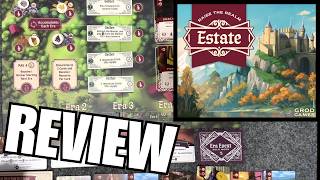
The Board Gaming Doctor Review at 0:06 sentiment: positive
video_pk 94815 · mention_pk 259358
Click to watch at 0:06 · YouTube ↗
Overall sentiment (raw)
positive
Pros
- Streamlined gameplay that feels familiar
- Interesting card collection and strategy
- Enjoyable puzzle of creating a tableau
- Progression from few resources to abundance
- Card variability makes each game feel different
- Acquiring workers creates tough decisions
- Solo mode is a fun, challenging puzzle
- More intriguing and strategic mechanisms compared to Everdell (base game)
- Solo mode is appreciated more than Wingspan's
- Rosenberg-esque mechanisms add to enjoyment
Cons
- Rulebook is short but a little disorganized
- Component issues with two player colors being too similar
- Might be too much going on for new players compared to Wingspan
- Less originality in mechanisms compared to Wingspan and Everdell
- May not be brought to the table if players enjoy Agricola, Wingspan, and Everdell more due to their greater content and history
Thematic elements
- Rebuild your realm after the Great War
- Medieval-inspired
Comparison games
- Wingspan
- Everdell
- Agricola
Mechanics (from transcript analysis)
- Asymmetric Player Powers — Each player has an asymmetric player board with a character that has an ability.
- Card Drafting — In the multiplayer game, cards are drafted at the beginning of the game.
- card management — The game involves managing a hand of cards with unique abilities, some of which interact with each other or provide set collection opportunities.
- Modular Setup — The gathering actions are set up at the beginning of the game and are modular, providing variability.
- Set Collection — Some cards feature set collection, like the monks.
- Tableau Building — Players build a tableau of cards which increases their power to perform certain actions.
- Variable objectives — Features public era objectives and personal family objectives to pursue for points, with competitive scoring for public objectives.
- Worker Placement — Utilizes worker placement on a shared board for the gathering action, with other actions performed on a personal board.
Video topics + discussion points
No key topics recorded for this video.
Quotes (from this video)
- I took a chance on this game, and I'm so glad that I did.
- Estate is a game where you, as a noble, lead your house to rebuild your realm after the Great War.
- Even down to the fact that in Everdell, you have multiple copies of certain types of cards, and they often combo together if you happen to draw into them. And that is present in Estate as well.
- The peer review on BoardGameGeek has both positive and negative things to say about this game.
- However, my rating overall for this game is quite high, an 8.9, which kind of surprised me.
- The cards can really make each game feel different for me.
- I do agree with the fact that the rulebook was a little rough to learn from and so it does help to understand these mechanisms from other games to approach this game and understand its puzzle.
- As a whole, it's hard to compete with the elegance and the opportunities and the originality that Wingspan has now that has has given compared to this brand new game, which feels like, you know, sort of inspired or perhaps even copied.
- But, I do appreciate the solo mode in Estate a little bit more than Wingspan.
- I really like both games equally, though.
- I'm super excited to come back to this particular puzzle of Estate.
- I really like Estate. I would play this again, and I highly recommend it.
- Once again, I really like this game. 8.9 out of 10. Highly recommend it.
References (from this video)
No references stored for this video.
Video hXQZ3FIxN-o
Sir Thecos Other at 9:55 sentiment: positive
video_pk 84102 · mention_pk 213151
Click to watch at 9:55 · YouTube ↗
Overall sentiment (raw)
positive
Pros
- nice pushy luck game
Cons
none
Thematic elements
Comparison games
none
Mechanics (from transcript analysis)
- Push Your Luck — described as a nice pushy luck game
Video topics + discussion points
No key topics recorded for this video.
Quotes (from this video)
- It looks really nice, really adorable.
- This is like a trick taking game with like a little bit of prediction and like psychological stuff which is pretty cool.
- This year's spiel was, as always, an amazing experience.
- It's incredible how this fair brings people together, just like board gaming itself does.
- I'm infinitely grateful for all of you.
References (from this video)
No references stored for this video.
Video dKahptEze44
The Dice Tower Event Coverage at 9:27
video_pk 81509 · mention_pk 202810

Click to watch at 9:27 · YouTube ↗
Pros
none
Cons
none
Thematic elements
Comparison games
none
Mechanics (from transcript analysis)
Mechanics unknown.
Video topics + discussion points
No key topics recorded for this video.
Quotes (from this video)
- This is the grooviest board gaming weekend in all of Knoxville is the promise here.
- The dice are shaped like heads.
- This is the best game of Medici I've ever played.
- You're the biggest loser.
- We wanted to do something that had some ways to get people connected really quick right from the jump.
- Well, Funky Town Games, it's been real, it's been fun, but it hasn't been funky.
- I haven't seen one in the wild, probably decade.
References (from this video)
No references stored for this video.
Video cM2q2rDUuWU
Meeple University Rules Teach at 0:10 sentiment: neutral
video_pk 69889 · mention_pk 227323

Click to watch at 0:10 · YouTube ↗
Overall sentiment (raw)
neutral
Pros
none
Cons
none
Thematic elements
- resource management, village building
- ancient Orne settlement
Comparison games
none
Mechanics (from transcript analysis)
- Clean action — Spend resources to perform clean actions and gain roof cards
- Drafting — Draft village cards from the common display; three cards per round
- End-of-round feeding — Pay food for settlers; manage midden/miden and end-of-round scoring consequences
- Furnish and trade tracks — Advance on furnish and trade tracks to score points; costs and benefits tied to resources
- Neutral player in 2-player — In two-player games, a neutral color is added and its turns are integrated into play
- Reclaim as Action — Spend resources to perform clean actions and gain roof cards
- Settlers and harvest — Gain settlers via cards and harvest resources from columns based on rune interactions
- special action tiles — Each player starts with standard action tiles and a randomly assigned special action tile with a unique power
- Storage and slider — Store resources in an unlimited storage area; use a slider to manage space and midden/points
- Track Advancement — Advance on furnish and trade tracks to score points; costs and benefits tied to resources
- Upgrading/building craft — Upgrade buildings by paying upgrade costs to flip tiles; upgraded tiles are worth more points
- Worker Placement — Assign workers to action tiles and resolve actions
Video topics + discussion points
No key topics recorded for this video.
Quotes (from this video)
- Scar is a game of resource management
- the vast majority of your actions will involve gaining spending or exchanging resources
- Victory points are represented by this icon positive or this icon negative
- after four rounds the game is over
- you'll gain the resources you need to make your villages Thrive
- end of the round you must pay food for each of their settlers
References (from this video)
No references stored for this video.
Video rpn_6s7YrU8
Meeple University Top List at 16:40 sentiment: positive
video_pk 64297 · mention_pk 157754

Click to watch at 16:40 · YouTube ↗
Overall sentiment (raw)
positive
Pros
- interesting resource management twist
- tight, competitive drafting for two players
Cons
- heavy on planning and management; can be punishing
Thematic elements
- ancient/medieval resource management with a siege flavor
- historical/resource-management drafting with combat
Comparison games
- Hadrian's Wall
- Everdell
Mechanics (from transcript analysis)
- card drafting and resource management — players draft cards, manage 16 resource types to fuel a personal tableau
- Endgame penalties for overstock — holding too much leads to waste and point penalties
- Turn order drafting and C-draft system — draft order and card drafting influence future turns and actions
Video topics + discussion points
No key topics recorded for this video.
Quotes (from this video)
- it's a drafting with turn order gam so you can draft something weaker to get a better place in the next round's turn order
- this is a nice light to medium weight complexity
- I really enjoy this uh probably more than beyond the sun
- it's a two-player mode that is brutal
- two-player brutal ... or competitive
- it's a big pen and paper game with a huge grid where you're trying to combo as many actions together
References (from this video)
No references stored for this video.
Video _5Df_PQkBBI
The Dice Tower Review at 0:22 sentiment: mixed
video_pk 30994 · mention_pk 209413
Click to watch at 0:22 · YouTube ↗
Overall sentiment (raw)
mixed
Pros
- Simple and accessible; quick to learn and play
- Breezy, light-weight abstract with quick setup and reset
- Good for families or players easing into abstract strategy
- Compact footprint makes it easy to play in small spaces
Cons
- Rule about using your own color can feel obtuse or confusing at first
- Board and mechanism can feel too small, limiting tactical depth
- Similar to Yinsh in flavor; may lack novelty for seasoned players
- Can produce a four-in-a-row too quickly, reducing strategic breathing room
Thematic elements
- Shepherding as a competitive abstract challenge with light thematic framing.
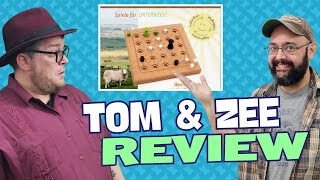
- A compact abstract strategy game where players guide sheep using shepherd pieces on a small board, aiming to form rows of three.
- Minimalist and abstract; thematic flavor is secondary to puzzle-like play.
Comparison games
- Yinch
- Tic-Tac-Toe
Mechanics (from transcript analysis)
- blocked movement (no jumping) — Pieces cannot jump over other pieces; movement is constrained by occupied spaces.
- color-usage constraint — You must use your own shepherd color to contribute to rows, and color replacements follow the scoring event rather than traditional capture.
- End condition — First player to reach three points wins the game; play proceeds in a series of scoring rounds.
- Limited Points — First player to reach three points wins the game; play proceeds in a series of scoring rounds.
- long-range movement along straight lines — On a turn, a player can move their shepherd or a sheep adjacent to their shepherd, and may move as far as desired in a straight line until blocked by another piece.
- row formation scoring with color-replacement — Form a horizontal or diagonal row of three sheep of your color to score a point; after scoring, an opponent replaces one of the sheep with their color, continuing play.
Video topics + discussion points
No key topics recorded for this video.
Quotes (from this video)
- This one feels like almost a tic-tac-toe variant that someone came up with.
- It's so small that it's easy to make four in a row.
- It's a 10-minute game or less, and it's easy to reset up and play again.
- I like it more than that. I'll give it a seven.
References (from this video)
No references stored for this video.
Video 89zqKs9TtvI
Beyond Solitaire Top List at 39:48 sentiment: negative
video_pk 12621 · mention_pk 127212
Click to watch at 39:48 · YouTube ↗
Overall sentiment (raw)
negative
Pros
none
Cons
none
Thematic elements
- Historical war context
Comparison games
none
Mechanics (from transcript analysis)
Mechanics unknown.
Video topics + discussion points
No key topics recorded for this video.
Quotes (from this video)
- Thunderbolt Apache Leader has sadly dropped to 199 on this list.
- John Company solo is great.
- Mr President is the biggest table hog—it's like one of the most ridiculous but like in an awesome way games I have ever seen.
- Paperback Adventures jumped up 560 spots this year.
- Pavlov's House changed the course of my videos and my gaming habits.
- Earth is going to rise up next year.
References (from this video)
No references stored for this video.
Video PgoIECFvcbw
Adam in Wales - Board Game Design Discussion at 8:33 sentiment: negative
video_pk 9595 · mention_pk 122657
Click to watch at 8:33 · YouTube ↗
Overall sentiment (raw)
negative
Pros
none
Cons
- Gets tedious after period of time
- Boring for extended play
- Limited gameplay
Thematic elements
- Card matching
- Abstract
- Pure chance
Comparison games
none
Mechanics (from transcript analysis)
- Card game — Matching identical cards
- Reflex — Quick reflexes required
Video topics + discussion points
No key topics recorded for this video.
Quotes (from this video)
- a series of videos where I take a bunch of different possible scenarios some of them provided by you the viewers and I shuffle them up into a deck of cards I reveal a scenario and roll a dice to see how many players I've got
- I got in lots of trouble last time for using the word dice as a singular so we'll be sticking with die as long as I remember today
- everything economic uh that I really really love seems to cap out at five players
- I can't imagine how long it would take so I think that would probably ruin ruin game
- frankly I played that with uh two players once and we gave up after about seven hours
- there's some good ones but most games before 1995 would ruin game night if you tried to play them today
- you're not allowed to speak to each other and you're playing against the time so it's very frantic
- the only way you're able to communicate is by tapping this wooden token to say look I need you to do something
- I think Mysterium would fall apart if they didn't speak the language and that's odd isn't it because it does isn't a game that has any text in it
- I think a terrible idea there's not that much interaction and the game gets longer with each player that you add
- I don't understand the people who put down a big you know they stick down Scythe in front of kids or boast about the fact their four-year-old can play sides
- there's no reason to be playing um Snakes and Ladders or or Candyland I would say not that Candyland is a big thing in the UK
References (from this video)
No references stored for this video.
Transcript Navigation
Showing 1–8 of 8