




















Dirt & Dust Deep Dive
What the Community Thinks About Dirt & Dust
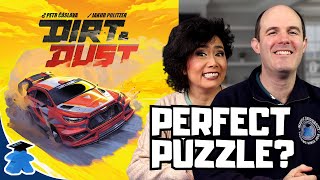
Dirt & Dust has surprised reviewers by being something quite different from what the box art promises. While it carries a rally racing theme, community consensus is unanimous: this is fundamentally a deck-building puzzle game, not a traditional racing title. Reviewers appreciate the designer Peta Kaslava's integration of theme with mechanics, but they're clear that players expecting the thrill of competitive racing should manage their expectations. Those who embrace the puzzle-solving aspects consistently praise the game; those seeking head-to-head racing tend to feel disappointed. The simultaneous play structure works well for keeping turns brisk and thematic, though it means players spend most of their time focused on their own board rather than their opponents' strategies.
Core Mechanics That Define Dirt & Dust
Deck Building with Driver Asymmetry
Each player begins with a starting deck of five universal cards plus five unique pilot cards specific to their chosen driver. Over the course of the race, players acquire new cards from a shared market by spending wrenches, gradually building their racing team. What makes this stand out from traditional deck builders is that the deck becomes your car's support system rather than just a resource engine. Your card choices directly shape not just your available actions, but your strategic approach to the race. Each of the four drivers plays dramatically differently, with unique abilities that reward specific strategies. One driver might excel at manipulating collision dice, while another specializes in retrieving discarded cards for maximum flexibility. This asymmetry means the puzzle you're solving shifts based on which driver you've chosen.
Dice Placement and Card Positioning
Players roll three dice each round and place them on their player board to activate cards in their tableau. The twist is that cards don't discard after use—they remain in play and shift one position to the right each round, eventually sliding off after six rounds. This creates a resource-management puzzle: you can play cards you don't want to use immediately, knowing you'll have chances to activate them in future rounds as dice values shift. If you roll high numbers early, you might spend wrenches to adjust die values down, saving the bigger numbers for cards that need them later. The interplay between dice allocation and card positioning forms the core puzzle of each turn, rewarding careful sequencing and forward planning.
The Dirt & Dust Experience
Puzzle-Solving Satisfaction
Turn by turn, players are solving a thinky puzzle: how to generate wrenches and traction with the cards they've played and the dice they've rolled, while positioning their car on the player board to maximize points each round. Reviewers describe the satisfaction that comes when all the pieces click—when a carefully planned sequence of card activations nets exactly the resources you need to place a navigation token, advance your car, and generate bonuses. But this is a game of high variance in satisfaction: some turns deliver that transcendent puzzle-solved feeling, while others leave you simply rolling dice, getting what you need through luck rather than clever play. The game doesn't punish boring turns harshly, but they can feel anticlimactic compared to the moments when everything aligns.
Rally Racing Immersion Through Isolation
Rally racing is fundamentally about drivers competing solo against the clock, not battling each other on a shared track. Dirt & Dust captures this through simultaneous play where everyone is managing their own board while the game unfolds in real time around them. You're not blocking opponents or stealing resources; you're executing your race plan in parallel with theirs. This creates an interesting tension: while thematically pure, it means the game feels more like a personal puzzle than a competitive confrontation. Some reviewers find this immersive and brilliant; others feel it undersells the racing fantasy. The calm, focused nature of simultaneous play does keep the game moving quickly, which reviewers consistently praise.
What Makes Dirt & Dust Stand Out
Driver-Specific Strategies
The four drivers each come with unique card pools and special powers that create almost entirely different games. One driver can trash cards from their deck (eliminating weak cards permanently), while another excels at managing collision dice and retrieving cards from a discard pile. A third driver specializes in generating wrenches when in certain board positions, and a fourth can call out cards for later retrieval. Reviewers emphasize that understanding which driver matches your desired playstyle is crucial to enjoying the game, and that first plays should absolutely include driver powers. The asymmetry is so pronounced that two players on different drivers might barely recognize they're playing the same game—the puzzle each solves, the resources they prioritize, and the optimal paths to victory all shift dramatically.
Cards That Stick Around
Unlike most deck builders where cards you play immediately go to the discard pile, Dirt & Dust keeps cards on your tableau, sliding them across your board each round. This creates a second layer of strategy beyond "which cards should I buy?" You're now asking "when should I play this card, and in which slot?" Playing a valuable card in position six means you'll have six full rounds to use it; playing it in position one means it's gone next round. Some cards have passive abilities that work without needing dice, providing value just by existing on your board. The longer cards stick around, the more value you extract from them. This mechanic genuinely distinguishes Dirt & Dust from other deck builders and rewards planning several turns ahead.
Potential Drawbacks
Misleading Racing Theme
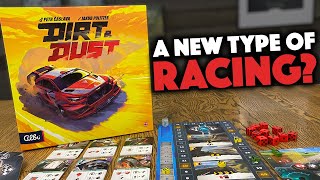
The cover art promises a racing game, but what you get is a puzzle game with a racing coat of paint. Players expecting to jostle for position on a track or to engage in direct competition with opponents will be disappointed. There's no way to block, no way to interfere with another player's actions, and very little interaction beyond polite simultaneous play. Reviewers who came in expecting something like Heat or Formula D reported feeling misled, even though they acknowledged the mechanics are sound. The theme is integrated thoughtfully—the rally racing concept of planning your approach to each stage does justify the solo feel—but it's still a disconnect between what the box suggests and what the game delivers.
Simultaneous Solo Play and Icon Overload
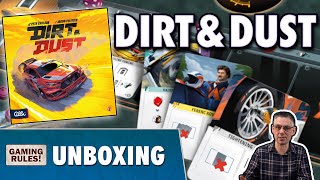
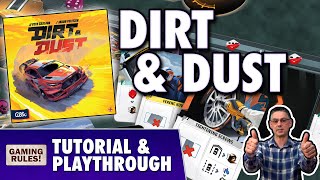
The first play of Dirt & Dust can feel overwhelming. There are a lot of icons to learn: wrenches, traction, navigation tokens, damage markers, popularity tracks, and various card abilities. The rule book is thorough and includes a helpful example turn, but reviewers consistently noted that learning the game from the rulebook requires patience and at least one full game before everything clicks. Additionally, the simultaneous play means downtime is minimal, but it also means there's very little table conversation or interaction. You're deeply focused on your own puzzle, only occasionally glancing at what others are doing. If you're seeking a game that builds on player negotiation or clever blocking, this isn't it. If you're seeking multiplayer solitaire with excellent puzzle design, Dirt & Dust delivers exactly that.
If You Enjoy Dirt & Dust
Players who enjoy Dirt & Dust's deck-building foundation will find similar satisfaction in Roll for the Galaxy, which also pairs simultaneous action selection with tableau building. For the puzzle-solving aspect without the racing theme, Aeterna offers comparable depth in card positioning. Those who appreciate the hybrid mechanics borrowing from racing games should explore Heat: Pedal to the Metal (for hand management under pressure) and Thunder Road Vendetta (for dice-driven action selection). If the rally racing theme appeals to you but you want more traditional racing gameplay, Formula D and Downforce provide actual track racing with interactive blocking. For players who enjoyed the thematic isolation of Dirt & Dust, Aeterna and Deckbuilding Game about Racing offer similar quiet focus.
What Reviewers Are Saying
"This isn't your normal deck building game. There are things in this game which work in a very different way and it's all about handling the position of your car on your player board and learning how to do that takes a game. So definitely play the trial first when you play the game."
— Watch Review
"We were expecting something in between Heat and Thunder Vendetta, but what we got was quite different. It's very much like almost a solo game where each player is building their tableau, doing the end management, the dice allocation, counting the points. But it's very much that all the players play at the same time. So you don't really get to see what the other players are doing."
— Board Stupid
"It is very thinky, which is why we said you really do want to play this simultaneous because you can get into some analysis paralysis situations. But when you solve the puzzle by doing all those little combinations, it is very satisfying. And the characters themselves want you to play a specific way."
— Watch Review