





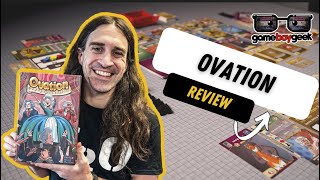
Ovation Deep Dive
What the Community Thinks About Ovation
Ovation, designed by Kirsten Lund and published by Looking Glass Workshop of Australia, is a 1 to 4 player game in which players take the role of classical composers competing for renown. Reviewers across multiple channels celebrate Ovation as a standout achievement in classical music theming. The consensus is clear: this is not a game that simply slaps a theme onto generic mechanics, but rather one where the theme and systems reinforce each other. Reviewers from kovray, TheGameBoyGeek, Let's Table It, and Board Gaymes James agree the theme resonates strongly, especially for players with musical backgrounds, yet the mechanical depth ensures non-musicians can enjoy it equally. One point of divergence emerges around player interaction. Some reviewers appreciate the controlled, collaborative atmosphere around the table, while others note that turns can feel like extended solitaire, particularly late in the game when engine turns become elaborate. Despite this, the overwhelmingly positive reception centers on how well Ovation executes its core identity: an engine-building game where every decision feels thematically justified and mechanically rewarding.
Core Mechanics That Define Ovation
Engine Building
Ovation's defining mechanical spine is engine building, and reviewers emphasize how elegantly it unfolds. Players begin slowly, acquiring fortune cards and patrons that unlock bonus actions and resource improvements. As the game progresses, these accumulated cards create cascading turns where a single action ripples through multiple bonuses. What sets Ovation apart is that every engine-building decision is rooted in the performance of classical music. You are not abstractly generating points; you are composing a repertoire. The magic note tokens act as the limiting resource that gates combo activation, forcing players to balance immediate performance gains against future combo potential. This creates a pacing arc that matches the emotional journey of a musical career: humble chamber pieces give way to grand concert pieces and ambitious Magnum Opus performances, each phase offering fresh strategic options.
Multi-Use Cards and Compound Scoring
The heart of Ovation's decision space lies in how every resource tile and card serves multiple purposes. Inspiration markers, represented as three distinct emotional tones (passion, joy, sorrow), must be carefully allocated across four main actions. Patron cards introduce a particularly clever scoring wrinkle: Legacy Patrons are specific about what they reward and penalize. A patron might grant points for every woodwind performance but subtract points for every piano piece. This design forces players to commit to a musical identity while remaining flexible enough to adapt when the card pool shifts. The game's final scoring combines points from performed cards, endgame patron scoring, Maestro card bonuses, and ticket conversions, creating multiple viable paths to victory. No single scoring track dominates, which keeps strategies diverse and keeps the race competitive deep into the endgame.
The Ovation Experience
Serene and Contemplative
Playing Ovation invites a meditative quality unusual for engine builders. The resource names (passion, joy, sorrow) and the thematic connection to classical composition create an atmosphere of artistic reflection rather than cutthroat competition. Reviewers with musical backgrounds report that seeking sorrow to perform a melancholic violin concerto feels narratively satisfying, not like optimizing a generic currency. The piano-key resource trackers and tasteful presentation enhance this contemplative tone, inviting players to slow down and think about their next move as if composing a phrase of music.
Rewarding Mastery and Combo Satisfaction
Beneath the serene surface lies genuine tactical depth. Experienced players unlock the satisfaction of turn-spanning combos: taking a main action, then cascading through bonus actions to perform multiple pieces or acquire multiple patrons in a single turn. This creates a learning curve where early games feel straightforward but later games reward strategic sophistication. The moment a well-constructed engine fires on all cylinders is genuinely thrilling, and reviewers consistently mention the joy of pulling off increasingly ambitious turns as the game progresses.
What Makes Ovation Stand Out
Smart Theme Integration
Reviewers single out the theme as the game's most distinctive feature. Classical music is rarely explored in modern board games, and Ovation treats it seriously rather than decoratively. The naming of patrons (real or period-appropriate aristocratic figures), the structure of concert versus chamber performances, and the resource metaphor of inspiration tones all reinforce the theme of building a composer's legacy. Players with musical training report feeling seen by the design; those without find the theme charming and immersive enough to carry them through the rules. The asymmetric composer powers further personalize the experience, allowing each player to inhabit a different historical voice.
Accessible Yet Mechanically Deep
The rules teach quickly. The four main actions are straightforward, and the bonuses granted by tucked cards follow clear logic. Yet the interaction between inspiration management, bonus action sequencing, and public goal races creates emergent complexity that unfolds across plays rather than overwhelming new players. Reviewers appreciate that you can play Ovation casually in under an hour with minimal downtime between turns, or dive deep into combo optimization and card synergy for experienced groups. The Magnum Opus module adds optional complexity for players seeking additional challenge, proving that Ovation's design scales elegantly from light to heavy.
Potential Drawbacks
Limited Direct Interaction and Solitaire Feel
Because Ovation revolves around each player constructing their own engine with shared card pools, turns can feel isolating once engines mature. Late-game turns with five or more music tokens available create decision-heavy sequences where other players wait. Reviewers note this is particularly noticeable for players who value direct antagonism or real-time interaction. The shared card pool does create light tension (everyone wants the same high-value piece), but this is mild compared to take-that or area-control games. For groups that prefer faster turns and more player engagement, Ovation's focus on solo engine optimization may feel tedious in the endgame.
Luck and Card Availability
Card draw timing matters. If the cards that complement your planned engine strategy don't appear when you need them, you must adapt or spend precious music tokens to refresh the card rows. This can feel punishing, especially on first plays when you haven't internalized the depth of backup strategies. Reviewers acknowledge that while the refresh mechanic exists, it comes at a steep cost, making players feel locked into suboptimal engines if the card draw doesn't cooperate. However, experienced players see this as a feature rather than a bug: adaptation and flexibility under uncertainty create strategic tension that keeps every play fresh.
If You Enjoy Ovation
Players drawn to Ovation's engine-building and thematic depth will find similar satisfaction in a few related titles. Fans of resource management and elegant escalation will appreciate the structural kinship with Wingspan and Parks, where players start slow and build toward powerful late-game turns. The card-tucking mechanism and accessibility-with-depth recall Splendor and Gizmos. For those seeking a heavier engine experience with period-appropriate flavor, Lacrimosa, the Mozart-themed deck builder, is the closest thematic neighbour, while It's a Wonderful World provides a streamlined engine-building alternative in a different thematic skin.
What Reviewers Are Saying
"The theme is smart and interesting, and it hasn't been overdone in other games. Not only that, but it's woven beautifully into the mechanics. You really do feel like a composer balancing artistry with, you know, paying rent."
— TheGameBoyGeek - Hi Quality Hi Energy Board Game Reviews
"I feel like lately there's been more and more games in that whole music genre but as someone who was in high school band who plays piano guitar saxophone and just loves instruments this was just magic to my heart."
— kovray
"If you're a music person this might be a must play as the theme isn't all too much seen in board games so it might be one you need to check out."
— Let's Table It