



Wicked & Wise Deep Dive
What the Community Thinks About Wicked & Wise
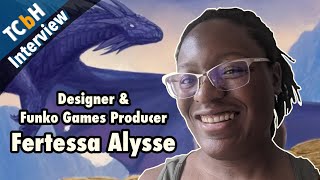
Wicked & Wise stands as a modern triumph of trick-taking game design, consistently earning praise from reviewers who appreciate both its elegance and its fresh approach to a classic mechanic. Ryan and Bethany Board Game Reviews, who grew up steeped in trick-taking tradition, call it "one of my new favorite trick taking games" and note its particular strength lies in how it combines strategic depth with accessibility. Rodney Smith from Watch It Played captured the immediate appeal perfectly: the game left such a strong impression that players wanted to play it again immediately after finishing. The wider community recognizes Wicked & Wise as an underrated gem that deserves more attention, even among those familiar with the trick-taking genre. Designer Frutessa Elise, speaking with The Cardboard Herald, discussed the intentional approach to creating asymmetric partnership that breaks from traditional cooperative mechanics by requiring genuine collaboration where each partner brings irreplaceable value to the team.
Core Mechanics That Define Wicked & Wise
Trick-Taking with Purpose
At its heart, Wicked & Wise is a trick-taking game published by Weird Giraffe Games, but it transforms the familiar structure. Rather than simply trying to win tricks, teams play three rounds toward specific goal cards that reward different patterns of trick ownership. A team might score for collecting a particular suit, winning tricks with gem cards (the game's trump), or achieving other specific conditions set by their goal cards at the start of each round. The genius lies in the strategic conflict this creates: winning tricks is sometimes exactly what you should avoid if your goal cards point elsewhere. Cards get reshuffled each round from the previously-played cards, meaning players develop information about what might come next. This layered approach gives the game remarkable replayability because success requires reading both the traditional trick-taking landscape and the unique goal conditions your team is chasing.
Limited Communication and Asymmetric Roles
The true innovation in Wicked & Wise comes from how the game handles partnership and communication. One teammate plays as the dragon, leading with traditional high cards to win tricks. The other teammate plays as a mouse, supporting the dragon with special abilities printed on their cards rather than competing for tricks directly. A mouse might rearrange the top cards of the deck, gain coins, or manipulate how tricks resolve. Communication between dragon and mouse is deliberately constrained: players can choose from different table-talk rules, ranging from complete silence to allowing only one yes-or-no question per trick. This forced limitation creates tension and forces partners to rely on game information and trust rather than explicit coordination. Reviewers frequently noted how refreshing this design choice is, separating Wicked & Wise from games where one player dominates decision-making while the other watches. Here, both roles feel essential and powerful in different ways.
The Wicked & Wise Experience
Thinky Strategic Play
Multiple reviewers described Wicked & Wise as a genuinely "thinky" game that rewards careful play without becoming impenetrable. Ryan and Bethany emphasized the depth: "I'm not sure how many tricks to take because I don't know what the cards will be in the future rounds, and I might want to take the gold as opposed to a treasure card because you don't know what it's going to do." Every decision carries weight. Do you prioritize this round's tricks toward your goal, or play defensively knowing what's already been seen? The asymmetric roles add cognitive richness; dragon players must signal through card play what they're pursuing while reading their partner's constraints, while mouse players must choose when to deploy powerful abilities for maximum impact. The game never feels arbitrary or lucky despite its card-based randomness, because player knowledge and strategic positioning drive outcomes.
Immediate Replay Value and Table Excitement
Rodney Smith's experience at Origins captures what multiple reviewers witnessed: the urge to play immediately after finishing. This speaks to both elegance and fun. Reviewers praised the moment-to-moment excitement, especially when a mouse's special ability shifts an expected outcome or when a team's carefully-positioned goal cards suddenly become achievable. The 52-minute playtime keeps the energy brisk without feeling rushed, and the streamlined rules mean players spend less time explaining and more time playing. The game generates those memorable table moments that make players reach for it again: the tension of making a final choice, the satisfaction of a perfectly-timed mouse ability, or the drama of realizing your goal is in range if you play the next round perfectly.
What Makes Wicked & Wise Stand Out
Beautiful Art as an Essential Element
Beth Sobel's artwork is woven into what makes Wicked & Wise special, not incidental to it. In a card game where players see the same cards repeatedly across three rounds, having stunning art matters enormously to the experience. Reviewers consistently called attention to the sharp, eye-catching designs and the charming creature artwork that brings the dragon-versus-mouse theme to life. One reviewer's personal anecdote stands out: being drawn to a particular card by its beauty and design, noting that in trick-taking games where cards are played repeatedly, excellent artwork sustains engagement. The game's visual presentation rewards the detailed examination that naturally occurs during play.
The Ingenious Goal Card System
Traditional trick-taking games establish a single scoring method and play toward that target. Wicked & Wise's innovation is making goal cards the strategic fulcrum. Dragons draw four goal options and pass two to their mouse partner, who selects one. This creates a collaborative filter: the dragon provides options based on their hand reading, and the mouse chooses based on their special abilities and what's possible. Different goal cards point teams in entirely different directions, sometimes making trick-winning feel secondary. This system creates genuine strategic tension between what you could do (win tricks) and what you should do (pursue your specific goal). Over three increasingly-valuable rounds, it transforms a game from "play your best tricks" into "solve the puzzle your goal cards have created."
Potential Drawbacks
Communication Rules Require Calibration
While the restricted communication creates strategic tension, different table-talk rules substantially change the game. Players must agree on a house rule before starting, and the choice determines whether the game feels more like a puzzle (minimal communication) or a more relaxed partnership experience. There's no single "correct" setting, so new players need guidance on which rule variant suits their group. Additionally, the first play at any communication level requires teaching, and understanding what each variant actually changes from traditional trick-taking takes a round to internalize.
Asymmetric Roles Create Teaching Friction
Explaining Wicked & Wise requires unpacking both trick-taking fundamentals and the dragon-mouse asymmetry simultaneously. Reviewers noted that players unfamiliar with trick-taking games find the premise harder to grasp. While the design is elegant, the upfront cognitive load of "one partner plays tricks, the other plays abilities" can slow teach time. Once players understand the roles, the game flows smoothly, but that initial barrier means Wicked & Wise works best with groups that either know trick-taking or are ready to invest in learning.
If You Enjoy Wicked & Wise
Fans of **Spades** will gravitate toward Wicked & Wise for its partnership structure and trick-taking foundation, but Wicked & Wise adds goal-based scoring and special abilities that create deeper strategy. Players drawn to **Small World** or **Sirens** for their asymmetric design and thematic creativity will appreciate how Wicked & Wise makes asymmetry mechanically essential rather than thematic window dressing. Those who love **Whitehall Mystery** or other hidden-information games will enjoy the knowledge-management layer; players must infer information from play patterns because communication is restricted. If you're exploring trick-taking games beyond the classics, **Skull King** offers special abilities alongside bidding, while **Fox in the Forest** brings push-your-luck decision-making to two-player trick-taking. For gamers seeking beautiful card games with elegant design, **Splendor** and **Carcassonne** share Wicked & Wise's ability to deliver satisfying strategic play in compact rule sets.
What Reviewers Are Saying
"There's a lot of things that go into that. So you have your goal cards that you're trying to meet and you and your opponent have the exact same cards in your stack, right? So you guys can be going for the same thing without knowing about it but because of what your goal is, you might not want to take certain tricks, or you might want to take other tricks, and you might want to take the gold as opposed to a card because you don't know what it's going to do."
— Ryan and Bethany Board Game Reviews
"As soon as we were done we played it again immediately and that's not typical you know with so many games to try repeating plays just doesn't happen so much but it did for this one."
— Watch It Played
"I thought that was a very clever take on that who plays what card matters at what time. And again, it looks stunning as well. So, it had an interesting take on trick taking plus being the first one on this list that like the card art mattered to me."
— Ryan and Bethany Board Game Reviews