






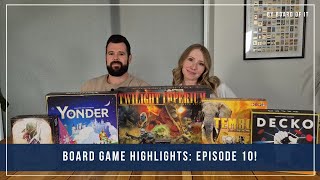



DECKO Deep Dive
What the Community Thinks About DECKO
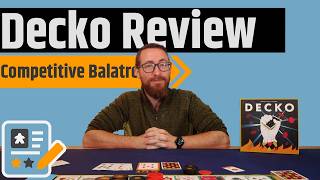
Board game reviewers have enthusiastically embraced DECKO as a fresh take on multiplayer card games. Board Game Critique called it the result of "Bellatro and Poker having a multiplayer baby," and the comparison to the viral indie video game Bellatro appears across nearly every channel discussing the game. What reviewers consistently praise is that DECKO isn't a straightforward translation of Bellatro to the tabletop, but rather a distinct design that takes the core appeal of chaotic deck building and fuses it with the tension of poker hand evaluation and multi-player interaction. Designers from across the community have highlighted how DECKO's structure allows players who fall behind in chips to catch up through strategic purchasing, creating dynamic shifts in momentum that keep the table engaged throughout the game.
Core Mechanics That Define DECKO
Deck Building with Card Burning
Every player begins with an identical 14-card deck (two copies of cards numbered two through eight). The magic happens through deck thinning: on your first betting action each round, you can permanently remove a card from your deck and draw a replacement. Reviewers consistently called this "satisfying" and "elegant." Watch It Played noted that this mechanic allows players to "streamline your deck so that you can get to your better cards more often," and the constant option to burn creates what Board Game Critique described as a tension that defines each round. Some reviewers described spending an entire game gradually sculpting their deck until they've eliminated weak cards entirely. The Dice Tower emphasized that burning is free and accessible to everyone, making it a cornerstone of the game's accessibility despite its complexity.
Joker Powers That Break the Rules
Rather than simply adding cards to your deck, players spend chips to purchase jokers: permanent powers that activate during specific phases (call, raise, fold, deal, burn, or buy). You may hold one joker of each type. These aren't passive abilities; they fundamentally reshape how the game plays. Board Game Critique highlighted the vampire joker as an example, explaining that "every time you call and match someone's bet, you gain a chip," meaning small edges snowball over rounds. Banter and Boards praised the joker system as the heart of the game, noting they "can completely change the flow of the game." Board of It observed that jokers "break the rules" and make the game far more than standard poker. The variety of jokers means players build radically different engines: some prioritize economy (generating chips), others focus on hand manipulation or theft mechanics. Reviewers stressed that the one-of-each-type cap prevents runaway combo dominance while still allowing genuine synergy.
The DECKO Experience
Chaotic Emergence and Unpredictability
Reviewers repeatedly described DECKO as "chaotic" and "wild," but in a way that felt intentional and fun. Might I Suggest A Game said the game "gets really weird really fast and frankly, I love it," emphasizing that "something new and crazy happens" every single play. Players draft broken card combinations, stumble into unexpected synergies, and watch opponents pivot their strategies mid-game. The chaotic energy comes partly from the marketplace (which refreshes unpredictably as cards are purchased) and partly from the sheer number of joker interactions available. Board Game Co noted that "every time I play this game, something new and crazy happens," creating a sense of discovery that persists across multiple plays.
Tension Without Traditional Bluffing
DECKO's betting and hand-revealing structure creates tension, but The Dice Tower noted the game explicitly does not center on bluffing: "the main focus of this game is upgrading your deck and buying the jokers. Those are the two biggest draws." This distinguishes DECKO from traditional poker. Players aren't primarily trying to deceive each other about hand strength; instead, they're making calculated decisions about when to stay in (to buy more cards), when to fold (to take a free marketplace card), or when to raise to pressure opponents. Board of It explained that sometimes "you want to be the one to lose, because then it gives you access to the jokers," which inverts the usual poker incentive. The Dice Tower observed a tension between wanting a good hand (to win chips) and not wanting the best hand (because winners don't get to buy), creating unusual strategic moments.
What Makes DECKO Stand Out
Accessibility Wrapped Around Depth
You don't need poker experience, and you don't need to have played Bellatro. Board of It stated plainly: "I wouldn't be surprised if this ends up in one of my top 10 of the year," and credited the game's success to "taking something familiar and twisting it in a way" that feels fresh. Watch It Played noted that poker's core rules have been refined over centuries, providing a stable foundation for the deck building layer. The game teaches the core loop in minutes but reveals new strategic dimensions across sessions. Board Game Critique praised how designer Hawon Hoel Garter's track record (Villagers, Streets, Moon Trilogy) suggests "he knows how to pack depth in approachable rules," and that "DECKO feels like it follows that philosophy." Reviewers played it with children and experienced gamers alike and found it engaging for both.
Wild Card Rounds That Flip the Game
Twice per game, a wild card round changes the rules. One version lets players draw one card of their choice from their opponent's burn pile. Another flips poker on its head: the lowest sum wins instead of the highest. Board Game Critique described this as "such a brain twist," and reviewers appreciated how these rounds reward different strategic preparation. A player who kept low cards or flexible multi-value cards suddenly becomes the shark. These moments prevent the game from calcifying into a single dominant strategy and give trailing players opportunities to pivot.
Potential Drawbacks
Luck and Scaling Concerns
The Dice Tower raised a significant criticism: there's "a lot of luck involved," both from card draws and the marketplace rotation. Players acknowledged that late in the game, you can know rounds before the game is over that "I can't win unless the other players just act like morons." This ceiling on catch-up mechanics could feel frustrating if you fall far behind on chips early. Board Game Critique also flagged that scaling remains unverified: the game officially plays 2-5 players, but the reviewer noted that it is unclear whether heads up feels right or whether five players bog down. They cited a playthrough where one player reached 59 chips while another was at 19, a gap that felt like a runaway lead despite fold jokers and economy options designed to close it.
Folding Can Feel Unrewarding
Board Gaming Ramblings criticized the fold reward: "it was really boring to fold." When you fold, you take one free card from the marketplace, but you're then locked out of the buying phase (where players who stayed in get to spend money on cards and jokers). The reviewer felt the incentive to fold wasn't compelling enough to make it a real strategic option, especially if you were building toward a strong deck. This contrasts with praise from other reviewers, including Board of It and Watch It Played, who felt folding offered meaningful choices, suggesting the mechanic's appeal may vary with player group and metagame.
If You Enjoy DECKO
Board Game Critique recommended Scout if you want the "add to your hand as you play" feeling without crowdfunding risk. For conflict and poker-style strategy in a bigger package, they suggested Wonderland's War, which uses poker chips and poker hand-style battle resolution alongside area control and asymmetric powers. Bellatro (the digital source of inspiration) remains free on Steam, Switch, PlayStation, and Xbox as a way to test whether the style hooks you. The Dice Tower and other reviewers noted that anyone curious about the chaotic hand-building experience should start with the actual video game before committing to a board game version. For players seeking multiplayer deck building without poker, Watch It Played compared it favorably to games built around supernatural card powers and escalating engine turns, though no perfect analog exists.
What Reviewers Are Saying
"What if Bellatro and Poker had a multiplayer baby? It exists. It's called Deco and it's live on Gamefound right now. I'm intrigued. I'm terrified. I'm all in."
— Board Game Critique
"I think this is absolutely brilliant and I'm going to go as far to say I wouldn't be surprised if this ends up in one of my maybe top 10 of the year. I'm quite enamored with it."
— Board of It
"This one gets really weird really fast and frankly, I love it. Every time I play this game, something new and crazy happens. Someone finds a wild new combo of jokers that's totally broken."
— Might I Suggest A Game