Are you playing games wrong if you do this? - Lost In The Shuffle
Games in This Video
9 games are featured in this video — they unlock as you watch.




Transcript
Should ignoring your favorite game's theme still be a path to clear victory? Or should that approach leave your score lost in the shuffle theme? Every board game has one actually except abstract games now that now I think about it. Um so non-abstract board games theme all of them have one which is what we are talking about today. Today, I Rick and I are going to ask the question, if you ignore a board game's theme or actually work against it, are you playing the game wrong or is that still a completely viable strategy? And I believe I you have I know you do because you're the one that thought of this topic. You you have an example for us of something that recently happened to you that that sparked this entire idea, this entire question in your mind. Yeah. Yeah. I've I've played a number of games. Um the most recent example would be uh Russian Railroads. Okay. You know, wonderful game. Absolutely wonderful game.
Thoroughly enjoyed it. But the whole point is to build your railroad as much as possible. Right. You think they they put it right there in the title. Right in the title. Right. So it's implied if nothing else. Right. Now wonderful part of the game is it also has an industry track at the bottom which is separate from the rails. Mhm. So this is my first time playing and I saw a path here for scoring points and not really knowing what I was doing. I just went with my industry track and I did really really well with that. And by the end of the game, I had done almost nothing with my rails. Okay, almost nothing with the rails. I felt great. I felt like I did the thing. I did what, you know, was another path for scoring points. I really felt great about it. And I also felt like I didn't do what the game was expecting me to do, which was build rails. And that's what fascinates me about this topic because if you play a board game kind of almost against the theme, some people may say, "Hey, you're playing the game wrong because you're playing the game against the way it wants to be played or you're not playing the game the way it was perhaps intended to be played." And is that wrong? It's a strange one, right? It's a strange one because you know when most people think if you're doing something wrong it means you're not abiding by all the rules or you've made your own homebrew rule because we prefer to play the game this way or something like that. But when you just don't go with the theme but you abide by all the rules it's a slightly different question. I think that's something very important to clarify about this conversation. We are talking about playing the game correctly by its rules, adhering to all rules. Yes. But
then when you play the game, taking the theme and having that be secondary and say, "Well, okay, I know the rules, but I'm going to play this engine the way I want to play it as opposed to perhaps the story that the game wants to tell." Correct. I think story is a good big part of this. Correct. Yeah. I am remembered of I am remembered. I hopefully I'm remembered. I'll remember you. Thank you very much. I appreciate so much. I recall there was this game I played of Tracarion and in Tracarion you know you are a magician who's building an act and performing tricks and you're collecting supplies and your different props and then you're going out to do stage shows and stuff and that's the whole theme of traceron right and I usually go into a game thinking what story will this game leave me with what story will I have to tell what neat event am I going to take away from this thing and my third turn I saw oh I had the opportunity to do this little combo and I did it and it got me a lot of points. It's like, well, that was really cool. And then my next turn came around. I thought, hey, you know, if I do this and this, I'll set up that combo again. Okay, I'll do that. Did those, came back, did it again. So the entire rest of that game, all I did was set up that combo again and then do it and did that over and over and over again. And I ended up winning the game, but I also ended up feeling like I played it wrong. Right. It's a strange feeling, isn't it? those things. I feel like I did not play the game the way it wanted to be played. I feel like I played, you know, setup combo game,
right? Which I mean, in many ways is is in alignment with that, but I'm assuming with Tracy, right? The point is supposed to be bigger and better and more impressive tricks. You're building your your showmanship. Yes. And and you're the guy who said, "Well, no, I'm just going to flip these two cards and I can make a good living at it and be out on the street. I don't need to be in here. I don't need to pay for the rental of the hall. I don't need the big audiences," which is very much not the theme. Not to go be a street musician. I wasn't building my catalog of tricks. I was the guy on the street corner doing three card monty for pocket change. Yeah. But that pocket change added up. Right. You made more than the other people who were inside performing. Right. It's kind of strange. I Yeah. Now, if you were playing a game of Trarion against someone and they did that, would you walk away from that game thinking you played the game wrong, man?
No. Not for me personally. I would I would very much be I'm always impressed when somebody finds an alternate path. I appreciate the ingenuity to that because I think with a lot of game design, the designers or the publishers do have that sense of what they want the player experience to be. And I think that's a great wonderful thing that should absolutely be in mind when designing a game. But sometimes that becomes too narrowed and and designers, anybody will stop thinking about oh what are these possible options? That's where play testing comes in. Sure. You know, the moment you publish a game, you have a thousand million more play testers than you ever had before, and they're going to find all the edge scenarios. They every single edge, every single one. Every single one discover it, you know, and so yeah, it's not it's not a sign of a a broken game or something wrong with the game. It's just always very interesting to me when you can go off theme because theme can be so important to people. It can be so much a driver of of what games they play, what games they buy, what even got them into gaming. So, I always am curious when somebody comes in like, "Oh, I love this theme." But then the theme, you know, isn't mandatory, right? There's other ways to go about it than the theme. Another example of me would be viticulture, another another game I love, you know, Jamie Stagmire Stonem games. Wonderful game. But I have played that game several times and just out of curiosity seemed like, okay, can I win this game without making wine, which is the entire point of the game.
Seems integral to the plot kind. Yeah, very much integral to the plot. Now that said, I've played with friends who, you know, lost that game because they wanted to make the wine they like to drink, which is probably not the good way to go about that game either, you know, but there, you know, it's all dependent, but I have had games that way where I've been able to win the game uh of viticulture without making wine. And again, I feel clever. I enjoy the game. I still really like the game. Uh, but it's very much like, wait, I'm supposed to be a wine maker and I'm I'm not being that thing this game wants me to be, right? Yeah. And so I appreciate it for the people who don't care about theme as much. They can just look at it and go another way if they want. I think that's a wonderful thing. Hey, this is just a quick note to let you know that The Game Crafter is having a sale all this week, including the game self-published by Lost in the Shovel co-host Iric Meyers, Rocket Roll, which is $10 off this week.
All week. Just this week. You know what I'm going to do? I'm gonna be so bold as to include a link to IK's game on the Gamecfter website in this video's description so you can go check it out, find out more information, and take advantage of this sale if you want to. And now, let us return to this episode's festivities. I approached this idea from kind of the player standpoint of am I telling the story that wants to be told? And you're approaching this question from more the designer standpoint of am I making my game too much on rails or too broad? Yes. So when it comes to like say the two extremes here, uh a sandbox environment game versus I don't know like an abstract game, do you think that you have to go into these things with a different design and even a different play mentality when you go into these these games or does it matter?
Um I think so. I mean yeah it's hard to say break the theme of Azul for example. Yeah, that's a really good example. how right as you said in the initial in the intro like abstract games don't have the theme so therefore you're not wrapped up in it it's a a thing a puzzle or challenge whatever you're trying to solve Azul does come across having a premise of course you know that's what you're absolutely yeah absolutely right but yes it's much it's much different than say you know pandemic or Robertson Crusoe or something where it's like if you're just moving pieces around the game is going to just not even make sense because the theme is so baked into it this is your motivation for why you're moving these pieces in these places, right? And that that's the interesting part about this topic is that theme can matter. I think of the game Boop with the cats on the bed. With the cats on the bed, wonderful. It's a great game. I I love it, you know, and it was put out as an abstract game before. Okay. With all the exact same grid maneuvering pieces. It did not have the cats on the bed theme. Okay. And so that is like a real simple example of how important theme can be. the exact same game. When it's when it's abstract little pieces that you flip over on a graph, that's one thing. When it's kittens on a bed jumping around on a quilt, people are able to approach it in a different way. So, that's why it's so interesting to me when when sometimes in a game the theme suddenly cannot matter.
It always interests me how you'll have a thematic game that comes out, people play it, they love it, it goes out of print, then years, decades later, the game comes back with a different theme applied to it. Yes. And it makes me wow, how important was that theme that seemed absolutely critical to the game? Was it actually that critical now that they've changed the theme to something completely different and the game still plays just fine? Yeah. It's that I find that really fascinating. Yeah. And it's especially from the design world, it's it's really interesting because I mean you hear that a lot like as a designer, if you're going to submit something to publishers, what you want to do is not get too far into the theme or art because they may want to reskin it. I've heard that happening. Absolutely. So, I've made this, you know, space game and this battle battle battle and you get it to a publisher and they're like, you know, this is going to be better off set in an arboral forest and the little critters are trying to gather the resources. It's the same game mechanically, but it's a different theme. And I think for a lot of times you can tell when a theme has been added afterwards. Um, not always to a bad case, you know, but it's just it's again that the abstract to boop. It it needed that to go that way. Can you think of any game that is so interwoven with its theme that the two can't be separated?
Oh my goodness. I've stumped him. Yeah, I won the conversation. Well, it was a pop quiz. I wasn't expecting that. Um, where it cannot be taken out. Yeah. While you ponder that, yeah, my premise I can't think of any either. I'm going to say that there's no game at all where the mechanisms and the theme are so interwoven that they cannot be separated. I don't think yeah, it's possible to do that. I think no matter the game, you could rethe it. Yes, that is what that is the answer I'm giving with confidence. I can taste it back. Taste that confidence swelling. Oh, that's what that taste is. Interesting. Yeah, I can't I can't think of one currently offh hand that you couldn't just rethe. And we see that all the time. I mean, I I guess Clank's a good one, right? Clank rethemed a space. Mhm.
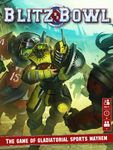
Right. It's like people want some space. Okay. Clank in space. It is. Get a little space in your Clank. Bring a little space in your Clank. might want to see someone about that. So, yeah. No, I would agree with you, Jazz. I think you're absolutely right. I'm sure there are people that will argue the other side, you know, especially some designers. It's like, no, this is so integrated and baked in, there's no way to remove it. Um, but I I think that's a very small sample group. Follow-up question, circling back to the initial concept. Do you think that there is any game out there that if you played against the theme, you would be breaking it and playing it wrong? Oh, so now we're going the opposite direction, right? Great question. Could you could you I you know, Blood Bowl comes to mind. You're drafting fantasy sports teams to have various competitions and advancing your team and and it kind of blends that fantasy world with the sports fantasy team thing. I'm not sure how you would take the theme out of that. True. To be perfectly honest, right? Like there's no other approach to that game than managing your team and playing running running the games. And so I don't I don't know if you could the potential example that came to my mind was RPGs. If you go into an RPG and you say I'm going to ignore all the storytelling and all the theme we're doing here and I'm just going to go in and I'm going to just roll my dice and fight this monster with my sword. I that may possibly be a scenario where completely ignoring the theme or playing against the theme even, right, would ruin the experience for the other players. Yeah. If you weren't role
playing in a role playing game. So at that point, does the role playing become theme or is role playing actually one of the rules? A mechanism even? I think it's a mechanism. M right. So if you go into a role playing game and you decide, I'm not going to role play, that might be a level where you're actually not playing the game. Right. Right. I think of also like Blood on the Clock Tower or any one of these big social deduction games. If you're not role playing or even like a murder mystery night or something like that, if you're not role playing, then you're not in the game. And I mean, I feel like people naturally self- select in that regard. You're either into social deduction games or you're not. Um, you know, but yeah, that that would be one where I think it would ruin it for other players. All right. You know, I am leaving this conversation pretty much in the exact same spot I began. Right on the fence. Not Not sure which way I go. Uh, but I am more informed, that's for sure. Yeah. And I think it's it's meant to be an ongoing conversation. I would very much like to hear what what our viewers have to say about this because it is a big topic of conversation. Theme is is huge for everybody. Everyone has their preferences. Everyone has their dislikes, you know, and so but talking about it and is it necessary, how important is it, how embedded is it into the game. Um these are interesting conversations to have. Yeah. So down in the comments below, you know, let us know your response to absolutely everything that we have said in this episode. This is just do that. That's that's all we ask.
Let's now turn to the theme of selecting a game to recommend for your next game night. A pick as it were. Ira, do you have a game night pick? In fact, I do, Chaz. Surprise. Convenient indeed. It's right here next to me. Wow, you thought of everything. I know. I'm prepared today. Don't expect it every time. So, my pick for this evening is Sky Joe. It's a wonderful little game. It's a great game for this actually episode because it's about as themeless as you can get. Or is it? Or is it right? It's very abstract, but it plays out in more of a tableau style. Um, which is what I like about it. You have several columns of cards. Yeah. Everyone has 12 cards and you're slowly exposing them. And so there's a lot of just kind of push your luck the whole time. I mean, for just a card game, there's a lot of like moments of what do I Oh, do I do I And you're talking about two cards like it's very easy to learn, very easy to teach, simple to get several games in. It's just a lot of fun and there is no theme.
Yeah. But, you know, sometimes that's all it takes. That's all you need. This was one of those games that I got taught and we played it and the initial reaction right after that first game was, "Okay, now I know what's going on. Let's play it again." Yeah. Right. Yeah. And I think we played two or three rounds of it just right there. Right then. It's a great game. It's a fantastic selection. Thank you. Thank you. So, yeah, if you haven't played Sky Joe, go find this game and at least give it a try. Uh, highly recommend it. Also, highly recommend sticking around for our next video, which will be shipping its way over to you soon over the interwebs. Be sure to join us then. Until then, I will be sitting right here waiting for you to come back. And it's cold, but I brought a sandwich.