10 Hot Board Games in 10 Categories - High Rollers



Transcript
If you're looking for this month's hottest board games, well, then join us as we explore the top trending titles in a collection of captivating categories. The list we cover may change from month to month, but each game remains a top performer because these are this episode's high rollers. I'm Chaz, and this month's list of primo performers begins with the game that logged the most play time on the Game Night Picks.com website this month. The colossal two to eight player historical development game that can easily fill eight hours, Advanced Civilization from 1991. Perhaps the logged games that were recorded were started during the Clinton administration and were just finishing up now. Back when it was first released, Advanced Civilization declared itself as, quote, the ultimate Civ building game. A title that's really only ever been taken by newer, updated versions of the same game over the years. Mega Civilization, which was published in 2015, followed by Mega Empires in 2022.
2022, which actually itself is built out of four separate individual games that all come together like some sort of tabletop Voltron. Uh We're going to come back to that actually in a bit. But first, let's talk about how technically Advanced Civilization is an expansion to the game Civilization, reworking its predecessor's rules to add some extra depth and increase its player count. Every iteration that's come along of this game has players lead their civilization from the invention of agriculture to the emergence of Rome, controlling everything along the way from finance to technology, literacy to law. And even with its grandiose epic nature, the game is still going strong. In fact, a crowdfunding campaign wraps up this very week for the two newest editions that are coming up, the Far East North and the Far East South. These are the last two of those four mega empires that we were talking about these earlier. And once they become available, when all four of the mega empires games are eventually combined together, it will be what its publisher describes as, quote, "the biggest board game in the world" with a total combined potential player count of 30 people.
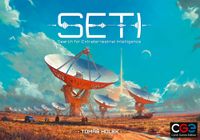
And never mind fitting all those people around the table. I mean, the coordinating the parking alone for a game of that size is is going to be quite quite the accomplishment. So, I'm looking forward to seeing how many hours get logged for a game of that size. Now, to be fair, when we we're talking about advanced civilizations, there there's actually always the chance that those advanced civilizations aren't going to be found here on Earth. And instead, you just may find those civilizations while playing the game that logged the most plays this month, SETI, Search for Extraterrestrial Intelligence. Here, terrific and specific scientific institutions search for traces of life far beyond planet Earth. And you better believe that they are going to find it. But getting there is no simple feat, requiring sending out probes, landing on ever-shifting moons and planets, collecting samples of alien environments, and analyzing the data, and
[clears throat]
sometimes just peering deep into space to see if you find anyone peering back. It all adds up to a captivating collection of combo-creating, point-scoring exploration. And helping to inspire another wave of interplanetary exploration recently has been the game's highly rated space agency's expansion, which unabashedly adds more of the more to this game. New cards, new tokens, and more aliens to encounter. This expansion right here, this guy, yeah, this also jump-starts the game with quick-start cards and asymmetric organizations, giving players some starting direction and helping players make their discoveries even faster.
Moving on now from Steady's very new view of the universe to a much, much older one is this month's most popular new release, Orloj the Prague Astronomical Clock. Your pronunciation may vary. This is a rondel-powered set collection game based on an ancient astronomical clock in the Old Town of Prague. And if that's the kind of sentence that makes your ears perk up in respond, "I'm listening." Well, then you'll find that you're going to have a lot here to love. Because master craftspeople compete to leave their personal mark on one tremendous timepiece in this game, improving its precision, its balance, and its beauty. This is accomplished in part by adding gears, spheres, and zodiac signs, each of which brings the clock ever closer to the masterpiece that it is today. Each turn, players will place workers on the clock's dial to gain resources and then perform actions with the goal of building the Orloj calendar. Then, the game will end when the calendar is completed, and the player with the most harmony points, well, they clock out with the win.
Hey, if you enjoy board games like these and having fun experiences, plus joining those two things together like some sort of tantalizing tabletop sub sandwich, well, then I want to share with you a shout-out for Grant's new series, It's All Funny and Games, which premiered earlier this month on his YouTube channel. In it, Grant and some of his comedian friends come together to share a fun-filled game night together and invite us, the audience, along for the ride. Down in this video's description, you'll find a link to his very first episode, which features the game That Escalated Quickly, which combines a little bit of storytelling with a lot of silly creativity. I think you may enjoy it because it is quite neat. So, check it out, give it a thumbs up and an encouraging comment, and then mark your calendar to be ready when his second episode comes out on May 20th.
Next up, viewer Max Gray mentioned that they'd like to see which game would top the category of games that are still going strong. Ones that are at least 5 years old, but still selling well and being played often. Based on that fantastic suggestion, we started digging into the research on this one, and it almost immediately became really obvious that a top contender for this title has got to be the abstract tile-laying game for two to four players, Azul, which actually turns 10 years old next year. It's easy to see why Azul has mass appeal. In this family-weight game, players draft tiles to form patterns, which will score by various point combinations. So, yeah, we'd say that Azul has become a modern classic for a good reason. It creates those moments that can be really tense while still remaining a pretty light game. Each game, you'll run into those moments where you'll wonder, will you get the right tiles that you need, and will you stop the other players from getting the tiles they need, and is there a way that you can possibly pull off both of those things at the same time?
So, yes, Azul is definitely our pick for the game that is currently still going strong. So, thank you, Max, for that suggestion, and we're going to keep this category in the mix to revisit in future episodes. And if you have an idea for a category, well, let us know down in the comments, and it may very well work its way into a future episode.
And now for the category that we are calling this month's biggest reconsideration because in the comments of last month's episode, friend of the show, awesome supporter of the channel, and a charming YouTuber themselves, T and Games, whose channel I'm going to add a link to in this video's description, mentioned that they were surprised that our coverage of the month's top-performing crowdfunding campaign chose to cover the Kickstarter for Slay the Spire: Downfall instead of the campaign for Brass: Pittsburgh. And yep, turns out that you called it, T and Games, because while Slay the Spire: Downfall's campaign did raise over $7.6 million, Brass: Pittsburgh ended up raking in over 9 million. And that makes Brass: Pittsburgh the undeniable crowdfunding champion of recent memory.
Uh Brass: Pittsburgh, the game, takes the Brass system into America's first Gilded Age, deep within the Steel Belt region during the late 1800s. This is a standalone game in the Brass series, which introduces new mechanisms while still retaining familiar concepts as pioneers in compiling carloads of cash at any expense. Vanderbilt, Carnegie, Rockefeller, and Frick all build their sprawling networks of railways and pipelines, redefining the very fabric of America and preparing it for our modern Gilded Age.
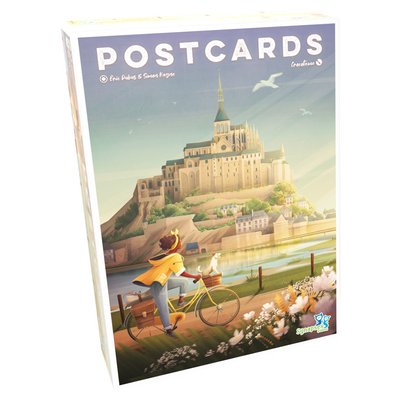
Now, let's take a look at two games that both received a burst of momentum this month, one physical and the other digital. Starting with one of my favorite gateway games of all time, Hey, That's My Fish. And even though it wasn't this month's mightiest mover, it was still the 2006 Japan Board Game Prize Best Foreign Game for Beginners Award Winner, and how could we not mention that? It was also a Spiel des Jahres recommended game. So, yes, there's there's that, too. In Hey, That's My Fish, the goal is simple. Catch as many fish as you possibly can by sliding to key locations across an ever-shrinking board. As the penguins pluck the hexes that they moved off of away to collect their fish, it reduces the options available for where to go next, cutting off rival penguins and hopefully creating the largest fishy feast for your proud penguin. And if you don't yourself have a physical copy of Hey, That's My Fish, well, it's also available to play digitally on the Board Game Arena website, right along with another game with a digital counterpart on the site that has been trending there, Postcards, a game that welcomes us all to explore the beauty of France and then send postcards home to gloat about it to friends and family. A game, obviously, designed by someone who has had friends and family visit France.
By cycling through France, visiting iconic locations and camping out, players score points by carefully selecting scenic spots and activities in the right order at the right time. It's a little bit of a race that's also mixed together with set collection and contract fulfillment, all within a beautiful backdrop. And plus, I have heard tell that my co-writer Matthew has lost this game three times in a row, which I would say sounds more like a skill problem to me, but he assures me that no, no, it's completely due to a language barrier of some sort in some way, somehow. But yeah, certainly makes sense to me, so why not let that be the reason why. Yes, we will go with that.
Why not?
Another category that was suggested from a viewer is this month's top soloable game, which was suggested by Rendell. And you are in luck. Yes, you are, because completely unrelated to the recent string of miserable defeats that Matthew has suffered, he has now, just by chance, taken to solo gaming. And his solo game pick of the month is The Castles of Burgundy. Specifically, it's special edition, which is just boy, howdy, elaborate. This version of The Castles of Burgundy takes the classic Euro point salad masterpiece and gives it an extensive visual makeover. Players are still in medieval France, still building out the countryside, and still comboing actions, gaining special abilities, and debating with each other about proper pig distribution. But now, imagine all of that combined with just over-the-top luxurious acrylic tiles, miniatures, and more bells and whistles than a medieval court jester falling down a flight of stairs. And whereas the original Castles of Burgundy from 2011 only supported two to four players, the special edition follows in the footsteps of its second edition from 2019, adding support for the coveted single-player solo mode. So it's a remake of a new edition that upped the number of players in reverse order down to one from its original first edition. That was definitely worth explaining to you
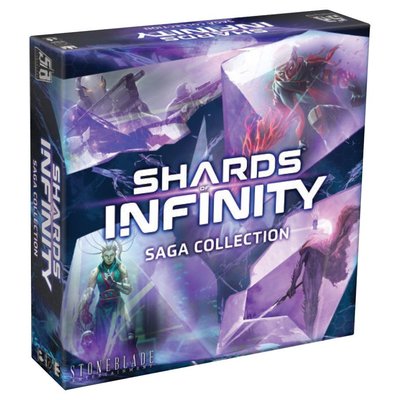
twice. Regardless, now, finally, yes, you can have the final say all by yourself over the proper placement of all hogs and swine. My personal top pick of the month is a deck-building game by the same designer behind the much-beloved card comboer Ascension, but this one being the Shards of Infinity Saga Collection, which combines tried and true deck-building elements with several new ideas with multiple sets of new cards and rules to unlock as players make their way through the game's storyline. Players strategically tailor their decks, acquiring new cards from a shared central market, including a variety of different allies to assist them in overcoming each of their opponents.
Shards of Infinity's Saga Collection is specifically pitched as an entry point into an ever-expanding universe. But lo, lo, indeed, it's not just an entry point though, because it's somewhere that players can stay for quite a while, because it contains the base game, all of the previous Shards of Infinity expansions and promo cards, upgraded components, and both PvP and cooperative modes. And as a result, there's a lot to enjoy the Saga Collection, which is fantastic, because I recently introduced it to a group of four other people that I regularly game with, and every person at the table enjoyed the game and asked me to bring it again so we could play it again next time. And that never happens.
So, thank you, Shards of Infinity Saga Collection, for saving me from having to learn and teach another new five-player game from scratch at my next game day.
And this episode's hottest game of the month is the puzzly two-player maze deduction game Layers. Now, undoubtedly, this was boosted by April's Kickstarter, which raised almost $200,000. That's got to be an extra kick in the pants right there. Layers is a dungeon building and exploration game for two rival dungeoniers. These players begin with a set of walls, traps, treasures, and monsters, then use those to create the most challenging catacomb that they can for their opponents to explore. But at the same time, they're also trying to navigate the dungeon created by their opponent. It's devious, it's inventive, and it sounded really fun when Eric described it to me, and I was looking forward to it, and then we played something else instead. So, no, I haven't haven't actually got to try this one yet. Even so, I do know that, in order to complete a tricky labyrinth, players will need to overcome dead ends, traps, and enchanted monsters, while also hunting for hidden treasure. And hopefully, you found some hidden treasures of your own among these 10 games that we just went over. 10 games in 10 different categories featuring 10 very different ways to enjoy this awesome hobby right now. And if there's a stat or a category that you'd like to see highlighted in our future episode, well, let me know in the comments, and we just may work that into the mix for a future episode. Until that future
episode, thanks for joining us, and take care.