Beyond Solitaire Podcast Ep. 243: Morten Monrad Pedersen on Solo Design
Games in This Video
9 games are featured in this video — they unlock as you watch.





Transcript
Hey gamers, it's time for a quick word from our sponsor. Uh, I am proud to announce that the Beyond Solitire podcast is sponsored by Central Michigan University Center for Learning Through Games and Simulations. Their most recent project, The Blue Way by Jason Morning Star, is currently up for pre-order and it is an amazing RPG about oppression and identity. So you should check it out. But for now, let's get on with the show. Hey gamers, this is Liz David Davis from Beyond Solitire. And this week on the pot, I'm a very special guest. I'm here with Morton Monrad Peterson. He is a solo game designer most known for solo modes, specifically through the Automa factory. How you doing today, Morton?
I'm doing good and I'm very happy to be here. I have been a regular listener to your podcast for for years now. I think I've listened to almost all of your episodes. So it's uh it's cool to be on here. No, I'm glad to finally have you on. I have like a little solo meeting of the minds. This is going to be great. Uh so for people who uh don't know somehow non- solo gamers what the Automa factory is, uh could you I guess sort of describe your entry into solo design because I do believe it started with bit of culture. Yeah. Yeah, I started with Gucci Culture and uh basically the most important thing I've done in my board game career is to visit a vineyard in Tuskanyany. Um I did that with my family back in 2012. And when I got back home, I noticed a Kickstarter for a board game about running a vineyard in Tuskanyany.
That was Vic Culture by Jamie Stagmire. I found that to be a fun coincidence. So, I checked out the Kickstarter and I wrote to Jamie and asked for whether I could see the rule book and he shared it with me, which wasn't all that common back then. And I gave him some feedback and we got talking and I had play tested the game while during the the Kickstarter and got some changes made to the game and after the Kickstarter we continued talking. So when uh when the play tester for the expansion for Vic culture asked for solo mode and Jim isn't in isn't into solo gaming here turned to me and asked whether I wanted to design the solo mode and I basically asked him how many of my kidneys do I have to sell to be a part of this? Please sign me up. Um and so yeah I be I became the solo mode guy of Stonem games. So, what what solo games were you playing up until that point? I feel like this is a when you got into this is a really interesting time in the publication of games with solo modes cuz I remember that was when I was also really getting into playing solo games like around the Vidiculture era. So, what were you what solo games were you playing that kind of prepped you to then want to be a designer for a solo mode?
Yeah. The I think the the two games that got me hooked were completely different than Viji Culture was uh The Lord of the Rings, the card game from Fantasy Flight Games.
Oh, yeah.
And uh Dawn of the Sets, the first edition of that game from Victory Point games. Those two games just completely hooked me on solo games. And then I became an omniwar of solo games. There weren't nearly as many of them back then. So I tried tried out a lot of different things from the moreatic stuff to the Euro game. Something like at the gates of L Yang for example. I I really enjoy the Euro genre where Jamie operates um Onurim uh by by Bay uh was also an important game for me in the beginning and and I still play that. It's still one of my favorite board games of all time. Yeah, that's, you know, Lord of the Rings living card game was also like my entry into solo gaming. Um, just I'd been wanting to play Magic the Gathering. I didn't want to financially have to deal with it. Um, I got Lord of the Rings living card game because I liked deck construction and then nobody would play with me, so I play by myself.
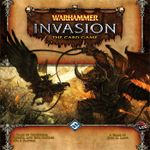
Yeah. Yeah. I was playing uh another of the living card games back then, Warhammer Invasion, which was a two-player game. But uh around that time, my board game group and my Dungeons and Dragons group kind of fell apart because we all started having children at the same time. And then all of a sudden everything became about diapers and uh the logistics of being a a family with small children. So uh I I tried out solo gaming when that happened and to to still be able to play solo games. And today is my primary for fall of games game playing.
That is really interesting. Okay. So um what made you make the leap from enthusiastic player to designer?
Yeah. Well, [clears throat] if we go back many years to uh a very young Morton, uh this young Morton, he set three life goals for himself. He wanted to get a non-fiction book published and get a fiction book published and a game published or get a job in the gaming industry. So in 2010 I got a non-fiction book published and then when I thereafter got into uh two solo games and uh the opportunity came from Jamie I I started saying okay now so I'll go for the gaming goal now as my the second of the goals I'll try to achieve. Um, and so I got serious about game design, started designing solo games and participated in a print and play solo game design contest on board gamege geek and I think in 2013 I started a blog about solo board games on board gamegeeek. It was a mix of my interest in solo games and this this idea that I had of these three goals I wanted to achieve in my life.
That's impressive. I like uh I like uh you know I had no goals to design anything ever and then it just sort of happened. So I really respect the intention here.
I think your approach is the more healthy one.
I don't know about that. I I I like a goal. All right. So let's just start with Okay. So back to the automa factory. Um how did it develop the way that it has as like a very streamlined system? you know, I I from the beginning wanted something very simple. Um, and I also the the way I work and the people who work with with me work is that we we get to design solo modes for games designed by other people and we want to be respectful to the designers of those games. We want to respect the vision they have for the game and we want to give the solo gamer the same experience as the multiplayer gamer to the largest extent possible.
And then I formulated six principles, six assigned principles that will support achieving those goals. So um the first one is that we turn a multiplayer game into a solo game by replacing one or more players by an artificial player. We call them automos when they follow these principles. Um and the second criteria is that the human player must play by the same rules as they would do in multiplayer. And [clears throat] the third principle perhaps the the most important one is that we try to mimic all the points of interaction of player interaction that is present in the multiplayer game. And this also includes the win-lose criteria. So we don't turn games into uh beat your own score games. We we want to retain the tension of winning or losing.
Um the fourth principle is that the human player must face the same decisions as they do in uh multiplayer. And it may sound like that this would be achieved automatically if we do the other goals, but that's not always the case because if if uh if the bot behaves in a different way than a human player, then the human player who plays against the bot might end up um facing different decision points than than normally. Um, the fifth principle is that the the human player must never make decisions on behalf of the automa. Uh, I know some people don't mind that, but to me it completely ruins my suspension of disbelief when playing the game if I have to all of a sudden pretend to be the bot or make good decisions on behalf of the bot.
And then the final and sixth principle is that the the rules and handling of the automa must be as simple as possible while achieving the other five principles. Um, so we we try to keep these principles in mind when playing when designing a solo mode. And the result is basically that the human player is playing the normal game, but the bot is playing a rather different and much simpler game than uh than the human player. But these two games play game played by the human and the game played by the automa they inter intersect at the point of interaction of the multiplayer game.
Um so I hope that description makes sense. Yeah, I think it's very interesting that you say this actually because when I am talking about bot design to people, a lot of times people seem to want the bot to be smart or they that's what they say they want. Uh or that they want the bot to play fair. Um but I'm not actually sure that that is what you want. You want a bot that feels like playing against a person. So like maybe using something like uh let's say like Wingspan. This is a widely known game. Um, what kinds of decisions does that bot make that are not human decisions but that feel human to a player while they are playing?
Yeah. Well, I should say I was only an assistant on design of the solo mode for Wingspan. It was my uh my partner David Stley who was the lead design on that one. So, it's been quite a while since I I played and don't remember all the details, but it is is definitely very streamlined. It it doesn't use in in Wingspan, you collect bird cards that has special abilities, and you might place it into onto your player mat into different habitats, these birds. But we are streamlining all that away the because it's not in it's not important to the to the interaction of the game what the birds of the automa does or which habitat they are placed in. So we it just simply doesn't get a player mad and it's it's card just placed in a pile for scoring not for doing anything. Um, so all of we cut away all of these elements and that's very much at the heart of our method that we cut away all the internal stuff of the automa. Uh, so all the internal state that a human player would have when playing a game is cut away if it's not important for the interaction in the game.
If I don't feel the stuff you have on your player mat, if I can't interact with it, then it doesn't need to be there for the automa.
That's interesting. So, when you are kind of deciding what belongs and what doesn't, when you're making an automa, um what are like how do you do that assessment? I'm assuming obviously you play the game a lot, but like what kinds of things are you noting as you play? And then is there anything that's kind of easy to miss as part of that process? because maybe you think something's important that's not or maybe the other way around you cut too much.
Yeah, it's uh we focus very heavily on interaction. So uh asking ourselves can player A interact with component X belonging to player B and if they can't interact with it then we uh the automo won't have that component. That's a simplified way of looking at it but it's really really all about the interaction. So, does this um are you basically making the kind of solo mode that you personally prefer to play? I know that you play a variety of solo games. Um but if everything could be like an automo, would is that what you would prefer or do you in your personal game life have like a wide variety of stuff you like to play with?
I I play all kinds of thing. There's some things I don't compromise with. I don't want to, as I talked about, one of the principles that I don't want to make decisions on behalf of an artificial opponent. If a game does that, then it's not for me. Um, other than that, I I play more or less everything. I do prefer, but and I prefer games that have win-lose criteria. I like the tension of that, but I also play lots of beat your own score games. and and and games that only have rudimentary butts. I don't know whether you tried at the gates of L Yang, for example. In in that one, there's a remnants of an opponent, you could say, but not an opponent that plays the game.
Um I enjoy a lot of U Rosenberg games and he typically doesn't have artificial opponents. instead. For example, in something like Nushaw or A Feast for Odin, you will they're worker placement games and they work in a way where you have two sets of workers and in one turn you place one set and then next turn you leave those workers on the board and then you place workers from the other set on the board but they the spaces you placed on the previous turn are now blocked. Then we you place your second set, you retrieve the first set and can place them while the second set is on the board. So that's a very uh smooth way to represent the presence of another player, but only uh on the with regards to the blocking. Um I I I like that approach. I think it it has some issues and of course like my own approach better otherwise I would be using approach not my own. Uh but I can definitely see how it uh results in a very smooth gameplay experience where you don't have to learn a lot of rules because the major downside of my way of doing things is that you need to learn more rules and you need to do more work on behalf of the automa and a large part of the work we do is trying to figure out how to streamline those rules as much as possible. figuring out every single rule
we can cut. Uh we can spend days a week arguing about whether we can take five rules and turn them into four rules that does the same thing. Um [clears throat] so we spend a tremendous amount of effort on streamlining and simplifying both the the rule complexity and the amount of administrative work the human player has to do on behalf of the bot. because you want to play the game, you don't want to move cardboard around for a butt.
Yeah, that's interesting. So, at what point in the development of a game does the Automa Factory typically come in? So, like you and Stonem have been working for a long time. So, like um you know, do you come in towards the end? Are you sort of around all along? Um, at what point is the game like done enough for the Automa Factory to to do its work?
We will usually seize um files for the game as soon as as Jamie Stemmy puts a game into external play testing, but we don't really start doing any work on it at that point. It's main just to have ideas sim at the back of our minds. um we we get started for real when the game is something like 95% done. When there are no longer major changes, then we start making a framework. Uh and when the game is fully done, we start for real. And then we work very intensively to uh to get the solo mode done because it can be a tough sell to uh to tell a publisher who has a game that's done well please wait two years while we've developed the solo mode until then you won't make any money from the game you made. Um so we usually have something like 3 to 6 months for our process but it it can vary a lot. Stommy has been in the fortunate position that they were ahead of schedule on a on a lot of stuff because they have Jamie doesn't want to release too many games and expansions each year. Um but more game had been designed than uh well room for on the release schedule. Uh so we that that gave us more time to to work on the solo mod with these games because we knew they wouldn't be released until two or three years later. Um so sometimes we do have
a lot of time but very often we have this 3 to six months to make the solo mode.
That's making me sweat. Um um so how uh how broadly can you test a solo mode and that timing?
Yeah. Well, I would say fairly broadly because we have a a range of external play testers who uh who help us out. But it's also one of the reasons why I want to stay true to the multiplayer game because if I completely redesign the game, then I have a very large amount of testing to do. But if I can leverage all the testing that has been done of the finished game, if the game is already balanced and I don't change it fundamentally, then all of the well at least a lot of the multiplayer play testing is actually also applicable to the solar mode. Um, and then within the time frame we have usually get in a couple of hundred of play tests. It depends on the game how much is needed. We have had some that had mod I think we were closing in on a thousand play tests for uh roaring realms for example but typically we I think we pass around 200 play test external play test not counting our own and uh I think that has proven to be sufficient.
Yeah that's awesome. How many different um solo modes do you work on at the same time or do you do it one at a time? that varies a lot. Um because we are while Automa Factory is legally speaking just me. Um I work with a lot of other freelancers. Um and they [clears throat] can take on work. Um so when when we have a project, we will appoint one of us to be the lead. It's very often me because I'm the only one doing this full-time, but it could be one of the others and that that leads will then drive the project forward and be the one to make the calls. We always work in small teams, but there's a lead who calls a shot. We don't want to create design by committee horrors or get slowed down by always having to reach consensus. So, there's one person who can say, "Okay, this is how we're going to do it."
Um, and that also widens our bandwidth, which means can we can handle multiple projects at once. I I I wouldn't like to do more than two projects at once on my own, but when the others are present, we can do more.
Yeah, that makes sense. Uh the other uh thing I want to sort of bring up is that you know you're primarily associated with with working with Stonemer games but uh Altoma is its own thing that works with multiple publishers. So how do you um I guess how do you choose which relationships to have and um you know what kinds of games are a good fit for the Altoma factory? Yeah, if you have some good advice on this, I uh would be happy because I'm strugging a lot getting the balance right here because one major advantage of working mainly with one publisher is that they are bandwidth limited. So they will tend not to give you 10 projects at the same time because they can't manage 10 projects at the same time. But when you work with multiple different publishers at the same time, they might all say, "Well, it's now that our game has to get made."
Um, so we struggled with that. Um, trying to balance that and for some years I was just saying no to everyone except Stonem. And now I'm starting to consider to working with with other publishers again. and I I have a a couple of PE companies I'm talking to. Um, but it's a very hard balance to strike. But we also look for particular types of games. We we we work in Euro games and our method generally works best for games with fairly low interaction. Um, so that's what we try to look for. There's also a rather annoying matter of money because I do this full-time, so I need to make money. So, I can't work on a spend two or 300 hours on a game that will sell 100 copies.
Um, [clears throat] so I unfortunately also have to be a bit picky about which project I take on just from a financial perspective because I have bills to pay. my family and I need to make some some kind of money to make uh ends meet. Um so there are a lot of considerations that go into this. Um
well you just don't do it for fun. Okay.
Well uh fun is is a major part of it but since I I went full-time with this I also have to consider paying the bills. When I started out with Wizzy Culture, there was no financial motivation. And when Jamie offered me money, I said, "No, I I have so much fun, so much fun doing this. I'm happy just helping out and having been a part of this and seeing my name in print in a in a published product." Um, but then Jamie started paying me anyway at one point and then I started making enough money that I could go part-time in Automa Factory and and uh and later on full-time and now money starts to matter.
Yeah, that makes sense. Um, so you we talked mostly about your solo modes but that is not all you do. Not anymore. Uh, you also just make straight up solo games. Um, such as Scander, which I thought was very, very good. Um, that was 2023.
Three.
Yes. Yes.
What inspired you to make a full-on standalone solo game of your own? And what did that process look like compared to what you've been doing?
Yeah. Well, it's it's something I've always wanted to do. It's that is it goes back to uh my three life goals. Um so, uh yeah, I al always dreamed about becoming a a game designer and um I I think I mentioned participating in a game design contest on uh Board Game Geek back in the day and I designed a game called Endless Nightmare for that contest. And at one point I got the idea of re-implementing that game with the mechanisms of Onerim, a game which I really enjoy. And that uh turned into uh to scone.
And uh the fun part of it was then that the designer of Unirum ended up being the publisher of scone shitty Tob. Um, so that was rather cool to get to to work with the guy who have designed one of my favorite games and I consider him the the best game designer of all time within my subjective taste. So it was a really nice to get to work with him and have him make my game better. Oh,
that's really interesting. So when did the theme So first of all for people who haven't seen Scow Interior, what is the theme for it? Yeah, it's based on Danish folklore and uh I I'm I'm Danish and but but the theme wasn't actually my idea when I designed the game. It was just basically generic fantasy and it was Shetty who's a Germanb born Belgian with Lebanese roots who suggested we should go with Danish folklore as the theme. And in the game, you are in a magical forest being hunted by the folkloric Danish version of the devil called G Eric. And you have to uh to escape him when he hunts you. And you're in this forest that is represented by a set of tree cards. And you can damage these trees and uh sacrifice them to gain benefits to to hinder the progress of Gner Eric. And uh the problem then is that it's also making the forest smaller so you have less room to run and hide.
So it's a kind of uh pee in your pants to stay warm mechanic. Um and there's also a deck of cards where you have uh allies that can help you at a cost and there are Gary Eric cards that will make Ger Eric move. you you take out these ally cards from the from the deck and then you can use them for one of two purposes after having paid the cost to get them. And the cost isn't free money or something like that. It's uh resolving some bad effect to get them into your hand. Then you can either use them to achieve to to work towards the goal of escaping or you can use it for some temporary benefit. And the problem is that the deck will over time have fewer and fewer allies but the same number of G area cards and then you reshuffle the deck occasionally which means that you'll be drawing more and more Gary cards. So he'll be moving faster and faster at the same time as the forest is getting smaller and smaller. So you have this ramping tension throughout the game where you uh try to achieve your goal of escaping before everything just falls apart and calary catches you.
Nice. So, um, when you were making this, like I guess you were combining mechanisms from previous games, you kind of came up with a theme, but it sounds like it was mechanism first. Um, what changes did you make to your design to make things fit together properly? Yeah. Well, it started actually the original theme was nightmares. That was the theme of the original print and play game based on. Yeah. Yeah. So, I I had I had this uh this nightmare game implemented that I tried to implement using the mechanics of another designer who had made an game about nightmares. So I felt it would be covering too much to keep the nightmare theme. So I I needed a different theme and I went with this escaping a monster in a magical forest theme. Um and I I tried to uh then base the theme on the the allies that that help you and try to figure out how the fogic theme could support the mechanisms. Most of the mechanisms were already there when we put on the folkloric theme. So we went uh looking through Danish folklore to try to fe find creatures that had uh was the
stories told about them kind of matched the mechanics we had for the game. So so it it was more mechanics first and then figuring out how to fit the theme to the mechanics so that it makes sense. We I think there were also some of the decisions where we uh we started that the game comes with two built-in mini expansions. Um and I think for those we were more thematically inspired. One of them is is based on a creature called Ludman who lure you away from the force and make you get lost. And uh so we had creatures, some of your allies being lost uh taken by the Luke demen and you have to negotiate with the with the Luke demen to to get them back. Um so so the theme was more it was more theme first for the expansion and mechanics first for the core game as I remember it. I started working on this game in 2016, so I don't remember all of the all of the details.
That's a long road. So, one thing I really enjoyed about Scander is how how spare it is uh how stark is as a game. Like there's um there's not a lot of extra noise. It's a very very um streamlined work.
Uh where there are
there are a lot of very explicit tradeoffs. You can't have anything nice without something bad also happening.
Yes, exactly. Um, does how does that fit with your ideas about what makes a solo game in particular good?
Well, I I enjoy a lot of different games, but this is one genre I really enjoy where everything you do is an agonizing choice where you have to make a trade-off decision, right? You need I really want this card, but the cost of taking is really rough. So, so can I make make that work? And I have this card, but I really want to use it to move towards winning the game. But I'm also just Gary will catch me in a minute. So should I instead sacrifice this ally card to to help me avoid getting caught right now? I I really enjoy these agonizing tradeoff decisions and constant tension. So that was really what I was trying to go for in uh in this game.
Yeah. I actually think the reason I want to talk to you about is because like that that is what I like also. Um I particularly like it when I make a decision that turns out not to work out and I feel like it's I feel like I'm to blame for losing.
Yeah, I prefer that to uh losing to a bad card draw. Though of course you score two you can lose to a a bad card draw is it's a card game. Uh but overall the the difference in win rate between a beginner player and a expert player is huge in this game. And to me that that proves that skill is more important than luck. And during the play tests, we could see people starting out with a very low win rate and uh losing to the to an easy difficulty level and then ending up winning the majority on the play of the place on a harder difficulty. Um, so that was very satisfying to see to see people go through that progression of understanding the the strategy of game and getting emails from people saying ah now I realize that you can actually do use these things together to do this and uh so people sort of unlock the puzzles step by step and get better and better and that's been very satisfying to uh to see that happening because that's exactly what I was going for.
So, I feel like um solo games or at least my favorite solo games often have a reputation for being difficult. How how much do you think it's fair to expect from a player in terms of getting them to explore your game versus kind of giving them too much too soon? Um, I feel like especially in an era where people only play things once or twice, um, waiting on a learning curve is a choice that I personally think is good, but like you know people might not stay around long enough patiently enough to go through that whole cycle. So like where do you where are you on the spectrum of like asking have letting your game ask a lot of people um versus not?
Yeah, there are multiple parts to this question, I think, but one thing we always do when either designing solo games or solo modes is that we include multiple difficulty levels. So, we try to have a difficulty level that's suitable for everyone because I'm not shouldn't dictate how how challenging an experience you want. If you prefer to win all the time, then that's how it should be. And if you prefer to lose all the time, that then that's how it should be. And if you want something in between then well we should also support that. So sconeure comes with various difficulty levels. We might have heard on the side of being too hard because a lot of people have has found the easiest difficulty level a bit challenging also. Um but but normally we we try to have a very wide range of difficulty levels.
Um, [clears throat] if we talk learning curve more from a root complexities point of view, then of course I want to to be as easy as possible to to learn to play the game. But I also sometimes I see a tradeoff between learning curve and streamline gameplay after you have learned the rules. So for a game like Scythe, there's a definite learning curve to the automa in that game, but once you have learned it, you can play very quickly. Um, and so I lean towards accepting a learning curve if it means that you can have a very smooth experience afterwards.
But it is it's a constant tradeoff. uh and we spend so much time on discussions about where to draw the line in any specific case. [snorts] Yeah, I thought it was very interesting you mentioned sort of the player should be able to have the experience of your game that they want. Um, so where do you kind of draw the line between yourself as like the artist? Like you're creating an experience for someone and then leaving that experience open for the person who's interacting with your work as much as possible.
Yeah, that's a very good question and a very hard one to answer. I I can't I can't defy a box and this is where I am. When it comes to designing games, I'm my own target audience, but not me, the designer of the game. It's me as a game player, as if I was not the designer. Because when you design a game, you can make it infinitely complex and still have it play smoothly because, you know, all the rules. Um, but I I prefer simpler games if I is given the option because I don't always have so much spare time. Um, so as a gamer, I prefer more simple games.
So that's what I'm trying to design. Um, and so I I I try to keep my what would I like in mind when I design? what what wouldn't the gamer like to play when that's often the question I ask when I design a game and I've only designed two games so far so I might make it sound like more than it really is and when I when I decide design solo mode I I think I I think a bit wider than just myself as the target audience I I try to think more who would be the audience for this game and how can I make a solo mode that fits that game. So something like the complexity budget for the rules will depend on how complex the game is. Um the more component handling the game has, the more component handling you can allow in the automa. Um stuff like that.
So so it's it's a bit different whether I'm
I'm designing a game or whether I'm designing a solo mode for someone else's game. I've also in a few game uh few cases designed expansions for games designed by other people. That's also a a new situation. But again there I would try to look at who was the original game for and then try to uh target that audience.
Makes sense. So you fell into my trap. No kidding. We're going this direction. Uh you mentioned you designed two games but SC is the only one we talked about so far. you have a new game coming up um called Shajarat. Um it is about trees I take it. So tell us about it.
Yes, it's a Arabic word for trees. Um and it's again about magical trees like in scria. So um I used to be the solo mode one trick pony and now I'm the solo mode and magical trees two trick pony. Um, I don't know how it ended up that way, but that's how it is. [gasps] Anyways, um, where Scone had a theme based on the Danish folklore of my heritage, uh, Shedarat, and it bugs me that I'm very bad at pronouncing the name of my own game because I don't speak Arabic. Um anyways that's based on uh on the cultural roots of the owner of the publisher Shadi T um who has Lebanese parents. So uh we are taking some cues from Arabic folklore and we have gins from Arabic folklore in this game have created a number of magical tree species and uh each of these tree species have their own very specific requirement for how they want to be where they want to be in order to thrive. So in this game you are a gardener making a a park of magical trees with the gins in it. Uh and you draw cards with tree with a tree on it one by one and have to figure out where
you do want to place it down into your park so that you can fulfill the requirements of the tree. And there also some you need to have some canals around the park that also has requirements. So it's a it's a balancing act of making all the types of requirements you have so sort of add up. Um and it also comes with a couple of built-in expansion modules. So in the game you will select four out of eight tree species for a game and then you for each of the two models you can include the module or not and each module have a few different options. So you have thousands of different combinations of components you can use to to build this park. It's a like scone. It's a rather posly experience, but it's a it's a more calm experience. And uh when I designed it, I designed it only for myself. I had promised myself after SCA that I would take a break of several years before trying to get another game published because it didn't need any more work. Um so uh yeah I I believed it. I I actually believed it when I told myself this.
I mean how lucky can you be? But yeah well then I was I I designed this game for this for very specific use case. I like to use uh solo games to unwind when I'm stressed or depressed or just when I sit in the morning and waking up with my morning coffee and want to play a game that's simple to to play but still tickles my brain. So just the goldilock zone of being easily playable while also challenging and um that was what I was aiming for with this game. And that's why you only draw one card at a time, for example, but and placing it down. I there's you have multiple different options for where to place it. And there's there will be some tough choices, but you aren't overwhelmed by having 10 different cards and having to okay, then if I play this, then I can play this, then I can play this. Um, so just one card at a time for this more uh calm and serene experience I was going for.
The working title for the game was Serenity Tree sort of highlighting what what what the goal of this game was and I I just wanted to make a rough prototype and play it with my by myself in this specific use case. And uh well then I enjoyed it so much I had to share it with my friends and and I sort of perhaps happened to ask Shotty well I could pitch it to him and I sent him the files and he asked whether he could publish it and yeah well in February next year it should be on the market.
That's very cool. Um so uh just a question. So Shotti has been the publisher for both of your games to date.
Yes. Um, so for those of you who just want one a quick primer, Shotty Torb is the designer of the Oniverse games. He now has a publisher called Inatients. I've interviewed him before. I'll put him in the show notes. But um, how much um, how much development does Shotti do on your games? Like what is that relationship like?
Yeah, it's a huge difference compared to what I'm used to when making Solo Notes. Because when we're making solo modes, the publishers are almost completely hands off. I think Jamie Stagmire might have tried one of our solo modes sometime after publication. Uh I'm not quite sure, but he he doesn't get involved in the development process. Oh, that's not true actually because he he was involved in the viculture solo mode. I don't think he he played it. I I don't recall, but I don't think he did. But he was in sort of an adviser during the process and after that he has just trusted us to get the job done. So if we get the job done on time, keep the players happy and we don't go crazy on the component budget then he uh gives us complete freedom to do what we want. Um also been very different working on a full game with the with Shidi uh because he have he he got very involved particularly in in Scia um and he has had a a big impact on both games made both of them uh better. Uh of course that also come with the downside that in the end he's the one calling the shots.
So there have been cases where he made decision that I might not agree with which was which very different experience after having worked on something like 40 or 50 solo projects where I called all the shots. Um but I've also learned a lot from working with him because as I said he's he's my favorite game designer. So uh it has been an honor to to work with him and he has really improved both games. Um, I think I've also been an annoyance to work with because I'm very often opinionated and uh but not always right. So, so sometimes it has taken me a while to see that he was right. I just nope, it just has to be this way and arguing and and then well Morton, you think this guy is the greatest game designer in the world? Perhaps you should get over yourself and try to listen to him for once.
I get it. I mean, you have to be willful about your work, too, though. So,
yeah. Yeah. And he's been very polite about my stubbornness. Um, so, uh, I really appreciate working with him. And I, as I said, I think we he really has made both games better. Um, and really there was one element of scone tier that I considered completely crucial to the game. And I think that was because it was the major part of uh Endless Nightmare, the game on which Scone is based. So to me, that part of the game just had to be there. I couldn't imagine removing it. And and one day he suggested, well, how about we remove it? Are you insane, right? It's it's key to the game and then okay, I'll try it out and oh well yes, the game is not only simpler, it's also more fun now.
Um
it all comes out in the play test. That's Yeah.
Whenever I want somebody to try something or I want to try something, look, look, the play test will tell us the truth. So we should just try.
Yeah, exactly. That's a very good lesson to learn. But just just try it out. Then that's when you're playing solo games and click play quick playing solo games as the two I've designed then it's so easy to to play test and I can I can play both my games in something like 15 minutes. Um so it's so easy just to sit down and and and try it out. Um
yeah. No, that's really good. Well, I hope that you don't wait too long before you publish more games. I'm hoping that this is like a once you started you can't stop situation, but you know, we'll see.
We'll see. I have more ideas in the pipeline, but it's it's a matter of prioritizing my time. It goes back to also the financial question because uh Scure hasn't sold as many copies as as Wingspan. that might surprise you.
But uh but it's the solo mode that uh solos that make the money and uh the games that are the passion projects and so I have to to balance the time and I I also have a family um and uh my own mental health I need to take care of. So, uh, yeah, there's a a lot of, uh, factors to balance, but, also goes into whether I'm just considering to taking on new customers for the solo mode part of the business. Um,
yeah, no, it makes sense. So, this kind of leads into I normally ask people what they're playing, but we'll ask like a heavier version of that question since you're talking about like, you know, time management and making sure you do things for yourself and taking care of your mental health. Where does gaming does gaming still fit into that? Like you mentioned you like to play solo like when you have a quiet moment. Um I take it that this being your work hasn't stopped it from being your hobby.
No, fortunately it's both very much still my my hobby and my uh and my job. Um and to some extent it's also a mental health tool for me. Uh, and Shijarat was also designed as a mental health tool for because this kind of game helps me when I'm depressed or stressed. Um, so uh games are very important to me in that way also. And uh I I buy a lot of games that fit the same mold uh for these when I'm stressed situation. Um, and the only vers games are examples of that. Something like A Gentle Rain fits the bill. Um,
yeah, I like A Gentle Rain a lot as well. So, um, we've given a couple examples, but, uh, have you played Thief recently that brought you some joy that you just really really liked?
Yes. Uh, I most recently played, uh, a game called Finding Calm. Um, and it's not as much as a game that I'm enjoying it. It's more okayish as a game, but it it might sound a bit weird and newagy, but um you when you end the game, you have a grid of 3x3 cards and uh one of them is chosen and then you look it up in a book and it will give you a small exercise to do. could be a meditation exercise, something about your thought processes that you should work on for for that day. Um, so I I I play that most mornings at the moment. It just take 5 to 10 minutes and it's a nice way to start the day. Um, and then on the other end of the spectrum, I few days ago I had a fiveplayer game of Everodell, which was uh was quite fun. Uh, but a much longer experience playing for three and a half hours or something like that. It was with with an expansion.
Um, and then I've been really enjoying uh on Eurum. I I brought that on summer vacation last uh last month. I I have uh both the first and the second edition of the game and I usually use the first edition as a travel game because it's very compact. Um so
now you're flexing. You knew about it before it was cool.
Yeah. But but I don't have the the first first edition of Herbian, so I'm not that cool. I don't know. There was a special version of it called equilibrian uh initially but that ran into a trademark issue and then it was republished as herbian and uh I only have the urban version. I've been trying to find the equilibrian version but haven't succeeded so I'm not 100% cool only 50% cool.
I wish you luck on your search.
Yeah. Um, and then, you know, if people want to find you online and follow your work, where do you like to be found?
Yeah. Well, in in multiple places, there's automafactory.com where you can uh see what I've been working on and you can sign up for my newsletter and uh I can promise you I won't spam you if you sign up for the newsletter. I send out I think maybe four to six newsletters a year. Then I have a blog on board gamegeeek called Thematic Solitire for the spare time challenged [sighs] um where I every once in a while post but I've been posting every once in a while for many years now so there are a lot of post and if you are interested in my way of doing solo modes or my thoughts on solo gaming in general then you can can go there and if you want to contact me then you can write to mortn m o ten at automafactory.com.
Fantastic. Warren, thank you so much for coming on the show and talking about solo games.
For having me.
It's been a delight. Um,
so everybody out there, I think that what you should go do is you should go play a relaxing solo game and uh and join us in solo game club.
I can get behind that. All
right, everybody out there. Please like, subscribe, comment, ask questions, and most of all, happy gaming.