Best 2 Player Board Games at Every Complexity
Games in This Video
8 games are featured in this video — they unlock as you watch.





Transcript
Hey, I'm Ryan. This is my brother Dango. And this is Rolls in the Family. And today we are talking about two player games, otherwise known as the games that make Dango and I feel really sad because we used to play a lot of two-player games.
All Ryan, do you remember
the the glory days?
The glory days.
Um we no longer live within what 2,000 mi of each other. So it's a little harder. If we were within 2,000 miles,
we would be different.
It would be different.
1,000 miles,
we would make a
weekly game. We would make
But yeah, not a lot. Honestly, most of my two-player gaming now is with uh my young son, so growing him up to raising him in the way so that we can get to a lot of the games on this list. But we are specifically actually going to be breaking down our top two-player recommendations at every complexity from really low complexity light could teach to almost anybody style games all the way to high complexity. You're going to have to find the right person to get these games played type of game.
But if you can find the right person, this is what great about two-player
some of our Yeah. You only need one other person, right? That's sometimes the hard thing with other games that you know you need four or five. You got to find all these people. Well, you only need one person who likes
if you're trying to get like something like Root played. It's like, okay, I need a full group that all is willing to do this or Twilight Imperium. No, just one.
You can be the most unlike unlikable person, but if you can just get one person to agree to play with you.
Yes,
you can you can enjoy these games.
We would love to hear down in the comments
other two player recommendations. This is not an exhaustive list.
Well, and we leave off some cuz we did three in each category. So, yeah, we'll have three games in each category. Um, we haven't played every game. I'm sure there's games that if we had tried them might make this list. Uh, we will have links though to all the games that we talk about in the description below if you want to check them out.
But Daniel, let's get this started with some low complexity. Let's ease into this. And this is actually one that is quite recent to my collection and that Dango has not actually played, but I am mandatingly recommend this one
because I think this is a very very good pick for a low complexity two-player game, especially if you're looking for something that's more like dueling style. And this is toy battle.
And so a lot of these kind of head-to-head dueling games tend to go up in complexity at least a little bit into like the next category. But this is one that really just nails being super easy to teach and super quick to play. I mean, we're talking under 10 minutes
per game. Um, it almost has a little bit of a feel of like a mobile game that's kind of like a I don't know, there's like something with the aesthetic and the way that it plays, but you have this battle map that has all these different um spaces on it.
Bases I guess are what they're called. And each side you have your home base. And then you have kind of like a Scrabble style rack that you're going to draw a bunch of your troop units onto that rack. And on your turn, you have a very simple decision. You can either draw two more troops to add them to your rack. And that's the end of your turn,
or you can play one of your units from your rack to a base that you're connected to. And you have to be able to draw a line of your connected units from your base, which actually becomes a strategic thing in the game cuz if you can cut off your opponent, they now can't play. You've cut off their supply lines. It's very thematic, right?
Um,
but what's cool in this game is the uh different pieces. There's only uh let's see, seven, eight, eight different uh units numbered from one to seven and then there's like a duck that's its own duck
value. Um, but whenever you if you want to go onto the base that one of your opponents is on, you have to do it with a higher number. So, you have to have a higher number unit. But all the units have abilities. And generally, the higher the number, the less powerful the ability. In fact, the number seven, the T-Rex, doesn't even have an ability, but he's just the strongest
number with the caveat that the duck can beat everything. So, it can beat the T-Rex, but the duck can be beaten by everything. And so it's kind of this like you can beat something but there's a good chance your opponent will take right back. So ultimately what you're trying to do is anytime you surround like you control all the bases around a shape you get to take the points that are there. So the map starts with all these points in all the areas and then there's an amount of points that if you can get that you win the game. So you're kind of like area control over these things but you can also win by taking over your opponent's base. So if you can manage to make a run all the way to your opponent's base and take it over uh you win there. So, it just plays so snappy quick with do I draw two or do I play one? But there's some tactical interest here. And the game actually comes with eight different maps, four different double-sided boards that all have different,
you know, twist to them.
Um, so this is one I've really been enjoying it with my 5-year-old. Um, and it just
I don't think I've played another game that hits quite as quickly and light, but still keeping the interest of this style of like head-to-head game.
Yeah. Yeah. Yeah, I haven't played this one, but this was the one you before the video said this. You wholeheartedly recommended this. This was a lock for you in the in the low category. So, um hopefully coming up here, I'm going to be
Yeah, you should be able to get to try soon. So, we can hear back if Daniel redacts it.
I will go down in the comments below and add scathing scathing uh correction to the to the video.
Yeah,
very nice, Ryan. Uh our second recommendation here game that uh I believe we both have. I think you have this one, right? So
um and you might have even Do you have two copies of this one?
No, I have the older edition.
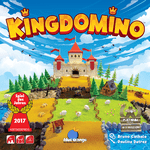
Okay. I've thought about doing doing two copies because uh you can you can even combine it together to play even a bigger map. But this goes to King Domino. And this is one very simple in terms of uh you know kind of in the domino name. You got these tiles that have, you know, one terrain on one side and another, you know, type of terrain on the other. And then some of the tiles have crowns. And essentially, you're trying to make this uh you're you're placing the tiles to make out in the normal game a 5x5 grid. Although, the reason we recommend this at two players is because you have enough tiles that you can play 7 by seven. And that's a really fun step up way to play. Um, but you're essentially trying, I mean, it's very simple. You're trying to kind of put common terrain together because at the end of the game, you're going to multiply the number of spaces of a connected terrain type by the number of crowns in that terrain. And certain terrain, it it's kind of interesting because there's some terrain that there's a ton of it, but very few crowns. And then there's the like the black terrain, you know, the caves or whatever. Yeah,
I'm pretty sure I've ended a game with like a field of yellow, like you know, like 12 of them and you got like one crown.
12 points. There you go.
Um, but then the black ones where it's like you might have three spaces, but there's
six crowns, six, eight crowns on there. Um, so but it's a very simple you're draft basic. It's a drafting game. So you um are going to take uh and I'm trying to remember Ryan actually remind me in two players. How does the drafting work?
You each get two people. Oh, you get to pick two. All four tiles are going to get selected.
Yeah. And so you when you put the tiles out, they have a number on the back typically ranking kind of how
valuable they are. So you put them in that order, which is important because when you place your person to draft, that's going to determine the order of drafting for the next round. So you might draft a tile not as good this round, but it gives you earlier picking for the next round. It kind of keeps going going like that. So, super simple game, easy to play, but I I think we've both found two players actually our favorite way to play this game specifically because you can go up to that that 7 by seven grid which just
yeah, it
just adds it gives you a little bit more time of and being able to build a little bit bigger thing and do some interesting stuff. Uh, but a very simple game um and one that a lot of people can pick up quickly and and enjoy. Yeah, this is probably the most accessible game even in this low complexity
category.
I would agree with that.
Yep.
Nice. Our third recommendation here is a little bit of a different feel. It actually the mechanics are a little closer to what we would associate with like party games in terms of like being more of a word game, but it's taking a popular word game and adapting it to be a two-player cooperative experience. And this is Codenames Duet. So the original code names, the whole premise of it is that you're trying to link different word cards in this grid by giving a single word clue. So you might say, you know, disco three and that's because you think there's three cards out there that are three words that would go.
I don't know why disco maybe uh ball is one of the words. Maybe dance.
Shine. I don't know. And so your team is trying to, you know, touch the ones to try to figure out which ones you were meaning. But each of the cards in the grid is assigned to either your team, the other team, or potentially even is the assassin that you lose the game if you hit.
Um, so it's this very interesting game of guiding your team to the right ones. Well, how do you make this work for two-player? The thing that makes this so great two-player and how they did this is in the duet version, you get to play both roles. So in code names, normally you're either the clue giver for the entire game or you're the guesser for the entire game. Here you get to alternate back and forth and each player can see a side of the key. And so you have words that you know you need to get your partner to get for the team. They have some that they need to get you. You know, there's some that you both have, so that you're both trying to get each other to have, but then there's actually three assassins in this version of the game. And it works really brilliantly as this back and forth trying to work together to get we need to get all of our answers within a certain amount of rounds. And there's some fun kind of different variants you can play with the difficulty. They have like kind of a funny campaign thing. They can like go around on a map. All that's changing is like the criteria of how many
Don't downatic immersive campaign.
But I know my wife and I have had a lot of fun with this one. um to the point where
I you know code names are very close to me but I might put this one a little ahead simply because I get to play both roles within a session and it's fun to get to guess and give the clues. Um so especially if you you know as a couple's game if you like word games if you've played code names and like it uh I think code names do's a great option.
Yeah I mean I'll go even a step further. I significantly like this one more than regular code names partially because I I just I don't love the downtime of There's basically no down time in this cuz worst case you can start thinking of more clues,
right? So, so it really just fixes that and yeah, they pulled off an incredible two-player cooperative experience. Um, which is kind of amazing to take that game and you would think like how do you make this two-player and they did an incredible job with it.
Yeah.
Well, we're onward here Daniel to lowmedium complexity. So, ratchet it up one one step, you know, and complexity can mean rules. Complexity can mean strategic complexity. There's some kind of different things that go into kind of why we maybe consider it a step up. Uh, but the first one I want to talk about here is a newer one in the last year that has just
it might be the best recommendation on this list, Ryan. I'll be honest,
it just has become like my like such an obvious recommendation in this category. And this is Sky Team. Mhm.
And this is another two-player cooperative experience where you are trying to work together to land a plane. Um, and I don't know why
Code Names Duet had a not immersive theme. This one is on the other end of the spectrum of incredible.
I don't know why the the pilot and the co-pilot can't like talk to each other directly, but we'll leave that aside.
Instead, you are not able to communicate. Instead, you're placing dice out. So, you're each rowing your four dice behind your shield and then taking turns playing these dice to take actions on your the central dashboard and like every round you both have to put one onto the tilt and like the difference between them will tilt the plane and if ever you tilt too far you crash and it you have to both do the engines which is going to determine how far you're going to go that turn. But you got to make sure you clear air traffic before you move otherwise you crash. There's lots of ways to crash.
I'm good at that Ryan. But then you also have to control the pacing of how like how many spaces you're going each time cuz the elevation is only ticking down 1,000 ft every round. And you need to time it so that you're arriving at the airport. You know, you're touching down at the airport. And then there's the kind of the landing sequence that you need to make sure you've gotten your flaps and opened and your brakes and everything.
And it just is this very it's very simple. Like there's not a lot of it's not hard to explain kind of what the different actions do, but there's a lot of emergent interest that comes out of this. How do I not only accomplish what we need to do, but communicate to the other person like
right
I have really high dice like I'm not going to be able to help or like I we need to work in this way.
And so it's this I love how you're kind of trying to optimize your actions and also the communication that's coupled with those actions. But then this is also a game that in the base box you get so much. The replay value out of this base box is incredible because it has all these different scenarios with different airports and different modules. You might be landing on an icy runway or now we have one where our gas we have to manage our fuel and it's leaking on the plane.
Yeah. Or we have an engine and it has this whole other thing and they're all like really fun little twists on the core system. Um, so this is one I am just so impressed with. I've had a lot of fun playing it with my young son, you know, cuz it's simple enough that I can do it with him, but it's also one that me and you could sit down and play and have a great time and not be like, why are we playing such a simple game kind of thing. Um, so really happy with this one, especially as a cooperative option kind of at this weight.
Yeah, totally agree, Ryan. And, um, moving to our next recommendation here. This is one that I got first. Um, and you also you still own this one, correct?
I haven't played this one nearly as much as you.
Yeah. And it's uh, man, this has just been a hit at the the two-player option with uh, my wife and I. You can technically play with with more players in kind of a variant mode, but but this is a two-player game and an excellent one. This goes to Santorini. And you know, if you like if you're someone who maybe likes u maybe you've played like games like chess, you've played kind of these head-to-head, you know, analyze the state of the map and figure out, you know, kind of your best move.
Basically, no luck, right?
Right. No luck. Um this is in that space, but does just such a fresh twist on it in that, you know, you think about the um literal, you know, Santorini place location in the world that has those white buildings with the blue tops on that. You are literally building out the city of Santorini in a 3D space, which the production quality on this is just it's just a beautiful game as you're building it up, but it makes you think in such a different way because you're you're moving in kind of 3D space. So you have these two builders and on your turn you can move one of your builders one space and you can move them up one level or or you can drop all the way down but then you can build a add a level to a space next to in one of the eight spaces next to the the person.
And ultimately what you're trying to do is you're trying to get your one of your builders up to the third level. So there's first level, second level, third level, but then the fourth level is a blue cap and that locks out the the entire tower. And so it's this like you're trying to like block your opponent. You're trying to get up to high ground. Um but also then there's a lot of like defensive moves of like if someone's getting close to getting onto a three, you move over and you try to cap it. Even just in the base game itself, a lot of strategy around how to best do that. But then what this game does, which is just so fun, is it adds all of these god powers. So at the start of the game, each person, you know, randomly gets a gets a god power. And these are not minor things. It's like a drastically powerful ability that you have. So for example, um some of them change the wind condition. I think about one that's like, oh, if you jump off level two, you're trying to get to level three normally. If you jump off the second level all the way to the ground, you win the game.
And so now as the opponent, you're like, "Oh my gosh, I got to if they're on level two, I got build a landing like get underneath." Like that's and and so it just completely changes. But then you have a maybe you've got a power. There's a there's one where a builder
can move and if it's like if they're on the base ground, they can just build two levels right underneath them and it's like,
yeah, just lift them up.
That's gamebreaking as well. And so the the fact that you have both players having these just unbelievably powerful abilities, it makes every matchup feel so interesting because you're trying to figure out how
Yeah. Not only what do I have, but how does this interact with the incredible power they have all around a great system already. Um yeah, this is one that I I really highly recommend. Has a ton of replayability
um um with it.
Yeah. Yeah. And I think if you're someone who likes the idea of some of these like abstract strategy games, but are maybe turned off a little bit by the fact that they have no luck and so like the better player is always going to win and stuff. This is a nice option because just the mixing up of the god powers makes it that you're not memorizing like the same openings like it's such a different game that it's it's you know kind of levels the playing field a little bit.
Um and there's also some things you can do here because of that variability to handicap or kind of like make the game a little bit easier.
I'll give you an example. My my wife and I were playing a game where we both had god powers that involved we could just build more than normal. Like I think one of us had the one we could build, you know, two. So what resulted is we had a game where we had all these towers built up crazy fast and getting capped and suddenly like the map is shrinking because all of these cap towers and so each game can play out really differently depending on depending on that.
That's cool. This one also has a nice new second edition. We have the original edition.
Um, but yeah, I think it's been
tuned up a little bit, more god powers and stuff. So, it's yeah, definitely a good one to check out.
Uh, next up we have I think the only other one on the list that Dango hasn't played.
So, I I only did this twice one, but again, this is one that is really impressive
recently. Dango will definitely play it soon. There's an argument that we should have just waited to make this video for like a month and then Don would have played both the games that
um but this is one that kind of fits in this category of working on your own puzzle. Um and I really have enjoyed it. And this is harmonies.
And so harmonies, you've got your little like habitat that you're building up with these little tiles, but you're also trying to figure out how to get these animal which are represented by cubes into the habitat. And so there's kind of this core puzzle that you draft on your turn. There's there's like five different options of three tiles you could take. So, which of these groups of three do I want? And then I can put those anywhere on my map. But there's different restrictions like the uh uh field tiles have to go on the ground level. The water tiles have to go on the ground level. Um but then there's like the wood that you can build wood on top of it and you can still cap it with a uh tree basically or like the plant tile. And so you can make trees that score more for the higher they are. But a a plant could also go on the ground. And then you've got kind of a similar thing with rocks that rocks can build up and you'll score more points if you have rocks next to each other. Like any rocks that are next to other rocks will score.
You'll score for your longest river with your water. And then you also have these buildings that can be built on the ground level or on rocks or on wood that will score if they have at least three different things around them. So there's this core system of scoring that's interesting with how do I arrange all these things? But then you also on your turn can draft these animal cards that are going to describe some pattern. Like it might be I need a two high tree with two fields next to it going in a straight line. And if I complete that pattern, I get to take a cube off that card and put it on maybe it's the second field one there. And that's getting me the points for getting that animal out. But you're going to try to do each animal multiple times. Like a lot of them come with three or four cubes. And so you're actually trying to find ways to do this pattern multiple times. But what makes it such a fun efficiency puzzle is the fact that you can reuse elements. So that two hall tall tree, I could just do, you know, the two fields in a different direction and keep using that two tall tree as long as, you know, you can only have one cube on each of the
actual tiles. So once you put a cube out, that kind of blocks that piece of it from being used.
Um, and it just comes together into this really nice crunchy dual layered puzzle of optimizing both of those things. And you can take multiple, you can have up to four animals at a time. So a lot of time you're kind of working on multiple patterns while you're trying to do this. And I love like as the game goes on, you're getting more and more constrained because you're filling up your board. That's actually how the game usually ends is cuz somebody, you know, basically fills up their board.
Um, and all of this still playing in close to a half hour, sometimes less if if both players are familiar with it. Yeah.
Um, so I think this one, especially at two players, you could really get to where you play this one pretty quickly. Um, so if you want something that's not very rules heavy, very nice aesthetic, but got a nice crunchy puzzle to it. Um, you know, we talk about this with some games that some of it's like
you kind of define for yourself how hard you want to think in this game, right? Like you can kind of just like, you know, do things and make it work or you can be like, I'm trying to literally squeeze the most points possible out of this. Um, but really have loved my plays of this one so far. I think Daniel is going to really like this one, too.
That's my bet. I think you are going to be correct on that. Um, okay Ryan, we are jumping over to our medium weight games. Although I would argue this first one is a half step up to the medium. I think this one's on the lower end.
We're just touching into medium.
We're introducing like card effects and combos that starts to get a little bit more going on.
And this is a one that is new to my collection of this last year. You got to try it. I think you really enjoyed it. Um, and yeah, so much so that it's I mean it's kind of crazy a game like this to already be in our three games we recommend in the medium category. This goes to the Veil of Eternity. And this is a a fun game in that you are uh kind of drafting these cards. Um, it's cards get dealt out. I think it's uh two more than the number of uh two more than the number of players or
plus one or something.
I don't know what it is.
A small amount. small amount of cards. Yeah. Yeah. I'm trying to remember out into the center and and as players um you are dealing you're placing your little markers out to basically reserve what cards you're um you're going to want to to do something with. And the kind of options you have with cards is you can either discard a card and get the uh tokens uh the money is essentially currency for it. Now the the whole kind of twist in this game around currency is you can only have four physical tokens. So you could have four one tokens come in different denominator.
Yeah, there's a one, a three, and a six. So you could have four ones, you could have four sixes. You also don't get change when you're paying for cards. So that right there is just a really interesting like, oh my gosh, I I want to I really want to play this two card, but I only have a six. Do I pay the six? It's like inefficient, but you need it now. So that's just an interesting thing that kind of the game centers around. But you can discard a card to get currency. you can reserve the card and put it into your hand or you can play a card from your hand by paying its cost. And that's kind of the the central thing. And ultimately, you're it's a race to get to, you know, 50 victory points. And um and it's all about building combos of cards really. I mean, each cards have, you know, some of them have immediate effects when they come out. Um some of them have an ongoing kind of every round they'll do an effect. Um and and and so cards, you know, it's it's building kind of it's it's a game that is just does a really great job at at a simple card combo game. You know, if you enjoy those kind of like effects comboing off of each other, this game takes what you might experience that in a lot of heavier games and just distills it down in a quick um and and fun fun game. And so yeah, this is I think it's got a lot of replay value um in terms of just yeah figuring out which you know the uniqueness of the cards and all that.
Even if the same cards come out but just in a different order, it's going [clears throat] to completely change how you're able to build an engine around it.
Yeah. And I shared in the last video we did that um it was one of my top plays of the month that that the expansion of this game is fantastic. And I mean, I would I would go so far to say if you get this game and you like it, the expansion's a must buy. It's just it's it's that good. Heard it here first. And Ryan wholeheartedly endorses that, don't you, Ryan?
I mean, it looked good. I This is still a game.
We were just we were in the theme of being forced to agree with things that, you know, you were feeling left out. I was feeling I was going to force you to endorse it.
Um, but Veil of Eternity, great game and one I want to play this more with you, Ryan, to be honest.
Mhm. Yeah. I I would love to try this one again. Um cuz I've only played it twice. I played it once without you actually using your copy.
What? Did you notice? No. Our family reunion. I I play with
Oh my gosh. We'll talk about this later.
Yes. Don't need to air our grievances in this video.
Uh let's go on to our second recommendation at the medium weight. And this one is a crazy game. um you got to be able you have a a tolerance to some craziness in your game. But for the right person, that's exactly what they're going to love about this game. And this is Innovation, which recently had its fourth edition released. Um, and especially at two players, this is just a great head-to-head card game where you're getting all of these innovation cards that come in. There's five different colors and at any point in time, you have up to five cards in your tableau cuz whenever you play the same color, you're going to cover up your existing ones. And there all these different innovations and technologies over over history. Um, and each one is going to have icons on it which is going to kind of determine how you are doing relative to your opponent in different areas. So like if I have more castles than my opponent, I can now use an ability that's a castle ability against my opponent or use a positive castle ability without my opponent also getting to do it. So there's this this element of tracking what you're behind in and what you're head in. But every single card in the game also has a unique dogma effect, which is basically on your turn when you're picking your two actions.
One of your actions could be I'm going to do I'm going to run this card and get whatever its effect is. If my opponent has as many of that icon as me, they also get to do it. Or if it's an aggressive effect, I can only do it if I have more of those icons. And these effects, you know, vary so broadly in what they're allowing you to do and potentially get cards and add them to your scoring pile because a big thing you're trying to do is it's usually a race to six achievements is like the most common way the game is going to end. And the main way you get achievements is once I get like five points, I could use an action to to grab the five point achievement, but there's only one fivepoint achievement. Now, we need to get 10 points if we want to have the next achievement. Which also adds a very interesting thing cuz points don't just stick around in this game. There's many times where an opponent might play a card that's like does something crazy and suddenly a bunch of my score pile got returned or given to them or some something weird. Well, now I got to build up again if I want to try to go after those, you know, standard achievements. And so, every game in this is it's very volatile. You got to be okay with it goes to your opponent's turn. You had a bit of a plan. your opponent does something and you go plans out the window.
Like the mo arguably the most volatile game I've played.
Yeah. As far as like the turn to turn.
Oh yeah.
And for some that's going to be a huge turnoff. And if you if having your like long-term strategy messed with
But here's the thing is you're not really in long-term strategy mode in this. You have some things you're shooting for, but the interest of this game is in every turn the tactical puzzle of, okay, this is the current state based on what my opponent did. This is where things are. What are the two actions that move the needle for me? Is it getting more cards? Is it just leaning into this dogma effect that currently I can, you know, it isn't uncommon for somebody to get a lead in something and be like, until you stop me, I am just doing this over and over and over and you got to do something about it.
Um, but just the way that every time you play this game, like this is one of the most playable games I think on our list here in terms of just
you could play this a 100 times and still be seeing situations you haven't seen before and funny combos the way the the ages progress but that like you could still have your top red card be back in age two while you're comboing it with some you know modern technology which is also very funny thematically. Um, so yeah, I've I've really kind of fallen in love with this one as a two-player experience that kind of just like captures my imagination with the tactical interest in it. Um, so I think for the right person, this this is a really strong uh option at this this weight.
Yeah. This has been one of your favorites of this year, I would say.
Yeah.
Yeah.
Yep. I I think it objectively in whatever video we did was my top new to me.
That's right.
In the last year,
it's probably in our new to us video if I had to guess.
Probably you could go watch it. It's I think it's still on the channel.
Ryan's going to link it right there. Don't worry. So, what are the odds?
And if he didn't, comment down below.
Yeah.
Okay, Ryan. Next, our last uh mediumweight recommendation. Ryan, this one I think is one of the most just underrated, forgotten about games that I still think people in 2026 or whenever you're watching this uh should be trying if you are looking for a two-player head-to-head game because I think this is one of the best ones that there is. And this goes to Summoner Wars. We have a long history of Summoner Wars because it's not a new game. This is a game that came out Oh gosh. I mean, did we get it right when it came out?
It was
probably shortly after. We thought we were playing it in 2010.
Yeah. 2010. We got the ma original master set and then we ended up, you know, kind of in the tragic split of our uh relationship. We uh uh stopped playing Summoner Wars as much and then uh I just recently now got the um whatever updated second edition.
Second edition.
Um and it it was one just reminded this game system is so great. I mean, it is a, you know, again, got a little bit of almost the chess feel of like, you know, the the grid.
It's like Magic the Gathering meets chess or something like that,
but you've but each person has their own unique faction and each faction's completely different. I mean, the you've got your I mean, everyone's got a similar structure of a mixture of like common units. You're going to have some champions, uh, kind of these special champ few special champion figures, and then you've got your summoner who's your the king, if you will, that the goal of the game is you're trying to destroy the other person's summoner. If you can kill their summoner, you win the game. But every, you know, every charact or card, you know, or, you know, unit has its own unique ability that fits within kind of the theme of the faction. And again, that just pairing of faction against faction is is such an interesting dynamic. So, it's a game where you're um you're summoning cards out. Now, the obviously with the name Summoner Wars and but you have to summon adjacent to a wall out there. So, at the start of the game, you've got I think like one wall out there, but you've got a couple more wall cards you could place out on your side of the map out there. Um so, that's so that's where you're summoning and your opponent can actually attack your wall and try to destroy it. Um, but then on your turn, you can move, I believe, three units, up to two spaces, and you can attack with up to three units. And some units can only attack if they're melee, meaning they have to be directly adjacent. Others can attack or they're ranged. They can, you know, up to three spaces away. Um, but then there's event cards that you might have in your deck that can kind of interact with stuff.
But how you ultimately you're trying to kind of get more magic because ma you when you play a card it has a magic cost and you have to pay magic to pay for it. Well to get magic you get it one of two ways. Either you kill another person's card. When you destroy an opponent's card it goes into your
you you go up on magic or you at the end of your turn decide to discard cards from your hand and you go up one on the magic track for each one that you discard. Now, that's interesting because you don't reshuffle your deck when you go through in this game. So, this is a game of timing, of how aggressively do you dump cards into your magic pile, maybe to pay for a champion that you want, whereas you might run out of your deck before your opponent and now suddenly it's like, well, whatever's out here, that's all I have left, right? So, it's it's got a really interesting pace to the game. Um, the Yeah, learning. I mean, I again, I wish I could just play this one over and over and over again in like a short amount of time because like learning how the different factions play and how they match up against each other is super fun and there's a lot of content
for this one. Um, I thought the second edition they improved a ton of stuff and I love it. It's it's just really one of my favorite head-to-head uh two-player games and so that is why it is making our list here. Ryan, do you miss Summoner Wars a little bit? I got to finally play the second edition with you. I mean, we played the first edition like almost 80 times, I think. So, we're coming from like a lot of like just raw plays with this game. But yeah, I I think for us it strikes this nice balance of like
a little bit of like the collectible card game, trading card game with different card effects and stuff with a spatial
battle on the grid, but then also there's dice, you know, for the combat, which some people aren't going to like that, but it is kind of a nice drama in the things don't always play out exactly how you think they're going to. Um, yeah. So, we we've obviously had a lot of fun with this one over the years.
Maybe maybe I'll pick up the second edition someday. My son is old enough.
Oh, yeah. Toby, that would that would be fun.
That would be the scenario.
Well, Dang, are we ready to get a little more complex?
Was this the hardest category, Ryan?
This often some of our favorite games of all time right here
are in this category. The medium high complexity. Um, so we're getting into some pretty strategic games here.
Um, and this first one is, you know, there are a lot of games in this complexity that fall into this what in the hobby is often referred to as Euro games. these very kind of like low luck strategic there's often resource management and
um I don't know how people exactly would you it's one of those terms that if people know it it's a very useful descriptor you could say your game but if people don't know it it doesn't help at all
uh but this game that we're recommending is Ark Nova um which is a big sprawling game about building a modern zoo and there's a lot going on here there's a massive deck of cards that you're going to get cards that have different animals or different conservation projects or other things that you get to bring into play, but then you also have your player board where you're building enclosures that you need to be able to play the animals into those enclosures um and build everything up. Um, and it's just such a rich strategic landscape that's ultimately driven by this cool card system where you have these five action cards that are like the five types of actions you can take. And whichever one you choose to do on your turn, you're going to do it at the power of where it is in the row. So the further it is to the right, you get to do like the most powerful version, but then it goes all the way to the left and pushes everything over. And so now you have to wait for that one to get powerful again.
So there's a lot of sequencing strategy of okay, if I do this first, that'll bump this up. Then if I do this, then that finally gets my animal card to where it needs to be that I can do this other thing that I needed to do. Um, and so it's a very satisfying to kind of plan that out, but then the fact that you're getting cards throughout the game. It's still very tactical. You can get something that really makes you go, "Oh, I could pivot my strategy and lean into this thing, or maybe I'll do I was going to put this in this enclosure, but this actually might be a better option." And
um and so this one is just a hugely satisfying um puzzle. It's got a very interesting kind of endgame objective that you've got two trackers. You've got your appeal of your zoo, but then you also have your conservation, how much you've contributed conservation projects, and you need them to cross. And so you can lean in more into one or more in the other and still have that be a, you know, decent strategy. Um, but you just ultimately need to get them to cross at some point.
Um, so this is one I've been just needing to get this one back to the table. I love the expansion for it, the Marine Worlds expansion. Some excellent, excellent stuff. Um, I've just had a lot of, this just hits on so many things that I enjoy in games. The, you know, getting to work on my own puzzle. There's some player interaction here. Not a ton. That's not a ton of player interaction. Um, so this is going to appeal more to people that really like kind of masterminding their own strategy and puzzle.
Um, but really fun one and a and a cool theme. Honestly, the building the zoo, getting the animal cards and stuff um is very cool. It is it is funny having you know we we had Veil of Eternity which we said was on like the low end of medium and then this one which I feel like is kind of on the high end to think that those two games are only one notch from each other is a little little odd to me a little bit more of a jump there
but you know cuz this one's there's a lot going on this is the heaviest we have in the medium high
right but
I I could be like convinced that it could push it to high but but I if I look at our high ones I'm like
they're There is another step.
There's there's always more.
We need very high, Ryan. Um,
very very
next recommendation has been, I think, one of the biggest hits for us in the last uh year, year and a half. Um, in some ways shouldn't have surprised us. It was such a big hit because we both loved the video game and you could totally see the board game elements in this. We have talked about this one over and over again, so it had to make this list. This goes to Slay the Spire and Ryan's got the board game. Yes, we're not just pivoting. Um Ryan's had Slay the Spire on his mind because they've got new uh another new content coming out.
I've actually played Slay the Spire 2 a little bit at this point. Oh boy. Very good.
But we're here to talk about Slay the Spire uh the original board game. And man, you know, this is our kind of cooperative one that we have in this medium to high range here. The And I mean, it's just unbelievable in terms of the experience. it. You know, if you like if you like deck building, this is the best deck building game I've ever played. It it you get this, you know, deck build, what's fun about deck building is, right, the satisfaction of identifying a card that you think can fit into your strategy and getting to [snorts] then play that thing over and over again. And some games you get maybe some opportunities to add some cards in. And some games you add a lot of cards, but maybe you don't get a ton of opportunities to run through the deck a few times. Cycling decks a few times.
This one just spa spams it over and over and over again. Every single turn or every single round of the game, you are
getting, you know, every level of as you're kind of moving through this dungeon, you move through three acts. Is that what they're called? Um ultimately, you know, and at the end of each act, there's kind of this final boss, but you're kind of moving along. But after every single one, even the start of the game, you get just an upgrade right away. Right away, cuz why not?
And not only do you get an upgrade, see, most games give you a kind of, hey, we're going to have a shared deck of upgrade cards, right?
Yeah. Generic.
Generic upgrade cards. No, you get your own personalized upgrade deck for your character. So, everyone's got their own unique deck of cards with com basic ones, but then also the really what are those really like special
like the high the rare?
Yeah, the rare ones. And
so every moment of this game, you're moving along in this dungeon. You're cooperatively monsters come out, they get assigned to each of you, and you're you're playing cards to to combo and ultimately try to try to, you know, defeat them and whatnot. having this as a cooperative experience is just so fun. Um it's in it's such to take a the video game which was already great and now get to experience of like collaboration is incredible but I just go back to Ryan the the game gives every what I love about deck building and it gives me the satisfaction of that over and over and over and over again. I just haven't played a game that has done it. So where you're you're just the entire you're spending I mean it's a long game. I mean you're playing for three and a half maybe even four hours
and yet the entire time that you're just getting that that fun um throughout it. So anything to add to Slay Spire?
Yeah, I mean it's excellent. Two is probably our favorite with it just cuz it keeps the play time down a little bit more and it also feels
like cuz one of the advantages of playing it cooperative is you can fill in each other's weaknesses. I do find as you go to three players,
you you have even more room to fill in weaknesses that it's it's harder to
not do well, I guess.
Oh, that's a shock to all those of you who play is like if you drink the wrong draw at the wrong time against the wrong thing that the enemy is doing, that could end your run. And I I find that the two-player dynamics really good here. We Yeah, we've absolutely
Yeah, the implementation was just I would arguably say perfect. like really
and and [clears throat] a shockingly not that hard to teach. This game is not that bad.
Deceptively uh
most of the complexity comes from just what the cards do, but you you read them and so yeah, it's a really clean system. Love it.
Our last medium high recommendation. We couldn't leave it off. It is in fact our most played game of all time as of recording this. Um and it's one that is short. Like here it is in the medium high complexity and we often will play it in under, you know, 15 20 minutes. You know, we've played it over 300 times. We're pretty familiar with it at this point. Uh this is Race for the Galaxy. And this is an oldie but such a good one of building up your tableau of card combos as you kind of try to race for points. And you know, it kind of depends like the the pacing in this game can vary so much of are you are you just pushing to get the 12 cards to end the game.
Um or you have more of an engine that's going to get a lot of points and you got to kind of pay attention to what your opponent is doing. But it's driven by
a system that's been used in other games like Puerto Rico or Twilight Imperium where, you know, you're selecting an action that other people are going to get to do like the secondary version of that action. So every turn both players are picking. What's fun in the two-player, which is kind of ironic, we didn't we didn't use the advanced two-player variant for like 300 of those plays. We were having so much fun, we didn't even think to try it.
Um, but you can play with the advanced variant where you actually get to pick two of the phases to trigger.
I think I've come around on that,
which I think is the better way to play, right?
Um, but there's a little bit of like what is my opponent going to pick because oh, if you settle then I don't need to do that. I could do this other thing, but how how bad is it going to be if you don't do what I think you're doing? Um, but you're taking all these cards and trying to figure out how to settle, you know, worlds and developments to use their different abilities. There's different abilities that trigger in different phases, but it's all driven by the fact that those cards are the money to pay for the cards. And so, every time you're looking at your hand, you're trying to figure out which of these should I be using to pay for costs and which of these are the ones I actually want to play. And you have a hand limit of 10, which can be very interesting. like if I have a couple six five cost cards that I think I'm going to play, I literally don't have enough hand capacity to carry the cost of both those cards at one time. And so I got to kind of manage that to figure out and you know, you can get these goods on worlds down there that you can then trade to get cards. So just the uh eb and flow of getting card flow into your hand uh is really interesting.
And we just have found this to be an evergreen experience. Like if anything, we're enjoying it more at 300 times
than we did at 200 plays.
Um and just like almost all of our plays have been two player. Like it had to make this list when we think of all those times where we would sit down the two of us and knock out two or three games in a row. Um
right. just such a satisfying um
just a satisfying uh puzzle every single time.
Not an easy game to learn. You know, it's got it's got a bit of a learning curve with the strategy, the iconography. Like it definitely takes
like there's a lot about this game that feels like it should be more of a medium weight, but then there's enough with the iconography and things going on that it kind of pushes up here. Lighter than Arc Nova. I'll give you that.
Yeah,
but not lighter than
not lighter than these ones. I'm going to cheat for a moment, Ryan, and just this we wrestled with this. And so, you know, like we had to leave off one of our kind of honorable mentions, Arkham the Card Game, which was uh like
Yeah. Which is it has the huge caveat that if you're looking for like more of a campaign that you can do with one other player, Arkham Card.
So, that one I know before we get all the hate in the comments, we considered it, but we had to only pick three. Um, we're moving to the high games, Ryan. These are not the light games. These are games that will bend your brain in all sorts of ways that you want your brain to be bended.
Yeah. Tell me more.
Um, and this first one, Ryan, gosh, I just every time I talk about this game, the first word that comes to my mind is just masterpiece. And maybe it shouldn't be a surprise because it was number one on Board Game Geek for a while.
And rightfully so. This is one of the best designed board games I've ever played. And I want to play it with you again, Ryan. We need to make this happen.
We have so many We have a graveyard of videos on this channel talking about how we need to play this again.
Uh, this goes to Twilight Struggle. This is a game thematically set in the Cold War, USA versus USSR, and it's just an incredible game of blending. one, the theme is so strong and and not just a great theme in that like you know all the cards are events, real events that happened in the Cold War that you know the strategy of the game is figuring out how you want to play these cards. And some of them are events for your side, some of them are events for the opposing person's side. And so one of the cool things like I've learned more about the Cold War through this game than I did anywhere through my my education. And so that's the the not only is the theme great, but the theme is so deeply interwoven with the mechanics of the game like uh you've got the defcon track where you're you know you start out at peace but as certain as coups are made you know you can go and coup a location to try to flip the influence in that spot. It's the defcon trap uh defcon track drops and suddenly now you can't make coups in certain places and if you cause the defcon track to drop all the way down you lose the game nuclear war. It's like that's that's not just a mechanic, it's thematic to and so you even feel that in the game of like when it's down at two
that changes what we can do on on the map because of of where the state of the world is at. And the game centers around again these those cards that you're playing, but then within the cards are shuffled scoring cards for different regions. And again, the game has an interesting flow of the start of the game. You only have three regions, Europe, Middle East, and Asia that are scoring. But then as the game moves into the middle war and the late war, you add scoring cards for all soon to be the whole world.
And it's this just tension of they get shuffled in and you don't know did your opponent get a scoring card? Did you get a you know, you've got your scoring cards. Okay, I got a scoring card and I'm losing in that region.
Do I try to be sneaky and kind of make moves without making it obvious to the other person? Do I just cut my losses and play it? Because the game's a tugof-war. It's it's a scoring track and it's the first to get to 20 points on your side. So, you're pulling kind of back and forth and um and all of that just comes together to just a game that I could play again and again. It is so the strategy is just so interesting. like you you feel like I feel like in this game even more than maybe any other I feel like I'm managing so much like you're by that late war you're looking at the whole world.
So you've got this big scope but you also
are looking for little moves you can make to flip something or creative things and there's so many places where you're like I really want to do something here
but then I'm going to draw attention to it and now they're going to do you know and they're going to combat it. So, you got to be like, do I think I can kind of out move them in this because of some event or because of what?
And Ryan's like, I'm playing against Daniel. I think I can.
I think I can out move him.
Daniel's come around. I think if we looked at our last we probably played this 20 sometimes. I think the last like probably like pretty
more even which has been a lot more fun.
Yeah, it's been so it's been far too long though. I mean, it is like our favorite two-player like high conflict
big game. Um,
excellent, excellent stuff from Twilight Struggle.
However, maybe you don't want to go head-to-head
intense competitive, though you could in this game. We don't recommend it, though. We actually recommend this game strictly for its cooperative mode. Uh, and this is Mage Knight.
And Mage Knight is a game that probably is the closest I've seen in a board game. There's actually probably a lot more games now that are getting closer to this, but that feeling of a video game like leveling up and, you know, improving over the course of a session, but not having it be a campaign game like this is sit down and play [clears throat] one session
and you're going to go out on the map and start
going wherever you want on the map to try to find things that you can do to level up your mage knight. And you're going to be going and fighting things and getting experience. And that's going to let you upgrade and get new cards. And every mage knight has its own unique like upgrades that it gets. Um, and it's all this deck building, you know, where you're drawing cards and adding cards to your deck, but it's a very tricky. Like nothing in this game is easy. Like I want to move over there like, well, I might not have move cards. Like maybe I drew all my more attack cards first, which may shift like, okay, I need to try to just with as little effort as possible get somewhere where I can fight something because I need to take advantage of all this in my hand. the puzzle of this game in every hand is just so interesting. Um, but the the the leveling up is so so satisfying like and how the the zero to hero that you go in this game and by the end and especially like if you're playing two-player cooperative which I would be our favorite way to play
um you know going off and leveling up but ultimately coming back together to try
finale at the finale
to do this finale at either you know it's going to be one of the cities or what a boss depending on what play mode you're doing. Um, and you, it feels like this almost insurmountable task when you see what you're going to have to fight and you're like, "Okay, we're going to do it." And then each player sits there and tries to figure out their puzzle of how to handle,
you know, which is just
Well, I was just going to real quick, that's the benefit also of playing this cooperatively is you can help with some of the puzzle.
You don't have to just sit there and twiddle your thumbs for 10 minutes while your opponent figure something out. It's like, "Oh, could you, you know, you could actually collaborate on it?" um or be working on your own since it could be kind of at the same time. Uh just such a satisfying game arc with this one. Um
and so I know it's very popular solo. We love it two player which I think for a lot of the same reasons that people like us. It is very fun to have the dynamic of another person who's bringing their things and being able to kind of kind of collaborate or how do we attack the map? Like which way are you going to go?
As long as they're carrying their weight.
Yeah. Which Daniel always carries his weight in these types of games that's for sure. Um, so one that we we actually when we first got this game mostly played it competitive.
It's amazing. We There's a world where we sell that game.
Yeah.
Because we're like, "Yeah, I don't think it's sticking around." And without ever trying to cooperate.
It would have been really hard to get to the table as much as a as a competitive game.
Yeah. It just, you know, it snow when it now when you're playing as a team, when somebody starts snowballing, you're like, "Great, they're on my team."
That's right.
Doesn't ruin the game. This is great. Um, but yeah, it's an excellent It's a tough one to learn, man. You got I'd look up some YouTube videos and not try to learn it from cold from the rule book, but
new uh new addition.
They just announced that they're going to be coming out with a new standalone two-player set that I think just has two mages and the and I think has a little bit easier
on the entry point. Yeah, if this is sounding interesting, you should be bookmarking that release because that's probably going to be the perfect on-ramp to getting into Mage Knight.
Speaking of a game that got a refresh and I think we uh
Yeah, I got to say, Daniel, we've got we're representing some oldies here in high complexity category.
I know this one Yeah, this one's been around for a long time, but got a refresh. would love love the changes they made, but I think uh through all the time that this game has existed. That was so nice.
Thank you. Uh it has has uh been a great one in the board game community. This goes to Through the Ages, a new story of civilization. Um man, Ryan, this uh this is a long game. It is not short. Even at two players, we're probably talking four, four, maybe even five hours if you're
It's one of those things that if you played it regularly, you probably pretty snappy, but it's so long that you get to the table once a year. But this game uh is what it the title says you are playing through the ages. You are starting as a civilization at the beginning of, you know, back when there's Moses and like that those are your that's your leader options and what are your, you know, weapons? It's like horses and spears and
and all of that. And you you are bu crafting this civilization of what's your uh what you know are your taking kind of you have this uh what do you call it a river of cards coming down and you're Thank you. I thought that fit well. um and you're drafting cards kind of from it for your civilization. And it could be upgrading your um resource production, you know, uh engine or it could be upgrading your technology and army and all of that and or getting a new leader or replacing your government and and all of these things are just critical around this this tense system of well like everything chains. everything's connected and you always feel like there's some problem with there's always some problem you're trying to address in the system because it's like okay I need to be producing uh uh resources right to be paying for these things and I need workers in order to be taking food but now I got too many workers now my workers aren't my happiness level I'm not enough to support my society
right so you're you're always like okay trying to kind of fix the next thing but this game just has such a fun long arc of you're just moving and building and by the end of the game you've got movie theaters and there your weapons are rockets and you're um
and you got all the way there without any big jumps. Yeah, you got to do every little incremental incremental
and there's something so satisfying about building something over this long drawn out game. Like we say, I think while it doesn't get to the table as often, I think that's a feature of the game is the fact that it's it just gives you this this long experience that you just really don't don't get, I think, in a lot of other games games.
Yeah. Honestly, one of the closer ones is what we just talked about with Mage Knight. Like that where you can look back and be like, remember where we were at? Like you get that a lot with this game, too, of you just feel like you came
so far in such a strategically satisfying way.
And I think it's I mean it's it's another uh it's it's one of the best just the euro kind of or the engine system of the game. I I think both of us find it really satisfying that um I mean this uh and it's one that you're mainly focused on yourself but there is political uh ramifications and you need to be you need to be aware of your opponent because they can play political events and do uh launch a raid against you and they can be brutal.
I mean really brutal. And so you have to like that's the whole other tension of the game is you're kind of doing your own thing but you are paying attention to what your opponent is doing both to see if there's an opportunity to go after them but for at least protect yourself um because
yeah all can fall apart if you do not do that.
It's very thematic if you build up all these wonders and technologies and just have like a guy out there with a spear waiting as your
neighboring civilization develops you know
right
a modern infantry. Mhm.
Yeah. So, it it's a long one, but for the you know, right group I and and I think that's why we think of it as two player is cuz like
Oh, it would get so
you add a lot of length. I just played it actually with three and it was really fun, but you are adding like an hour and a half per player with this game.
Um, but that caps our low to high spectrum here. So, I tell you, go find just one friend. That's all you need. Let's find one friend and check out some of these games together.
If you are in need of a friend to play these games with, uh maybe go down in the comments below, let us know that you need a friend and maybe we can uh build some community down there. Also down there, we've got links to all of these games that you can check out. And we've got a couple more videos as always right here. Thank you YouTube for suggesting another awesome video for you to check out. We will see you in the next