31 new games ranked & rated! ►►► Rahdo Rounds Up February 2026
Games in This Video
6 games are featured in this video — they unlock as you watch.


Transcript
Hey everybody. Today on Roto Runs Through, we are rounding up the month of February 2026. And hey y'all. Uh it's me. I'm back. And this is an odd one because February is the shortest month of the year. And yet I think this month I have got more games to talk about than any roundup I have ever done. And I've been doing this for over half a decade at least now. I think 31 games that I am going to count down for you. Starting with my least favorite and ending with a new game of the month like always. And before I get to that countdown, folks, like always, I just want to do a quick notice for folks who might be interested. There's a whole bunch of exclusive content that went up on my channel in the month of February that you can see if you check me out at patreon.com/roto or uh sign up as a member here on YouTube. I just want to do a quick rundown on that, a little bit of self-promotion, then we'll get to the countdown. So, what have we got this month? Um, well, full playthroughs from start to finish of what is it? 1 2 3 4 5 6 seven games. Misttor, Removal, Viva, Katrina, Reef Gardens, Flamecraft DS, Honeypot, and Keshi. A lot of fun uh doing all that for you. Uh there's also a new Q&A where I answered all of your questions, sometimes joined by my wife, Jen. We had some big topics. I did a new updated top 10 favorite Sim City inspired games. Um, I went back and looked at my most anticipated games for
2025 to see where I got it right and more importantly where I got it wrong. Oh, did I get it wrong in a lot of places? Oh. Oh man. And I did a deep dive on Star Trek including defending Star Trek Starfleetmies um as one of the best uh Trek in years. It's actually I think now my number five highest ranked Tre show, although it's early days. We'll see how uh things go. But anyway, yeah, I went deep answering the question, what's the best way for a Trek novice to start at TRE these days. Um anyway though, you're going to get a different answer from me than most people, but that's what makes me special. So, those are all exclusives as a way of saying thank you to everybody who helps keep Roto running. Um but now, let's start rounding up.
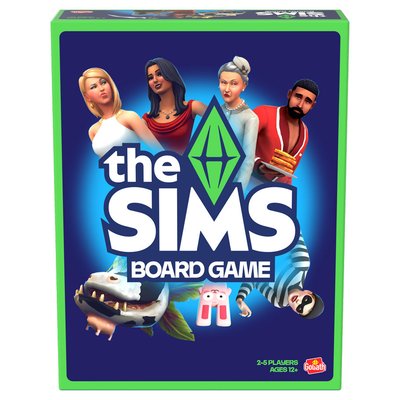
So, for starters, we've got number 31, The Sims, the board game. And oh man, oh, what a way to start. This is a real heartbreaker for me. Uh, personal story time, folks. I was a video game designer for 20 years. One of the biggest games I ever worked on was The Sims. I was the lead designer who brought over from PC to PlayStation. Sims is hugely important to me in my career. It's what led to me getting a job to work at Lion Head so I could become one of the lead designers on Fable 2. I owe a lot to Will Wright and all the folks at Maxis and EA and um Edge of Reality to give me the opportunity to work on one of the most beloved video game franchises in history. And so you can imagine I was certainly interested in how are they going to turn into a board game because on paper The Sims is a nobrainer.
Um, you know, I mean, it would so easily transplant with the idea of needs for your Sims you have to keep track of as you build houses for them and try to build relationships and manage their lives and all that. It'd be perfect. But that's not what this game is. No, no, no, no, no. Um, this I guess you could call it kind of a a party game sort of um because it's essentially a worker placement game. There are six quote iconic locations. By the way, um I have obviously have not filmed this game. I did not like this game, but the YouTube channel uh Merry Married Meeples, they did a very good job doing a how to play. So, I'm just using their video. A link for their video is down in the show notes if you want to get more details about specifics of how this game plays. But, basically, it's a worker placement game. You've got your what's called the plumb bob. You know that uh that green diamond thing that floats over the Sims heads because you're the Sim. You don't have a family of Sims. You don't grow.
You you know, you you it's just you. And every turn you go to one of six locations. Um, going there will make you drain a need. Uh, which means you'll have to refill it eventually, which I guess is kind of Simsy, although it's weird. Why does, um, why does going to a restaurant make me suddenly hungry and then I have to go home to refill it? I mean, you know, the the the ties to Tim Sims are tenuous at best, let's just say. But anyway, you go to a location. Um, you consume or you you you empty out one of your needs that has to be taken care of by going back home because that's the location you go as well. The reason you go to a location is because there's icons on the location. Those icons match a bunch of icons that are on object cards that are off to the side and every turn you want to grab another one of these object cards. And you're basically you're trying to set collect icons because you have an objective. Hey, I've got to get three of this or this icon so that I can be outgoing or I can be a bookworm or whatever it might be. Um, and this is how you score points. You grab a bunch of cards, but most of these cards have other actions they'll do like let you take another turn or steal cards from another player or various incundry things. Uh, it's a wide variety of stuff and a good deal of it is all about screwing your opponents over. So, every turn, you're just going to go to another location to get access to some icons that will let you draft a card so you can set, collect, complete an objective so you can get another one. And every once in a while, when your needs are too low, you go back home and you can refill your needs before you go out again. Oh, and one other thing. If you go to the same location as somebody else, you have
an encounter with them, which means both of you independently have to roll this die. And um you might get lucky and yay, one of my one of my needs is met because it was a good encounter for you. Or it might go bad for you and it was an awkward encounter and you will lose one of your needs. Or it'll be really bad for whoever you met with and you will steal a card from them. Just straight up go fish steal a card from them. And the thing is both you and I when I go to where you are, we both roll the dieice independently. I didn't want to interact with you, but all of a sudden I go there, you've stolen something from me and I've lost a need. And this is supposed to be fun. I don't get it. This is clearly not for me and my wife Jen. has it is only surface level having anything to do with the Sims. Um it's not true to what that experience was that was so important to me. So for me it's a huge letdown. But I guess I can see that folks who just kind of want you know you know a chaotic in-your-face everybody sitting down and laughing at the misfortunes of their friends uh and causing that misfortune. Well this and and everybody likes the Sims then that might fit the bill. I mean, I guess that's one thing that's true about the Sims. In my experience, a lot of people when they first start playing the Sims, they become sadists. They make swimming pools, put the Sims go swimming, and then they remove the uh the the ladder so the Sims can't get out. Or they make a bedroom, the Sim goes to sleep, then they remove the only doors and windows, and then the Sim wakes up and realizes they're trapped until they starve to
death. There's all kinds of weird stuff you can do to your Sims. And I think mo a lot of players kind of go through a period where they experiment and push boundaries. At least that's what I know based on all the feedback and market research that was done back when I worked on the Sims myself. So hey, don't do that to, you know, an AI character in the world. Do that to your human friends. And if that sounds like fun, maybe you should check out Sims the board game. But for both me and my wife Jen, it was it was did not did not live up to um to the pedigree in my personal opinion. But anyway, that was number 31, The Sims, the board game. Okay.
Okay. Let's move on to something a bit more pleasant with number 30, Zoologology. Now, this game is clearly designed to be played with a big group of like five or six people. I am ranking it so incredibly low on this list because it officially supports two players, but I'm here to tell you I don't think it should. I think the more people you have around the table, the better because this is very much a uh very, you know, silly um you know, party atmosphere kind of game. How does it work? Well, everybody has in front of them a card that represents one of Well, if you're looking on screen, you can see the channel Fun with Boxes filmed uh just the basic game where there's just 16 animals, but I think you can almost double the number of animals if you add, you know, like a second, third, fourth, and second, third, and fourth board. So, there's just a ton of animals out there, and you know, you have an animal that is one of them. You can't see your animal, but everybody else can because he's in front of you pointing away from you. And what you do on your turn is you got three different cards that are things like what is the laziest animal or which animal is best at birthday parties or I mean I made that one up but there's really like which one would be the best emblem of justice. You know there's just a weird you know like normal stuff like which one is the hairiest you know which one is the uh you know the the angriest but all kinds of questions weird ones and normal ones. And on your turn, you are going to play one of these cards.
And um everybody else looks at your card and everybody but their own. Everybody can see everybody's animal except for their own. And then 3 2 1, everybody declares the one they think is the hungriest or the one that wants to stay out of the sun or the one that best symbolizes justice or whatever it is. And everybody reveals at the same time. Um, and there is a winner based on whichever got the most votes. And that is interesting information for whichever player has that animal because then that player goes and says, "Oh, I I mean, yeah, there are six people playing. Four people agreed that I have the hungriest animal. Do I have the hippo? Do I have the hungry hippo? Because I can't see the hippo and I can see what everybody else has and I can see what else is available. So, I need to start thinking about which animal is mine. Um, so you're asking a question that can hopefully let you learn more about your animal, but everybody has the potential to learn about their animal. And then you draw another card and it keeps going around and everybody is racing to be the one to say, I think I know what my animal is. And they take a guess. And if they do it, they score some points. If not, it's no big deal. And it's just a race for points. It's a very simple game. Um, and again, the more people you have, the better. played as a two-player game. Uh, I've got my animal, you've got your animal, and then there's two neutral animals over there that don't belong to anybody. And what Jen and I found is every single time we both
agreed for every one of these questions, oh, it's almost always one of those two neutral animals. So, we're not really learning anything about our animals because you're really limited to what questions you can ask. And it just did not work. It's interesting. The game has two modes, a competitive mode and a co-op mode. First of all, I will say the co-op mode is much better because you can really get screwed on the card draw. You can end up drawing cards that just make no sense, that are completely useless, but you've got to play one and ask the question. Um whereas in the co-op game, everybody's working to, you know, successfully before time runs out, everybody has to figure out their animal or everybody loses. So, everybody's more invested in trying to ask questions that can help everybody around the table figure out what their animal is. So, there's a little bit more strategy and a little bit more spree decor. It's just a better overall experience, or at least I assume it would be played as a two-player game. I would not suggested either co-op or competitive. And so, that's why it comes in at the bottom of my list. It's charming. I think it would be a lot of fun for kids. A lot of the questions are very silly. A lot of them simply make no sense. You'll look around and say, "Well, none of these animals fit this bill. I don't know how to answer this question." But um the more players you've got, the less likely it is to break down. And so that's why I would only recommend this as a high player count game whereupon I think I might enjoy it with the right group. But as a two-player game, I say no, no, no, no, no, no. It is number 30 of the month, Zoologology. All righty. Moving
on to number 29, we have Pulitzer. And I was very excited about this one because of the central gimmick uh which you can probably see on screen right now. Here's a video from the in focus series on board gamege geek. This is one where we are uh newspaper reporters trying to win the puliter by reporting on all kinds of high government crimes. Um it's set around the Watergate era. I would never say we're specifically reporting on anything in particular, but you could take a guess at what we're writing about. Anyway though, um it is a worker placement game where we have a set of five reporters, if I recall correctly, numbered 1 2 3 4 5. And every round, we're going to take turns deploying our workers to different sections on the main board, uh which is a very cool board, uh long vertical one that represents the newspaper building we work at. So, we're sending them to different departments, including out on the street to the whip up leads and write the article itself or down to the distribution area where we can make more money by selling the papers and get more um you know, trust from the public. Uh but there are special powers we can activate that will act that will modify the other sectors. There's uh stuff you can do like get extra workers for a round and you can level yourself up. All kinds of worker placementy stuff. And all this is very nice, but the twist is our reporters are numbered 1, two, three, four, and five. We put them face down. And it's not until everybody has deployed, all their workers, that we flip them back face up. So, it's kind of like worker placement with blind bidding
to see who will get to do a thing first, who will get access to better rewards. And, you know, we've seen this in a bunch of games over the years, like um lock up and and plenty of other ones. It it generally is a system that works very well and I think it works great here. But that's not what's really cool about this game. When you do the reporting action, which means you draw a certain number of cards that represent the subject and the lead for your story you're writing, you go to your own personal conspiracy board. you know, just like, you know, the meme that everybody's seen of Charlie um from, you know, uh uh Philadelphia that uh you're you're trying to mark certain subjects in certain columns and then connect them with a literal piece of string. And the bigger the connections you can make, well, the better the writer you have, the longer connections you can make between the things. Everybody has their own goals that they're trying to hit certain spots and make certain patterns.
It's really neat. It's a lot of fun. It's a great tactile gimmick. It didn't have to be that. It could have just been a flat board and we could have just put markers on the stuff. But, um, you know, that string which, you know, does, you know, represent the tenuousness of the connection between this story and this story. I think it's a really nice touch. It really enhances the flavor and the feel. And it's got a great presence cuz they all stand up. They come on stands. So, it really feels like you're working at a corkboard. It's very, very nice. So, there's a lot to like here. I think the worker placement is good. I think the central gimmick is great. The production quality is fantastic. So why does it come in at number 29 two-player? I would happily anytime, anywhere play this game at a higher player count. Uh because then it's just me against you and a few other players and I don't mind losing out on the blind bid to a human being who outmaneuvered me. But when you play as a two and to a lesser extent as a three-player game, there are extra meuples representing government agents trying to block our investigation. And that's cool thematically. Um, and they are deployed, you know, with a with a randomized system and some of them are face up so you can see what their numbers are. Some of them are face down and you have to deploy and there are several actions you could go to that if you go there and it turns out you were not strong enough and the government agent beat you, you get nothing. You don't get a consolation prize, you don't
at least get some benefit for, oh, at least I investigated the cover up, anything. No, you just get nothing. And that, you know, the game really and and in a two-player game where it's still competitive, but there's kind of a semi-ooperative element now because the agents are trying to basically stop all the riders from reporting, but I could get royally boned and you could get off scot-free and get totally lucky. Uh, it is way too much swinginess to this game for me and Jen. We found it very, very frustrating. Again, I don't mind losing a blind bid to a human, but just to dumb random luck, and it didn't happen to you, but it did to me, I I did not care for this system. Now, if they had done the tiny bit of extra work, cuz they were almost there, they could have very easily turned this two-player mode into a full co-op experience where I'm working 100% with you to beat the government agents. Then, I don't mind if luck totally screwed me because it screwed me and you. we're all working together and maybe you'd be able to help me out or something like that. But they didn't do that. They turned the two-player game into a semi uh co-op game and uh and it just intro, you know, just really brought the game overall experience down for me. It's just the the game can brutally favor one player over another um through just random mis uh misfortune and the game did not need that. If it had been a co-op, it would have been something completely different. If they if they just would have said, "Hey, you know what? All the government agents are always face up."
So, it's more just like, "Oh, some, you know, the other players went, they're powerful, and we just have to work around them." That would have been fine, too. IT'S THE HAHA, I GOT YOU. You achieved nothing this round while your other player screams ahead. Are you having fun yet? No. No, I was not. I did not care for that. There were a lot of different ways the developers could have approached it. And fingers crossed somewhere down the line they will revisit this cuz I think all the raw mechanisms are here to turn the two-player mode into a really great co-op or at the very least come up with alternatives that takes away the brutal unfair swinginess of the two-player experience that really brought down this game. If it weren't for that, if I were rating this as a higher I haven't played a higher player count, but I suspect I would enjoy it much more and it would come in much higher. But as a two-player game, Pulitzer sadly comes in at number 29 of the month.
All right, moving right along. We've got number 28, Thiefdom, which I have not covered, but here's a video from Slicker Drips. Tom Heath did a great job uh capturing the feel of this game. And I got to be honest, I knew going to this game I probably wasn't going to be uh for me and Jen. Um, but I still had to try it anyway because it evokes in me a great sense of nostalgia back in the uh the classic age, you know, the late 90s when there was a boom in stealth-based video games like Tenu and Thief and Metal Gear Solid and heck, even my own Siphon Filter. It was like a, you know, an explosion of, you know, a renaissance of stealth gameplay. And this game promised and delivered to capture that feel in cardboard form. This could have almost been Tenu um the the board game except it's you know set in you know medieval instead of Asian uh area where and we're uh n we're not ninjas we're just you know more traditional thieves I guess it's closer to thief dark whatever it was dark project I think oh man I used to play a lot of video games back in the day back when I used to make them but regardless um this is a game where players each control a team of thieves that are sneaking around back alleys using all kinds of cool thematic thief equipment to skullk around in the shadows and rob from rich people and um stay one step ahead of the guards. Heck, even rob from the guards if you can pull it off. Um you'll pull off daring escapes into the catacombs only to pop
up in another part of town and uh invest all your stuff to upgrade your character and get cool new uh you know tools of the trade and score victory points. And you know that's what it offered and it totally delivers that. Incredibly thematic game. There's a lot to like here. I think there's going to be people who really, really dig this game if they like pick up and deliver. And that's my one problem. This game is so pick up and delivery. Such a huge portion of it is, hey, I forget what it is. I think each of your people gets like three, maybe it's five steps. I forget how many steps you get every turn, you know, and you move them all and then it goes on to the the next night and and you know, the the guards move and the merchants move or the you know, the the nobles move and then we all get to move again. And uh you know occasionally we get to force the other characters to move around. We can even um force you know the guards to move away from me and over to you. So you get caught. Haha. And you get thrown into the clank. But don't worry, you'll break out and you continue uh thieving.
You just lost some of your ill gotten gain. But it's all about I need to go break into this house over here and steal this stuff and then trapes all the way across the board to deliver it to this merchant this uh you know black AR this uh you know black market dealer on the other side so I can score my points and then oh now from there I got to go over to this guy and steal from him to take it over here. And while I loved the sneaking around feel and you know and again the thematics of all the tools you can get and level up with and the characters, it's all great. It is still a game that is 99% okay I just got to over the next three turns I got to move 24 steps and what's the best way to do it? You know clue style just step step.
All right I'm halfway there. I'm a third of the way there. Next turn I'll get further. And in between that um also if I can force the guards to move towards you and away from me so you get caught not me. So there's a little bit of take that which I'm not crazy about but it was really the pick up and deliver that was just a bit I I wish there had been more of the sneaking and less of the walking uh you know basically and oh and there's there is one really cool element of it. Like I said, we have a team of three thieves, right? And um we have four action markers every round. In secret, I guess you could call it a programming game. In secret, I pick my number one, two, three, and four chip, and I decide which of my thieves is going to move first, second, third, and fourth. But you say, "You only have three thieves. Why are there four?"
Because the fourth thing I can move is the guards. So, as I look at the boards, behaving around, I see, oh wow, I'm about to get nabbed. I better I better either have that guy move really quick away from the guard or my first move could be to move the guards. Um you know because every round I get to move my three people and the guards to either uh void detection or ideally in a perfect world mess things up for you and you are trying to do the same thing as me. I might say, "Oh, I'm perfectly safe. The guards aren't going to move until the end of the round. I don't have to move really quick. except I can never be sure that you aren't going to make moving the guards your number one or your number two action. So that's where I need to be afraid because we're basically hunting each other. Like I said, um you know, it's it's very thematically appropriate.
And for people who like pick up and deliver where players, you know, in between thinking about how to most efficiently pick up and deliver, we're also hunting each other. You're going to have a great time. Now, I will admit I only played it solo. I didn't play it with my wife, Jen. She was not interested at all. I really I think I enjoyed it more as a solo game quite frankly because then I didn't have to be messing with her. It was just 100% a puzzle of trying to stay one step ahead of them. But even still, the pick up and deliver was a bit overdone for my tastes. But if you there's a lot of people who love pick up and deliver, who love board traversal. And if you're one of them and you're looking for a really an much more strongly thematic than most pick up and deliver games, quite frankly, you might want to check it out.
Just cuz it's low for me doesn't mean it would be for you. I'm here to tell you it's a very good game. Uh check out Slicker Drip's runthrough. There's a link down in the show notes so you can see it in action. But for me, sadly, Thief came in at number 28, even if it was a nice nostalgia rush. Okay, let's talk now about number 27. Where is that? Um, which I'm using a video from the dice tower. Thank you, Tom. I did a great little brief summary of it. And this is a very fast playing game that is much geography test as it is board game. Basically, it comes with two different modes where you're either uh building to a communal map of Europe or there's another version of it, South America. We played the Europe one. um you're building towards a communal map and every turn you end up getting a card that represents a city somewhere in either South America or Europe and you have to look at the cards that have already been played on the board and figure out right where does this city relative to all the other ones that are out there. Is it to the east, the south, the north, or the west? Is it in between them? You can actually go on ahead and take these cards and put them in between existing cards and cause the other cards to slide to make room. And um ultimately if you're playing the score as you go communal map, you immediately flip over, see if you got it right or wrong and score points and you're racing to be the first to score I don't remember how many points. Um the better way to play, I think, is where everybody is drafting these cards and building their own private map and everything just gets built face down over and over. That's what actually Tom is showing here. And only once all the cards have been played
and everybody's got this big old map of a bunch of cities in Europe, do they then flip them all over and see how well they did. Because the brilliant thing about the design of this game is these cards when they are next to each other um on each of the four sides, they create a little completed circle with two numbers. One of the numbers um is red or I'm sorry, orange and one is white. the orange number. You know you've put these two cities correctly um relative to each other if of the two numbers, the orange one is the smaller number and the white number is the larger number. Which means um you know some things, hey, this thing could actually be legal to say it's to the west and to the south because, you know, it's kind of on the edge there and the system just brilliantly works it out. So it's very easy to quickly score and just shuffle up the deck and try again. And I've got to say, I highly, highly recommend this game for anybody who's interested in geography or really wants a uh fun little geography teaching tool.
My only problem with this game is it's going to be very lopsided. There is nothing in this game that uh helps out the more geographically challenged among us. I'm talking about myself who are up against walking atlases. I'm talking about my wife. Uh, and it's a real shame because, you know, I mean, yeah, I know I'm a broken record these days, but man, there could have been like a co-op mode where everybody's working towards a common score and, you know, the rules could have included like a phone your friend where, oh, I got to figure it out myself and I only get three times. I get to ask somebody else, you know, or like you could even keep it competitive. One of the most brilliant things about paperback, which was basically crossing Scrabble with um deck building, was the fact that I could look at my hand of cards and realize, "Oh, I'm just not sure what to do with these cards." And I could literally open it up so that other people around the table could offer to help me. And that's a way they could score points on my turn. you know, something that brings people together because uh you know, if you got a bunch of people who all know some of it, but nobody's particularly good or better than anybody else, I think everybody's going to have a good time. But if you have somebody uh if you're in a situation where there are people who really know their stuff, the rest of the players might not even show up because there's no there's no leveling field.
There is kind of because there are these additional cards you can throw in. So instead of cities, you're actually talking about monuments and whatnot. And so they're a little more esoteric. So in theory, but you know, that's just pure luck. You could just get screwed by luck and oh, the person who was already struggling gets all the tough cards and the um uh the people who knew it really well get all the easy cards cuz you know, some cards are easier than others. Moscow is east of London. Everybody knows that. I'm not think I don't think Moscow's in. I think maybe there were some Russian ones. Anyway, um as as opposed to, you know, two cities in Baltic stakes. I don't know. um you know unless I was from there or unless I had really strong knowledge. So I like it. I respect it. I think it would have really really great use cases. I mean it's a wonderful teaching tool. I just it just I don't think it was actually presented in a way that works well for me and my wife. Uh which is why sadly it comes in at number 27. Where is that? All right.
Let's talk about number 26. Clans and Glory. And I'm using a video from the great channel um Ludovox. They always make things look so good. Uh link for their video down in the show notes below. Anyway, what is this? This is again it's a very clever puzzly Euroey area dominance game. Basically, you've got a uh series of seats at a clan gathering in the Scottish Highlands, and you've got a handful of cards that are numbered, I want to say, 1 through nine, or maybe no, I think it was like 3 through nine or maybe it was 3 through 7. 3 through 7, 3 through eight, 3 through nine, something like that. And if I recall correctly, four different suits of colors. And on your turn, you're going to take one of the cards you've got and play it into any of the seats anywhere around the board. But there are some restrictions when you're putting adjacent or opposite across the way from existing cards. You have to match the existing cards either by number or by color. So, hey, there's a seven over there. Well, I could put a seven across from it. Oh, it's a red seven. I could put a red three across from it. And so, that's the big constraint as more and more cards get played. And as more cards are out there, the more con tight and constricted it is to get the cards played. But the more important thing is after you play the card, you have the option for that section of the board to put one of your little flag tokens. And uh and if somebody else plays a card to that section of the board later, they could put one of their flag tokens on top of yours. And we're going to keep doing
this until all the space are full up and everybody's played all their flags. And then we're going to score. And here's the interesting thing about how scoring works. Whoever is there first, whoever put their first flag in a given section scores all of the lowest value cards in that section. So if I put a three in a section and I go ahead and put it there, I'm thinking, well, hey, you know what? I've got three more threes in my hand. You know what I'm going to do? I'm going to get in there at the bottom and I, you know, so I'm the first person there and I'm going to try and get all my threes into that section because if I can get like three or four threes, that's nine or 12 points. That's pretty good. I mean, that's not as good as two sixes, but there's going to be a lot more competition for those sixes. Maybe people won't try. You know, I'll be able to get a lot of threes out there, and so I'll be able to grab a bunch of them.
And then you come along a little bit later, and you put a four out there. And then you put your thing down like, "Haha, you're going to get one, maybe two fours. I'm going to get a whole bunch of threes." But then here's the trick. You don't put a four down there. I've been putting all these threes. I was the first one there. I'm going to get access to them. You then put a one there. Or again, I mean, if I've been putting fours there, you put a three there. And then all of a sudden, all the fours I've been collecting, I've been collecting a bunch of fours, they belong to you because now the lowest value in that space is a three. And all the fours I was trying to build up, they belong to the next player. So all of a sudden, oh my gosh, how am I going to deal with this? Ah, and that's the brilliance of it. This is a very clever little mind game of, you know, trying to anticipate where you think your opponents are going to go. You don't know what cards they have. You don't know what it is they're trying to build. You got to take gamles and players can definitely mess with each other. And at the end of the game, um, wow, you know, I the one I thought was going to, you know, but heck, you know, all of a sudden this one's not going to score me very well, but maybe I can get some of the lower value ones in there. or um maybe I can get something lower still. Or maybe I'll be the third player in that zone two so that I can get the higher value ones and I try to fill up the spaces before you can get any more. But anyway, you took all the work I did and now I've got to come up with another solution. Don't worry, I'm going to do the same to you at some point. And so, as a two-player game, this game is exceptionally cutthroat. I don't think it would be quite so much at a higher player count because it really wouldn't be possible to keep. It'd be
more about just, you know, tactically seizing advantages when you can as opposed to a two-player game. Oh, it is a battle of wits in the biggest way. And I think it's really sharp and it's got really great art and it's very, very fast and very clever, super sharp, elegant rules and I think for a certain mindset, a lot of fun. But this is not Jensen's in my mindset. As a two-player game, it was way too cutthroat for us. which is why as much as I liked it, there's a lot to recommend here and certain people are going to love this game for me and Jen. Clans and Glory uh was a miss and it comes in at number 26 of the month. Okay, number 25 on the list is Honeypot. And this is odd. I I did not do a sponsored runthrough for this, but Kimberly did. She actually did a runthrough of the multiplayer version of this game that you w you would normally call this an I split you choose, but um officially the catch line is it's an I stack you choose because everybody in the competitive game is trying to create a stack of cards for other players to go digging through uh to find treasures, you know, basically to find lots of honey because we're all bears. But uh when I'm creating a stack of cards, I might be layering traps in there, hoping that your greed will end up falling a foul of one of my traps and causing you to lose more points than you gain. It's a clever game. I would never want to play in a million years. That's why Kimberly covered it for the channel and not me. But I did end up getting a
copy of it anyway. And while I did not play it with Jen, I did play the solo mode. And I'm just here to tell you folks, the solo mode is a blast. If I were a solo gamer, this would probably be in my top five of the month because it is fast, it is puzzly, it is tensionfilled, there's a lot of drama, and it's really sharp. But, um, I am rating it. Would I want to play this with my wife, Jen? That's how I rank all my games. And the answer is no. Because, again, it is a very aggressive, in-your-face, um, trap laying game where everybody's trying to outwit each other and outsmart each other. So, it was a good fit for me, but I can say it's a great solo game. And you're going to see a sponsored preview for it coming on the channel very, very soon. And uh yeah, I was very impressed by it as a solo game.
It's just I'm not a solo gamer, which is why um Honeypot came in at number 25 of the month. All righty. Okay, let's go on to number 24. Dorf Romantic Light Luggage. I was definitely interested in checking this out cuz I really liked Dwarf Romantic, the board game. uh which in case you don't know is a cooperative tile layer based on I guess a very popular series of video games and um it's a really cozy, comfortable, relaxed, laid-back game that famously you cannot lose at. So some people would say it's not even a game. You're just trying to do your best. There is no loss condition. You just see, hey, you play, you try to lay out your tiles and make the best um dwarf, which is German for village you can and score as many points as you can. And the thing that made the original Dorf romantic, the board game, so interesting to me was that it introduced a video game style level of achievements that throughout the game as you complete certain objectives like make a river a certain length or a village a certain size or whatever it might be, every time you complete an objective, you score it and another one shows up and you try to pivot and work towards that while you're trying to work on several objectives at once. The beautiful thing about Dwarf Romantic is over time, the more you played, you might have, you know, half a dozen, even upwards of a dozen objectives. You couldn't possibly do them all, but every time you complete them, you unlock more stuff to add to the game. So you, every time you play, you get a different combination. And it was this really wonderful ecosystem of the game evolving based on your skill and your accomplishments, your achievements. I
thought it was great. So, light luggage is basically a travel version of Dwarfromantic. All the tiles have been shrunk down. I would say they're I don't know exactly. I'd say they're 30% smaller. The box itself is a tiny little box. So, it's easier to play wherever you want. It doesn't take up much table space. Uh it plays very, very fast. And it's the exact same cooperative. Hey, I draw a tile, pick where it goes. Then it's your turn. You draw a tile, pick where it goes. and we're just collaborating to make the best thing we can completing objectives along the way. And so there's a lot to like here. Here's the problem for me, though. It excised completely the achievement system. It has left that aside. Instead, it replaced it with this idea that every time you play, you want to score progressively more points than the previous time you played because if you can, so it gives you, I guess, more of a directed objective to try to do. Hey, every turn the every time I play, the only thing I care about is scoring more points than the last time I played because if I do, I will unlock another envelope and those will be new types of tiles that will mix it up. Eventually though, you're going to unlock everything and then you've got it all.
And then you still just keep playing try to beating your best score and that's unfortunate. If that had been what the original Dwarf Romantic was, I would have said, "Oh, this is a nice cozy pastime, but I it's not for me. I don't want to keep coming back." I wanted to keep coming back to Dorf Romantic because I wanted to open more envelopes. I wanted to see more combinations of a wide variety of special power tiles and mixing and matching those with objectives and stuff. In this game, it's really simplified and streamlined. It plays much faster. It takes up less space because you you can travel with it. It's light luggage. Just throw it in your bag and go with you on vacation. And it's still a fun game, but just not as compelling for me to come back game after game if my only real goal is to beat a high score table. I wish a little bit more of what made the original so special had a little bit. There is some achievement locking. There's one envelope you can unlock once you reach a certain point threshold, but it wasn't quite enough for me. Now, if you really love Dwarf Romantic, it's worth checking out. Um because if you love it more less about the oh the constant chase to unlock more achievements, if you're just more like I just like chillaxing with my friends and making a lovely little village, that's still here and it does that very well. But it just doesn't have that compulsive drive. At least not for me and Jen, which is why it came in at number 24. Dorf romantic light luggage.
And I should say before I go, thank you very much to Should I Buy This Board Game uh YouTube channel. They did a nice little summary of the game answering the question in their opinion. Should I buy the board game? Well, if you'd like to know what they think, their link is down in the show notes so you can see this in action. Anyway, moving on. Okay, let's talk about number 23. Aethermon collect. Now, I've not covered it, but Tabletop for one YouTube channel has done it, and the link for their videos down in the show notes. What is this? This is very much inspired by Pokemon or you know that kind of hey collect a bunch of cool animals and um to score points in this game not to actually fight other animals. So that makes it a big step over Pokemon as far as I'm concerned. We're just very much appreciators of these animals and we're I guess we're still trying to collect them though. But anyway, it's it's a very simple game that you can either play cooperatively or competitively. And the way it works is you lay all the animals out in a big old grid as you can see here on screen. And on your turn, you're going to pick this game piece that represents us as the animal collectors. And it's like a rook in chess. You can move as far as you want, north, south, east, or west. And wherever you land, you will pick up that animal and add it to your own personal collection. And you're trying to set collection. If you got one of the yellow animals, you want to get all three of the animals. If you got one of the dark blues, you want to get the other dark blues. Actually, one of the things, well, all the animals are really, really nice. The art is great. I got to give a big do of the cap that they did a great
job making it easy to at a glance identify all the I mean, there's it's a bunch of set collection of there's all these different sets of animals where if you've got one, it's worth points, but if you get all of them, it's worth a lot more points. So, hey, I want to get all the oranges or all the pinks or all the light blues or all the dark blues. And every one of those colors, in case you're color blind, has um unique icons on them as well. So well produced game. The game looks good. Uh it plays fast and uh it's it's a simple enough thing where on my turn I can move northsoutheast west as far as I want. Oh, I can see that'd be perfect for me. That's my next purple one. I got to get it. But if I go grab that right now, what am I doing? What opportunities am I giving to you? Oh, you'll get your third and final light blue one. And that's worth more to you than getting that purple for me. So I want to get that purple, but I want to work my way around. or I want to use one of my special artifacts to change things up, to literally move things around from place to place to modify the grid. The game comes with a bunch of different artifacts with a bunch bunch of different special powers so that um you can create circumstances where I can get my stuff without ideally creating opportunities for you to get the stuff you want while still at the same time hoping that you will create better opportunities for me. That's if you play competitively. And the thing is, the competitive did not work for me in Jen because you spend as a two-player game, I should say, so much time spot-checking your opponents, spending so much time trying to ensure you do not give an
inch, give them more than what you're going to get. And I found ultimately it really kind of drugged the game down how much time I was studying Jen's cards and my own. And it just kind of bogged it down. Which is why I was very excited. There's a co-op mode instead, which is much better because uh in that mode, we've got to collect them all. But once I've collected a light yellow, I only I can pick up the other light yellows and only you can pick up the greens because you've started collecting those greens. And so we've got to get them all. But we got to puzzle out together how we can most efficiently move around. And now I don't mind the fact that I'm paying attention to you because it's in both of our interests that we're communicating saying, "Okay, I I really need to go over there because if I can get that that'll, you know, all that stuff." So, I think it's a much better co-op game than a competitive game and I'd much rather play that way. All that said, I have one big problem with the co-op game, unfortunately, and it is that those artifacts I was talking about earlier that have all the cool powers that let you manipulate the board and do all kinds of things, they are left out of the co-op game. No. And I don't know why they could have increased the co-op difficulty, you know, made a harsher timer so we have less time to score everything and then given us the artifacts so we can use them to puzzle our way through it. If that had been the case, this would have gone much higher because I love the look of it and you know, it's it's a it's just a very tiny box, just a bunch of cards and that one nice looking token that you move around.
But the competitive game, there was too much effectively hate drafting or hate movement um so that you could get the cool powers. But then if you played the co-op, which was much more fun, the powers went away. And I'm not quite sure why. I bet you anything there's probably a variant that would let you go on ahead and play the co-op with the powers. Maybe a couple of them would have to be taken out because they're very much in your face messing with other players. But that was my big issue. And it's that combination of design choices that unfortunately brought um Aethermon collect in at number 23. Uh, I can imagine for other people, you know, especially if you play at higher player counts, I think the competitive is going to be a lot more engaging. And I think the co-op would too, quite frankly. But as a two-player game, I was left. It wasn't quite what we were looking for.
Uh, sorry, Aethermon the collect number 23. All right. All right. All right. Let's move on to number 22, Fantastic C. And we've got here a video from Better Half Reviews, who did a very nice uh summary of the game. link for it down in the show notes. Uh thank you uh very much Allison. What is this game about? Well, we are trying to repopulate corals by introducing various wildlife to create the most harmonious ecosystems. Um and we do that by taking our hand of cards full of all kinds of colorful fish um valued anywhere from 1 to nine, I believe. And on my turn, I'm going to take one of the cards in my hand and play it out to this big grid of fish that are already out there surrounding the central coral card. And whatever my fish is next to hopefully is smaller than what my fish is so that my fish can eat the adjoining fish. If I play a five down and there are any fish next to my five that are lower than five, my fish can eat one of those. And if I do, I get to claim that card and either put it in my ecosystem, i.e. scoring pile or my reserve, i.e. special power pile. And um then my turn is over. When it comes around, I'm going to play another one of my cards. And hopefully wherever possible, I'm trying to have I if I've got higher value cards, then I'm trying to set collect in various ways. Every time you play, there's going to be different scoring metrics. whether you're trying to score straights or you're trying to get all odd numbers or all kinds of different things to so I'm either trying to collect fish to put
into my scoring pile based on this game's unique combination of scoring metrics or if I grab a fish that isn't good for scoring I put it in the special power because once I've got a pair of that fish or fish in my reserve pile I can discard them to activate that fish's special power that will do all kinds of interesting things. The game comes with nine different fish and nine different special powers. Also, the fish all have a special power that happens when you first play them. So, the fish have a power when you play them in addition to hopefully eating something else. So, you can score power it. And then when you collect them, you can get different usually more powerful special powers as well. And then at the end of the round after everybody's played their fish and a whole bunch of fish that were there have gotten eaten, there's now new fish that we've placed out there. The tides uh which every round the tides are going to change from, you know, going um south to west then to north and to east and south. They are going to push all the remaining fish. Some fish will get pushed too far away from the coral and they are forgotten. And then we refill the area. We draw a bunch of new cards and we continue trying to fill up our two separate piles by smartly playing cards to activate their powers. And of course, as you might guess, the higher the value of fish you play, the worse its power is because its main power is, oh, I can there's a lot more fish I can eat. If I play a seven, it's much more powerful than a three. It can eat a lot more fish out there, right? But a seven doesn't have anywhere near as good uh special power that it can activate. And so that's my one problem with the game because that's the fundamental design.
Um that you know a one which can't hardly eat anything at all should have the most powerful power in the game. Um you know and a nine which could eat anything has the weak. Now the high value the I would say the powers do generally get weaker. My problem is the number two card, the sardines, because the sardines, which should be the second most powerful special power in the game in a two-player game, is practically useless. And I'm not sure, I didn't actually count the cards, but I got the impression there are more sardines than anything else out there. There are so many sardines. The special power of the sardine is it can't do anything. When you play it, it doesn't do anything. But if you play it next to another sardine, it goes from being worth a two to the two sardines count as one to, you know, it's like you create a school of sardines. If there are like three sardines adjacent to each other, that's a two, a two, and a two. And then I put a sardine next to those anywhere. Then the sardine I just placed is an eight, which means it could eat the biggest of fish. And it's also very, very hard for it to get eaten. So a school, the bigger it gets, the more powerful it gets. And like I said, twos are very common. You eat a lot of sardines. Here's the problem. In a two-player game, the reef structure that these fish come out onto is very small. And when Jen and I played it, we found there didn't tend to be a lot of sardines next to each other. And if you start a round and you're like, "Oh, I've got sardines. Oh, there's no sardines out there." Well, it's very unlikely this sardine will get to eat anything. So, how about I just waste a turn and do nothing. And I don't think that would be a problem at a higher
player count because there's literally twice as many corals. there's like 30% more fish out there and those low-V valueue um fish will have a greater opportunity to do what their cool power is. And the problem with this game is if you play a card, there were many, many times, it's not just the sardines. There could definitely be circumstances where, oh, I've got a five and there's literally nothing I can eat and the five's power is just not going to work in this case because I think the five was the one that's the puffer fish that like knocks things into the coral and there's nothing that can get knocked into the coral right now. So, but I have to play it. I have no choice because there's no consolation prize. There are many times that I found while playing this as a two-player game that I've got cards where I'm literally just wasting my turn. There's nothing I can do with them because of the circumstance of the board. And that wouldn't happen at higher player counts because with more players, there would be more fish out there. There would be more fish appearing, more fish disappearing.
There'd be more literal churn. and the there would be greater opportunities to use all the fish. But in my experience playing it with Jen as a two-player game, there are often circumstances where you will have a frustrating turn or two because well, I'm not getting anything done because of the random card I drew and I just wish there was something you could say, hey, you know what? I would rather not play a card and I would just rather just put this in my reserve pile, you know, or something like that or um I'm not quite sure what something so that in a case because it can just happen a lot where and and for me I don't like having dead turns and I wish the game had just done a little bit extra so that if you're in a situation where because of the circumstance on the board and the random cards you drew, you're not going to get anything this turn because there just aren't more players to create more opportunities for you. there'd be at least one get out of jail free card that you could collect and use on a future turn. You know, it's kind of like Burgundy, Castles of Burgundy, the greatest board game of all time. It relies a lot on random d luck of dice rolling, right? You roll the dice and those dice say what you can do.
And sometimes those dice say screw you, pal. You can't do anything you want. And you know what you do in those cases? You say, "Okay, I'm just going to discard the dice and get a token that lets me manipulate the dice on a future turn." This game needs something like that. Um, and if it had it, or alternatively, if I played at a higher player count, I suspect it would rank much higher because the art is phenomenal. The cleverness of the of the tide, shifting things around, and you know, all the there's lots of powers of moving fish around and all kinds of neat things. There's a lot of great ideas here. Um, a lot of cool neat powers. Again, the sardine power is really, really neat if there's enough opportunity for it to evolve if you're in kind of but uh plenty of times it could be useless, which is why there just needs to be that little something extra that could have taken this out of what I call this is my number 22 of the month. You know, everything else about this game is a top 10 of the month easily. And again, at a higher player count, I suspect that's where I would have put it. But I'm I'm rating it as it is, not based on what it could be with a few house rules, which honestly wouldn't be that hard to come up with if I were to put some thought to it. I think there could be some cool things. Well, you know, I don't play it.
I just discard it or something. I don't know. Regardless, it is what it is and is with a heavy heart that um for me, Fantastic E comes in at number 20 2022 of the month. And I should add, my wife liked it a lot more than me. She was much more forgiving of the occasional, oh, this was a dead turn. It's okay. The next turn will be good. But for me, that just really got under my skin. So, that's fantastic. C. Okay, let's talk about number 21. The most unique and quirky game I played this month, Brolage, or I think its full title is Kakai Brickage. I think it was originally called Kakai, but then it got re-released as Bricklage Hedge. So, both titles work. But what is this game? This is uh first of all, it's a game I haven't done a run through for. So, I've got a video from Ludovox on screen right now. A link is down in the show notes if you want to get a closer look at their video. But this is basically answers the question, what would it be like if Martin Wallace's brass had been set in modern day where instead of making a rail empire, we are trying to develop an urban art scene and it's for two players only. It's the weirdest thing. This is definitely brass for two players, but instead of uh spending uh you know all our time trying to build up a uh you know a route of rail lines so that we can pick up goods and move them to processing facilities and then ship them
overseas for income and points and all of that. We are deploying fans who will set up flyers all over town. the flyers that are at all kinds of intersections along all the routes, those are your rail lines that different players own. And um the uh the tokens out there on the board don't represent industrial goods waiting for processing by being delivered to major cities. Those are art fans that you want to have travel via the flyers because the flyers tell them where to go. want to travel to the different districts where we haven't been building up cities and processing arenas and all that kind of stuff or factories. Instead, we've been um erecting beautiful art sculptures made out of castoff refuge garbage that's been turned into works of art. So, we are uh you know and we're doing all of this using a card system very similar to brass where I've got these cards and um you know they are tied to the different regions of the board and whichever card I play says oh that means this round I have to work in that region even if I don't want to whether it is in that region I'm going to not expand more rail but instead deploy more flyers not build more factories but instead um make more art sculpture not um you know transport goods to my factories uh but instead attract fans to
come see my art and then I'm not going to take those things and then ship them overseas. I'm going to put on an expedi expedition an exhibition of my art once the um people have come so I can convert them into points in income. It's amazing how one for one everything is. Now, don't get me wrong. I mean, there's still a lot of differences with this game. The way um the different regions have different bonuses that were randomly set up for actually creating the not factories, but um art installations in the different areas. Um the art installations themselves have this very very cool thing where you're making these tall towers that are potentially because you're making statues. The first one you put down is the feet, then there's the body, then the head. to three tall and um they have lots of different information about how you build them and what bonuses you get when the fans first come to see them.
But then after you put on the exhibition, the fans go away. Um you know, and there's even the stuff of pulling more stuff out to increase your It's incredible. All of it driven by a very very similar, hey, my hand of cards says where I can actually do the work. And so I've got to work where wherever it I'm I'm permitted to. And it's not a, you know, a sepia toned, you know, Victorian era game. It is a bright, vibrant explosion of modern-day color. And it's lovely and it works. It's really impressive. Um, you know, it it plays in half the time of brass. It's easier to teach, although there are some quirky oddball rules, but hey, there's quirky oddball rules in brass, too, that are incredibly hard to teach. So, overall, it's a much more approachable game. easier to teach, uh, gorgeous, and, um, but, you know, still gets the same vibes, and it's a huge box for two players only. Maybe the biggest box I've ever seen this side of War of the Ring for a two-player only game. So, it is a really unique thing. Now, all that said, it does what it sets out to do beautifully and brilliantly. It still comes in at number 21 of the month for me because honestly both Jen and I are over this kind of um route network building good transport optimization games. And while this game hides itself so it doesn't look like that. That is what it is. I got rid of my brass a long
time ago and my railways of the world and I'm just not interested in pursuing any of those kinds of games. Honestly, I went in not knowing that's what it was. But that's what it is. It's such a weird kitschy approach, you know, you know, re molding brass in a new way to make it more approachable with a completely new theme and doing a bunch of new cool modern twists as well. Um, I think, you know, and and then again making it only for two players. It's really an impressive thing. And if you love that sort of route generation, goods transportation, optimization, logistics puzzles, you owe it to yourself to try it out because it's unlike any other one you've ever played. Even if it is at once very, very familiar. It has a lot of the same rhythms, but a different feel. It's hard to describe. It's really, really cool. It's just a kind of game that Jen and I are not into anymore. lots and lots of baby steps, lots of little turns to build up towards really big paydays. At the end of every year, you had to have reached certain milestones or um you'll really suffer.
So, it makes you work really hard. Clever in a lot of ways, just not our cup of tea. But I think for a lot of people, this could be their game of the year. Um and for those people, they have no idea because it looks like anything but what it is. Do not judge a book by its color cover. It is so unique, so fresh, so original in so many ways. Uh, it's number 21 of the month. Uh, Kikai brickage heads. All right, folks. Number 20 is kind of a bummer for me. It is Last Lantern, and I was very excited to give this one a go. While I haven't filmed it, uh, the YouTube channel Co-op Guild has. Here's their video link for it down in the show notes. They did a great job showing off this two or you know this this multiplayer two or more two to four player cooperative entwined drafting tile land game. And that is a sentence that sounds like it was designed in a lab to appeal to me. I was so excited about this game. I love cooperative play. I love tile lang. I love entwined drafting. Um and heck, it's a limited communication game too. And you know I can enjoy a limited communication game also. So, why is it coming in at number 20? Well, first of all, here's what it does. Every round, there's going to be uh depending on the number of players, a certain number of tiles drawn from a bag. And um players each have this little dial where we in secret choose which of the tiles we're going to grab for ourselves. And um you know, each of the tiles goes in a pile that is next to
little woodland critters that have different powers. So, I might want a particular critter and I'll just take the tile so I can get the critter. or more importantly, I want that tile because it's going to be perfect fit for what I need to do in my section of the tile laying board. And I'll get a critter as well. And the critters do all there's like what is it? Four of them, I think. Or no, there's three of them. And then the fourth one is wild that does all that, you know, duplicates what all the other ones do. So, you're collecting these little critters for their special powers. But more importantly, you're grabbing these tiles trying to create a path in a dark forest and fill it full of fly fireflies that will light the way um so that we can get out of the darkness. And that means we are tile laying polyomino tile laying from left to right. And if you look on screen, you can see in a two-player game, well, half the board is covered up. Um and so there's only the uh tile placement spots for the first and second player up there at the top. I if I'm the first player, I've got the first three rows. You've got row um five, six, and seven. And then row four in between us, we are both allowed to build in that row. And so we're trying to grab the tiles that will fill our spaces most perfectly, most tightly because as we move forward, we'll cross these thresholds whereupon um lit fireflies will show up. Uh, and we want those lit fireflies. Uh, because basically once we hit those thresholds, if there are any gaps in the spaces we're trying to fill, as we go as we
fill from left to right, we have to draw into a bag. And we're hoping to draw lit fireflies from the bag because then they will go in those spots and everything's hunky dory. But there are dark fireflies in the bag, too. And if those come out, they go into the spots because we didn't like, you know, perfectly fit all our tiles together. And I forget what the number is. I want to say it was seven. If seven of them come out, that might be nine. I forget the number. But if a certain number of them come out, we lose. So the special powers let us, you know, manipulate the fireflies and do all kinds of stuff. But the important thing is at the beginning of a round, these tiles come out. We see what animals they're associated with. We each simultaneously select and reveal which one we're going to take. And the important thing is we cannot take what the other one took because that means we are being inefficient. If we both go for the same thing, then hey, you can get the tile, I'll get the animal, or vice versa. But we can't get an animal and a tile. And so, it's really important that we can't talk about what we want, but we have to intuitit what the other person wants and not take that. And they have to intuitit what we want, so they won't take what we want. And that's the limited communication. And then once we've taken our stuff, we can talk again about how to jigsaw puzzle things together. And oh dear, how close are we?
And you how many more things are in the bag? And we need to get more good stuff. You know, all that kind of stuff. So, this is all great. Here's my problem. Jen and I found as a two-player game, we literally could not lose. It was always, almost without fail, so immediately obvious to us what the ideal tile was for each of us. And it was always, well, of course you're going to take that one because that one is so much better for you. And even if it was good for me, it's 10 times better for you. And so, yeah, well, obviously I'll take that one over there. And never once did Jen and I ever go wrong. We always chose the exact correct one. We never accidentally over overlapped each other because as only a two-player game, there's only a few tiles. These tiles have to fit into a very tiny tight space. So, you have to be super cautious about it. Oh, also the tiles have I think there were mushroom tokens and there are different objectives that can mean like oh you have to get like certain um tiles laid out in certain patterns and stuff like too which you know actually that was an optional variant you could do that makes it even easier to never make a mistake because oh I know how important it is for you to get those yellow ones. Of course you're going to take that one. So that was the problem. It was just way way way too easy. And I don't think that would be the case with more players because if you were playing a three or four player game and there were a lot more or there were twice as many players out there, there's going to be a much greater chance of accidental overlap that two or maybe even more players go for the same thing at the same time. And then you can't be taking really peak
efficient turns and you'll start getting under the eightball and be in danger of losing. So I think Oh, and by the way, the game comes actually with several different variants. We tried a couple of them. They didn't make the game harder. They just made the game more complex. Um, but still it it was just as a two-player game, the fundamental challenge of the game is, you know, through no communication, making sure you always pick the right thing. And we just always did because it always to us seemed incredibly obvious which ones we should take and which one we shouldn't take. So that was the problem. So, I I'm not quite sure what the game would need to do for a two-player. I I think the main thing is play at a higher player count. Although, to be fair, you know, the co-op guild here, the folks, they loved it as a two-player game. And so, maybe you will, too. Maybe it's just Jen and I have played way, we have played a lot of limited communication games over the years, and we have gotten very, very good at co-ops where we can't openly talk and we can just kind of figure out what the other person needs. I think it's an acquired skill, and the more you do it, the better you get. And so, The Last Lantern could have been a contender. And I think for a lot of people, I mean, I've seen this game is getting a ton of love from a lot of places. I really respect a lot of other YouTube outlets and whatnot, but it wasn't for me and Jen because we just found it way too too too easy, way too relaxed, too chillaxed, and I think we'd need to play it at a higher player count to really get caught up in um the drama
in the challenge. But uh still nicely presented and I think uh for the right people or the right size group it could be something a lot of fun. So that was number 20 Last Lantern. All right. Now let's move on to number 19. Keshi which first of all I got to say is a beautiful production. Uh which is not surprising. Often abstract games like this have wonderful components and the uh tiles that we are tile laying to build simultaneously what five different parallel engines which is basically what this game is an engine builder of sorts. Uh the the tiles that you place and the art on them is absolutely lovely. They just feel great in the hand you know they're that smooth was it bake light I think is what it's called. But anyway that's neither here nor there. Um what is the game itself? Well you've got five columns. At the bottom of each column you've got a keshi doll. Sensibly, we are artisans making keshi dolls, and the more we make, the better. But the theme could not be more loosely pasted on. I mean, there's pretty much no theme here at all. This is a pure abstract. Um, which is one of my issues with it. One of the things that keeps it from ranking higher. I always like the theme to actually work its way into the mechanisms. And there's nothing here about the theme that actually informs the gameplay. I mean, they could literally just be a bunch of colors and symbols rather than cute little kokeshi dolls. But I will admit, they do look really cute. They are absolutely adorable and the presentation is great. But what happens is on my turn, I'm going to pick one of my kokeshi dolls and move them up one step in their column. Now, when they do that,
if they land on an empty space, they will come all the way back down to the bottom of their column. I will draft one of the publicly available tiles at the top of their column, which will give me access to one of two different powers. And that's my turn. Um, and then on my next turn, I might have that same keshi move up a step and uh it would hit that thing, that one I just placed. Whenever a keshi moves up, if they don't land on an empty space, they instead land on one of these existing tiles. And you always have a choice of one of two things to do, which is um, you know, usually activate a different keshi, which is at the bottom of another column, and have them move up. And so this game is all about building these columns full of tiles so you can make cascade chains of well I okay I'll move the grandma keshi up and she lets me either move up the samurai or the sumo. All right. Well, I'll move grandma up and then I'll choose from there to move the sumo up.
And then the sumo lands on a space that says, "Hey, either move the samurai or the grandma." And now, boom, I'll I'll go back to moving the grandma up because then she will get to the space that I really wanted to get, which was move forward one step on the cat track because boom, as soon as I take one more step on the cat track, I'll grab an extra tile for free and I can put it in any tile I want. But in addition to moving forward on that, it says, "Hey, also move the samurai." And now finally I'll move the samurai forward and the samurai moves into an empty space. And so boom, my turn is over and I will grab one of the publicly available tiles and put it on the samurai. And then the samurai will crash down to the bottom. And that's an example of the kind of turn turns you are trying to sculpt for yourself and that you will you will find yourself uh making these kind of turns and you will create channels of where oh these two keshies work really well to like kind of make the either of them scream up really high. you do want to scream up really high because if they make it to the top of the board, you can get points or other bonuses. There's also um points thresholds if they reach certain uh it's and it's it's a sharp little game. It's fast. It's it's fun.
It's simple. It's relatively easy to teach. The solo mode was a little bit of a headscrew, but I think I understood it correctly. You can see me actually playing it as an exclusive for backers of the show I did this month. But, um I could definitely say Jen and I both enjoyed it. We enjoyed it just fine, but it was at the end of the day way too abstract for me. And I think for both of us, it was a little bit on the light side. And I don't know if it's something that would have us coming back to more. This is very much a gateway. Hey, let's introduce you to the idea of of an engine building game um with this really cool uh you know funky little theme that's just delightful and charming and uh you know gameplay that is just very very fast as you know players race to make their keshi mount I don't even know what we're making. What are I mean is it how many cohesion we've sold? I'm not sure. We're just filling all these things in trying to fill these columns up so we can create um you know chain reactions of actions based on how we built them. It's nice. Uh, it's fun, but it's very abstract and it's very, very lightweight. And those two things combined are what keeps me from wanting to come back to it. But I can imagine if for Gateway fans or for engine builder fans who are looking for Gateway Fair, uh, they might very much enjoy number 19, Keshi.
Okay. And now we are moving on to number 18 magazine. And uh this is one where we are trying to run a successful magazine by getting the best cover stories possible um to you know score lots of points and make lots of money so we can get more stuff. And the way this game works is first of all every round if I recall correctly the game lasts for exactly six rounds. First of all we do kind of a king domino thing where we take turns picking a spot on the turn order track to and the the later in turn order we're going to go the better a bonus we're going to get. we can get an extra worker if we're going to be really slow on turn order or even a wild tile is the slowest. But if you want to go really fast, you don't get any bonus. And if you go kind of fast, you'll get points or money. So anyway, first of all, every round, we work out what the turn order is going to be. And the quicker you get to go, the first dibs you get on stuff, the less of a bonus you're going to get. Then we start doing things. And there's two things you can choose from to do on your turn. You can do worker placement um or uh which is actually uh putting the magazines together you know uh publishing the magazines or you can do tile drafting which is kind of working on the stories for your magazines. Now it costs money to draft tiles. Uh you know they can be cheap. They can only cost a couple bucks. They can get super expensive like oh my god how can I ever have enough money to afford to write this one? Um but uh the thing is once you take them the the stories take a certain amount of time to write and basically they will come they will be completed in a certain season you know spring summer autumn or
winter and you can see at the top of every tile oh if I start writing this now I'll pay a lot of money for it and it will not be ready for publication for three more rounds because it says it's going to be ready in winter that's three rounds from now so do I want to pay a ton of money to get that and then just sit on it where it's not doing anything or almost nothing for me for all this time and only in round five will it eventually kick in. Maybe if it's really valuable because the main thing you're doing with them is set collecting trying to get a wide variety of I think there's five different types of stories and the more different sets you can collect the more points you get. you'll get those set collections whether you know they um they uh you know they flip or not you'll you'll score the set collection for them but once they flip once they become active stories instead of just leads on stories they feed into the other half of the game the magazine covers because remember on your turn you're either going to pay money to draft one of these tiles and then wait for it to be finished writing so it can be flipped and it can be fuel for the magazine. The other half is by default everybody has I want to say it was two workers, right?
You have two workers and you can deploy them to the different magazine covers and every round there's going to be six magazine covers and each one has two different worker placement spots. One of them is you put the worker there, you just get something right now that you probably need desperately like some money or some tiles or you know any number of things. So, you either put a worker on the spot that says, "Give me something right now." Or you put a worker on the spot that says, "Okay, don't give me anything right now, but let me actually take the card itself." Because at the end of the round, every card that has been claimed by a player will go into their own little personal like magazine rack. You can have up to three magazines on the go at once. And what that means is these three magazines you've got at the end of every round for the rest of the game, they are going to give you u money or points or various things or do various powers based on what stories you've written. So if I've grabbed a magazine that says I want to write a lot of art stories, then you better believe I'm trying to grab the stories that are art, even if they're crazy expensive. If I look out there and I see, oh, there's some really cheap stories I could get really quick. Oh, and they won't take very long to to to write, they'll be able to flip pretty soon because I don't have to wait till winter. They're going to be ready in summer. Well, I look over at the magazines and say, "Okay, well, if I get those stories, which magazines will benefit from them the most?" Um, and that means I better go over there and get that magazine, but then what if somebody grabs the story before I do?
Turn order is everything in this game. You always want to be first because chances are people are going to take the magazine you want or the stories you want and you got to get in there quick. But if you go fast, that means you got really crappy bonuses and you're not going to get as much stuff done. Um, so it's got a really nice balance there. And you know, it kind of in a tiny tiny way reminds me of Keyflower, that you know, old worker placement auction game where I either put the worker on the tile to activate it or I put it off to the side to make a bid to get the tile later. This game is not as complex as Keyflower. It's do I put my worker to get a power from it now or do I take it so it'll give me power for the rest of the game, but only if I can write the correct stories and get them published as fast as possible because there's all kinds of special powers like publish stories early, all kinds of things. And that's the crux of the game. And it's a very good game at a higher player count.
Once again, as a two-player game, here's my problem. about half the cards in the game are left out, right? And that's you see that a lot that hey, all the cards that have a little number two on it, leave them out in the box because those are for higher player count games. Here's the problem. All the stories or all the magazine covers that have really cool special powers that are something other than just count the number of things I've got and get some points or count the number of things I've got and get some money. Really, there's really simple basic ones and those are your bread and butter. You need those to be generating more money so you can do more stuff. But there's all these really cool game-changing powers, too. And every single one of them is put back in the box when you play two players. And I was just gobsmacked when I saw that. They're like, "What? These are all the really cool things. These are the powers I want to do. These are the ones I want to pay through the nose for and I want to, you know, risk everything to get and then be able to leverage for the rest of the game." You're like, "Nope, sorry. You need to pay at least three players if you want to have those." If you're playing two players, you just get the boring basic powers and nothing else.
And I'm like, well, screw you game because, oh man, it really drove me nuts because I really liked it. There was a lot of really good vibes. The, you know, the the, you know, the tension of this game, you could cut it with a knife. And there's a lot of really neat powers that I'd love to try, but I'm not going to play this as a three or four player game. So, if I could, and I got a chance to actually get my hands on them, this would be up in my upper echelon for the month. But as it is, this comes in at number 18 and it breaks my heart. And I just don't know. I can guess why. I can guess why. Because here's the thing. The game doesn't really do anything to scale, right? There are always the same number of worker placement spots um whether you're playing two, three, or four. And the thing is is a two-player game. Each of us only has two workers.
And there are what are they? There are 10 worker placement spots. Uh, and you know, one of us could, you know, go later in turn order so we could have a third worker. So, at most only five workers are going to come out every round. And with 10 worker placement spots, you're never really going to get frozen out of something good with your workers. But at a higher player count, you would at a higher player count, it's going to be harder to get into those other things because because there's a fixed number of workplace spots. By the way, there's always a worker placement spot of just get two bucks, which is the crappy one. And so that's why I think they kept the cool powers to make up for the fact that oh don't you know don't you didn't get what you wanted but you did get this really cool power that's really going to change things up for you in the future so that if you get I think that's why they did it because you can get shortch changed you can get squeezed out of good opportunities in higher player count. Therefore you need those cool special powers. But I don't care. I want the cool special powers to play with my wife. And I would have rather that they would have tightened up the board and said, "Hey, you know, in a two-player game, there are only four.
There's only three magazine covers instead of five." So, it's still just as tight and give ME THE COOL SPECIAL POWERS NOW, PLEASE. I don't get it. So, that really kind of frustrated me because I really wanted to like this game. The presentation is great. Like I said, the, you know, the King Domino uh selection that the uh the set collection in general, the the idea of time that I start working on a story and it won't be done until the end of the game, but that's okay because that's when I'll get this other thing. There's a lot to recommend here. But if you're going to play it two player, know that you're going to be bummed that some of the coolest element of the games are kept at arms length and they say, "Nope, not for you. Put that fun stuff back in the box." And that's why magazine sadly comes in at number 18 of the month. Oh, so sad. Oh, and actually before I move on, sorry. Sorry. Uh, thanks to Tom Vassel in the Dice Tower for doing a nice little video of it. So, I had something to put on screen because I was not going to run through this game myself. Tom, maybe someday I'll play it with you. Okay, folks. And we have made it to about the halfway mark. And oh my gosh, I'm already an hour and Oh, this is going to be a long episode. Why can't I just thumb things up faster? Anyway though, I'm interrupting here because in the last roundup, I mentioned something that a lot of people said, "Yes, please do that." So, I'm going to start doing that. This is the uh threshold, folks.
We have crossed over from the first, what was it? Uh numbers 31 to 18 games. They're like, "Okay, yeah, you know what? I'm done with those. Don't need to go back. Don't need to play those again for the various reasons I talked about." Um you know, those games as presented to me as a two-player gamer, done with them. don't need them in my life. Now we are moving on to the uh higher echelon of games where like oh I would happily play this game again. This I this one has stuff that makes me want to keep coming back. Uh and so we are going to go into a happier climb with number 17 on the list last minute which I haven't done a run through for but onetop co-op shop did. Jason did a phenomenal job showing both the basic mode but also an advanced mode. Hey, um James, my editor, James, please um use Jason's video in the advanced mode, you know, which is towards the end of his video because it shows how um rich this game is. This is a real-time cooperative bomb diffusal game. It seems like we're going through a renaissance of bomb diffusal games ever since Fuse came out many, many years ago, followed up by Flatline. But then, was it last year we had Bomb Busters, which really set the world on fire? Didn't it get nominated or did it win the spiel? I don't remember.
Regardless, it wasn't for us, but Jen and I love Fuse. Uh, Fuse has survived so many calls. You know, it's made it into my um, you know, top 10 mustave amongst all, you know, if I could only have 10 games, probably one of them would be Fuse. It's the ultimate real-time cooperative game. It's wonderful. I love its pieces. Um, so Last Minute does a lot of the same stuff as Fuse, but with cards instead of dice. So, of course, I'm excited. How does it work? Well, um, this game you only have 2 minutes to diffuse a set of bombs. And, um, if you're looking on screen, you can see all the bombs there. They start with the number 60 on it. There's a deck of cards. Each card is numbered 1 to 59, right? Basically, this game is kind of like the mind turned into a game because the game around I I forget what our hand size is. I want to say seven.
Maybe it's five. Maybe it's eight. It's something like that. We've got a handful of cards that are, you know, numbered all sorts of things. And each card has a number and a wire color on it. And what we're supposed to do is normally we are supposed to play cards that match the wire color of the bomb that are in descending order. So, uh, if I put a 48 and a red, yay, I've got a red wire because this bomb needs a red wire to be cut. And I've cut it. But what I've done is because I did 48 now 49, 50, 51, 52, 53, 54, all the way up to number 59. Might as well throw them away. Nobody can use them because now you can only play lower than my 48. And so I see, oh my gosh, I've got we need to do a blue and yellow. And I've got a yellow, but it's a 20. Probably not a good idea for me to play that. Although that means there's still cards one through 19 to play the other. But remember, we're working communally on multiple bombs at the same time. So maybe on a different bomb that needs a yellow. Oh, it's already there's like a 27. It's not so bad to put a 20 on there because hey, I'm only throwing away 21 through 26 cuz if it was a 27 and then a 20. Okay, there's only what is that? Six cards that uh got tossed. That's not so bad.
So that's a smart place to play. And so you're playing your cards as fast as you can because we have very little time to diffuse all these bombs. Um but I only know what's in my hand, not what's in yours. We can't talk about it. And so, kind of like the mind, we sit and wait and like, "Okay, I shouldn't play this right now. I should wait to see what you're doing. If you're going to no, nobody's okay, I'LL PUT THIS ONE DOWN and we'll see what happens." And you're like, "Ah, okay, fine. I'll put the next one." But in any given time, if you just don't think you should play any of yours because they're all too low. It'd be too dangerous. It would make one bomb maybe undefeable. The other thing you can do is you can discard any number of cards you want from your hand and then you can draw back up to your hand size. So, you can just go digging for cards if you need it. And you can do it as fast as often as you want, but that means you're burning through cards fast. And that's time that's not spent actually diffusing, but instead just preparing your tools. That's it. That's the whole game. That's all the basic rules. And it works great. And you can see it happening right there. Now, what makes it really good is well, it comes with like a whole bunch of missions. I think like a dozen of them that start adding complications, these extra little tiles that you put on the bombs. So, they can be complications like, "Oh, you can only play odd numbers." Or, "Oh, you um can only uh, you know, play, oh, I don't know. Let's see what what ones Jason has. You you um you have to only play cards that are divisible by 10. You have to play them from left to right. Uh, you know, like on that bomb, you have to play the red and then the yellow and then the blue. You can't play the blue first, you know, or you have to play them in ascending order. There's a bunch
of different things. or you can't diffuse any other bomb until you've diffused this one. All kinds of things. And really, the game opens up when you just start playing the advanced mode where you just take some random bomb cards, put some random um confounders on there, and then you just start the timer and go. And really what you're supposed to do is you can increase the difficulty by how much time you've got and how many bombs you have to diffuse. And if you fail, then you get another shot. you there are two go back in literally time travel tokens that let you go back in time and try again and you get a little bit more time on the clock and you have to win three different bomb scenarios with a set of bombs with different complications. Uh, so you know, it's, you know, while each bomb countdown is pretty quick, um, you know, just a few minutes, you have to play through several of them to consider it a full win. Or you can just say, heck with it, let's just bring it out, shuffle up the cards, deal them out really quick, and play a quick twominute game. Um, you know, and just just have one and just make it harder by having more stuff or having less time. It works great. Both Jen and I enjoyed it quite a bit. And the only thing that keeps it from ranking higher is at the end of the day, I still like Fuse more.
um fuse, man, it just really bends our brain in the toughest way with that card draft where we it's like we have just one hand of cards whereas in this game everybody has their own hand of cards and you can kind of you know it's as if fuse everybody had their own dice and we could just keep reshuffling our dice as much as we wanted. It makes it a bit more approachable. It makes it a bit easier to teach. It makes it a bit less daunting and challenging. Although again, you can increase the challenge, but I I think overall we really love the incredibly hard decisions because you never have to make compromises. You just have to burn time digging for the cards you really need. Whereas in Fuse, oh, if we don't use these dice, we're going to suffer a huge penalty. So, somebody's got to take that die. Who's going to take it? And I and I I like the challenge level infuse more. If I had never played Fuse though, I could see last minute being something that I'd want to keep in my collection. Or if I just didn't like dice and I preferred cards or I preferred having more control and I'm less at the whims of luck in a co-op experience, I'd probably like last minute over Fuse. Fuse from Kane Clanko is an incredibly high bar to beat, but I would say Last Minute gives Fuse a run for its money, which is why it comes in at number 17 of the month. In any other month, this would have been in my top 10. And it's just I played so many games this month and last minute was a really really fun one and I'd love to play it.
Also, I got to say I'd love to play it with more. I think as a two-player game, a two-player with fuse, I don't really feel like I'm compromising that. It's still just as challenging playing it at two as is at four and confounding. But I think this game is really going to sing with more than two players. With two, it's a little bit more easy. In the same way, the mind is a little bit more easy. Have you ever tried playing the mind and said, "Why would anybody play this game? This isn't even a game. Try last minute and I think you'll find what you were looking for. That's number 17. Last minute. Okay, continuing on to number 16. We have got Penguin Kaboom. Yes, folks, we've got a second real time cooperative bomb diffusal game on the list today. And while I haven't filmed a run through for this, the uh folks at the publisher, Parallel Games, they filmed one. So, that's what's on screen here at the moment. And here's the deal.
Um, I already talked about in the previous one how much I love the subject matter. I love personally real-time co-op games. My wife Jen, she used to be into it more, but she's kind of over it. She's just not as enthused uh as I am these days about the extra high pressure and stress and tension. And this game really ratches it up because it does the real-time co-op um bomb diffusal in an un or in a non-standard way. Most games borrowing from Fuse or Flatline Fuse's sequel or the previous one I just talked about last minute um have everybody doing whatever it is simultaneously at the same time. But there are occasionally games in the genre where we don't all do things at the same time. we take turns. Uh like I'm thinking of you know the pandemic real-time game that came out a few years ago. Um but you know you know unlike Escape Curse of the Temple or Project Elite, it's really interesting when a real time co-op has you take turns because it really changes the feel as one player is under the gun feeling all the pressure having to make all the decisions while everybody else stands on the sidelines waiting until that active player says, "Okay, I'm done. Tap it out." out and then it's the next player's turn. And so it's interesting. You get kind of an eb and flow. Although in this game, Penguin Kaboom, you don't really because generally speaking, there's no way with the time you've got that whoever the active player is can do everything themselves. And they need all the help
they can get. And the game encourages everybody else to help out wherever possible. What are we doing, though? Well, when you're the active player, you're rolling and re-rolling dice as fast as you can, yatsi style, trying to uh get the right die faces to be able to um fill spots on was generally speaking, you've got most of the time five bombs. Sometimes you've got fewer bombs or you've got special bombs or like conjoined bombs. This game has so much variety, which this video doesn't necessarily show, but there are bombs with like branching paths and all kinds of funky stuff in this game, but uh generally speaking, the bombs, you have to put dice on them in a set order. So, you're rolling, rolling, rolling, trying to get the dice, and you don't have very many dice in this game. That's important. So, if you spread all your dice out amongst several bombs, you're not going to get any of them done. So, at any time you want, you could say, "Screw it. I'm done. Moving on to the next player." when it moves on to the next player before they start rolling they have to decide right of the dice that have been placed by the previous player which ones am I going to leave and which ones am I going to abandon which ones I'm going to say you know what no we're not going to get that bomb done we really need to focus on the other one all the work you done that I'm pulling all those off and bringing those back into my hand along with the spare and also along with the green dice cuz there's one face when you're rolling as fast as you can and you're rolling trying to get what you want every time you roll the green face the I think it's a lightning bolt or no, it's a hammer.
You have to take that die and put it on the green board. And that means it's denied you. It's locked up. It's tied up. It's become a tool and you won't be able to use it. But what happens is when I eventually say quit, uh, I'm done. Move on to the next player. When that other player is retrieving dice, they can retrieve those um green tool dice as well. And if they retrieve enough of them, that buys us more time on the actual timer. But it's not as simple as that because I I I don't imagine this is the only one. There's probably been other games that do this. But because this game uses an app, a dedicated app that the developers made, rather than just saying, "Hey, use a timer on your phone. You have to literally download this app." In this game, we don't all have one shared bucket of time. We don't all have 10 minutes to get it done, and we're just moving things around.
Instead, at the beginning of a given mission, we all might have only one minute. So, between us, we're playing a two play. We've just got two minutes. But what happens is when you pass over to me and I say, "Oh, there's enough green dice built up. I'll collect them all." I push the green button on the app and that will give an additional x seconds to whoever has the least time left, whoever it is that's about to die. So, and it's really really cool that the app works that stuff out for you because in a regular real-time game, we wouldn't have time to figure out, right, okay, you know, who's got how much time. We we don't want to have five timers for every single player and, you know, independently. But because they used an app to tie all this together, I might have 15 seconds on the clock. You might have 50 seconds on the clock. So, when it comes back around to me, it's going to be fullon panic mode. Whereas when it's you, you've got a bit more time.
But the more we switch, the more we get those green um, you know, dice back that are, you know, getting clogged up, the more it refills my timer um when it comes back around to me because I'm suddenly the weak link because I spent too much time while other people skipped really quick. So, there's an extra dimension of time management that doesn't exist in these games normally because we all have our own time pool that's growing and shrinking, but only when we're actively playing. And that really mixes things up and makes this feel different than any of the other ones out there. Even if what we're doing is really simple, rolling, rolling, re-rolling, re-rolling, um, you know, as fast as we can. Um, and then, you know, passing the next player. Now, that's just the base game. Like I said, this game, I forget, comes with like, I think, a dozen different missions, and they get progressively more and more complex as you introduce more complex bombs. Oh, I also forgot to mention, every 30 seconds, the app will say alert. And that means we have to flip another alert tile, which you can see they're over on the side. If all the alert tiles are flipped face up, we lose. If if somebody runs out of time, we lose. But, um, we can divide our dice. We don't have to put our dice on the bombs. we can put them on the alerts and if we fill up an alert we get to flip it back face down. So that's something we're always having to manage.
I mean we could keep going forever. There's no fixed 10 minutes and then it's over. We could have a half hour game because we could constantly be building time back as we use more of the green and the app gives us more time and as we keep fighting the alerts so that they won't trigger a loss. So it's a really different feel and I really like it. And now what I love most about it though is the promise this game show because like I said I forget there's like 10 or 12 missions. Two of them do cool extra things in the app that you could never do without the app. Like one of them is at an aquarium, right? And so the tanks are starting to leak and um you know in the story. And so what happens is over time remember we use the app. The center button in the app is how we switch to say okay I'm done. It's your turn. Your timer starts. And it's also how we um you know get get our time back by collecting the green dice. But in the aquarium level over time water starts to accumulate on the screen or you know digital water. And while we're doing everything else we have to be using our finger to wipe to swish the water away so we can get to because I can't actually switch over to you till I get this water out of the way so I can hand off to you so you can go. And there's a, like I said, there's a couple of missions that do fun stuff like that in the app. And my only complaint about this game is, man, I wish it had done more because that could have been the secret sauce that propelled this to the top of the real time bomb diffusal chart. As it is, I think I'm still going
to prefer prefer fuse because it still creates with the time limits, you've got the hardest puzzles to solve. this one uh there's a more complex robust amount of stuff going on that's all you know but it's handleable because the app takes care of a lot of that stuff for you so you can just focus on the job at hand and even when you're not the lead player you're the one that's REMINDING EVERYBODY OH NO WE JUST ONE MORE WE need for that alert because you might forget because you you're myophically focused um you know other players might actually be flipping things for you helping out however they can because it's just a high-speed chase and I really enjoyed enjoyed it. I enjoyed it quite a bit. Again, it does not beat Fuse because Fuse is deviously um beautiful in its design. But like I said, I don't you know, the beautiful thing about having an app too is the developers could go back, they could update the app and maybe bring a few more of those app specific moments where we have extra complication in the app in addition to the dice we're rolling in real time. A few more of those would have made this scream higher, higher, higher. But as it is, I don't think I'd ever turn down a game of this because I really and and Jen did too. And that's saying something because, you know, again, Jen, she really feels the pressure in these things. And she doesn't always respond well. But I think we both really had a great time in large part because of the app because it allowed this game to do stuff that it's um you know, it's um competition in the market cannot do. And that's number 16,
Penguin Kaboom. Okay, moving right along. We have number 15, Peach Festival, which is a lovely old roll and ride. Um, it's kind of a push your luck bingo style game. Bingo in that you roll the dice, the five dice publicly and everybody has access to them. Push your luck because of the way you fill in this grid with um numbers derived from the dice. Here's basically the idea. You roll the dice and you count up the number of each type of face you've got. Say you've got three gems and one T and one carpet. What that means is you can go to the carpet or the T column and write the number one because there was exactly one in the next space. Or because there were three gems or faces, you could write three in the gem column. Or because um none of the other stuff came like the gold bars.
Uh what are there? There's gold bars. So when there's um you know cars or jugs, uh since none of those showed up, you could write zero in those columns for those goods, you know, and it represents what you got at the local peach festival, what you know, commodities you collected. You could write zero or one or two or three, depending on how much there is of a given thing. Here's the problem. As you fill these columns up from top to bottom, the the next number you write in a column has to be equal to or greater than what came before. So, you know, if two carpets come up and you write two in the uh carpet row, and believe you want to write higher numbers faster because the quicker you get to higher numbers, two or three or four or whatever, the more points you'll get at the end of the game. But once you've done that, once you've wrote a two in the carpet for the rest of the game, you can't collect zero or one carpets anymore. You can only collect two at a time. And ideally, you want to fill the entire column for each one of these goods. So, you've just made it a lot harder to fill the carpet row. And so, maybe you shouldn't grab those. Uh, so, you know, in a perfect world, you say, "Oh, well, I'll just keep doing zeros and until, oh, now I'll start doing ones and then I'll do twos." And then you'll only But the thing is also you can't say you've gotten almost to the bottom of and you really want to have like a three or a four down at the bottom so you can get big multiplication bonuses to your final points. But when you decide to go up, you can only go up by one. So you you can make it all the way down with
zeros and ones. So you aren't going to score very much, but you filled almost the entire column. And now you're at the bottom. You want to jump to a four. You can't. You have to go from a one to a two and then a two to a three and then a three to a four. So, you've got to be planning to go to those higher numbers sooner. And that's the challenge. That's the push your luck. If early on a three comes out and you can get it played cuz you're already at two, then you probably want to take it. But now you're in trouble because you got to get threes in that particular thing for the rest of the game. And again, there's only five dice. So, the other trick is as you are working your way up these, maybe as you're filling these things up, you're getting all kinds of bonuses in certain spaces like um you there's a bonus that says, "Hey, when you hit this spot, you can put any number you want that's legal in this other column over here." So, that's how you could go from a two to a three or even a three to a four if you've already made it up to three and then you're like, "Oh crap, I'm not going to be getting any fours anytime soon. So, I need to fill up this other thing because it'll let me put anything I want in this other column and then I can put the four there. And now I'm going to score big out of that point because I even if I don't fill anything more there, I made it to four. Also, the important thing is in each of the columns once you reach three, that is a huge turning point because I should have said right up front, everybody starts the game with uh these special power cards and the game comes with a bunch of them. must be a I don't know 15 20 uh you know somewhere between 15 and 20 of these special power cards and you've got them and they let you break all the
rules. They let you treat some um resources as wild. So oh you need four carpets and only two carpets rolled up. Good thing you got the power that lets you turn um leaves into carpets as well or whatever. So, everybody has their own unique powers. And once you make it to three uh in any column, you get the opportunity to get more powers or instead you get the opportunity to get more peaches, which by the way is another thing you can collect. When you fill certain spaces, you get peaches. Peaches let you roll the dice, let you increase or decrease the value of the dice as necessary. Peaches are incredibly valuable, uh, incredibly powerful. Once you hit three in a column, you can get yourself more peaches and progressively more and more. Or you can give yourself other power cards. And these power cards are significantly gamechanging. And the game comes with a ton of them. And honestly, the game would be impossible to get anywhere because what I just described is incredibly limiting, incredibly restrictive, and it would be impossible to really achieve anything within those really restrictive confines of you always have to increase, you know, um, one num, you know, one number at a time.
You can't jump from a one to a four. You um once you've got to a four, you can only use fours from then on. That's where all those special powers come in. And over the course of the game, once you get to those higher numbers, you get more powers that will help you deal with the fact that you're now incredibly limited with the numbers you can collect. And that's the secret sauce of the game, the these cards, because there's so many of them. And every time you play, you're going to get a different combination of them that will make different die faces valuable in different ways, will let you manipulate numbers in different ways. all kinds of things. There's a lot of really creative powers in here. So, there's a lot to like. I think it is a very good um you know, uh what do you call it? Rolling, right? My problems with it, uh they keep it out of the upper echelon. They keep it in the oh, I'd be very happy to play this game. I don't know if I need to own it, but I'd really be happy to play it. Well, one, it's very abstract. Essentially, it's about this famous um you know, ancient story about this peach market where I I forget it talks about it, but really you're just collecting numbers and writing them in, you know, ascending values as you descend down columns. The the theme is not really here at all. And you know, that's not at all uncommon for uh rolling rights, but I think you'll find the rolling rights I tend to keep in the collection are a bit more thematically grounded than this. My other problem, which is really the bigger one, those um those powers you get from the cards, there's so many of them and they're all iconographically represented. And those icons are tiny, tiny, tiny, tiny icons.
Also, the icons that you get for bonuses when you fill certain spaces in the grids are tiny, tiny, tiny, tiny. And the reality is playing this game, I had to put on my I had to put on my glasses to play it. And I don't like having to do that. Uh, my biggest problem with this game is I wish it had come in a bigger box because a bigger box would have meant bigger cards. It would have meant bigger pieces of paper, which would have meant bigger icons so I can more clearly understand what I'm doing. Both Jen and I found I mean, heck, we're in our 50s, so we probably wouldn't be bothered by this if we were in our 20s still, but we found Man, it was hard to, you know, parse, right? Is that an extra peach I get or is that What is that icon there? Let me put my grip my reading glasses on. And um so that was probably my biggest issue. So I don't know if I need to own the game, but I really do like it quite a bit. And if you had it and wanted to play it, I'd happy play it anytime because it is an interesting uh combination. This push your luck idea.
The sooner you go to the higher numbers, the more powerful you are, but the more problems you've got, but the more powers you have to deal with them. And that's really nice. It is a sharp design. We both really liked it quite a bit. Number 15 of the month is the Peach Harvest. Oh, wait, and before I move on, thanks to uh Jen Camplays. Uh she did a great little runrough of it. You can find the link down in her show notes so you can see it in action and watch her sweat and squirm as she works her way further up the track. Uh thank you, Jen, for the video that I was able to show. Folks, links down in the show notes. Right now, let's move on. Okay, next up we've got number 14, Origins with the new Ancient Wonders expansion. Although I guess it's not new. I think it came out last year, maybe even the year before. I got it way late, and I finally got a chance to check it out. And um Origins, the First Builders, is a game I covered many years ago on the channel. Uh and I liked it quite a bit. It's a dice worker placement game where the dice evolve over time and you know, ascend to different powers. The dice worker placement spaces change the more you use them. the um higher value of dye you have to go to use them again until they reset. There's a nice little tile laying miniame off to the side. Multiple uses for your dice. Overall, it was a very sharp game with a theme. I really loved the fact that ancient aliens helped ancient humanity build those ancient wonders. I just thought it was a lot of fun. Um I did have some problems with the original game and I'd always kind of hoped an expansion would deal with them.
Sadly, Ancient Wonders did not. My original problem, if you go back and watch my runthrough of Origins, was for two players, I wish they'd done a little bit more for kind of introducing neutral players to compete on the progress tracks. There's like four of them, and in a two-player game, they're just kind of a little n they they needed to have those neutral players on there like they introduce in the solo mode, but they leave out of the two-player mode. And I was really hoping this expansion would address that, and it didn't. It didn't even touch it. What does the expansion do, though? It does a couple of nice things. First of all, it introduces the ancient wonders, new double-sized tiles that activate every time you build next to them. The tile lane game is a small subset of the game where you get all these tiles, and every once in a while, you get to activate those tiles when you give up one of your worker dice to go over there and activate the tiles. So, no, you activate them when you first place the tiles, then you get to activate them again when you apply dice to them. But these new wonder tiles, they're twice as big, so they're a bit trickier to build around, but once you uh put them down, they activate every single time you put another tile next to them. Kind of like Glenn Moore's activation. I like that quite a bit.
It's a very nice improvement in a big way. But the more important thing is it introduces extra objectives. Every time you play, you um set up five because this is the huge change to the game. The original Origins First Builders had a loosey goosey endgame where a certain number of thresholds has to be accomplished by players before the game ended. And a lot of players found that the game could go very very very long. Um, if players don't race towards those, this is a problem you see so often. I don't understand why designers keep falling for this mistake. They think variable in-game goals are the right way to go. It's not because invariably what happens is anytime there's a game with variable length, you know, it's player initiated ending triggers. What'll inevitably happen is if you're a smart player, you'll recognize that and you'll try to race towards it. Because if you generally speaking, if you can get more done in less time because you're racing towards an end while other players are just kind of exploring and building their engines and faffing about and building up bigger and better things, whereas you're racing like a laser to get it done, well, the game won't overstay its welcome and chances are the racer will win. That's what First Origins is about. A lot of players don't play it as a race game and the game can take too long. And so the developers realized, you know what, maybe we should have made it a fixed five rounds. And that's what they've done officially now.
And the game is much better for it because now everybody treats it like a race because you don't have very much time. And then they went above and beyond because it's not just there's five rounds, but at the end of each round there's going to be an you can see right from the beginning all five objectives. And you know, you know what? Okay, I'm going to ignore that round one objective because I'm really going to set myself up to score big at the end of round two with that objective. It's kind of Year of the Dragon, but without horrible calamities. Instead, they're opportunities, and that's great. It's what the game always should have been because not everybody out there has players like me who are always racing to finish the game. Um, and so it it fixes a big problem for a lot of players. The wonders are very, very nice tiles. So, there's a lot of good here.
I'm really bummed though that they did not take the opportunity to um tighten up the two-player experience, which they didn't even touch. Also, I'm kind of bummed, not that I'm a solo gamer, but when I originally covered it, there was a solo mode coming that was designed by Dave Tury. And here's the weird thing. Dave Tury, you know, like the solo designer extraordinaire, ultimately do an official variant for it. And the publisher said, "Hey, here's you can print out an extra board to make this um you know, this new solo mode where you play against a another UFO, you know, a UFO player." Um, and all you can do is you have to print it out and, you know, and, you know, generate the thing yourself. What boggles my mind is why aren't those solo components in the box for the expansion?
They totally would have fit. I mean, you can see I'm actually using John Larufa, his uh no fluff solo gaming channel. He actually printed the uh solo bot out for himself so he could demonstrate it solo. Why isn't that stuff in the box? That's crazy. You've got one of the best solo designers in the world. They make a new solo mode for you and you don't put it in the box. I mean, already I'm complaining about you don't address the two-player, but you don't address the solo player either. So, it really at this point feels like Origins Ancient Wonders is, you know, with the expansion, you're going to be best off if you're playing at a higher player count at the end of the day or you're willing to do some um home crafting yourself to make that solo mode. So, I'm just kind of bummed by that. I still like the game quite a bit, but honestly, as a whole, I'm I'm kind of deflated because I was expecting more as I just described. So, it's still a good game.
I'd still happily play it, but um you know that's why it comes in at number 14, Origins First Builders with the Ancient Wonders expansion. Let's move on to number 13, Reef Garden. Now, this is interesting. This is a remake of a game that um I used to rank very highly back when it was originally called Citrus from designer Jeffrey Allers. It was a game about orange groves in Spain, if I recall correctly, or you know, citrus groves in Spain. And um you know there being all these finaas all over the place and us planting um you know groves of trees and um you know marking the different groves as ours and trying to get area majority out of the different finaas as you know more and more trees spread across the land and moving them out into areas where you could get bonus tiles and all kinds of stuff. I did a run through for um Citrus many many years ago. So, I was really surprised to see that Jeffrey and the publisher revisited that well and um did a an updated version that is now sent under the sea and started doing orange groves. We are regrowing um tropical coral trying to save the world's oceans.
And I got to say, I like this subject matter a lot more. I think the game is a lot prettier, a lot more vibrant and colorful, and just more fun to be. I think it's a cooler theme. I like the idea of saving the world. rather than just more capitalism with with orange groves. Uh so a lot of improvements right out of the gate in terms of quality of production and the story it tells and all of that. But the game play is still pretty much the same brilliant tile drafting and then tile placement and then tile activation and painfully tile deactivation area majority game it's always been. Here's the trick. On your turn, what you're going to do is you have to spend money and you dry up fast. you run out of money so fast to draft one or more tiles from this sideboard and you can you pick a row or a column and pay for everything in that row and then um you know things don't refill automatically. You have to wait a while before it refills. So over time, first come first serve, those tiles get gobbled up quick and then you start deploying those tiles. Like I said, you try to reach certain spots, you can get bonus action tiles you can use whenever you want, but you're also trying to surround there used to be think, you know, farm houses. Now they are underground um ep you know um like diving bells where the uh scientific work is done to regrow the coral. So you're trying to surround those having the most coral reefs that belong to you that are marked with your these cool little diver meuples that you put on them when you deploy them out there.
Once a given I forget what they're called. They're not called farmhouse. They might as well be called coral farmhouses. Once your diving bells get surrounded, whoever has the biggest contiguous grouping, the most coral, is the one who scores it and gets the big points. And here's the interesting thing. Once it's been scored, all that coral is still out there and the divers are still on the coral marking who has ownership, you know, for area majority of the different coral things. Now, I said earlier to when you buy tiles, you have to spend money and you run out of money fast. On your turn, you're either going to put more tiles out or you're going to spend a whole turn recalling divers from the board to bring them back to your board because the more divers you bring back, the more money you make. And sooner or later, you need to do this because you get broke and you can't deploy more stuff until you bring divers back. But as soon as you bring those divers back, that coral reef that it was on no longer belongs to you for the purposes of area majority point scoring.
So, you want to keep those divers out there until a given thing is surrounded and scored. And then once that happens, it's almost like there's a feeding frenzy of, OH, EVERYBODY GET YOUR DIVERS off the board, BRING THEM BACK SO we can bring more money and deploy them into new areas. And that eb and flow was brilliant in Citrus and it continues to be brilliant here. And I thought the game was awesome back then and if anything, I think it's even better now. But I have changed uh quite a bit and it's amazing to me playing this game now. I remember how much fun Jen and I used to have and you know this is a game where you're definitely cutting each other off and oh you pulled out now I'm going to move in and take over that coral that used to be yours and all kinds of stuff you know and making moves and counter moves and doing all kinds of area majority stuff and cutting people off from their growth and whatnot. I used to be totally fine with that. Jen and I used to enjoy the heck out of that. We played this and we're like, "Oh, I just don't like continuing to do this. I don't like cutting you off and trying to, you know, outmaneuver you. We nowadays find we much prefer tile layers where we're doing our own thing in our own little reef garden rather than a communal one where we're trying to outf fox each other. So, I still think the game is brilliant. One of the all-time great tile layers, but you got to know going in this is an interactive this is a this is a territory dominance battle.
Um, but with really brilliant euro mechanisms. So, it's definitely one I'd play. Um, but it's just I I it was really surprising. I remember thinking so fondly of citrus. I went back and watched my videos. Oh my gosh. But then J and I play were like, "Yeah, this is good. This is good. This is real good." Not for us, though. But it's still as brilliant as it ever was. And it comes in at number 13 of the month. Reef Garden. Okay folks, we are making progress. Now let's talk about number 12, Viva Katrina, which is another cool tile layer where players are drafting tiles from a central road. It's two rows. Any given time on your turn, you're going to grab a tile. You have to grab any of the four outmost extremity tiles in the top row or the bottom row. uh you might see a tile in the middle you really want, but you're going to have to, you know, take turns grabbing tiles from the outskirts till you get to that inner one. So, planning is an important thing because you can see what tiles are available to you. You just can't get to them right away, and you got to grab some other tiles to work your way towards it and hope another player doesn't take them. But then you place your tiles and build your own um network of two different types of roads leading back to your village where they're putting on a uh danceto the day of the dead the um Mexican celebration.
Actually I did another game on this subject last year which was also excellent. But anyway, this is a tile game where we are drafting tiles and the different tiles have different metrics to score them on. like you're trying to collect basically all kinds of different decorations like balloons or trying to build a plinth so you can put statues out and there's um flowers and oh and while the way while this is going on the maraposas the migrating butterflies are coming through too. So you're trying to make roads for all the villagers on the roads to be able to make back and celebrate. But then you're also trying to make flower roads for the um butterflies to travel as well because you score points for more butterflies that connect back to the beginning, you know, and everything needs to connect back and you're racing to get the majority and all the different um things that you're chasing after. And it's lovely. I mean, just look at it, folks.
You can see I did a uh runthrough of it
for um uh backers of the show. And like I said, it is a stunning looking game. But if I had one complaint about it, it is a little on the light side. I both Jen and I really enjoyed it. I'd happily play it whenever you want. Actually, I think Jen rated it quite a bit higher than me in large part because it's just such a looker. Uh, and it's really, really fast, too. I mean, this you get through it really, really quick. Um, you just basically run around of tiles that triggers the end of the game. And whoever scored the most points off of I forget what they all are. There's definitely the statues and definitely the butterflies and the people and the balloons. Oh, and the you know, the candy skulls. the candy skulls. So, there are several different things you can score on and you know doing set collection, all the kind of stuff you want. But I think the most interesting thing about it is you're basically trying to develop with your tiling two different road networks that are in parallel. The actual paved roads for the people and the flower roads and you're trying to make both of them as long as they can be and you know hook up to everything that you're building but also hook back up to the town center. It's sharp. It's fun. It's very very light.
It's pretty easy to teach. It's over pretty quick. And personally, I'd like a slightly heavier game, but man, I mean, this one really resonated strongly with Jen. She dug it quite a bit. Uh, it is a little bit abstract, but there's no denying how incredibly pretty it is. And all that combined brings it in uh a pretty healthy uh number 12 on the list, uh, Viva Katrina, which again, Jen and I filmed for backers of the show, as you can see on screen. All right, let's move on. So, now let's talk about number 11, removal. Another tile laying game. Yes, folks. I mean, you play this many games in a month, you're going to have some tile layers. And was this my favorite one? No, I do have a couple rated higher because we're still got more tile layers to talk about. But I really enjoyed this one quite a bit. You've probably heard me several times mention how I generally look for stronger integration of theme that, you know, often a game if it's a bit too abstract, if the theme doesn't really connect, that can knock it down for me. This is a great example of theme really driving the game because we are basically what do you call it? You know, two guys in a van outfit. You know, it's our job to pack up all the um furniture and personal belongings of a house into our moving van and then drive it to the new location, dump the stuff, and then come back and start filling the van again. And uh it is a fun and very thematically strong polyomino tile layer. And why I say that is because of the different types of tiles. You know, there are just regular tiles that are nice and easy, but there are delicate
things that will get damaged if you weigh if you put um too many heavy things on top of it. There's really heavy things that cannot be stacked on top of anything that must um be on the floor of your van or can only be stacked on top of other heavy things. There are several different special case rules for the different types of things. You know, there are things that have to be this side up and you look at them, you say, "Oh, yeah. Of course, if you if you put that upside down, everything would spill all over the place." So, this tiling has all that fun jigsaw puzzle um you know, gameplay that a great polyomino game has, but it's so much more thematic because you're thinking about these tiles in realworld terms. Uh, and that really enhances it for me. Another thing that enhances for me is this is an incredibly fast-paced race. What happens is when your truck pulls up and you're going to go grab stuff, you can by default only grab from the bottom floor of the house. If you want to get to the things that are higher up in the house, and by the way, everything's just randomly strewn around the house.
Something that's really important to you might be at the top, something's really important to you might be at the bottom. But if you want to get something on the second floor, you have to have taken something from underneath it. It's kind of like the reverse of a pyramid building game where you can't build the second floor until the two things below it of the first floor are done. This is the opposite. You can't take something from the second floor until something from the first floor is taken. You can't take something from the third floor until something from the second floor has been taken. So, um you might grab stuff you don't really care about because you're just trying to snake your way up to get to the thing you really want. But when you make that available, somebody else might grab it first. So, you got to gamble that, oh, whatever you just revealed, they'll probably want the other thing more because you can see what they're trying to squeeze into their truck. And what I mean, we have tiny trucks. We can only fill so much stuff in and we're trying to fill them as efficiently as we can because there's a whole bunch of negative one spots. And so, just like Feast for Odin, if you don't cover those negative one spots, you are basically losing points. But as soon as you can, you want to drive away so you can empty all the stuff out so you can come back and start filling it again, too. But um it's when you drive away that you suffer that you you get a flat 10 points every time you drive a thing away, but you lose points for every negative one you didn't fill. So, you are incentivized to fill as fast you can and drive and refill as fast as you can because you can reset and like, oh, I want more heavy stuff, but I don't have room for heavy stuff. If I drive away, I'll only make three points because I get 10, but I've got seven negative ones, but I need to clear this stuff out because I really want to get
that heavy thing because I also mentioned there's a set collection element. Everybody, there's three types of things that everybody wants to get to have the most of and I really want to get that, but I can't do it right now unless I empty my truck or unless I use we have three helper cards and if you use them, you're giving up points, but you'll use them at the right time to score even more points to break the rules and suddenly stuff things in where it wouldn't have been possible otherwise. It's a clever game. I appreciate how fast it is. I appreciate how very strongly thematic it is. So, this is really upper echelon um tile laying for me. It is still pretty lightweight. I would love to see it a little bit heavier. I mean, I'd love to see it get an expansion with some more special case rules, with some more special case furniture, but still as it is lightweight, maybe even a bit light.
I mean, for Jen, I think she said it was a bit more lightweight for her. I thought was great. I love the thematic trappings. I love the racy aspect of it. There is just a lot I loved in number 11 of the month, removal. Oh my goodness, we're down to number 10, folks. But geez, it has taken me two hours to get through 21 games and I got 10 more to go. But actually, folks, we're now moving into ones where I've actually done runthroughs for. So, for those I'm just going to try and speed things up because yesesh, let's talk about number 10, Tundra, which I've done a full run through for. Follow links down in the show notes. You can go check it out. This is a lovely gosh, you can't really call it a Forex game, but it is. There is exploring and expanding and exploiting. Just no exterminating. It's a lovely little um game where we've got workers who are trying to spread out into the tundra, flip over tiles, harvest resources from those, reh harvest resources over and over again, and build up infrastructure on these tiles so we can automatically harvest resources from them instead of manually having to initiate it with our workers.
And all of it is driven by dice worker placement. Uh roll some dice, everybody ends up getting the same dice that starve around and then we start placing dice on our own personal worker placement boards. And the thing that there's two things that make this game really special. One, it is incredibly generous. It this is a game that doesn't hold stuff back. It's like a deck builder where when you get your cards, they don't go in your discard pile. They go directly in your hands. You can play them right away. This isn't a deck builder, but it has that kind of feel where you are constantly uh accumulating and achieving things and not having to say, "Oh, I finally done something and now next round I'll get a benefit." You always get benefits immediately. And that's a great feeling. It's really satisfying. The other thing is the dice worker placement. Each player has four dice worker placement boards where you can put your numbers one through six. But the thing is, you can upgrade these boards. You can grab cards and slot them in. So putting a two in a given spot won't just give you a basic action, but will give you a basic action, advance action, or maybe a combination of different types of actions. And so over the course of the game is your worker placement cards evolve, the val how you value the different die results changes. And that's really really cool, too. So my only problem with this game is the co the coolest thing I just talked about, the way your dice worker placement cards evolve, you're really restricted. You only get to do it once for each one of your cards. And that's a bummer. I love that is my favorite thing of the game and I desperately want to do that more.
And you just can't. Now, here's the interesting thing. There are unique player powers and one player has a special power that they get to advance each of their cards two times. And um I complained when I did my run through about it that yeah, it's kind of a bummer that only one player gets that power, the power to make everything really super cool and leverage the most unique feature of this game. Well, the designer commented on the video and said, "Hey, you know what? It's not broken if you just want to ignore the other powers and say everybody has that power." And that's really cool, too. But then there were a lot of other really cool powers I want as well. I want to have it all. I really like Tundra quite a bit. And I it just, you know, it's just right on the tip, the cusp of greatness that, you know, the coolest thing it does officially, you can't do it very much. unofficially you can do it, but then you give up on other cool things you get to do. I want all the cool things, please. You know, it's just outside of, you know, an all-time great.
But again, that combination of upgrading your worker placement spots plus the real generous constant infusion of goodies every step of the way is really satisfying. So, there's a lot to recommend with number 10, Tundra. Okay, let's talk about number nine, Salamandra. another tile laying game, which I do have a runthrough for this coming probably next week, so I won't go into it too much detail. Suffice to say, we're druids in a magic grove trying to harvest ingredients to score points. And the thing is, we are placing tiles out in a big communal garden and we are also deploying our workers out onto the garden. And the thing is, when we deploy our worker, we get to do a thing on that tile, but then the workers stay there.
They stay there forever. They never come back up. And so they transform from a worker that I had to choose to, you know, get various benefits depending on where I put it into a cog of an engine because on future turns, I can activate the workers that are already out there to generate stuff from the tile they're on and funnel that into other tiles I've built where I've got other workers permanently placed. So, it's this cool idea of workers evolving into engines or pieces of engines that's really, really neat. It is unfortunately a little bit on the abstract side, so that kind of dings it a little bit, but there's no denying the gameplay is fantastic and you'll see me running through it soon. That is number nine, Salamandra. Sorry Fox, I'm just trying to get through this. So, let's talk about number eight, Flockers. Now, I did a sponsored run through of this. It's going to be crowdfunding. I think about a week from now. Any day now, the crowdfunding is going to start. Maybe a couple weeks, I don't remember. Um, actually, it might even be next month now. I think about.
Anyway, um, go check out the run through. If you like it, you can follow the link, go to the crowdfunding page, and click the notify when launch. What is this? Again, you can go check out my runthrough. So, very briefly, this is a flock management game. We are trying to make snow geese who are flying south for the winter. Every turn, we have to play another card to our growing V, Echelon of geese. And when we play the card, they have powers. you get to activate immediately and then they have an ongoing effect which is uh they can be part of a it's basically we're when we're not building our flock we're building a route that we're going to fly and these routes have different terrain types and we as the terrain gets built you know by players choices we draft a card we make it the next terrain that's going to come up we then have to sculpt our flock so that it can travel through the terrain that we players have chosen and so a lot of the powers we have with these flock cards is swapping their positions or you know manipulating them such that they can align properly with the terrain that's built. The tricky thing is once you have played seven cards to your flock, your game is over right there and then. And you don't want it to be over because there's two ways the game ends. If everybody makes the maximum size flock, it's over and whoever got the farthest wins. But we're racing to try to make it through 10 terrains. So, a big thing you have to do when I say flock management is not only just maneuvering things and moving them around, but also finding ways to remove birds from your flock because you don't want to hit seven. Not until you make it
to the end of the racetrack. And so, that creates a lot of tough puzzly choices. If you check out my run through, uh you can see I I got into some tough scrapes there, but it gives you a lot of tools to be able to manipulate things to keep on moving. And it is a lovely lovely presentation. It's a very fun puzzly bit of gameplay. I think people are going to like it a lot. The subject matter is nicely realized. A lot of cool thematic touches too in number eight uh flockers. Okay. Number seven is Formagio, which is a sequel to a game I covered a few years ago. Um Fromage, you know. So, Formagio is Italian for cheese, as is Formage is French for cheese. So, both these games are all about making cheese, but now we're making it in Italy instead of France. And it's the exact same brilliant cheese worker placement game that Fromage was, where you uh deploy your workers out on the board. They are little wedges of cheese shaped and the at the end of a round after we deployed all our workers, the entire board rotates clockwise 90°. And we don't recall our workers until they have spent enough time out on the board to properly age the cheese they're working on. And so at any given time you might have all your workers available to you or you might not have some because they're still out on the board working. And so managing the timing of when your workers come and go um as a you know every round a new worker it's like there are four worker placement boards fused together.
And so every round a new worker placement board shows up. Will you have the right workers at the right time to leverage that worker placement board or will you ignore that worker placement board because I'm saving my workers for the next one because that's the one I'm really focusing on. Formage was a brilliant clever design. Everybody loved it. Uh Formagio, I think, is going to love it, too. This is a standalone sequel, but you can combine it with Formage. So, basically, you had eight or four unique player boards in the first one. Now, you've got four more. So, you've got more unique ways that you can combine your player board than ever before. The four new boards, I think I like them. They're a little bit more interesting. uh you know, a little bit more straightforward at once, but all less woolly with the rules, but also I think a little bit crunchier with the depth of them. I like I mean, I like the original ones. I like these ones, too.
The main thing this adds new is the idea of platinum cheeses that can be aged longer than ever before, but when you do one of them, you don't see your worker back for four rounds, which is unheard of. So overall things get a tiny bit more complex, but for the most part it's just a nice companion to the original one. And um we liked Fromage, we like Formagio for both of them. I think I liked him more than Jen. Um Jen always felt that the games she'd like to see them a bit more crunchy. And so we would have like to see Fromagio take it further, you know, make it a crunchier, heavier game as opposed to keeping it the same nice almost gateway game. This is this is practically gateway level. This is only a tiny bit more uh heavy than a ticket to ride or something like that. And I think Jen Wand a little bit more which is what keeps it from coming in at the top levels. But um it's great.
Formage is great. Formaggio is great. It's number seven of the month. And before we move on, thanks to uh Mary married meles one more time for doing a great looking video that allowed me to show it off what it looks like. Link for their um video is down in the show notes. if you'd like to see them go into it with a very nice how to play if you've never seen these games before. Okay, now we're moving on. Okay, number six on the list is Forge, which I did a sponsored run through for and this is a lovely roll and write another bingo style where all the dice are rolled, you know, divvied up into their appropriate buckets and then everybody has access to the same dice. But how does that part work? Well, I should say I've done a full runthrough of this game. Uh, and more full than normal because if you got access to the game, because the game is eventually going to come out. It's crowdfunding right now. You can play along with me and try to beat my score a year from now once the game is out. But you get to see a full game from start to finish. And it is a blast. And it is, what did I say? I said it's one of the most relaxing rolling rights I've ever played. Basically, you roll all the dice. How many are there? There's four, five, six, seven, eight. One die is a special die that's available no matter how you uh draft. But all the dice that um you know all the die faces that showed a single like hey there's only one berry or there's only one of this particular I can't remember the names of the plants. There's only one fern or whatever. All the singles go on the right side of the main die card. All the things that are in pairs or three of a kind or four of a kind go over on the
left side. And what you have to do is you have to pick all of the singles plus the unique one that's in the center of the card. And if you do that, you get to spend all those singles. You have a um forest trail card and you can start ticking off spaces to try to surround areas to get bonuses. And over the course of the game, uh at the end of every round, you get to draft another card. So you can add more forest trails if you want to have more and more stuff if you end up drafting all the singles instead. On the other side, there's all the two of a kinds, three of a kind, four of a kinds. You can pick one of those groupings and grab all of them and use them for there ultimately three types of cards trying to fill up the trails, which you do with the singles, but the groupings, you gra you use those to fill up the closets full of canned goods. So, oh, if if there wasn't a single berry, but there were three berries, they go over on the left, you can say, "Oh, I'm going to grab the triple berry." And just that because I've got a card that says, "I want to can a lot of berries." or you know a lot of nuts or or you know whichever group of stuff or pine cones or you know whatever comes out. And then there's a third type of card which is fulfilling recipes to make gifts for your friends.
And you can use either type of dye. All the singles can go into that or the groupings. So every round we're going to uh roll. You're going to have to pick one group and then work on one group of uh cards. And then here's the important thing. At the end of your turn, you get to expand either your trails or your closets or your gifts. You're trying to make the three different types of cards. So, you draw one of those types of cards. You look at it and you decide, right, am I going to expand my trails with this because I want more trails. Oh, I don't like this. This doesn't work with my current trail. Whenever you want, you can say to heck with that. And in turn, I can get more time, which is the most valuable resource. you um you know collect your time up on this time track and you can spend those resources to break all the rules and do all kinds of special stuff and that's pretty much the crux of the game. There's also a few objectives that players are racing to be the first to complete every time you play. And uh yeah uh it's just super cozy. It's it's it's a nice incredibly chillax laid-back game. Not too heavy, not too light, a really great mix of stuff. And uh both Jen and I enjoyed it quite a bit. It's maybe a little bit too lightweight for us, but it's right on the edge cuz I mean I I I really enjoyed this one quite a bit. So I'm not going to say it makes it all the way up to the top tier, but it's just right outside it. And anytime anybody wants to play this, it just feels good. You know,
there's no better term than relaxing or cozy, but still full of interesting decisions to make from the beginning to the end. You only take 13 turns. It's It's fast. Uh, every decision is important. The dice always surprise you and make you have to make tough compromises. You know, I mean, like I said, I did a sponsored run through of it. Don't take my word for it, folks. Go watch the run through for yourself. There's a link down in the show notes. You can see it in action. And I think you'll agree if you like rolling rights, you probably want to check out you probably want to check out number six, forage. All right. And we're getting close to the end, folks. Number five uh is Moonshine. And thanks once again to board game channel Ludovox who makes some of the most beautiful looking. I mean they've got such an huge output. Uh and so they make my life very easy. Uh folks, link down in the show notes like always. What is this game? It is set in roaring uh roaring uh 1920s prohibition era. We are trying to run a speak easy.
Uh which means we got all kinds of clientele showing up at our door and they have certain things they want. They want to hear great live music. They want delicious food. And most importantly, they would like something to wet their whistle. They would like some hooch. They would like some booze. And every round when you are the lead player, you are going to roll um by default just three dice, three white dice. and they'll all turn up um one of those three things or they'll turn up a moon symbol which is kind of just like general purpose seeing to their needs. So you can roll the dice and by default you can do one reroll. It is possible that you unload unlock more rroll potential later. But you you either you get you like what you got or you roll trying to get stuff and then after you're done the dice everybody has access to them. Everybody gets to take your result and use that to fulfill the needs of their customers. So the customer cards, they all have in the top right corner how much they want of the three main resources. And generally speaking, it's tough to get them everything they need. They generally want more than what the dice will give.
Like if there's somebody who wants like, you know, three drinks and some music uh and and if you can provide all that stuff, then what you do is you take their card, you tuck it underneath your speak easy, your leftmost um card, and you unlock a very strong powerful bonus action you will have for the rest of the game. And then you I think you draw two more customers. You keep one, the other one goes to the bottom of the deck. And so you've always got at the beginning of the game two customers who you're trying to take care of. In the same way you can unlock the ability to do more R-rolls, you can also unlock the ability to have more customers you're taking care of at once, you can also unlock the ability to get access to more dice. There's also a special orange and a blue die that maybe when I'm lead, I'm rolling and I've got access to the blue die and after I'm done re-rolling and whatnot, you don't have access. So, you only get the white, whereas I get the white and the blue or or the orange or what have you. So, anyway, you can that's those are like some of the main powers you get. You get access to more dice, you get access to more rerolls, you get access to more clients as you build your speak easys up. Most importantly, you get access to more points because this aim is a race to I think I want to say it was scoring 12 points. And the main way you do that is to fill an easier clients. Now, here's the deal. After you're done with your roll and your roll and maybe multiple rerolls, you might end up with, well, these dice are useless. There is not enough of anything to make any of my clients happy. So, what am I going to do? And that's going to happen at the beginning. Well, what you can do instead is just give them a little bit of personal attention. and you can ignore the dice and just give them one moon symbol. And that's like, you know, giving them personal service at your
speak easy. What that does is you put that on one of their moon symbols up in the top left corner of their card. And what that does is that unlocks an ability that you will have for as long as they are waiting for their main meal. You still want to get them all the stuff you want so you can take them and tuck them under your speak easy to get the really big power and to score the points. But in the meantime, if you have a bad roll, remember I talked about this earlier in this very episode. Hey, games with dice rolling, you have to have something. So if you have a bad roll, you can still get something good. In this game, if you have a bad roll, you just per you just not permanently, but you just unlocked a temporary ability that you'll have from that client until they get tucked under your card. And then you start running into tough problems because you might get some really great powers you don't want to get rid of. You want to keep them around and keep using that power because they're helping you fulfill the needs of other clients. So now you want to expand your speak easy to serve other people and keep this one on. And basically what you do is you start creating an engine out of these cards because your speak easy has certain powers you can unlock.
So do your customers. and you'll keep those powers um until you serve the customers in which case you lose them and you got to build them back up again. So you're constantly going on this roller coaster of highs and lows getting access to a bunch of powers but then you consume a lot of them to fulfill the needs because another thing most of the time most of your clients in addition to maybe needing some music and some booze they need you to spend some of the moons that you have put on your other cards. So, you have to give up the special the temporary special powers to fulfill this other one to get the permanent special power of this other card. And so, you're constantly juggling all of this. And as the game goes on and you unlock more dice or you unlock more rerolls or you unlock more um customers and you unlock more temporary powers from all of them, you just start building up an empire and you go from zero to hero and you started out barely being able to get anything, but this is a game of great escalation and it's awesome. Both Jen and I really love the gameplay, especially because it's a one, you know, a lot of times when uh publishers try, you know, designers try to do the whole, hey, one player picks the action and everybody gets to follow it. A lot of times they don't work very well, especially at two players, but here it works great.
So, here's the deal. I've got only one complaint, but it's a doozy, and it's really my wife's complaint. I could live with it, but sadly it drove my wife so nuts that we're not keeping the game because otherwise this game would totally be a keeper for us. It would definitely I would find room on the shelf. There's a lot of games I would get rid of, but for one problem. I said right up front, this is set in, you know, 20s era prohibition and um you know, we're running a speak easy. Here's the deal, folks. I didn't mention this. You might be able to tell from the uh video you see on screen. Most of the clientele that we're servicing are gangsters and most of them are just walking around brandishing pistols and Tommy guns. And my wife hated that. She could not stand it. She so vehemently despises the appearance of guns in her game. She doesn't want to be looking at She doesn't want to be servicing gangsters who are probably going to use those guns to racketeer or intimidate or kill people. And she just wants nothing to do with servicing these people. She hated it. But what she hated even more is, like I said, folks, it's set in the 20s. And I would say probably half, if not more than half, of all the clients you have are smokers. They're smoking. I have never seen a board game with more people smoking cigarettes um and watching Captain Kangaroo than this game. And she could, as much as she hates seeing all the guns, she could almost live with that. But then seeing card after card after card come out with
um you know people just smoking uh it was just it was unacceptable for her. And I understand it's certainly thematically appropriate. Everybody was smoking and everybody was wearing a fedora back then. But Jen could have done without all the cancer sticks and she definitely could have done without all the without all the guns. It's a 100% issue of presentation. They didn't have to do that. These could have just been regular people who are going and smoking outside and this would have been a keeper for us. This could have been maybe our number one or our number two game of the month. The game play is that good. And the gameplay is so good. I'm still bringing it up here. But unfortunately, it's not a keeper for us because my wife and you know I didn't like it. I can live with it, but I'm not crazy about it. But my wife hated it. If a version of this game ever comes out where they just make the tiniest bit of change to the art and rub away the guns and rub away or erase the the um um cigarettes, I will be first in line to pick up a copy and sing its praises.
Seven Ways to Sunday because Moonshine is an excellent, excellent game. But sadly, it is our number five. All right, folks. We've made it to the upper echelon. I got four games. My top four games go beyond. Hey, I'd happily play it anytime, but um I I don't know that I need to own it. Um but I'd still love to play them. That's the second echelon. We're to the final echelon. These are games I would very seriously consider making room for on the shelves, which is hard to do. I mentioned right up front, I got rid of 163 games this year to keep my collection under control. So, I am very picky about what I put on the shelf. Uh my top four are those games. Starting with number four. You can see it right here. It's Focus. And thanks one more time to YouTube channel Ludovox for having a great looking video so I can show it because I have not run through it myself. What is this game?
This game is a very simple twoplayeron cooperative kind. What would you call it? I want to call it like kind of a cooperative two-player only mysterium. I think that's the best way to put it. Here's the way it works. You got all these two side cards. You shuffle them up. You flip them over so you get a different combination. You make a 4x4 grid of 16 cards and each player draws a card that tells each player in secret. Then the third row, second from the left, that's my card. I'm trying to protect that card. And you you drew a thing that says, "Oh, you're trying to protect the one in the top right corner, which in this Ludox video means you're trying to protect the apple, right? The one that's in the top right corner. Me, I'm trying to protect the telescope." Okay. So, we've got our goal. And what we have to do is we have to eliminate all the cards from the table except for those two. And we cannot tell each other what our secret card we're protecting is. So, how do we communicate to each other? By the cards we take away. If you're trying to protect on your turn, what you got to do is you've got to remove one card. Um, and now I should say there are four additional cards over to the side which you can take or but I mean those ones are up. So you don't have to take those.
You have to ultimately we have to remove 14 of the 16 cards in the main grid. And so if you're trying to protect the apple, you might take the one that's next to it that's like the um what is it? I think it's like um it's it looks like it's it's a round thing that's the same color as the apple. It's got a couple of needles in it. You might take that because what you're trying to communicate to me is this card I just took away. This is the this one represents the one I'm trying to protect. And I might look at that and say, "Oh, green like the apple. Oh, and it's round like the apple, too." And so I might suspect that you're trying to protect the apple. But you know what else is round? That artist pallet over there on the left. Maybe you're trying to protect that. You know what else is round? That um tape measure down at the bottom. Maybe you're trying to protect that. I don't know. But you took that one away. Now, every time you pull a card away, there's a risk that you're actually going to take mine away. And if if if my protected one is taken by you, we lose. If I take your protected one, we lose. So, we have to get rid of all the other ones. So, you hold your breath, you take that away, and you breathe a sigh of relief when I say it's okay. And now, I've got information about what you're trying to protect.
Which of the round things are you trying to protect? I don't know. I could gamble and I could take one of those away because of course I'm trying to protect the telescope, but I should take away one that communicates that to you. So maybe I'll take the broomstick right next to it because both of them are at like a 45 degree angle and they're long skinny sticks. And if you see me take that away, you might say, "Oh, he's trying to tell me maybe it's the lamp post or maybe it's that telescope or maybe I'm not sure yet. It's a cleaning utensil. um you know it's it's you know maybe it's something to do with something else. I don't know. And so we communicate by risking and gambling and pulling ones away. And the more cards we pull away, the more our teammates should know what it is we're trying to protect.
But of course, sometimes we just have to pull stuff away and hope for the best. There's there's gambling. There's risk. That's why there's the extra ones over to the side. You can always take those because you know those ones are safe, but those ones might not connect. It might not might not communicate anything well. You might take those as a stalling tactic, but every time you take something, your oppon your teammate doesn't know if you're taking that away because you're trying to communicate something or if you're just trying to stall. It's freaking brilliant. It's as good as, you know, Mysterium. I mean, you know, Mysterium spawned like a whole series of games like this that are, you know, generally for party, you know, bigger groups of people with like complex rules and all kinds of stuff. This game is brilliant in its pure simplicity and I love it because it's two players only and most of these games often like you know Dixit just won't work at all with two players and you know other games like it or you know um and so I was so happy to see one of these games that you can play in five minutes. It's the ultimate restaurant game. you could um you know and just like shuffle them up, flip a few over, deal again and it's always fun because ultimately you'll have to explain what I did this and this and this. It's obvious it was that and you can't talk at all and it's great. I'm super impressed by it. Also, it's a super tiny box so it fits on my shelf without taking up too much space. So that's another feather in its cap. It is number four focus. Oh, it's lovely. Okay, folks. Number three
is Dwarf Romantic: The Duel, which by the way, I'm relying on YouTube channel, Should I Buy This Board Game once again? And she has a great job showing off the components. Now, here's the deal. Talked about a different Door Formatic before that didn't work for me because it was nowhere near as good for our tastes as the original Dormatic. But here's the deal, folks. Dorfomatic: The Duel turns Darroatic into a two-playeronly competitive game. And I'm here to tell you, it is a better competitive game than a cooperative game. And that blew my mind because the coolest thing about Darformatic is the cool, you know, achievement unlocking system. And I love everything about that. But it turns out they were able to turn into a great little two-player head-to-head co-op game. So, here's the deal. Still regular door formatic. Every turn you're going to draw a tile. You're going to find a place to put it out in your growing village. Um, you always have to make rivers match with rivers, roads match with roads, but otherwise there's no restrictions. At any given time in this game, you've got three objectives on the go. As soon as you complete one objective, you know, make a village of a certain size or whatever it might be, get certain things next to other things.
You then draw a new card, which gives you a new objective, and you add that or not a new card, a new tile. You add that to yours as does your opponent. Every time I create a new objective, you get the same objective in yours. And here's the thing, folks. There's one player who is the lead and at every turn they draw a blind from their deck of tiles to see what everybody's going to place. You, my opponent, you've got a set of the exact same tiles as me, but my tiles are face down, shuffled up. Your tiles are all face up, making it easy for you to find. Because when I draw the tile that has a forest and a river running through it with forest on either side, you have to find the exact same tile and we're both going to put the same tile into our individual villages we're trying to build. And early on, I guarantee you, we're going to make a lot of the same moves. But eventually, we're going to start thinking, "Oh, I should do this."
And you think I should do that. And then we start to diverge. And sooner or later, you know, hey, one person finished an objective before another. So now that person creates a new objective for both players and now one player's got four or five objectives while the other one has three. And before you know it, our um two villages are radically different. But every round it's still the exact same simple thing. Draw a tile, place a tile. If you complete an objective next turn, draw an objective tile. Place that tile. And it's amazing to me how well it works. It works so well. It is so good. Um, you know, and every time you play, the order of objectives you get is going to make things different. Also, the game comes with a few different modules. And, um, you know, the first player to hit certain goals has the opportunity to grab one of the modules. Um, and these are kind of like some of the modules that are unlocked in Dformatic, like, but they are new. And actually, the game comes with a little expansion for Darformatic as well. So, like uh there's like one that's the photographer. So, you get this little photographer token that when you place a tile next to the photographer, the photographer automatically moves to that new tile and takes a picture of that new tile and scores you an extra point. So, all of a sudden, you don't want to put your tiles just any old way. You want to put them next to the photographer. But that means you're not completing an objective on the other side of your village because the photographer's on the wrong side.
So, you've got new questions or you've got new types of tiles like you you put hearts down on these tiles and normally the game's very relaxed and very forgiving about how you place tiles, but if you put a heart on a tile, now you want to get exact matches on every single type of that tile. So, I forget there's like five or six different little bespoke mini objectives you can get. First come, first served. If I unlock one first, then well, you can get it later, but it won't be as good for you. And some of them, if I unlock it first, you can't have it at all. So, we're racing to get to those modules that will make the game feel very, very different every time we play. But there's no guarantee when I start if I'm going to get module X, Y, or Z because you might get it first. It's great. I love it a lot. I'm still not sure if we're going to keep it, but because there's I have one problem with it.
This has got to be one of the biggest tableh hall games I've ever seen. Dooratic. By the time you finish a game of Dormatic, you've already made a ginormous village that fills up a a sizable portion of the table. Now, in duel, you're making just a big village you ever did, but you're making two of them. One for me and one for you. This is already bigger than the biggest Vita Larda game. Just to have these two gigantic villages next to each other, and you don't even know what way they're going to evolve and expand. So, you got to give yourself a lot of space to expand in all directions. But that's not all because remember one player has to have all their tiles face up so that when I draw face down and tell you hey get the one that has um you know of you know the train line and the village and the forest you've got to see all your tiles. So it's like you've got three full dwarf romantic villages and this will fill up the biggest table out there. And that's a real crying shame.
If they had made the tiles in this game tiny like the tiles in dwarf romantic like luggage so it would be a little bit more under control. This would be a 100% keeper for me and Jen. My only problem with it is I there are a lot of times I play on a table that is simply not big enough to play this game. And that's weird because this is a two-player only tile laying game and that's not normally a a problem I run into. But we ran into it with this game and that makes it a bit of a hassle to deal with which is a shame because otherwise this game is phenomenal. You know, it would have been much better if they had just put numbers on all the tiles. And so you as a second player, you just keep all your tiles in a row in a in a row, right? Or, you know, in numerical order. And then I say, "Hey, take tile 13." And all you got to do is just get tile 13. And if they were smaller tiles and they had just put numbers on all the tiles, this would 100% be a keeper. This would be, you know, this might this probably would have made it in my top 20 for 2025 because this game came out in 2025. It would have been in my top 20 best games of the year. I can't stress how good it is, how I did not ex I mean, but I I had the same response to the original Droatic. I was shocked how much I love Darromatic and I'm shocked that I think this is even better than Dromatic except for the fact they made some terrible production decisions that makes the game harder to play than it should be and it could have been handled much differently much easier. And unfortunately they did
not do that. So it's on the bubble for me. But I'm here to tell you Dorromatic Duel is great and it's my number three of the month. All right, folks. We've made it to number two, and I've done a run through for it, so I don't have to spend much time on it. It is Mayor of Chicago, which is not widely available yet. I got a pre-release copy, but as I understand it, we are going to be seeing it rolling out in the coming weeks and months. Uh, I've already put my runthrough up, so you can go check that out if you like. Uh, link for it down in the show notes. Like always, this is officially a solo only game designed by one of my favorite designers of all time, Jav. And it is about um players trying to run a campaign for mayor in Chicago. Probably in the I would say probably in the 50s. It seems like it's kind of set around that time frame based on the clothes people are wearing or I shouldn't say people, the cute little anthroorphosized um denisens, animal denisens of this fantastical version of Chicago. Here's the way it works. Every turn you draw a card from the shuffled up deck. These are all two-side cards.
You have a choice to make. You either keep it on the street side, which you saw coming because you can see um on the top of the deck what the next street card is, and you can expand any of the four streets that you are trying to canvas to whip up votes for your run for mayor of the city. And when you're doing that, you're trying to line up icons on all these cards uh in the ideal way so you can score them to either get votes or to get money to run your campaign or to get booze, I guess. Okay, it's not 50s. It's prohibition era because of course booze is a great way to bribe people because booze is available. So again, this is a 20s30s prohibition era game. I totally forgot about that part. So you're trying to get um votes, money, booze, which is better than money because basically every booze is worth two bucks, but it also gives you corruption. You're also potentially getting corruption points. There's also wild icons. So you're trying to build up your sheets to line up the icons to be able to harvest them to the best of your ability. Now, the other thing you can do is you can flip the tile over and spend money, which you're always out of.
You're always broke in this game, to hire these cards, uh, because you see a character with a cool special power. And then whenever you want, you can deploy those characters out onto the streets you're building. So, they will harvest all the icons that you've been trying to line up perfectly, and they'll activate their special power, which will do all kinds of things. And, um, that's the crux of the game. Every card is two-sided. They're multi-use, and you keep going. um until you make it through the deck of cards and at the end of the game you have an automated remember it's a solo game. You have an automated opponent. If you got more votes than them and you didn't have more corruption than them, you win the game basically. So, I don't really play solo games. Here's why I rank this so high. Because if you buy two copies, then you can play a co-op version. And the co-op version works fantastically. You set up next to me. Um and we're both playing the same game. And remember how I just talked about how doormatic duel missed the trick by saying, "Hey, every time I pull a tile, you just have to look through all the tiles to find it." This game did the smart thing. They just put numbers.
So, I draw a card and I say, "Hey, find card 37." And all you got to do is just whiffle through and you find card 37. And now we're both looking at the same card. And we both decide if we want to hire the person, only one of us can do it because there's only one newspaper reporter. And so that means if you want to hire that person, then I've got to take the the uh the city card. Oh, by the way, I forgot. There's also you can discard cards and get benefits in various ways, too. So, there's a little bit more to it than that. This is a brilliant example of well, really what Dorfatic should have done, turning a solo game into a great two-player game, and it's done perfectly. If you'd like to see it in action, you can watch my run through. I am super impressed by it. It is no surprise from Javier George, one of the greatest designers of all time. And I think as more people get their hands on it, they will find it's a phenomenal solo game and a phenomenal two-player co-op game. It's my number two game of the month. Mayor of Chicago.
And oh my goodness, folks, we made it. I thought we never would. What are we at now? Jeez, almost three hours. Let's go with my number one on the list, Acropolis with the Athena expansion. Now, I covered Acropolis a couple years ago back when I still lived in the States. I thought it was a great tile layer. Thought it was a total keeper. Um, in a nutshell, because I because I'm in a hurry now because we've been talking for way too long on this roundup. Uh, this is a tile laying game where every turn there's a handful of tiles out. You can grab the one that's closest to players or you can spend your resource stone to skip over that to grab other ones. Eventually, all but one of the tiles are going to be grabbed and then more come out. And basically, you grab these tiles, spending resources to get the ones that are ideal for you. And then you expand your um your ancient Grecian city. Either expanding outwards trying to get these are these are triominos, you know, uh three hex's put together. You're trying to expand your city, getting the right color tiles next to each other. You can also build upwards by putting stuff on top. That's how you get more resources to grab the tiles you want. And each one of the there's the residences and the markets and the outposts and uh I can't remember what they're all called, the parks. They all score in different ways and the base game that's pretty much it and it was a brilliant game. You know, a really good tile layer and I liked it quite a bit and I thought it was a keeper already. But I have to admit I had recently been thinking about maybe I wasn't going to keep it because it was not best of all time tiles. It was just a really good one and I was
running out of space and I was thinking maybe I should get rid of this. But before I did, I tried the expansion and this so elevates the game. this has put this into best of all time tile layer territory. I need to go back and think does this put this Acropolis into my top 100 of all time. I don't know about that, but they I would never play Acropolis without the Athena expansion. And by the way, thanks very much to Board Game Ninja, another YouTube channel that I'm using to show um because up till now, I imagine James has been showing the first half of Board Game Ninja's video just showing Acropolis. But now, James, skip forward to showing the Athena expansion because here's what gets added. Objectives. Every time you play, I think the game comes with about 20 objective cards, and you get four of them randomly, and they will let you score in different unique ways for the different types of buildings. Uh, you get four of them every time you play. You might get four that are all about the same type of thing, making, you know, those residences because they're all blue related, scoring a lot of ways, or might, you know, diversify. But every time you play, you're going to get four unique objectives that's going to radically change the way you build. And you'll never build the same Acropolis, the city of of Acropolis again. Because these objectives are all interesting.
They are very, very challenging. They force you to build in unique ways that makes it um less efficient to do all the normal stuff. Um so, and you can still score all the normal ways, too. But if you complete these objectives, one, you get a bonus tile. And the first prior to complete objective gets their choice of any bon of any of the four bonus tiles they want. If you come later, you have fewer to choose from. But these bonus tiles are one by ones, and they're perfect for filling in spaces or building up on high ledges and giving you huge bonuses. Plus, if you complete all four objectives, which is doable, but is very, very challenging, and you have to make a lot of compromises to do it. But if you do it, you build the complete statue of Athena. And if you do that, every leftover stone you have at the end of the game, instead of being worth one point like the regular game, is worth five points. And that is gamechanging. If you can pull it off, that is a source for winning. Honestly, if I had one complaint, I do wonder if maybe they should have been three points instead of five points because that does seem really super powerful. Um, but I'm not sure and I'm inclined to trust the designer that they know better than us.
Uh I'm not going to say anything is broken. I'm happy with it as it is because just introduc an already very very good uh tile air introducing this very smartly implemented um objective system that gives it so much um replayability through variability is just awesome and just makes it climb climb climb up the rankings of my overall game collection. And now I would not get rid of Acropolis. This is a total must-have expansion for what was already a great tile layer and it has now become truly phenomenal. One of the greats. I cannot sing its praises high enough. I still in the back of my mind worry about that, but I'm happy with the rules as they are. It is the best gaming experience Jen and I had this month. um getting reacquainted with Acropolis now with the awesome awesome awesome Athena expansion. Oh yeah.
And that is it folks. I am done. And that was too too many games. I'm going to warn you right now folks. Next month Jen and I are taking it easy. You're going to be lucky if I talk about 10 games in the next roundup after doing 30 games this month in the shortest month of the year. Oh my gosh. But, uh, we had a lot of fun playing. I hope you had fun watching this video. Maybe I pointed out a game or two that might be of interest to you. Again, for every single one of these, there's links down in the show notes to learn more about them. And in closing, I would like to say thank you very much to James Wood, who for the last year has kind of been an intern editing these videos. As of this video, he is now an employee of Roto Run through because I just couldn't take advantage of him anymore. So, um, welcome to the party, James. And, um, sorry I introduced you with the longest roundup I have ever done before, but I'm sure you pulled it all together. And folks, I want to thank everybody for watching and liking and hyping and commenting and all the rest of it. And we'll see you again a month from now with hopefully a shorter list because this is killing me, folks. But I won't deny, I'm having a good time. And uh, we'll see you next month, everybody.
Talk to you later. So long. Bye-bye. Oh, and by the way, there's a bunch of stuff you can click on. You can watch last month's roundup. You can watch other runthroughs. All kinds of things are just waiting at your fingertips. Won't you click? Won't you click click click? Do please click. Click. Click. Click. like