Top game releases: Small and Large! - Board Game Buyer's Guide
Games in This Video
13 games are featured in this video — they unlock as you watch.




Transcript
It has been an exciting month of new board game releases and restocks, and we have compiled our top picks, some games that are back and better than ever, and more. So, if you are on the lookout for some new games, then you have come to the right place because this is our board game buyer guide. I'm Chaz Marlor with Game Night Picks, and this episode, this episode, we're doing something a little bit different. We're going to take our list and work through it from the smallest games up through the increasingly elaborate productions. So, we'll start with a few cards and end up with considerably more cardboard on the table. And we'll begin with the game Let's Dance, where two to six partygoers put their best foot forward without actually having to put their feet anywhere because instead cards become your choreography as you arrange sequences of dance moves in front of you to score points. You can draw more cards, refresh your hand, or interrupt somebody else's dance because competitive stomping around is technically, yes, still dancing. that revealing the end of the party card starts the final round, giving everyone one last chance to improve their routine before the scores are compared. As part of Dver's pocket collection, Let's Dance packs its dance floor disputes into a small format card game, so you can have a party that you can bring with you wherever you go without having to bring along a second pair of shoes to slip into as you get on the dance floor. And from fancy footwork to managing your
lead foot, we now have NASCAR, which is also coincidentally a diver pocket game where one to six drivers compete over two laps of a racetrack. Here, cards provide the movement with a different trumpuit revealed each round. Play that suit to drive aggressively and cover more ground or choose another suit to travel a shorter distance, but trigger its bonus. You can also pull into the pits to replenish your hand because burning through your best cards can leave your racing prospects just running on fumes. The challenge here is deciding when to push ahead, when to collect a useful bonus, and when to stop and recover, just like real life. Now, play your cards right. Literally, play your cards right, and you may just cross the finish line in first place. But first place isn't always the place to be. As demonstrated by Shod and Freuda, a trick- taking game for three to five players that was first released back in 2020 and is now back with a new edition from Office Dog. Now, in this trick- game, the second highest card of the leading suit is the one that wins the trick. The winner then collects their card plus any other cards that were played out of suit. but collect a number that you already have in your score pile and both those copies are discarded. The remaining card values they become points which you want usually. I say usually because everyone is trying to finish closest to 40 points without going over
and once somebody exceeds 40 well then the game ends and the highest score still at or below 40 wins the game. So, you're trying to take some tricks, lose others, and possibly help your opponents score more points than they wanted to. Shot in Florida indeed. And while we're on the subject of plans going beyond our control, their Star Trek Lower Decks Flux, where one to six players encountered the crew of the Seratoss in a card game whose rules refuse to stay put. begin by drawing one card and playing one card and presto, you're playing flux. But then new cards will be introduced that change how many you draw, how many you play, and even what you need to do in order to win. Collect the right keepers to satisfy your current goal while contending with creepers and plenty of opportunities for your winning position to become somebody else's winning position. It's a 10 to 30 minute trip through an everchanging mission briefing. And speaking of missions for which to be briefed on, it's your mission to rescue two robots in Roborun, a cooperative game for exactly two human players who must escape a dangerous factory without discussing their plans, demonstrating just how human they are. Now, helping you out along the way are action cards, which offer different options on opposite sides, so you can see what's available to you. but not everything available to your partner. Choosing a
card also affects their options, of course, making every move an exercise in anticipating what the other person needs. Together, players guide robots around walls, traps, and patrolling guards towards the ever loving exit. 30 replayable scenarios are spread across five campaign books with new rules, equipment, and abilities entering the mix as players progress, providing plenty of content in Robo Run to run through. Now, let's get back on track, literally with Magical Athlete Second Wind, a standalone follow-up to Magical Athlete, which can also combine with its predecessor for maximum ziness in racing form. In this two to six player game, rolling a dice and moving that many spaces sounds straightforward enough.
Sure, perhaps even a bit blaszeise until the racers start using their bizarre special powers. And oh boy howdy, there's a bunch of them because there are 36 new athletes in Second Wind, including a diva, a hog knight, of course, a stepdad, and probably 33 others because that's what I had just said. From these characters, players draft a team, decide who to send into each race, and then watch as their racers abilities interfere with an otherwise perfectly reasonable track and field event. Two new tracks bring further complications into the mix, including teleporting worlds and racechanging twist cards. The game's publisher, CMK, lists a US shipping date in late November. So get on your marks and get set because magical athlete second wind is approaching the starting line. And after you deal with that whirlwind, you can settle in beside a window with some raindrops as the rain gently falls with a tile collection and pattern building game for two to four players called raindrops. Now, starting at the top of a shared window board, players trace a downward path of matching symbols, moving straight down or diagonally, and collect the tiles that they come across along the way. The remaining drops slide down and fresh ones refill the window, changing the possibilities for whoever follows. Your collected symbols fill patterns on personal memory cards, turning a rainy afternoon into points with bonus tiles and thunder tokens offering additional
opportunities. The game ends when somebody completes 10 memories or the bag empties for a second time with the result being a practical demonstration of just how staring out the rain can actually be a productive way to spend your afternoon. And from watching the world through a window to heading out into that world towards certain adventure perhaps maybe we have the amazing journey which doubles down on that bet from Horrible Guild because here two to four travelers set off around the globe planning routes and selecting modes of transportation on particular dates that are available. See, knowing where you want to go is only part of the puzzle here, because you also need to work out how to get there and when. And along the way, you'll gather experiences and meet other travelers at checkpoints, building a journey that's worth remembering over the course of this expedition, which combines travel planning with collecting stories. Ideally, stories about wonderful adventures rather than extremely detailed accounts of missed connections, which actually does remind me of the time I almost missed a flight at San Francisco. This this is really interesting. I was right there in the middle of the terminal. That was a bit rude, but it does bring us to our next journey, which comes with less sightseeing and considerably more boss fighting in Boss Fighters QR. This is a two to four player game where heroes
combine a character deck with a class deck and then cooperate against 10 different bosses. The QR part comes from scanning your cards into an integrated companion app which controls the enemy and responds to your actions. So figuring out its tactics is part of the challenge with four difficulty levels that change the challenges that you come up against. and defeating bosses unlocks loot to improve your decks. So, your party develops as the campaign continues. As a result, there's a lot of cards to combine and choices to make while the app handles all the opposition. Your phone can finally stop distracting you from the game you're playing and start actively participating in it. And there's even more to participate in because there's also Boss Fighters QR Jungle Fever, which is an expansion that sends your party in a new campaign against five additional bosses.
You do still need the base game to play the Jungle Fever expansion because it just provides additional content. And for a conflict where cuttingedge technology simply means having a new sword, there's the Lord of the Rings Circle of Conflict, a dice-driven game for two to four players, each of whom commands both the Free Peoples and the Shadow, with your Free Peoples facing the shadow on your left and your shadow confronting the Free Peoples on your right, which means you're simultaneously both celebrating Middle Earth and threatening its livelihood at the same time, kind of like the Hobbit movies did. Uh, dice results let you recruit forces, fight battles, and advance your fellowship, or interfere with somebody else's journey. Either way, mark those developments down on your battle board while keeping an eye on both neighboring conflicts. This is a rollandright struggle where choosing the good guys doesn't always get you out of managing the bad guys. And now for a game that encompasses an entire solar system, or several actually, because this is Entropy, where one to four aspiring space scientists face a final exam that involves creating stars and forming planets and introducing life onto onto those planets. Just that just just that.
To pass this class, all you got to do is simply spontaneously generate sentient life. Just that's all. You know, personally, personally, I was hoping for multiple choice, but no, just regardless, each turn, players move their scientist one to three spaces clockwise around an action board, then resolve the space they reach. This will allow them to build up solar systems, play life cards on planets with suitable conditions, and unlock abilities by adding biomes, and improving their little personal player console. Timing your travels around the playerboard matters because the actions you need won't always be the ones that are conveniently a step away. And completing two of the six main objectives triggers the end game with points deciding which scientist graduates to the next level of cosmic responsibility.
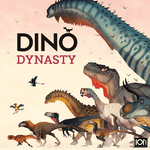
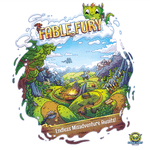
And then once you've created somewhere for life to thrive, let's see how it survives in Dino Dynasty, where one to six competing dinosaur species spread across a gradually revealed landscape, adapting to the challenges of living during the Cretaceous period, an era when all the natural resources were devoured by a handful of lumbering dinosaurs. Can't even imagine what it must have been like to live through an era like that. No, certainly not. Territory tiles form different biomes, while scenarios and challenge cards determine what survival strategies matter during that specific game. Now, the goal is to complete more challenges than your rivals do, rather than simply having the dinosaur with the biggest, sharpest teeth. Optional rules let you carry development between games and switch species within your dynasty with a campaign that links several scenarios together. All in all, it's a prehistoric competition with room to explore what might have evolved. And then from evolving survival strategies to wondering whether toast counts as equipment, we have this episode's most awkward segue into the game Fable Fury, a cooperative fantasy adventure for one to six unlikely heroes who explore randomized layouts of faceown cards to uncover enemies, traps, and story encounters while searching for shrines and portals to assist them. Shrines heal the party and unlock new skills. Thank
you very much, Shrines. While the gift shop, which we'll find elsewhere, lets you spend coins on equipment, which includes pool noodles, headphones, and the aforementioned toast. Apparently, the greatest thing since sliced bread in this game is sliced bread. Collect three monster runes across three realms to unlock the final confrontation, combining your hero's abilities and assorted purchases to defeat the threat you discover. Now, Fable Fury combines the adventures and dangers of a fantasy quest with the familiarity of shopping for groceries on a Tuesday afternoon. Or if you're up for a bit of a blast from the past, there's Ascension's 15th Anniversary Collector's Edition. Now, beginning with a modest deck, players use runes to acquire heroes and constructs from a shared center row and power to defeat monsters for rewards. as they go. Newly revealed cards keep changing their options, so you're building combination from whatever's available rather than shopping from a fixed menu on a Tuesday afternoon. This 15th anniversary collector's edition bundles the original game along with the Return of the Fallen expansion and updated promo cards, all foil cards, and an embossed tin. Yes, your tin is now bumpy. It's a familiar deck building staple with a fresh polish. Literally a fresh polish if you take the tin into consideration. Aimed at celebrating this game's early years,
which actually is similar to the last game on this month's list as well, Blood Rage Valhalla, a standalone sequel that begins after the original Blood Rage ends with Ragnarok destroying the world. Spoiler alert. In Valhalla, three to five Viking clans continue competing in the afterlife, drafting cards, battling rivals, and building up their powers to earn glory and the favor of the gods. Different combinations of gods change the powers and strategic possibilities that are available from game to game. This introduces a new battlefield with plenty of miniatures and a way to connect it to the original Blood Rage because the included Rainbow Bridge module links the two games together into a longer experience with accomplishments that happen before Ragnarok providing bonuses in Valhalla. Yes, finally a loyalty program that comes with some real long-term benefits. And we hope that you can benefit. It was a segue from learning about even more games to discover by continuing on to our other videos, including game picks, overviews, and recommendations. Until next time, thanks for joining us and take care.