Top 10 Very Clever Card Games - Chairman of the Board
Games in This Video
10 games are featured in this video — they unlock as you watch.




Transcript
Hey everybody, today I'm talking about my top 10 very clever card games. So, I wanted to make a list that put a focus on card games cuz generally I love card games and there are so many out there, but I kind of wanted to take a step beyond that and filter down into some games that kind of took a different approach and thought outside the box when it came to more kind of standard card game mechanisms. And that's what this list is all about. So, I've got some 10 fantastic games here that I think deserve a lot of spotlight and a lot of attention um just because they are so unique and just again make you think a bit differently. So, these are all still generally pretty accessible games, but as I said, you might need a game or two just to understand some of the nuances and just to appreciate what these games do differently. So, let's get started with the first game. So, at number 10 I have Startups by Oink Games. This is a pretty ferocious little game as you're trying to control the majority of these different companies by collecting cards of the matching type.
And if you have the majority of those types at the end of the game, then any other player who has um a matching card or kind of shares in that company has to pay you money. Um and the way that you play the this game is quite interesting because all you do on your on your turn is you either draw a card from the face-down deck and add it to your hand and then play a card either in front of you or in front of what you call the market. And that is becomes another option on where to draw from in future turns. But every time you end up drawing drawing a card from the face-down stack, you have to put a coin on each other card in the market, which can kind of start bleeding your funds. And this is a game really about kind of almost like a game of chicken where you need to be the majority shareholder, but you don't want to become involved in companies where you where you're not going to win because you're going to start losing more and more points at the end of the game. And it's that idea of trying to trap and lure people into taking shares when you are pretty confident that you're going to win because at any time in the game you've got hidden information in your hand.
And at the end of the game once all those cards have been used from the deck, there's going to be that big final reveal to to to see who the majority shareholder is. And I really love that. So, you have kind of have this back and forth where you want to again invite people into getting involved in these companies and you don't want to go straight up and just start spamming all your cards down because then people are going to say, "You know what? I'm not getting involved in that company cuz I'm you know, I'm pretty sure that I'm going to lose a lot of points for doing so." And that kind of back and forth is fantastic. There's some of these companies only have say five cards in the deck, some of them have 10 cards in the deck. Again, that competition is fierce. That idea of um you know, being being the majority shareholder is also interesting because if you ever have the most shares of a company, then you cannot actually take any more of those cards from the market. And therefore, you only have to rely on cards that you're top decking from the deck. And you know, normally I'm not a big fan of top decking, but for this it somehow really works. And um this probably is one of the best games for the depth and kind of um the kind of the depth and nuance in relation to how quick the game takes cuz this one does only take about 15 minutes to play and it does scale from I think three to seven players. Now, I will say I do prefer it at the lower player counts and it becomes a bit more chaotic at the high player counts, but it is still nice to have that option. But this one is certainly a game that doesn't get near enough attention cuz it is so well put together, very well balanced and again it just has a lot of tension and a lot of grit for such a small tiny card game.
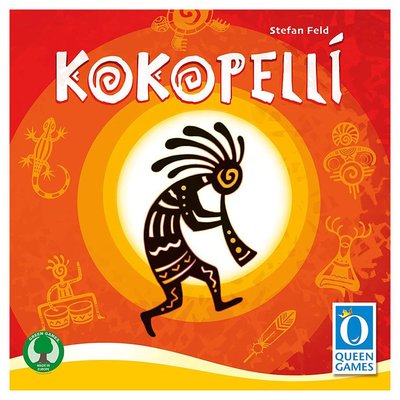
So, that is Startups, a fantastic little set collection and kind of stocks and shares style game. At number nine I have Kokopelli by Stefan Feld. So, generally Stefan Feld is known for his boards board games, you know, very Euro mechanical games. And this one is obviously his take on a more traditional card game. And this one has a kind of an idea of like a temporary engine building as you are playing cards in front of you on your little ceremony board. And as long as those cards are active on the board, you're going to get a certain power for playing them. So, they'll do things such as maybe when you draw cards, you draw extra cards or you can start drawing cards from people's discard piles or you can complete ceremonies with fewer cards. So, very small and subtle tweaks, but when they start merging together, they really do start to kind of work up and you become quite powerful depending on what you have active at any time. Um but the kind of spin on this game and how it works differently is not only that you can play cards on other people's ceremonies depending on where they're sitting. And the reason you might want to do that is because you might want to stop them from exploiting that power too much. But a further twist on that is that when you play the fourth card of a particular type, then you're going to get rid of those cards from your board and then you're going to take a points marker and which depreciates as the game goes on. So, you're kind of spinning these players off, you know, how long do I want to abuse this power and get the most out of it, but I also need to think that I need to get rid of this power pretty quickly because I'll get more points for doing so. And I really like that little twist on the game.
There's a ton of variability in this game because I think any individual game you only use 10 different card sets and the game comes with like 20 plus. So, every game feels slightly different and I love that that tension of which powers have I got active, when am I going to cash them in, am I just going to you know, not worry about the points and just abuse the power as much as I can. And it's just a really well put together game and just nice to see a designer like Stefan Feld who who again doesn't normally make these style card games to see how he thinks about making a game like this. At number eight I have a game called Parade. So, Parade is a a very beautiful game. So, this is kind of set in the Alice in Wonderland setting, you know, very beautiful artwork. And this one you of course have a hand of cards and on your turn you are adding a card to this queue of cards or this row of cards in the center of the table.
And when you do that, you are thinking about not only the suit of cards that you're playing, but also the number on that card because the number on the card is going to show you how many cards you're going to skip past on that row before you start collecting cards. And you're going to start collecting cards with a lower number than or this matching suit of into your scoring piles at the end of the game. And you really want to be scoring as few points as possible because the win condition is the player who scores the fewest points wins. But that in itself is taking a step further because for every card you have a particular type, if you are the majority holder of them, you only going to you're going to flip them face down and going to score one point each for them. And then any person who has those cards but aren't the majority holder are going to score the exact points on the cards, which can be you know, five, six, or seven. So, you can rack up a hell of a lot of points if you don't have the majority.
But of course, ideally you don't want to be collecting anything. And managing that is very tense, particularly as the game goes on and more and more cards are added to this row, people are avoiding taking them and all of a sudden you play this big card and you're forced to take a bunch because it's such a high number and any after that in the row end up coming to you as points. So, it's a really cool again this this tension of how long can I go? Is now the time to play this card and just you know, I'll I'll take a couple of points, not the end of the world, but to do that I'm going to kind of force take a bunch of points later. And such a cool system again, one that probably takes a turn or a game or two to understand how it works because it is so different. But again, another nice game that plays in 20 minutes and it feels completely unique. Definitely one one worth hunting down because it is that good. And um I really haven't kind of um tired of this one one bit. It is fantastic. So, that is Parade.
At number seven I have probably one of the most cutthroat games on this list. This is a game called Arboretum. Now, funnily enough um from the visuals of this game you might think this game looks lovely. It's a beautiful game. And yes, it is. But as I said, um once you understand how it works, it is pretty damn vicious. So, this one you are going to be um playing cards from your hand into um into a kind of a tableau in front of you, which has this special puzzle element as you're trying to match up these trees to create kind of numerical chains. And the bigger these chains, the more points you're going to get. But you can end up chaining through other trees as well um in order to kind of do this kind of cross-hatching and paths and stuff. Um so, a really cool special puzzle in the first place. But the scoring system in this game is what makes it feel so different and very clever um because you only ever score um the the tree types in front of you if you still have the majority of that card type remaining in your hand at the end of the game. And that applies to all the other players. So, say I had, you know, um say I had a total value of seven oak trees in my hand and my opponent has invested loads of oak trees in front of him in his tableau and he only has six in his hand, then I'm going to stop him scoring for all of his trees. So, you've got to be very careful to manage your hand to not only score the cards that you've had, but also to prevent other people scoring from their cards as well. And you have this additional wrinkles to the game where you can draw from other people's discard piles. So, you've got to be very careful about the order in which you discard things. Again, managing your hand is just so tense because you end up clogging your hand up
because you want to keep things in your hand that you know you need for end game scoring, but the more you keep it in your hand, the less flexibility you have to play and what you're going to take on your turn. So, just a brilliant game. One that I kind of have to be in the right mood for because it is so ferocious, but I still completely appreciate the design of this one. It is so well balanced, very um again very uh cerebral, but just a brilliant design and and a beautiful game as well. You know, if you can get past that um that cutthroat nature of it. But what a game. That is Arboretum at number seven. At number six I have a game called Saboteur. So, Saboteur I probably out of all these games, this one has the breeziest feel to it. You know, it feels very relaxing to play. But despite that, it is a pretty damn clever game. Again, particularly when it comes to the scoring. So, I kind of a running theme of these games is how the end game kind of resolves and how the scoring works.
And this one at face value you might think this is a pretty simple set collection game. And yes, it is. You know, so many card games out there um kind of work on that mechanism where the more cards you get of different types or the same types, works on a sliding scale, so the more points you get, the more cards you get, the more points you get. And this game does that. However, there are some kind of twist on that, not only with the way you acquire the cards in the first place, because you're going to have this row of cards that all people are sharing. And then, on your turn, you're going to take a card from your hand and play it on a matching number on that row. And then, all the cards to the left of that card, you're going to be able to take into your hand for kind of future turns. But, all the cards to the right of it, you can take in order to play in front of you as scoring or as points, basically. And as I said, you're trying to build up these these different sets of cards from left to right, and you have to keep them in the same order as well. And then, for each row you do that with, you're going to score again.
So, you've got to be very careful of not only trying to expand your rows, but also create new rows. And on top of all of that, you also score for your two biggest columns of cards, so the matching types, um for how far along they are on the row. So, say I collected five cards on the sixth of the sixth type along my row, then I'm going to get 30 points, cuz it's five times six. But, say I had a bunch of the same cards on the number one spot, then I'm only going to score that multiplier times one. So, I really like the way that works. Again, I love that spinning plates thing. You know, I need to keep click taking cards in my hand, but that lure and that attractiveness of wanting to take cards into your scoring area as well is just really inviting. So, what a brilliant game this is. Um just it feels familiar, but it still feels different enough to make it kind of spark that intrigue. So, um yeah, think this is a fantastic one.
Um instant hit for me. That is Sub Astra. At number five, I have Stella, which is actually from the same design team as Sub Astra. And this one is a strictly two player game. At this one, you are trying to build up kind of two sets of cards, one of which is your telescope, and one is called your notebook. And the way they work together and synergize with each other is where the game really really kind of shines. But, additionally, I love the way that you acquire cards in the first place, as again, a bit like Sub Astra, you have this communal bunch of cards. And what you're going to do is you're going to draw a card from this communal row, add it to your hand, then you're going to play one of these cards either into your telescope or into your notebook. And depending on which one you play, you have to play the opposite um so, you have to play another card in the opposite area, depending on the number you just played. So, say let's let's say I played a a number four in my telescope, that means I'd have to look at the communal card row, pick up the number four, and then put it in my notebook.
And the idea is that you're trying to build up this telescope of of cards um with a with lots of restrictions on, so you need to make sure that cards of of the same type are touching each other. You're trying to put these um basically stars there, because the stars are going to multiply by the runs of cards that you've created in your notebook. So, it might sound quite complicated, and you know, it is it's different, but it's not when you play it, you kind of understand how it works. But, I love that managing of the card system, you know, you you've only got the kind of opportunities available to you on the current tableau of cards available to all the players, but kind of optimizing that is where the game really shines. And again, I love the the idea of, you know, I need to create these runs, um but I also need to get these stars in the in the telescope, but at the same time, you are also scored on majorities in your telescope, because that telescope is divided further into three different sections.
And if you have the highest number of cards, which ironically comes with the smaller value of um of stars on these cards, is going to end up um giving you points at the end as well. So, you want to control the majorities, you want the stars multiplied by your notebook. So, a brilliant game, again, one that you probably have to um play to understand um how it works, cuz it's probably not as complicated as it sounds, but that tenseness and the restrictions that choke you as the game develops become really satisfying when you pull off those big combos. And just a brilliant two player game, one that's massively overlooked, and it should be up there with the greats. That is Stella at number five. At number four, I have Biblios, which is kind of considered one of the greatest filler games of all time, and I tend to agree with that one. But, ultimately, this is a card game with some help with some dice, which basically just act as a a counter for the game. So, this one is a game divided into two very kind of distinct halves. The first half of the game, you're going to be drawing cards from the stack and then drafting them, not only for yourself, but also deciding which which kind of cards other people can take, and then putting another card in this face-down stack for the second half of the game, which is where all the cards that you acquired in the first half of the game, cuz a lot of these cards just have monetary values on them, you're going to be bidding for those cards. And the idea with this one, you're trying to acquire these sets of cards and be the majority holder of these sets, because at the end of the game, each set that you are the majority holder of, you are going to score a number of points equal to this corresponding die, which has been manipulated as the game goes on.
So, some of these cards will let you kind of increase the pit value, some will let let you decrease them. And you're kind of using this internal navigation system, thinking, you know, well, I think I've got the majority here of this specific suit, therefore, I'm going to increase that value and I'll make it more valuable at the end of the game. And the same you know, applies to the other suit. If you're thinking another person has got loads of a particular suit, you can start tanking the value of that die, which is really interesting. But, what I really love about this game is the kind of excitement and the um kind of almost that that speculation of who's got what. Because sometimes in this game, you might think, you know, I've only got, say, a total value of four of these cards, which is not very good at all, but not realizing that everybody else has got less than that. So, you think, you know, I can discard these cards, they're not going to mean much to me. Um but, ultimately, if you kept hold of them, you could have won a hell of a lot of points, and that's really cool. So, again, one of the best games in terms of that end game reveal, a brilliant scoring system, and I think one of the um one of the best filler games out there, as I said, just a fantastic blend of auction, speculation, set collection, um and it's a manipulation of the scoring.
Just all comes together so harmoniously to make a fantastic game that I highly recommend. And this one has really stood the time, you know, it's been out for a long long time, and people still enjoy this one. And if you can't get the Biblios version, the game is still available um under the under the name, I think it's called For the King and Me, which isn't so cool, but still the same game. So, that is Biblios at number four. At number three, I have Hanabi Koji, which is another strictly two player game. This one, I have to say, is probably one of the most elegant, streamlined, and sophisticated games I've ever played. One of my most played games in my collection ever. So, I really have had a hell of a journey with this game. But, this one is a a kind of an action selection game, where you are trying to have gain the influence of these geisha girls by playing certain cards in front of you. And if you have the majority, then you are going to get win the favor of that geisha and hopefully win. Cuz I think this game's got one of two different winning criteria. One is to um win a certain amount of geishas, I think it's four geishas, and the other one is to get over a certain amount of influence from those geishas. Um but, the way you do that is the most interesting part, because you have a very small hand of cards, and then each turn, you're going to pick one of these four different actions you can take. And two of them use the system that I love, which is the I I pick, you choose, or I split, you choose mechanism, where you're going to pick, I think it's, say, uh three cards, give them to your opponent. Your opponent will pick one of them and put them on their side, and you'll take the
other two, put them on your side. And the same applies to this other action, where, you know, you put two pairs, uh your opponent will pick a pair, and you get the other pair. So, you have to kind of divide these cards up into your hand into the best orientation, which is going to suit you and mitigate the or mitigate the damage you can potentially suffer by get by pairing them off accordingly. So, and additionally, you need to be very careful about which which card you're going to keep back in your hand and which information you're going to display, cuz a lot of the time, when you're giving this giving your opponent options to choose, then you really do want them to pick a certain type, because you know you've got the other cards in your hand. And kind of keeping a poker face on that is one of the coolest parts of the game. This is a very tense game, probably one of the most games that offer the most kind of agonizing decisions, you know, it's paralyzing at times, and you can't afford a single mistake, because the game is so delicately balanced. And I love the way that works. Um so, yeah, this one I think it's just brilliantly designed, again, no fat on this game whatsoever.
The smallest mistake can cost you gravely, but that all adds to the excitement and drama of the game. One of the best two player games out there. That is Hanabi Koji, an essential, in my opinion. At number two, I have Mandala, which is another two player only game, um and the final one on this list. But, this one is a game that really does walk that fine line of being very accessible and breezy, but still having a lot of layers and depth in the decisions that you're going to make throughout the game. So, this is a set collection style game, but one that works almost in a similar fashion to a game like Stella, where sorry, I have Sub Astra, where the order in which you collect these cards is very important, because the first cards you collect are only going to be worth one point each, but the ones you collect in the third are going to be worth three points each, and the fourth four four points each. And the way you acquire these cards is very interesting, because you are either going to be playing cards from your hand into a center of one of these Mandalas, cuz there's two active at any time. And when you play them into the center, you're going to be drawing cards back into your hand, and it's going to be a great way to keep your options and flexibility going throughout the game.
But, when you play these cards in the center, those are the cards that are going to be available to not only yourself, but your opponent as well. So, you are creating these opportunities when you actually end up drawing cards in the first place. But, the way you acquire these cards is you can play any number of the same type onto your kind of bidding area, and the person who's bid the most cards when each of the different suits of cards being played in one of the mandalas is going to collect all the ones from the middle or going to have first choice on the ones in the middle and acquire them for points at the end. And this creates a hell of a lot of fallout in the decisions you're going to make because sometimes cards could be worth very little to you because it might be the first set you've collected, but they can be worth a lot to your opponent because they might be the you know the fourth set they've collected. So, you kind of need to use the cards in your hand that you know are worth a lot to your opponent as bidding tools and be careful not to leave them in the middle when you're drawing back up cards because again they're going to be worth a lot to your opponent if they win that particular mandala. So, another game that you kind of really need to see in practice to see how it works.
And again another game where when you play it the first time you think oh there's not much to this, but then when that end game reveal comes and everyone scores you might think oh next time I'll do this differently I'll do this differently and I'll play in this particular manner. I think this is one of the most timeless and another elegant game, one that feels like it's going to stand up for years and years to come and one of my favorite games from last year. Um well I played it was new to me last year, but it blew me away. I continue to love this one and probably my favorite two-player game of all time is that good and that clever. That is Mandala at number two. And finally at number one I have Capital Lux 2 Generations. So, this game is pretty much a take or a new twist on the classical casino game Blackjack, you know the game where you're trying not to go above 21 by keep playing cards or you'll go bust. But this one you are doing that but with a moving target because out of the hand of cards you have which you've drafted prior to the gameplay taking place you are going to be either playing cards in front of you or to the capital which is basically going to determine the the value that all players are aiming towards. You've got I think it's four different types of cards or four different colors of cards. And whenever you play a card in the capital not only are you manipulating that value which people can aim for now, but also you're going to get a distinct ability or power for taking that particular action which can be as simple as drawing a card. It can even be manipulation tools where you play a particular color and you can take one of these tokens which will again either increase or decrease the values of the other suits of cards that you're trying to collect.
And that can be hidden information so you know it and nobody else knows it. Um and if you're not playing to the capital you're being trying to play in front of you and trying to stay as close as you can to these limits because if you are the victor by being as close as you can to these targets without going bust by going over, then you're going to score um say a number of points um depending on the cards in the capital which is going to further manipulate the value for future rounds. But additionally you're trying to keep those card values alive as long as you can because if all those cards are still alive without going bust when it comes to final scoring, then you're going to score for each of those which is such an exciting and tense um thing to manage. So, I love how dynamic this game is. I love how much the other people can impact the game and they just a passive interaction between you. Um just a real game that keeps you on the edge of your seat from start to finish as you're constantly trying to manage your values. You know do I need to increase the capital because I've gone over here? Am I willing to play this card um but bearing in mind that maybe somebody else is going to attack that value later. Just brilliant game again strikes that great balance of being fun but still being really clever.
Some great kind of modularity and replayability in this game because there's a ton of different options and different ways you can use the powers depending on the different suits of cards you play. And um certainly one that I think everybody should play. And you know I'm not generally into this kind of sci-fi theme, but the gameplay completely transcends that cuz it is that sharp and um I think it's a brilliant brilliant design. That is Capital Lux 2 Generations at number one. So, that concludes this this video. I'm hoping there's something on here that's caught your attention and because I think all these games are fantastic. You know any other game depending on which way the um any other day depending on which way the wind blows um this game could have been mixed up or this list could have been mixed up. You know games that are eighth could have been number three, you know. I I love all these games and it's very hard to um put these in a particular order, but they're all fantastic and they're all brilliant card games if that is your cup of tea and style of game.
So, um if you have enjoyed the video, please hit like and subscribe to my channel and check out my other videos too. Additionally, if you want to go that extra mile and um support the channel, then please consider backing on Patreon and I'll leave the links below for that one. And for everyone else, I'll see you next time on Chairman of the Board. Bye.