How to design a POLYOMINO board game *Top 10 Mechanisms*
Games in This Video
9 games are featured in this video — they unlock as you watch.




Transcript
i recently received a review copy of pre-histories from hachette board games uk it's a simple thai laying game from flying games whereby players place secret bids to gain geometric tiles representing cave paintings they race to fulfill a series of objectives based around gathering certain types of tile and filling up their own personal cave walls with illustrations of their hunting prowess it's a fun recent example of a poly omino game and that's the topic of today's video so let's get stuck in this is a domino it's a tile made up of two squares and they're great they line up really neatly to form grids and satisfying patterns of course king domino is the most prominent game in the genre having won the prestigious spieled as yara's award in 2017.
so if this is a domino then what's this it has five squares well in 1953 mathematician solomon gollum named this shape a pentomino pent being the greek prefix for five so if that's a pentomino well what's this gollum says it's a tetromino tetra being greek for four and that leaves this little piece here what should we call this well if we fully adopt gollum's nomenclature we'd be declaring carcassonne as the greatest monomono game out there it's a square isn't it i'm adam porter i design games and i review games and on this channel i like to dip into certain genres trick taking flicking tableau building dice rolling and try to pinpoint the specific mechanisms frequently used in these games it's a toolbox for you as a game designer which of these mechanisms do you want to employ in your own polyomino game which of these mechanisms could you subvert and crucially which mechanisms spring to mind which haven't yet been utilized is there any space for innovation here there may not have been a name for them but polyamino puzzles have been around for over a century the traditional puzzle always focused around completely filling a grid and that's still a staple of the genre today solomon gollum's 1953 puzzle saw a player trying to fit 12 pentominos into a tight grid 1960s multi-puzzle used the same premise with shapes made up of six
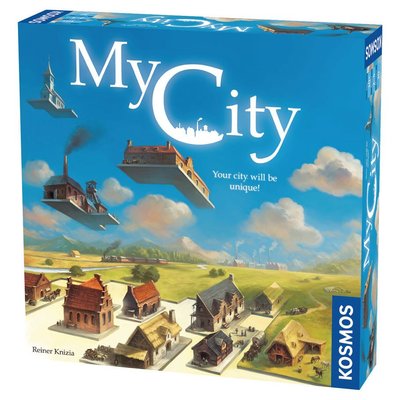
squares called hexominos often these puzzles would feature a few pieces positioned in defined locations and players would try to fit the remaining pieces around them a more recent example is smart games iq puzzler pro which sees players positioning a mixture of trominos tetrominos and pentominos into a grid with predetermined starting positions cleverly this set features two different grids in the set along with a third mode of play where pieces are stacked on top of each other to form a pyramid but all of these are solitaire activities the genius square turns the puzzle into a race between two or more players dice are rolled to determine the position of the starting pieces and then players race to place their tiles to complete the grid before the other players polyaminos can be divided into free one-sided or fixed video game tetris is an example of a game which utilizes one-sided polyaminos they can be rotated so they're not fixed but they're not totally free because they can't be flipped over to their reverse side modern polyamino board games tend to use free polyominos which is to say that the pieces can be freely rotated or flipped to their opposite side this is intuitive and it keeps the game moving it's easier to quickly identify a suitable spot on your grid which could accommodate a specific shape at a glance when you don't have to mentally rotate and flip the piece in your head to check all the possible orientations reinerkinicia's my city is an example of a board game which uses one-sided
polyaminos tiles which can't be flipped coming to this game from other popular titles the one-sided system can be jarring it adds a layer of challenge to the game which is perfectly acceptable of course but it just feels limiting when you're used to the freedom of many other similar titles in the hobby pre-histories uses fixed polymers well sort of the rules explain that cave people don't like abstract art they want their animal paintings correctly oriented that is with their legs pointing downwards so no rotation is allowed that said the game does allow you to flip your tiles to the reverse side which feature a different orientation in practice this is a bit clunky because you really need to check both sides of the tile before you decide whether it's suitable for your needs it's kind of the worst of both worlds in 1989 the video game tetris took the world by storm when it was packaged with nintendo's game boy children and adults were hooked as a child russian programmer alexei pagetnov was a fan of golom's pentominos and in 1984 with the birth of home computers alexei set about creating a digital version of his favorite puzzle his first attempts were a straight-up re-implementation take a selection of polyominos and fill a grid but he found that this quickly became tedious so he introduced a limitation on placement the pieces would drop vertically into each player's grid so that the polyaminos were positioned from bottom to top but suddenly the game became infinitely
variable and far more challenging many modern board games have restrictions on where and how polyaminos can be placed in blockers that's the whole game place as many of your colored pieces on the board as you can but you can only place them so they're touching one of your other pieces at a corner they can never touch your own pieces on a straight edge hence the game is all about blocking off the other players and preventing them getting their pieces down princess of florence is a much more complex strategy game with many layers to it but right at the center of the game is a polyamino placement puzzle this was the first such game and paved the way for later titles like felds and merrego and rosenberg's a feast for odin in princes of florence your polymer no tiles represent buildings in your own little play area and just as in blockus they can never touch on a stray edge landscape tiles are not restricted by this rule and they can be placed adjacent to each other or to buildings a more common rule is exactly the opposite of that featured in princes of florence and blockus in many tile laying games your pieces must be placed adjacent to your previously placed tiles in prehistories your first tile must be placed adjacent to the left edge of your player board and then each subsequent tile must be placed adjacent to tiles that you've already placed similarly in my city your first tile must be placed adjacent to the river and all subsequent polyaminos must be placed adjacent to your earlier tiles an isle of cats has similar placement restrictions but you can play cards here
to free yourself from those placement restrictions starting up a new group of cats in a different part of your ship both my city and isle of cats feature end game scoring for groups of connected tiles which share a common color alexei paget nov had created a system that worked the restrictions on tile placement along with a good degree of time pressure made the game tense and challenging but he hit on a stumbling block the game was over almost immediately whether you played well or poorly the screen filled up with polyominos before you knew it and you couldn't place any more blocks the solution remove completed rows creating a dynamic playing space and the brilliance of this system is that the player's successes are constantly removed leaving only their failures the messy lines the ugly gaps players are driven to fix their mistakes and that's what makes the game addictive it's a conundrum for board game designers trying to capture the magic of tetris a slew of tetris-themed ward games were released capitalizing on the success of the video game but none of them came close to the original the closest was rhino kenitzia's fits released in 2009 which featured players slotting tetrominos into an inclined board and working to fill up their own personal grid by leaving as few spaces empty as possible but despite superficial similarities it does lack the time pressure of tetris and the immediate feedback of completing rows in-game feedback is one of the core aspects of a game which keeps players engaged in tetris whenever a section of
the grid is completed a bunch more spaces become available to you it's extremely satisfying so how can we replicate that in board game form in phil walker harding silver and gold players mark crosses on dry wipe cards corresponding to polyamino shapes drawn randomly from a deck each card is worth a number of victory points and when one is completed it's added to the score pile and the player starts work on another clearing your cards has a similar immediacy to clearing rows in tetris in barron park also by walker harding players gain a victory point statue every time they fill a complete grid with animal enclosures but even more excitingly if they cover a certain icon they can start working on a new tile increasing the size of their animal park once again replicating that dynamic playing space from tetris barren park makes extensive usage of this icon based system each icon that you cover gives you access to a different selection of tiles for future turns cover multiple icons in a single turn and gather multiple tiles it's really rewarding the concept of covering specific spaces with polyaminos to gain rewards was first introduced in the 1977 game skirid in this game players can place a translucent tile over a number in order to score an equivalent amount of points and if the tile has a multiplier on it then you can double or treble your score but if you want to block an opponent you also have the option of playing your tile upside down which halves your points but it prevents your opponent from playing adjacent to that tile
in pre-histories if players cover hand prints on the cave walls they get to draw additional cards into their hands which will benefit them when bidding for tiles on a future turn the same effect can be achieved by inviting players to surround an icon with polyaminos in order to receive the reward so in cartographers players gain coins when they surround the mountain on all four sides the coins are worth victory points but in expansions they can be spent to access certain actions and abilities players are also tasked with surrounding monsters placed by their opponents llama land is another recent polyamino game by walker harding and once again you gain rewards by covering certain icons in this case tokens which act as a currency for purchasing point scoring cards or special action cards which you select from a central display the key twist in llama land is that your tiles can be stacked stacking of tiles is not something which is seen often in polyamino games largely because of the awkward shapes involved it just doesn't feel right to leave pieces hanging off the edge of your structure so the rules always tend to state that your pieces need to be properly supported by other tiles beneath them this is easier to achieve in a domino game like walker harding's gingerbread house because the pieces are smaller as polymers get bigger it all gets a little bit more unwieldy a popular title which requires players to stack polyaminos is number nine from abacus spieler now i've been a fan of the game cusco previously known as java for many years
the game uses poly hexes as opposed to polyominose but the principle is the same stacking pieces to form a terrain where height matters a playing piece on a higher level has a higher status over lower pieces in some way in this case when it comes to majority scoring of areas of terrain cuzco features player tokens which can be placed on top of tiles to score points in various ways they also prevent other players from placing poly hexes on top of them and similarly in llama land players place llamas at different heights on their terrain to achieve scoring objectives but in the process they limit their later tile placements because no tile can be placed on top of a llama new york zoo is another game featuring tokens which are placed on top of your polyamino tiles this game takes a slightly different approach to the feedback mechanisms which we've discussed previously in new york zoo if you completely fill an enclosure with animals the animals are all removed and the enclosure is available for you to fill again and again the most prevalent feature in all of these games is that filling a grid is good enough so that i made it number one on the list indeed in many of the games including new york zoo filling your grid will win you the game but many polyamino games featured different ways to score points ravensberger's former was one of the first to do this in 1973.
former required players to surround certain spaces to score points or to connect the different edges of the board with polymers making connections is a staple of the genre it features in multiple modules in the constantly changing legacy game my city and in several scoring criteria in pre-histories and cartographers for example this objective from pre-histories requires you to join up all three of your starting icons on your player board other objectives require you to fill entire rows or columns or join the top left corner to the bottom right with a continuous chain of connected tiles in one of the earlier polyamino titles the very attractive two-player game cathedral joining one edge of the board to another claims that section of the grid as your own hence blocking your opponents from playing in that space the goal of the game is to place your pieces such that when the game ends you've managed to fit more buildings on the board than your opponent cathedral has two players facing off on a shared grid this is something which is seen in many of the earlier more abstract polyamino games including gollum's original pentominos puzzle which could be played by two players taking turns to place tiles on the board with the first player unable to place a tile losing the game blockus uses the same basic premise alternating tile placement until players are shut out and they lose the game the vast majority of modern poly amino games don't utilize a shared board they have each player working on their own grid arcadia stands
out in that regard in arcadia players are tasked with building houses in the town of arcadia when houses are surrounded the players are rewarded with seals which change in value based on what's showing atop the central castle deciding when to cash in your seals is the key to winning the game but the central mechanisms of the game all revolve around placement of polyaminos on a shared grid arcadia features many of the mechanisms previously discussed on this list so tile placement is restricted such that you can only build adjacent to previously placed workers or other buildings to generate workers place a tile over a camp icon completely surround a building either with other buildings or workers in order to receive seals and to add a castle piece to the central structure thereby changing the value of the various different seals cash in seals to gain gold and the richest player wins the game the advantage of a shared board is that a game immediately becomes interactive each player's turn directly impacts on their opponents of course that's also true in tetris although few board games are as gleefully destructive as the mean-spirited multiplayer version of paget knobs classic polyamino games can be really challenging they're geometric puzzles originally designed by mathematicians like solomon gollum as a form of recreational mathematics but a board game needs to be fun so board game designers have found a neat little component which greases the wheels a little the monomino this little tile is extremely desirable if you're struggling to complete your zoo in barron park fill
your boat in isle of cats or squeeze an extra piece onto the board in cathedral equally a handy monomino can be vital if you want to prop up an overhanging polyamino in gingerbread house or llama land uver rosenberg's patchwork utilizes a time track whereby turn order is dictated by who's further back on the track each tile costs buttons to purchase but it also advances a player on that time track such that you might select a particularly desirable tile but it could allow your opponent a couple of extra turns before you get to play again at key points on that track players are rewarded with a neat little single square patch but only the first player to reach the point gets the reward and the patches are invaluable for filling in the more difficult areas of your grid and filling as much of your grid as possible is key to winning at patchwork because any spaces left unfilled at game end are worth negative points which brings us to the final mechanism frequently utilized in poly amino games sometimes the negative points are awarded for empty spaces in the grid as in patchwork sometimes they're gained when you fail to cover specific icons the rats on the boats in isle of cats the rocks in nitsy as my city in cathedral you lose points at game end equal to the number of spaces that your unplaced buildings would have covered had they been positioned on the board polyaminos are by definition flat two-dimensional shapes some games utilize similar shapes with a third dimension but they fall outside the scope of this video if you're interested
in such games take a look at blockers 3d or bridget or team three let me know your favorite polyamino games in the comments and if you enjoyed the video please click like share it and subscribe and maybe watch some of my other top 10 mechanisms videos on this channel until next time all the best