6 Hot Picks & Cool Recs - Which would you rather play? - The Anti-Hotness
Games in This Video
9 games are featured in this video — they unlock as you watch.



Transcript
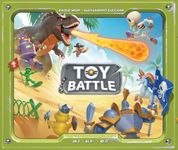
Looking for a game to play? Well, then join us as we recap the month's most popular board games along with some lesser-known ones with a similar vibe that you may also enjoy. I'm Chaz, and my co-writer Matthew and I are combining the latest hotness with some cool recommendations starting with a game that recently racked up the most plays on Board Game Geek, making it a top trending title of the month. The two-player game of area control with an inviting theme, Toy Battle. In mid-May, Toy Battle won the Golden Geek Award for the top two-player game of 2025, and it was added to the Spiel des Jahres list of officially recommended titles. Toy Battle turns two twin teams of tyrannically technical toys against one another as they take turns either drafting more troops or deploying them to earn point-scoring medals and take control of their opponent's headquarters. There's also several different maps available to help set the stage, each one making different bonuses available to the players as well. Now, don't let the art and the name of this game fool you. Toy Battle is a war game at heart. It's a quick, light, approachable one, but still worth checking out if that's a style of game that you enjoy. The designer of Toy Battle has designed several other short strategic games we recommend, including Caesar: Caesar Rome and Blitzkrieg: World War II, both of which can be
played in about 20 minutes. In Caesar, the Roman Republic is coming to an end, but not before a power struggle between Caesar and Pompey plays out. Here, instead of toys, players command legions, strategically deploying them to key battlegrounds to seize control of provinces and retain the Republic. Tokens are drawn and placed to allocate power to different provinces, control areas for points, or close off areas for bonuses. The other recommendation, Blitzkrieg World War II, was originally pitched as the perfect war game for non-wargamers, which is a bold claim, but one that the game delivers on. Because Blitzkrieg has one or two players battle across the war's most iconic theaters, winning key campaigns and building their military might.
Again, army tokens are drawn to allocate resources and gain victory points, weapons, and strategic advantages. And plus, Godzilla's in the mix, which does make me wonder why we're not all playing this game right now this moment. Next, a top trending title tallying table time on our gamenightpicks.com website, is Wingspan. And I think that that is news that will surprise nobody at all. Wingspan deservedly receives a lot of love from players. This competitive, card-driven engine-building game leads bird enthusiasts, researchers, watchers, ornithologists, and collectors all on a mission to discover and attract the best birds to their network of wildlife preserves. What makes a bird the best? I don't know, but I do assume it has something to do with how heavy of a coconut it can carry. Regardless, birds create chains of powerful combos, which score bunches of bird-based bonuses. And at this point, there's quite a few expansions for Wingspan available, including European birds, Oceanic birds, Asian birds, and now one full of American birds, which adds more depth, variety, and a few new feathered friends. Plus, there's also a giant nesting box to put all of it in. So, now you can store your abstracted avian allies with precision.
With Wingspan being so familiar, perhaps you want to reach for something similar, but also a little bit different. In that case, we think a game worth recommending would be Raising Robots from 2023. Raising Robots seems to be inspired, at least in part, by Wingspan, but there are key differences. In this competitive, simultaneously played engine-building game, famous inventors assemble the greatest collection of robots by selecting actions to perform, then running their engines to upgrade their system by designing and fabricating and assembling even more robots. Building bigger and better bots creates even more powerful engines, scoring more and more points. Now, the similarities between the two games are certainly there, with the rows of mechanical marvels replacing the birds.
Still, it's full of clever card play, devious resource management, and, of course, powerful point-scoring engine-building mechanisms. And if you're looking for something even lighter and quicker, well, then two other recommendations also come to mind. The first being Beasty Bar. Do you enjoy activating your row of special bird powers in Wingspan? Well, in Beasty Bar, players create a shared lineup of animals. And as animals are added to this row, their special effects mix up who is standing where in the queue. Mischievous monkeys may jump to the head of the line, skunks can scare away others, and, well, crocodiles just outright eat other animals, which does, yes, seem rude, but there's still a whole menagerie of other species, all jockeying for position, as well. And while we're on the topic, we would be remiss if we didn't also mention that if you just want to play a great card game with beautiful birds in it? Well, then Peep Mats is definitely worth crowing about. It's a clever and tricky card game all about collecting bundles of birds.
By playing bird cards next to different feeders, players collect pairs of mated birds as well as majorities of single birds all for points. Peep Mats is full of beautiful artwork, cutthroat tactical card play, and there is even a version of the game that comes in an egg-shaped container because not every marketing decision is a complete winner. Moving now from the tactile tabletop to the digital desktop, there's the games that are logging the most plays on the Board Game Arena website this month. And a frontrunner is the economic action auction game, the second edition of Pax Pamir. Now, it's the 19th century in this game, and Afghanistan's leaders are attempting to forge a new state after the collapse of the Durrani Empire. Now, in many different ways, Pax Pamir is a straightforward tableau builder where players buy and play cards to gain units and additional actions that they can take, plus gain vital influence with various factions. But every action taken and every card played can drastically change the tides of power and influence.
Not to mention, there's a strong emphasis on using actions to directly disrupt and upset the actions and influence of the other players. So, it would appear that taking control of an entire country won't be as simple as the brochure made it sound. And as a result, Pax Pamir is a game like no other. It simulates a tremendously tumultuous moment in history, and some say that the the best way actually to understand how it plays is simply to play it. And that's why attempting to recommend a game that's like Pax Pamir can be such a challenge. What's like it? Fortunately though, that is not my problem to figure out because Matthew drew the short straw, best two out of three even, when it came to picking which one of us was going to make a recommendation based on Pax Pamir. So, I'm as excited as you are to see what he came up with because I refused to go for best five out of seven.
If asymmetrical, historical, and ever so slightly quirky war games call to you, well, then a series of games that you might want to call upon is the Coin series. Oh, good pick, Matthew. Well done. In this library of counterinsurgency scenarios, players take charge of drastically different factions with unique abilities, play styles, and victory conditions while responding to the ever-changing events that unfold as the game plays out. There's generally two schools of thought as to where to start with this potentially daunting series of games. One approach is to begin with Cuba Libre, which is often seen as a good introduction to the Coin system. But Matthew, never one to go with the flow, instead suggests simply starting with whichever game in the series speaks to you the most since at their core, yeah, each Coin game is based largely on the same underlying system.
However, he notes, do be aware that the learning curve is steep, but also equally balanced among players. Now, Matthew's favorite Coin game is Pendragon, but he advises not starting with Pendragon. In fact, he wrote that all in capital letters because even as complex game systems go, Pendragon leans on the complex side of even that. But hey, if even the lightest entry in the Coin line is still a bit more than you want to chew on, well, then a bonus recommendation that we have for you is a simpler game that can still retain that vibe of the Coin series. Of course, we're talking about the ever popular game Root, which takes some of its inspiration from the Coin series and is designed by Pax Pamir designer Cole Wehrle. It's like we're tying everything together like a big tabletop turducken.
In Root's playing space, factions of forest dwellers, each with unique abilities, powers, and win conditions, duke it out among the trees for supremacy. Now, Root offers an inroad to asymmetrical gameplay, as well as a library of 14 different expansions to choose from, which add new maps, factions, and everything in between. And for even more game recommendations, continue on to our other recent videos, including our board game buyers guide and our new high rollers series, which tracks primo performers in a variety of different categories each month. Thanks for joining us, and take care.