Don't Waste Your Time. 😒 | 18 Board Game First-Impressions ❌
Games in This Video
12 games are featured in this video — they unlock as you watch.








Transcript
Welcome and welcome back everybody. It's Tabletop Yogi here and in today's video I'll be going over my new board game plays from September of this year. Hopefully these first impressions of the 18 new games I got to try last month will help y'all make some informed decisions about new games you might want to check out or that you can save your time and money on. But without further ado, let's get started. So it was a pretty good month for games with 110 plays of 90 different games. One of the new ones that I got to try was amazing from In Patience Games. I actually have a full solo play through of this one to two player cooperative abstract game over on the channel. So if you're interested in checking it out, definitely look there after this. I will say that as far as cooperative puzzle games go, especially for two players and solo to be honest, having it in an abstract form was really fresh and new.
I have personally not played a game quite like this one before. So if that sounds interesting, definitely check out my solo party video on the channel that goes more into detail about rules, has a play through, and more complete thoughts on it. I also had a first play of Rune Right from designer Jason Catswinkel. This is a flip and fill style game where you are constructing different glyphs using cards, overlapping them from rounds to rounds. I also happen to have a solo play video of this one on the channel. So if you're a fan of flip and fill games that are quick and easy to learn but have a lot of fun depth and strategy, then you can check that video out as well right after this. Enchanted Ivy is a solo puzzle game from All Play Games. This one has a really cute aesthetic. I had heard really good things about it and it definitely did not disappoint. Essentially, you are overlapping cards and placing out different guests onto these cards in order to give them the most optimal kinds of seating within your inn based on their preferences. The game features a campaign mode that goes through a very quaint little nostalgic cozy story, or you can play endless mode, which is pretty hardcore because you have to manage, I think it's like 10 or more guests. Overall, simple rules, but a lot of complexity with the different characters, layouts, and how you progress through the game. The Phantom of the Opera is a two-player trick-taking game from designer Guionel.
I talked a lot about their two-player card games in my last monthly plays video, where I reviewed Orbita and the Yellow House. So, the Phantom of the Opera is one of their newer titles. It's an asymmetrical two-player trick-taking game, where one person plays as the Phantom, and one person plays as Christine. And the Phantom is trying to compose a perfect score. Christine is trying to mess with his plans. So, there are certain tricks that you're trying to win or lose based on which character you're playing as. Some interesting things with exchanging cards and using one of the cards as the bid for the round to set a number that raises the stakes double or nothing every time it appears. I really enjoy this one. It never ceases to amaze me how many variations there can be on trick-taking with while still implementing new ideas.
The one thing that does get under my skin, though, is that the actual music scores that they use for the boards aren't necessarily really solidly written music, which I feel like they could have integrated, but that is just something very nitpicky and definitely doesn't directly impact the really fun, interesting decisions and gameplay from a mechanic standpoint. Moving right along, we also had Tribes of the Wind, which is a slightly older title from 2022. This was one I wasn't sure I would enjoy because while I do like engine building and there's a little bit of a feel of pick up and deliver, which is a category of game that I like, but don't get to play often. I had heard that this one was very dependent on other players because you're using the backs of their cards as potential resources or comparing majorities in order to trigger certain combos or events and actions on the cards that you play each round. I found that at two players, this was really satisfying though because you actually have a dummy hand, which is your available cards that you can draft from. You have complete control over your cards and you have a little control over the market, which can also influence the actions you can take. And then you just have to factor in the one other player. So, I'm not sure I would enjoy this one as much at three because then you're not using the market cards as resources, you're just using your neighbor's cards. So, I'll have to try this one at a higher player count to see if I still enjoy it as much, but at two, I found it was a really nice balance of being aware of other players and the
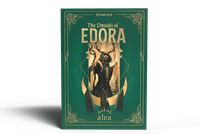
market and then managing your own board, cards, engine, etc. The Druids of Edora is a newer game from Stefan Feld that came out last year. I finally got a copy through our sponsor Noble Knight Games and I was really excited to delve into this one. It's a two to four player game that features some area control, some engine building, and route building as well. So, each round you're taking dice and assigning them to different areas of the board, paying resources to travel further from your previously placed dice, trying to get majorities of the number of pips on your dice in certain areas to secure end game points, all the while managing your board. I did an unboxing of this one last month when it arrived from Noble Knight. So, if you want to see more of the components and things like that, that was live streamed. So, that's up on the channel.
This one really gave me Bonfire vibes and I think that it accomplished a similar level of different pieces working together, but in a less crunchy way and with very different mechanics from Bonfire. Whereas Bonfire felt like a lot of separate mini games that you're putting together, Druids of Edora felt like one complete cohesive picture with a lot of little things that you're managing, but they give similar vibes overall, I would say. So, I really enjoy getting to the try this one out this past month. And here we have Nuna Tak, Temple of Ice, which is a tile laying engine building game from designer King Clinkscale. One of the things that I really enjoyed about this game was that the tiles that you place and claim are based on the different set collection of cards claiming as well. So, they give you different actions, but also scoring bonuses for the end of the game while you're managing area control and constructing this multi-level temple.
I'm not the biggest fan of area control games, but as far as they go, I would say that this one had a really nice presentation with the 3D elements and the art from Kwanchai Moriya. Another one that's very easy to learn and teach, but has quite a bit of depth to it. I also had a first play of Moon Colony Bloodbath, which I had heard is a very popular title, but I had not heard of it too much prior to this year. This is an engine building game where everybody is contributing to a center event deck of cards that is flipping up. And essentially, it's just attrition. When do you run out of colonists that you use to populate different buildings, which will get you benefits, and how do you manage those different actions from turn to turn? I will say that this game wasn't for me, and that's coming from someone who loves engine building, who loves games that feel tight and put a lot of pressure on the players. Moon Colony Bloodbath was advertised to me as such, but did not really succeed in that. I felt like a lot of the decisions that you make feel very arbitrary, and the trade between your population versus your buildings seemed very cut and dry.
So, the multi-use effectiveness of the cards didn't feel quite so balanced or create a lot of tension for you as a player. There were also cards that were just clearly better beginning of the game versus end game. So, that also detracted from the tension of like, "Oh gosh, I ran out of population. Which cards do I get rid of?" Oh duh, of course they get rid of this one that's pretty much useless now. So, while I appreciate the concept and idea, I don't necessarily think that my play through accomplished what I had hoped it would in terms of creating a really captivating tension from the game mechanics and decisions based throughout. I also got to try a game called Tatsumi where players are moving their dragons around the board in order to collect different rings and turn them in for variable scoring objectives that then let you potentially place scales to get engine building and bonus points or powers throughout the game. This game has a beautiful presentation. I liked the puzzliness of everybody interacting on the board, collecting rings, and then placing them onto your own personal board. I am skewed slightly negative towards this game though because the rulebook was very difficult to get through. So, I would definitely need to play this one more, I think, also at three or four players in order to see whether I really like it or not. Definitely did have a spark of something that intrigued me and gorgeous presentation.
weekend where I tried the previous two games, I also got to play Borgo, which is a new, not even roll and write or flip and fill, just the writing parts of those style of games. An even implementation of Fromage using similar mechanics of workers that you block out for a certain number of rounds and that have different colors that match different parts of your board, but it's about producing wine instead of cheese. I was not the biggest fan of Fromage. Similar to some of these other games I've talked about this month, love the concept of Fromage with the strength of your worker equaling the number of turns that you have to commit them for actions, but the scoring and mini games in Fromage don't do it for me. Bordeaux, however, was so snappy and concise. It really felt like I could take the best part of Fromage using time as a resource and assigning workers for a number of rounds, and Bordeaux implemented that so well with managing the few different parts of your board. It felt really tight, really snappy, and I would definitely recommend checking this one out if you are looking for a unique decision and write game. Piñatas is another All Play game from designer Reiner Knizia. It's a trick-taking game for two to five players. While I really enjoyed the art of this one, one of the big downsides is that there is a lot of player elimination where you like lose out on the round and then it's the last one standing that gets more points. It was pretty quick and fun, but I don't really know that the players get a lot
of choice. It doesn't feel quite as strategic as some other trick-taking games, but the idea of bluffing and trying to go out once you've won an exact number of tricks or not going over a number of tricks was easy enough to get into and fairly enjoyable. Cut the Crap is a game that I've been looking forward to for a while. Originally published from Mandu Games, this one is an interesting take on set collection. Very heavily involved in terms of bluffing and reading other players. Essentially, over seven rounds, you're choosing three of your 21 card hand to be able to play that round. Either cups that stack on top of each other, crabs to claim those cups, bottles to reserve them, or occupy to take the bottle cards. And then whichever cups you end up with at the end of the game, those are your points. I've played a lot of card games, a lot of set collection games, and I'll say that this one definitely felt unique and fun. The replayability from game to game doesn't vary too much, but because it is a unique concept, I think it gets away with that quite a bit here because it doesn't feel like it's necessarily overly referential to any other game I've played previously within this genre. And then, I also had a first play of Turnip, which is another bluffing style card game. When I originally read the rules for this one or the little blurb about it, I thought, "Oh, it sounds like Bad Beats," which is another bluffing game kind of for kids, where you have to say, like, "Okay, these two
cards, this is how many turnips I have," and that's supposed to be the sum of your turnips. So, it felt like a very condensed down version of, like, Sheriff of Nottingham. I wasn't really thinking that there would be a lot of strategy, but as it turns out, there was quite a bit. I think this one definitely depends on your group that you're playing with, though, because if you have a bunch of people who are goody two-shoes or who are always lying, it may be very transparent with the limited number of cards and how things play out and who calls someone out. And there was some discussion with our group about the benefits of calling someone out and being wrong and they get an extra point versus you getting points for calling them out and whether that was really balanced, but I thought that it was a really fun idea for a game that sits kind of between something like Bad Beats, which is like a kids' bluffing game, and Sheriff of Nottingham, which is more involved. I'm definitely a little bit biased here as well because I absolutely love the art and the theme for this one, but overall, I'll say I was very pleasantly surprised because I did not have super high expectations, but it definitely exceeded them. And a couple more games I got to try this month, Northwest, which was sent from a friend of the channel. And speaking of, I want to say a big shout-out to our channel members for supporting the channel directly over here on YouTube, Discord, Instagram. Because of them I was able to try this abstract game for two to four players. You're moving your hiker around the board and the piece that the last player picks up determines your movement and then you're collecting
sets and programming them into your board in order to get the most optimal scoring. Really fun components, quick and snappy, very abstract feeling, just a chill cozy game with some surprising depth to it. Planet Peta is another one sent from our channel members. This is a departure from all the other games that we've talked about so far. It is a dexterity game where you were flicking your little aliens onto a center board trying to gain majorities in certain rings. It seems like it wouldn't be that strategic. I thought it was just going to be goofy fun, but it is surprisingly strategic because once your alien lands on one of the rings, not only can you use them to skillfully knock other players out, etc., but you can choose to leave them face up where they count as two points or two control or you can flip them face down where they have a stronger magnet and can act as more of a staple on the board to manipulate other players or not be as easily pushed around by subsequent pieces. However, if you flip them for that more stable connection, they're only worth one point when determining area control at the end of the round. That small little mechanic really made for some interesting gameplay and strategic choices. This is definitely one that if you're a fan of dexterity games, if you like Crokinole but want it with a theme and a little bit more interesting mechanics utilizing magnets, definitely check this one out. A surprise hit this month was Pop Art, which is a drafting game. When I saw the
box for it, saw that it was just drafting, I thought, "Eh, this feels like a light easy party game." But it really turned out to be a hit for myself and everybody who I've showed it to since. The thing that makes Pop Art stand out is the fact that each round you're drafting two cards, a background and a transparent overlay. Each background and overlay can create up to three different card combinations that you are then placing into a grid, and those card combinations determine a unique combination of scoring based on positions, color majorities, icons, etc. that you have on your cards and potentially other players cards. For a game that plays one to eight players, again, 2 seconds to teach the game, so much strategy, so many different choices with those different card combinations.
Really genius in terms of the design and thinking about how much thought must have gone into all of the different combinations of overlays and how you balance that. So, if you're a fan of drafting, if you're a fan of card games, if you like novel, interesting, unique uses of cards, do not sleep on this one. Pop Art was really stand out this past month. Another set collection game with some bluffing is Yokai Pagoda. I actually found this one at a local game store. I believe it's also on Board Game Arena. This was a new one that I hadn't heard of, but I was pretty intrigued. You're managing your hand and discard piles, but there are some effective ways to mitigate scoring and keep your score low because at the end of the game, you score points for each different suit of card that you collect. However, only your lowest card of each suit counts.
Again, it never ceases to amaze me how people can take something like set collection, just taking and discarding cards, but make it into a very strategic game where you have a lot of player interaction, trying to read other players, thinking about what cards they might be trying to retain, managing your cards as a resource for end game scoring. I just found this to be really delightful, and I'm especially excited to try it at higher player counts and see how it balances out, whether it feels similar to two players, feels different, better, worse, or just. So, I'm really glad I saw this and was able to pick up a copy. And last but not least, I had a first play of Kushikatsu Express, which is a dexterity game. Each round, players are trying to construct cubes, which represent different items on their skewer, on an actual like chopstick skewer with different wraps of meat and cheese. It's really just a speed game, but with some really fun components and lovely little art. I had a good time playing this one. If you're a fan of speed games, this one definitely has very high production value and was a quick fun time. So, there you [clears throat] have it. Those are the 18 new games I got to try last month. Let me know down in the comments which of these games you would be most interested in trying out. And if you have any recommendations for games you'd love to see featured in future months.
As always, thanks so much for joining me, and we'll see you next time. Bye.