Graeme's Top 100 Games of All Time: 90-81
Games in This Video
8 games are featured in this video — they unlock as you watch.



Transcript
Hey everyone, this is Graeme. Let's get back into my next 10 games from 90 through 81. My number 90 game is another one of those games that is slowly dropping down my list as I'm not sure how much longer it's going to remain, but then each time I played reminded how much I enjoy it. It's a game from 2015 called Manurva. It's another ancient Rome based high lane game that is relatively quick. On your turn, you're either going to be taking a tile from the supply or placing one of your resonances. When you take a tile from the supply, you're gonna be adding it to the tableau in front of you. Basically, you're building up like a city of of tiles. Why this game is on my list is kind of twofold. First is the passing mechanism. When a player passes around, each time it's their turn again, they receive a coin. So, the other players are very wary of taking too many more turns as those coins can be very useful. The second reason why I enjoy this game is the other main action you can take on your turn. That is placing one of your residences into your city. When you do this, you choose a direction, you know, up, down, left, right from that residence, and activate all the tiles in that direction until you hit another residence or the end of your city.
Planning your city is critical because those tiles are activated in order, starting from the residence in whichever direction you picked. The real joy of this game comes down to building up a long series of buildings, then placing that residence and activating them all and getting all their resources. Although this game has slipped down my top 100, it's quick, simple, and fun, and it might just hang on for another year. So, that's my number 90 game. Number 89 is one from 2007 set again in ancient Rome and it's about putting the greatest show the Romans have ever seen. The game is Coliseum. Now, the main goal of this game is, as I said, to be putting on the best show you can in your coliseum. To that end, each round they're going to be sets of tiles which should be auctioned off kind of once at a time. Once the auctions are finished, you get to trade those asset tokens amongst the players. Then, you're going to try and use your asset tokens you've accumulated to produce an event that will fit into your coliseum. You'll be rolling some dice beforehand to see if you can get some nobles into your coliseum to add some prestige to it and also applying any upgrades your coliseum has to get more prestige or kind of more wealth. What I like is that you only ever score your best show. If the points you get from your current show doesn't exceed your previous maximum point show, you don't score any more points. This usually means that one of the last shows you put on will usually be your best, but it may not be the last show you put on. And that's okay. This game has two mechanisms I usually not a fan of, auctions and trading. But for this game, it just works for me. Probably because during the auction, you're always going to get something because those tokens are refilled after each successful auction. You can luck out with a great set of tiles, even if you're the last person to win an auction. The game is, of course, also a bit group dependent, but it's still one I enjoy playing. So,
my number 89 game is Coliseum. My number 88 game is not set in Rome, but set on Isla Nubler. Oh, no, no, it's not. It's set in some unspecified island. This is Dinosaur Island. The game is all about getting dinosaur DNO to create dinosaurs for your amusement park. You're trying to carefully manage your thrill meter while still keeping your visitors safe. You can, of course, create non-threatening herbivores, but people want to see the large carnivores like the T-Rex. Each round, you'll be drafting DNA, DNA dice, and dinosaur, then hiring people for your park, and you get a chance to create dinosaurs in your lab using the DNA as long as you have paddocks for them to hopefully increase your thrill meter for your park. Finally, you're going to be drawing visitors from a bag based on the thrill meter of your park. And of course, if hooligans are drawn from the bag, they jump to the front of the line and they don't pay any entrance fee. Once your park is full or there are no more people in line waiting to get in, you see if your dinosaurs break loose and have a snack on some of your visitors that have made it in. I love the way this game kind of flows each round. Each step in the round has an area you're going to be taking an action on. So, it makes the game flow so well.
It makes it easy to teach. I also like that there are different ways to get visitors into your park. Yes, dinosaur is the main attraction, but don't forget about all those other things like food places and souvenir stands and even some roller coasters. The game is all about managing the different aspects of your park, but it's not so punishing that if you don't have enough security, your game is over. Sure, some visitors might get eaten, but that just makes your park more thrilling. My number 88 game is Dinosaur Island. Number 87 is set in the 17th century, and it's about scientists traveling around Europe spreading the word of science. That game is Newton. Now, each player has a hand of basic action cards, and on their turn, they're going to play one into the desk in front of them. The card played will dictate the action you take, but the total of the symbols that match that action is going to be how strong that action is.
These actions are going to be how you move up the various tracks, get new cards for your hand, travel around the map, and visit prestigious areas, and have your apprentices perform certain actions. Once all players have played the five cards, the round is over. Now, here comes the part that I love. You may take you must take one of those five cards played and tucked it underneath your player mat. So only the action is showing. Now in subsequent rounds when you take that same action as the tucked card, you get to add that symbol to the strength. I love that decision point in the game. I need to make sure that whatever card I tuck, I still have a card in my hand that will allow me to perform that action. The tucked card symbol will only add its strength to a played card. It cannot be played on its own. Combine that with several tracks you're working your way up. Variable endgame scoring based on which tracks you actually max out on. all combines into a game that I find thoroughly enjoyable and why it's number 87 on my list. My number 86 game is actually the last co-op game on my list. And like the last co-op, this is a horror themed one.
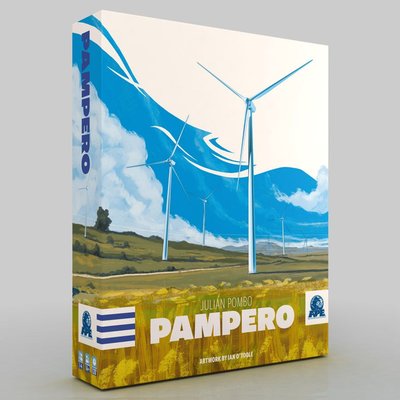
It's called Deep Madness. Deep Madness has one of my favorite themes of all time. I love it in movies, books, and shows and board games. And that's being trapped underwater, you know, an environment with something. My number 86 game is actually the last co-op on my list. And like the last co-op I talked about, this one's horror theme, and it's called Deep Madness. Deep Madness has my favorite theme of all. I love it in movies, books, shows, and board games. That's being trapped in an underwater environment with something bad that's coming for you. Now, this is a very hard cooperative game, and as the game progresses, the room tiles are going to get flipped to the madness side, which might spawn more monsters and other hazards in those rooms. There are many different types of monsters that are spawned. And when it's the player's turn to take actions, they're going to be interspersed with the actions of the monsters, which makes one of the main things that sets this game apart from me. You look at the activation run, and see, okay, I go first, then the monster, then you go, and then this monster. It makes planning piece of this much more engaging and will change from round to round. And as the monsters attack you and you see what's happened to this environment, it starts to take the toll on the characters through insanity and madness tokens. And the resulting madness cards, they're going to affect how the scenario unfolds. Now, the game is scenario-based and there is an underlying story that you can follow, but it's not a campaign game and such that you need kind of the same group of people to play every game, which makes it a little more easy to get to the table. Combine horror sci-fi with the movie Alien and the mythos of Lovecraft with an interesting activation mechanism, and you have my number 86 game, Deep Madness. Number 85 of my list is one about harnessing wind power in Uruguay. It's a large, heavier Euro game
called Pamperro. Now, in this game, you're trying to run a company to capture the strong winds that blow across Uruguay. You need to build up wind farms, electrical towers, and transformers to get the power where it needs to be. And if you have enough power, hopefully you can generate some batteries. There are some contracts on the board where you can supply power to the locals. And there are even opportunities to export your power to the neighboring countries through those batteries. Now, you're going to be doing all of this by just using your hand of cards. You have two rows of card slots where you can play your cards basically on the top and bottom of your player board. You have to play a card into the left most empty slot in one of the two rows, then do the action of the card. Now, the two rows allow you to do an action, but in different parts of the board and have different costs. When you take an action, there has to be a piece of building equipment in that location, but it doesn't need to be yours. If it is, you pay the cost to the bank. If it's someone else's, you pay them the cost to use their site. It means you're never locked out of locations. And sometimes when money is tight, you actually want people to be using your stuff, which is a mechanism I find enjoyable. The other mechanism that gets this one on my list is the card play.
You can spend a turn to return all your cards back to your hand or at the end of the round you're automatically going to get the rightmost card back into your hand. So making smart plays of cards is critical to doing well in this game. So that is Pompero by number 85. 84 on my list is a reprint from 2014 and the original came out in 2004. This is St. Petersburg. Although there is a board in this game, it really is a card game at heart. In the game, you're trying to play an important role in building up the city of St. Petersburg. In each round, you go through different phases and purchasing cards. Each card you purchase is going to be activated in a different phase. At the end of each phase, you're going to get coins and victory points hopefully. The real joy of this one's kind of building up your engine. Building it up in the first phase is so you can get the resources you need to buy buildings later on, which are going to score you points. There are also noble cards which going to use to gain points and coins, but they cost more than building. So, kind of building up your engine is important.
There's also an exchange uh round where you can essentially upgrade your cards to more powerful ones. But getting just that engine going is fun. And knowing when to keep your money for potential upgrades at the round again is a fun decision. I also appreciate that there can be cards left over from round and it's going to impact how many cards for the next phase will be drawn. This game you just get better and better as the game progresses and your engine reaps better and better rewards. This is just a pure fun engine building game using cards. Very enjoyable. And my number 84. My number 83 is a newer game and the actually the first failed on my list. This one is Mirrah. You play as different families competing against each other to achieve honorable titles. And whichever player most skillfully uses their assistance and resources will become the Ober MUI of Marrakesh. Like a lot of later Fell games, there are many things going on in this game. Well, that is many ways to get points. Players are going to be secretly selecting three cylinders to use and deploying their assistance to those areas. Then all the cylinders are going to be put for the cube tower, although I guess you could be calling it a cylinder tower. This is going to randomize which are available for the round as some might get stuck on the tower and others may come out that were there in from previous rounds.
You'll then draft these cylinders that come out. You're then going to use them to do all sorts of various functions on your board. Everything is a good option and you have so much choice. I like how open it is in terms of paths I want to take. I don't feel like I'm ever kind of being railroaded into going for a certain strategy every time I play, which for me is something I really appreciate and what I find Fel does so well. I do like the randomness of the tower. You're pretty sure you know what you're going to do that round based on the cylinders and assistance you have picked and deployed, but always having some wiggle room based on the cylinders that come out is a necessity as well. This is one that I think with more plays, it's going to slowly way make its way up my top 100, but right now it's my number 83. Number 82 on my list is one from a rotating group of Italian designers who seem to collaborate with each other quite often. This one is from 2012 and it's called Zulkan, the Mayan calendar. Your role is representing the different Mayan tribes that are competing to appease their gods the most or the best to get the most points. But the game is also known for its gears on the on the game board. There are several connected gears on the board so that when the main one turns, it's going to turn all the smaller ones as well.
You're going to be doing several familiar actions like collecting resources, building buildings, and going up tracks. On your turn, you either have to place a worker or workers on the lowest spot in a gear, which will cost you corn, or remove a worker or workers from a gear and perform the action. The longer you leave your workers on the gear and the more of the gears rotate during the game, the better the action you're going to be able to take. But you do have so many workers at the start of the game and you can't skip your turn. You're either going to be placing or pulling them back. You can get more workers during the game, but at some points, of course, you also have to feed your people. This gear rotation almost changes the game from a worker placement game to almost like a worker waiting game. You want to lean them on the gears as long as possible as each gear has actions for a particular gear that it that it is. And this mechanism definitely is something that sets this game apart for me and why it's my number 82. Number 81 and the last for the set of 10 is definitely something different than you've seen on this list. This is actually a block war game from 2002 called Hammer of the Scots. This game takes place during the time of the rebellion of William Wallace, also known as Braveheart. One player takes on the role of the English who are trying to pacify Scotland by controlling noble lords and the Scotland player also wants to be trying to make allegiances with his nobles to support their struggle for freedom. The main point of a block war game is each side has a series of blocks with information only on one side of the block. Depending on the position of the block, you know which way it's rotated.
That's going to determine the strength. So only, for example, the Scottish player can see the Scottish blocks. They know where the English blocks are, but they don't know who that block represents or how strong they are. During the game, part of the game play is figuring out kind of who is where on the board. The players have a hand of five cards which allowed you to do various actions, mainly moving your blocks around, but it could also be events. You're going to try and position your blocks so when battles happen, you have a higher strength blocks. There really is a good fog of war in this game. You're trying to outwit your opponent by strategically placing your troops to offuscate what their strength really are. I find that the game play kind of just fascinating because there is some dice rolling during the battles. Having a higher strength doesn't guarantee you the win on the fight, but we're probably going to make the fight easier. This is the game that kind of got me to try more block war games, but I don't get to the table as much as I would like. So, it's my number 81 game.
So, that's it for my 90 through 81. There were some non-uros in the section, but those are going to diminish as the list progresses. So, until next time, thanks for watching.
Hey folks, thanks for joining us for that video. If you haven't yet, like the video, subscribe to the channel, and hey, make sure you check out what's happening where I'll cover an app on an iOS or a Switch device, and you can check it out along with me. Thanks very much. You've been watching the Dice Tower.