/pic4332309.jpg)
In a dark and claustrophobic deep sea mining site, the uncovering of a mysterious “Sphere” is dragging everyone nearby into the endless madness. The fears deep within one’s mind are amplified and transformed into horrifying monsters from other dimensions, torturing one's body and testing their sanity. Only those with extraordinary will and conviction can escape its devastating grasp. Deep Madness is a fully cooperative board game for 1-6 players with 66 amazingly detailed miniatures, depicting a sci-fi horror world inspired by Lovecraft’s work and the Alien series. In the game, players assume the roles of investigators, venturing into the seemingly empty yet perilous deep sea mining site to find out the truth behind the lost contact event. Unimaginable horror and madness from the dark fear within is waiting.
Deep Madness is based on multiple scenarios from a continuous storyline. Each scenario has its own unique board setup, rules, special effects, and goals. From resolving fatal crises to struggling with overwhelming bosses, the investigators will face various quests filled with strategical decisions and fierce combat. With each scenario achieved, they are one step closer to the truth, but also one step deeper into the world of madness. Each scenario of the game plays in a limited number of game rounds, if the investigators fail to achieve the goals before the last round ends, the game is lost and everyone is consumed. Each game round consists of 4 phases: Devour Phase, Spawn Phase, Activation Phase, and Refresh Phase.
In Devour Phase, the Devour Marker progresses one step forward along the Devour Track, indicating the world going deeper into madness. As the Devour Marker progressing, more and more rooms (map tiles) are flipped to their madness side. These rooms will spawn monsters and provide various nasty effects to hinder the investigators or to boost the monsters.
In Spawn Phase, different types of monsters with unique abilities are spawned in the flipped rooms. Monsters do not show their existence in fixed locations, they could be spawned right next to the investigators if they ventured carelessly.
Activation Phase is the core of the game, the investigators and the monsters take turns to act alternately. Monsters do not wait for all investigators to finish their turns like in other cooperative games, but do act between them, so careless planning would put the investigators who are later in the turn order into grave danger, facing fatal attacks before they had a chance to act.
In Refresh Phase, some maintenances are performed, and some special effects are resolved.
In each investigator’s turn, it is crucial that the player chooses 3 actions to take wisely. Each kind of action has its own value, and every single decision could be life and death in Deep Madness. Unfortunately, the correct decision is rarely obvious. Moving, attacking, searching, exchanging items, locking the doors, and recovering sanity are the basic actions. Additionally, each investigator also has his/her own unique and irreplaceable abilities to activate. Different combinations of investigators provide distinctive strategies and game experiences.
Monster acts according to its own action pool during its turn. In Deep Madness monsters are highly characteristic, not just in stats, but also in abilities and behaviors. Different combinations of monsters provide unique challenges. And due to the intertwined activation mechanism, even different turn orders of the monsters make each game session different. However, no matter how the monsters setup is, Deep Madness will be a very challenging game, even death could be a strategy.
In the game, investigators battle the horrific monsters, survive the harsh crises, and above all, save their own minds from the devouring of madness. They are given many chances to consume their own sanity, to activate their abilities, to use the effects of items, to reroll the dice, and etc. However they are vulnerable when the sanity is low. After an investigator with insanity tokens manages to kill a monster, the monster will corrupt his/her mind, by permanently flipping the insanity tokens into madness tokens. As the madness token cumulates, horror haunts the investigator by resolving Madness Cards, and each of them has unique negative effect and terrifying flavor text.

Deep Madness Runthrough
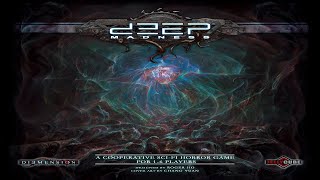
- Engaging and immersive theme
- Strategic monster AI
- Visually appealing with good miniatures
- High replayability due to variety in monsters, investigators, and cards
- Tense atmosphere without being overly frustrating
- Interesting mechanics like sanity management and devourer abilities
- Choices for players in placing spawn points
- Unique combat encounter system that doesn't rely solely on initiative tracks
- Significant amount of reading required
- Can be overwhelming for new players
- Easy to miss complex rules and mechanics
- Reliance on luck can be frustrating initially
- Rulebook combined with storybook is a minor negative
- Disconnect when story refers to named characters not present in player group
- Surviving a deep sea or alien environment with monstrous threats and psychological horror elements.
- Unknown, but implied to be a dark, possibly cosmic horror-influenced environment.
- Text-heavy with descriptions on cards and in scenario books that contribute to lore and theme.
- Arkham Horror
- Eldritch Horror
- Massive Darkness
Mechanics (from transcript analysis)
- Card Drafting — Madness and consciousness cards are drawn, introducing random events and effects.
- cooperative play — Players work together to achieve objectives, though the complexity can sometimes require a designated player to guide others.
- Dice Rolling — Dice rolls are used for actions and checks, with mechanics like sanity re-rolls to mitigate luck.
- Modular Board — The game uses tiles to create different maps for scenarios.
- Monster AI — Monsters have their own AI system that dictates their movement and attacks, with abilities that can change based on environmental factors.
- Resource Management — Managing sanity is a key resource, used for re-rolls but leading to madness if depleted.
- scenario-based play — The game is played through scenarios or chapters, with an overarching story in campaign mode.
Video topics + discussion points
Quotes (from this video)
- viewer discretion is advised
- deep madness okay so real quick you then play beautifully what do you think the the second time around better better I think it was a lot a lot a lot better
- there is a lot of reading in this game, like an unnatural amount
- if you don't have that mentality if you're willing to play the game it's like a [ __ ] book
- it's very easy to miss a lot of stuff
- such is the way of Ameritrash games which is which is this very heavily on theme and luck
- I personally really liked this because it shows care they're like we love alien and we laughed at Spears a little taste whenever I saw peppering in what they yeah what they took from what they I know yeah it was his inspiration
- I don't expect perfection right well that's supposed to be the story book is they just clumped it in with the rule book which is kind of a negative of mine
- it's campy okay it's hey good on you guys good game
- I think very game is love he's better any mechanic yeah better yeah
- it's not like a initiative track or we randomized this every single time so we never know what's gonna happen
- I don't think anyone was useless like and it actually felt like an awesome sematic entrance
- The sanity in this game I love because it's a risk reward hey I'm gonna reroll i'ma try make this happen great I killed it [ __ ] looks the madness
- it was always still like we were always on their toes he was always suspenseful but not like I was always mad
- they make help like a big deal in this game yeah they do
References (from this video)
- Descriptive writing effectively immerses players.
- Players have control over monster spawn locations.
- Unique character abilities offer strategic depth.
- The opening narrative dialogue is described as shoddy.
- Some players may struggle with identifying all characters and their lineage, similar to dense fantasy novels.
- Surviving a catastrophic event and an oxygen-starved environment.
- A mining facility called K.A.O.S.
- The game uses descriptive writing to immerse the player, with actions like characters touching shoulders to convey presence.
- Game of Thrones books
- The Witcher
- Arkham Horror
Mechanics (from transcript analysis)
- character abilities — Each investigator has unique abilities, such as manipulating activation order, exchanging positions, or performing special attacks.
- clue gathering — Players must collect clues from hazardous locations, with specific objectives requiring three successes.
- Corpse Markers — Discarding a corpse marker on a space allows for the resolution of a consciousness card.
- Monster spawning — Monsters spawn in 'devoured rooms,' and players have control over where these spawn locations are placed.
- Oxygen Depletion — A track advances, causing players to take oxygen hits and reducing their maximum oxygen levels, leading to potential suffocation.
Video topics + discussion points
Quotes (from this video)
- I love this thing that's one of the things that drew me to the game in the first place and for me personally I think the descriptive writing is spot-on because it truly brings you into the world.
- The place is eerily silent occasional words or clicks issue from various systems or machines but there's no read of life no sign the men and women so call this place home however there are plenty of hints that they used to every look are indications of struggle and abandonment.
- You have two objectives trying to discover what happened to the station and find a way to restore the oxygen before your whole team suffocates.
- Companies do instead of going retail there's like hey there's more money because everyone wants the first one but you can't get it so now here's a second reprint.
- I like the spawning mechanic in this game how they only spawn in devoured rooms and how do I mean that that makes sense.
- I like how you have control over where that spawn location is so based on the objectives you can think ahead or it's like okay well let's put in your room because you're the fighter or whatever the situation may be I like how you have control over all that.
References (from this video)
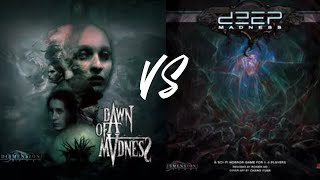
- High replayability and variety due to numerous scenarios, investigators, monsters, and items.
- Action-packed gameplay that allows for physically engaging moments.
- Offers a more direct and visual horror experience.
- Good player involvement with multiple characters contributing to actions.
- Narrative is less in-depth compared to Dawn of Madness.
- Immersion can be less impactful if players prefer narrative over action.
- sci-fi horror
- a deep sea mining facility
- Aon Trespass Odyssey
- Kingdom Death Monster
- Evil Within
- Dead Space
- Silent Hill 2 remake
- Arkham Horror
- Eldritch Horror
- Halflife
Mechanics (from transcript analysis)
- Action Points — Players have a set number of action points to perform actions like moving, searching, or attacking.
- Combat and Dice Rolling — Players use weapons with to-hit ratios and damage values, rolling dice to hit enemies.
- Investigator progression — Players choose an investigator with unique stats and equipment, managing health and sanity pools.
- Resource management (Sanity) — Sanity acts as a resource that can be used for actions, and accumulating 'madness' leads to negative effects.
- scenario-based gameplay — The game is structured around scenarios, where players pick a scenario and aim to meet given objectives.
- Tile-based movement — Players move from tile to tile within the scenario map.
Video topics + discussion points
Quotes (from this video)
- Deep Madness is kind of your sci-fi horror game that is set in a deep sea mining facility. They utilize a lot of kind of like Evil Within and Dead Space vibes, but if it were underwater, that's the best kind of feel I can give for it.
- Dawn of Madness feels like it has a lot more Silent Hill vibes because of the fact of it's your own character's interpretation. You're reliving your past. You're you're experiencing trauma that you're just kind of having to deal with.
- In Deep Madness, you are moving through rooms, you're diving into water, uh, take, you know, you have an oxygen meter to manage, and you're shooting. You have line of sight rules that you're shooting enemies and and things like that. Dawn of Madness has these locations that you're going in.
- So, your sanity is actually a little bit different. In games like Elder Tour, that was just another type of damage meter. You take sanity damage. If it hits that threshold, then you go insane and they're they're out of the game. Um, sanity and deep madness is used a little bit different in that it's kind of your your character's uh mental capacity of seeing the horrors within the game.
- The Dawn of Madness wanderer system I think is very very uh unique but it is not intuitive. It I've never seen anything like this but it almost feels like it's way more complex than it needed to be.
- So, the game flow of Deep Madness, like I've mentioned a little bit before, is that it is a scenario-based game.
- And that is a typical session for Dawn of Madness. Now, how long does that take? Dawn of Madness is a very, very long game.
- Deep Madness, if you're looking for story, you're not getting much. Don't get me wrong, it still has atmosphere. It still has theme, but like I said, a lot of your story is going to be coming from the opening blurb and the scenario and then through some of the cards.
- I think you honestly have more replayability with Dawn of Madness than you are with Deep Madness, but you have more variety with Deep Madness than you do Dawn of Madness.
- I have Dawn of Madness at a nine and deep madness at an eight. Like it's really I mean if you care about rankings at all this is honestly still my current sitting.
References (from this video)

- Oozes theme and atmosphere
- Unique sanity and oxygen mechanics
- Great representation of FPS/video game mechanics in a board game
- Lots of expansions with new characters and scenarios
- Characters inspired by popular video game/movie figures (Isaac Clark, Ripley)
- Not always intuitive to teach
- Some components (like paper money) are considered less ideal
- Cosmic horror, survival, Lovecraftian themes
- Underwater mining facility
- Mission-based, video-gamey feel
- Alien
- Dead Space
- Eldritch Horror
- Gloomhaven
- Primal
Mechanics (from transcript analysis)
- Action Point Allowance — Players take actions, and each action can have consequences like ticking down oxygen.
- Dungeon Crawl — A core dungeon crawl experience with exploration and combat.
- Oxygen management — Players must manage an oxygen meter, ticking down with each action in certain situations.
- Sanity mechanic — Characters have a sanity meter that affects their grip on reality and can be driven to madness.
- scenario-based — The game is scenario-based, with different missions to undertake.
- tile flipping — Rooms on the board can flip over the course of the game, changing their state or effects.
Video topics + discussion points
Quotes (from this video)
- it's not much of a looker.
- this is a two-player deduction game where you have two demi gods that you draw from a deck
- Orléans, you know, was one you showed me a long time ago.
- this was my really kind of my first bag builder experience
- This game is not intuitive in any way.
- this game has theme.
- this game feels really really video game like.
- have your family be a glor glorious and famous family is kind of what you're working towards.
- if you like perfect information 1v one fighting games, then BattleCon is probably the best
References (from this video)

Mechanics (from transcript analysis)
Video topics + discussion points
Quotes (from this video)
- I love Spirit Island. One of my top games of all time. Amazing design, but it's a game that will often have a boring ending...
- if you make your game fun enough, like it's just a blast to play, you can forgive a lot.
- Pandemic has a lot of problems with this. Alpha player will creep in.
- I do think some games like you can design against alpha player without like totally hiding everything.
- The biggest one is like the more your game is a puzzle and there are sudden must-win like moves that need to be made.
- The only way the only reason it was uh beneficial was because of the asymmetry. If we both could do the same thing, it would just be kind of annoying to sit there and have a discussion on strategy past, you know, a couple minutes.
- I love the idea that this is a new starting point. We're going to be going they yes yes they want me to keep buying more stuff but we're going to go through what seasons essentially
- I mean Arkham is my favorite Arkham is my favorite game that I tell people not to buy.
References (from this video)

- strong atmosphere and tactical depth
- campaign-connected scenarios
- visual and thematic immersion
- complex rules
- potentially lengthy playtime
- madness and survival in a hostile environment
- Underwater base with Lovecraftian horror vibes
- connected scenarios forming a campaign
Mechanics (from transcript analysis)
- Cooperative Game — Coop play with a focus on limited information and strategic placement
- cooperative tactical combat — Coop play with a focus on limited information and strategic placement
- Madness Track — A track that influences tile flips and new horrors as you progress
- Oxygen management — Resource management critical to survival underwater
Video topics + discussion points
Quotes (from this video)
- it's not about the size at all right it's very important what the board game uh like PX pamir offers you
- the Journey Begins with setting up your base first from there you will create new tools and gear
- the immersive atmosphere and gameplay in Assassin's Creed totally won me over
- this is the best Legacy game I've played and Legends of the West is fantastic
- Twilight Imperium is the ruler of your table
References (from this video)
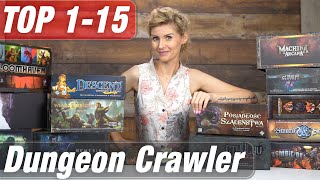
- dense atmosphere and strong tension
- engaging activation and enemy systems
- heavy rule set
- theme can be claustrophobic for some
- cosmic horror and madness
- underwater base exploration with crushing pressure
- intense, pressure-filled exploration
Mechanics (from transcript analysis)
- character activation order and 2d monsters — location and enemy type influence turn order to heighten tension.
Video topics + discussion points
Quotes (from this video)
- tiny epic dungeons
- every time when i reach another envelope and i open it to see what new scenario what new adventure awaited me
- the app adds even more to the atmosphere
- the entire zombie side series for being a dungeon crawler that i can easily play even with completely casual players
- compression of the big version of gloomhaven
References (from this video)

- the theme is immersive and highly appealing
- the monster activation rhythm adds depth and tension
- scenario-based play allows varied experiences without campaign requirements
- very hard cooperative, can be punishing
- cosmic horror meets sci-fi
- underwater research facility
- scenario-based with underlying story
Mechanics (from transcript analysis)
- cooperative play with monster activation — monsters act between players, creating a dynamic, tense table presence
- madness and insanity — environmental flips and madness tokens affect character state
- Scenario-based progression — each session uses a scenario with its own progression and hazards
Video topics + discussion points
Quotes (from this video)
- The passing mechanism. When a player passes around, each time it's their turn again, they receive a coin.
- The real joy of this game comes down to building up a long series of buildings, then placing that residence and activating them all and getting all their resources.
- The main goal of this game is, as I said, to be putting on the best show you can in your coliseum.
- You only ever score your best show. If the points you get from your current show doesn't exceed your previous maximum point show, you don't score any more points.
- The tucked card symbol will only add its strength to a played card. It cannot be played on its own.
- Deep Madness has my favorite theme of all.